
PUR PLUS Pitcher Review (2026): Is It Worth It?
★ CERTIFIED LEAD FILTERYou are comparing water filter pitchers and every box screams something different: better taste, fewer contaminants, cleaner water. Then you see the PUR PLUS — the only pitcher on the shelf whose brand claims stretch to certified lead reduction and a wider contaminant list, at a price close to a basic Brita. The real question is whether that certification edge is real, and whether the short filter life quietly eats the bargain.
Here is the short answer: the PUR PLUS carries the widest brand-stated certified list of any basic pitcher filter — WQA and NSF 42/53/401 listings including lead, per PUR’s own materials — at about the same upfront price as a basic Brita. But each filter lasts only 40 gallons (about 2 months), so you will buy roughly 6 cartridges a year, and slow filtering is the most repeated owner complaint. This review covers what the PLUS is certified to do, what owners complain about, and what a year of filters costs.
Our scores
Table of Contents
Bottom line
The bottom line: the PUR PLUS pitcher is the right buy if you want certified lead reduction and a wider contaminant list at the basic-pitcher price — roughly $38–44 for the 11-cup pitcher (estimate). It is not the right buy if you only want better-tasting water or hate swapping filters: you will change cartridges about 6 times a year.
Verdict: the widest certified list in the basic-pitcher price class; the shortest filter life too.
Estimated price about $38–44; it changes often — see the live price before you buy.

We did not receive a test unit and we did not run a lab bench test. What we did instead was research and comparison: we pulled PUR’s own listings, checked certification claims against third-party summaries of the public databases, read owner feedback for the complaints that keep repeating, and ran the yearly cost math from listed filter prices. Where a claim comes only from the brand’s listing, we say so — and where a claim could not be verified, we left it out.
One thing to know up front: if your main worry is just chlorine taste, the cheaper route is a basic taste-only pitcher. Our Brita Everyday pitcher review covers the budget end of that ladder.
Pros and cons
Pros
- Widest brand-stated certified list in its price class — WQA and NSF 42/53/401 listings including lead, per PUR’s own materials, for the price of a basic pitcher.
- Lead-certified at the budget end — one of the few pitchers at this price with a brand-stated lead certification.
- Noticeably better taste and odor — the most consistent praise in owner feedback; the chlorine note in tap water disappears.
- Big 11-cup capacity — enough for a family without constant refilling; a smaller 7-cup version exists for tight fridge shelves.
- Filter-change indicator — the electronic tracker on the lid tells you when the cartridge is due, which matters when you change filters 6 times a year.
Cons
- Short filter life — 40 gallons (about 2 months) per cartridge means roughly 6 swaps a year, triple the rhythm of a Brita Elite.
- Slow filtering is the top complaint — owners repeatedly report long filtration times, worse when the cartridge is new, unprimed, or past its life.
- Pour and lid quirks — the spout and lid fit draw complaints about messy pouring on some units.
- Plastic durability questions — a thinner thread of owner feedback mentions breakage and wear on pitcher parts.
- Heavier yearly filter bill — about $50–70 a year in filters (estimate), roughly double a basic Brita’s running cost.
Certifications (database-checked)
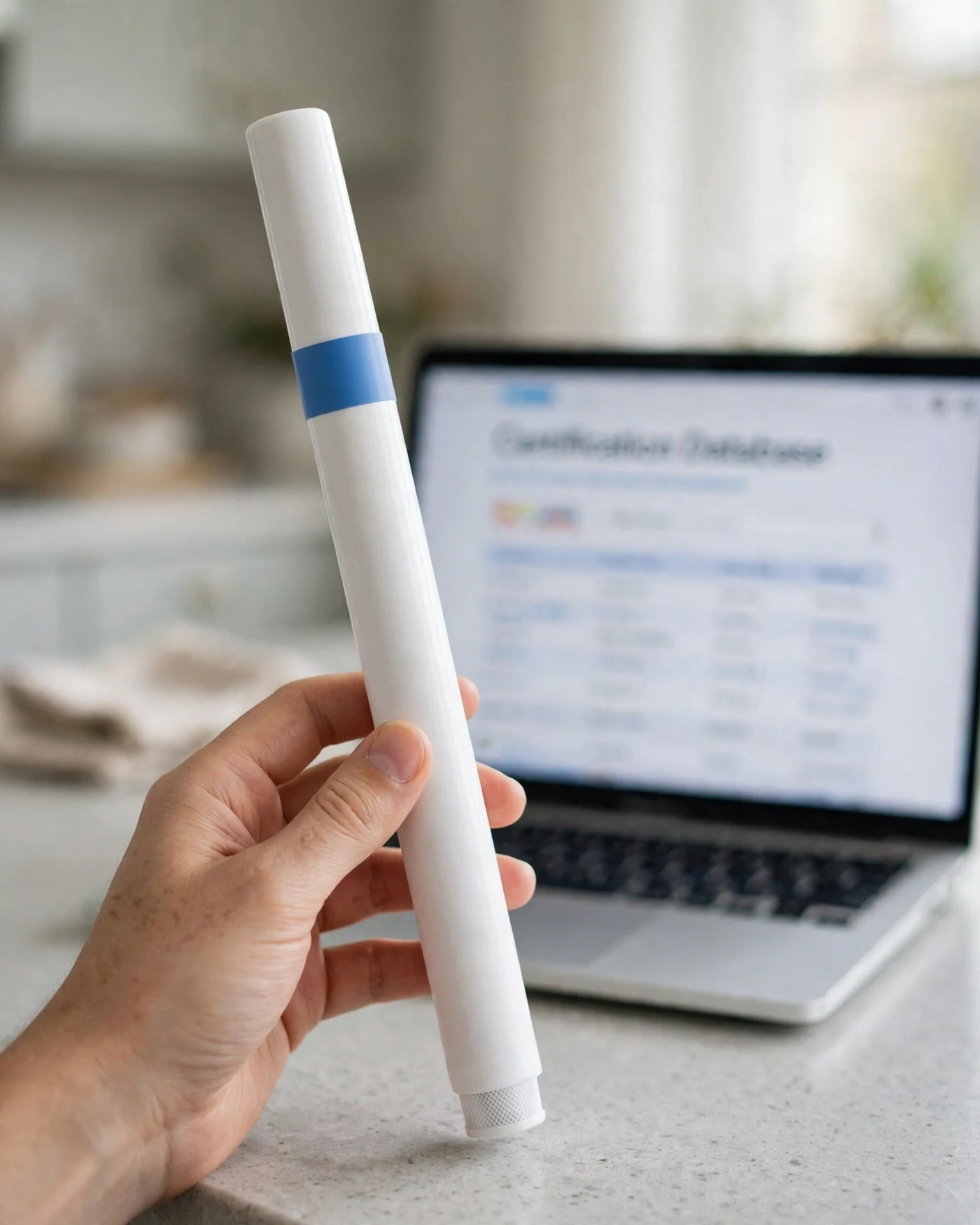
This section is where pitcher boxes get oversold, so we will be precise. Everything in the table below is brand-stated / listing-stated: it comes from PUR’s own product pages, the filter manual, and major retail listings describing the PLUS filter as WQA and NSF 42/53/401 certified. “Compliant” is not the same as “certified,” and certification only ever covers the exact substances in the listing. One honest complication: some third-party summaries list the CRF-950Z filter at NSF 42 and 53 only, while PUR’s own materials list 401 as well. Look the listing up yourself in the public database at info.nsf.org, matching the filter model on your box.
| Substance | Brand-stated standard | Status on this page |
|---|---|---|
| Chlorine (taste and odor) | NSF/ANSI 42 | Brand-stated — self-check at info.nsf.org |
| Lead | NSF/ANSI 53 | Brand-stated — self-check at info.nsf.org |
| Mercury | NSF/ANSI 53 | Brand-stated — self-check at info.nsf.org |
| Microplastics | NSF/ANSI 401 | Listing-stated — summaries disagree on the filter model; self-check |
| 20+ chemical and physical substances | NSF/ANSI 42/53/401 | Brand-stated — the full list is in the brand’s manual |
| PFAS (PFOA/PFOS) | — | NOT certified for the CRF-950Z listings covered here — do not buy for PFAS |
Read that table the honest way: the PLUS is a certified-reduction filter, not just a taste filter — lead is the headline. Slow down on the microplastics row: summaries disagree on the filter model, so verify the exact model first. And the PFAS row is a hard no: no verifiable PFAS certification for the CRF-950Z listings here, and PUR’s 2026 announcement names a different filter model.
If you want to compare within the PUR family before deciding, our PUR Ultimate pitcher review covers the other PUR model in this class.
Certification covers only the substances in the database entry, and only under standardized test conditions. If your water concern is hard-water minerals, bacteria, or anything not in the table above, a basic pitcher filter is the wrong category of product regardless of brand.
Design and usability
The PUR PLUS is a pour-through design: fill the top reservoir, water trickles through the PLUS filter into the main body, and you pour from the spout. The flagship 11-cup model is one of the larger pitchers in its class — enough for a family to get through a day without constant refilling — and PUR also sells a 7-cup version for tighter fridge shelves. It is tall, so measure your refrigerator shelf before you buy.
Day to day, the design is straightforward. The filter seats with a simple push fit, and the electronic filter-change indicator on the lid tells you when the cartridge is due — genuinely useful when the replacement rhythm is every two months. The pitcher is made without BPA and PUR lists it as dishwasher-safe, though hand-wash the lid and remove the filter before washing. If an 11-cup pitcher still is not enough volume, our Brita Grand pitcher review covers a larger-family option from the rival lineup.

- Brand
- PUR
- Filter model
- PLUS (CRF-950Z)
- Pitcher capacity
- About 11 cups (7-cup sibling)
- Filter rated life
- 40 gallons / ~2 months
- Certifications (brand-listed)
- NSF/ANSI 42/53/401 (incl. lead)
- PFAS reduction
- Not certified (CRF-950Z listings)
- Typical pitcher price
- ~$38–44 (estimate)
- Dishwasher safe
- Body listed dishwasher-safe; remove filter
Care is basic: cold tap water only, hand-wash the lid and indicator area, and never fill with hot water to “speed things up.”
Filter cost math
The sticker price is the least important number on this page. What matters is the yearly cost of running the thing, because pitcher filters are a subscription you pay in cartridges:

| Item | PUR PLUS | Brita Elite |
|---|---|---|
| Pitcher (upfront) | ~$38–44 | ~$37–45 |
| Filter rated life | 40 gallons / ~2 months | 120 gallons / ~6 months |
| Filters per year | ~6 | ~2 |
| Replacement filter price | ~$25–35 per 3-pack (estimate) | Higher per cartridge |
| Estimated yearly filter cost | ~$50–70 | ~2 × Elite filter price |
| Cost per gallon (estimate) | ~$0.21–0.29 | Lower |
Two things jump out. First, the PLUS’s yearly filter bill runs about $50–70 (estimate) — roughly double a basic Brita’s, because you buy about 6 cartridges a year. Second, the honest rival here is the Brita Elite: both are lead-certified pitchers at a similar upfront price, and the decision is certification breadth against filter-change rhythm. If you change filters on schedule, the PLUS’s wider list is better value; if you forget filter changes for months, the Elite’s two-a-year rhythm is worth its premium. The full comparison from the other side lives in our Brita Elite pitcher review.
What owners complain about
Slow filtering. The number-one recurring complaint: the pitcher can take a very long time to filter a full reservoir. Most of the time it is one of three things — a new cartridge that was not soaked and primed per the included setup instructions, a cartridge past its 40-gallon life, or water with heavy sediment that clogs the filter early. PUR’s own support team answers slow-filter complaints regularly, which tells you how common the theme is.
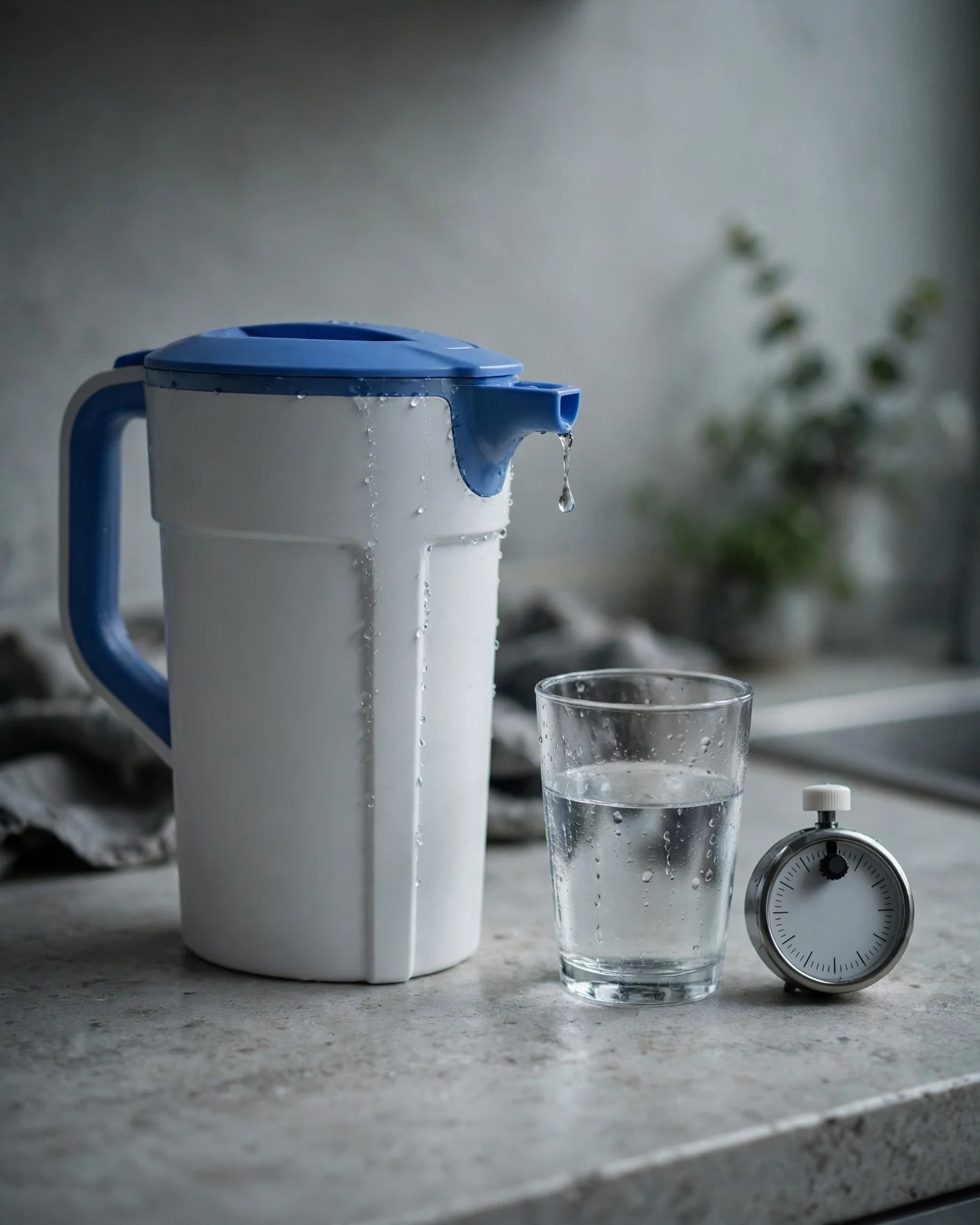
Spout and lid fit. A smaller but persistent thread: the spout pours unevenly or dribbles on some units, and the lid does not always seat perfectly, so pouring a full pitcher can get messy — the most frequent handling complaint after speed.
Black specks from new cartridges. Owners report tiny dark particles in the first pitchers from a fresh filter — carbon fines from the new media. Soak and rinse the new cartridge per the setup instructions and discard the first couple of pitchers before drinking.
Breakable plastic and wear. A thinner thread mentions pitchers cracking or parts wearing over time. Nothing suggests a safety issue, but an 11-cup pitcher full of water is heavy, and rough handling shows.
Short real-world life. The 40-gallon rating is a lab number. In homes with heavy sediment or very hard water, owners report the flow slowing and the taste turning sooner than two months. The fix is changing the filter earlier; the frustration is that the box calendar does not warn you.
None of these are hidden gotchas — but the speed complaint is louder on the PLUS than on faster-flowing rivals, and you are better off knowing that now.
Who should buy it
Buy it if
- You want certified lead reduction at the basic-pitcher price — this is the cheapest route to a lead-certified pitcher filter.
- You value a wide certified contaminant list over filter-change convenience — the brand-stated 42/53/401 coverage is unmatched at this price.
- You are a family and the 11-cup capacity fits your daily drinking-water routine.
- You will actually change filters every 2 months — the indicator helps, but the rhythm is on you.
Skip it if
- You only want better-tasting water — a basic Brita costs less to buy and far less to run; see our Brita Everyday pitcher review.
- You hate changing filters — six swaps a year will wear on you; the Elite’s two-a-year rhythm exists for a reason.
- You want filtered water on the go — a pour-as-you-drink design like the one in our Brita Stream pitcher review fits that use better.
- PFAS is your concern — this filter’s listings carry no verifiable PFAS certification. Start with a water test, then look at certified products.
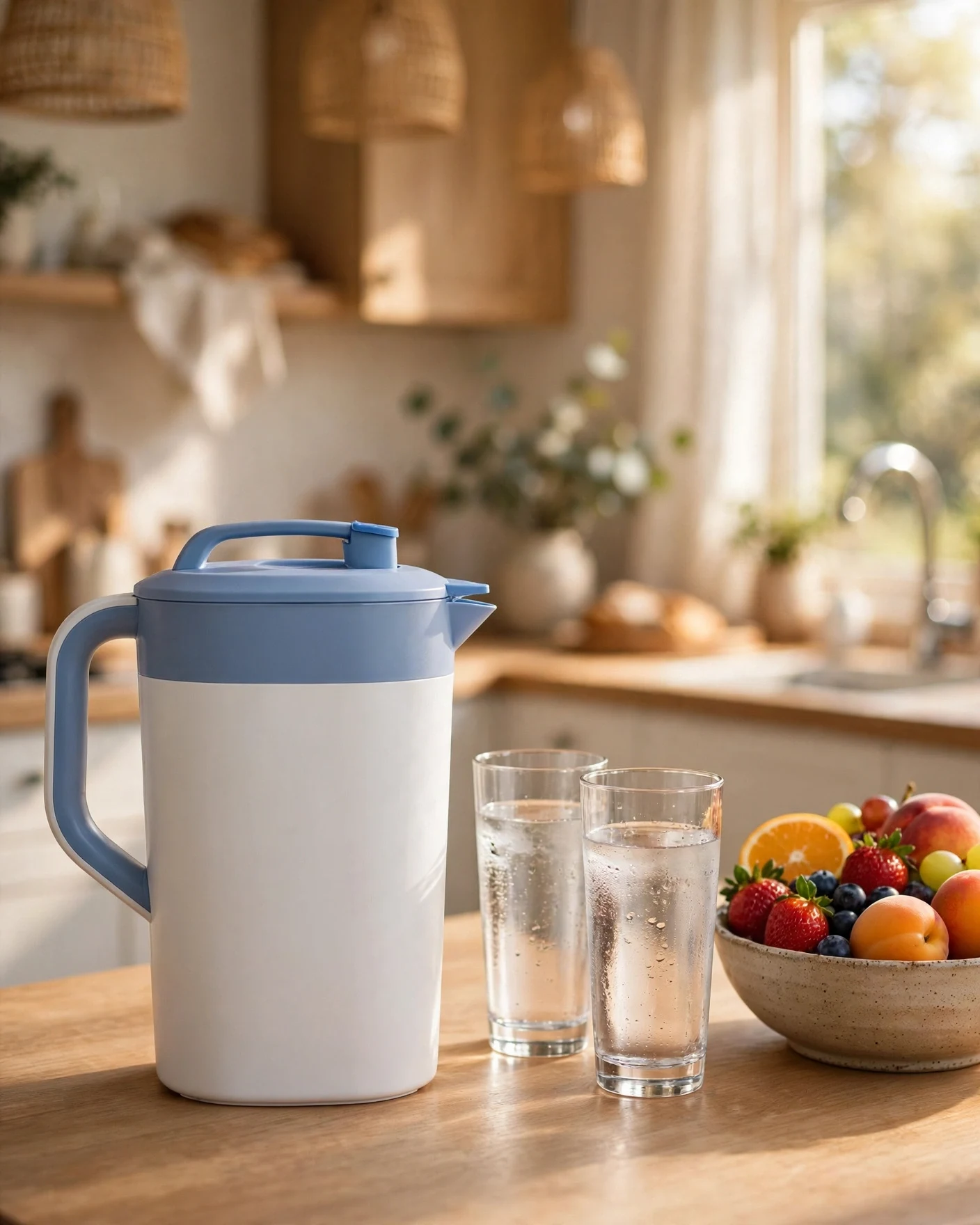
Cross-shopping is where most buyers decide — here is the PLUS against the pitchers it is most often compared with, from published specs and brand-stated certifications. The PUR Ultimate pitcher review covers the other PUR model in this class.
| PUR PLUS | Brita Elite | Brita Everyday | PUR Ultimate | |
|---|---|---|---|---|
| Typical pitcher price | ~$38–44 | ~$37–45 | ~$28–30 | See review |
| Filter rated life | 40 gal / ~2 months | 120 gal / ~6 months | 40 gal / ~2 months | See review |
| Certifications (brand-stated) | NSF/ANSI 42/53/401 incl. lead | NSF/ANSI 42 & 53 incl. lead | NSF/ANSI 42 & 53 (narrow list) | See review |
| Yearly filter cost (estimate) | ~$50–70 | ~2 replacements | ~$30–42 | See review |
| Best for | Widest certified list at this price | Lead-certified + fewest filter changes | Cheapest taste upgrade | PUR alternative in class |
FAQs
How often do I need to change the PLUS filter?
Every 40 gallons or about every 2 months, whichever comes first – that is PUR’s own guidance for the PLUS filter. In practice that means roughly 6 cartridges a year for a typical household. The pitcher’s electronic filter-change indicator is the practical reminder; a spent filter you keep using is just an expensive funnel.
Does the PUR PLUS pitcher remove lead?
PUR states that the PLUS filter is certified to reduce lead, and the brand-stated listings describe WQA and NSF 42/53/401 certification including lead. Before you buy, look the exact listing up yourself in the public database at info.nsf.org, matching the filter model printed on your box. Certification means the filter reduced lead under standardized test conditions – not that it handles every lead scenario, such as very high levels in old plumbing. If lead is your main concern, a water test is the smart first step.
Does the PUR PLUS pitcher remove PFAS or microplastics?
Treat these two separately. Microplastics: some listing summaries describe the PLUS filter as WQA/NSF certified to reduce microplastics, but third-party summaries disagree on the filter model – verify the exact model at info.nsf.org. PFAS: the CRF-950Z listings covered here carry no PFAS certification we could verify, so do not buy this filter for PFAS. We left the 2026 brand announcement out because it names a different filter model.
Why is my PUR PLUS pitcher filtering so slowly?
Slow filtering is the most common complaint about this pitcher. Three usual causes: a new cartridge that was not soaked and primed per the setup instructions, a cartridge past its 40-gallon life, or heavy-sediment water clogging the filter early. Fill only to the max line and change the filter when flow drops or the indicator says so.
Can the pitcher go in the dishwasher?
PUR lists the PLUS pitcher body as dishwasher-safe, but always remove the filter before washing. Hand-wash the lid and the indicator area to protect the electronic filter tracker, and use cold tap water only when filling – hot water can damage the cartridge.
PUR PLUS vs Brita Elite – which is the better buy?
The PUR PLUS carries the wider brand-stated certified list, including lead, at a lower upfront price – but each filter lasts only about 40 gallons (2 months), so you buy roughly 6 a year. The Brita Elite is lead-certified too, and each filter lasts about 120 gallons (6 months) – roughly 2 a year, at a higher price per cartridge.
Is the PUR PLUS worth it if my tap water already tastes fine?
Probably not. This pitcher earns its keep when chlorine taste bothers you or you want certified contaminant reduction – lead included – at the pitcher price point. If your water tastes fine and you have no contaminant concern, you are buying a subscription of 6 filters a year for no payoff. The better move is a cheap taste-only filter like the one in our Brita Everyday pitcher review, or no pitcher at all.
Conclusion
The PUR PLUS pitcher is the right buy for exactly one buyer: someone who wants the widest certified contaminant list — lead included — at the basic-pitcher price, and who will actually change the filter every two months. For that buyer, $50–70 a year in filters buys something no taste-only pitcher offers. For everyone else, a better-fitting pitcher is one click away.
Price checked at time of writing; it changes often — see the live price before you buy.
Update log
- Zulqarnain: Review published.