AquaTru Classic vs Carafe (2026): Which Should You Buy?
You want reverse-osmosis water without drilling into your countertop — and AquaTru’s two countertop models share the same filtration promise. The Classic costs roughly $100 more, looks bigger, and claims cheaper running costs. The Carafe is smaller, collects water in glass instead of plastic, and costs less upfront. Which one actually belongs in your kitchen?
The short answer: both units filter with the same 4-stage reverse-osmosis system, so this is not about cleaner versus less-clean water. It is about capacity, footprint, and long-term cost. The Carafe is the better buy for most people — smaller footprint, glass collection carafe, and a lower upfront price (estimates put it around $375–395 vs $449–475 for the Classic). The Classic wins for heavy water drinkers: its 0.75-gallon tank and larger cartridges make it cheaper to run over time. This comparison covers the specs, the certification papers, the yearly cost math, and the complaints owners repeat.
The pick for heavy water drinkers
AquaTru Classic
~$449–475
The same filtration with a 0.75-gallon tank and push-button dispenser — and roughly half the Carafe’s cost per gallon, at about $0.14.
The pick for most kitchens
AquaTru Carafe
~$375–395
The same 4-stage RO filtration in a smaller footprint, with a 64-ounce glass carafe and the lower upfront price.
The bottom line: the AquaTru Classic and the AquaTru Carafe use the same 4-stage reverse-osmosis filtration, so filtered-water quality is effectively identical. The decision comes down to three things: how much water your household drinks, how much counter space you have, and how long you plan to keep the unit.
Buy the Carafe if you want the smaller footprint, a glass collection carafe instead of a plastic tank, and the lower upfront price. Buy the Classic if you go through a lot of water daily — its 0.75-gallon tank, push-button dispenser, and larger filter cartridges make it cheaper per gallon over the years you own it.
Price checked at time of writing; it changes often — see the live price before you buy.
Our comparison scores
Table of Contents
Side-by-side comparison
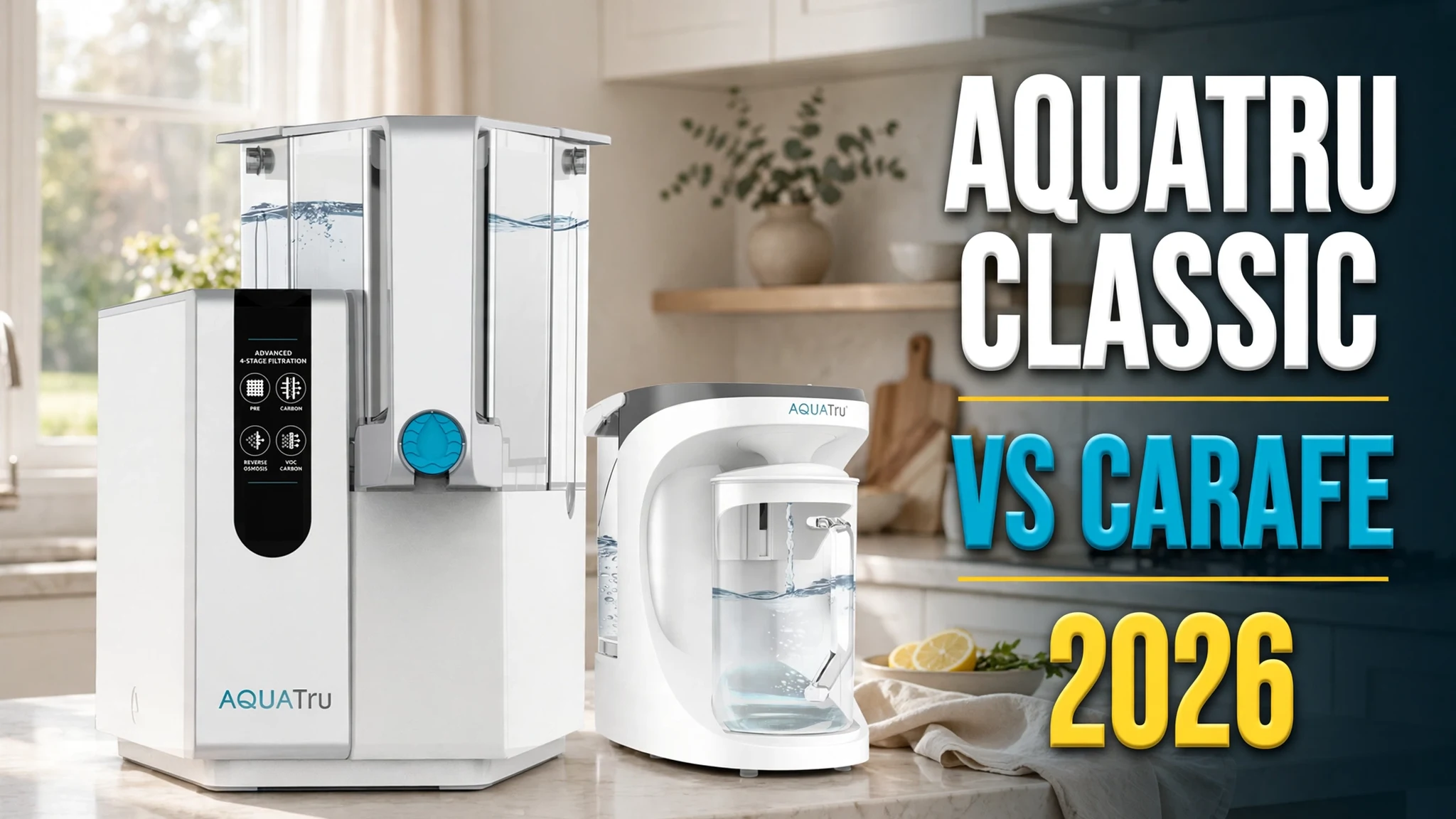
Everything that matters in one table. The first row is the one that ends most debates: the filtration is the same.

| Feature | AquaTru Classic | AquaTru Carafe ★ Winner |
|---|---|---|
| Filtration | 4-stage reverse osmosis | 4-stage reverse osmosis (same technology) |
| Typical upfront price | ~$449–475 (estimate) | ~$375–395 (estimate) |
| Clean-water collection | 0.75-gallon BPA-free plastic tank | 64-ounce glass carafe |
| Dispensing | Push-button tap | Pour from removable glass carafe |
| Filter set (replacement) | Pre/carbon filter: 600 gal; VOC carbon filter: 600 gal; RO membrane: 1,200 gal | Pre/carbon filter: ~6 months; RO filter: ~2 years; VOC carbon filter: ~1 year (per AquaTru) |
| Estimated cost per gallon | ~$0.14 (third-party estimate) | ~$0.29 (third-party estimate) |
| Estimated annual cost | ~$100 (third-party estimate) | Higher, due to smaller cartridges |
| Pure-to-waste ratio | 4:1 advertised by AquaTru (manufacturer claim — far better than the ~1:4 of old under-sink RO units) | |
| Installation | None — both plug into a standard 120V outlet and need manual tank filling | |
| Water chilling | Neither model chills water; the Carafe’s glass carafe fits in a refrigerator | |
| Filter interchangeability | Not interchangeable — each model uses its own cartridge set | |
| Counter footprint | Larger — tall unit with rear + front tanks | Smaller — narrow, apartment-friendly |
If the difference in filter life ratings looks odd — gallons for the Classic, months/years for the Carafe — that is how AquaTru publishes them. The pattern still reads clearly: the Classic’s larger cartridges last longer between changes, which is exactly why its cost per gallon comes out lower. For the full dedicated review of the bigger unit, see our AquaTru review.
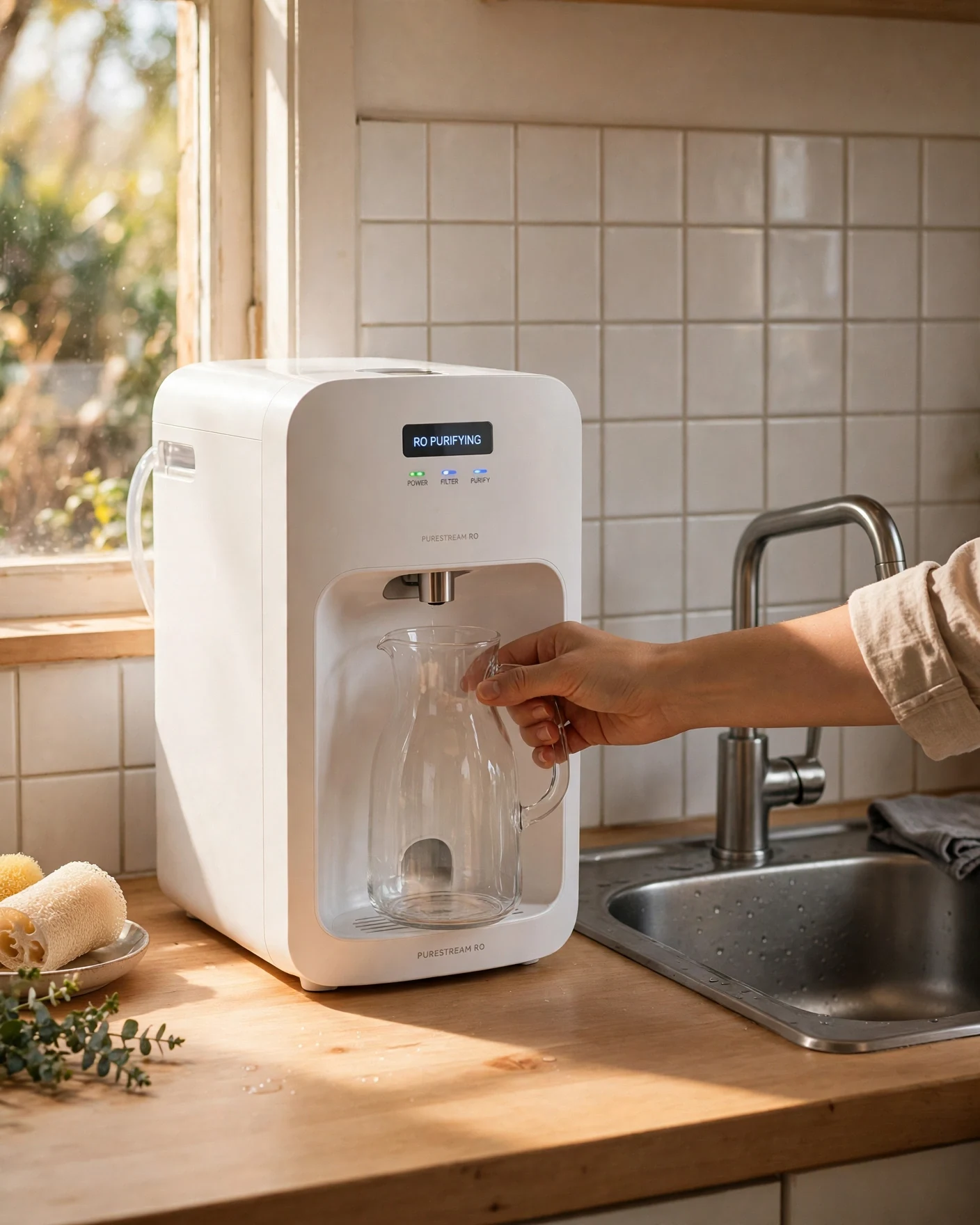
Why you should trust this comparison
We did not receive test units and we did not run lab tests. Claiming hands-on testing we never did would be dishonest, so we will not do it.
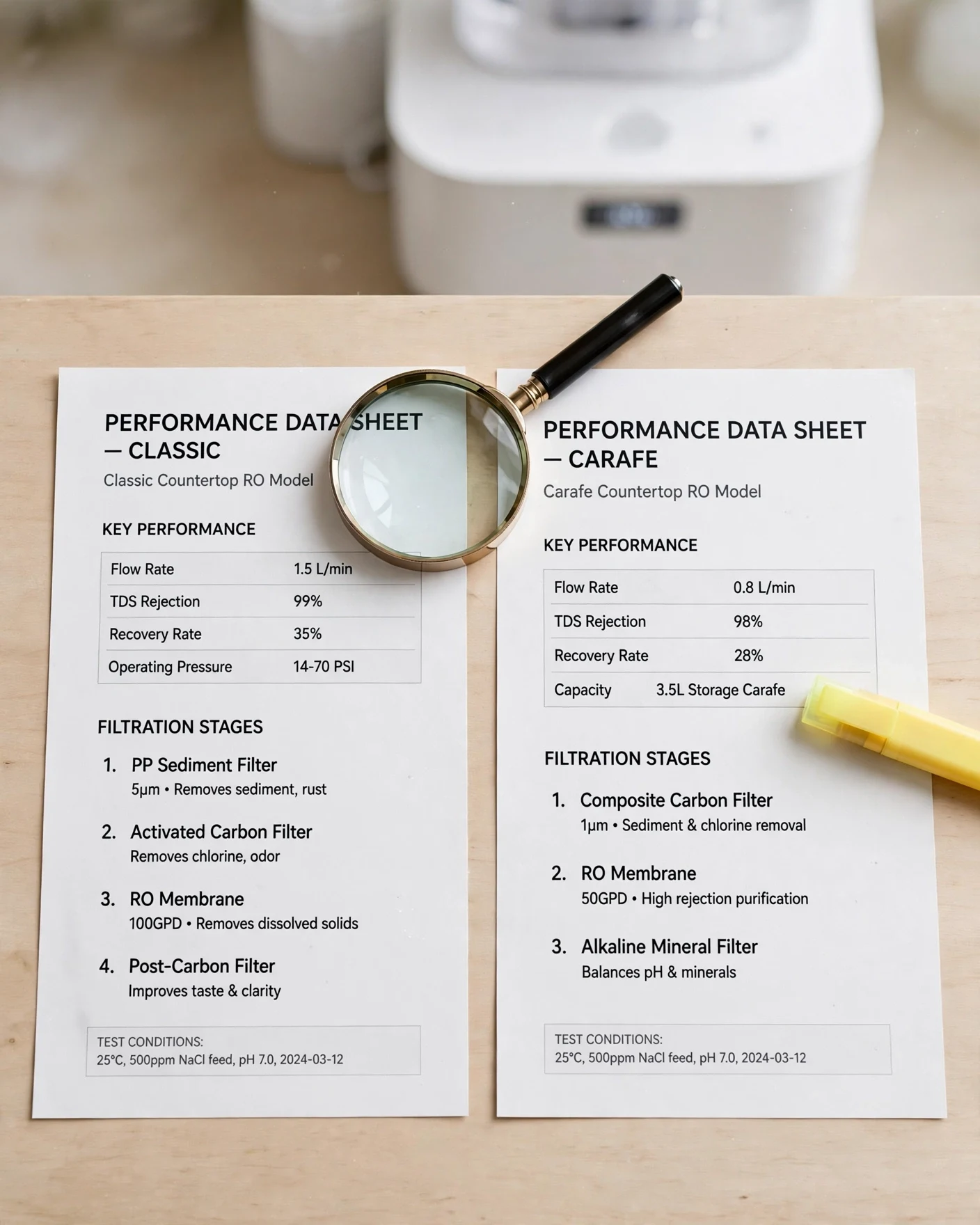
What we did instead was research and comparison: we read the manufacturer’s published Performance Data Sheets for both models, cross-checked certification claims against what independent reviewers found, read owner reviews for the complaints that keep repeating, and ran the replacement-cost math from published filter lives and street prices. Where a claim could not be verified, we say so instead of pretending we checked it.
Certifications: what the papers actually say
Certification is the one place AquaTru genuinely stands out among countertop RO units — and it is worth understanding exactly what the papers do and do not promise. AquaTru publishes IAPMO Performance Data Sheets for its models, and multiple independent reviewers confirm the units were tested by IAPMO to NSF/ANSI 42, 53, 58, and 401, with NSF/ANSI 372 covering the lead content of the wetted parts.
| Standard | What it certifies | Notes |
|---|---|---|
| NSF/ANSI 42 | Aesthetic effects (chlorine taste and odor) | The “does my water taste better” standard |
| NSF/ANSI 53 | Health effects (lead, cysts, certain VOCs) | Includes the lead-reduction claims AquaTru publishes |
| NSF/ANSI 58 | Reverse-osmosis systems | RO-specific performance and materials testing |
| NSF/ANSI 401 | Emerging compounds (pharmaceuticals, certain chemicals) | Covers the “incidental” contaminant list |
| NSF/ANSI 372 | Lead content of wetted materials | This is a materials standard — it certifies the plumbing parts are lead-free, not that the filter removes lead from water |
Two honest caveats. First, AquaTru’s published figures — like the “83 contaminants” on its Performance Data Sheet and its own test numbers for lead, fluoride, and PFAS reduction — are the manufacturer’s claims, corroborated by independent reviewers but not by a lab we hired. Second, we could not query the live IAPMO directory listing from our research tools; confirm its current status at IAPMO’s own directory before treating any certification as the deciding factor. Certification covers only the contaminants in the listing, and only under the lab’s test conditions.
One point is consistent across every source we checked: the Carafe and the Classic carry the same certifications, because the filtration inside is the same. You are not buying extra protection with the Classic — you are buying capacity. To see how AquaTru stacks up against a rival brand’s countertop unit, our Waterdrop K19 vs AquaTru comparison covers that matchup.
Cost per year: the math that matters
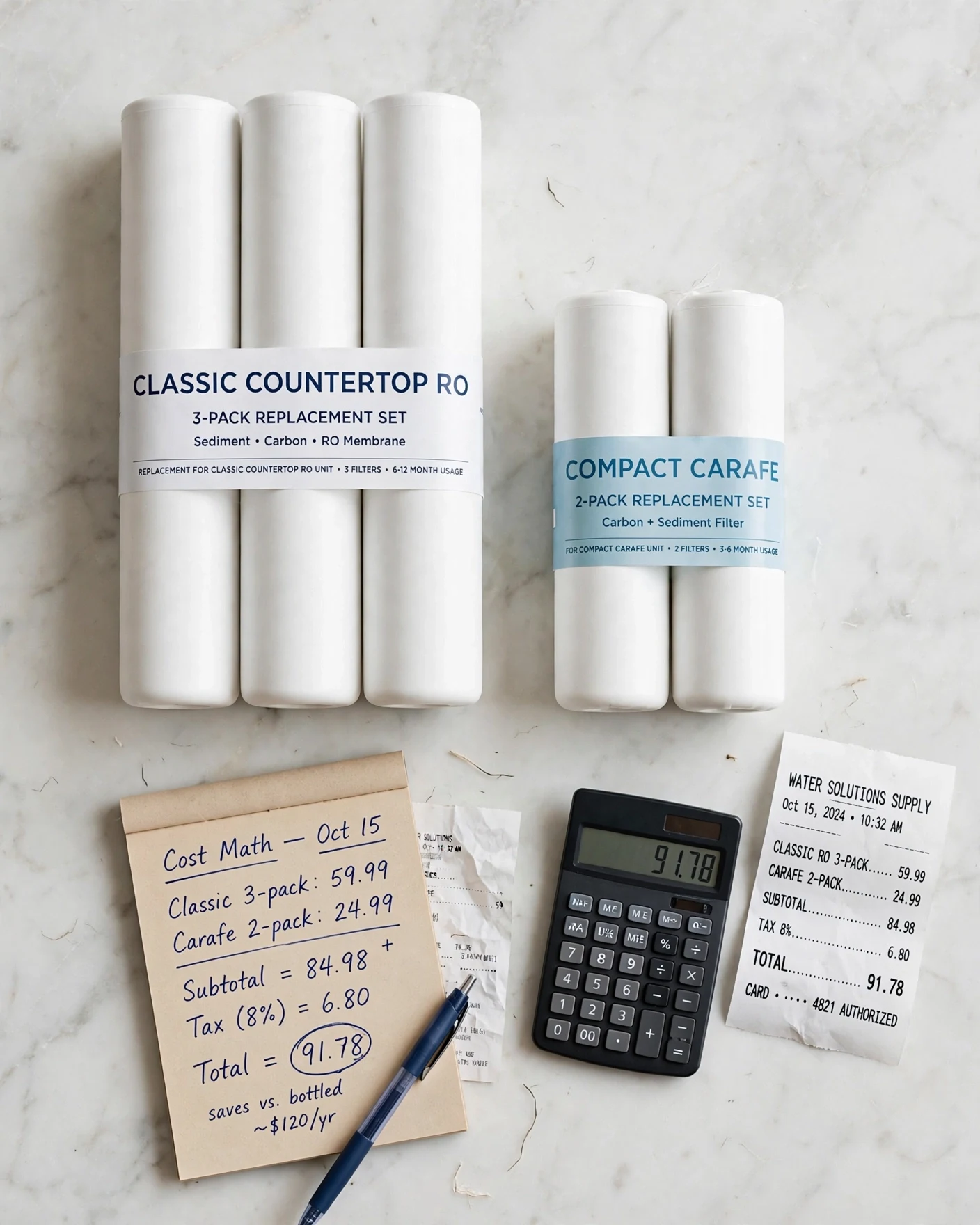
The Classic’s ~$100 higher upfront price is the number everyone sees. The number that actually matters is the running cost — and here the Classic wins, because its larger cartridges spread their cost over far more water.
| Item | Classic | Carafe |
|---|---|---|
| Upfront price | ~$449–475 | ~$375–395 |
| Filter changes per year | Fewer (600–1,200 gallon rated lives) | More (smaller cartridges, ~6-month cycle on pre/carbon) |
| Estimated cost per gallon | ~$0.14 | ~$0.29 |
| Estimated annual filter spend | ~$100 | Higher than Classic |
| Break-even vs Carafe | The Classic’s higher upfront cost is recovered through lower running costs within roughly 2–3 years for a household drinking ~1 gallon per day | |
The takeaway: if this is a 1–2 year purchase — a rental, a short-term living situation — the Carafe is cheaper overall, because you will never reach the point where the Classic’s lower running cost catches up. If the unit will sit on your counter for years, the Classic ends up cheaper to own. For a lower-priced option in the same category, our SimPure Y7P review covers a cheaper countertop RO.
What owners complain about
Both models share the same filtration, so they share most of the same complaints. These are the ones that repeat across many owners over many months — not one-off bad experiences.
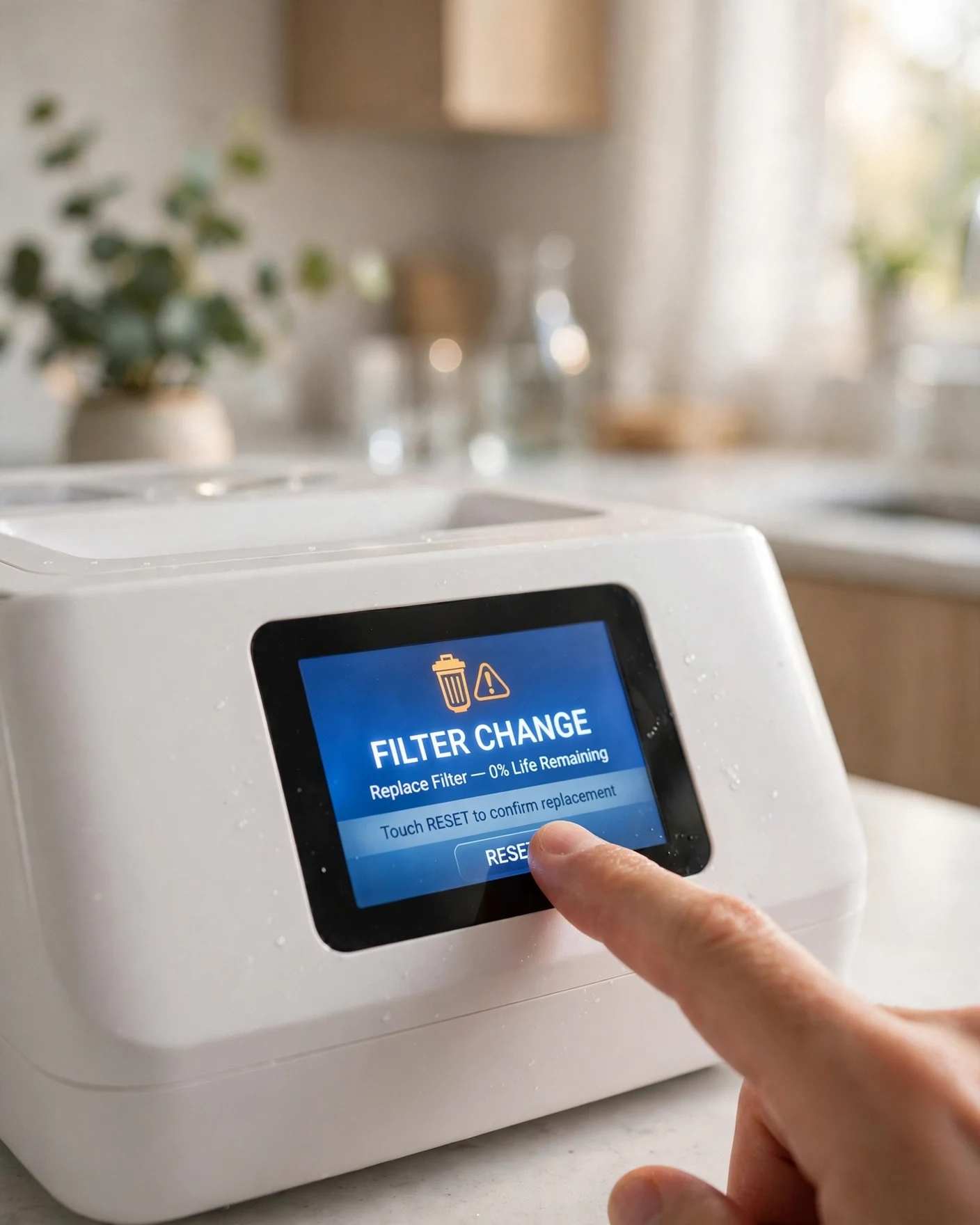
Slow filtration. The most common complaint for both models: filling the tank takes roughly 10–15 minutes per gallon. Plan around it by keeping the tank topped up rather than waiting until it is empty.
Manual tank chores. Neither model connects to plumbing — the trade-off is you fill the rear tap-water tank and empty the reject-water tank by hand. Reviewers consistently call this the real daily friction of owning either unit.
Plastic contact on the Classic. The Classic’s clean-water tank is BPA-free plastic, and some owners do not love drinking water that sat in plastic. The Carafe’s glass carafe means no post-filter plastic contact — its single biggest qualitative advantage.
Flat, demineralized taste. RO strips minerals along with contaminants, so the water can taste flat. AquaTru’s optional alkaline remineralization filter adds minerals back — a taste preference upgrade only, not a health claim.
Filters are not interchangeable. Classic cartridges do not fit the Carafe and vice versa — double-check the model on the box before ordering replacements.
None of these are hidden gotchas; most are inherent to countertop RO as a category. For more owner feedback on the smaller unit, our AquaTru Carafe review digs deeper.
Which should you buy?

Buy the Carafe if
- You have a small kitchen or rent — the narrow footprint fits where the Classic will not.
- You prefer glass over plastic — the 64-ounce glass carafe means no post-filter plastic contact, and it fits in the fridge.
- You want the lower upfront price — roughly $100 less than the Classic (estimates), which wins if you may move within a couple of years.
Buy the Classic if
- Your household drinks a gallon or more a day — the 0.75-gallon tank and push-button dispenser are built for that volume.
- You want the lowest long-term cost — roughly half the cost per gallon of the Carafe, with fewer filter changes per year.
- You plan to keep the unit for years — the running-cost advantage compounds over a long ownership period.
Price checked at time of writing; it changes often — see the live price before you buy.
Price checked at time of writing; it changes often — see the live price before you buy.
If you are weighing the Classic against the brand’s own product line in more depth, our AquaTru Classic review covers the bigger unit on its own.
How we researched
- Compared the manufacturer’s Performance Data Sheets — the AquaTru Classic (AT2000-series) sheet documents filter lives (600 / 600 / 1,200 gallons), inlet water limits, and the IAPMO certification statement; the Carafe sheet documents its 64-ounce glass carafe and filter schedule (roughly 6 months / 2 years / 1 year per AquaTru).
- Checked certification claims against independent coverage — multiple reviewers confirm IAPMO testing to NSF/ANSI 42, 53, 58, and 401, plus NSF/ANSI 372 for lead-free wetted materials. The live IAPMO directory listing itself was not re-queryable from our research tools, so re-confirm it there before relying on the listing for a purchase decision.
- Read owner reviews across both models — looking for recurring complaints mentioned by many owners over many months, not one-off bad experiences.
- Calculated yearly running costs — from published filter life ratings and street filter prices, with third-party cost-per-gallon estimates for both models.
FAQs
What is the main difference between the AquaTru Classic and the Carafe?
Not the filtration — both use the same 4-stage reverse-osmosis system with the same certifications. The differences are capacity, footprint, and cost: the Classic has a 0.75-gallon plastic tank with a push-button dispenser, costs more upfront (around $449–475 estimated), and runs cheaper per gallon; the Carafe uses a 64-ounce glass carafe, has a smaller footprint, costs less upfront (around $375–395 estimated), and costs more per gallon to run.
Do the Classic and Carafe remove the same contaminants?
Effectively yes. Both models are built around the same 4-stage reverse-osmosis technology and carry the same IAPMO certifications (NSF/ANSI 42, 53, 58, and 401 per AquaTru’s published Performance Data Sheets). Independent reviewers measured nearly identical contaminant reduction from both. Choose based on capacity and running cost, not filtration performance.
Are the Classic and Carafe filters interchangeable?
No. Each model uses its own cartridge set — the Classic’s larger 600/600/1,200-gallon-rated filters do not fit the Carafe, and the Carafe’s cartridges do not fit the Classic. Always match the replacement set to your exact model before ordering.
How much does it cost per year to run each model?
Estimates from a third-party reviewer put the Classic at roughly $0.14 per gallon (around $100 per year) versus roughly $0.29 per gallon for the Carafe, because the Classic’s larger cartridges last longer. The Carafe’s lower upfront price wins for short-term ownership; the Classic’s lower running cost wins over several years of heavy use. All figures are estimates — re-check live filter prices before buying.
Do the AquaTru Classic or Carafe remineralize the water?
Not as standard. Like all reverse-osmosis systems, both models strip dissolved minerals along with contaminants, so the water can taste flat. AquaTru offers an optional alkaline remineralization filter that adds minerals back for taste — treat it as a flavor preference, not a health upgrade.
Do either model need plumbing or installation?
No. Both are countertop units: they plug into a standard 120V outlet and you fill the rear tap-water tank by hand. The trade-off is manual chores — refilling the tap-water tank and emptying the reject-water tank — which reviewers consistently name as the main daily friction of owning either model.
Which model is better for a small kitchen?
The Carafe. Its narrow footprint fits small counters and apartments where the taller Classic will not, and its 64-ounce glass carafe doubles as a fridge-friendly serving pitcher. The Classic is the better fit for larger households with more counter space.
Can I use an AquaTru with hard water or well water?
Only within limits. AquaTru’s Performance Data Sheet specifies a maximum hardness of 10 grains per gallon (171 mg/L) and TDS of 1,500 mg/L; harder water needs softening first. Private well or unknown-quality water should be tested and appropriately treated first, since heavy sediment or microbiological contamination will foul the membrane and shorten its life.
Conclusion
The AquaTru Classic and the AquaTru Carafe are the same filter wearing two different bodies. If most buying guides pick the Carafe, it is because most kitchens are small and most people prefer glass to plastic — not because it filters better. But if your household runs through a gallon of water a day and the unit will stay put for years, the Classic’s larger tank and roughly half-price running cost make it the smarter buy. Match the machine to your kitchen and your habits, and either choice is a good one.
Price checked at time of writing; it changes often — see the live price before you buy.
Update log
- Zulqarnain: Review published.