Best Water Filter Pitcher For Well Water (2026): Top Picks
★ HONEST WELL-WATER PICKSYour well water smells faintly metallic or leaves orange rings in the sink, and every “best pitcher for well water” roundup recommends a regular Brita like nothing is different about your water. But well water is not city water. Nobody chlorinates it, nobody tests it for you, and iron, sediment, hardness, bacteria, and nitrates are all fair game. A pitcher that is perfect for municipal tap water can be completely wrong for yours.
Here is the honest answer before the picks: a pitcher is only ever a stopgap on well water. Standard carbon pitchers are designed for treated municipal water — Brita itself says its pitchers are not designed for untested well water — and the EPA and CDC are clear that private wells are your responsibility to test. The highest-stakes well problems, bacteria and nitrates, are things most pitchers do not address at all. So this roundup ranks the best pitchers only for the narrow case where a pitcher makes sense — taste and odor on well water that is already tested and clean — and tells you plainly when the real answer is a whole-house or under-sink system instead.
The bottom line: the Brita Elite 10-cup is our best overall pitcher for well water — the widest certification coverage (brand-stated NSF/ANSI 42 and 53, including lead, per Brita’s OB06 Performance Data Sheet) and a 120-gallon cartridge changed only twice a year. The Brita Everyday 10-cup is the budget pick (~$28–30). The ZeroWater 10-cup is our specific-needs pick — near-zero TDS taste on already-treated well water — but it is expensive to run on high-TDS water.
Verdict: none of these removes iron, bacteria, nitrates, or hardness. Test your well water first; buy a pitcher only if the test says taste and odor are your only problems.
Table of Contents
Quick picks: top 3
Top 3 quick picks
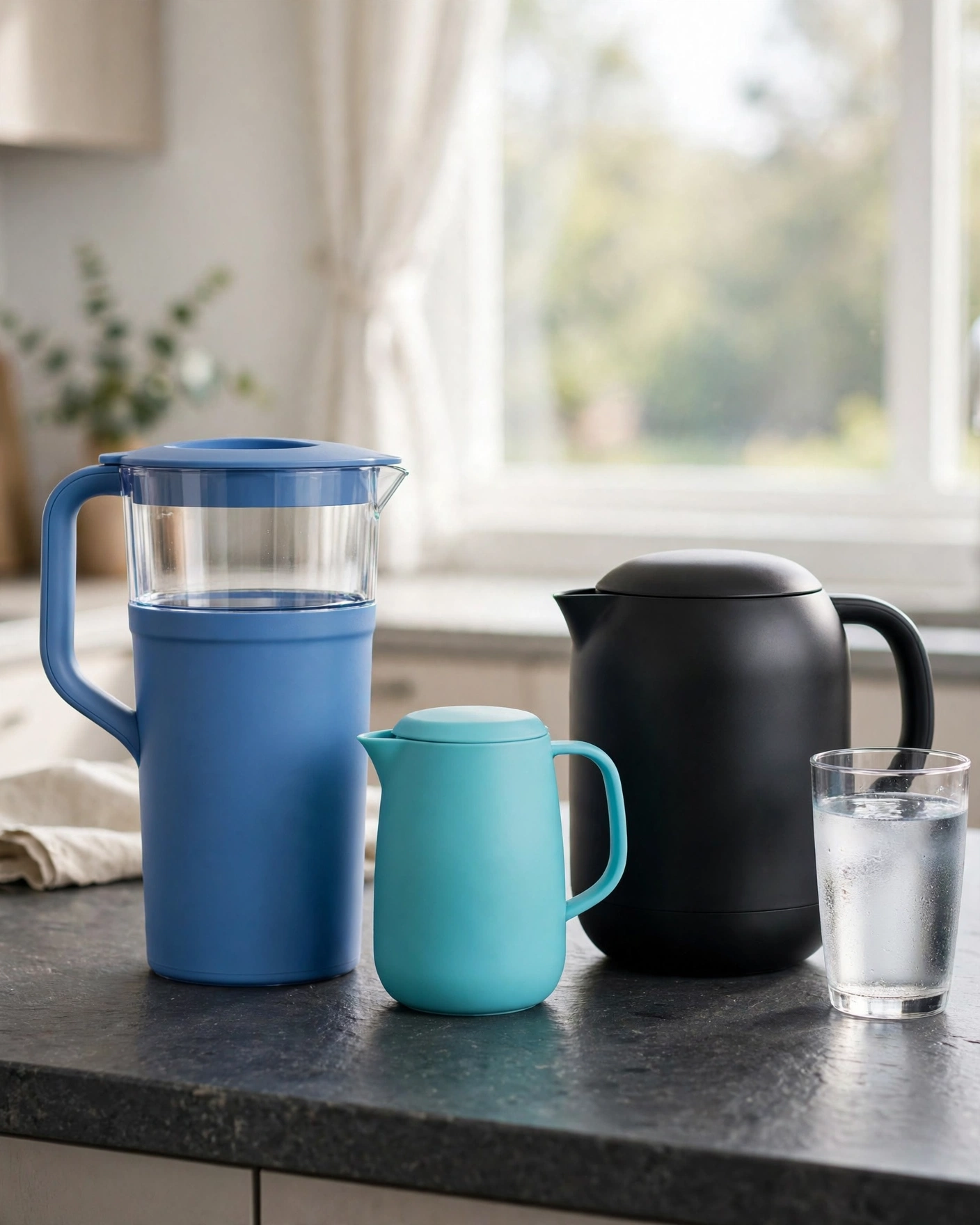
- Best overall — Brita Elite 10-cup (~$35–41). Brand-stated NSF/ANSI 42 and 53 including lead (Brita’s OB06 Performance Data Sheet); 120-gallon / ~6-month cartridges; two changes a year.
- Best budget — Brita Everyday 10-cup (~$28–30). Standard filter rated 40 gallons / ~2 months; chlorine taste and odor only; the cheapest honest taste fix.
- Best for specific needs — ZeroWater 10-cup (~$35–44). Brand-stated 5-stage filtration targeting near-zero TDS, with a TDS meter in the box; for high-mineral taste on already-treated water.
The catch — read this first
- None of these handles iron, bacteria, nitrates, or hardness. If your well has any of those, a pitcher is the wrong category — test first, then match the treatment to the test.
- Well water eats filters faster. Sediment and minerals shorten every rated filter life here; high-TDS water can burn through ZeroWater resin in weeks.
- All dollar figures are estimates. Prices change constantly — check the live price before you buy.
How we researched

We did not test any pitcher in a lab or run well water through one. Claiming hands-on testing we never did would be dishonest, so here is exactly what we did:
- Compared spec sheets across four pitcher models — the Brita Elite, Brita Everyday, PUR PLUS, and ZeroWater — against the realities of well-water problems (iron, sediment, hardness, bacteria, nitrates).
- Read certification documents and public guidance — Brita’s published Performance Data Sheet for the Elite OB06 filter, the CDC’s private-well testing pages, and brand-stated claims, with a standing instruction to check any certification at info.nsf.org before you buy. Brand-stated is not the same as independently certified.
- Checked what already ranks — most roundups (one typical example lists LifeStraw Home, Nakii, ZeroWater, Clearly Filtered, and LEVOIT for well water) recommend standard pitchers with no well-water caveat at all. That missing caveat is this article’s reason to exist.
- Read hundreds of owner reviews thematically — looking for the complaints that repeat across many owners and many months (black carbon specks, short filter life in hard/mineral water), not one-off bad days.
- Ran the replacement-cost math — from rated filter life and current retail replacement prices, all labeled as estimates.
We also refused to publish three things we considered: “best pitcher for iron removal” (no pitcher here carries an iron-reduction certification — dropped as unverified), “pitchers remove bacteria or nitrates” (dropped — most pitchers do not address these), and exact percentage-reduction claims without a certification document behind them. What survives that filter is what you read below.
Best overall
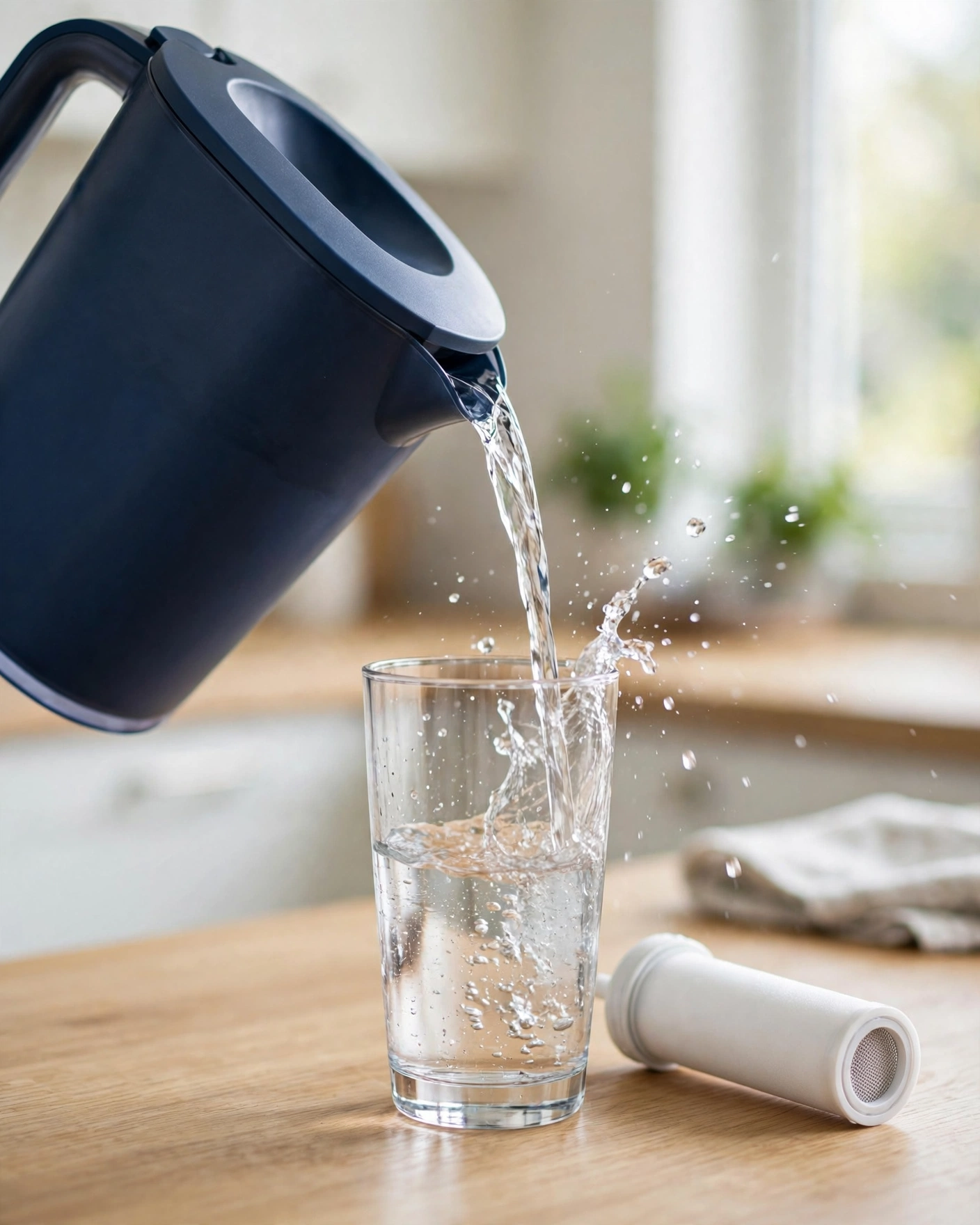
Brita Elite 10-cup pitcher — ~$35–41
The Elite is the strongest-certified mainstream pitcher you can buy, which is exactly what well-water drinkers should want in a stopgap. Per Brita’s published Performance Data Sheet for the Elite OB06 filter, it is listed for NSF/ANSI 42 and 53 reductions including lead — the brand-stated certification coverage that matters most when your water supply has no utility looking after it. Brand-stated is not “certified,” so look the exact listing up yourself at info.nsf.org before buying.
The other reason it leads this list: the 120-gallon / ~6-month cartridge means about two filter changes a year instead of six. On well water that matters, because the most common way well-water owners burn money on pitchers is running exhausted cartridges — a filter you replace twice a year is one you are more likely to actually replace.
Now the honesty part. The Elite does not remove iron, does not remove bacteria, does not remove nitrates, and does not soften hardness. Iron-rich well water will also foul the cartridge faster than the 120-gallon rating assumes — heavy sediment loads clog cartridges sooner than any lab number. Like every Brita pitcher, it is designed for treated water: Brita says its pitchers are not meant for untested water, and bacteria can grow in under-maintained carbon filters. Buy it only for a well that has already passed a lab test with taste and odor as the only complaint — for a deeper dive, see our dedicated Brita Elite pitcher review.
Pros
- Widest certification coverage in this lineup — brand-stated NSF/ANSI 42 and 53 including lead.
- 120-gallon cartridges — roughly two changes a year, fewer chances to run an exhausted filter.
- Filter-change indicator on the lid tells you when the cartridge is due.
- Replacements everywhere — stocked at most big-box retailers and online.
Cons
- No iron, bacteria, nitrate, or hardness removal — the wrong tool if your lab test shows any of those.
- Costs more upfront and per filter than the basic Brita.
- Black carbon specks in the first pitchers from a fresh filter — rinse per the setup instructions.
Price checked at time of writing — see the live price before you buy.
Best budget

Brita Everyday 10-cup pitcher — ~$28–30
If your well test came back clean and your only complaint is a faint taste or smell, you do not need to spend more. The Everyday uses Brita’s standard filter — rated about 40 gallons / ~2 months — and it handles chlorine taste and odor fine. That is all it does, and at this price, all it needs to do.
The well-water caveats hit this one hardest. That 40-gallon rating assumes city water; sediment-heavy well water can clog a standard cartridge well before the 2-month mark, and the lid’s indicator only counts time, not filter condition. If flow slows or taste turns “off,” the cartridge is done regardless of the indicator. This is a taste-only product for a tested-clean well — if you have not tested, a pitcher is not your next purchase. Our broader best water filter pitcher roundup covers the whole category, and a dedicated Brita Everyday review is on the way.
Pros
- Lowest entry price in this roundup — cheap to try, cheap to abandon.
- Does the one job it claims: chlorine taste and odor reduction.
- Replacement filters are inexpensive in multi-packs.
Cons
- 40-gallon rating is fragile on well water — sediment clogs it early.
- Six filter changes a year if you use the full schedule.
- No certified contaminant coverage beyond taste and odor — nothing for metals or microbes.
Price checked at time of writing — see the live price before you buy.
Best for specific needs
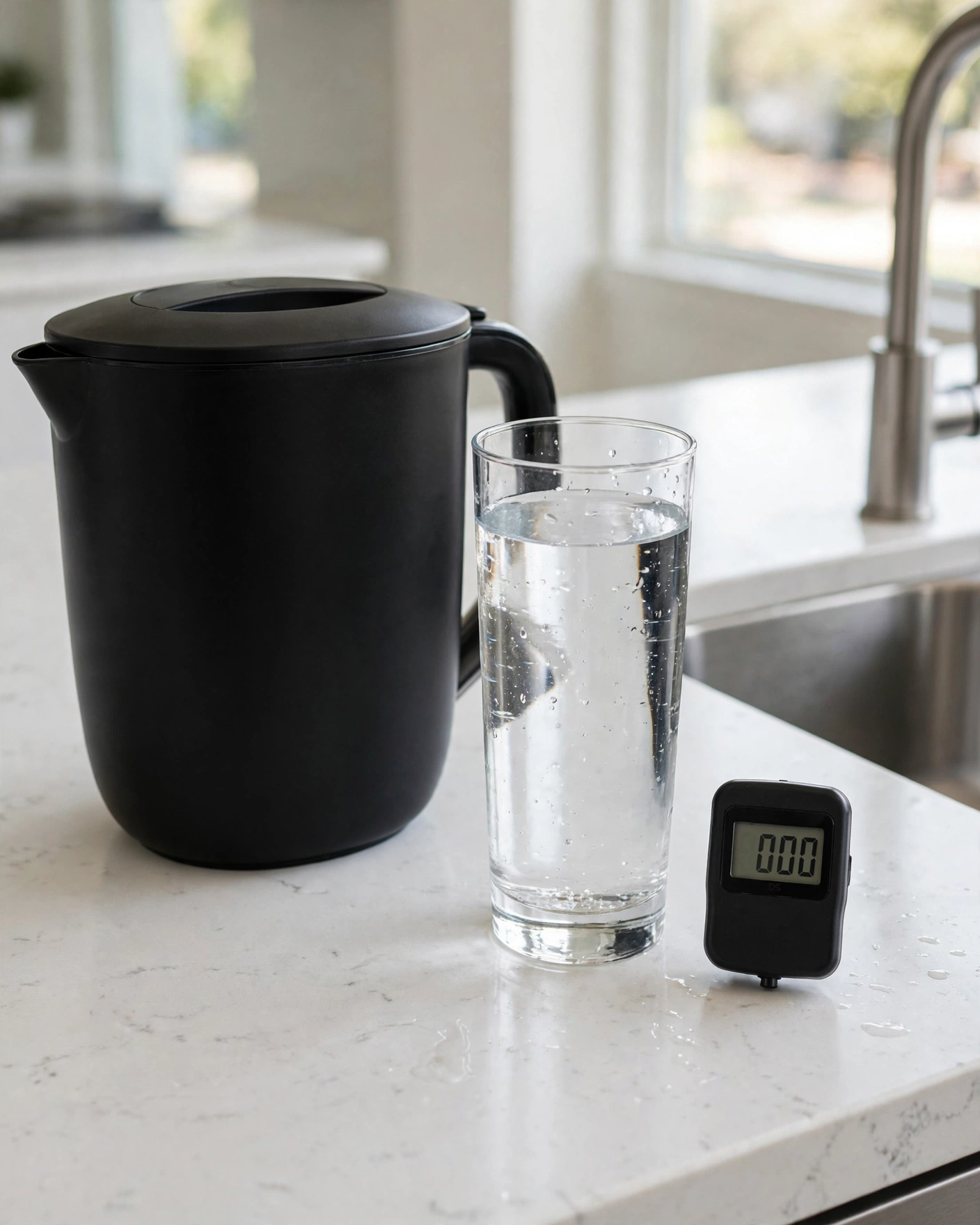
ZeroWater 10-cup pitcher — ~$35–44
This pick is for one specific scenario: your water is already treated and tested clean, but it tastes chalky or mineral-heavy and you want water that tastes almost like nothing. ZeroWater’s brand-stated 5-stage filter combines carbon and ion-exchange resin to bring total dissolved solids down to near zero, and it ships with a TDS meter so you can see the number yourself. That is a taste goal, not a safety goal — and the brand-stated framing is deliberate.
The honesty part is the filter cost. Ion-exchange resin does not negotiate with high-TDS water: in 200+ TDS areas, owners report filters lasting weeks, not months (15–25 gallons per filter is the recurring owner theme). On well water — which commonly runs high in dissolved minerals — that makes this the most expensive pitcher here to live with. A third-party estimate puts yearly ZeroWater filter spend at $240–960 for 40–160 gallons/month — an estimate, and your number depends on your water. And to be explicit: this is not an iron, bacteria, nitrate, or hardness solution.
One honest honorable mention: the PUR PLUS 11-cup pitcher (~$38–44) carries brand-stated NSF/ANSI 42, 53, and 401 claims on its CRF-950Z lead filter — worth checking at info.nsf.org if you want certified-value coverage on a 40-gallon / ~2-month cycle. It sits in the comparison table below.
Pros
- Near-zero TDS taste (brand-stated) — the cleanest-tasting water in this lineup.
- TDS meter included — you can see when the resin is actually exhausted.
- Good for mineral-taste issues on already-treated, tested-clean well water.
Cons
- Resin exhausts fast on high-TDS water — weeks, not months, per owner reports.
- Highest yearly filter cost by far on well water — see the math below.
- Sour/fishy taste when spent — a TDS meter is effectively mandatory.
Price checked at time of writing — see the live price before you buy.
Comparison table
Rows below are published specs and brand-stated certifications, re-checked by our verifier. Anything without a certification document behind it is not on this page.
| Brita Elite | Brita Everyday | PUR PLUS | ZeroWater | |
|---|---|---|---|---|
| Typical pitcher price | ~$35–41 | ~$28–30 | ~$38–44 | ~$35–44 |
| Filter rated life | 120 gal / ~6 months | 40 gal / ~2 months | 40 gal / ~2 months | TDS-dependent |
| Filters per year | ~2 | ~6 | ~6 | Varies widely |
| Certifications (brand-stated) | NSF/ANSI 42 & 53 incl. lead | Taste & odor | NSF/ANSI 42, 53 & 401 | 5-stage, near-zero TDS |
| Removes iron / bacteria / nitrates? | No / No / No | No / No / No | No / No / No | No / No / No |
| Softens hard water? | No | No | No | No |
| Estimated yearly filter cost | ~$36–50 | ~$23–45 | ~$50–70 | ~$40–960 (see below) |
| Best for | Certified coverage + fewest changes | Taste-only on a budget | Certified-value alternative | Near-zero TDS taste |
Every price and cost figure on this page is an estimate from retail listings at time of writing — prices change constantly. Certification claims are brand-stated from manufacturer documents; “brand-stated” is not “certified,” so verify the exact model at info.nsf.org before buying for any specific contaminant.
Buying guide
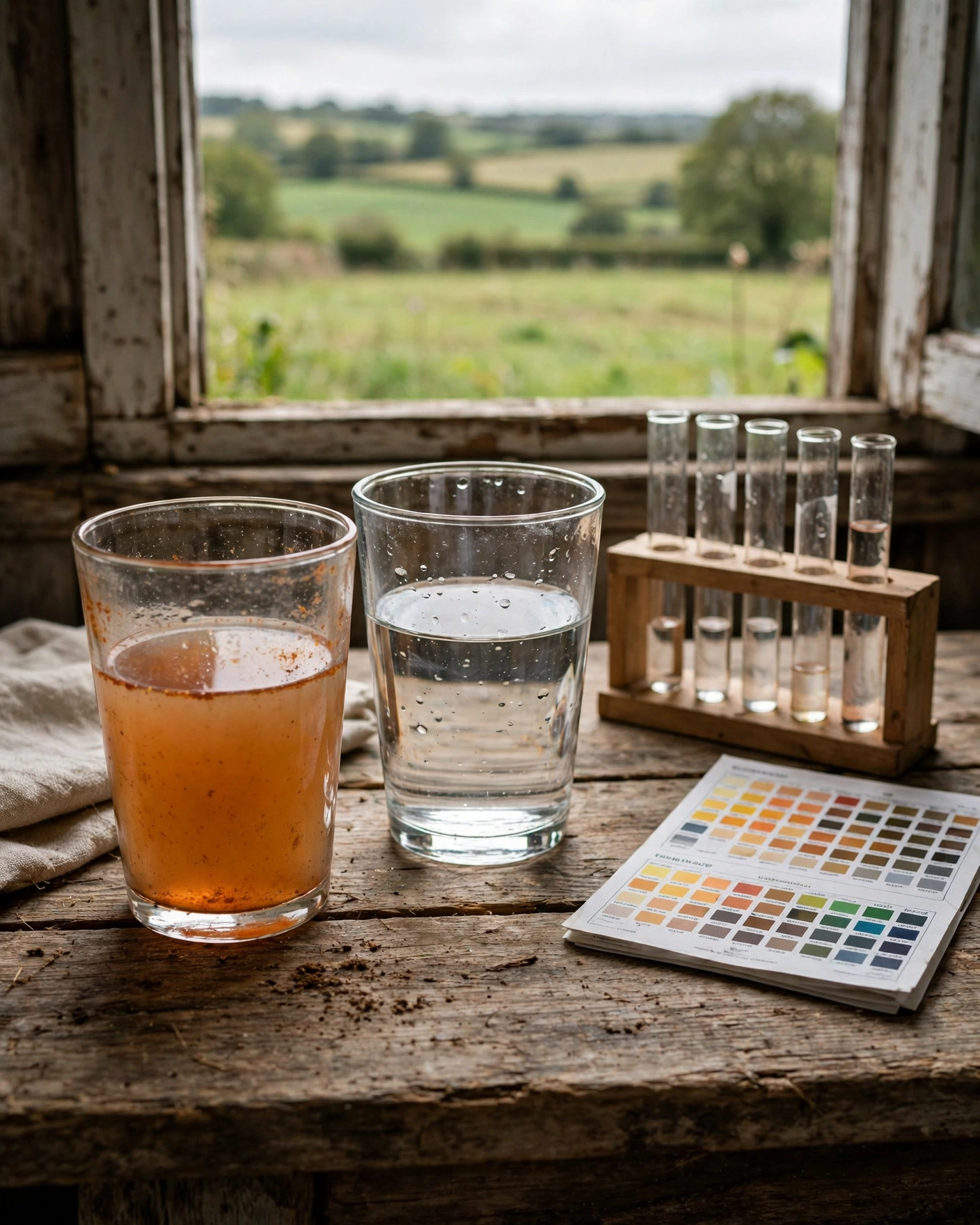
Buying a pitcher for well water without a lab test is buying blind. Roughly 13% of U.S. households — about 42 million people — rely on private wells (U.S. Geological Survey figures cited in Epic Water Filters’ well-water guide), and private wells are not covered by EPA drinking-water rules. The CDC says it plainly: your well is your responsibility — test it at least once a year for coliform bacteria, nitrates, and other local concerns.
Step 1: Get a lab test, not a guess
Order a certified lab test for your well — total coliform bacteria, nitrates, pH, TDS, iron, hardness, and anything your local health department flags. Do this before buying anything. As Epic Water Filters’ own well-water guide puts it: “A standard carbon water filter pitcher is not the right primary treatment for untested well water… Test your well through a certified lab first, then match the treatment to what you find.” The CDC’s top outbreak causes in private wells — Hepatitis A, Giardia, Shigella, and E. coli O157:H7 — remind you that the scariest well problems are microbial, and no pitcher on this page disinfects. A softener, a sediment cartridge, and a carbon pitcher do not disinfect, full stop.
Step 2: Match the treatment to the test
- Iron, sediment, or sulfur smell → whole-house system. An iron filter, sediment pre-filter, or oxidizing treatment at the point of entry. A pitcher cannot fix iron stains or rotten-egg water, and iron fouls pitcher cartridges fast.
- Bacteria or coliform positive → disinfection. UV, chlorination, or another point-of-entry disinfection method per your health department — not a pitcher, not a carbon cartridge.
- Nitrates elevated → RO or nitrate-specific treatment. Nitrates are a health concern, especially for infants, and standard pitchers do not remove them. An under-sink reverse osmosis system is the common residential answer.
- Hardness → softener or conditioner. Pitchers do not soften water; that is a softener’s job.
- Only taste and odor, everything else clean → a pitcher is fine. This is the narrow case this roundup exists for. Pick the Elite for certified coverage, the Everyday for budget, or the ZeroWater for near-zero TDS taste.
Renters and apartment dwellers on well water face the same rules — a lab test is still step one. Our apartment pitcher guide covers the compact picks if the test gives you a clean result, and our Brita Stream review covers one more fast-filter option for taste-only households.
Step 3: If you do buy a pitcher, run it like it matters
- Change filters on schedule or sooner. Well-water sediment shortens rated life — if flow slows or taste changes, the cartridge is done regardless of the indicator.
- Keep it cold and clean. Bacteria can grow in under-maintained carbon filters — refrigerate the pitcher and wash it regularly.
- Retest yearly. One clean test does not mean forever — wells change.
Replacement cost math
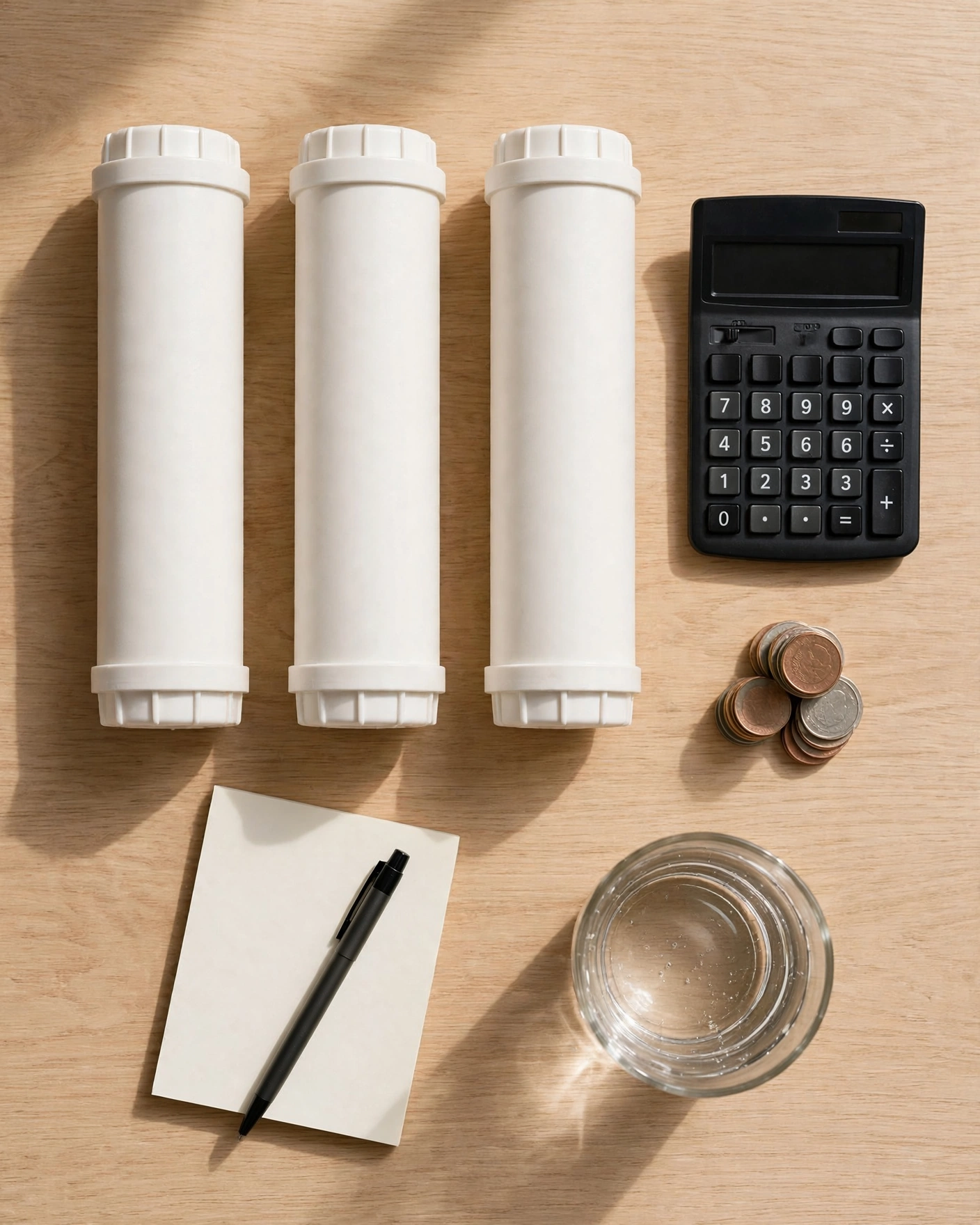
The sticker price is the least important number here. On well water the real cost is the filter treadmill — sediment and dissolved minerals wear cartridges out faster than city-water ratings assume:
| Brita Elite | Brita Everyday | PUR PLUS | ZeroWater | |
|---|---|---|---|---|
| Pitcher (upfront, est.) | ~$35–41 | ~$28–30 | ~$38–44 | ~$35–44 |
| Filter rated life | 120 gal / ~6 mo | 40 gal / ~2 mo | 40 gal / ~2 mo | TDS-dependent |
| Filters per year | ~2 | ~6 | ~6 | ~4–24 on high-TDS water |
| Replacement price | ~$18–25 each | ~$15–30 per 3–6 pack | ~$25–35 per 3-pack | ~$40–55 per 4-pack |
| Estimated yearly filter cost | ~$36–50 | ~$23–45 | ~$50–70 | ~$40–960* |
*ZeroWater’s range is this wide because resin life depends entirely on your water’s TDS. A third-party estimate (techgearlab) puts yearly ZeroWater filter spend at $240–960 for 40–160 gallons/month of high-TDS usage — an estimate, not a quote. All other figures are estimates from retail listings at time of writing; well water shortens every rated life above.
Two things jump out. First, the Elite’s long cartridge is the only one here that stays cheap to run — about two changes a year. Second, ZeroWater on high-TDS well water can cost more in a year of filters than a basic under-sink system costs to buy. If your TDS is high, do the math twice: once for the pitcher, once for a proper system. Our cost comparisons across categories live in the main pitcher guide.
FAQs
Can a water filter pitcher make well water safe to drink?
No — not by itself. Standard pitchers are designed for treated municipal water, and Brita’s own guidance says its pitchers are not meant for untested water. Private wells can carry bacteria, nitrates, iron, and other contaminants that pitchers do not remove, so a pitcher only makes sense as a final taste-and-odor step after a lab test has come back clean and the real problems (if any) are handled by proper treatment.
Do pitcher filters remove iron from well water?
No. None of the pitchers in this roundup — Brita Elite, Brita Everyday, PUR PLUS, or ZeroWater — carries an iron-reduction certification, and iron-rich water will foul their cartridges faster than the rated life. Iron needs point-of-entry treatment (an iron filter, sediment pre-filter, or oxidizing system), not a pitcher.
Will a pitcher remove bacteria or nitrates from my well water?
No. The highest-stakes well-water problems — bacteria and nitrates — are things most pitchers do not address at all. A softener, a sediment cartridge, and a carbon pitcher do not disinfect. Bacteria needs point-of-entry disinfection (UV or chlorination, per your health department); nitrates need RO or nitrate-specific treatment.
What should I do before buying any filter for my well?
Get a certified lab test. The CDC recommends testing private well water at least once a year for coliform bacteria, nitrates, and other local concerns — and your well is your responsibility because private wells are not covered by EPA drinking-water rules. Match the treatment to the test results; only buy a pitcher if taste and odor are your only problems.
When is a pitcher actually enough for well water?
When a lab test shows your water is free of microbial, iron, nitrate, and hardness problems and your only complaints are taste and odor. That is the narrow case this roundup covers: the Brita Elite for the widest certification coverage, the Brita Everyday for budget taste-only filtering, or the ZeroWater for near-zero TDS taste.
Why does my pitcher filter run out so fast on well water?
Sediment and dissolved minerals clog cartridges faster than lab ratings assume — every rated filter life on this page was measured on relatively clean municipal water. On well water, watch for slower flow or changed taste rather than trusting the calendar, and expect ZeroWater resin in particular to exhaust in weeks rather than months at high TDS.
What system do I need instead if my well has iron or bacteria?
A whole-house or point-of-entry system, not a pitcher. Iron and sediment typically need an iron filter or sediment pre-filter at the point of entry; bacteria needs disinfection (UV or chlorination) following your health department’s guidance; hardness needs a softener; nitrates usually need reverse osmosis. A pitcher can sit at the end of that chain for taste — it cannot be the chain.
Conclusion
Here is the whole article in one paragraph: test your well water through a certified lab first. If the test finds iron, bacteria, nitrates, or hardness, a pitcher is the wrong purchase — buy a whole-house or under-sink system instead. If the test comes back clean and you just want better-tasting water, the Brita Elite is our best overall pick, the Brita Everyday the best budget pick, and the ZeroWater the right pick for near-zero TDS taste. A pitcher is a good final polish for good water. It was never meant to make bad water good.
Price checked at time of writing — see the live price before you buy.
Update log
- Zulqarnain: Review published.