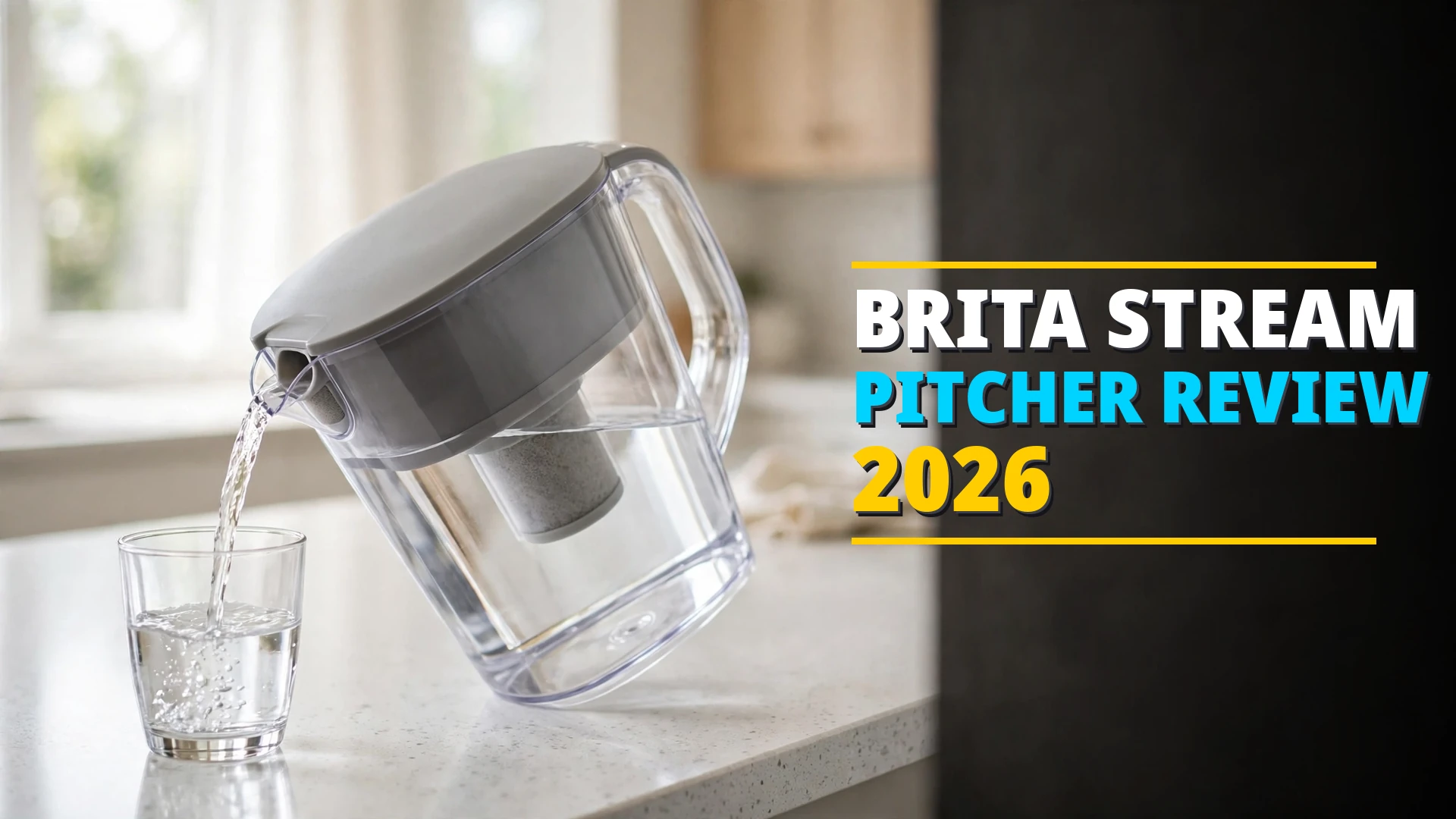

Brita Stream Pitcher Review (2026): Is It Worth It?
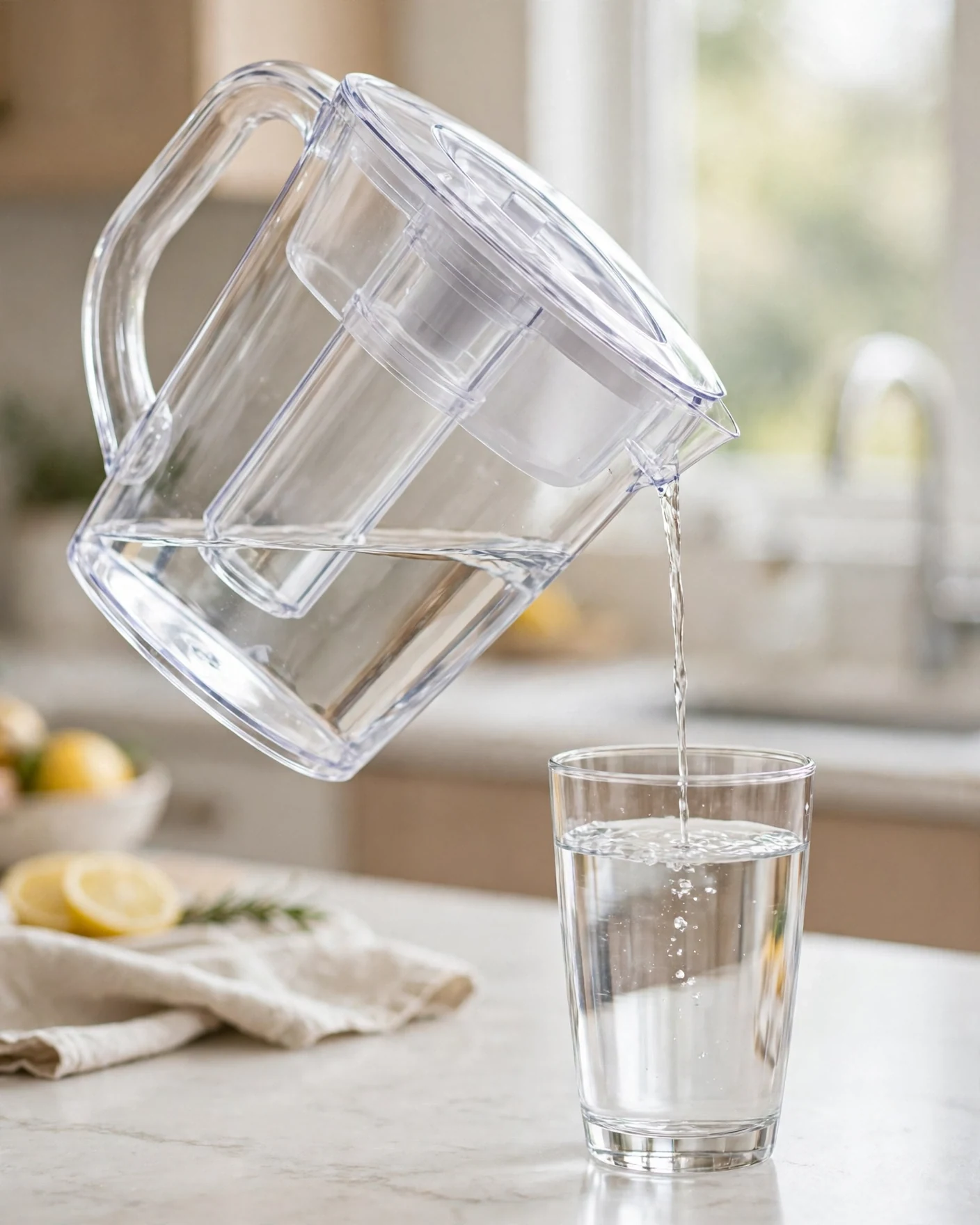
★ FILTER-AS-YOU-POUR REVIEWYou love the idea of a Brita pitcher but not the waiting. Fill the reservoir, wait five minutes while water drips through, pour, repeat — that routine gets old fast when the whole family wants a glass. The Brita Stream promises to fix exactly that annoyance: it filters as you pour, so the glass fills in seconds instead of minutes.
So is it worth it? The honest answer: the Stream is Brita’s speed champion, and it is genuinely better at one thing — convenience — than every other Brita pitcher. But speed costs you filtration depth. The Stream’s narrow, fast-flow filter is only certified for chlorine taste and odor plus particulates; it carries no lead reduction claim at all, and its filter life is the shortest of the Brita family. This review lays out what the Stream is certified to do, what it costs to run for a year, and who should buy it versus who should pick a regular Brita instead.
Our scores
Table of Contents
Bottom line
The bottom line: the Brita Stream pitcher is the fastest-feeling Brita you can buy — it pours a glass of filtered water in seconds because the small StreamFilter sits in the spout and filters as you pour. But that speed comes with real trade-offs: the certified contaminant list is the narrowest in the Brita pitcher family (chlorine taste/odor and particulates, nothing for lead), and the filter needs replacing every 40 gallons or about 2 months.
Verdict: worth it for impatient pourers who only want better-tasting water fast; not worth it if you want certified protection beyond taste.
Price checked at time of writing; it changes often — see the live price before you buy.

How we researched
- Compared the three Brita filter families — Stream, standard (Everyday-style), and Elite — against the same retailer-listed specs, plus PUR PLUS and ZeroWater as outside rivals.
- Checked certification claims against Brita’s own materials and public database listings, always framed as brand-stated or listing-stated, with a standing reminder to self-check any listing at info.nsf.org.
- Read hundreds of owner reviews — across major retail listings, looking for recurring complaints (the same problem mentioned by many owners over many months), not one-off bad experiences.
- Calculated yearly filter-cost math — from rated filter life (gallons and months) and current street prices for Stream replacement filters.
Pros and cons
Pros
- Filtered water in seconds — no reservoir to fill and wait on; pour and drink, which owners call out as the main reason they bought it.
- No filter soaking or prep — the StreamFilter is ready out of the box, unlike standard filters that need a rinse-and-soak routine.
- Good chlorine taste and odor reduction — the one thing owners consistently agree on: tap water tastes cleaner.
- Slim fridge-door fit — the tall, narrow body fits a refrigerator door shelf, where many wider pitchers do not.
Cons
- Narrowest certified contaminant list in the Brita family — no lead reduction claim; this is a taste-and-odor pitcher, not a health-effects filter.
- Short filter life — 40 gallons or about 2 months, the same short cycle as the standard filter, and replacement packs are its own proprietary cartridge.
- Pour slows as the pitcher empties — owners report the flow dropping to a trickle once the water level loses contact with the spout filter, and a last bit of water that will not pour out without removing the lid.
- Filter cover is fiddly — seating and removing the small spout filter takes a little figuring-out the first time.
Certifications (database-checked)
This is the section that matters most for the Stream, because it is where the speed trade-off becomes concrete. The Stream’s filter is small and fast by design, and its certified reduction list is correspondingly short. Per Brita’s brand-stated and retailer-listed materials, the StreamFilter is certified under NSF/ANSI 42 for chlorine taste and odor plus particulate reduction — that is the complete brand-stated list. It carries no NSF/ANSI 53 health-effects certification, which means there is no certified lead, copper, cadmium, or mercury claim on this filter.
| Contaminant | Claimed certification | Source |
|---|---|---|
| Chlorine taste and odor | NSF/ANSI 42 (brand-stated) | Brita / retailer listings |
| Particulates | NSF/ANSI 42 (brand-stated) | Brita / retailer listings |
| Lead, copper, cadmium, mercury | Not claimed | — |
| Fluoride | Not claimed | — |
| PFAS (PFOA/PFOS) | Not claimed | — |
The word to watch for in listings is “compliant” or “conforms to” — that is not the same as “certified”. Before buying for any specific contaminant concern, look up the exact model listing yourself at info.nsf.org, the public NSF database, and confirm the certified reduction list. If lead in older plumbing is your concern, a Stream pitcher is the wrong Brita — the Brita Elite review covers the lead-certified option.
Design and usability
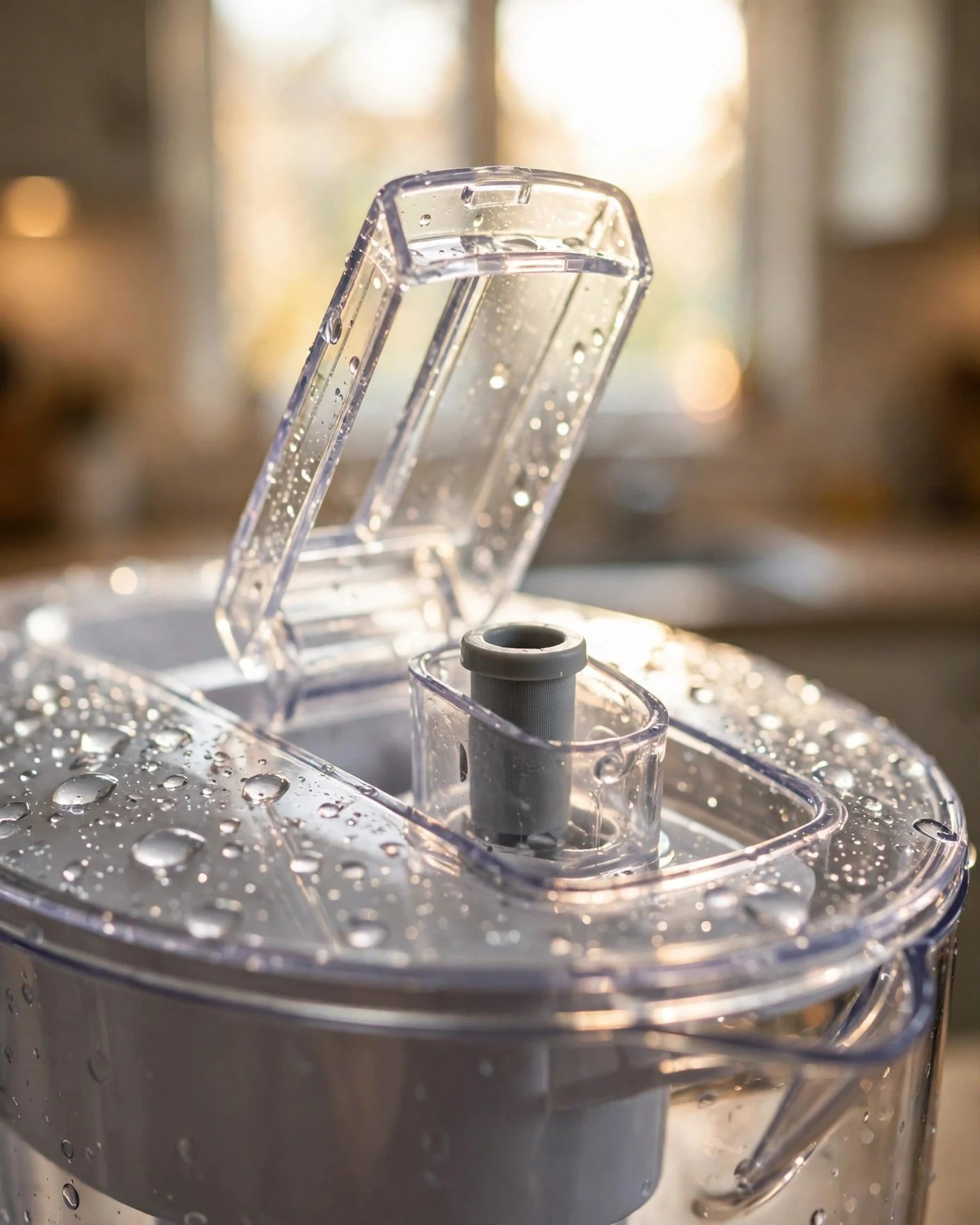
The Stream pitcher looks like a regular pitcher with one crucial difference: there is no top reservoir. The body is one open chamber, and the small cylindrical StreamFilter locks into the spout. You fill the pitcher from the tap, and water only meets the filter as it passes through the spout on the way to your glass. The 10-cup Rapids model — the most common version — is tall and slim enough for a refrigerator door, which owners repeatedly call out as a practical win.
Filling is trivial since the whole pitcher is the reservoir, and the lid’s electronic filter-life indicator tells you when the cartridge is due. One design quirk: because the filter sits up in the spout, water only gets filtered while the level is high enough to touch it — physics, not a defect, and the reason for the number-one complaint in the next section.

If you are comparing against the standard reservoir-style pitcher, our Brita Everyday pitcher review covers the fill-and-wait alternative and its wider certification profile.
Filter cost math
The sticker price is the least important number on this page. What matters is the yearly cost of running the thing, because pitcher filters are a subscription you pay in cartridges:
| Item | Brita Stream | Standard Brita |
|---|---|---|
| Pitcher (upfront) | ~$29–37 | ~$25–31 |
| Filter rated life | 40 gallons / ~2 months | 40 gallons / ~2 months |
| Filters per year | ~6 | ~6 |
| Replacement filter price (each, estimate) | ~$6–7 (StreamFilter 3-packs) | ~$6–7 (standard 3-packs) |
| Estimated yearly filter cost | ~$36–42 | ~$36–42 |
The math lands in an uncomfortable place for the Stream: it costs roughly the same as the standard Brita to run each year — six filters either way — while certifying a narrower list of reductions. You are paying a small premium in the upfront price and getting fewer certified contaminants in return; what you get back is pure convenience. But on cost per year, the Stream does not win. (All figures are approximate street prices, labeled as estimates — re-check live prices before you buy.) For a fuller look at what pitcher filters cost over time, see our broader pitcher water filters guide.
What owners complain about
The slow last pour. The number-one recurring complaint by a wide margin: the flow rate drops as the pitcher empties. Once the water level falls below the spout filter, the stream slows to a trickle, and owners describe the 10-cup pitcher as really a 7-cup usable pitcher — you either refill sooner or remove the lid to pour the last bit. This is the direct consequence of the filter-in-spout design, so go in expecting it.
Narrow filtration for the money. The second theme: owners who researched after buying were surprised at how little the filter is certified to do — no lead, no heavy metals — for a pitcher priced above the standard Brita. One recurring owner summary is blunt: faster water, fewer contaminants removed, higher price. That is the trade-off stated plainly, and it belongs in your decision.
Fiddly filter cover. Seating the small spout filter takes a couple of minutes of figuring out the first time; owners say it becomes trivial once you have done it once, but the setup instructions deserve a read.
Fridge space. The slim body fits a door shelf, but like any pitcher it takes real refrigerator space — owners without a plan for it mention the rearranging.
None of these are deal-breakers for the right buyer. But the first two are the real-world friction points, and they decide whether this pitcher is for you or not.
Who should buy it
Buy it if
- You hate waiting for reservoir pitchers — the pour-and-drink flow is the whole point of this product, and it delivers it.
- Your water is city water that is fundamentally safe but tastes or smells of chlorine — the certified list matches this use case exactly.
- You need a pitcher that fits a fridge door and want zero prep — no soaking, ready out of the box.
Skip it if
- You want certified reduction beyond taste — the Brita Elite is lead-certified, and the PUR PLUS covers a wider list on a similar cycle.
- You are choosing between the Stream and the standard Brita on filtration — the Everyday certifies more for less.
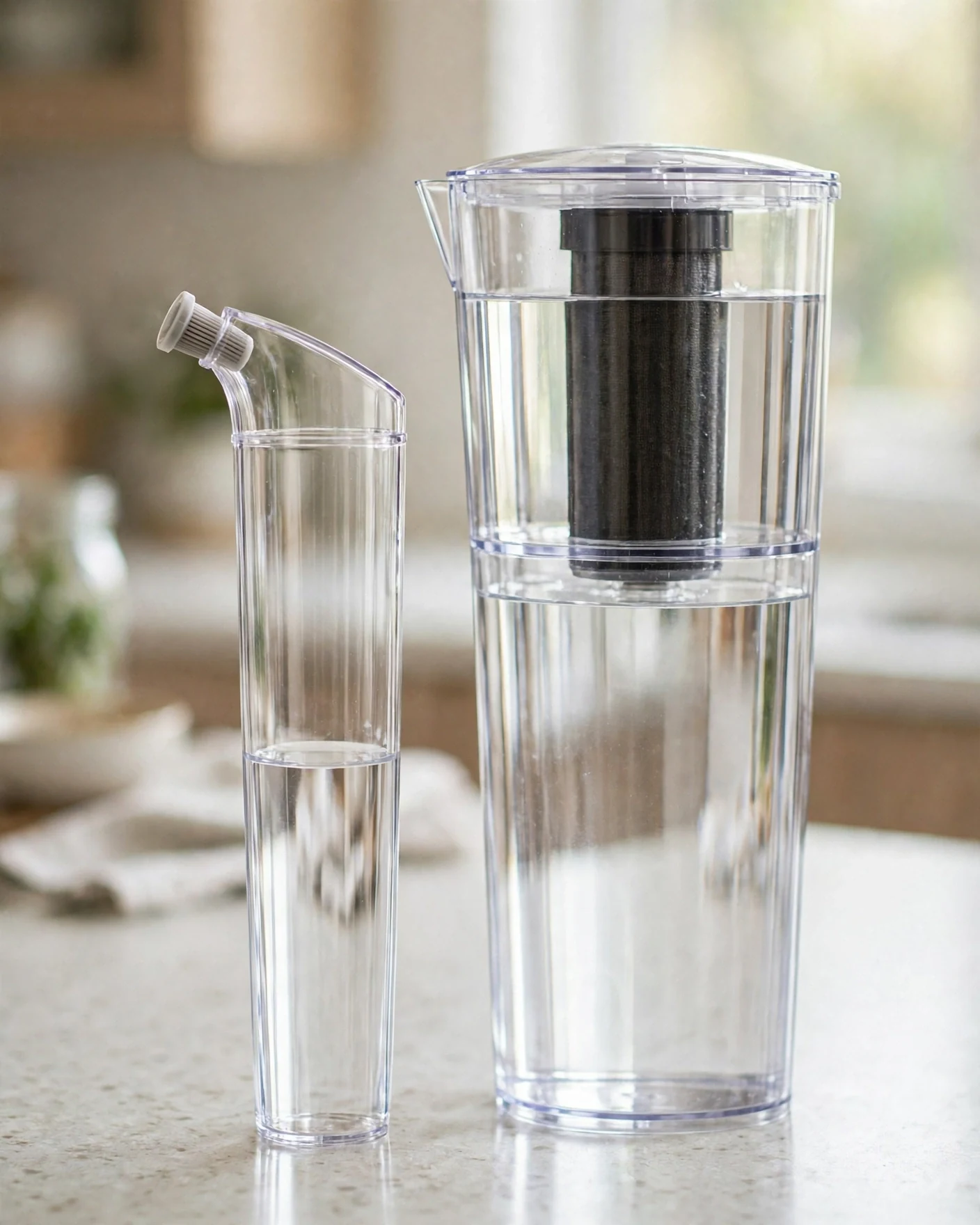
- You want near-zero TDS water — a ZeroWater-style pitcher targets that; the Stream is not that product.
Two more comparisons worth reading if you are on the fence: our PUR Ultimate pitcher review for another fast, slim option, and our Brita Grand pitcher review for a larger reservoir-style Brita.
The specs
- Brand
- Brita
- Filter model
- StreamFilter (OB05)
- Pitcher capacity
- About 10 cups (Rapids)
- Filter rated life
- 40 gallons / ~2 months
- Certifications
- NSF/ANSI 42 (brand-stated)
- Lead reduction
- Not claimed
- Typical pitcher price
- ~$29–37 (estimate)
- Dishwasher safe
- No
FAQs
How does the Brita Stream pitcher actually filter water?
There is no reservoir. The small cylindrical StreamFilter locks into the spout, so water passes through it while you pour — that is Brita’s “filter as you pour” design. Fill the pitcher from the tap, tilt, and the glass fills in seconds. Water only gets filtered while the water level is high enough to reach the spout filter, which is why the pour slows near the bottom.
How long does a Stream filter last?
Each StreamFilter is rated by Brita at 40 gallons or about 2 months, whichever comes first. In real homes that is about six filters a year. The lid’s electronic filter-life indicator counts pours and tells you when the cartridge is due — reset it each time you install a new filter.
Does the Brita Stream pitcher remove lead?
No — lead reduction is not among the Stream’s brand-stated certifications. The StreamFilter’s certified list is limited to chlorine taste and odor plus particulates under NSF/ANSI 42 (brand-stated, listing-stated). If lead in older plumbing is your concern, you need the Brita Elite or another NSF/ANSI 53-certified filter, and a water test is the smart first step.
Can I use standard Brita or Elite filters in a Stream pitcher?
No. Standard and Elite cartridges fit all Brita pitchers and dispensers except Stream models. The Stream line uses its own proprietary StreamFilter (OB05), which is a small spout-mounted cartridge, not the pull-top cartridge used everywhere else. Buy replacements labeled for Stream pitchers.
Do Stream filters need soaking before first use?
No — this is one of the Stream’s genuine conveniences. The StreamFilter needs no soaking and no rinse routine; wash the pitcher, install the filter, and it is ready to use. That is a real difference from standard Brita cartridges, which require a rinse-and-soak before first use.
Why does my Stream pitcher pour so slowly when it is nearly empty?
Because the filter sits up in the spout. Once the water level drops below the spout filter, only a trickle can reach it, and the last bit of water will not pour out through the spout at all unless you remove the lid. Owners consistently describe the 10-cup pitcher as having about 7 cups of truly convenient pouring. Refill sooner or pour the last bit with the lid off.
Is the Brita Stream worth it over a regular Brita pitcher?
It depends on what you value most. The regular Brita pitcher certifies a wider reduction list (including metals under NSF/ANSI 53 for the standard filter) at roughly the same yearly running cost, but you wait minutes for each fill. The Stream gives you water in seconds and skips the soak routine, but certifies chlorine taste/odor and particulates only. Speed-first buyer? Stream. Filtration-first buyer? Regular Brita.
Conclusion
The Brita Stream pitcher is a specialist, not an all-rounder. It does one thing exceptionally well — gets filtered water into your glass in seconds, with no reservoir routine and no filter prep. And it does one thing notably worse than every other Brita pitcher: it certifies the narrowest list of contaminant reductions, with no lead claim at all. That trade-off is neither hidden nor subtle, and it is entirely yours to weigh.
Buy it if speed is your top priority and chlorine taste is your only concern. Skip it if you want certified protection that goes beyond taste — there are better Britas for that. Know which buyer you are, and the choice makes itself.
Price checked at time of writing; it changes often — see the live price before you buy.
Update log
- Zulqarnain: Review published.