
Best Pitcher Filters (2026): 5 Top Picks, Costs & How to Choose
Pitcher Filter Buying Guide
Your tap water tastes like a swimming pool, or you just can’t shake the thought of what’s in it. Bottled water fixes the taste but empties your wallet and piles up plastic. A filter pitcher sits in the middle — cheap, simple, no plumbing required — if you buy the right one.
We compared the five pitcher filters worth buying: from the ~$28 workhorse most households should get, to a ~$90 premium option for people who want maximum filtration. Below you’ll find mini-reviews of each, the real yearly cost math (the refills matter more than the pitcher), and a plain-English guide to choosing.
If you haven’t settled on a filter type yet, our water filter guide walks through all 9 types — pitchers included.
Table of Contents
Quick Picks
In a hurry? Here’s the short version.
How to Choose a Pitcher Filter
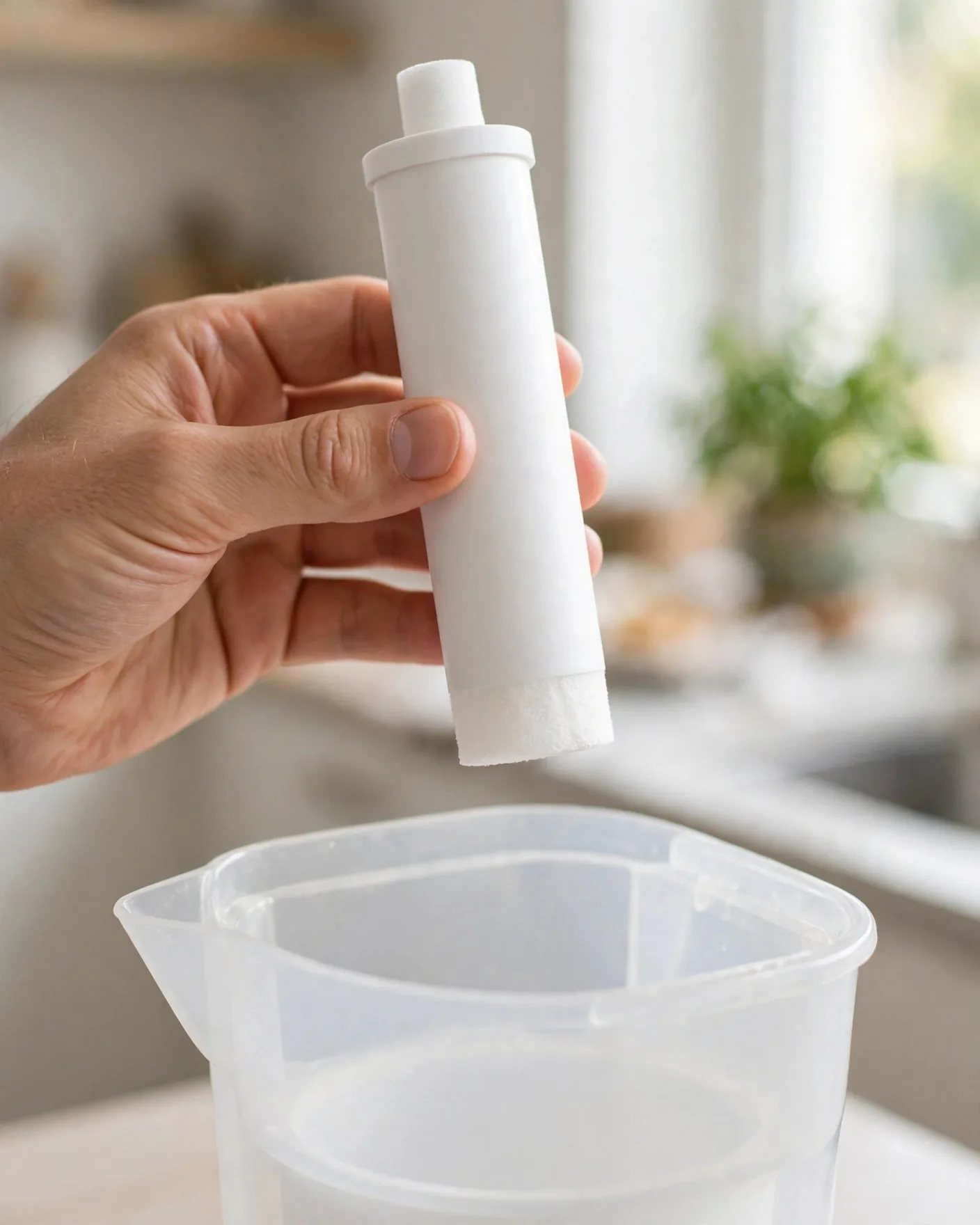
Here’s the honest truth: the pitcher itself is just a jug. The filter cartridge is what does the work, and it’s also what costs you money year after year. So choose with the cartridge in mind, not the jug.
- Household size → capacity. A 10-cup pitcher suits one or two people. Bigger households should look at 11-cup models or slim-door designs that still fit the fridge.
- Filter life. Rated lives here run from 40 gallons (~2 months) up to 120 gallons (~6 months). Fewer changes means less hassle — and usually cheaper refills over the year.
- Fridge-door fit and fill style. Measure your shelf height before you buy. Slim pitchers store better in crowded fridges; flip-top lids fill faster than ones you have to remove.
- What you’re trying to reduce. Taste and odor (usually chlorine) is what most pitchers are built for. If you’re worried about something specific — lead, fluoride, dissolved solids — test your water first so you buy the right pitcher for your problem.
- Certifications as types. NSF/ANSI 42 covers aesthetics — chlorine taste and odor, particulates. NSF/ANSI 53 covers health effects — lead, cysts, and similar. Never claim a certification from the box alone: check the exact model in the NSF public database. Brand pages are not proof.
- Indicator lights and timers. Handy reminders, but they’re timers, not water tests. Treat them as a nudge to check the rated life, not as science.
One more thing: compare pitchers against the other filter types before you commit. Our water filter guide covers all 9 — a pitcher is the cheapest entry point, but not always the cheapest answer over a decade.
The 5 Best Pitcher Filters: Mini-Reviews

Best overall Brita Everyday 10-Cup Pitcher
Best for: most households. This is the default pick for a reason — it’s the cheapest way to get noticeably better-tasting water, replacement filters are everywhere, and the 10-cup size fits a standard fridge. Each filter is rated for about 40 gallons, roughly 2 months of typical use.
The catch is the cadence: you’ll be changing filters six times a year. That means remembering to buy them and actually doing it — an exhausted filter is just a jug of tap water. If you know you’ll forget, look at the Elite below.
Pros
- Low upfront price — the cheapest entry point here
- Simple to fill, pour, and fit in a standard fridge
- Replacement filters are widely available and easy to find
Cons
- Filters need changing every ~2 months (40 gallons)
- 10 cups can fall behind with big families or heavy drinkers
~$28 (price checked Oct 2026 — changes often)
Best value Brita Elite 10-Cup Pitcher
Best for: people who hate changing filters. The Elite’s standout trait is its rated filter life: 120 gallons, roughly 6 months — three times the Everyday’s. That means two filter changes a year instead of six, which is less hassle and, over time, often cheaper refills.
The catch: replacement filters cost more per filter than standard ones, so the per-change price stings even though you buy fewer. And it’s still a 10-cup pitcher, so capacity is the same as the Everyday. For certifications, look up the exact model in the NSF public database.
Pros
- Longest rated filter life of the group: 120 gallons / ~6 months
- Only two filter changes a year — the least hassle here
- Good fit for busy households that forget maintenance
Cons
- Higher price per replacement filter
- Same 10-cup capacity — not the answer for big families
~$35 (price checked Oct 2026 — changes often)
PUR PLUS 11-Cup Pitcher
Best for: bigger households and door storage. The extra cup of capacity plus a slim profile that slides into fridge doors makes this the practical pick when 10 cups don’t cut it. Filters are rated for 40 gallons, roughly 2 months — the same cadence as the Brita Everyday.
The same catch applies here: six filter changes a year, with refills that add up. It’s a solid pitcher, but buy it for the size and the door fit, not for lower running costs — those are Everyday-tier, not Elite-tier.
Pros
- 11-cup capacity holds more between refills
- Slim shape fits fridge doors and crowded shelves
- Easy-fill design pours well at the table
Cons
- Same 2-month filter cadence (40 gallons) as the Everyday
- Refills add up over the year — see the cost math below
~$38 (price checked Oct 2026 — changes often)
TDS pick ZeroWater (Culligan) 10-Cup Pitcher
Best for: buyers who care about dissolved solids. ZeroWater uses a 5-stage filter aimed at TDS (total dissolved solids), and it ships with a TDS meter so you can test the filtered water yourself — that meter reading is your change signal, rather than a timer or a gallon rating.
The catch is refill economics. Owner reports are consistent on this: in hard-water areas the filters exhaust noticeably faster, and replacements cost more than standard carbon filters. If your tap water is very hard, expect to go through filters quickly — check the refill price and do the yearly math before you commit.
Pros
- Included TDS meter shows you when to change the filter
- 5-stage filtration designed for dissolved solids
- Well-designed pour and sturdy feel
Cons
- Filters exhaust faster in hard-water areas, per owner reports
- Ongoing refill cost runs higher than standard pitchers
~$35 (price checked Oct 2026 — changes often)
Clearly Filtered Pitcher
Best for: maximum-filtration budgets. This is the premium option — marketed for broader reduction than basic pitchers (fluoride reduction is claimed per the brand’s own lab data, not an NSF certification — verify the exact model in the NSF public database), for buyers who want one pitcher that handles more. Build quality feels a step above the budget picks.
The catch is the price, both upfront and in the missing numbers: we have no rated filter-life figure for it, so check the box for the rated capacity before comparing costs. This is the “money is not the deciding factor” choice — everyone else should start with the Everyday or Elite.
Pros
- Designed for broader reduction than basic pitchers — check model details
- Premium build quality and feel
- The answer for buyers who want maximum filtration from a pitcher
Cons
- Highest upfront price of the five
- No filter-life rating in our materials — check the box before comparing
~$90 (price checked Oct 2026 — changes often)
Side-by-Side Comparison
Here’s the short version of everything above, in one place.
| Product | Filter life | Contaminant focus | Yearly cost ~ | Best for |
|---|---|---|---|---|
| Brita Everyday 10-Cup | 40 gal / ~2 months | Chlorine taste & odor | ~$63 | Most households |
| Brita Elite 10-Cup | 120 gal / ~6 months | Chlorine taste & odor* | ~$56 | Fewest filter changes |
| PUR PLUS 11-Cup | 40 gal / ~2 months | Chlorine taste & odor | ~$73 | Big families / door storage |
| ZeroWater (Culligan) 10-Cup | By TDS meter reading | Dissolved solids (TDS); 5-stage filtration* | Varies — see cost section | TDS-conscious buyers |
| Clearly Filtered Pitcher | Check the box | Broad reduction — see model details* | Varies — see cost section | Buyers wanting maximum filtration |
*Check the exact model in the NSF public database — claims vary by model and certification.
Prices are estimates as of October 2026 and change frequently — check the current price before you buy.
Cost of Ownership: The Real Yearly Math

The sticker price is the least interesting number here. A pitcher lasts years; the filters are the subscription you didn’t sign up for. The formula is simple:
Yearly cost ≈ (filters per year × refill price) + (pitcher price ÷ 3). The “÷ 3” is our assumption that a pitcher lasts about three years — adjust it if you’re harder on plastic.
Let’s work it once with the Brita Everyday as the example. Six filters a year (40 gallons each, ~2-month rating) at an estimated ~$9 per filter comes to ~$54 in refills. Add the pitcher amortized over three years (~$28 ÷ 3 ≈ $9), and you’re looking at roughly ~$63 a year — all figures approximate.
Apply the same formula to the rest. The Brita Elite needs only two filters a year (120-gallon rating); at an estimated ~$22 per filter that’s ~$44 in refills plus ~$12 of pitcher cost, or about ~$56 a year — fewer changes and, in this estimate, the cheapest to run. The PUR PLUS follows the Everyday cadence: six filters a year at an estimated ~$10 each (~$60 in refills) plus ~$13 of pitcher cost, or about ~$73 a year.
ZeroWater and Clearly Filtered vary too much to pin down — ZeroWater’s filter life depends on your water’s hardness (the TDS meter tells you), and Clearly Filtered’s rating is on the box. For both, check the refill-pack price and run the formula yourself before buying. Our replacement filter cartridge guide covers where to find refills and how to spend less on them — bulk packs are the easy win.
Troubleshooting: 5 Common Pitcher Problems
Water flows too slowly
Usually an air lock or a clogged filter. Reseat the filter firmly, fill with cold water only, and let it soak per the box instructions. If it’s past its rated life, slow flow is the filter’s way of retiring — replace it.
Black specks in the filtered water
Almost always carbon dust from a new filter — manufacturers describe it as harmless. Soak and flush the new filter per the box instructions before first use; a few specks on the first pitcher are normal.
The filter-change light won’t reset
Reset steps vary by model — check the manual. Remember the light is a simple timer, not a water test. It can also get stuck if the lid wasn’t closed properly after the change, so reseat everything and try again.
Filtered water tastes stale or off
Either the filter is past its rated life, or the reservoir needs a wash. Replace the filter if it’s due, and hand-wash the pitcher and reservoir weekly — standing water in a warm kitchen goes stale fast.
Pitcher leaks or the lid doesn’t seal
Reseat the filter and the lid — most leaks are a filter that isn’t seated straight. Don’t overfill past the max line, and pour slowly; a full reservoir sloshing at the spout isn’t a leak.
Pitcher Filter FAQs
Do pitcher water filters remove lead?
Some are designed to, but a pitcher is not a blanket yes. The only reliable way to know is an NSF/ANSI 53 listing for the exact model in the NSF public database — check the model number, not the brand. If lead is your concern, confirm that listing before you buy.
How often should I replace my pitcher filter?
Follow the rated life on the box: the filters we reviewed run about two months or 40 gallons (Brita Everyday, PUR PLUS), or about six months or 120 gallons (Brita Elite). Most pitchers have an indicator light, but that’s a timer, not a water test — never run a filter past its rated life — because an exhausted filter is just a jug of tap water.
Do pitcher filters remove fluoride?
Most standard pitchers aren’t designed for it — fluoride needs a filter specifically built to reduce it. If fluoride is your concern, check the exact model’s NSF listing in the NSF public database, or use a water test kit first so you know what you’re dealing with.
Do pitcher filters remove PFAS?
A few pitchers are marketed for PFAS reduction, but don’t take the claim from the box — look for an NSF/ANSI 401 listing for the exact model in the NSF public database. If PFAS is your concern, test your water first and match the model to its listing.
Is a pitcher filter enough, or do I need a bigger system?
For better-tasting drinking water, a pitcher is plenty for most homes. But if a test shows high lead, hardness, or other issues beyond taste and odor, a bigger system may be the smarter move. Start with a water test kit to find out what’s in your water, then compare pitcher filters against the other 8 types in our water filter guide.
Can I use cheaper third-party replacement filters?
They’ll often fit, but fit isn’t the question — certifications and build quality vary widely. Check the exact model in the NSF public database before trusting a no-name filter with your drinking water. Our replacement filter cartridge guide covers where to find refills and how to spend less on them.
Is filtered pitcher water as good as bottled water?
For taste and odor, usually yes — and it costs far less per gallon. For specific contaminants, it depends on the model and what’s in your water, so test first and match the pitcher to the problem.
Conclusion
Most people should buy the Brita Everyday: it’s cheap, it works, and refills are everywhere. If you hate maintenance, the Brita Elite is the smarter buy — two filter changes a year instead of six, and a comparable yearly cost (~$56 vs ~$63) in our estimate. And if money is no object and you want the broadest reduction a pitcher can offer, the Clearly Filtered pitcher is the premium answer.
Whatever you choose, remember the real cost is the filters, not the jug — run the yearly math in the cost section before you click buy. And if you’re still weighing your options, compare pitcher filters against the other 8 types in our water filter guide.