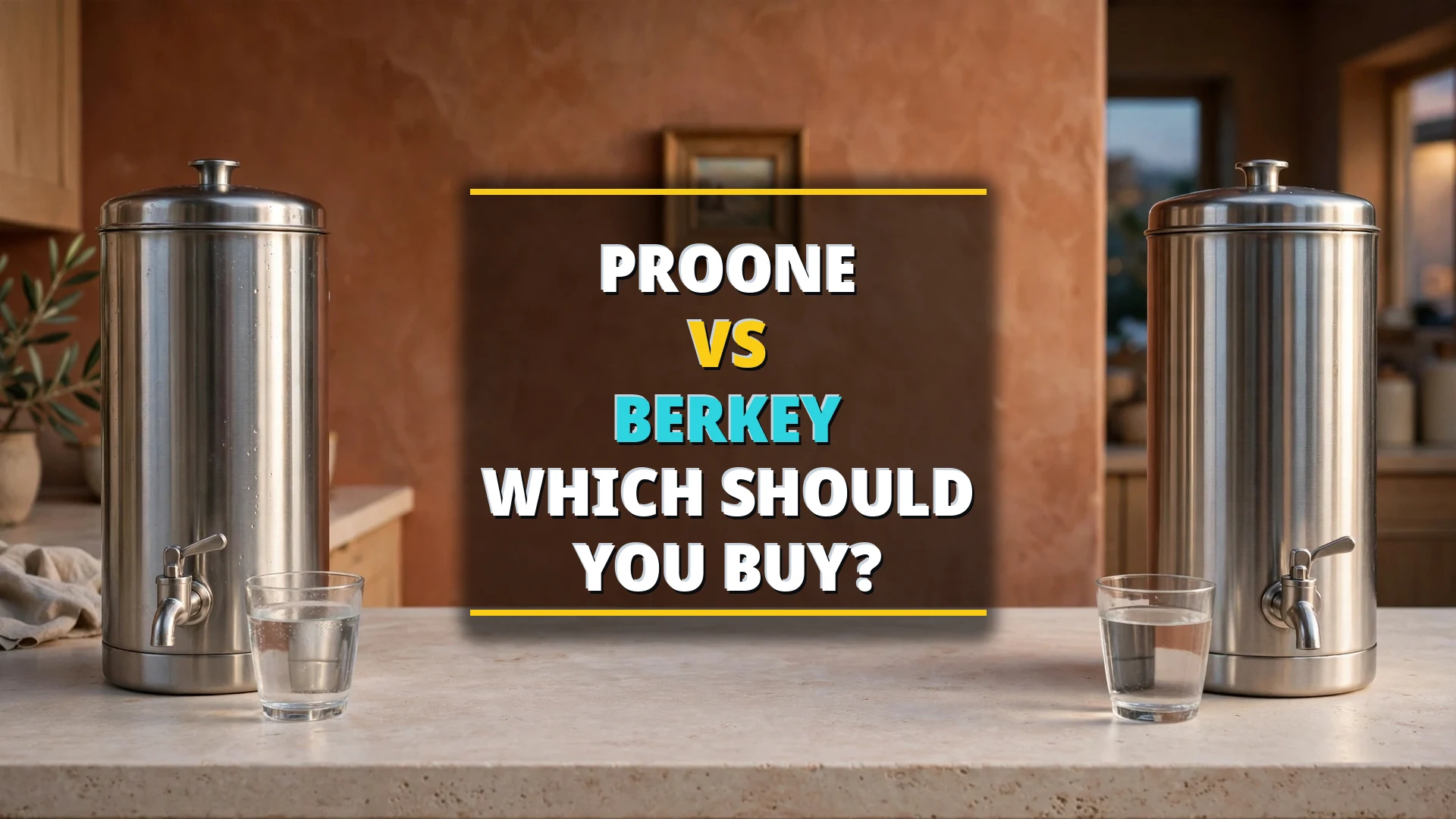

ProOne Big+ vs Berkey (2026): Which Should You Buy?
You came here for a simple answer: Big Berkey or ProOne Big+ — which stainless gravity filter belongs on your counter? A year ago this was a genuine coin flip. In 2026 it is not. One is under a federal stop-sale order an appeals court refused to pause in September 2026; the other is being cleared out by its new owner. Most page-one comparisons still score them like it is 2023.
We researched and compared both against the court opinion, the current certifier listings, dealer pages, and independent measurements — here is where each stands, what the certifications cover, and the yearly cost.
The better value on paper
Big Berkey
Unavailable new
Bigger element life and faster claimed flow — but Black Berkey Elements are under an EPA stop-sale order and production has stopped.
Our pick — while stock lasts
ProOne Big+
~$184 (closeout est.)
The only one of the two you can still buy new with a supported element supply chain — and the stronger current certification paperwork.
The bottom line: the ProOne Big+ is the only one of the two you can still buy new with a supported element supply chain, and it carries the stronger current certification paperwork. The Big Berkey was the better value on paper — bigger element life, faster claimed flow — but Black Berkey Elements are under an EPA stop-sale order that remains in force, and production has stopped. We cannot recommend a system whose core consumable cannot legally be sold in the US.
Verdict: the Big+ wins by default — and on certification — but it is a closeout product, not a forever product.
We compared the First Circuit opinion, the October 2026 listing checks, brand documents, and independent flow measurements. The Big+ is the largest of ProOne’s stainless gravity lineup — the Traveler+ (2.25-gallon, stainless) and the plastic Big II (2.5-gallon) are the smaller siblings running the same G-series elements — and our ProOne Big+ review covers setup in full.
Table of Contents
Side-by-side comparison
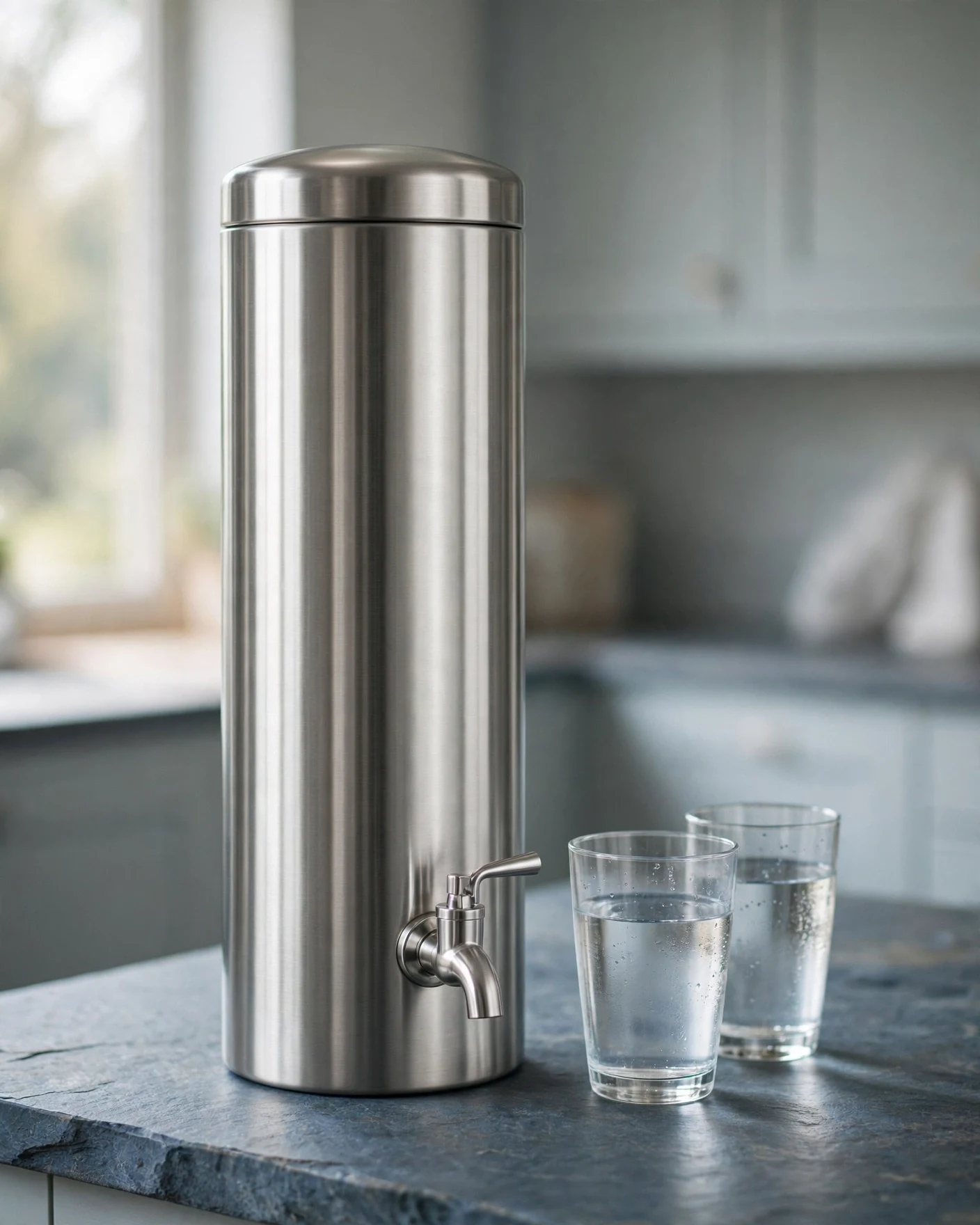
Published specs, dealer pages, and independent measurements — kept separate so you can see where each number comes from:

| Spec | ProOne Big+ ★ Winner | Big Berkey |
|---|---|---|
| Availability (Oct 2026) | Discontinued; clearance ~$184 | Element production stopped; unavailable new |
| Capacity | About 3 gallons | 2.25 gallons |
| Maker-rated element life | 6 months or ~1,000 gal per 7″ element | 6,000 gallons per pair (years) |
| Certified service cycle | 50 gallons per element set (IAPMO listing) | None verified |
| Flow rate | ~1 GPH (dealer); 0.77 GPH measured independently | ~3.5 GPH (dealer); 0.75 GPH measured independently |
| Certifications | IAPMO: 42 (chlorine, chloramine), 53 (lead, total PFAS), 401 (microplastics) | None verified for Black Berkey; newer Phoenix elements hold NSF 42/372 |
| Fluoride | Built into the G3.0 element (brand-stated) | Optional PF-2 add-on (~$103 per set of 2) |
Note: dealer flow figures (3.5 vs 1 GPH) suggest a big Berkey edge; independent measurements (0.77 vs 0.75 GPH) show a dead heat. Element ratings are maker ceilings.
Certifications
Certification is where this comparison is decided — and where most page-one comparisons go silent. A filter lab-tested against NSF standards is not the same as a certified one: certification means an independent certifier lists the product, the contaminants, and the conditions it held up under.

ProOne Big+ (G3.0): listed — with one big trap
An October 2026 listing check shows IAPMO listing the ProOne Big+ and Traveler+ with G3.0 elements for chlorine and chloramine (NSF/ANSI 42), lead and total PFAS (53), and microplastics (401), matching the brand’s statements. Independent reviewers found no official certification for the Big+ just months earlier, so these listings appear recent.
The trap: the listing’s certified service cycle is 50 gallons per element set — performance guaranteed only for the first 50 gallons, against the maker’s ~1,000-gallon rating. Which number you trust decides affordability (see Cost per year). Verify it in IAPMO R&T’s directory.
Black Berkey Elements: no certifier listing we could verify
For Black Berkey Elements we could verify no listing at NSF, IAPMO, or WQA. Berkey’s position was always its published independent lab reports instead of certification — and the legal situation below makes the distinction moot for a new buyer. The one Berkey-attached listing belongs to the newer Phoenix elements (42, plus 372). (Buyers also confuse Berkey with the British-made Berkefeld: our British Berkefeld vs Berkey breakdown and British Berkefeld review.)
The Berkey stop-sale: what actually happened
In May 2023, the EPA issued a Stop Sale, Use, or Removal Order to Berkey International covering its silver-containing Black Berkey Elements. The agency’s position under FIFRA — the federal pesticide law — is that the silver in the elements, combined with the pathogen-reduction claims used to market them, made them unregistered, misbranded pesticide products. Berkey sued and asked the courts to pause the order while the case proceeds. On September 18, 2026, the First Circuit refused: in Berkey International, LLC v. EPA (No. 24-1917), it affirmed the lower court’s denial of a preliminary injunction because Berkey had not shown it was likely to succeed. The order remains in force while the case continues. Two precisions: the court made no finding that the elements are unsafe or ineffective — the fight is over classification and labeling — and a stop-sale is neither a ban nor a recall. The practical effect: production has stopped, and dealers have no standalone elements to sell.
No purifier claims for either system
NSF’s P231 “Microbiological Water Purifiers” listing held only four products at our October 2026 check: Multipure (plumbed-in) and Camelot (faucet-connected). No gravity system appears. Treat both as city-water filters; disinfect suspect water separately.
Cost per year
The sticker price is the smallest number here. What matters is the yearly element bill at 2 gallons a day:

| Item | ProOne Big+ (maker-rated) | ProOne Big+ (certified-basis) | Big Berkey (historical) |
|---|---|---|---|
| Element rating | ~1,000 gal or 6 months per 7″ element | 50 gal per set (certified cycle) | 6,000 gal per pair |
| Replacement price | ~$79 per 7″ element | Same | ~$166 per pair (no longer sold new) |
| Estimated yearly element cost | ~$160–320 | ~$920 | ~$20 (theoretical) |
The maker-rated ProOne number is a normal gravity bill; the certified-basis number (~$126 per 100 gallons on a third-party cert-cost table) is what the certificate alone guarantees — and not how owners run the system. The honest reading: certification proves the claims under test conditions; the maker’s rating is what you budget on, uncertified. The Berkey column is history, not advice — new pairs cannot legally be sold while the order stands.
The flatter alternative: the Boroux Legacy — successor built by the former Berkey distributor — runs its Foundation elements on a plain 12-month rhythm at roughly $140–159 a pair a year; the system lists at $399 (often less on the street). See our Boroux Legacy review and our Boroux Legacy vs ProOne head-to-head.
Owner voices
The patterns that repeat across owner reports and independent long-term reviews:
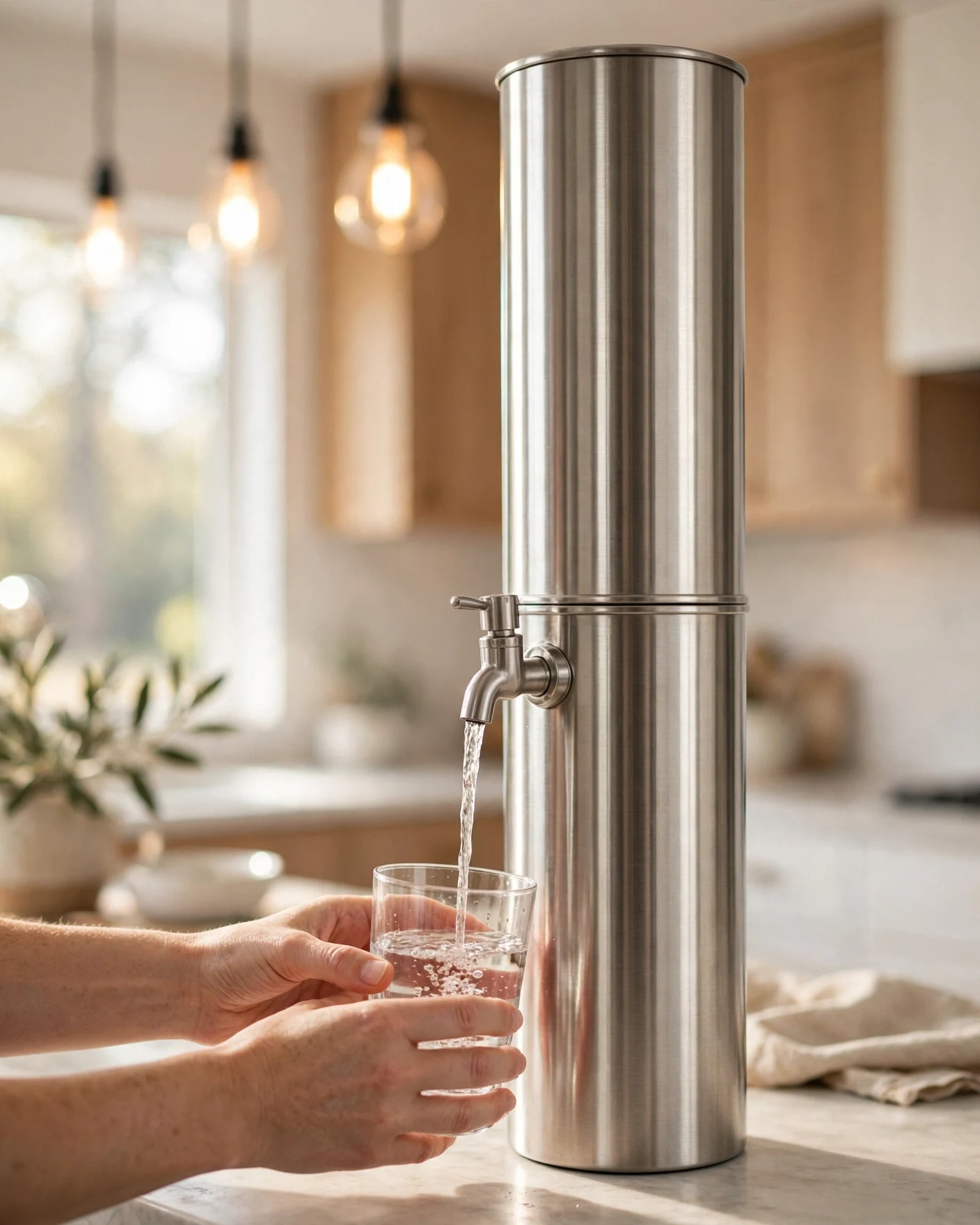
ProOne owners live by the night-refill routine: fill the top tank before bed so a full reservoir waits in the morning — the stream slows as the upper chamber empties (gravity-head physics, not a defect). Recurring maintenance note: when sediment slows the flow, owners scrub the ceramic shell with an abrasive pad, no soap, and flow returns. Most-praised trait: no priming. Recurring complaint: the 6-month rhythm lands tighter than the “1,000 gallons” headline suggested.
Berkey owners are mostly long-timers, loyal to the element: years of use per pair is every veteran’s theme, and real-world flow (~1 gallon an hour with two elements in a long-term owner’s own log — matching independent measurements, not the dealer’s 3.5 GPH) is accepted as the price of gravity. But the 2026 conversation has shifted from filtration to supply: where do I get genuine elements, and how do I avoid fakes? The brand’s dealer pages now steer owners toward the newer Phoenix elements and warn that standalone elements sold online are very likely counterfeit. The other recurring friction is setup — reviewers have long rated it the category’s weakest, thanks to the priming ritual.
Which should you buy?

Buy the ProOne Big+ if you want a stainless gravity filter you can buy today with certifier paperwork and elements you can still stock. At ~$184 on closeout it is the strongest current value in the category. Do buy a spare element set now: Culligan, which acquired ProOne, says its MaxClear elements fit the Big+, Traveler+, and Big II housings — a consumable path exists.
Do not buy the Big Berkey new. Not because the filter failed — the court made no such finding — but because a system with no future supply chain is one you cannot maintain. Berkey owners: nothing orders you to stop using what you own; your risk is supply, not safety. For untreated stream or well water, neither system holds a purifier listing — disinfect first, filter second.
Closeout stock changes fast — see the live price before you buy.
FAQs
Is Berkey banned?
No. In May 2023 the EPA issued a stop-sale order on Berkey’s silver-containing Black Berkey Elements under FIFRA, the federal pesticide law. On September 18, 2026, the First Circuit refused to pause it while the case continues. A stop-sale is not a ban or a recall, and the court made no finding that the filters are unsafe or ineffective.
Can I still buy a Big Berkey in 2026?
Dealer pages still list Big Berkey systems as shipping with Black Berkey Elements while supplies last — but production has stopped, and standalone replacements are not available through authorized channels. We do not recommend buying in new: the core consumable cannot legally be sold in the US.
Is the ProOne Big+ certified?
As of an October 2026 listing check, yes — IAPMO lists the ProOne Big+ and Traveler+ with G3.0 elements for chlorine and chloramine (NSF/ANSI 42), lead and total PFAS (53), and microplastics (401). But the certified service cycle is only 50 gallons per element set, far below the maker’s ~1,000-gallon rating.
Can either filter make pond or stream water safe?
Neither. No gravity-fed system holds an NSF P231 purifier listing — our October 2026 database check showed only Multipure plumbed units and one Camelot faucet-connected unit. Treat both as city-water filters, and disinfect suspect water separately.
Which one is cheaper to run per year?
On paper, the Big Berkey — about $166 for a pair rated at 6,000 gallons, roughly $20 a year at two gallons a day. Moot: you cannot buy new Black Berkey pairs. The ProOne Big+ runs about $160–320 a year on the maker’s rating, far more on the certificate’s 50-gallon cycle.
Update log
- Zulqarnain: Review published.