RO System vs Water Softener (2026): Which Should You Buy?
You fill the kettle and watch white crust building up again, and the glasses come out of the dishwasher cloudy. Then someone says get reverse osmosis — while someone else swears by a water softener. Two big machines, two different price tags, and both camps insist theirs is the answer. Which one do you actually need?
Here is the short answer: they are different machines for different problems, so “which is better” is the wrong question. An RO system purifies drinking water at one tap — the right tool when your worry is what is dissolved in the water you drink, like lead, nitrates, or fluoride. A water softener removes hardness (calcium and magnesium) for the whole house through ion exchange — the right tool for scale on fixtures, spotty dishes, and dying water heaters. It does not purify water. Many hard-water homes end up with both, softener first. This comparison covers what each system does, what each costs over five years, what the certifications really mean, and what owners report.
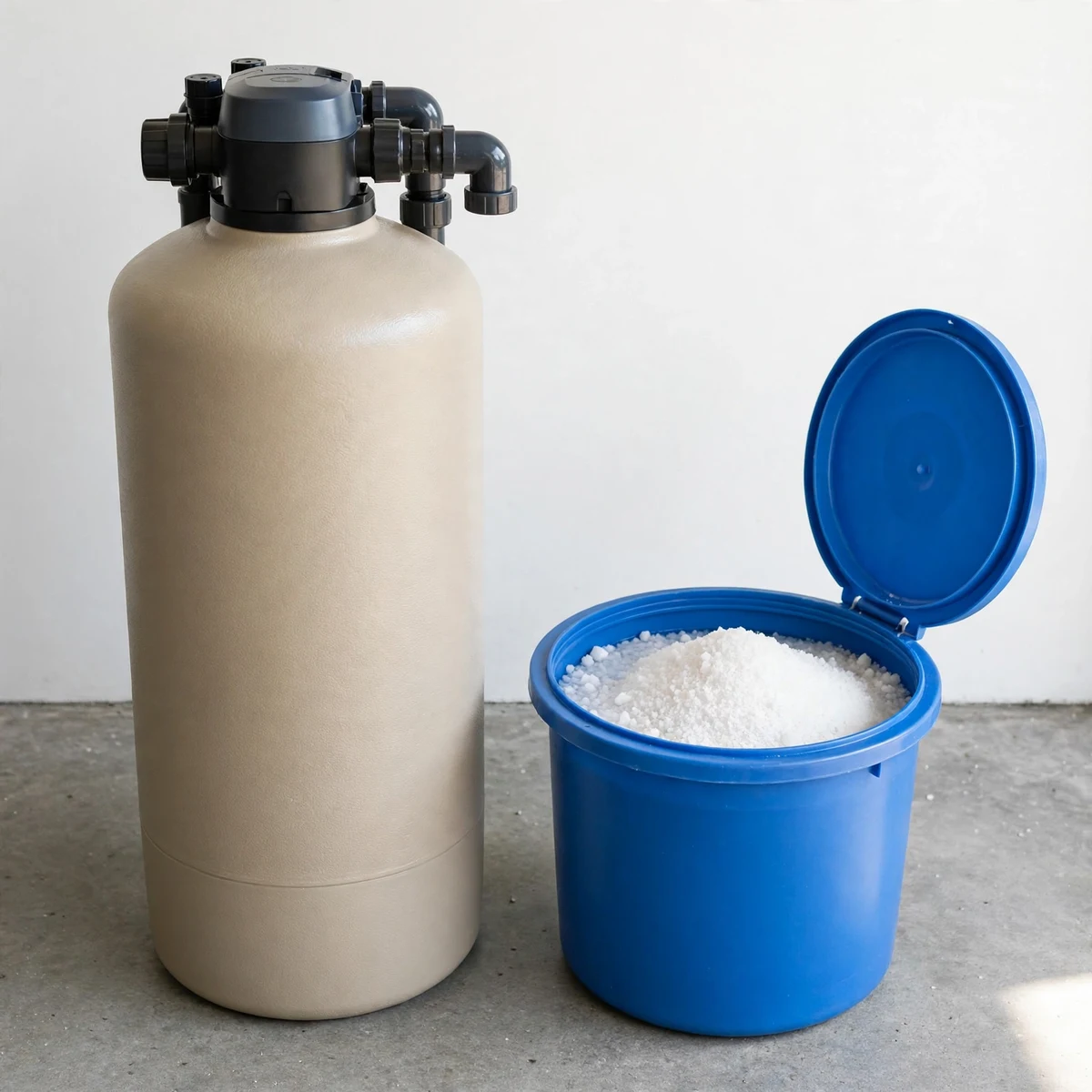
Water softener — the whole house, scale-free
Water Softener
~$500–750
Ion exchange for the whole house — ends scale, spots and soap scum and protects every appliance — but it does not purify drinking water.
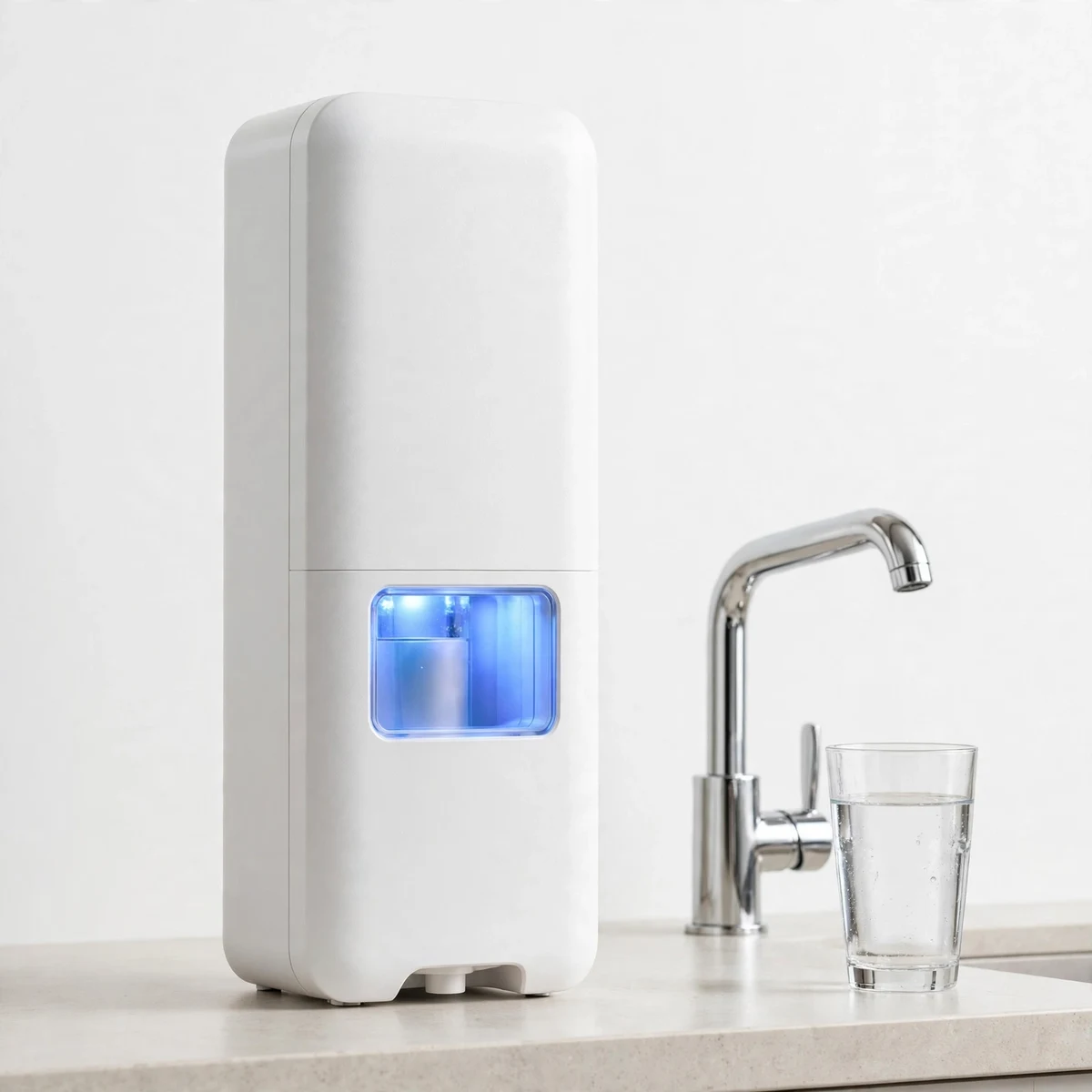
Under-sink RO — the purest water, at one tap
SimPure UV RO System
~$300–450
The broadest purification at the tap — lead, nitrates, fluoride and PFAS — with DIY installation in about an hour and roughly $50–150 a year in filters.
The bottom line: an RO system answers “is my drinking water safe from dissolved contaminants?” A water softener answers “is my water wrecking my plumbing with hardness?” RO treats one tap; a softener treats the whole house. A softener will not purify drinking water, and an RO system will not protect your water heater. Buy the softener for hard-water symptoms (scale, spots, soap that won’t lather). Buy the RO for drinking-water concerns (lead, nitrates, fluoride, taste). Both problems? Buy both, softener first.
Verdict: hard-water symptoms → water softener. Drinking-water concerns → RO system. Both → both, softener first.
Prices are estimates checked at time of writing; they change often — see the live price before you buy.
Table of Contents
Side-by-side comparison

Here is the whole comparison on one screen. The two rows that decide everything are mechanism and scope: RO pushes water through a membrane at one tap; a softener runs the whole house through ion-exchange resin.
| Under-sink RO ★ Winner | Water softener | |
|---|---|---|
| Main job | Removes dissolved solids and many contaminants at one drinking tap | Removes hardness (calcium and magnesium) for the whole house |
| Mechanism | Semipermeable membrane plus sediment/carbon pre- and post-filters | Ion exchange: resin beads swap hardness ions for sodium or potassium ions |
| Coverage | One tap — usually the kitchen | Every tap, shower, and appliance |
| Lead and PFAS | The right tool at the drinking tap — the membrane rejects dissolved contaminants | Not the tool for them — ion exchange targets hardness only |
| Fluoride | Reduced substantially by the membrane | Not removed — passes through with the other dissolved minerals |
| Chlorine taste | Yes — carbon pre-filters handle it | No — chlorine needs carbon filtration |
| Scale and hardness | Only at its own tap — the rest of the house still gets hard water | Yes — its entire reason to exist |
| Purifies water | Yes — broadest purification at the tap | No — hardness conditioning only, not contaminant filtration |
| Sodium in water | Removed — the membrane holds back most dissolved salts | Slightly increased — a result of the exchange |
| Wastewater | ~3 gallons to drain per gallon made (tanked systems) | Some — the resin regenerates with salt water on a cycle |
| Upkeep rhythm | Filters every 6–12 months; membrane every 2–3 years | Salt top-ups every few weeks; resin lasts many years |
| Typical upfront (estimate) | ~$180–210 value 5-stage; ~$300–450 premium with UV | ~$500–750 home-center unit; $1,000+ with professional install |
| Installation | DIY — about an hour under the sink | Often a plumber — it cuts into the main water line |
| Best for | Drinking-water worries: lead, nitrates, fluoride, taste | Hard-water symptoms: scale, spots, dead appliances |

Under-sink RO — the purest water, at one tap
An under-sink RO system pushes tap water through sediment and carbon pre-filters, then a reverse-osmosis membrane that rejects dissolved contaminants, finishing with a polishing post-filter. It is the broadest purification you can buy at the tap — dissolved lead, nitrates, fluoride, PFAS, and most dissolved solids do not make it through. The SimPure UV system (roughly $300–450, estimate) is the premium tankless-with-UV representative; our best RO systems roundup compares the category’s top models, and our tank vs tankless RO guide covers the tanked-versus-tankless choice.
Pros
- Broadest contaminant removal at the tap — dissolved lead, fluoride, nitrates, PFAS, and the dissolved solids behind bad taste.
- Removes most sodium too — including the extra sodium a softener adds, if you pair the two.
- DIY installation — owners consistently report about an hour with basic tools.
- Low yearly upkeep — roughly $50–150 a year in filters (estimate).
- Verifiable results — owners check single-digit TDS readings with an inexpensive handheld meter.
Cons
- One tap only — shower, laundry, and water heater get nothing.
- Does not soften the house — scale keeps forming everywhere else; hard water can also scale the membrane itself.
- Wastes water — tanked systems send roughly 3 gallons to drain per gallon of drinking water.
- Flat taste for some — removing minerals changes the taste; remineralizing post-filters exist as add-ons.
Water softener — the whole house, scale-free
A water softener runs your whole supply through resin beads that swap the hardness-causing calcium and magnesium ions for sodium or potassium ions, then periodically regenerates the resin with a salt-water rinse from a brine tank. What you get: no scale on fixtures, spot-free dishes, soap that lathers, and appliances that last longer. What you do not get: purified water — a softener does not remove lead, PFAS, fluoride, or chlorine. The Aquasana HealthShield (roughly $1,900–2,300, estimate) is the premium whole-house route that bundles softening with carbon filtration and UV; value home-center softeners run roughly $500–750 (estimate). Our RO vs whole-house filter comparison covers the filter side of the whole-house decision.
Pros
- Protects every pipe and appliance — the only system of the two that covers the water heater, dishwasher, and laundry.
- Ends hard-water annoyances — scale, water spots, soap scum, stiff laundry, and dry skin from hardness.
- Cheap to run — salt runs roughly $10 a bag (estimate); the resin bed itself lasts many years.
- Extends RO membrane life — softened feed water means the RO membrane does not scale over.
Cons
- Does not purify water — lead, PFAS, fluoride, and chlorine are outside its job description.
- Adds sodium — a consideration on a sodium-restricted diet; potassium chloride is an alternative (check with your doctor).
- Salt chore and space — the resin tank plus brine tank takes garage space, and salt bags are heavy.
- Higher upfront — value units are affordable, but installed systems often cross $1,000.
Certifications
Certification is where this comparison stays honest. Each system has its own standard number, and the numbers tell you what was tested — and what was not. We did not verify any brand’s specific listing from this desk; this section states what the standards cover and how to check a product yourself.

| Standard | Applies to | What it certifies |
|---|---|---|
| NSF/ANSI 58 | Reverse-osmosis systems | System-level performance of the RO system — including membrane contaminant-reduction claims. Match the listed claims to your contaminant. |
| NSF/ANSI 44 | Residential water softeners | Cation-exchange softener performance — how much hardness the system actually removes and how efficiently it uses salt. |
| NSF/ANSI 42 | Both, as add-on claims | Aesthetic effects: chlorine taste and odor. Not a health-contaminant certification. |
| NSF/ANSI 53 | Both, as add-on claims | Health effects such as lead and cyst reduction — only for the specific contaminants on the listing. |
If your worry is a contaminant, you need an NSF/ANSI 58-listed RO at the drinking tap — and read the exact listed claims for that contaminant.
How to check yourself: search the model name at info.nsf.org or the WQA product directory. We found no independently verifiable certification listing for the products named in this guide — treat brand-stated cert claims as unverified until you check them yourself.
Cost per year
| Value under-sink RO | SimPure UV RO | Value home-center softener | Premium combo (Aquasana HealthShield) | Both (value combo) | |
|---|---|---|---|---|---|
| System (estimate) | ~$180–210 | ~$300–450 | ~$500–750 | ~$1,900–2,300 | ~$680–960 |
| Installation | DIY (~$0) | DIY (~$0) | DIY or plumber (~$0–500) | Plumber (~$300–600) | DIY + plumber |
| Yearly upkeep (estimate) | ~$50–150 filters | ~$50–150 filters | ~$50–150 salt | ~$100–200 filters | ~$100–300 |
| 5-year total (estimate) | ~$430–960 | ~$550–1,200 | ~$750–1,500 | ~$2,400–3,900 | ~$1,180–2,460 |
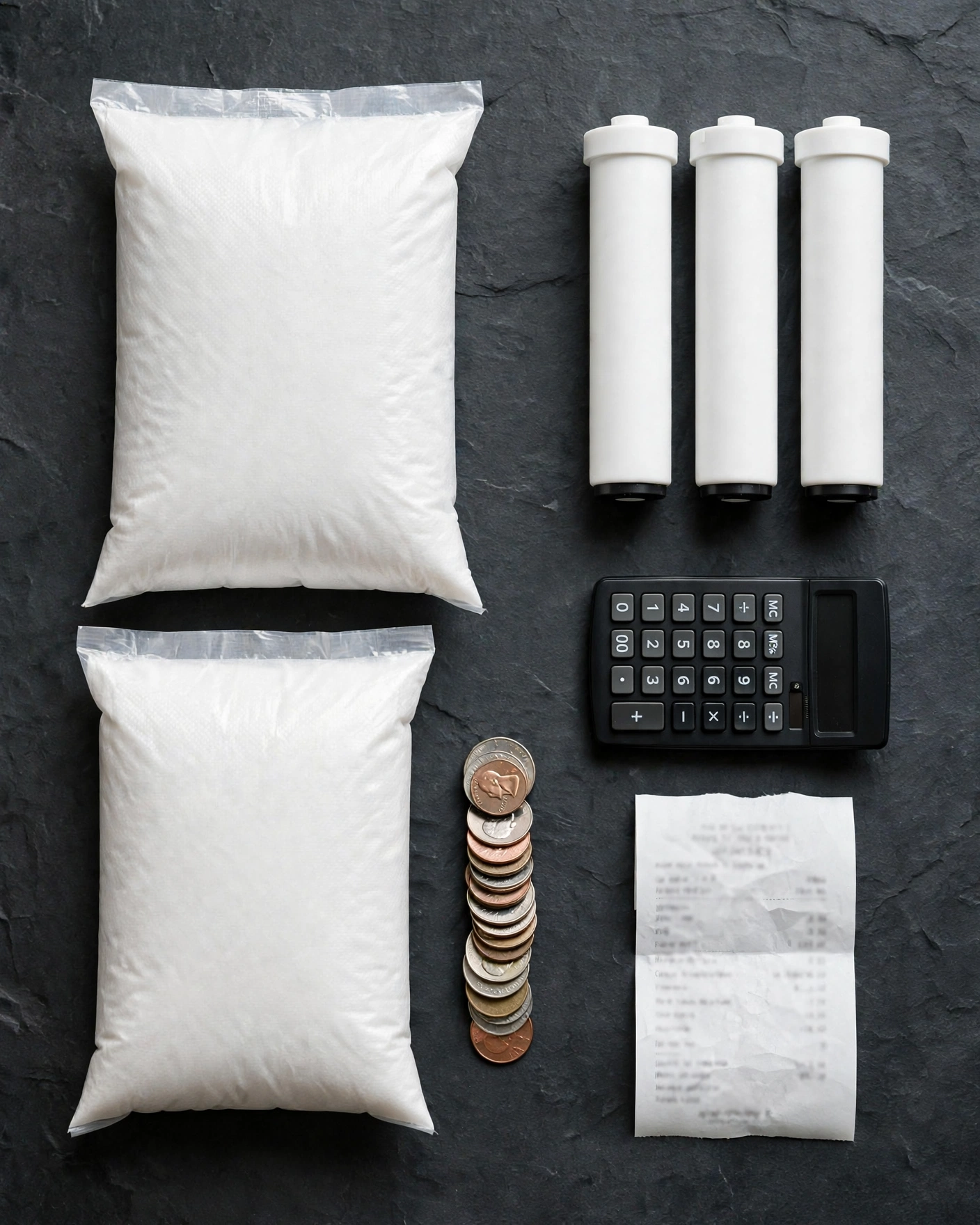
Three things jump out. First, yearly upkeep is roughly a wash at the value end — salt costs about the same as RO cartridges. The money difference is almost entirely upfront and in installation. Second, the “both” column costs less over five years than the premium combo alone. Third, the softener’s real ongoing cost is attention: salt bags are heavy and the brine tank needs periodic checks. For deeper RO math, see our RO system yearly cost breakdown.
The hidden costs are water, not money: tanked RO sends roughly 3 gallons to drain per gallon made, and a softener flushes salt water during regeneration. Both are modest at household scale, but both matter on well water or metered billing.
Owner voices
We read owner reviews across retail listings and forums to find the patterns that repeat. Here is what keeps coming up for each system.
RO owners talk about the TDS meter moment — watching the reading drop from the hundreds into single digits after the first flush. Installation earns consistent praise as a genuine one-hour DIY job. The recurring complaints are the category’s usual suspects: slow tank recovery that big families notice, the ~3:1 wastewater ratio, and pre-filters that must be changed every 6–12 months — skip those and the membrane dies early.
Softener owners talk about the change they can see: spots gone from the dishwasher, fixtures staying shiny, soap lathering again, the water heater lasting longer. The recurring complaints are all around the machine: lugging 40-pound salt bags, finding space for the resin tank and brine tank, and the monthly salt-check chore. A smaller but consistent thread is the “wait, it doesn’t filter anything?” realization — owners who expected purified drinking water and learned that a softener is a hardness machine only.
The pattern across both: owners who tested their water first and bought for a specific problem are happy. Owners who bought a machine and hoped it would fix everything are the ones writing the one-star reviews.
Which should you buy?

Buy the RO system if
- Your worry is drinking-water safety — lead, nitrates, fluoride, PFAS, or the purest water you can get.
- You rent, or you cannot modify the main plumbing.
- Your water is soft enough already — no scale, no spots, soap lathers fine.
- Budget is tight — it is the cheapest way to genuinely clean drinking water.
Buy the water softener if
- You see hard-water symptoms — scale on fixtures, cloudy dishes, soap that won’t lather, crust in the kettle.
- Your water heater or appliances are dying early from scale.
- You own the home and have space for a resin tank plus brine tank.
- Your drinking water is already acceptable — only the hardness needs fixing.
Buy both if
- You have both problems — hard water at the fixtures plus drinking-water worries at the tap.
- You are on well water with hardness plus anything dissolved you care about.
- Install the softener first — it protects the RO membrane, and the RO removes the sodium the softener adds.
If you land on the RO side, the next decision is which style fits your home: our under-sink vs countertop RO comparison covers the renter-friendly route versus the plumbed-in one.
FAQs
Does a water softener remove lead?
No. A water softener targets hardness minerals — calcium and magnesium — through ion exchange. It does not remove dissolved lead, PFAS, fluoride, or chlorine, and it does not purify water. If lead in drinking water is your concern, that is a reverse-osmosis problem: an under-sink RO system at the kitchen tap is the right tool.
Does reverse osmosis soften water?
Only at the one faucet it feeds. An RO membrane does reduce dissolved minerals, including some calcium and magnesium, but the rest of the house still gets hard water. If hard water is a house-wide problem, you need a softener; RO cannot substitute for one.
Is softened water safe to drink?
For most people, yes — softening replaces calcium and magnesium with small amounts of sodium (or potassium, if you use potassium chloride). The EPA has a 20 mg/L sodium health advisory for people on sodium-restricted diets; if that is you, talk with your doctor first. An RO system at the kitchen tap removes most sodium, including what a softener adds.
Do I need both a water softener and an RO system?
Only if you have both problems: hard water throughout the house plus dissolved contaminants you care about at the drinking tap. If both apply, install the softener first — it protects the RO membrane from scaling, and the RO removes the sodium the softener added.
Does a water softener remove fluoride or chlorine?
Neither. A salt-based softener does not remove fluoride — it passes through the ion-exchange resin like the other dissolved minerals. It does not remove chlorine either; chlorine needs carbon filtration. If fluoride or chlorine is your concern, those are filtration jobs, not softening jobs.
Which costs less to run — RO or a water softener?
At the value end they are surprisingly close: roughly $50–150 a year in filters for an under-sink RO versus roughly $50–150 a year in salt for a softener (estimates). The real cost difference is upfront: a value RO starts around $180–210 while a value softener starts around $500–750, and the softener often needs a plumber for installation.
Conclusion
The honest answer to “RO system vs water softener” is that most buyers are choosing between a drinking-water purifier and a whole-house hardness machine. RO for drinking-water worries; softener for hard-water damage. Both problems means both machines: softener first, RO at the tap. Test your water, match the machine to the result, and skip everything the test does not justify.
Prices are estimates checked at time of writing; they change often — see the live price before you buy.
Prices are estimates checked at time of writing; they change often — see the live price before you buy.
Update log
- Zulqarnain: Review published.