APEC ROES-50 vs ROES-PH75 (2026): Which to Buy?
You have narrowed it down to APEC’s classic under-sink system — the ROES-50. Then you spot the ROES-PH75: same brand, same look, a bit more money, and a name that hints at something extra. Is it just the ROES-50 with one added filter? Do you actually need it, or is it an upsell?
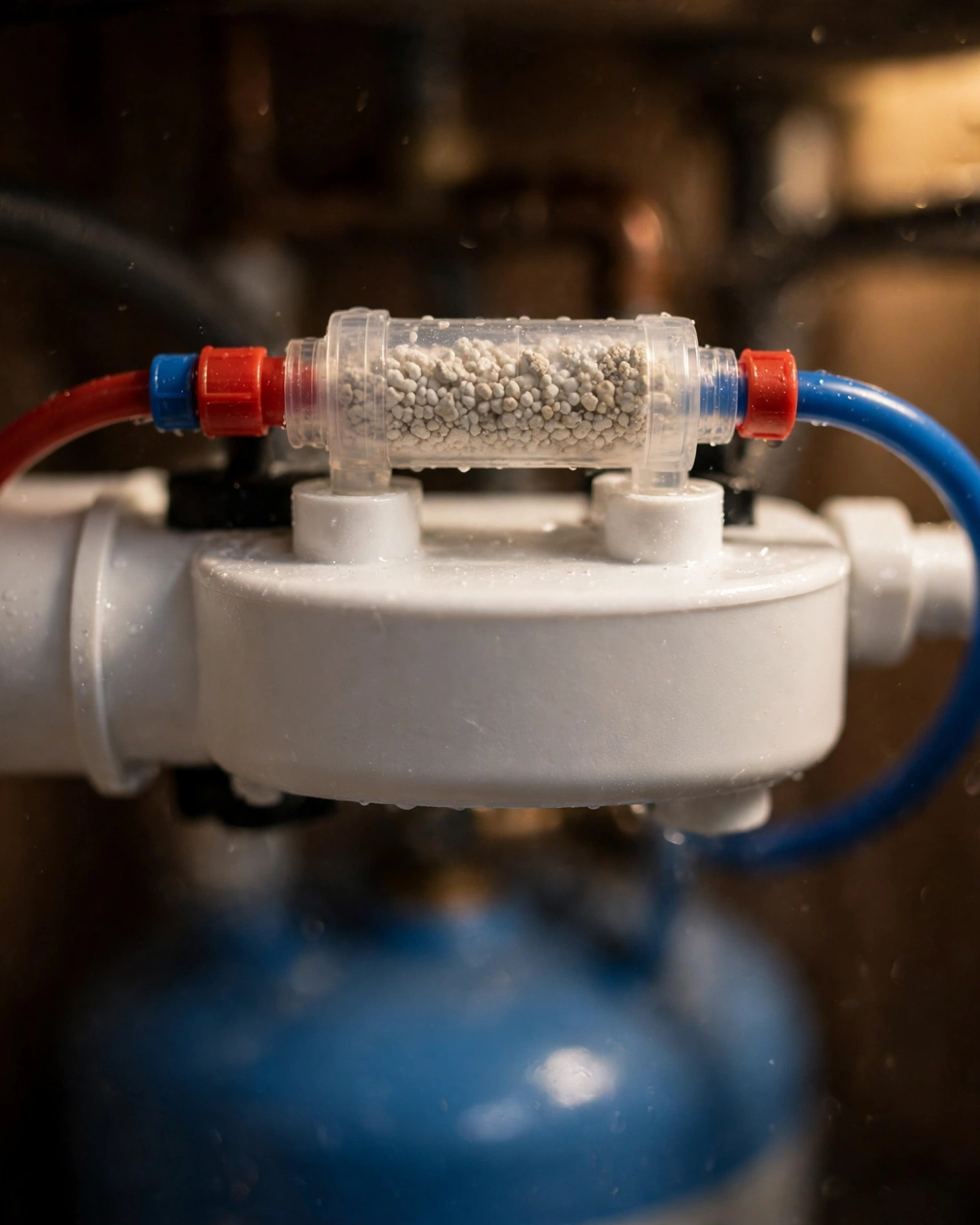
Here is the straight answer: they are nearly the same machine, but there are two differences, not one. The PH75 adds a sixth stage — a calcium carbonate remineralization filter — and it also carries a bigger 75 GPD membrane (the 50 in ROES-50’s name means 50 GPD). Everything else — tank, housings, faucet, certifications, maintenance routine — is shared DNA. So the real question is not which system is better. It is whether you want slightly alkaline, remineralized-tasting water and faster tank refill, and whether that is worth the roughly $40–50 street premium. This comparison breaks down both, so you can answer that in five minutes.
The classic 5-stage system
APEC ROES-50
~$180–230
The same core filtration for the lowest price — 5 stages, a 50 GPD membrane, and the cheapest yearly running cost.
Best pick for alkaline finish
APEC ROES-PH75
~$230–270
Adds a sixth calcium remineralization stage and a faster 75 GPD membrane for roughly $40–50 more.
The bottom line: the ROES-PH75 is the ROES-50 plus a 6th-stage calcium remineralization filter and a faster 75 GPD membrane, for roughly $40–50 more on the street (~$230–270 vs. ~$180–230, estimates). One independent lab test measured the PH75’s finished water at pH 8.7 — so the alkaline stage does what APEC says it does, taste-wise.
Verdict: if you drink your RO water straight and wish it tasted less flat, buy the PH75 — it is usually worth the small premium. If you mainly cook with it, or the price gap is big on the day you shop, buy the ROES-50 and skip the extra stage.
Price checked at time of writing; it changes often — see the live price before you buy.
Price checked at time of writing; it changes often — see the live price before you buy.
Table of Contents
Side-by-side comparison

Strip away the branding and these are the same machine with two upgrades applied. The ROES-50 is a classic 5-stage tanked RO system: sediment pre-filter, two carbon blocks, the RO membrane, and a post-carbon polish, feeding a 4-gallon pressurized tank. The PH75 keeps all of that, adds a sixth stage — an inline calcium carbonate filter that adds minerals back and raises pH — and swaps the 50 GPD membrane for a 75 GPD one. That is the whole list. For how these compare to the wider field, see our iSpring RCC7 vs APEC ROES-50 comparison.
| APEC ROES-50 | APEC ROES-PH75 ★ Winner | |
|---|---|---|
| Stages | 5 | 6 (adds inline calcium remineralization) |
| Membrane rating | 50 GPD at 60 psi (~30 GPD at 50 psi) | 75 GPD — 50% more production |
| Storage tank | 4-gallon pressurized | 4-gallon pressurized (same) |
| Feed pressure range | 40–85 psi | 40–85 psi |
| System footprint | ~15.5 × 5.25 × 17 in | ~15.5 × 5.25 × 17.5 in |
| Remineralization | No — RO-pure, slightly flat taste | Yes — calcium carbonate stage, lab-measured pH 8.7 |
| Waste-to-pure ratio | 3:1 claimed; third-party tests measured up to 5:1 worst case | ~3:1 claimed; lab testing found significant waste on small draws |
| Certification | WQA Gold Seal, NSF/ANSI 58 — listed for TDS reduction | WQA Gold Seal, NSF/ANSI 58 for TDS reduction; NSF/ANSI 372 lead-free components |
| Street price | ~$180–230 (estimate) | ~$230–270 (estimate) |
| Estimated yearly filter cost | ~$40–50 (estimate) | ~$120–140 (estimate — see cost math) |
| Best for | Lowest price, plain RO water for cooking and drinking | Alkaline-tasting water and faster recovery |
APEC ROES-50 — the classic 5-stage system
Pros
- Lowest price of entry — roughly $40–50 cheaper on the street than the PH75, for the same core filtration.
- Cheapest to run — five stages instead of six means one fewer cartridge in the replacement rotation.
- True RO-pure water — if you want the blankest canvas for coffee, tea, or baby formula, nothing is added back.
Cons
- Only 50 GPD — output drops toward ~30 GPD at 50 psi feed pressure, so tank recovery is slow.
- Flat taste — RO-pure water tastes “empty” to many drinkers; that is the number-one reason people upgrade to the PH75.
- No remineralization option later — you cannot add the calcium stage cheaply after the fact.
APEC ROES-PH75 — the alkaline-finish upgrade
Pros
- 75 GPD membrane — 50% more production; the same 4-gallon tank refills noticeably faster.
- Alkaline finish — independent lab testing measured finished water at pH 8.7, with a small mineral taste owners consistently praise.
- Bypassable stage six — owners report APEC support can guide you to bypass the calcium filter if you ever want plain RO water.
Cons
- Costs more upfront and yearly — roughly $40–50 more to buy, and one extra cartridge to replace over time.
- Alkaline taste is not for everyone — some owners report the first glasses tasted slightly bitter until the new tank was flushed a few times.
- Same 3:1 waste ratio — the extra stage and faster membrane do nothing to reduce wastewater.
Certifications: what’s actually certified
Both systems are legitimately certified to NSF/ANSI 58, the standard for point-of-use reverse osmosis — but read what the certificates actually cover. Independent checks of the certification databases (October 2026) found both APEC systems’ WQA Gold Seal listings cover TDS reduction — real and meaningful, just narrower than the marketing pages imply. The PH75 additionally carries NSF/ANSI 372 certification for lead-free components, per third-party lab reviewers who inspected its listing.

Here is the discipline part. APEC’s copy claims up to 99% reduction of fluoride, arsenic, lead, and 1,000+ impurities. Those are marketing claims, not individually certified reductions — the WQA listing behind both systems covers TDS reduction. RO membranes do reject a huge share of dissolved contaminants in practice, but if fluoride or lead is your hard requirement, look up the exact model at info.nsf.org before buying, and test your water first.
One important framing note: APEC’s marketing talks about alkaline water “health benefits.” We do not repeat that framing. The evidence-backed view is that remineralization is a taste question, not a health one — food dwarfs drinking water as a mineral source. Buy the PH75 because you like how the water tastes, never because you expect health effects from it.
Cost per year: the real math
The sticker gap is small — roughly $40–50 on the street (estimates; prices move). The running-cost gap needs honesty, because two different estimating methods produce very different numbers.

| Item | APEC ROES-50 | APEC ROES-PH75 |
|---|---|---|
| Pre-filters (stages 1–3) | Every 6–12 months | Every 6–12 months |
| RO membrane | Every 2–4 years (city water) | Every 2–4 years (city water) |
| Post-carbon polish | With the membrane | With the membrane |
| Calcium stage (PH75 only) | — | One extra cartridge in the rotation |
| Estimated yearly total | ~$40–50 | ~$120–140 |
Owner voices: what owners actually say
We did not run a lab or install either system — so here is what people who own them actually report, paraphrased from hundreds of owner reviews (no invented quotes, no cherry-picked five-star copy).

“The water tastes great — but flush the tanks first.” The most detailed PH75 owner review we found calls it the same machine as the ROES-50 with better output and a PH filter that can be bypassed if you ever want it gone (APEC support will walk you through it). He measured roughly 10 ppm TDS with the PH stage active — against ~50 ppm tap and ~20 ppm bottled spring water — and notes the water tasted slightly bitter at first compared with bottled, until he flushed a few tankfuls, after which his whole household preferred it. Judge only after flushing.
ROES-50 owners praise the install, grumble about housings. APEC’s instructions and videos get consistent install praise, and the pre-pressurized tank puts most DIY installs at about an hour. The scarier thread — cracked filter housings leaking after a couple of years — is a single well-reported complaint, not a pattern. One third-party reviewer also notes filter changes need the supplied spanner wrench and some patience.
The quiet test result worth knowing. An independent lab review scored the PH75 8.87/10 overall, found “excellent” contaminant reduction in Tap Score lab testing, and measured the lowest TDS creep and quietest operation among the tanked systems it tested — it also appears in our best RO systems with remineralization roundup. The same review’s one real ding: significant wastewater on small draws, and a time-consuming setup process.
Which should you buy?
After the spec sheets, the databases, the cost math, and the owner threads — here is the decision in plain terms.
Buy the APEC ROES-50 if
- You want the lowest price — the same core 5-stage filtration for roughly $40–50 less on the street.
- You cook more than you sip — in coffee, tea, and cooking, the remineralization difference disappears.
- You want true RO-pure water — the blankest possible canvas, with nothing added back.
Buy the APEC ROES-PH75 if
- You drink your RO water straight and find plain RO water flat — the alkaline finish (lab-measured pH 8.7) is the point of this model.
- Your household drains the tank often — the 75 GPD membrane refills the same 4-gallon tank noticeably faster.
- You want a reversible choice — the calcium stage can be bypassed later if your taste changes.
Skip both if
- Feed pressure is below ~40 psi — neither model is rated for it; look at pump-assisted systems instead.
- You want less wastewater — both run roughly 3:1; our tank vs tankless RO guide shows the efficient alternatives.
- You have not compared the category — our best reverse osmosis systems roundup covers tanked and tankless options side by side.
Price checked at time of writing; it changes often — see the live price before you buy.
Price checked at time of writing; it changes often — see the live price before you buy.
FAQs
What is the actual difference between the APEC ROES-50 and the ROES-PH75?
Two differences: the PH75 adds a sixth stage — an inline calcium carbonate remineralization filter that raises pH — and it carries a 75 GPD membrane instead of the ROES-50’s 50 GPD. Everything else is shared: the same 4-gallon tank, housings, faucet, 40–85 psi feed range, and WQA Gold Seal certification scope.
Is the alkaline water from the PH75 healthier?
Buy it for the taste, not for health claims. The PH75’s calcium stage adds a little calcium and raises pH (an independent lab test measured pH 8.7), but remineralization is a taste preference: food dwarfs drinking water as a mineral source. APEC’s marketing suggests health benefits; we do not repeat that framing.
Can I bypass or remove the PH75’s remineralization stage?
Yes. Owners report that the sixth stage can be bypassed so the system produces plain RO water, and that APEC support will guide you through it. If you are on the fence about alkaline taste, that makes the PH75 the safer bet over the ROES-50 — you can switch it off, but you cannot add it to the ROES-50 later.
Do either system’s certifications cover lead or fluoride?
Not as individual certified reductions. Database checks of the WQA Gold Seal listings for both models show they cover TDS reduction under NSF/ANSI 58; the PH75 additionally carries NSF/ANSI 372 for lead-free components. APEC’s “99% of fluoride, arsenic, lead” style copy is marketing, not a list of certified claims — look up the exact model at info.nsf.org and test your water if lead or fluoride is your hard requirement.
Which one is cheaper to run?
The ROES-50 — but by less than the estimates suggest. Both share the same pre-filter, membrane, and post-carbon schedule; the PH75 only adds one extra calcium cartridge per rotation. The honest answer is “a little more,” and your water hardness moves both numbers more than the model choice does.
Will the PH75’s water actually taste different?
Most owners say yes. With the calcium stage active, the PH75’s finished water measured around 10 ppm TDS (one owner test: ~50 ppm tap, ~20 ppm bottled spring water), versus near-zero for plain RO. Owners describe a smoother, less “empty” taste — though a few report slightly bitter first glasses until the new tank was flushed several times.
Is the PH75 worth the extra money?
Usually, yes — if you drink your RO water straight. The street premium is roughly $40–50, and for that you get the remineralized finish plus a 75 GPD membrane that refills the tank 50% faster. If you mostly cook with the water, or the price gap is wide on the day you shop, the ROES-50 gives you the same core filtration for less.
Does the ROES-PH75 waste less water than the ROES-50?
No. Both run around a 3:1 waste-to-pure ratio under typical conditions — the extra stage and the bigger membrane do not improve efficiency, and one lab test found significant wastewater on small draws. If low waste is your priority, see our tank vs tankless RO guide instead.
Conclusion
The ROES-50 vs. ROES-PH75 question has a simpler answer than the model names suggest: two differences — a sixth calcium stage and a 75 GPD membrane — and one question for you. Do you want your RO water to taste slightly alkaline and remineralized? Yes, and the premium is small: buy the PH75. No, or the price gap is wide today: buy the ROES-50 and pocket the difference. Either way you get the same proven APEC core — choose by taste, not by confusion.
Price checked at time of writing; it changes often — see the live price before you buy.
Update log
- Zulqarnain: Review published.