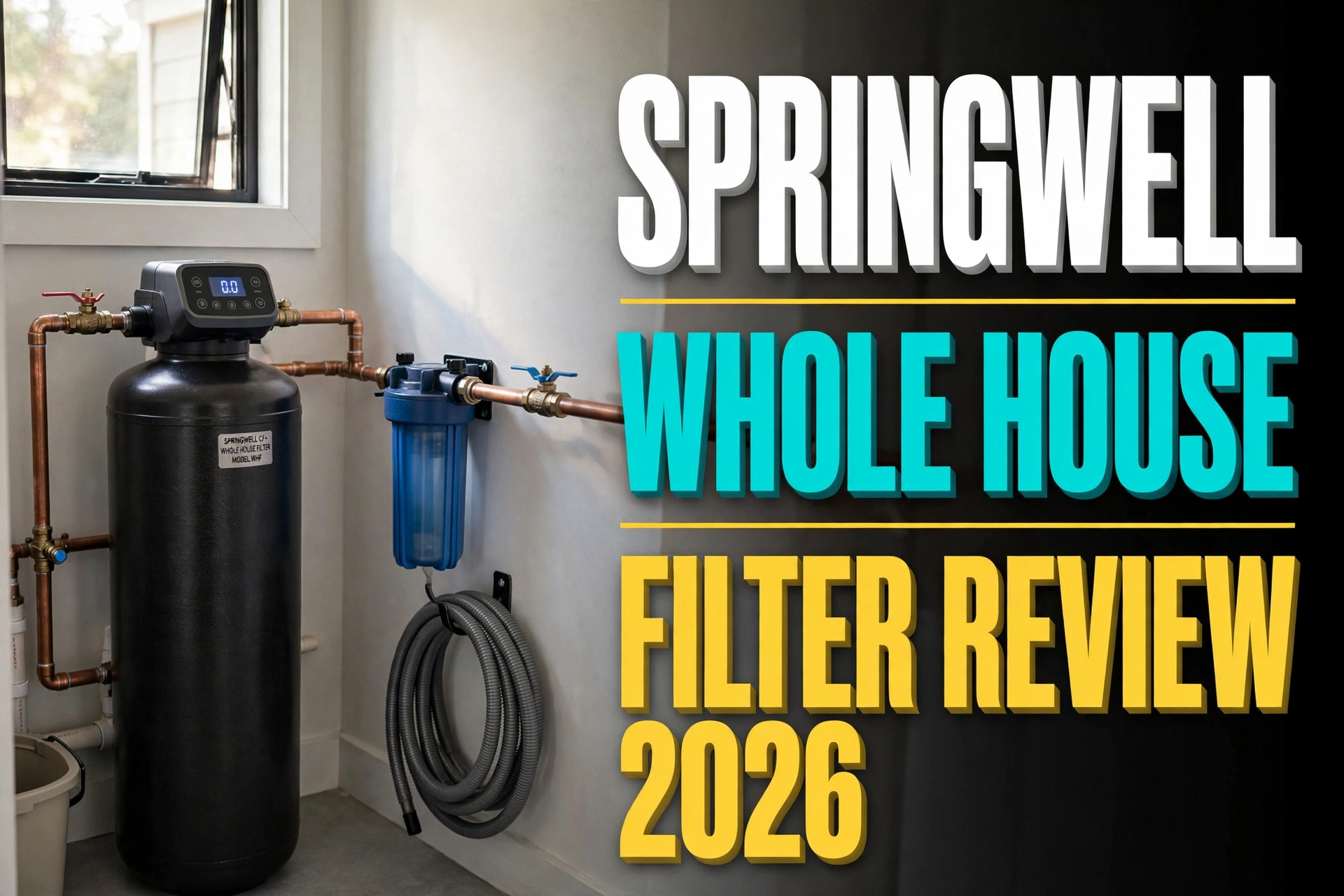

SpringWell Whole House Water Filter Review (2026): Is It Worth It?
★ WHOLE-HOUSE REVIEWYour shower smells faintly of chlorine. The kitchen tap tastes like a swimming pool on some days. And the under-sink cartridge you change every few months only covers one faucet — while every shower, load of laundry, and dishwasher cycle still runs on the same untreated city water. So the question starts forming: is it time to filter the water for the whole house, and is SpringWell — the tank system you keep seeing at around a thousand dollars — actually worth it?
Here is the short answer: the SpringWell CF1 is a legitimate whole-house system for city water, with a manufacturer-rated 1,000,000-gallon capacity that means no main-filter media to replace for roughly a decade, and a lifetime warranty on covered components. But it is not NSF-certified as a complete system, the installation is real plumbing work, and it does not soften hard water or treat well water. If your goal is chlorine and chloramine coverage at every tap in a city-water home, the value proposition holds up. If your problems are iron, hard minerals, or lead, you need a different SpringWell system — or a different brand entirely. This review lays out the certifications, the real owner complaints, and the yearly cost math so you can tell which buyer you are.
Our scores
Table of Contents
Quick verdict
The bottom line: the SpringWell CF1 is the right buy if you are on city water and want chlorine and chloramine filtered at every tap, with almost no maintenance for years. It is not the right buy if you need certified contaminant reduction you can look up in the NSF database, or if your water problems are hardness, iron, or lead — the CF1 is a city-water filter, not a well-water or softening system.
Verdict: strong value for city-water households; buy the right SpringWell for your water, not just the brand name.
Price checked at time of writing; it changes often — see the live price before you buy.

Why you should trust this review
We did not receive a unit and we did not run a lab bench test. Claiming hands-on work we never did would be dishonest, so we will not do it.
What we did instead was research and comparison: we pulled the manufacturer’s spec sheets and warranty terms, cross-checked every certification claim against what independent reviewers found in the public NSF database, read owner reviews and BBB complaint pages to find the problems that keep repeating, and ran the replacement-cost math from rated filter life and real cartridge prices. Every section says what it is based on, so you can check the reasoning yourself.
How we researched
- Compared the SpringWell line against whole-house rivals — the CF1 against the Aquasana Rhino, the PRO+AQUA well-water line, and SpringWell’s own WS and LCR siblings.
- Checked certification claims against the NSF database — specifically whether the system carries whole-system NSF/ANSI certification, or only component-level listings, using the public listings at info.nsf.org as reported by independent reviewers.
- Read owner complaints across retail listings and BBB pages — looking for recurring themes (the same problem mentioned by many owners), not one-off bad experiences.
- Calculated long-term cost math — from the rated 1,000,000-gallon media capacity and current sediment post-filter prices, on a 10-year horizon.
Pros and cons
Pros
- Rated 1,000,000-gallon media capacity — roughly a decade of typical use with no main-filter media to replace, per the manufacturer.
- Manufacturer-stated targets include chlorine, chloramine, VOCs, and PFAS-class chemicals — the common city-water complaints, covered at every tap.
- High rated flow — 9–20 GPM depending on the model, so multi-tap use does not collapse your pressure.
- Lifetime warranty on covered components plus a 6-month money-back guarantee, per the brand’s published terms.
- Very low yearly upkeep — only a sediment post-filter to swap, roughly $30–70 per year (estimate).
Cons
- Not NSF-certified as a complete system — only component-level NSF/ANSI 42 and 53 certifications, as independent reviewers who checked the NSF database report.
- Real plumbing installation — cutting into the main water line means copper work, a shutoff, and for most buyers a plumber’s bill.
- City water only — the CF1 does not remove hardness minerals, iron, or treat well water.
- Salt-free “softening” does not remove hardness — SpringWell’s salt-free options condition water but do not pull minerals out the way a salt-based softener does.
- Owner complaints cluster around installation surprises, return-fee policies, and shipping delays — detailed below.
SpringWell’s product line at a glance
SpringWell is not one product — it is a small lineup, and buying the wrong one is the most expensive mistake in this review. The CF1 is the city-water filter. The WS is the well-water line, built around air-injection oxidation to handle iron (manufacturer-stated up to 7 PPM), sulfur (up to 8 PPM), and manganese. The LCR is a separate two-stage carbon-block system aimed at lead and cysts, with a manufacturer-stated 100,000-gallon cartridge life. And the FutureSoft salt-free option is a water conditioner, not a softener.
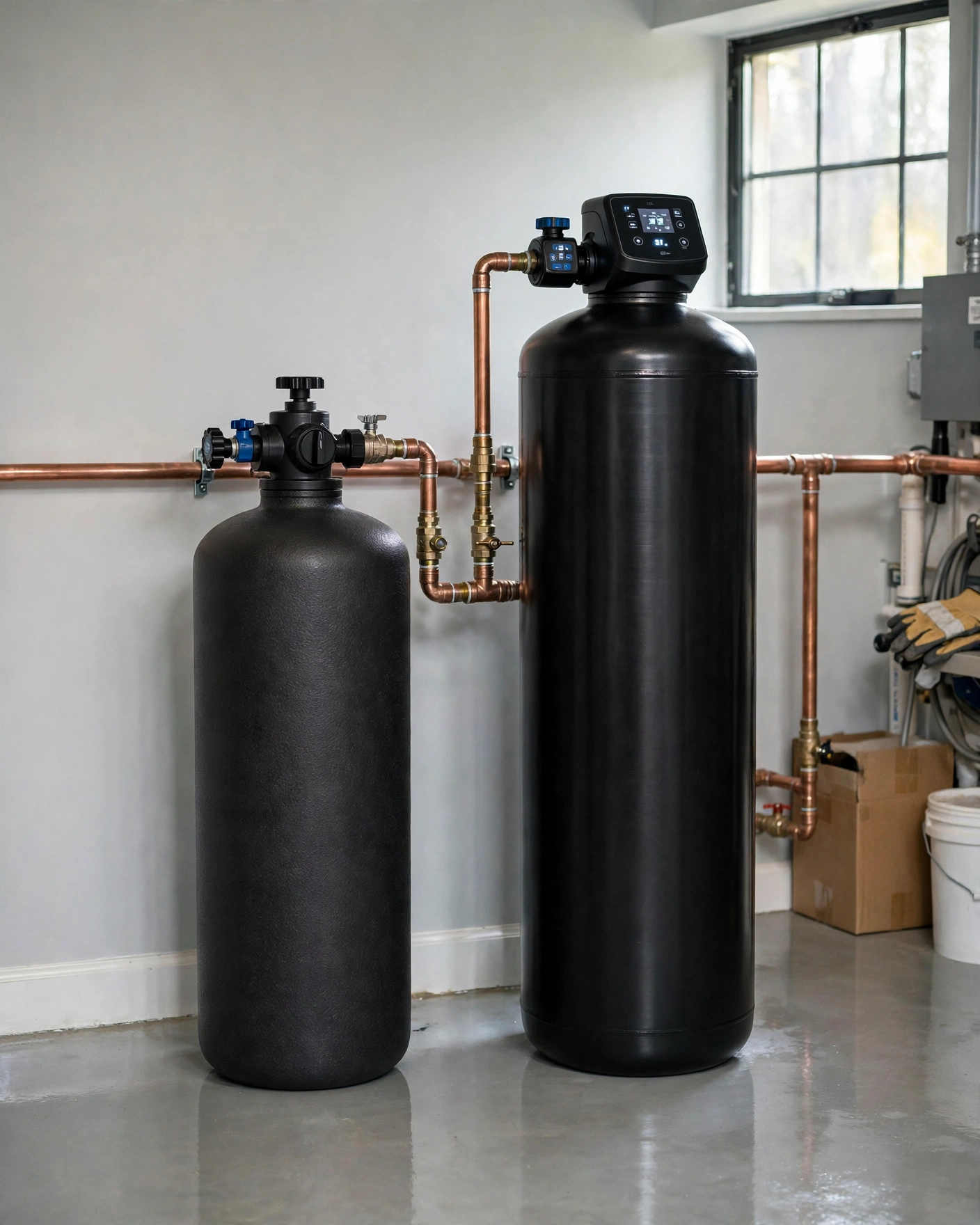
That distinction matters because the marketing can blur it. If your water comes from a municipal supply and your complaints are taste, odor, and chlorine, the CF1 is the right tank. If you are on a well, you need the WS — the CF1’s carbon and KDF media is not designed for iron and sulfur loads, and one BBB reviewer learned the hard way that even pipe compatibility matters: two plumbers told them their galvanized pipes made a whole-house tank a poor fit, a reminder to get a plumber’s assessment of old plumbing before ordering. Our well-water whole-house guide covers the WS-style systems in full.
Certifications (database-checked)
This is the section that separates an honest review from a rewrite of the brochure. The SpringWell CF1 is not NSF-certified as a complete system. Independent reviewers who checked the public NSF listings report that only certain components carry NSF/ANSI 42 and 53 certifications — the assembled system you buy has no whole-system certification entry in the NSF database. SpringWell’s own materials do not claim whole-system certification either; the Products database we maintain lists the CF1 as “NOT certified.”

| Contaminant or claim | Basis | Status |
|---|---|---|
| Chlorine taste and odor | Manufacturer-stated target | Not independently certified as a system |
| Chloramine | Manufacturer-stated target | Not independently certified as a system |
| VOCs, pesticides, herbicides | Manufacturer-stated targets | Not independently certified as a system |
| PFOA / PFOS (PFAS class) | Manufacturer-stated targets | Not independently certified as a system |
| System-level NSF/ANSI 42 or 53 | NSF public database | No listing — components only |
| Fluoride reduction | Manufacturer materials | Not among stated targets |
A word on how to read this table: “manufacturer-stated” means the brand claims it and reviewers corroborate the design supports it — but nobody has independently certified the assembled system against it. That is weaker evidence than an NSF listing, and we will not pretend otherwise. If a contaminant matters to you — lead, fluoride, bacteria — confirm it appears in an actual certification listing for the exact system before you buy.
For context, this is the same standard we apply everywhere: our Aquasana Rhino review notes that Aquasana’s own certification page lists NSF/ANSI 42 and 61 only — broader “42/53/401” claims for that system are refuted. The whole-house category has a certification-transparency problem, and SpringWell is not the worst offender in it.
Design and usability
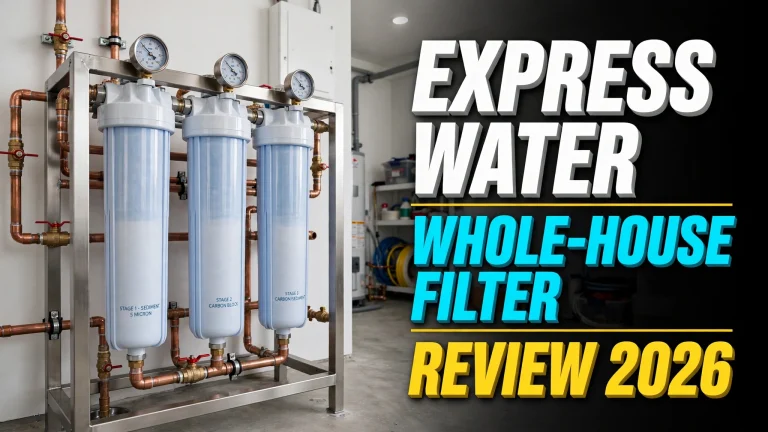
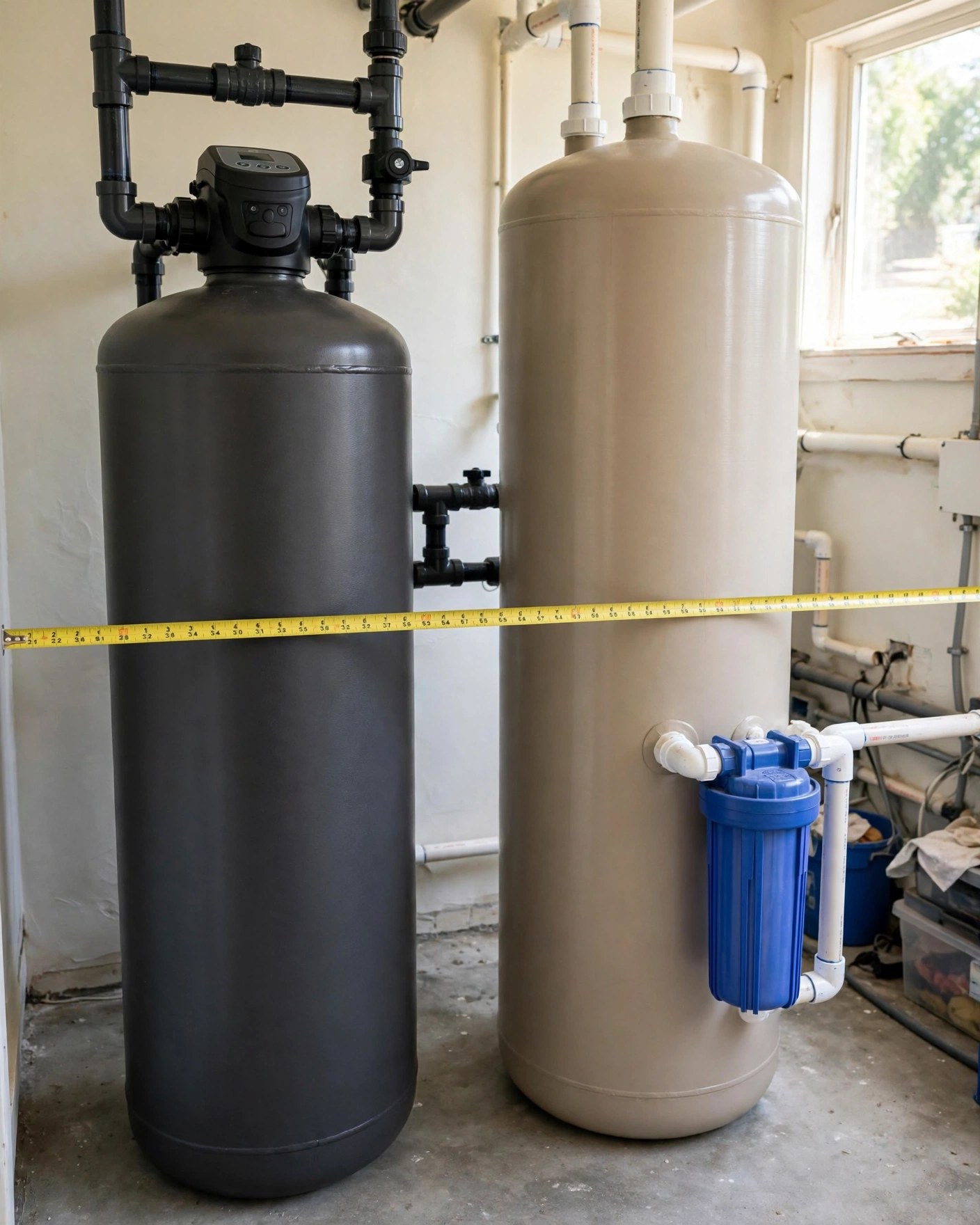
The CF1 is a tank system, not a cartridge system. A tall media tank filled with catalytic carbon and KDF media sits on your main water line, followed by a 5-micron sediment post-filter. Water flows up through the media and out to the house. There is no backwash cycle, no drain line, and no electrical outlet required for the CF1 — one long-term owner notes the main tank has needed no service at all since installation.
Sizing is by household: the line scales from small homes up to 7+ bathrooms, with rated flows of 9–20 GPM depending on the model. The practical implication is that you size once and forget it — but size wrong and you either waste money or choke pressure during simultaneous showers.
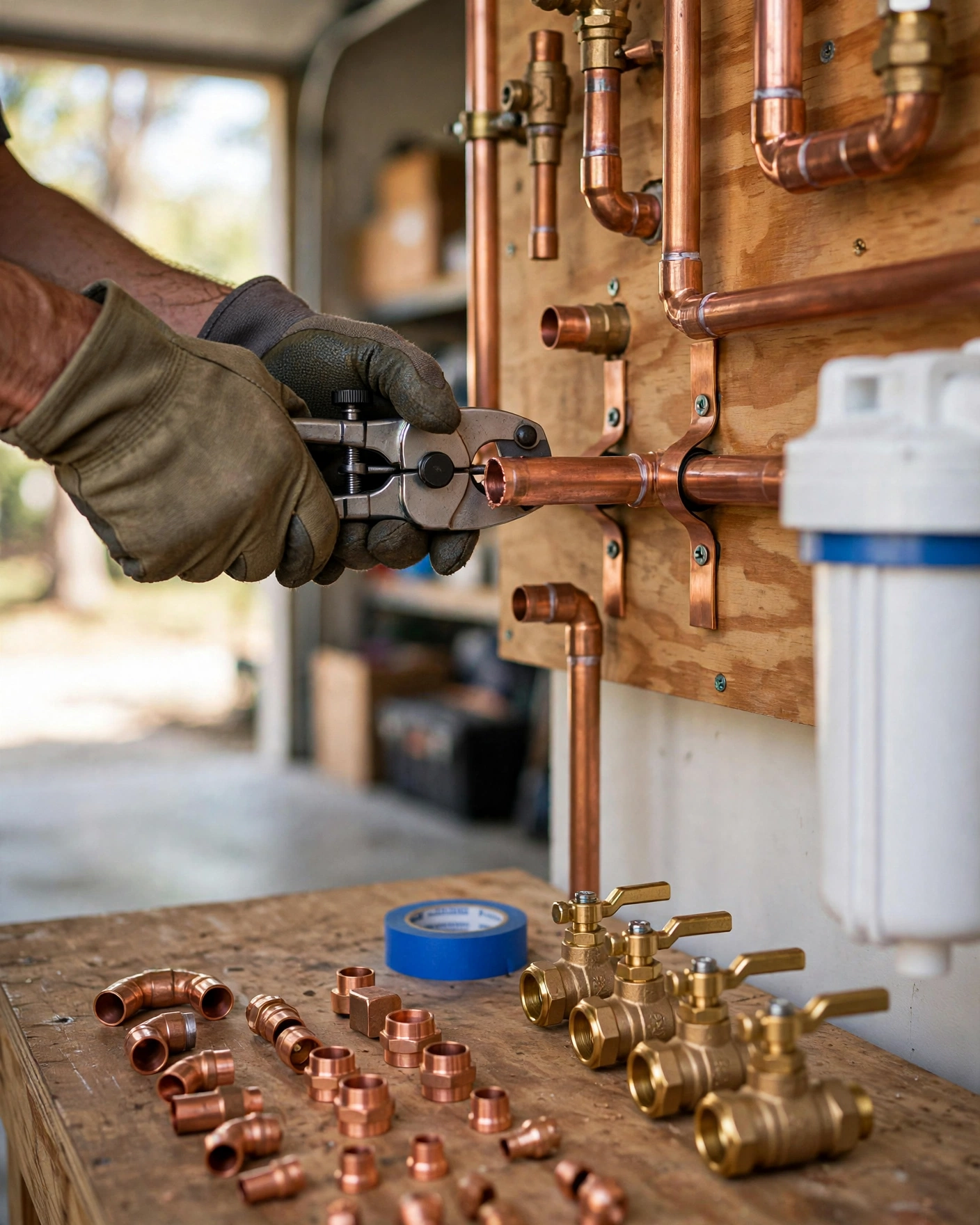
Installation is the part buyers underestimate. This goes on the main line where water enters the house, which means shutting off the water, cutting copper pipe, and sweating or pressing fittings — the kind of job confident DIYers can do in a day and everyone else should hand to a plumber. Two real-world catches worth knowing before you order: one owner’s feed pressure ran above 80 PSI and the system did not perform until a pressure regulator brought it down, and another buyer was warned off by two plumbers because their galvanized pipes made a tank system a poor fit. Check your pressure and your pipe material before you buy, not after.
Filter cost math
The sticker price is only the first number. What matters is the 10-year cost of owning the thing, because whole-house systems are a subscription you pay in cartridges — or, in SpringWell’s case, mostly not:

| Item | Amount |
|---|---|
| System, upfront (estimate) | ~$1,100–1,150 |
| What’s included | Media tank (rated 1,000,000 gallons), control head, 5-micron sediment post-filter housing |
| Yearly upkeep (estimate) | ~$30–70 — one sediment post-filter, swapped every 8–12 months |
| Main media replacement | None — the tank is rated for roughly 10 years of typical use |
| 10-year cost (estimate) | ~$1,450–1,850 |
Two things stand out. First, the tank design is the whole economic argument: cartridge-based whole-house systems need regular cartridge swaps that add up to hundreds per year, while the CF1’s ongoing cost is a single inexpensive sediment filter. Second, the math assumes you keep the system for years — buy it and move in 18 months and you paid for capacity you never used. (All figures are estimates from rated life and current retail cartridge prices; re-check the live price before buying.) For how these numbers compare across the category, see our best whole-house water filters roundup.
What owners complain about
Installation is harder than the marketing suggests. The recurring theme across owner reviews: this is a plumbing project, not an appliance unboxing. Copper cutting, a main-line shutoff, and in many cases a plumber’s bill that the budget did not include.
Return and refund friction. SpringWell advertises a 6-month money-back guarantee, and most buyers never test it — but BBB complaints include a buyer who refused delivery before shipment and was charged a restocking fee of 25% ($575 on a $2,300 order), and another whose replacement tank shipment was delayed for weeks with repeated “warehouse delay” explanations. Read the return terms before ordering, and do not refuse a shipment without confirming the fee first.
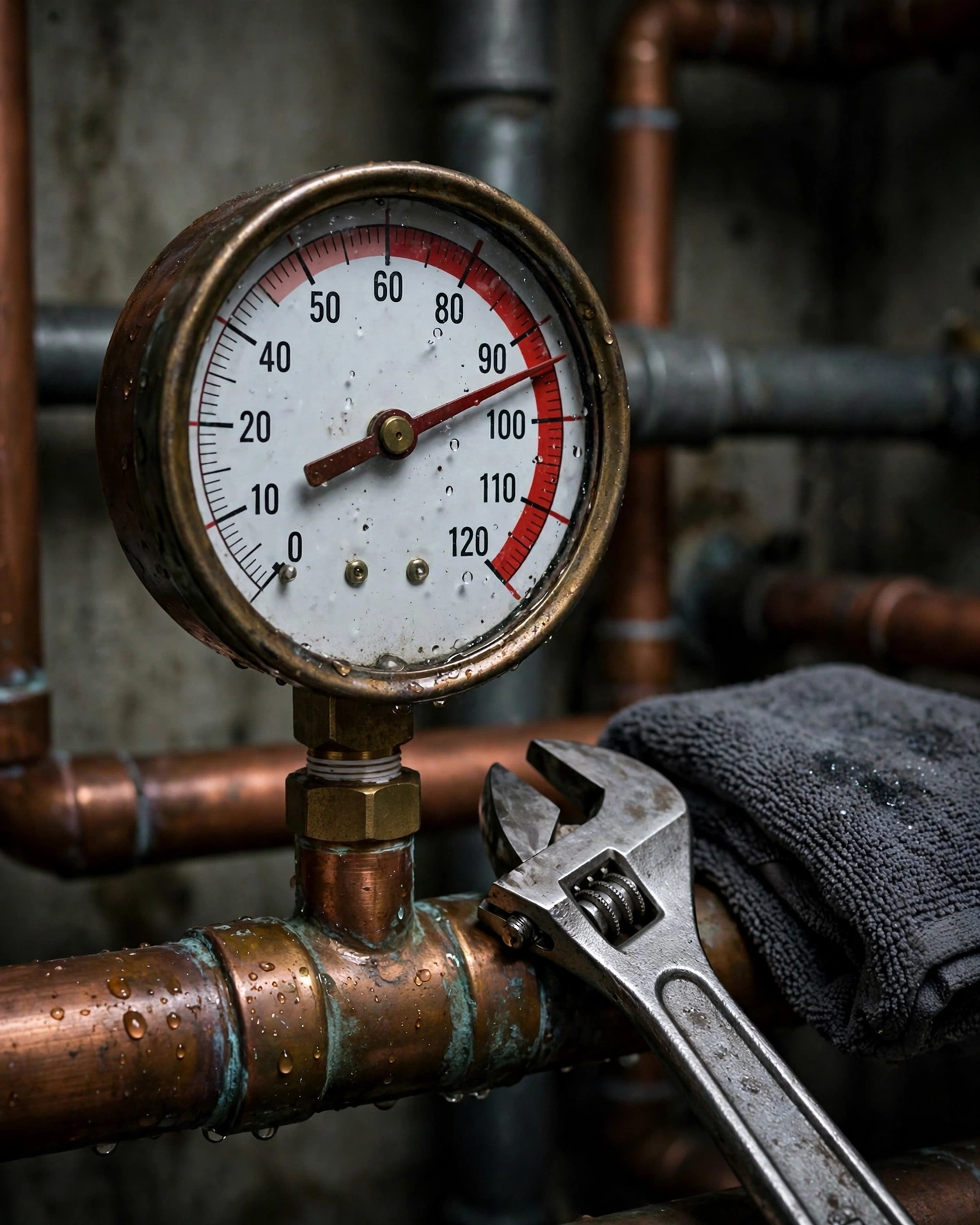
Feed-pressure and pipe surprises. As noted above: feed pressure above 80 PSI caused one system to underperform until a regulator was added, and galvanized pipe was a deal-breaker for one buyer’s two plumbers. These are house problems, not product defects — but they become your problems the day the tank arrives.
The sediment housing is opaque. A long-term owner notes you cannot see the post-filter cartridge without opening the housing — a small window would make maintenance checks easier. Minor, but the kind of detail only years of ownership surfaces.
None of these are hidden gotchas unique to SpringWell — installation friction and return-term surprises show up across the whole-house category. But they are the real-world friction points, and you are better off knowing them now.
SpringWell CF1 vs rivals
Numbers in a vacuum mean little, so here is the CF1 against the alternatives buyers cross-shop most often — drawn from published specs and brand-stated claims, which our verifier re-checks against the same databases.
| SpringWell CF1 | Aquasana Rhino | SpringWell WS | |
|---|---|---|---|
| Typical system price | ~$1,100–1,150 (estimate) | ~$900–1,100 | Check current listing |
| Best for | City water: chlorine, chloramine, taste and odor | City water, NSF-stated chlorine reduction | Well water: iron, sulfur, manganese |
| Filter design | Media tank, rated 1,000,000 gallons | Tank + cartridge stages | Air-injection oxidation tank |
| Whole-system NSF certification | None (components only) | NSF/ANSI 42 and 61 per Aquasana’s certification page | None (components only) |
| Yearly upkeep | ~$30–70 (estimate, one post-filter) | Cartridge swaps (see our Rhino review) | Sediment spin-down every ~24 months |
| Warranty | Lifetime on covered components | Limited (see listing) | Lifetime on tank and valve |
The pattern is clear: the CF1’s real advantage is its maintenance economics — a tank you ignore for years versus cartridges you keep buying. The Aquasana Rhino counters with NSF-stated certification on its own terms, and our Aquasana Rhino review and Aquasana HealthShield review cover those systems in the same detail. And if your water comes from a well rather than a city main, neither city-water tank is your product — the WS line is.
Who should buy it

Buy it if
- You are on city/municipal water and chlorine taste, odor, or chloramine is your main complaint.
- You want whole-house coverage — filtered showers and laundry, not just the kitchen tap.
- You hate maintenance schedules — a tank rated for roughly a decade with one cheap yearly filter is the lowest-fuss design in the category.
- You value the lifetime warranty on covered components as your quality signal in place of system-level certification.
Skip it if
- You need independently certified contaminant reduction you can look up in the NSF database — the CF1 has none as a complete system.
- You are on well water — iron, sulfur, and manganese need the WS line, not the CF1.
- You want softer water — the CF1 does not remove hardness minerals, and salt-free options only condition water.
- You have lead concerns — look at the LCR lead and cyst line instead, or a certified point-of-use system.
The specs
- Brand
- SpringWell
- Model
- CF1
- Media
- Catalytic carbon + KDF media
- Rated capacity
- 1,000,000 gallons (~10 years typical)
- Rated flow
- 9–20 GPM (model-dependent)
- Stages
- Media tank + 5-micron sediment post-filter
- Certifications
- No whole-system NSF listing (component-level 42/53)
- Warranty
- Lifetime on covered components (brand terms)
- Guarantee
- 6-month money-back (brand terms)
- Typical price
- ~$1,100–1,150 (estimate)
- Water type
- City / municipal
- Electrical / drain
- Not required for CF1
FAQs
Is the SpringWell whole house water filter worth the money?
For city-water households whose main complaint is chlorine taste and odor, yes — the CF1’s rated 1,000,000-gallon tank means years of near-zero maintenance at roughly $30–70 per year in post-filters (estimate), which undercuts cartridge-based systems over a decade. It is not worth it if you need certified contaminant reduction, have well water, or want softer water — those need different systems.
Is SpringWell NSF certified?
Not as a complete system. Independent reviewers who checked the public NSF listings report that only certain components carry NSF/ANSI 42 and 53 certifications — the assembled CF1 has no whole-system NSF listing in the database. Treat contaminant claims as manufacturer-stated, not independently certified.
Does the SpringWell CF1 remove fluoride?
Fluoride is not among the CF1’s manufacturer-stated reduction targets — the table in the Certifications section is the complete picture. If fluoride reduction is your goal, you will need a different product, such as a reverse-osmosis system.
How much does a SpringWell system cost per year to run?
Roughly $30–70 per year (estimate) for the CF1: one sediment post-filter swapped every 8–12 months. The main media tank is rated for about 1,000,000 gallons — roughly a decade of typical use — with no media replacement. Add a plumber’s installation fee to the first-year cost if you are not doing the copper work yourself.
Do I need a plumber to install a SpringWell whole house filter?
Not strictly, but most buyers should budget for one. The system installs on the main water line where it enters the house, which means shutting off the water and cutting copper pipe. Confident DIYers can do it in a day; everyone else should hire a plumber. Also check your feed pressure (above ~80 PSI caused problems for at least one owner) and have old plumbing assessed first.
Does the SpringWell CF1 soften water?
No. The CF1 is a filter, not a softener — it does not remove hardness minerals. SpringWell’s salt-free options use template-assisted crystallization to condition water, which reduces scale buildup but does not remove the minerals the way a salt-based softener does, and is not effective for very hard water.
Which SpringWell system do I need for well water?
The WS line, not the CF1. The WS is built around air-injection oxidation for iron (manufacturer-stated up to 7 PPM), sulfur (up to 8 PPM), and manganese — the CF1’s carbon and KDF media is designed for municipal water chemistry, not well-water loads. Our well-water whole-house guide covers the WS-style systems in detail.
What is SpringWell’s warranty and return policy?
SpringWell publishes a lifetime warranty on covered components (tank, valve, heads, fittings — per the brand’s terms) and a 6-month money-back guarantee. Read the return terms carefully before ordering: BBB complaints include a 25% restocking fee withheld on a refused shipment, so confirm the current policy and fees in writing first.
Conclusion
The SpringWell CF1 is a well-designed tank filter for one specific job: giving a city-water household chlorine- and chloramine-filtered water at every tap, with almost nothing to maintain for years. Its economics beat cartridge systems over a decade, and its lifetime warranty is a meaningful quality signal. But it is not a certified system, it is not for well water, and it will not soften your water. Know your water first — then buy the SpringWell that matches it, or a competitor that certifies what you actually need.
Price checked at time of writing; it changes often — see the live price before you buy.
Update log
- Zulqarnain: Review published.