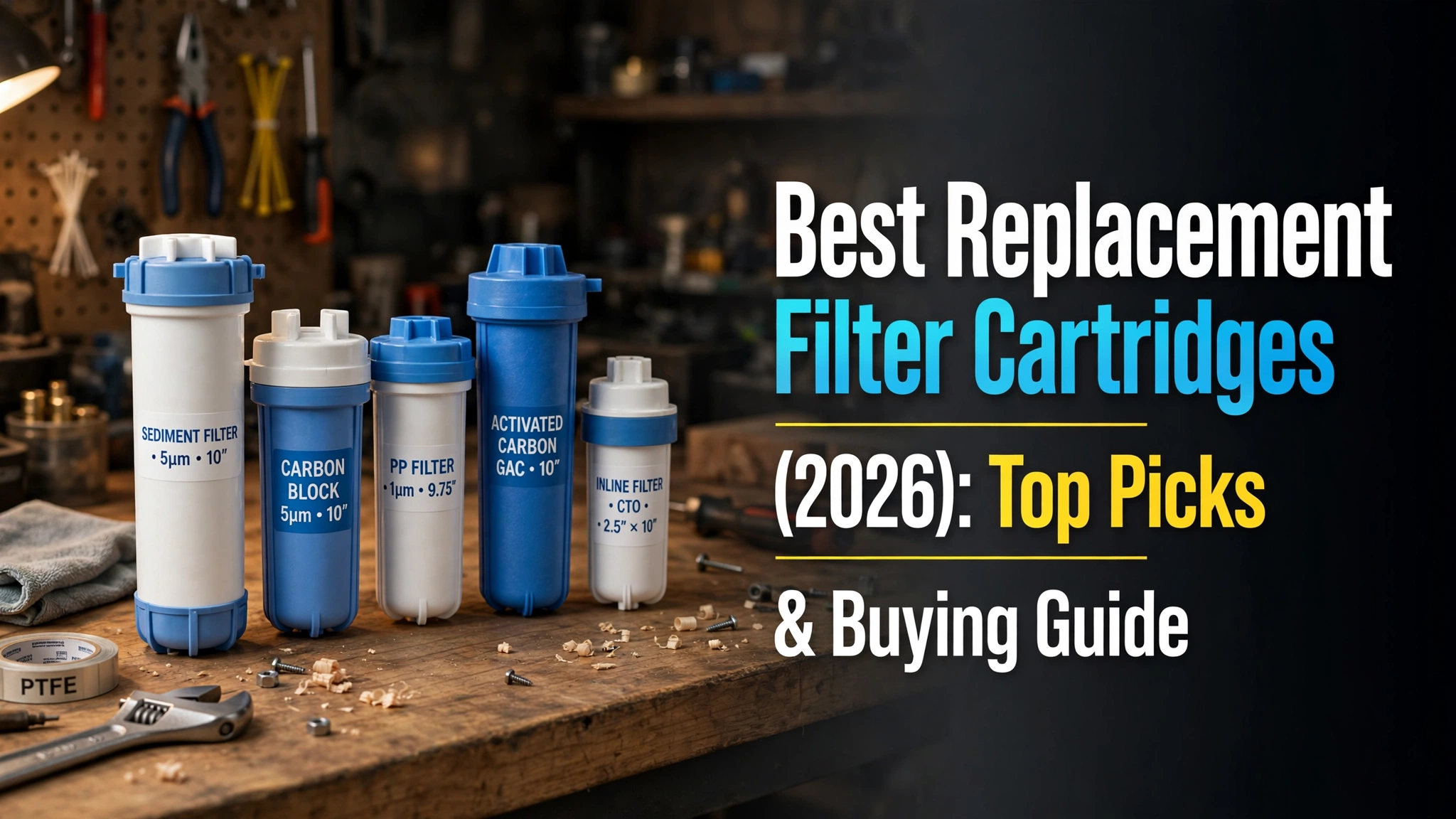

Best Replacement Filter Cartridges (2026): Top Picks & Buying Guide
Replacement Cartridges — Hub
Swapping a water filter cartridge should be the easy part — until the old one’s label is half rubbed off and ten look-alike options show up in search results. Buy the wrong cartridge and you pay twice: once for the part, and again if it doesn’t seal properly and leaks inside the housing. Worse, compatibility codes are confusing enough that many people just reorder by looks, which is the single most expensive habit in home filtration.
The fix is simpler than the market makes it look: match the part number instead of the shape, read the spec sheet for the real replacement interval, and make the OEM-vs-generic call with clear eyes. Below: the cartridges worth knowing, a compatibility-first buying checklist, and the honest yearly-cost math — so you spend on fit, not on guesswork.
Table of Contents
Quick Picks
These are the cartridges people reorder most often, one per common filter type. Pick the one that matches your system, confirm the part number, then read on for the buying checklist and cost math.
Check Current Price
~$45–55 — check current price
Check Current Price
~$25–35 — check current price
Check Current Price
~$25–35 — check current price
Check Current Price
~$20–25 — check current price
Check Current Price
~$70–90 each — check current price
Check Current Price
~$20–60 — check current price
Check Current Price
~$8–15 — check current price

How to Choose a Replacement Cartridge
Every filter type has its own cartridge logic — there is no universal element. From fridge cartridges you swap in seconds to whole-house sumps you open with a wrench, the checklist below works for all of them.
1. Read the part number off the old cartridge
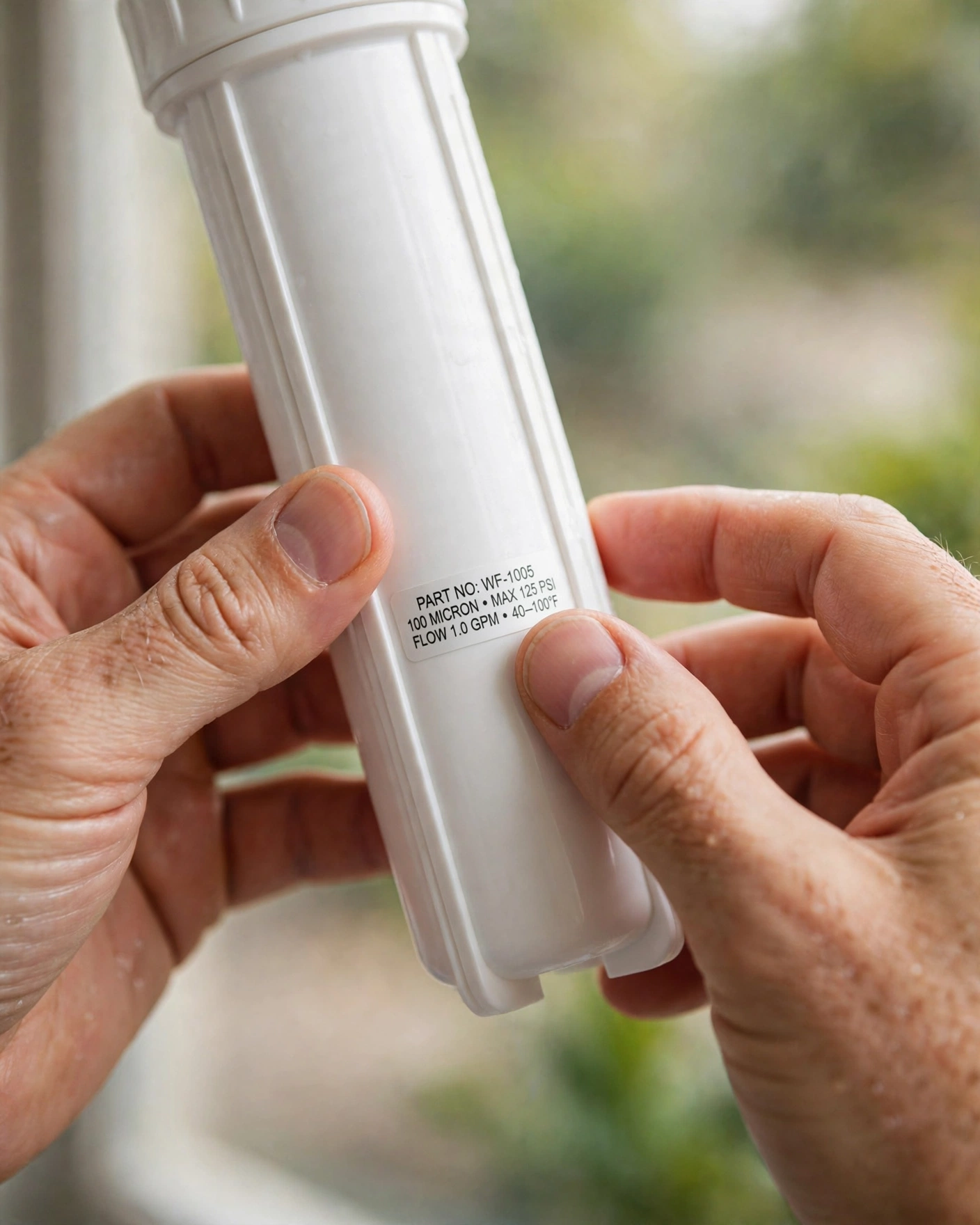
The part number printed on your current cartridge (or in the system manual) is the most reliable identifier you have. Match it on the replacement’s packaging or in the brand’s compatibility tool — serial numbers, housing names, and family names can all overlap across incompatible models.
Never buy by looks alone — identical-looking cartridges can have different fittings or micron ratings.
2. Note the size class
Cartridges fall into a few families: small OEM-specific ones (fridge, shower, coffee maker), standard 10-inch elements, and jumbo 20-inch Big Blue whole-house cartridges. The size class narrows the search; the part number pins it down.
3. Check micron rating and capacity — from the spec sheet only
The micron rating and rated gallon capacity come from the brand’s published spec sheet — not a marketplace listing summary. If a listing doesn’t state both, treat it as a placeholder, not a purchase.
4. Know your indicator-light type
Some indicator lights are simple timers; others measure actual flow. A timer-based light can fire early on a lightly used system and late on a hard-used one — the spec sheet’s gallon rating is the honest schedule.
5. Make the OEM-vs-generic call deliberately
OEM (original equipment manufacturer) cartridges cost more and keep warranty terms simple. Aftermarket options cost less but vary widely: some publish full specs and test data, others almost nothing. Compare listed specs (fit, micron rating, capacity, any verifiable certification listings), check whether your appliance maker limits coverage with non-OEM parts, and buy from reputable sellers. No blanket winner here — judge each cartridge on its own merits.
6. Count your yearly swaps before buying multipacks
Multiply the rated interval by the cartridge price before you stock up — a 3-pack of a twice-yearly cartridge is a deal; a 6-pack of one you change every two years is shelf clutter. The cost section below does the math.
Cartridges span all the filter types we cover, and under-sink RO systems are a special case: they run cartridge sets — usually sediment plus carbon prefilters and an RO membrane — and the stages have different replacement rhythms. Countertop RO units follow the same logic in a smaller footprint, with the membrane typically outlasting the prefilters by a wide margin.
Best Replacement Filter Cartridges
Seven picks, one per common type. Prices are estimates and move often — use the buttons. For verified certification data, check listings on info.nsf.org before buying.
GE XWFE — the fridge workhorse

The XWFE is the GE OEM cartridge most stocked for recent GE side-by-side and French-door models, so it’s easy to find in a hurry. It installs with a quarter-turn fitting, and as a genuine OEM part there’s no warranty ambiguity. For the full fridge-filter picture — models and compatibility quirks — see our refrigerator filters hub.
Pros
- Widely stocked genuine GE OEM cartridge
- Tool-free quarter-turn install
- No warranty ambiguity with GE appliances
Cons
- Premium pricing versus aftermarket alternatives
~$45–55 — check current price
GE XWF — the lower-priced GE OEM option
The XWF is GE’s lower-cost OEM fridge cartridge and a separate SKU from the XWFE — separate spec sheet, separate compatibility list. If your fridge lists the XWF part number, it does the OEM job at a lower shelf price. Confirm the part number first; an XWF is not an XWFE and vice versa.
Pros
- Lower shelf price than the XWFE (~$25–35 estimated)
- Genuine GE OEM part
- Same quick quarter-turn install
Cons
- OEM pricing still above aftermarket options
~$25–35 — check current price
GE FXHTC — the frequent reorder
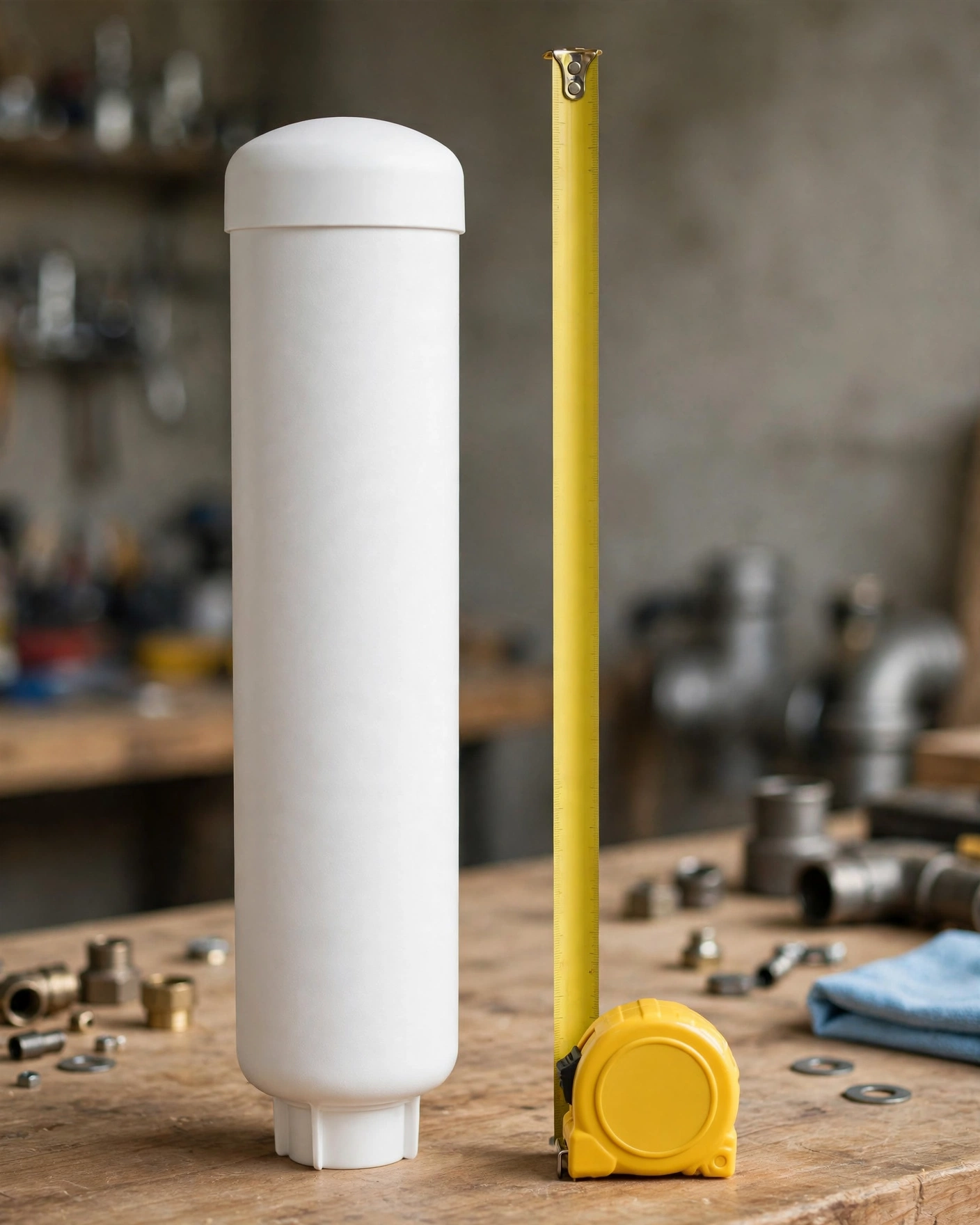
The GE FXHTC is the replacement cartridge for compatible GE whole-house systems — built for point-of-entry flow rates. Whole-house cartridges are the most frequently reordered type on this list, so this is where multipacks actually pay off. More point-of-entry context in our whole-house water filters hub.
Pros
- Built for whole-house flow rates
- Modest per-unit price (~$25–35 estimated)
- Multipacks available for the frequent-reorder pattern
Cons
- Shorter service life than appliance cartridges
~$25–35 — check current price
AquaBliss SFC100 — the shower cartridge
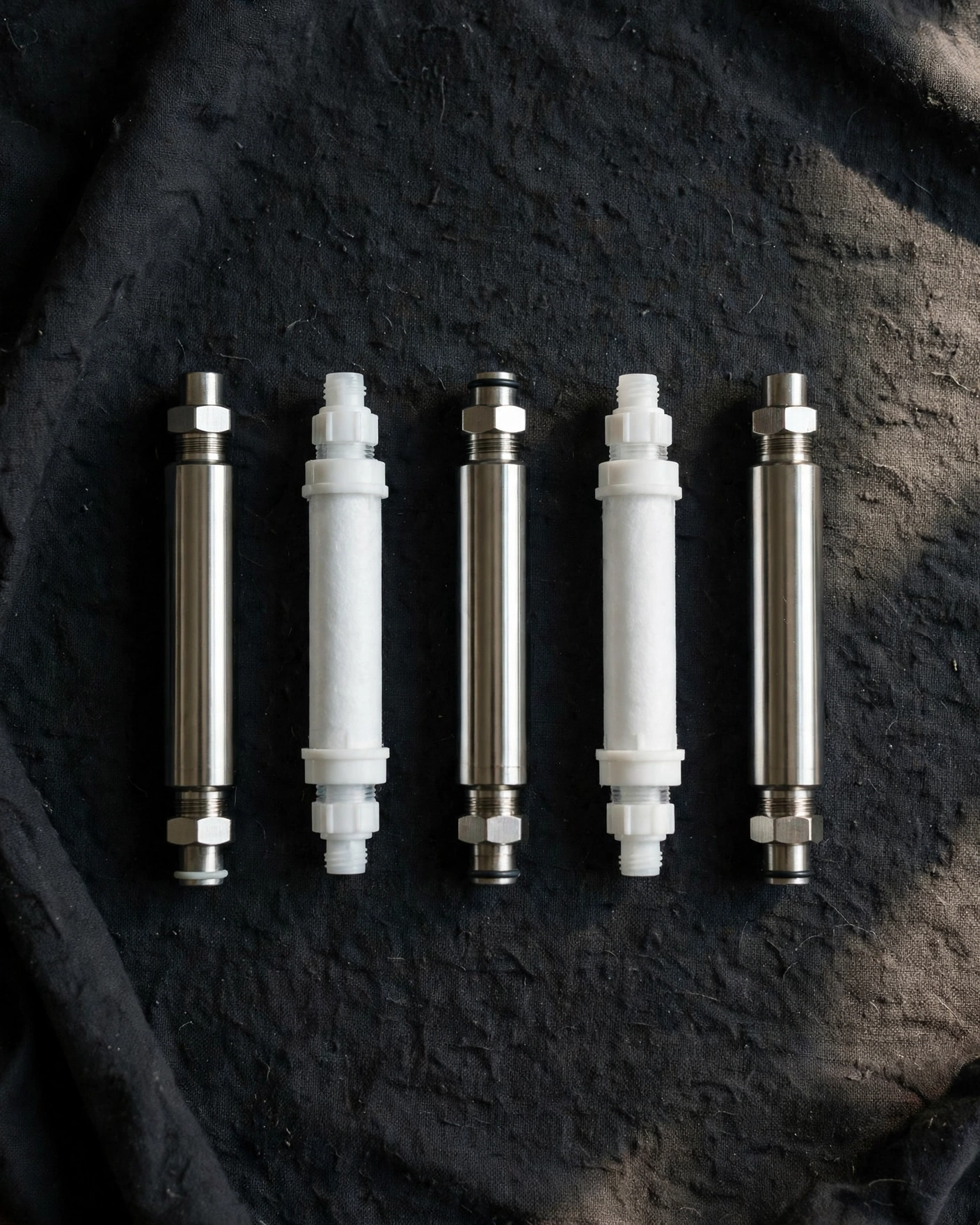
The SFC100 is the replacement cartridge for the popular AquaBliss SF100 shower filter — an inexpensive, quick-swap inline element. The main failure mode is simply forgetting to change it, so keep one spare on hand. Shower-filter background lives in our shower filters hub.
Pros
- Very low per-cartridge price (~$20–25 estimated)
- Quick swap, no tools
- Cheap to keep a spare on the shelf
Cons
- Small capacity — needs regular swaps
- Easy to forget without a reminder
~$20–25 — check current price
ProOne G2.0 9″ elements — the gravity-system investment
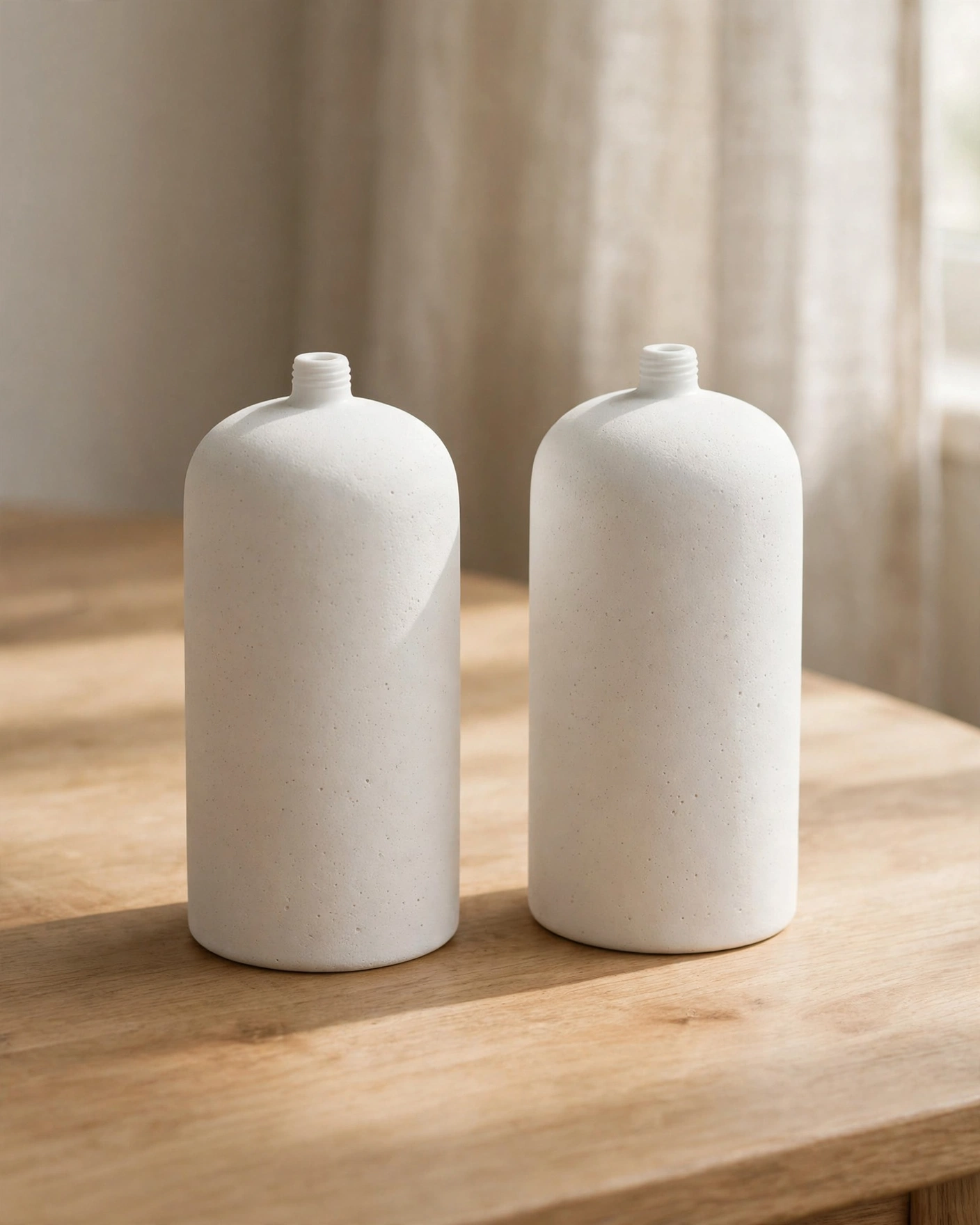
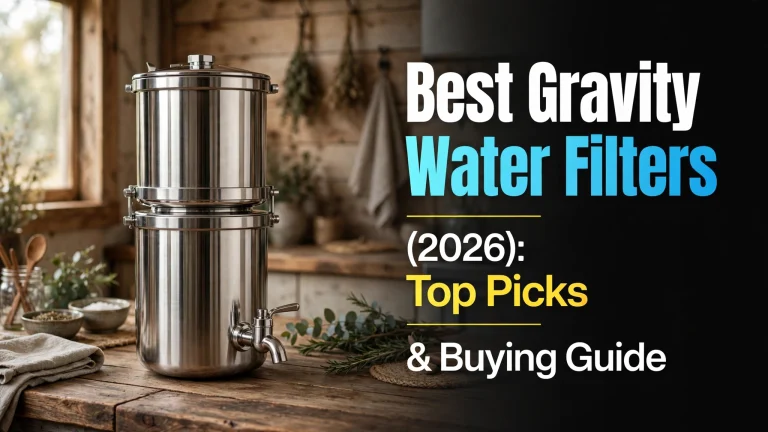
The ProOne G2.0 9-inch elements fit compatible gravity-fed systems. At roughly $70–90 each they look alarming next to everything else here — but gravity elements are rated for very long service lives, so the per-year cost lands in reasonable territory (see the cost table below). Background: gravity water filters.
Pros
- Long rated service life — infrequent swaps
- Simple drop-in replacement for compatible systems
Cons
- Highest per-unit price on this list (~$70–90 each estimated)
- Only fits compatible gravity systems
~$70–90 each — check current price
Big Blue 20″ cartridges — the plumber’s staple

The 20-inch “Big Blue” cartridge is the standard large-format whole-house element — Pentair is the big name, with compatible versions from many brands. It’s the cartridge plumbers keep on the truck because the format is near-universal for point-of-entry housings. Media choice (sediment, carbon block, etc.) matters more here than brand. Our whole-house water filters hub covers the housing side.
Pros
- Near-universal format for Big Blue housings
- Wide media choice (sediment, carbon block, and more)
- Competitive per-unit pricing (~$20–60 estimated)
Cons
- Changed often — budget accordingly
- Media quality varies across compatible brands
~$20–60 — check current price
Coffee-maker charcoal filters, 6-pack — the cheapest habit
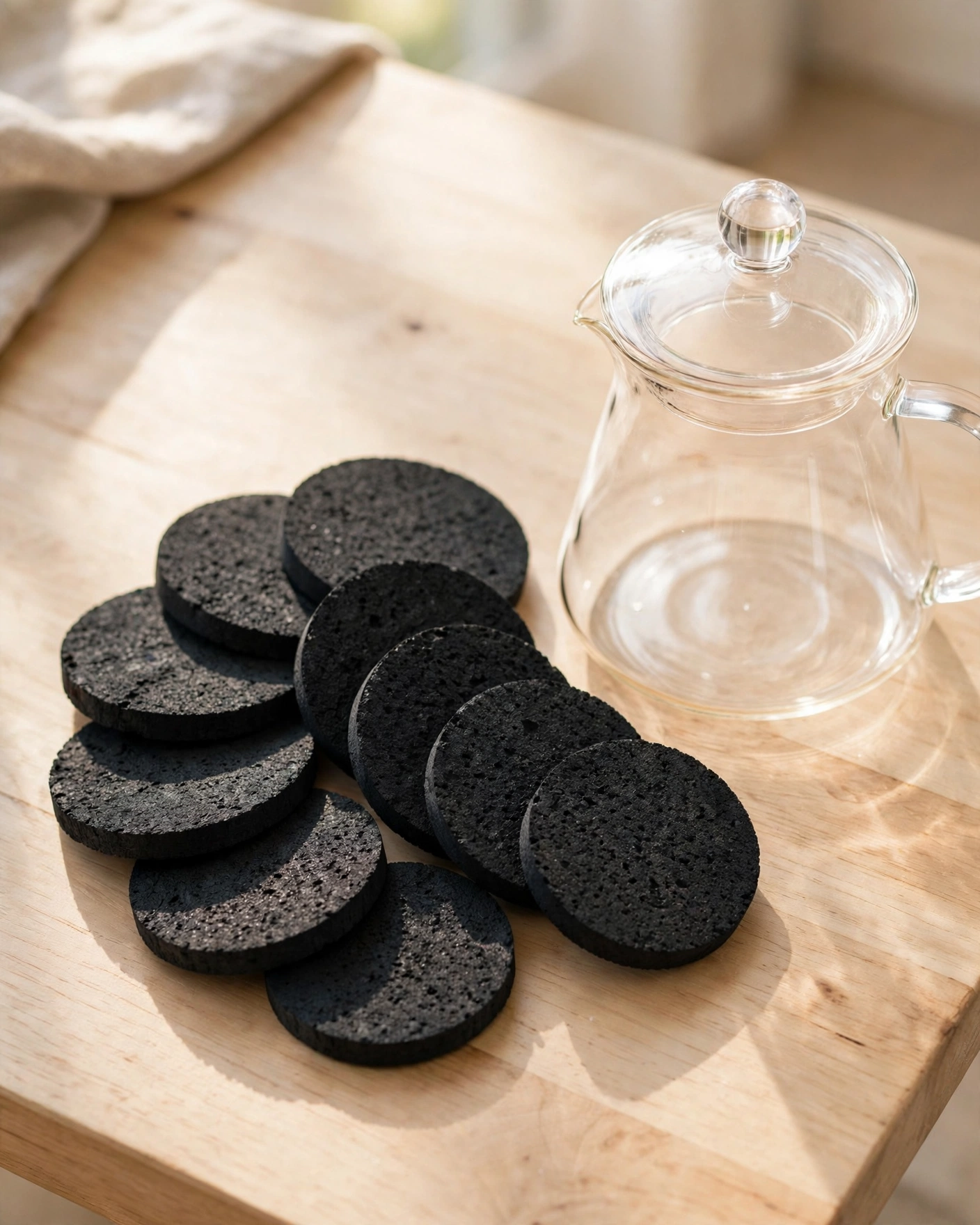
Generic charcoal disk filters for compatible coffee makers are the cheapest cartridge habit on this list — around $8–15 for a six-pack, or roughly a dollar or two per change. They won’t transform your water, but fresh disks keep off-flavors out of the brew. This is where bulk buying is a no-brainer, as long as the disks match your machine’s filter basket.
Pros
- Cheapest cartridge on this list (~$8–15 for six)
- Bulk packs make per-change cost trivial
- Noticeable taste difference when fresh
Cons
- Small capacity — swap often
- Must match your machine’s filter basket
~$8–15 — check current price
Replacement Cartridges Compared
A side-by-side across size classes and price bands. Intervals are brand-rated figures — confirm on your model’s spec sheet. “Check current price” applies everywhere.
| Cartridge | Fits | Size class | Brand-rated interval* | Price band |
|---|---|---|---|---|
| GE XWFE | Compatible GE fridge models | Small OEM | ~6 months (rated gallons) | ~$45–55 |
| GE XWF | Compatible GE fridge models | Small OEM | ~6 months (rated gallons) | ~$25–35 |
| GE FXHTC | Compatible GE whole-house systems | Whole-house | Shorter — check spec sheet | ~$25–35 |
| AquaBliss SFC100 (fits SF100) | AquaBliss shower filters | Inline | 3–6 months (brand-rated) | ~$20–25 |
| ProOne G2.0 9″ | Compatible gravity systems | Tall element | Up to ~12 months — confirm on spec sheet | ~$70–90 each |
| Big Blue 20″ | Standard Big Blue housings | Jumbo 20″ | Varies by media — check spec sheet | ~$20–60 |
| Coffee-maker disks, 6-pk | Compatible coffee makers | Disk | Frequent — check packaging | ~$8–15 |
*Intervals vary by model, household size, and source water — confirm on your cartridge’s spec sheet. Prices are estimates and move often.

For the housing side — sump sizes, wrench tips, point-of-entry layouts — see our whole-house water filters hub.
Cost of Ownership
The cartridge price tag is only half the story. What a filter system really costs you is cartridge price × swaps per year. A cheap cartridge you change four times a year can outspend an expensive one you change every other year — which is exactly why the honest move is to do the math before you buy anything in bulk.
| Cartridge type | Est. cartridge cost | Example swaps/year* | Est. yearly spend |
|---|---|---|---|
| Fridge (GE XWFE class) | ~$45–55 | 2 | ~$90–110 |
| Fridge (GE XWF class) | ~$25–35 | 2 | ~$50–70 |
| Whole-house (GE FXHTC class) | ~$25–35 | 4 | ~$100–140 |
| Whole-house (Big Blue class) | ~$20–60 | 2–4 | ~$40–240 |
| Shower (AquaBliss SFC100 class) | ~$20–25 | 2–4 | ~$40–100 |
| Gravity elements (ProOne G2.0 class) | ~$70–90 each | ~1 | ~$70–90** |
| Coffee-maker disks (6-pk) | ~$8–15 | 2–3 packs | ~$16–45 |
*Example swap counts use typical brand-rated intervals — confirm your model’s rated interval on its spec sheet. **Per ProOne’s up-to-12-month rated replacement for the 9-inch G2.0 element — many gravity systems run two elements, which doubles this figure.
Three cost-saving moves that actually work:
1. Multipacks for frequent swaps. Whole-house, shower, and fridge cartridges are reordered often enough that 2- or 3-packs usually cut the per-unit price. Just make sure the multipack’s part number matches your system exactly — a deal on the wrong cartridge is not a deal.
2. Store them right. Keep cartridges sealed and dry, and don’t stock more than a year of supply — media can degrade on the shelf, which quietly erases the bulk-buy savings.
3. Compare OEM and aftermarket on price, not reputation. Aftermarket cartridges often run much cheaper for the same size class, but quality varies — compare published specs and verifiable certification listings rather than assuming equivalence, and factor warranty limits into the “savings.”
For honest contrast: pitcher filters have the cheapest cartridges in the house to replace — which is part of why pitcher systems are the low-commitment way to start filtering.
Troubleshooting
Most cartridge problems are installation problems, not product problems. Work through these before you reorder anything.
- The cartridge won’t fit. Compare the part number on the new cartridge against your manual or the old label — don’t force it. A cartridge that “almost fits” is the wrong cartridge.
- Leaks at the O-ring after a swap. The O-ring — the rubber gasket sealing the housing — causes most post-swap leaks. Reopen the housing, check the ring sits flat in its groove with no twists, wipe it clean, and apply the food-safe lubricant your manual recommends. Replace cracked rings rather than reusing them.
- Slow flow or odd taste right after replacement. Usually a flushing issue: new carbon cartridges need a flush per the manufacturer’s instructions — a few minutes of running water — to clear carbon dust and air. If that fails, recheck the cartridge is the correct one and the housing is tight but not cross-threaded.
- The indicator light won’t reset. Filter-change lights don’t reset themselves — the reset sequence is in the manual (often a long-press). Go by the spec sheet’s rated interval, not just the light.
- Cross-threaded housing. If the sump won’t screw on smoothly by hand, back off and start again — powering through cross-threads cracks housings.
Buy from reputable sellers and check the packaging looks consistent — and when in doubt, buy direct from the brand.

FAQs
How do I know which replacement cartridge fits my filter?
Match the part number on your old cartridge’s label or in the system manual — fittings, micron ratings, and bypass behavior can differ between cartridges that look identical. Never buy by shape alone. If the label is worn off, search the manufacturer’s compatibility tool by your system model.
Are generic or aftermarket cartridges as good as OEM?
It depends. Some aftermarket cartridges publish full specs and test data; others publish almost nothing — so compare listed fit, micron rating, capacity, and verifiable certification listings rather than assuming equivalence. Also check your warranty terms, since some appliance makers limit coverage with non-OEM parts. No blanket winner: decide cartridge by cartridge.
How often should I replace a water filter cartridge?
Follow the brand’s rated interval on the spec sheet — gallon capacity or time limit, whichever comes first. Heavy use or poor source water shortens the real service life; very light use doesn’t extend it forever, since media can foul. Set a calendar reminder and watch for flow drops or taste changes between swaps.
Why is the water flow slow or the taste off right after I change the cartridge?
New cartridges usually need a flush per the manufacturer’s instructions — a few minutes of running water — to clear carbon dust and air. If that fails, check the O-ring is seated flat, the housing is tight but not cross-threaded, and you installed the correct cartridge, since a wrong-size element restricts flow.
Can I save money buying replacement cartridges in bulk?
Yes, with two conditions. Multipacks lower the per-unit price for cartridges you swap often — but only stock what fits your system, and keep under a year’s supply, since media can degrade on the shelf. Prices move often, so check the current price before buying.
Do I need to reset anything after changing a cartridge?
Many systems have a filter-change light that must be reset manually — the steps vary by model, so follow the manual (often a long-press). Note that some indicators are simple timers while others measure flow, so a timer-based light can fire before the media is spent.
What should I do with old filter cartridges?
Some local recycling programs accept spent cartridges and some don’t — check your area’s rules. A few brands run take-back programs, so check the brand’s site. Otherwise, dispose of old cartridges with household waste per local rules.
Conclusion
Replacement cartridges reward one habit above all: buying on fit, not on brand loyalty or price alone. Match the part number, read the spec sheet for the real interval, and run the yearly-cost math before you stock up. Do that, and the cartridge aisle stops being confusing — it becomes the cheapest maintenance habit in your house.