
Best Gravity Water Filters (2026): Top Picks & Buying Guide
Gravity Filters — Hub
Clean drinking water sounds simple until the power goes out, your landlord won’t allow any plumbing work, or your cabin has no pipes to begin with. A pitcher is too small for a family, an under-sink system needs installation you may not be allowed to do, and bottled water turns into a weekly expense and a mountain of plastic.
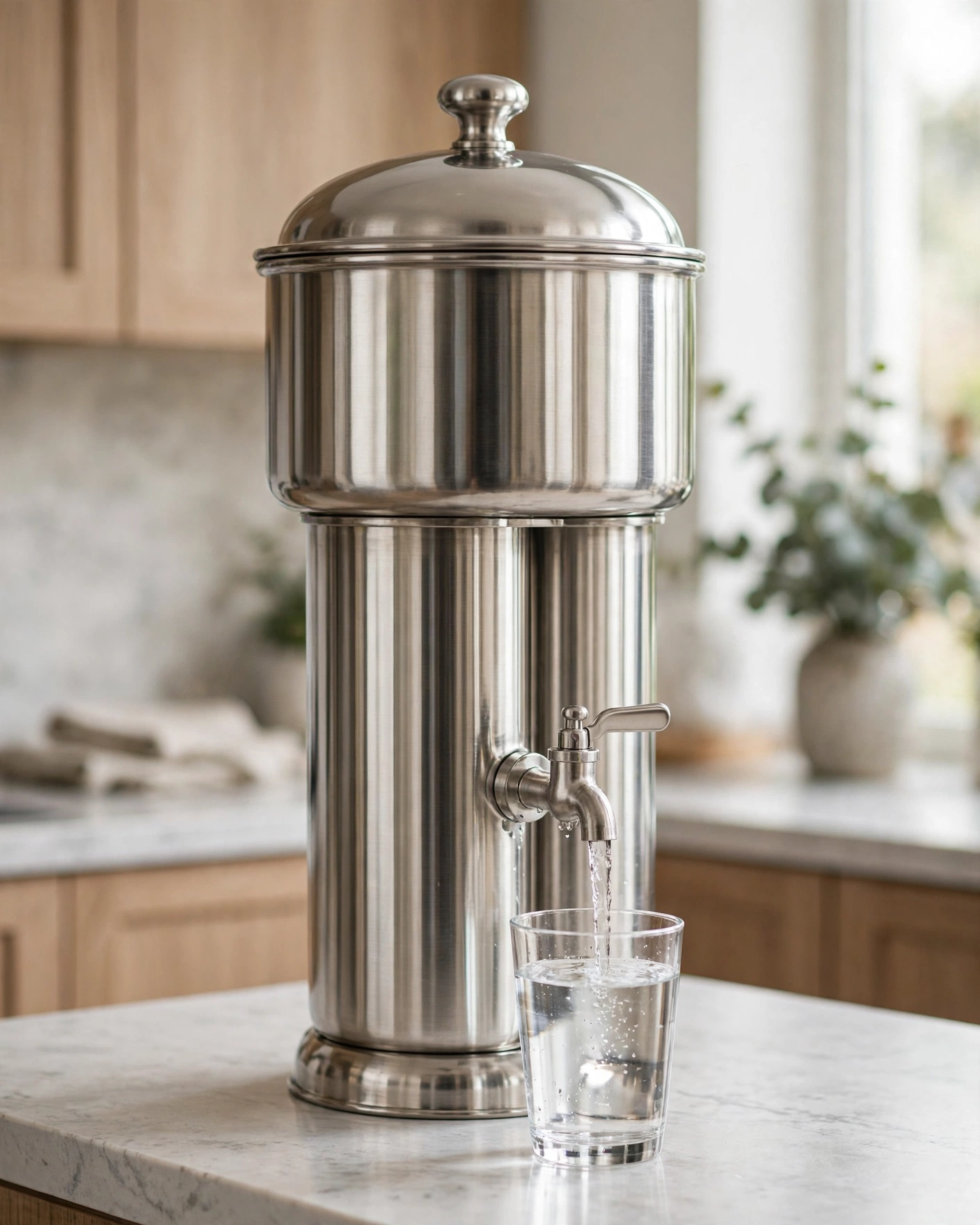
The answer is a gravity water filter: two stainless-steel chambers stacked together — tap water poured in the top, clean drinking water drawn from a spigot at the bottom. No electricity, no water pressure, no tools, no landlord. It’s the simplest serious filter you can own, and this guide covers how gravity filters work, what to check before buying, and which model is the best gravity water filter for most homes — plus the alternatives worth your money.
Table of Contents
Quick Picks
In a hurry? Our overall pick is the ProOne Big+ — a 3-gallon workhorse with the strongest advertised testing of any system here. But if you drink less than a gallon a day and just want better-tasting tap water, be honest with yourself: a pitcher filter costs far less and may be all you need.
How Gravity Filters Work
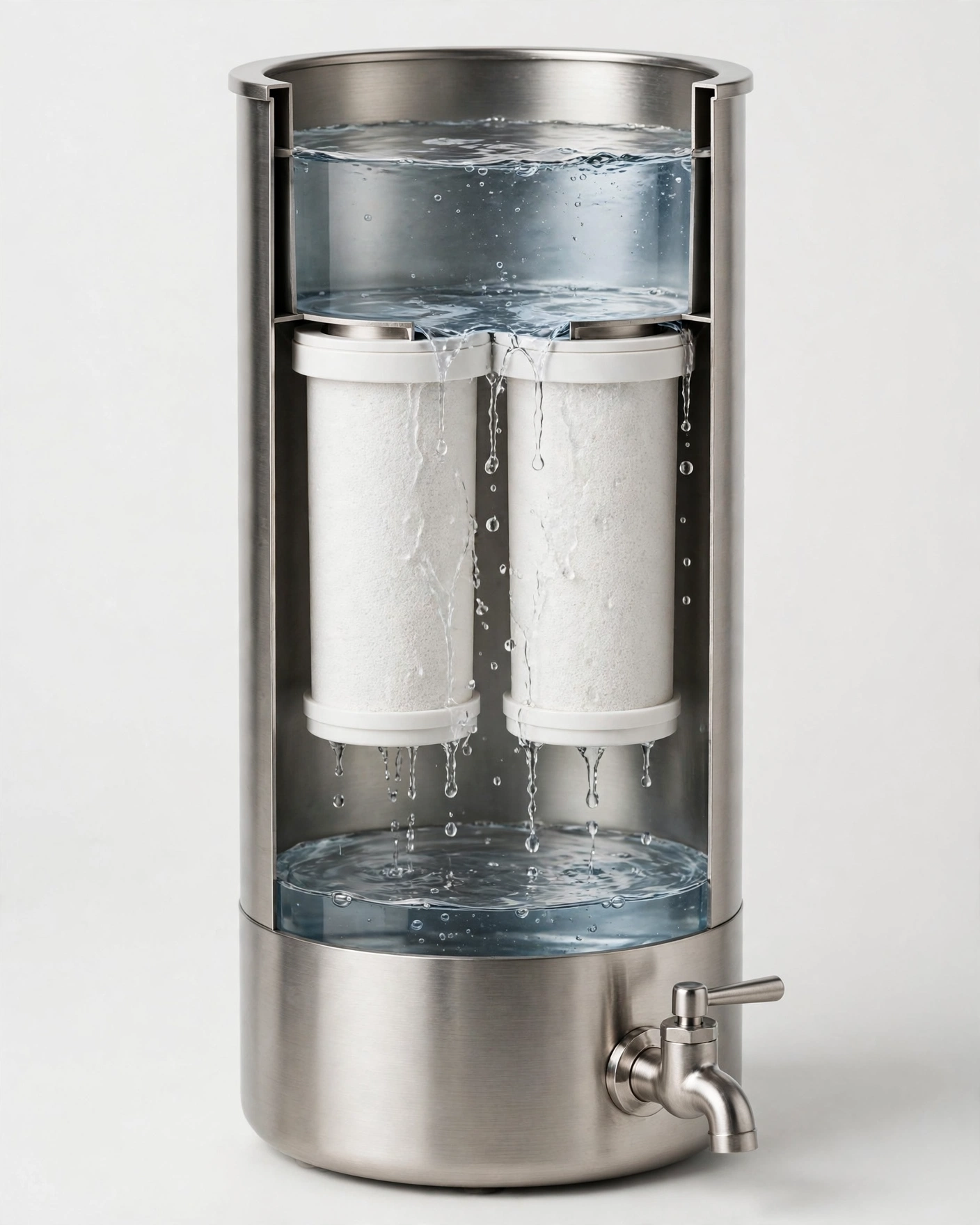
A gravity filter has two parts and zero moving parts. You pour tap water into the upper chamber, filter elements hang from its floor, and gravity pulls water through them, drop by drop, into the lower chamber. Open the spigot at the bottom when you want a glass. That’s the entire machine — physics does the pumping.
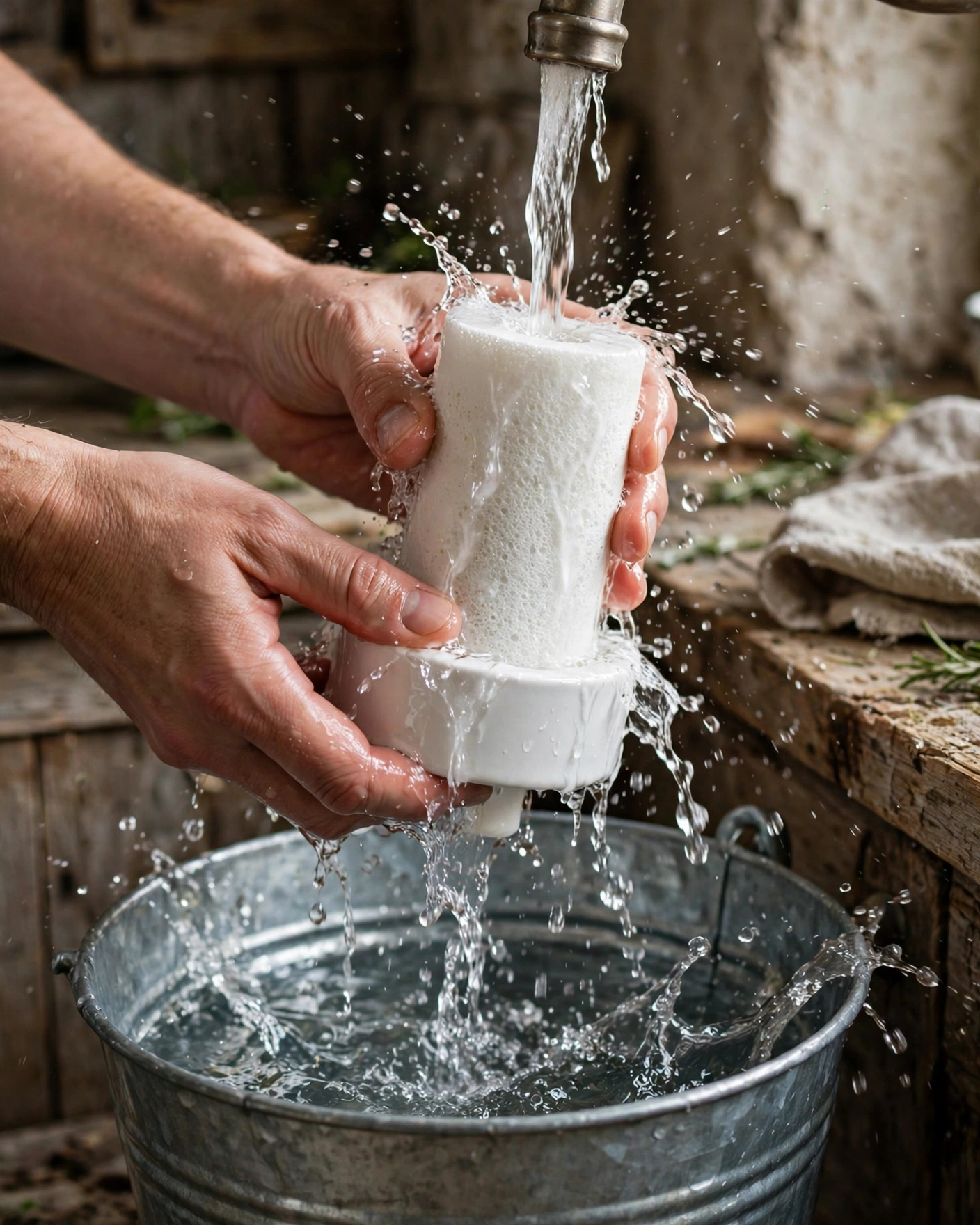
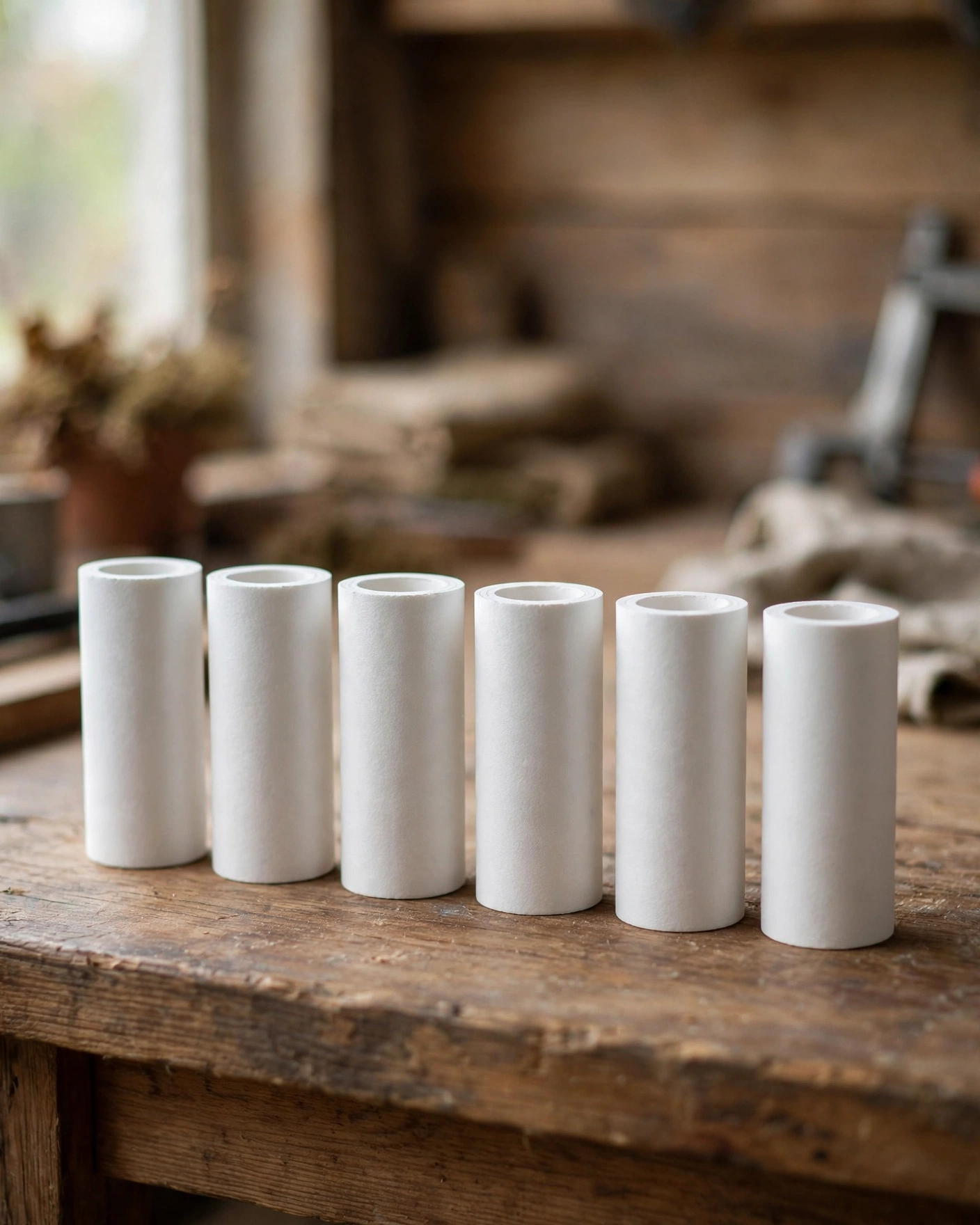
The elements are usually ceramic shells with an activated-carbon core, or composite carbon-block cartridges. Ceramic elements can be scrubbed clean and reused for a long time — a big deal off-grid, where you can’t order a replacement overnight. Carbon-block elements trade that longevity for better taste and odor reduction, since carbon grabs chlorine and the chemicals that make tap water taste like a pool.
Set your expectations on speed before you buy. Gravity is patient — a full upper chamber takes hours to drain, not minutes. Most owners fill the top chamber in the evening and draw water the next morning. If you need a gallon of filtered water in thirty seconds, this is not your category; see our overview of water filter types for faster options.
One more thing this category is famous for, and it’s worth saying plainly: some gravity-filter brands advertise impressive-sounding test results on their boxes and websites. We don’t treat marketing pages as proof. If a brand claims certification against an NSF/ANSI or IAPMO standard, look the listing up yourself in the public certification database at info.nsf.org before you rely on it. “Tested to NSF standards” is not the same as “NSF certified” — the first phrase has no official meaning.
How to Choose
Match the system to your household and your actual daily water use. Run through this checklist first:
- Capacity vs. household size. The common sizes are 2.25, 2.5, and 3 gallons. A family of four drinking half a gallon each empties a 3-gallon system about once a day — comfortable. With a 2.25-gallon system, that family is refilling twice a day, which gets old fast.
- Element type and lifespan. Ceramic elements scrub clean and last longer; carbon-block elements taste better but get replaced sooner. Find the element’s gallon rating on the spec sheet and divide by your daily use — that’s your real replacement interval.
- Fluoride option. Some systems sell add-on fluoride cartridges. Treat any fluoride claim like any other contaminant claim: check the brand’s spec sheet and the public certification database, not the marketing copy.
- Materials. Most are 304 stainless steel — food-safe and easy to wipe down. Cheaper housings use plastic; check that the spigot and seals feel solid, since those leak first.
- Off-grid portability. For a camper or cabin, weight and height matter — a full 3-gallon urn is heavy and may not fit under low cabinets.
- Replacement element cost. The system price is only half the story — check what a new set of elements costs and how often you’ll buy them. We break this down in Cost of Ownership below.
Certification reality check: we treat every certification claim on this page as “advertised by the brand” until it’s confirmed in the public database at info.nsf.org. If you can’t find the listing there, buy the system for what it observably does — cleaner-tasting water — not for the acronyms on the box.
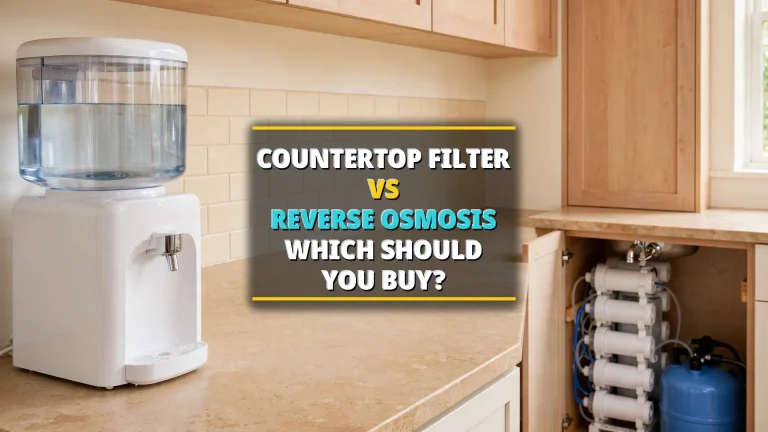
Two alternatives worth ruling out first: if you have a power outlet and want better-tasting water with no installation, a countertop RO system filters faster. And if your tap water is decent municipal water and your fridge has a dispenser, your refrigerator filter may already do the job — a gravity system would be redundant.
Best Gravity Water Filters
These are the systems we’d actually buy, ranked for a typical household. Every price is an estimate — confirm at checkout.
Best overall ProOne Big+ (3-gal)
The Big+ is the default recommendation: a 3-gallon stainless system for families, using ProOne’s G2.0 9-inch elements. The brand advertises IAPMO 42, 53, 372, and 401 — the strongest testing claim in this roundup. That’s the brand’s claim; confirm the listing in the public certification database before relying on it.
Pros
- 3-gallon capacity suits a family of 3–4
- Strongest advertised testing story in the category
- Wide availability of replacement G2.0 elements
- Optional fluoride add-on elements
Cons
- Certification claims need database verification
- Tall and heavy when full
- Premium price vs. budget stainless options
Around $180–220 (check current price — estimates only)
Check Current PriceAvailability note (Oct 2026): Culligan has acquired ProOne and is moving the line to Culligan MaxClear — ProOne-branded systems are being sold while inventory lasts. Culligan states its MaxClear 7-inch filters fit ProOne housings (Big+, Traveler+, Big II), so replacement elements remain available under the new name.
Berkey alternative Boroux Legacy (3-gal)
Berkey dominated this category for years — then got tangled in a years-long EPA dispute over its elements (more below). Boroux comes out of the old Berkey distributor network, positioned as the compliant successor: the familiar 3-gallon stainless design without the regulatory baggage. Its certification claims are unverified, so the check-the-database rule applies doubly here.
Pros
- Familiar Berkey-style 3-gallon design
- Positioned as a regulation-compliant successor
- Good option for owners replacing a dead Berkey
Cons
- Certification claims currently unverified
- Highest price on this list
- Smaller track record than the original brand
Around $350–400 (check current price — estimates only)
Check Current Price
Portable ProOne Traveler+ (2.25-gal)
The Traveler+ is the Big+’s smaller sibling, built for the situations where gravity filters shine: camping, RVs, boats, off-grid cabins. Same element family in a size one person can carry. For a couple in a camper, it’s the sweet spot — big enough to avoid hourly refills, small enough to pack.
Pros
- Packable size for camping, RVs, and cabins
- Same ProOne element family as the Big+
- No power or plumbing needed off-grid
Cons
- 2.25 gallons means frequent refills for a family
- Certification claims need database verification
Around $130–170 (check current price — estimates only)
Check Current Price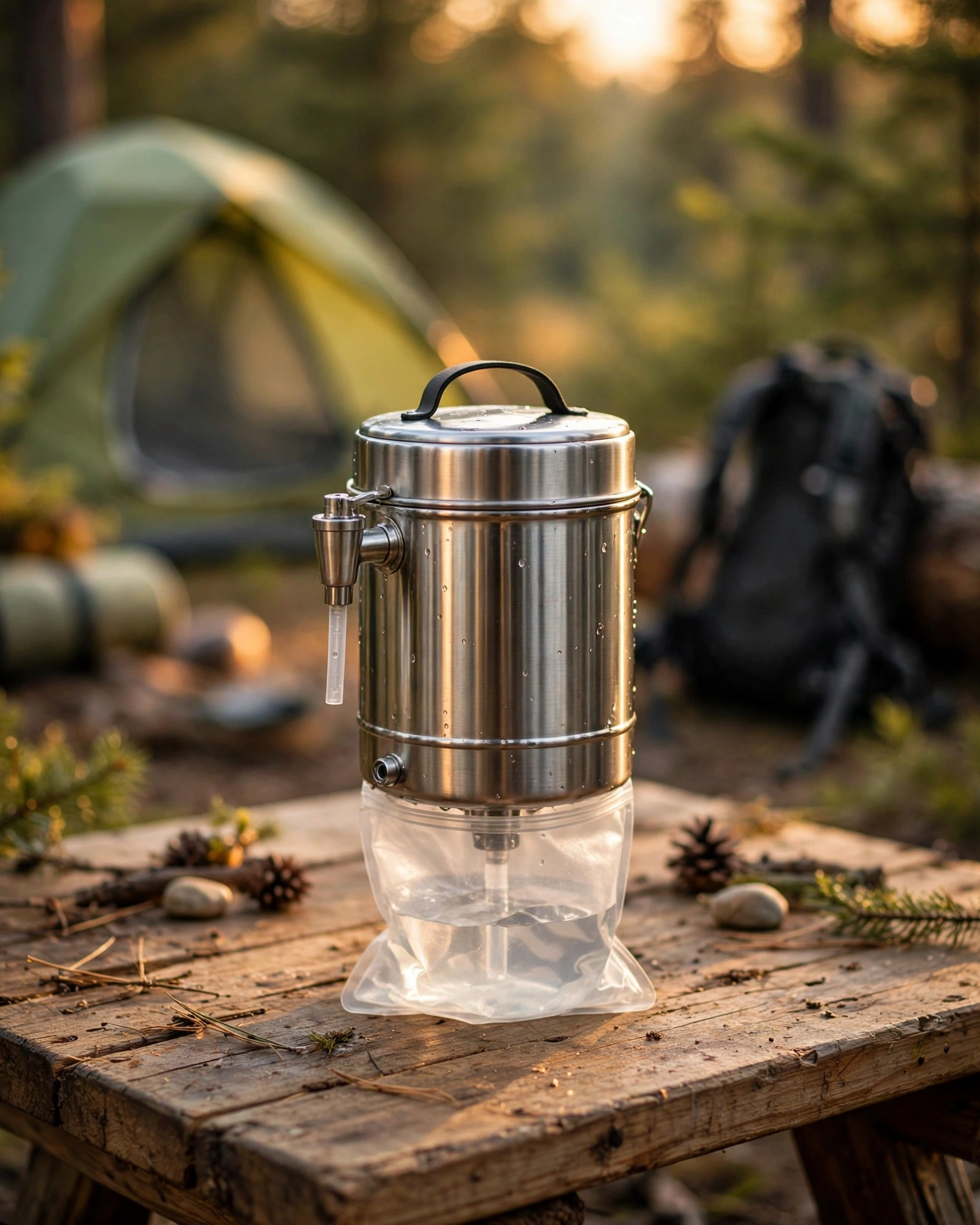
Classic ceramic British Berkefeld (8.5L / 12L)
British Berkefeld is the ceramic-filter veteran — Doulton’s gravity line predates the American brands, and ceramic is the original gravity technology: scrub it clean, keep using it. An optional fluoride cartridge exists. The brand lists NSF 42/53/401 — confirm at info.nsf.org before relying on it.
Pros
- Ceramic elements you can scrub and reuse
- Long-established brand with deep parts availability
- Optional fluoride cartridge
Cons
- Smaller capacities (8.5L / 12L) than US 3-gallon systems
- NSF claims need database verification
- Slower flow than carbon-block systems
Around $180–260 (check current price — estimates only)
Check Current Price
Budget Purewell 3-stage (2.25-gal)
Purewell sells the same basic stainless setup for roughly half the price of the big names. The trade-off: an “NSF/ANSI certified” claim we could not verify in the public database, and thinner owner history. If budget decides, it’s a reasonable entry point — buy it for clean-tasting water, not for the acronyms.
Pros
- Roughly half the price of premium systems
- Stainless housing at a budget price
- 3-stage element setup out of the box
Cons
- Certification claim unverified in the public database
- Thinner track record and owner reviews
- 2.25-gallon size needs refills for families
Around $100–130 (check current price — estimates only)
Check Current PricePrepper pick Alexapure Pro (2.5-gal)
Alexapure Pro is the emergency-prep favorite: a 2.5-gallon stainless system marketed to the preparedness crowd, with elements that are easy to stockpile. Its certification claims are unverified — but as a no-power backup for storm season or grid outages, the concept is exactly what this category is for.
Pros
- Marketed for emergency preparedness — stockpile-friendly
- Simple stainless build, easy to store
- Fast flow for a gravity filter (~1 gal/hour in third-party testing)
Cons
- Certification claims unverified
- 2.5 gallons limits family use
- Brand recognition lags the big names
Around $250–300 (check current price — estimates only)
Check Current PriceAlso worth a look: the ProOne Big II (2.5-gal, roughly $150–200) sits between the Traveler+ and the Big+ — a middle size for households that find 3 gallons too tall and 2.25 gallons too small. Check Current Price
A word about Berkey: the Big Berkey (2.25-gal) was the most famous gravity filter ever sold, but the brand has been tied up in an EPA dispute over its filter elements since 2022, and dealer reports describe a court decision in September 2026 that kept the restrictions in place. Because the situation is unresolved and availability is unreliable, we don’t recommend buying a Berkey right now — verify the current status yourself before considering one.
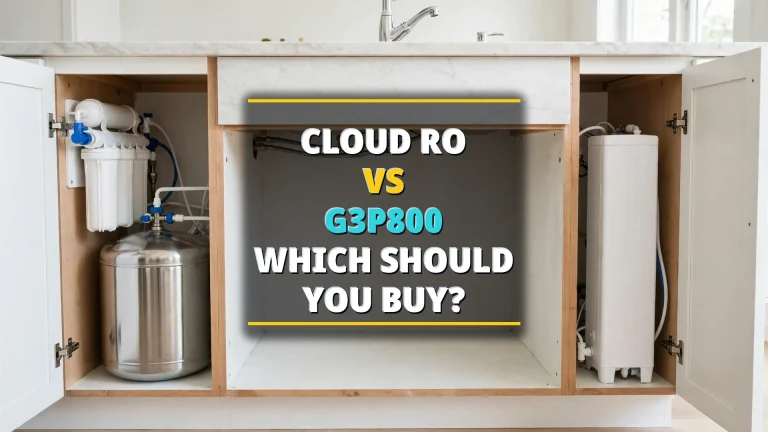
If you own your home and the idea of refilling a chamber every day sounds like a chore you’ll abandon by March, consider the permanent alternative instead: an under-sink RO system filters automatically every time you turn on the tap, with no refilling ritual at all.
Gravity Filters vs Pitchers vs Countertop RO vs Whole-House
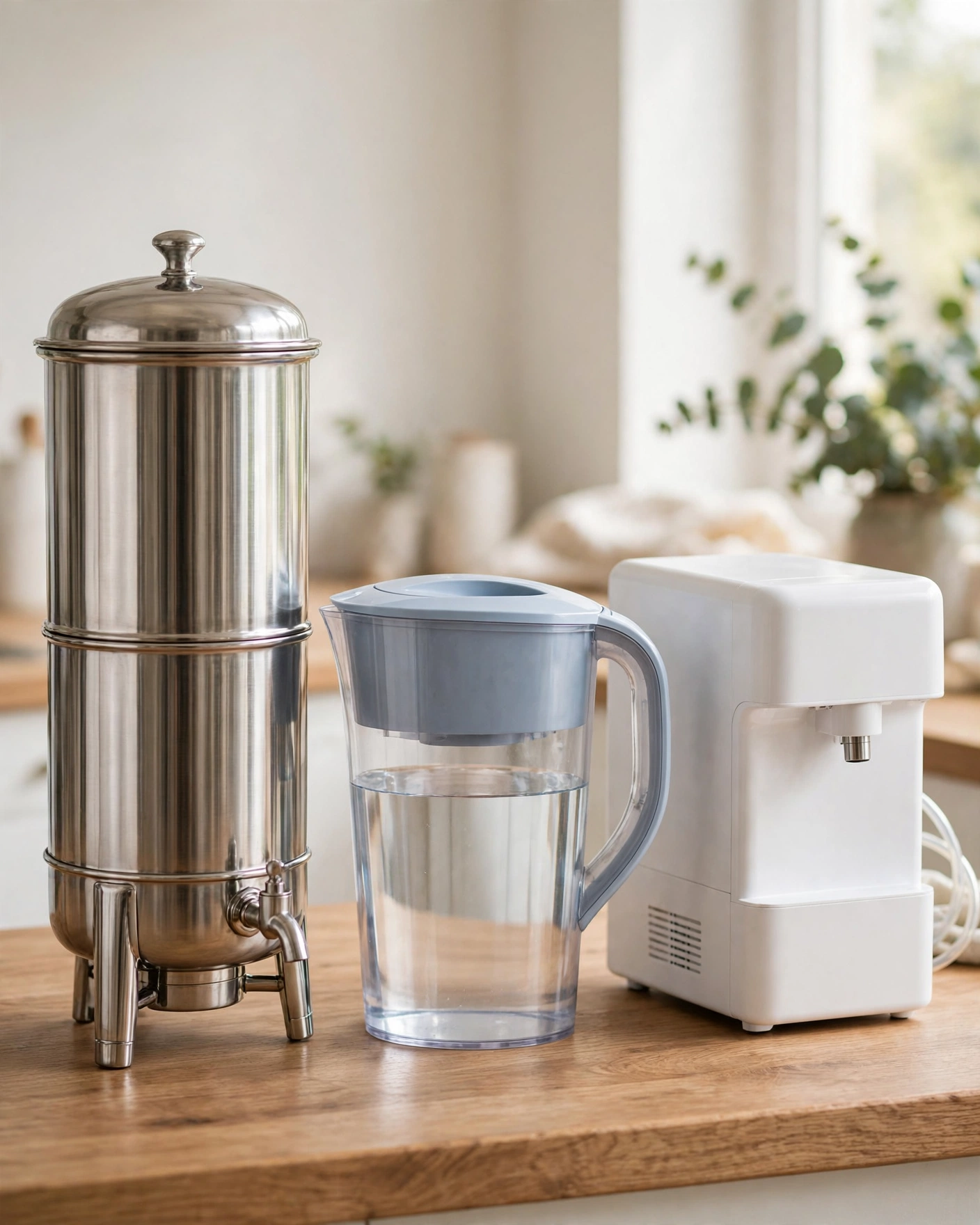
Here’s how the main drinking-water options stack up, so you can check you’re buying in the right category before you fall in love with a stainless urn.
| Type | Needs power / plumbing | Daily output | Typical upfront cost | Best for |
|---|---|---|---|---|
| Gravity filter | No / No | 2–3 gallons per fill | ~$100–400 | Renters, off-grid, emergency prep |
| Pitcher filter | No / No | ~1 gallon per fill | ~$30–80 | 1–2 people, light use |
| Countertop RO | Yes / No | On demand | ~$200–500 | No-installation renters who want RO-level filtering |
| Under-sink RO | Yes / Yes | On demand | ~$150–600 | Homeowners wanting set-and-forget |
| Whole-house filter | No / Yes | Whole home | ~$300–2,000+ | Protecting plumbing and appliances |
The pattern is simple: the more you want filtered automatically, the more installation (and usually power) you accept. Gravity filters sit at the “zero infrastructure” end of that spectrum, which is exactly why they survive every power outage. If your goal is filtering water at every tap in the house — not just drinking water — that’s a whole-house water filter decision instead. And if what bothers you is shower water rather than drinking water, that’s a different product entirely — see shower filters.
Cost of Ownership
The sticker price is only the entry fee — the real cost is replacement elements. That math is friendlier here than elsewhere, because ceramic elements can be cleaned and reused. The table below uses ProOne’s G2.0 9-inch elements (~$70–90 each) as the reference point.
| System | Upfront (~) | Replacement elements | Rough annual element cost (~) |
|---|---|---|---|
| ProOne Big+ | $180–220 | G2.0 9″ elements, ~$70–90 each (usually 2) | $140–180 |
| Boroux Legacy | $350–400 | Brand replacement elements; confirm price at checkout | $80–160 |
| ProOne Traveler+ | $130–170 | Smaller ProOne elements, ~$50–70 each (usually 2) | $100–140 |
| British Berkefeld | $180–260 | Ceramic candles, scrubbable — replaced less often | $40–100 |
| Purewell | $100–130 | Budget 3-stage element sets | $40–90 |
| Alexapure Pro | $250–300 | Brand replacement filter ~$130 each (~200-gal life) | $130–260 |
These are rough estimates, not quotes. Element life depends on your water quality and daily volume — a family on hard well water burns through elements faster than a couple on soft city water. The honest way to compute your number: take the element’s gallon rating from the spec sheet, divide by your household’s daily gallons, and price a replacement set at checkout.
Troubleshooting
Almost every “my gravity filter is broken” story is one of these six. Work through them before you order new elements.
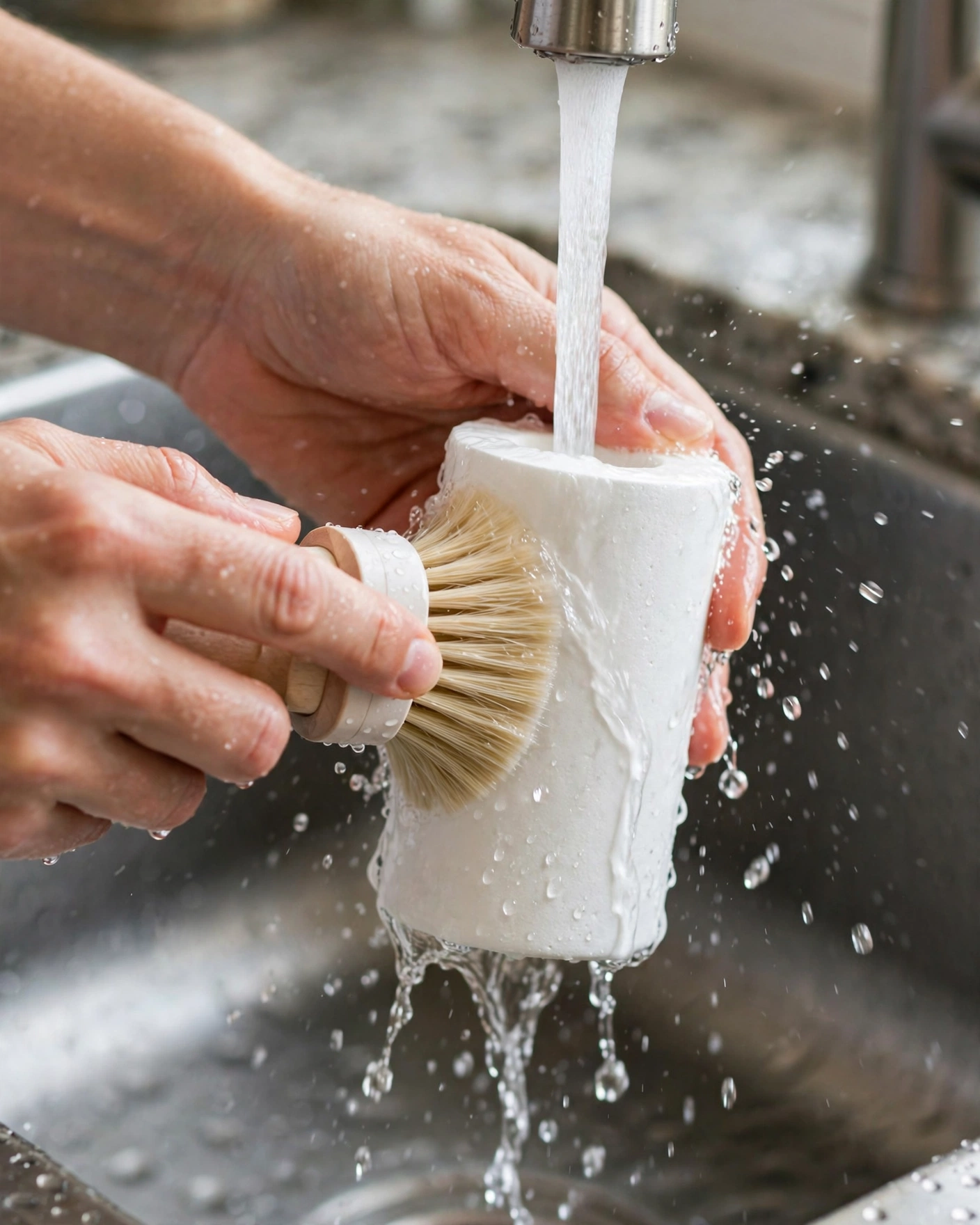
- Water barely drips through. New elements almost always need priming — soaking or flushing per the brand’s instructions — and trapped air is the number one cause of slow flow. Re-prime, and never let ceramic elements run completely dry between fills.
- Black water on first use. That’s carbon fines washing out of new elements — normal. Run the manual’s flush cycles until the water runs clear before drinking.
- Odd or plastic taste. New elements and housings need a break-in flush. If the taste persists after a week, suspect your source water — consider a lab test of your tap water.
- White film or mineral taste. Gravity filters don’t soften water — calcium and magnesium pass straight through. For softer-feeling water, you need a different technology.
- Leak at the spigot or seals. Reseat the washers, snug the spigot without overtightening (plastic spigots crack), and check the upper chamber sits level.
- Cloudy water after scrubbing ceramic elements. You may have scrubbed too aggressively and cracked the ceramic, or dislodged the element’s seal. Inspect the element for hairline cracks — a cracked ceramic element should be replaced, not kept in service.
FAQs
How does a gravity water filter work — does it need electricity or plumbing?
You pour water into the upper chamber, gravity pulls it down through the filter elements into the lower chamber, and you draw it from a spigot. No electricity, no water pressure, and no installation — the whole thing runs on gravity.
Do gravity filters remove fluoride?
Some gravity systems sell separate add-on fluoride cartridges, but fluoride removal is a brand-specific claim, not a category feature. Check the exact element’s spec sheet and confirm any certification in the public database at info.nsf.org. If the brand can’t point to a spec sheet or a listing, treat the claim as unverified.
Are gravity water filters safe for well water?
That depends on what’s in your well, and no gravity filter should be trusted blindly with untreated water. Get a lab test of your water first, use a sediment pre-filter if your water is cloudy or gritty, and understand that a gravity filter is a polishing step — not a guarantee. If your water is microbiologically unsafe, follow your local health authority’s guidance, not a product box.
How often do you change gravity filter elements?
Ceramic elements scrub clean and get reused, replaced only when the brand’s gallon rating is reached or flow stays slow after cleaning. Carbon-block elements get replaced per their gallon rating. A noticeable drop in flow rate is your practical signal — trust the gallon rating on the spec sheet, not the calendar.
Gravity filter vs pitcher filter — which is better?
It comes down to volume. A pitcher holds about a gallon and suits one or two people; a gravity system holds two to three gallons and handles a family or an off-grid setup with no power. Pitchers filter faster per glass but need constant refilling; gravity systems are slow but nearly hands-off once filled. Under a gallon a day, a pitcher is cheaper and simpler — above that, gravity wins.
Do I still need to boil water when using a gravity filter?
We don’t claim that any gravity filter makes untreated water safe to drink, and boiling guidance should come from your local health authority, not from a filter brand. Treat a gravity filter as a way to improve the taste and quality of water that’s already reasonably safe — not as a purification guarantee for water of unknown quality.
Can gravity filters remove lead or PFAS?
Only trust a specific, verifiable claim: an element listed against NSF/ANSI 53 for lead or NSF/ANSI 401 for PFAS-related compounds, confirmed in the public database at info.nsf.org. A brand’s marketing page is not proof, and we don’t publish contaminant-removal claims we can’t verify. If lead or PFAS is your concern, the database listing is the entire buying decision.
Conclusion
A gravity filter is the lowest-drama way to get clean-tasting water with no power, no plumbing, and no installation permission. For most families, the ProOne Big+ is the safest default; the Boroux Legacy fills the Berkey-shaped hole; the Traveler+ and British Berkefeld cover portable and ceramic. Whichever you choose, verify certification claims in the public database and keep spare elements on the shelf.