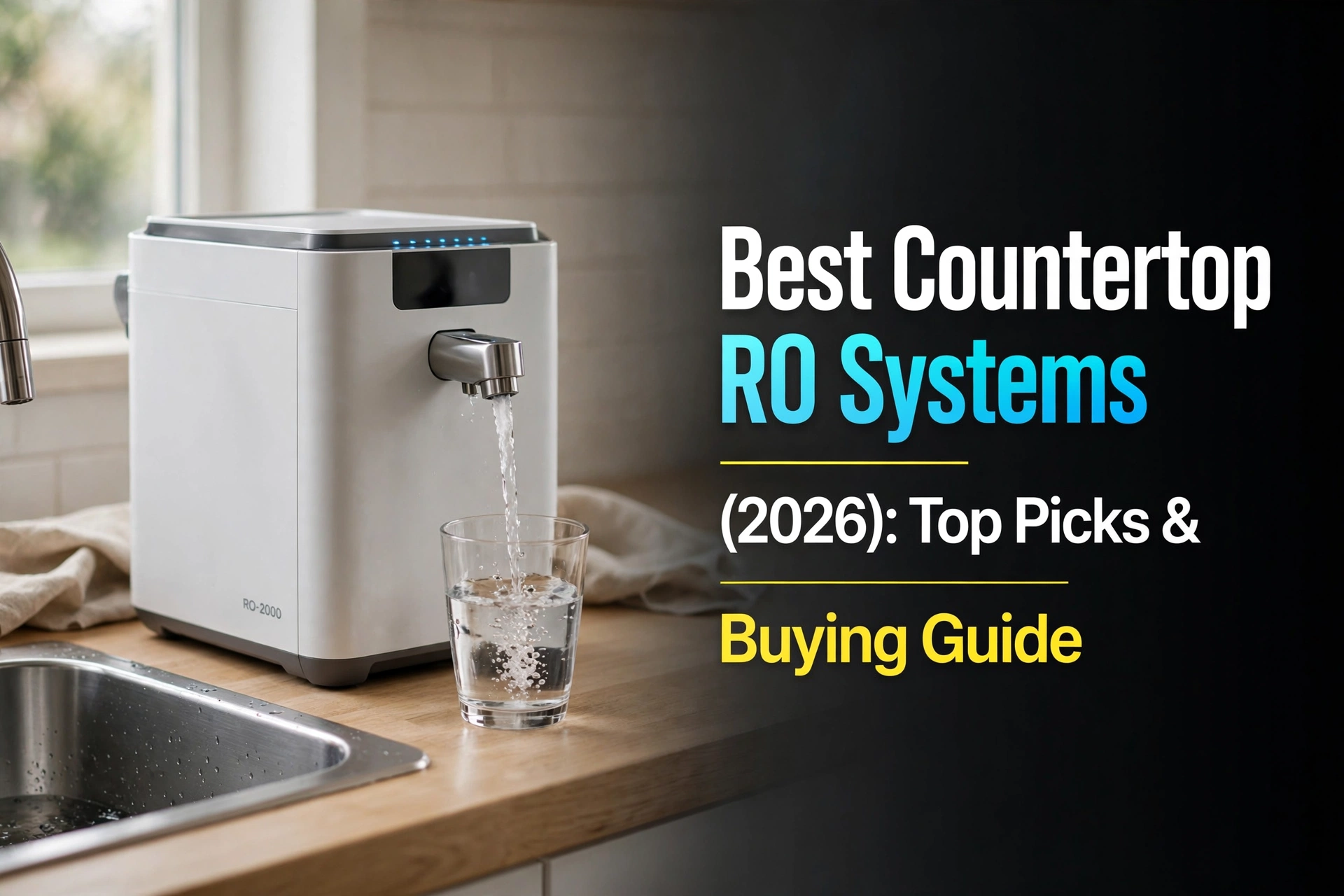

Best Countertop RO Systems (2026): Top Picks & Buying Guide
Countertop RO — Hub
You want reverse osmosis water, but there is a problem. You rent your place, so no one is drilling into your sink, cutting cabinet space, or touching the plumbing. And the tap water where you live tastes like a swimming pool.
The answer is a countertop RO system: a small appliance that sits on your kitchen counter, plugs into a normal outlet, and turns tap water into crisp, filtered drinking water. No plumber, no holes, no arguing with your landlord. This guide covers how these units work, what to look for, and the two countertop RO picks worth your money right now.
Table of Contents
Quick Picks
Short on time? Here are the two countertop RO systems we would buy today. Both are real countertop appliances, plug in, and need zero installation.
NOVETE Countertop RO with Cooling — This is the pick for people who drink a lot of cold water. It chills filtered water down to around 32°F, so you get ice-cold RO water straight from the tap of the machine. If you keep buying bottled water mostly because you like it cold, this is the unit that replaces that habit.
Check Current PriceEstimate: ~$400–500. Prices change — please check the current price before you buy.
Melissani M1 Countertop RO — This one heats and cools, and it does it fast, with hot and cold water ready in about 3 seconds per the brand. It is the pick if you want one machine for drinking water, tea, and instant coffee, at a lower price than the NOVETE.
Check Current PriceEstimate: ~$300–400. Prices change — please check the current price before you buy.
One honest note before you scroll further: if you only drink a glass or two of filtered water a day, a $300+ machine may be overkill. A simple pitcher filter costs far less and covers light needs just fine. Countertop RO earns its price when you drink a lot of water, hate the taste of your tap, or want to quit bottled water for good.
How Countertop RO Works
A countertop RO system is a small box that sits on your counter, roughly the size of a coffee maker. You pour tap water into its supply tank, plug it in, and press a button. Inside, the water goes through several filter stages, then through a reverse osmosis membrane, and comes out of a spout into your glass. The filtered water collects in a clean tank, and most units keep the waste water in a separate tank you can dump or reuse.
Reverse osmosis is the part that does the heavy lifting. Tap water is pushed through a membrane with pores so tiny that most dissolved solids cannot pass through. That is why RO water tastes so clean and neutral, and why it is the go-to technology for people dealing with hard water, salty taste, or a high TDS reading on their tap.
Before the membrane, a pre-filter catches sediment and chlorine. Chlorine matters because it damages RO membranes over time, so the pre-filter protects the expensive part. After the membrane, many units add a final polishing filter to fix the taste. Some countertop units then heat or cool the water, which is where the NOVETE and the Melissani M1 stand out.
In our water filters hub we cover nine filter types, and countertop RO is the strongest filtration you can get without touching your plumbing. And if you do own your home and would rather hide everything under the cabinet, an under-sink RO system does the same job permanently with a dedicated faucet.

How to Choose
Shopping for one of these is easier than it looks. There are only a few things that actually matter. Work through this checklist and you will not buy the wrong one.
1. Tank size vs. your drinking habits. Countertop units store filtered water in a tank, usually around 2 to 6 liters (roughly half a gallon to a gallon and a half). Heavy drinkers need a bigger tank to avoid constant refills; a solo light drinker is fine with a smaller one.
2. Hot and cold options. Some units only make room-temperature water; others heat it for tea or cool it for drinking. Hot/cold models cost more and use a little more power, but they can replace a kettle and a water cooler. Decide before you buy, because you cannot add this later.
3. Filter life and replacement cost. This is the real long-term price. Filters typically need changing every 6 to 12 months depending on the model and your water quality. Check the replacement filter price and how easy it is to buy. A cheap unit with expensive filters is not a cheap unit.
4. Waste water ratio. RO filtration always makes some waste water. Many countertop units hold it in a separate tank, so there is no drain hose to install. You can use that water for plants or cleaning. Check the brand’s stated ratio in the spec sheet so you know what to expect.
5. Noise. These units have a pump, and pumps make sound. Most owners say it is like a quiet hum while it is filling, not constant. If your kitchen is open to your living room, look for units that owners describe as quiet.
6. Size and looks. Measure your counter space, including under-cabinet height. These are not small appliances. Also remember you will look at it every day, so pick one you do not mind seeing.
Certification check: we could not verify NSF/ANSI or WQA listings for the specific models in this guide in the public databases, so we make no certification claims about them. Note: the NOVETE’s Amazon listing title does say “NSF/ANSI 42/58 Certified” — that is the brand’s own marketing claim, and we could not independently confirm it in the public NSF database, so treat it as unverified. If a specific contaminant matters to you, look the model up yourself in the public NSF database (info.nsf.org) or read the brand’s spec sheet before buying. Brand pages alone are not proof.
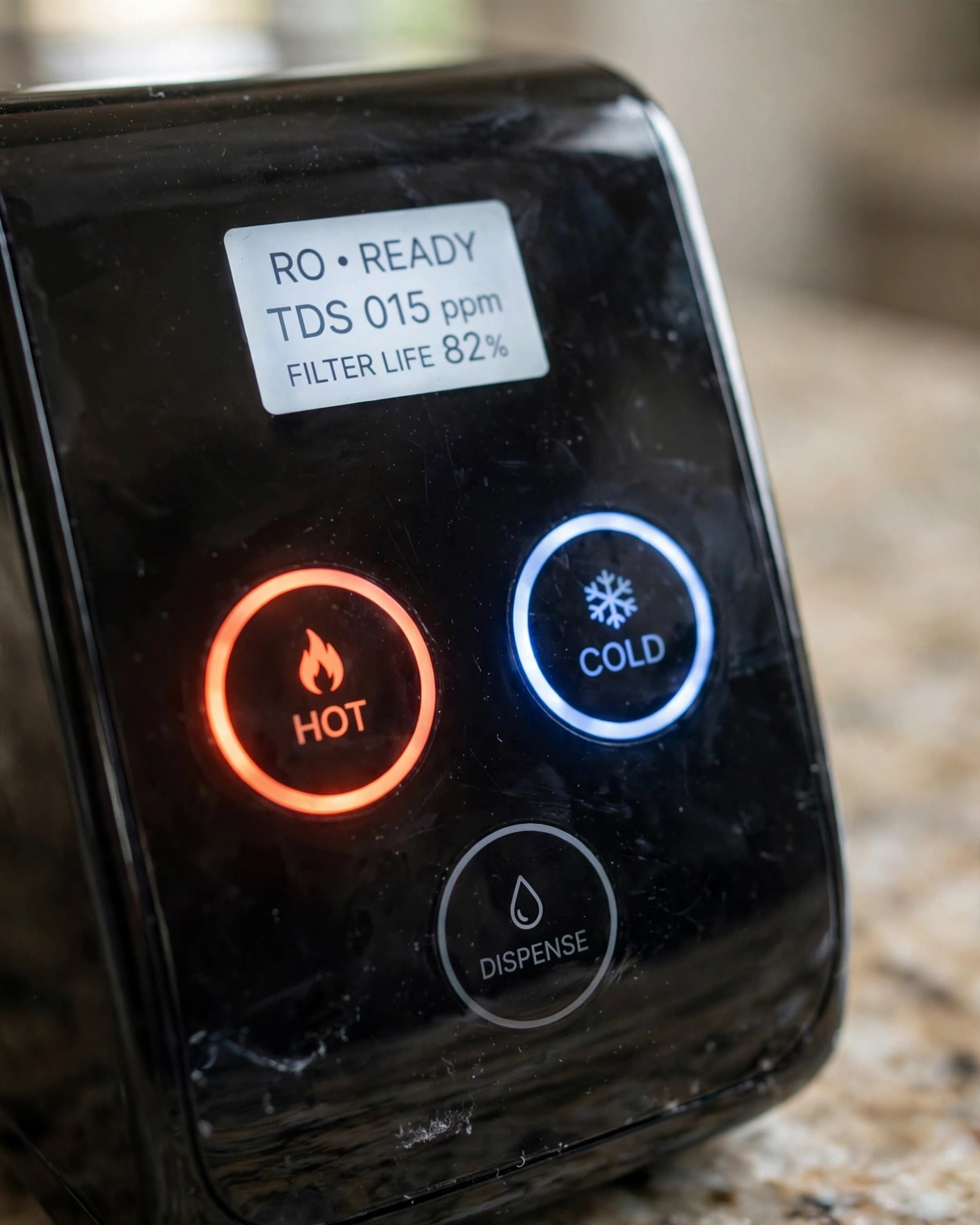
Not sure you need RO at all? If your only complaint is taste and you mostly drink from the fridge dispenser, a refrigerator filter may be all you need for a fraction of the price. RO is for when you want the strongest filtration a countertop can offer.
Best Countertop RO Systems
These are the two countertop RO systems we recommend. Both are full-size countertop appliances, both need zero installation, and both come from brands with real owner feedback behind them.
NOVETE Countertop RO with Cooling
The NOVETE is the premium pick and the one to buy if cold water is the whole point. Per the brand, it chills filtered water down to around 32°F, which is as cold as water gets before it turns to ice. If you are the person who keeps a pitcher in the fridge and grabs it ten times a day, this machine takes over that job and does it better, because the water is RO-filtered on top of being cold.
As a filter, it works like every countertop RO: pour tap water in the supply tank, and it runs it through its filtration stages and membrane. The cooling is the headline, and it earns its keep in hot weather or in homes where everyone wants cold water. The trade-off is price: it sits in the ~$400–500 range, and the cooling uses more electricity than a basic unit.
Pros
- Chills water to around 32°F per the brand — a real water-cooler replacement
- No installation: fill the tank, plug in, done
- RO filtration gives noticeably cleaner-tasting water than a pitcher
Cons
- Premium price (~$400–500)
- Cooling adds electricity use vs basic units
- Takes up real counter space
Estimate: ~$400–500. Prices change — please check the current price before you buy.

Melissani M1 Countertop RO
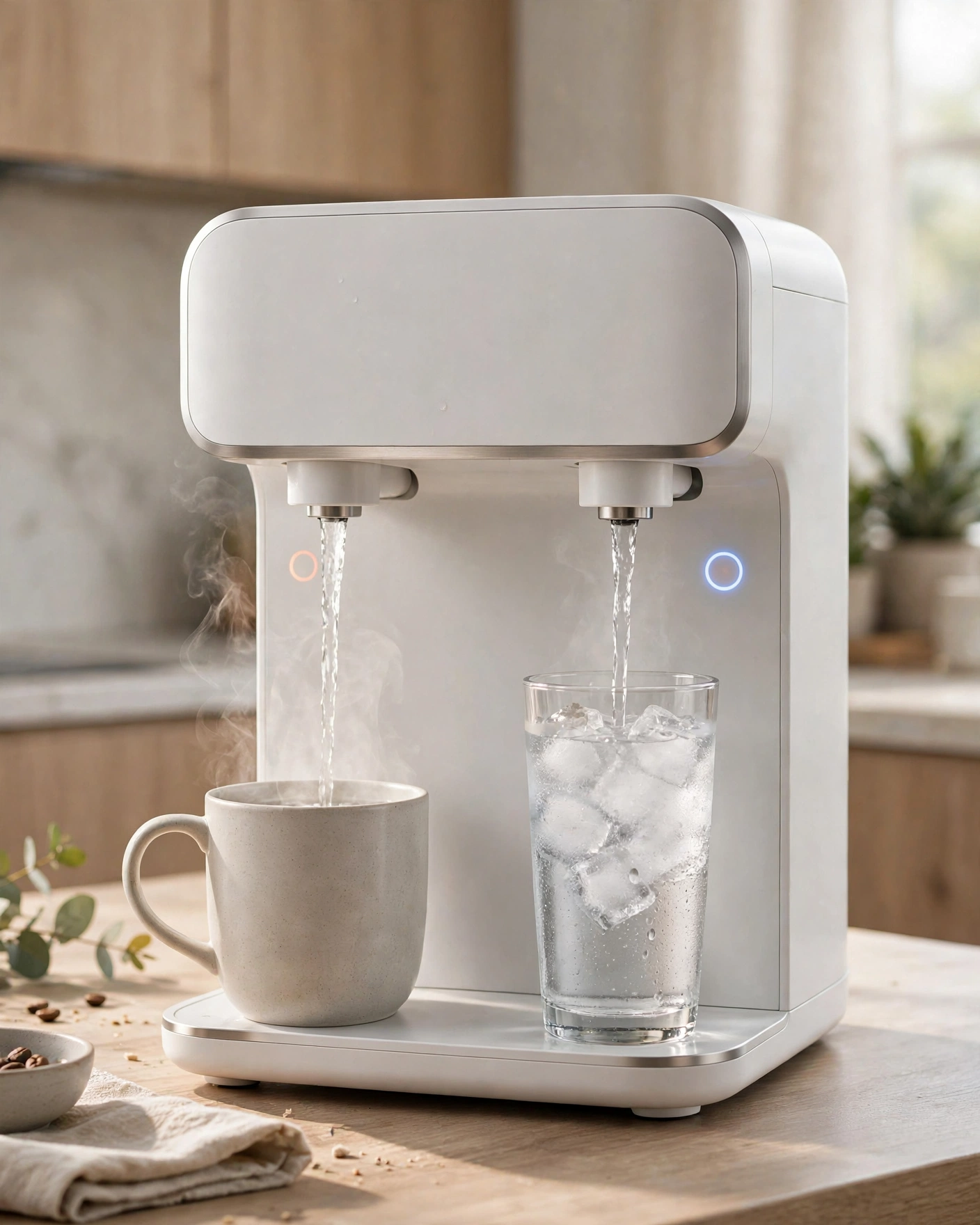
The Melissani M1 is the value pick, and it is the more versatile machine. Where the NOVETE is all about cold, the M1 does both hot and cold, and per the brand it is ready in about 3 seconds. That makes it a water filter, an instant kettle, and a water cooler in one box. Morning tea, afternoon cold water, evening instant coffee — all from the same spout.
At ~$300–400 it costs meaningfully less than the NOVETE while giving you more functions. The catch with any hot-water appliance is placement: keep it where kids cannot reach the spout, and confirm the child lock is on. Like the NOVETE, it needs no installation, and like the NOVETE, we make no certification claims about it — verify the model in the NSF database or the brand’s spec sheet first if a specific contaminant is your concern.
Pros
- Hot and cold from one unit, ready in about 3 seconds per the brand
- Lower price than the cooling-only premium pick (~$300–400)
- Replaces a kettle and a pitcher in one box
Cons
- Hot water spout needs care around kids — check for a child lock
- Heating and cooling use more power than a basic RO-only unit
- Tank refills still required — no plumbing connection
Estimate: ~$300–400. Prices change — please check the current price before you buy.
Countertop RO vs Under-Sink RO vs Pitchers
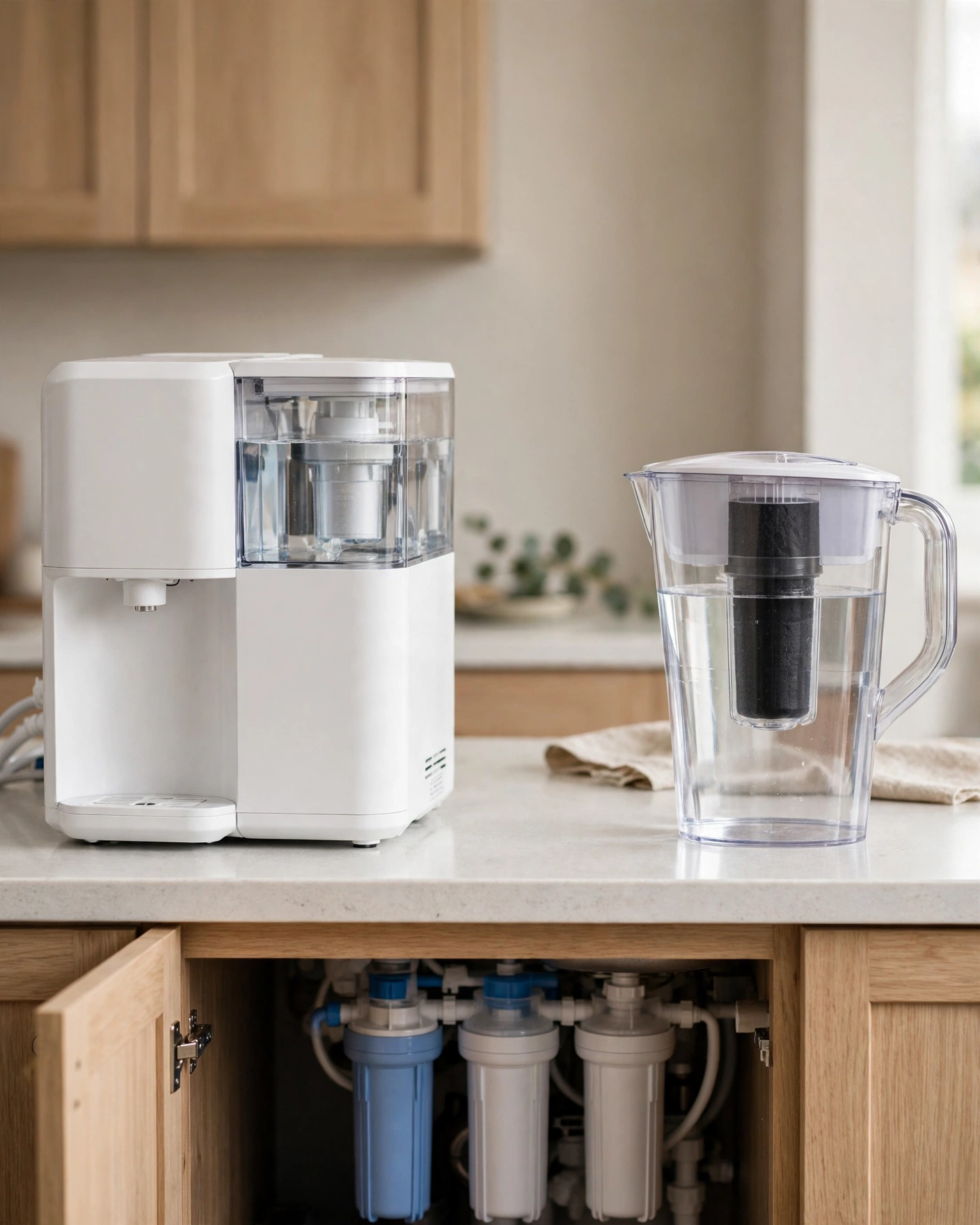
Countertop RO is the middle ground of the filter world. It filters far better than a pitcher but asks nothing of your plumbing, unlike an under-sink system. Here is how the options stack up.
| Option | Filtration strength | Installation | Best for |
|---|---|---|---|
| Countertop RO | Strong — RO membrane | None — plug in and fill the tank | Renters, apartments, anyone who cannot modify plumbing |
| Under-sink RO | Strong — RO membrane | Needs a drill, a faucet hole, and cabinet space | Homeowners who want a permanent setup |
| Pitcher filter | Basic — carbon, improves taste | None | Light drinkers on a budget |
| Whole-house filter | Varies — protects the whole home, not a drinking-water specialist | Professional install at the water line | People with well water or whole-home concerns |
Two related upgrades to know about: if your concerns cover the whole house, not just the glass, a whole-house water filter treats water at the point it enters your home. And if it is your skin and hair you are worried about rather than drinking water, that is a different job — see our shower filters guide, since RO systems do not filter your shower.
Cost of Ownership
The sticker price is only the first bill. Here is what a countertop RO system actually costs to own over a few years, using rough estimates. Treat every number below as a ballpark, not a quote.
| Cost | Estimate | Notes |
|---|---|---|
| The unit itself | ~$300–500 | Value models near $300; hot/cold and cooling models near $500 |
| Replacement filters | ~$60–120 per year | Usually every 6–12 months, depending on the model and your water |
| Electricity | A few dollars per year | Pumps use little power; heating and cooling add more |
| Waste water | A few dollars per year | Most waste water goes in a tank you can reuse for plants |
| Bottled water you stop buying | −$300–600 per year saved | For a household drinking a case or two a week |

The math favors you if you currently buy bottled water. A $400 machine plus filters breaks even against bottled water in well under two years for a water-heavy household, and after that it is saving you money. If you rarely buy bottled water and just want better taste, the payback is slower — which is fine, but know it going in.
All prices on this page are estimates from October 2026 and will have moved. Always check the current price on the product page before you buy.
Troubleshooting
Countertop RO units are simple machines, and most problems have simple fixes. Here are the common ones.
1. Water flow is slow. The most common cause is a filter that is past its life. Check the filter indicator and replace the cartridge if it is due. On a new unit, the first few tanks always run slower while the membrane settles in.
2. The water tastes off. First, flush the system: most brands tell you to run several tanks through a new unit before drinking. If the taste shows up later, the polishing filter is usually the part to replace. Also make sure the supply tank is clean and filled with fresh tap water.
3. The pump is louder than expected. Some hum is normal while the unit is actively filtering. If it gets loud suddenly, check that it is sitting level and nothing is rattling against it. A pump that runs constantly without filling the tank may have an airlock — try emptying and refilling the supply tank.
4. Leaks around the base. This is usually the supply tank not seated properly or overfilled. Take the tanks out, wipe the seals, and reseat them firmly. If water keeps appearing, stop using the unit and contact the brand — do not open the housing yourself.
5. Error lights or the unit will not start. Check the basics first: plugged in, tank seated, lid closed. Many units will not run with the lid ajar. If the filter-life light is on, replace the filter and reset the indicator using the steps in the manual.

FAQs
Do countertop RO systems need installation?
No. That is the whole point of them. You take the unit out of the box, rinse the tanks, plug it into a normal outlet, and run a few tanks through it to flush the filters, as the manual instructs. There is no drilling, no plumbing connection, and nothing to attach to your faucet. When you move, you carry it to the next kitchen.
Are countertop RO systems worth it?
They are worth it if you drink a lot of water and currently buy bottled water or hate your tap. A household that buys a case or two of bottled water a week can break even on a $300–500 unit in well under two years, and the water tastes better than most bottled brands. They are not worth it if you drink very little filtered water, in which case a pitcher filter does the job for far less.
How often do you change the filters in a countertop RO system?
Most brands say every 6 to 12 months, depending on the model and how hard your water is on the filters. Many units have a filter-life indicator light that tells you when it is time. Follow the brand’s schedule in your manual rather than a fixed rule, because pushing filters too long can wear out the RO membrane, which is the expensive part to replace.
Do countertop RO systems waste a lot of water?
All reverse osmosis filtration produces some waste water — it is how the membrane works. Most self-contained countertop units collect the waste water in a separate tank instead of sending it down a drain hose (a few models do route it to a drain, so check the spec sheet), so you can see exactly how much there is and reuse it for plants or cleaning. Check the brand’s stated waste water ratio in the spec sheet so you know what to expect before you buy.
Countertop RO vs a pitcher filter — which is better?
A countertop RO filters far more thoroughly than any pitcher. RO pushes water through a membrane that removes dissolved solids that a carbon pitcher cannot touch, so the water tastes noticeably cleaner. But a pitcher costs a fraction of the price, needs no electricity, and takes up no counter space. If you drink a little water and just want better taste, the pitcher wins. If you drink a lot of water or dislike your tap, the RO unit wins.
Do countertop RO systems need electricity?
Most of them do. The pump that pushes water through the RO membrane needs power, and the heating and cooling functions on models like the NOVETE and Melissani M1 need it too. A few basic countertop RO units work without power, but the mainstream picks in this guide all plug in. The electricity cost is small — a few dollars a year for the pump, a bit more if you use the heating and cooling heavily.
Can a countertop RO remove lead, PFAS, or fluoride?
Reverse osmosis as a technology is capable of reducing a wide range of dissolved contaminants, but whether a specific unit removes a specific contaminant depends on that unit’s tested performance. We could not verify NSF/ANSI or WQA certification listings for the models in this guide, so we make no removal claims about them. Before relying on any unit for lead, PFAS, or fluoride, check the brand’s spec sheet and look the model up in the public NSF database.
Conclusion
If you want RO water without touching your plumbing, a countertop RO system is the answer. Buy the NOVETE if ice-cold water is what you are really after. Buy the Melissani M1 for hot and cold from one machine at a lower price. Either way: no plumber, no more bottled water runs.