
Waterdrop vs Glacier Fresh vs ICEPURE (2026): Which Should You Buy?
★ BRAND SHOWDOWNYour fridge’s filter light just turned red, and you did what everyone does: you typed the old filter’s number into a store search. The three cheapest listings are from three different brands — Waterdrop, Glacier Fresh, and ICEPURE — each shouting “NSF certified” and each priced within a few dollars of the other. Same coconut-carbon cartridges, same six-month ratings, same confident claims. So which brand is actually telling the truth?
Here is the short answer: all three sell the same category of product — coconut-shell carbon-block twist-in cartridges — and all three make brand-stated certification claims that you should read as exactly that: what the brand says. Glacier Fresh has the strongest certification story for GE fridge owners, thanks to its chipped XWFE-compatible cartridge. Waterdrop has the easiest certification trail to follow in its product documentation. ICEPURE sits in the middle with the widest brand-stated range of standards on its fridge-filter line. This page compares the three brand by brand, names exactly what each one claims, shows you how to verify it yourself, and runs the yearly cost math — all from the brands’ own published materials.
Table of Contents
Quick verdict
The bottom line: the brand on the box matters less than the filter number on your old cartridge. Fit decides this contest first — a cartridge that does not seat in your housing is a leak waiting to happen, no matter whose name is on it. But when all three brands make your filter number: pick Glacier Fresh for GE fridges that need an RFID chip, Waterdrop if you want the most documented certification trail, and ICEPURE for Whirlpool/EveryDrop-family fridges. All three cost roughly a third of the brand-name cartridge.
Verdict: buy the brand whose model matches your fridge exactly — then verify that model’s certification before you trust the badge.
Prices checked at time of writing; they change often — see the live price before you buy.
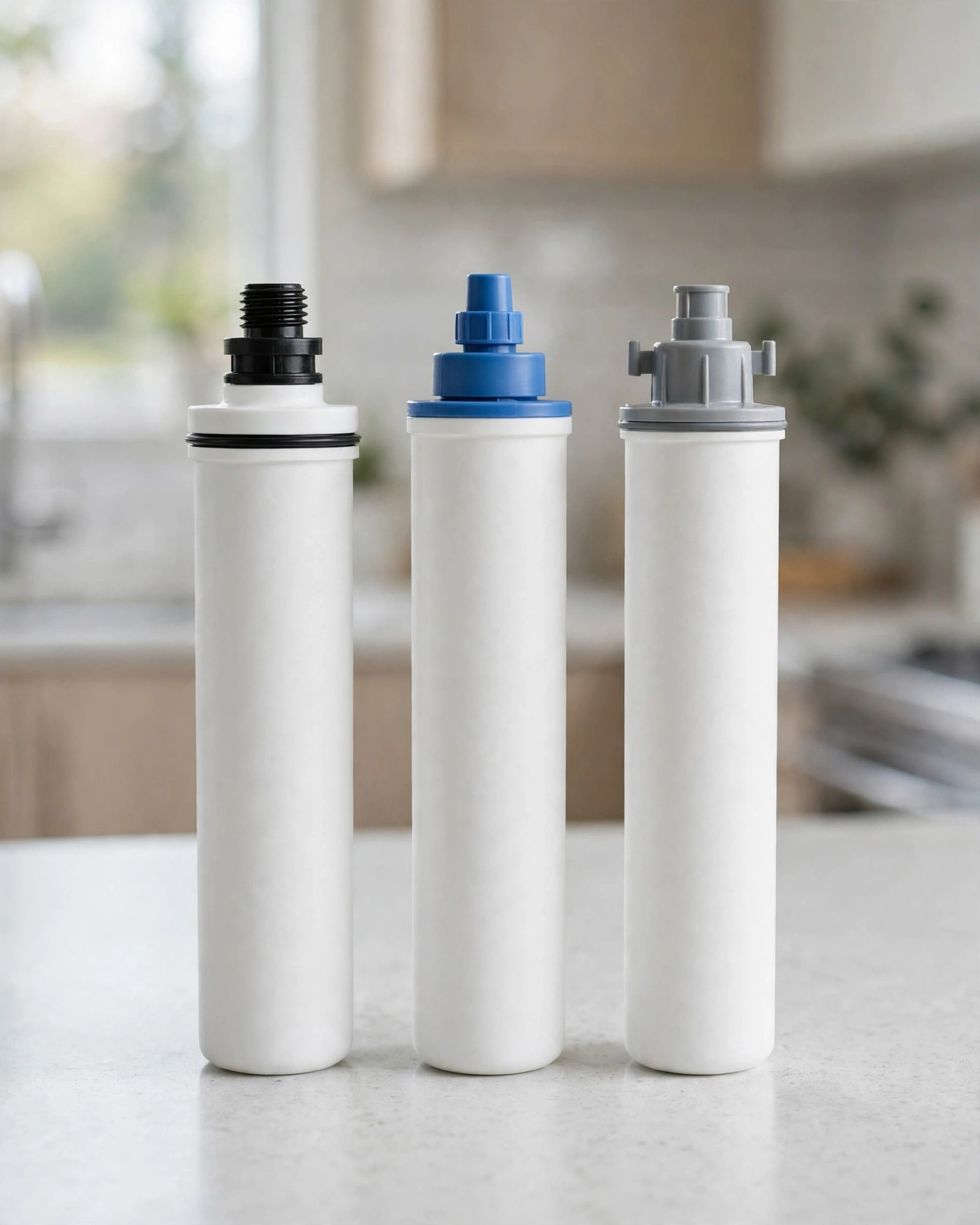
Side-by-side table
The table below is built from each brand’s published product documentation. Every certification entry is worded as brand-stated — that is the honest framing, because a certification lives in a public database (NSF’s info.nsf.org, WQA, or IAPMO), not on a product page. The Certifications section shows you how to check it in about five minutes.
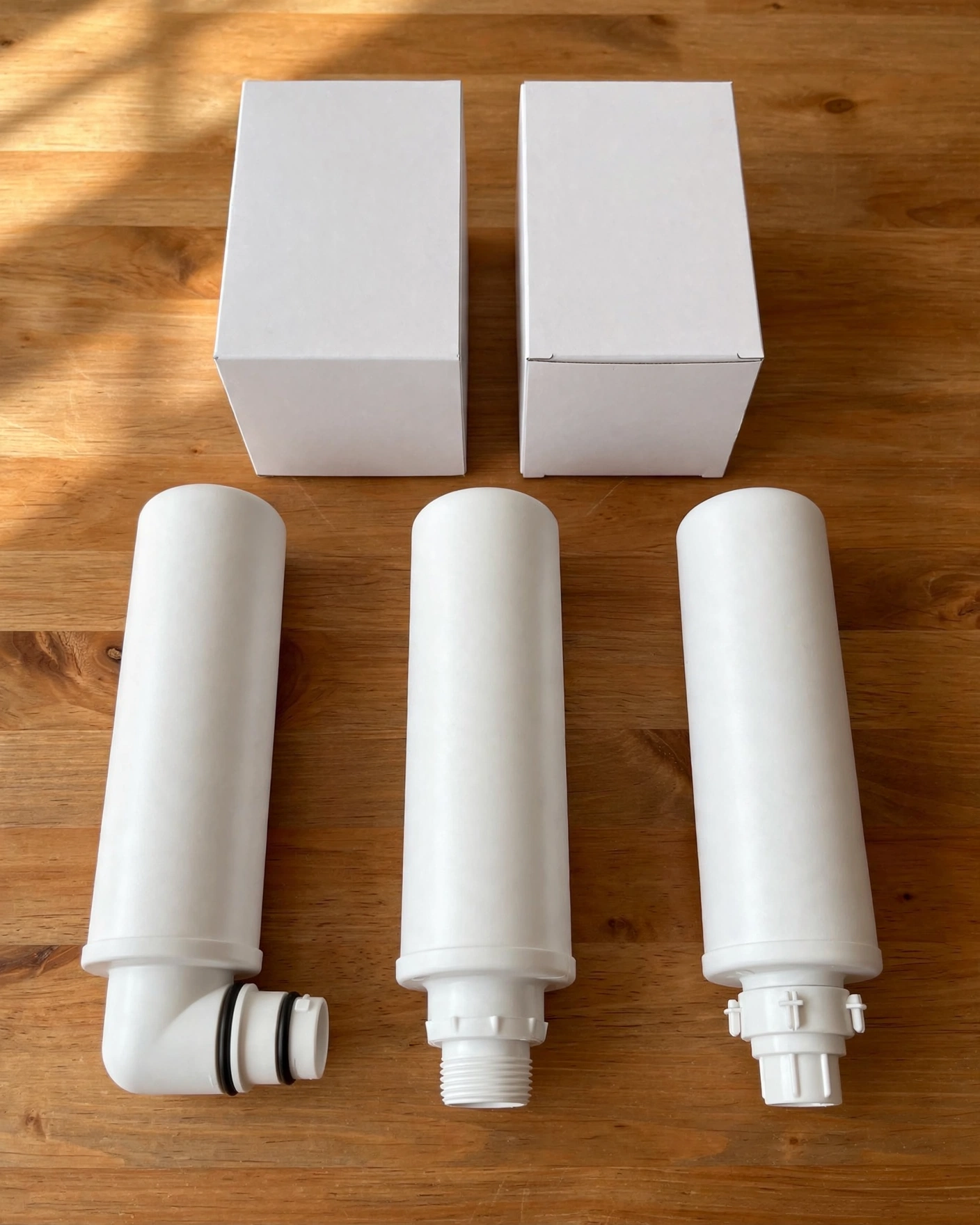
| Brand | Brand-stated certification | What it covers | Fits (examples) | Typical price (estimate) |
|---|---|---|---|---|
| Waterdrop | NSF/ANSI 42 + 372 (brand-stated on WD-F05, WD-F13, WD-F19C, LG LT700P replacements); 42 + 53 + 401 + 372 listing-stated on a separate upgraded Plus line (EFF-6013S) | Chlorine taste & odor; lead-free materials | GE MWF, LG LT500P/LT700P, GE RPWFE (WD-F19C), Samsung DA29-00020B | ~$15–25 each |
| Glacier Fresh | NSF 42 (brand-stated on all models); NSF 53 (brand-stated on select upgraded models); GF-XWF searchable at info.nsf.org (brand-provided path) | Chlorine taste & odor (42); lead, mercury, cysts on upgraded 53 models | GE XWFE (with RFID chip), GE XWF, GE MWF | ~$15–30 each |
| ICEPURE | NSF/ANSI 42 + 372 (brand-stated on RWF0600A, RWF0500A, RWF0900A); IAPMO (brand-stated); NSF 401 (separate upgraded line) | Chlorine taste & odor; lead-free materials; IAPMO material evaluation | GE MWF, Whirlpool/EveryDrop Filter 4 (UKF8001), Samsung DA29-00020B | ~$15–25 each |
| Brand-name OEM (reference) | NSF 42 / 53 / 401 on the brand’s own listings — the benchmark you are comparing against | Varies by filter number; check the OEM’s own packaging | Your fridge’s exact filter number | ~$40–55 each |
Prices are estimates for single cartridges in typical multipacks; check live listings before buying. Certification rows are brand-stated — read them as “the brand claims this” and confirm each model in a public database, as described in the next section.
For the full four-brand certified-compatibles rundown — these three plus AQUACREST — see our certified compatible fridge filters guide.
Certifications
“Compliant” is not “certified”
This is the whole point of the page, so say it plainly: a product that says “compliant with NSF/ANSI 42” is telling you the manufacturer believes it would pass — it has passed no independent third-party evaluation, it is not listed in any public database, and nobody re-inspects the factory. A product that says “certified to NSF/ANSI 42” has passed third-party evaluation by an accredited body (NSF International, WQA, or IAPMO R&T) and appears in that body’s public listing — which you can look up yourself before spending a dollar. When a listing uses any of these words, the correct question is always the same: which exact model, certified by whom, to which standard — and is it in the database right now?
What each brand actually states (our verification)
Waterdrop. The brand’s own manual PDFs for the WD-F05 and WD-F13 state the filters are certified against NSF/ANSI Standard 42 and NSF/ANSI 372, with chlorine, PFOA/PFOS, sediment, and rust reduction claims on the WD-F13 sheet. The brand also lists an upgraded Waterdrop Plus line (EFF-6013S) with 42 + 53 + 401 + 372 claims. We could not independently verify these listings at info.nsf.org during research — treat them as brand-stated.
Glacier Fresh. The brand’s own site states its GFXWFE cartridge is “NSF 42 certified” and includes the RFID chip that GE’s newer fridges require, and its documentation points buyers to search “GF-XWF” at info.nsf.org. NSF 53 is brand-stated only on select upgraded models — not across the line.
ICEPURE. Retail listings for the RWF0600A line (GE MWF replacement) are listing-stated as “NSF/ANSI 42 & 372” with IAPMO brand-stated, and an upgraded RWF0600A variant is listing-stated as NSF 42 + 53 + 401. We found no independently verifiable database entry for these claims during research, so they sit at the same “brand-stated” level as the others.
What each standard number actually covers
Standard numbers are not quality grades — they describe what the certification process verifies:
- NSF/ANSI 42 — chlorine taste and odor, particulates. The most common certification on compatible cartridges, and the one you can actually verify.
- NSF/ANSI 53 — health effects: lead, cysts, certain VOCs. The exact claims matter: two filters can both be “NSF 53” with different listed contaminants.
- NSF/ANSI 401 — emerging compounds such as pharmaceuticals. ICEPURE’s listing mentions an NSF 401 line under a separate product code — relevant only if you buy that exact variant.
- NSF/ANSI/CAN 372 — widely misunderstood: 372 is a lead-content limit for the filter’s own materials, not lead reduction from your water. A filter certified only to 42 + 372 is certified for taste/odor and for being made of lead-free materials — it does not certify lead removal from water. Many brands lead with 372 because it sounds like a lead claim; now you know it is not one.
How to self-check any compatible filter (5 minutes)
- Write down the exact filter model number from the listing (e.g., WD-F13, GF-XWF, RWF0600A).
- Search it at info.nsf.org, the WQA database, or the IAPMO R&T listing — whichever body the brand names.
- Check three things: the model matches exactly, the standard is the one you care about, and the specific claims cover your concern.
- If the model is not in any database, treat the claim as unverified — the listing’s wording does not count as evidence.
If you want the background on whether off-brand cartridges are safe in the first place, read our article on are generic fridge filters safe.
Cost per year
Fridge filters are a subscription you pay in cartridges, so the per-filter price matters less than the yearly total. All three brands rate their cartridges for 6 months — two changes a year under normal use.

| Item | Waterdrop | Glacier Fresh | ICEPURE | Brand-name OEM |
|---|---|---|---|---|
| Cartridge price (estimate) | ~$15–25 | ~$15–30 | ~$15–25 | ~$40–55 |
| Cartridges per year | ~2 | ~2 | ~2 | ~2 |
| Estimated yearly cost | ~$30–50 | ~$30–60 | ~$30–50 | ~$80–110 |
| 3-year cost (estimate) | ~$90–150 | ~$90–180 | ~$90–150 | ~$240–330 |
There is no cost advantage hiding anywhere in this comparison: all three brands sit in the same ~$15–30 band, so the yearly math is nearly identical. Against the brand-name cartridge, each brand saves roughly $50–60 a year, or $150–180 over three years. Two caveats. First, the savings only count if the compatible is certified — an uncertified $9 cartridge that fits poorly or leaks costs far more than the difference. Second, for fridges with electronic authentication (GE’s RFID-chip XWFE line), a compatible without a chip may trigger error messages — confirm the chip on the exact product page. For the deeper price comparison, see our genuine vs compatible fridge filter cost breakdown.
Owner voices
We researched and compared the recurring themes in owner reviews and forums for the three brands, keeping only the patterns that show up repeatedly across many buyers — not one-off complaints.
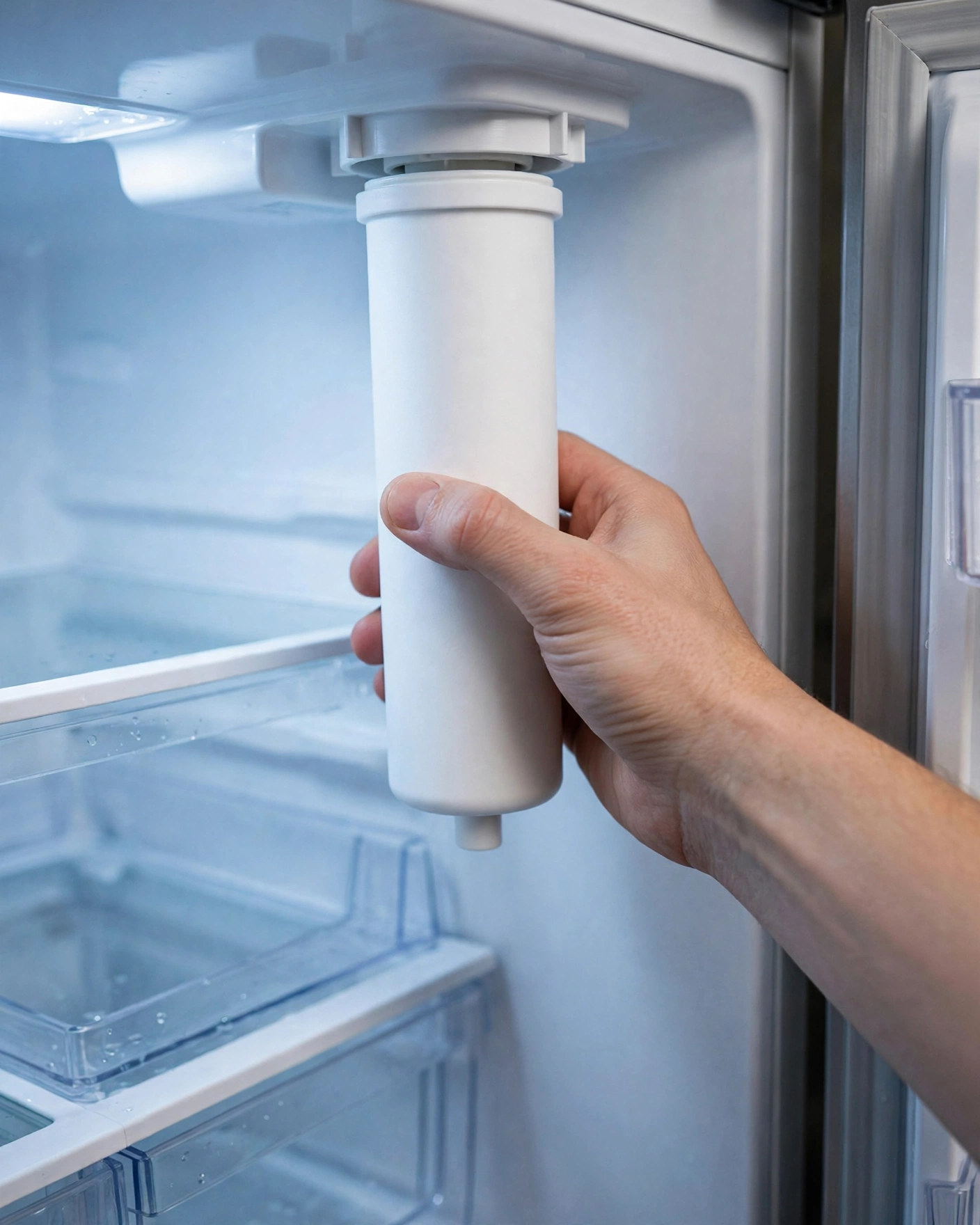
Taste improvement is the most consistent win. Across all three brands, the dominant theme is that water and ice taste better — chlorine notes gone, cleaner ice. That matches the certification nearly all of them actually carry: NSF/ANSI 42 for taste and odor.
Flush the new cartridge. Carbon fines (tiny black specks) in the first pitchers are the most repeated first-day complaint, and the standard fix repeats just as often: run 2–3 gallons through the dispenser before drinking. Owners who skip the flush write the angry first reviews.
Fit issues are model-specific, not brand-universal. Slow flow and “not quite seating” threads cluster around specific filter numbers rather than specific brands — which is why matching the exact filter number on your old cartridge matters more than picking a brand first.
Glacier Fresh’s chip gets the most forum attention. GE’s XWFE line uses electronic authentication, and owner threads report mixed results with chipped compatibles generally — some work normally, some trigger errors. Glacier Fresh brand-states that its GFXWFE cartridge includes the chip, and owners treat “chip included on the exact product page” as the must-check feature.
Waterdrop wins on documentation. A recurring theme in Waterdrop’s favor is model-matching: clear cross-reference guides mean fewer “wrong filter” orders — the most expensive mistake in this category.
ICEPURE is the value play. ICEPURE reviews cluster around value: solid-enough build for roughly half the price, with the usual compatible-filter caveats — flush properly and confirm the exact model number.
The same fit-first logic applies across the whole category — our OEM vs generic fridge water filter guide covers the tradeoffs in full, and Samsung owners get model-specific help in our best compatible Samsung water filter guide.
Final verdict
Pick Waterdrop if
- You own an LG or GE fridge — the WD-F19C (GE RPWFE) and LG LT700P replacements are its most clearly documented models, brand-stated NSF 42 + 372.
- You want the easiest certification trail — model-specific manuals and data sheets are the easiest to find of the three brands.
Pick Glacier Fresh if
- You own a GE XWFE or XWF fridge — the only brand here that brand-states both NSF 42 on all models and an RFID chip in its GE XWFE-compatible cartridge.
- You want the strongest certification story — NSF 53 brand-stated on select upgraded models, with a brand-provided path to check info.nsf.org.
Pick ICEPURE if
- You own a Whirlpool/EveryDrop-family fridge — the RWF-series covers the MWF/UKF8001-family models, brand-stated NSF 42 + 372.
- You want the widest brand-stated range of standards — including an IAPMO claim and a separate upgraded 42/53/401 line.
Skip all three and buy the OEM if
- Your water concern is a health contaminant (lead, cysts, PFAS) — verify the exact compatible model is certified to 53 or 401 for that claim, or buy the brand-name cartridge.
- Your fridge has rejected chipped compatibles before — the OEM is the zero-risk option.
Prices checked at time of writing; they change often — see the live price before you buy.
FAQs
Are Waterdrop, Glacier Fresh, and ICEPURE filters actually NSF certified?
Some models are — certification is per-model, not per-brand. Waterdrop brand-states NSF/ANSI 42 + 372 on its WD-F05, WD-F13, WD-F19C, and LG LT700P replacements. Glacier Fresh brand-states NSF 42 on all models and NSF 53 on select upgraded models, with a brand-provided path to check GF-XWF at info.nsf.org. ICEPURE is listing-stated as NSF/ANSI 42 + 372 on the RWF0600A line. Every claim is brand-stated until you find the exact model in a public database yourself.
Which brand is best for a GE fridge with an XWFE filter?
Glacier Fresh. GE’s XWFE line uses an RFID chip for authentication, and Glacier Fresh is the only one of the three brands that brand-states both NSF 42 certification and a built-in chip in its GFXWFE-compatible cartridge. Confirm “chip included” on the exact product page before buying — not the brand homepage.
Does NSF 372 mean the filter removes lead?
No — this is the most common misunderstanding on compatible-filter listings. NSF/ANSI 372 is a lead-content limit for the filter’s own materials (it certifies the filter itself is lead-free). It does not certify that the filter reduces lead in your water. For lead reduction you need NSF/ANSI 53 (or 401) with lead listed for that exact model.
Can I use a Waterdrop filter where a listing also names ICEPURE or Glacier Fresh?
Compatibility is per filter number, not per brand. Multiple compatible brands can all replace the same OEM filter number (for example, the GE MWF is covered by all three), but that does not make the brands interchangeable with each other — match the exact OEM number on your old cartridge to the exact compatible model, and do not cross between filter numbers.
How do I check a filter’s certification myself?
Get the exact filter model number from the listing, then search it at info.nsf.org (Certified Products and Systems), the WQA product database, or the IAPMO R&T listing — whichever body the brand names. Verify three things: the model matches exactly, the standard is the one you care about, and the specific contaminant claims cover your concern. If the model is not listed, the claim is unverified.
How much do I actually save over the brand-name filter?
Using estimates: a brand-name cartridge runs roughly $40–55 and a compatible from any of these three brands roughly $15–30, each changed twice a year. That puts the compatible at about $30–60 per year versus $80–110 for the OEM — roughly $50–60 a year saved, or $150–180 over three years. The savings only count if the compatible is certified and fits properly.
Conclusion
The three-brand question resolves the same way the four-brand one does: the brand on the box is the least important part. Your fridge’s filter number decides what fits, a public database decides what is certified, and the price decides what you save. Glacier Fresh wins for chipped GE fridges, Waterdrop wins for documentation, and ICEPURE wins for the Whirlpool family — any of the three beats paying three times as much for the same carbon block, as long as you verify the exact model first.
Prices checked at time of writing; they change often — see the live price before you buy.
Update log
- Zulqarnain: Review published.