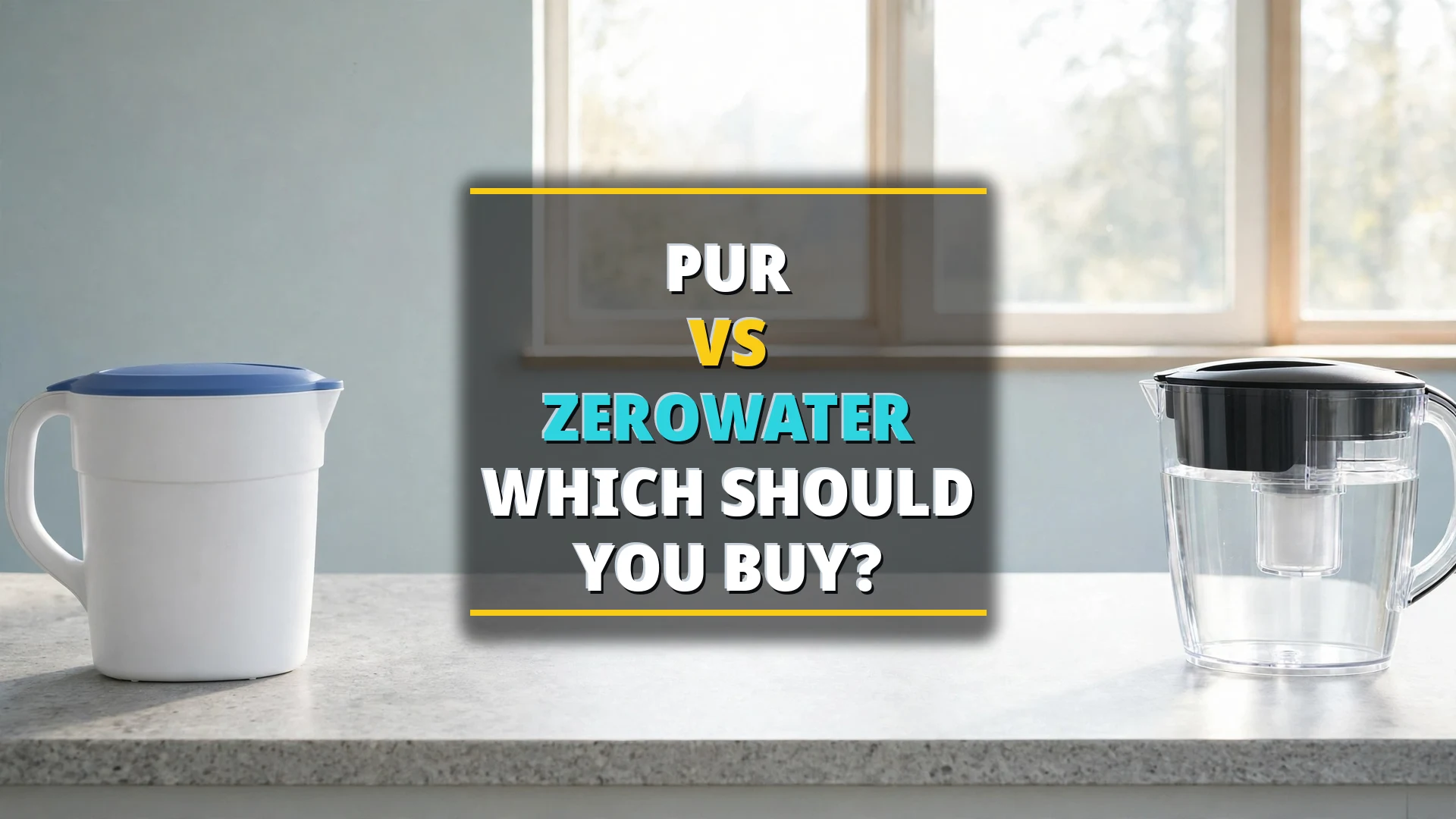

PUR vs ZeroWater (2026): Which Should You Buy?
You want cleaner-tasting water without a plumber, and the two names that keep coming up are PUR and ZeroWater. They sit next to each other on the shelf and cost about the same upfront — but they do completely different jobs. Picking the wrong one means overpaying for filters, flat-tasting water, or a cartridge that burns out in three weeks.
Here is the short answer: the PUR PLUS is the budget-friendly, certified-filtration pitcher — carbon plus ion exchange, brand-stated WQA certification to NSF/ANSI 42, 53, and 401 including lead, with cartridges you swap about six times a year. ZeroWater is the purity pitcher — a five-stage ion-exchange filter, IAPMO-listed to NSF/ANSI 53 plus 42, with a TDS meter that tells you when the filter is spent. The catch: its near-zero TDS comes at a high per-gallon cost, especially in hard-water areas. The details below — certifications, yearly cost, and owner voices — make the call easy.
The 0-TDS purity specialist
ZeroWater
~$35–44
Five-stage ion exchange to a verifiable 0-TDS reading, IAPMO-listed to NSF/ANSI 53 plus 42 — but its filter bill tracks your tap hardness.
The budget champion
PUR PLUS
~$38–44
The widest brand-stated certified list at this price — WQA-stated NSF/ANSI 42, 53, and 401 including lead — at about $50–70 a year in filters.
The bottom line: buy the PUR PLUS for certified contaminant reduction — including lead — at the friendliest price in the pitcher aisle. Buy ZeroWater for maximum purity: its TDS meter reads 000 when the filter is fresh, and the ion-exchange stack removes far more dissolved solids than any carbon pitcher can. Check your tap water first — your hardness decides how much ZeroWater will cost you.
Verdict: certified lead reduction at a budget price goes to PUR PLUS; the 0-TDS purity mission goes to ZeroWater, filter-bill honesty included.
Price checked at time of writing; it changes often — see the live price before you buy.
Table of Contents
Side-by-side comparison
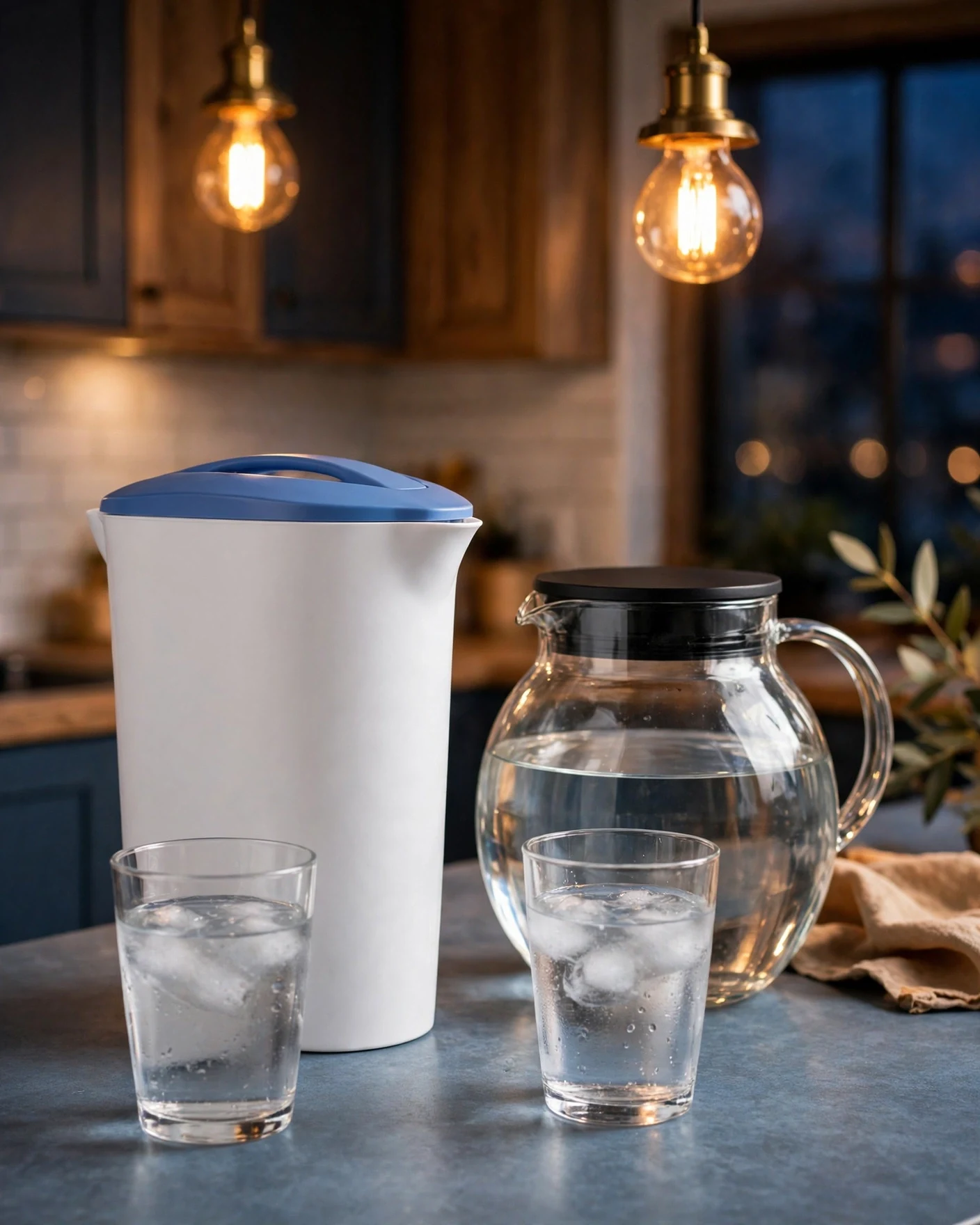
We researched and compared the brands’ published Performance Data Sheets, certification listings, and replacement prices rather than running lab tests. The table below compares each brand’s strongest pitcher tier. PUR also sells cheaper Basic-filter pitchers (PPF900Z/PPF951K), NSF-listed to 42 and 53 without lead — taste-first products that compete with basic BRITA, not with ZeroWater.
| PUR PLUS ★ Winner | ZeroWater 10-cup | |
|---|---|---|
| Filter tech | Carbon + ion exchange (CRF-950Z filter) | Five-stage ion exchange |
| Certification coverage (brand-stated) | NSF/ANSI 42, 53, and 401 incl. lead — WQA, brand-stated | NSF/ANSI 53 (lead, PFOA/PFOS, chromium, mercury) + 42 (chlorine) — IAPMO R&T listed |
| Filter rated life | 40 gallons / ~2 months | Varies with water hardness |
| Replacements per year | ~6 | Higher in hard-water areas |
| Pitcher price (estimate) | ~$38–44 | ~$35–44 |
| Yearly filter cost (estimate) | ~$50–70 | High per-gallon; a third-party estimate puts it at $240–960/yr |
| Mineral retention / taste | Keeps minerals; clean, familiar taste | Removes minerals; 0-TDS water often tastes “flat” |
| Filter-life indicator | Brand’s change indicator | Included TDS meter — change at 006 |
| Best for | Certified lead reduction at the lowest price | Maximum purity and verifiable 0-TDS water |

Certifications
Certifications are the only part of a filter box you can trust without drinking the water: an independent certifier verified the claim under standard conditions. Our rule is strict — a contaminant is listed only if the brand’s Performance Data Sheet or a certification database lists it. Before you buy for a health concern, look the exact model up in the public NSF, WQA, or IAPMO directory yourself.
PUR PLUS (CRF-950Z)
PUR states that the PLUS filter is WQA-certified to NSF/ANSI 42, 53, and 401 — including lead under NSF/ANSI 53 — one of the widest brand-stated certified lists at this price point. One honest complication: some third-party summaries list the CRF-950Z at 42 and 53 only, while PUR’s own materials list 401 as well. Match the model number on your box and check the current listing at info.nsf.org or the WQA directory before you buy. The PLUS filter is rated at 40 gallons, about 2 months — the short cycle is the price of the broader scope.
ZeroWater (5-stage filter)
ZeroWater’s filter is IAPMO R&T listed to NSF/ANSI 53 for lead, PFOA/PFOS, chromium, and mercury, plus NSF/ANSI 42 for chlorine — a genuine third-party certification. But its defining trait, near-zero total dissolved solids, is a design outcome, not a certification. And one caveat matters more than any brand chart: a TDS reading is not a safety metric. Low TDS means demineralized, not contaminant-free; high TDS does not mean unsafe. The included meter is a filter-life tool — change the cartridge at 006 — not a water-safety verdict. For the full three-way view, our BRITA vs PUR vs ZeroWater comparison adds BRITA to this same cert table.
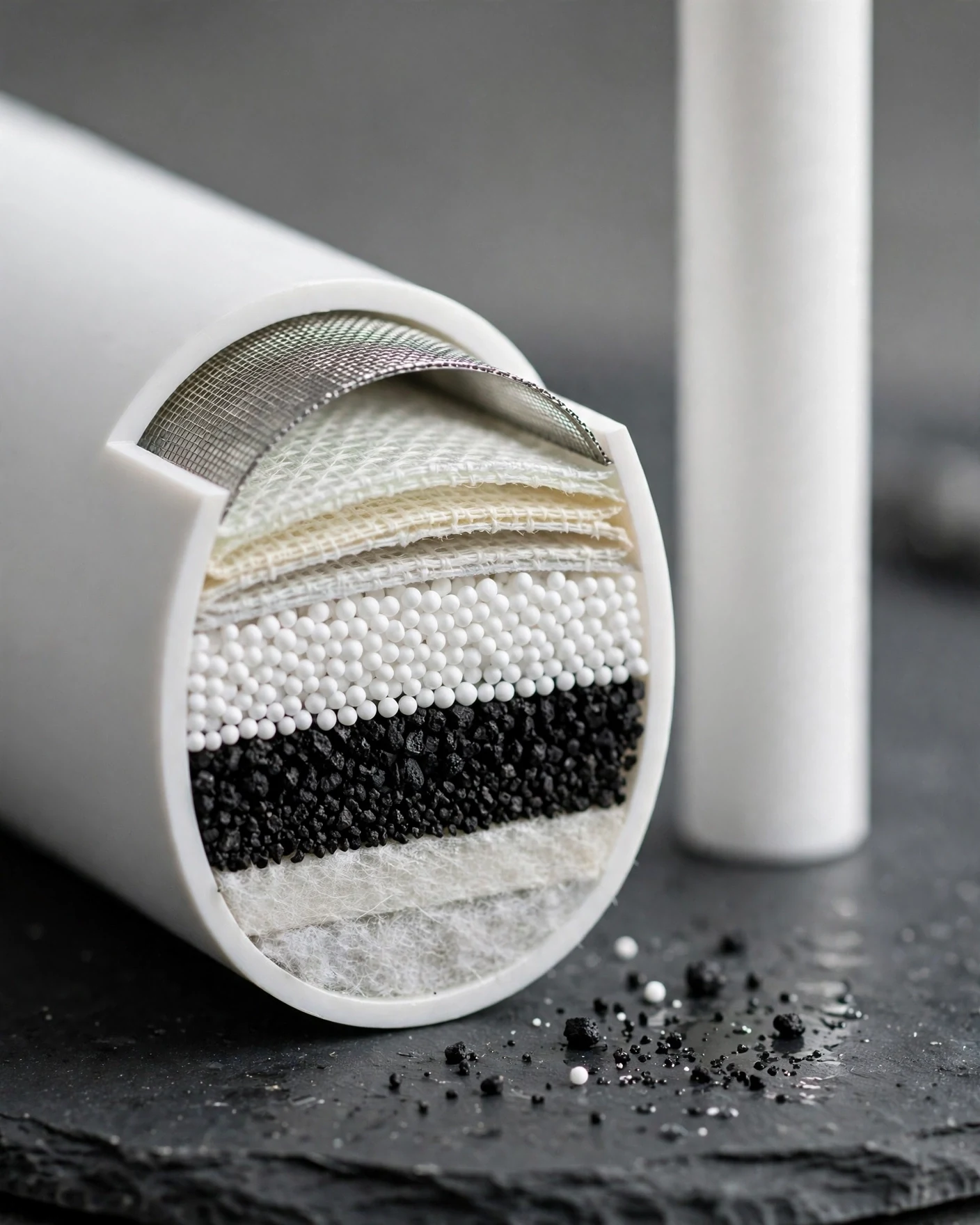
Certification covers only the contaminants in the database entry, and only under standard test conditions. If your concern is bacteria, nitrates, or fluoride, a pitcher is the wrong category regardless of brand.
Cost per year
The sticker price is the least important number on this page. Pitcher filters are a subscription you pay in cartridges — and this is where the two pitchers diverge hardest.
| Item | PUR PLUS | ZeroWater 10-cup |
|---|---|---|
| Pitcher (upfront, estimate) | ~$38–44 | ~$35–44 |
| Filter rated life | 40 gallons / ~2 months | Varies with water hardness |
| Filters per year | ~6 | Hard water: a swap every 2–4 weeks is common |
| Replacement filter price (estimate) | ~$25–35 per 3-pack | Higher per cartridge |
| Estimated yearly filter cost | ~$50–70 | TechGearLab estimate: $240–960/yr at 40–160 gal/mo |
Two things jump out. First, the PUR PLUS is the cheapest certified-filter pitcher to run — roughly $50–70 a year in cartridges (estimate), and owners widely describe it as “BRITA but cheaper to run.” Second, ZeroWater’s cost is at the mercy of your tap water: the ion-exchange resin saturates in proportion to dissolved solids, and owners in 200+ TDS areas report only 15–25 gallons per filter — weeks, not months. The TechGearLab third-party estimate of $240–960 a year (at 40–160 gallons a month) is the number to budget around if your water is hard. Test your tap TDS before you buy; it is the best predictor of your ZeroWater filter bill. For the same cost lens on the third big brand, see our BRITA vs ZeroWater cost comparison.
Owner voices
Specs tell you what a filter is rated to do. Owners tell you what it is like to live with. Below are the themes that repeat across retail listings, forums, and long-term owner posts. They are paraphrased, but the patterns are consistent enough to plan around.
PUR PLUS owners
Slower pour than BRITA. The most repeated PUR complaint: the dense filter media filters more slowly, so filling a glass takes patience. Owners see it as the trade for the broader certification list, not a defect.
The value pick. Owners praise the price math most: triple certification (42/53/401, brand-stated) at the cheapest running cost in its class. The lid draws a minor, persistent thread of complaints — awkward to seat, occasional drips — but rarely a deal-breaker.
The certified-vs-tested tension. Lab-test sites have scored the PLUS modestly for raw reduction in their test water, while certification loyalists note it is certified for what it claims. Read the two as different questions: the listing says what it reduced under standard conditions; the lab score says what happened in one specific water.
ZeroWater owners
Filters die fast in hard water. The dominant ZeroWater theme, by a wide margin: owners in hard-water areas report swaps every two to four weeks, and the filter bill is what surprises them. There is no fix — it is ion-exchange physics: more dissolved solids in, shorter filter life out. Several long-term owners also note filter life seems shorter since the Culligan takeover, when the filter cover changed from hard blue plastic to film.
Sour or off taste means change now. A spent ZeroWater filter does not fail silently. Owners describe sour, acidic, or fishy tastes once the resin is exhausted — and the TDS meter can read higher than tap water. Replace at 006; never wait for the smell.
Flat taste, faithful fans. Some owners find 0-TDS water flat, and many on already-good city water switch back. But loyalists are fiercely loyal: owners with chemical sensitivities describe the verifiable 0 reading as the whole point. The same owner debates run through every ZeroWater pairing — our BRITA Elite vs ZeroWater page covers them from the BRITA side.
Comparing the premium tiers beyond this pair? Our BRITA Elite vs PUR PLUS page puts the two lead-certified tiers head to head, and BRITA vs PUR covers the budget tiers.
Which should you buy?
This pair is a rare honest choice: neither pitcher is trying to be the other. The PUR PLUS is the budget champion — the widest brand-stated certified list (NSF/ANSI 42, 53, and 401 including lead) at the cheapest running cost in the aisle, about $50–70 a year in cartridges (estimate), with familiar mineral-retaining taste. It asks only for patience on the pour and a swap every couple of months.
ZeroWater is the purity specialist — IAPMO-listed to NSF/ANSI 53 (lead, PFOA/PFOS, chromium, mercury) plus 42, with a TDS meter that turns “when do I change the filter?” into a number. In return it asks for two things: acceptance that 0-TDS water tastes flat to many people, and a filter bill that tracks your tap hardness — steep if your TDS is high.
Buy the PUR PLUS if: you want certified lead reduction at the lowest price, you like familiar-tasting water, and you want the cheapest yearly filter bill in this class.
Buy ZeroWater if: you want maximum purity with a verifiable 0 reading, and your tap TDS (test it first) keeps the filter bill sane.
Price checked at time of writing; it changes often — see the live price before you buy.
Price checked at time of writing; it changes often — see the live price before you buy.
FAQs
Which is better, PUR or ZeroWater?
It depends on the question. PUR PLUS is better for certified contaminant reduction — including lead, brand-stated to NSF/ANSI 42, 53, and 401 — at the lowest price in the aisle. ZeroWater is better for maximum purity: its five-stage filter produces verifiable 0-TDS water and is IAPMO-listed to NSF/ANSI 53 (lead, PFOA/PFOS, chromium, mercury) plus 42.
Is the PUR PLUS filter certified to reduce lead?
PUR states that the PLUS filter (CRF-950Z) is WQA-certified to NSF/ANSI 42, 53, and 401, including lead under 53. Some third-party summaries list it at 42 and 53 only, so match the model on your box and check the current listing at info.nsf.org or the WQA directory. PUR’s cheaper Basic filters (PPF900Z/PPF951K) are NSF-listed to 42 and 53 without lead — do not confuse the two tiers.
Does ZeroWater remove lead and PFAS?
ZeroWater’s 5-stage filter is IAPMO R&T listed to NSF/ANSI 53 for lead, PFOA/PFOS, chromium, and mercury, plus 42 for chlorine. A listing means the filter reduced those substances under standardized test conditions. Change the cartridge when the included TDS meter reads 006 — a spent ion-exchange filter can release sour or off tastes.
Why does my ZeroWater filter run out so fast?
Because of your water, not the filter. The ion-exchange resin saturates in proportion to dissolved solids: in 200+ TDS areas, owners commonly report only 15–25 gallons per filter — weeks, not months. There is no fix; it is physics. Test your tap TDS before buying, and replace at 006 rather than waiting for sour tastes or fishy smells, which signal an exhausted filter.
Does ZeroWater water taste different from PUR water?
Yes, usually. PUR PLUS keeps healthy minerals, so its water tastes like clean, familiar tap water. ZeroWater strips minerals along with contaminants, and many people describe 0-TDS water as “flat” — especially if their tap water was already good. One clarification: a TDS reading is not a safety metric. Low TDS means demineralized, not contaminant-free.
Which costs less to run for a year, PUR or ZeroWater?
PUR PLUS costs far less to run: at 40 gallons (2 months) per cartridge and roughly $25–35 per 3-pack of replacements (estimates), the yearly bill lands around $50–70. ZeroWater’s cost depends on your tap water — a TechGearLab estimate puts it at $240–960 a year at 40–160 gallons a month, with hard-water owners reporting swaps every two to four weeks.
Update log
- Zulqarnain: Review published.