Best PFAS Water Test Kits (2026)
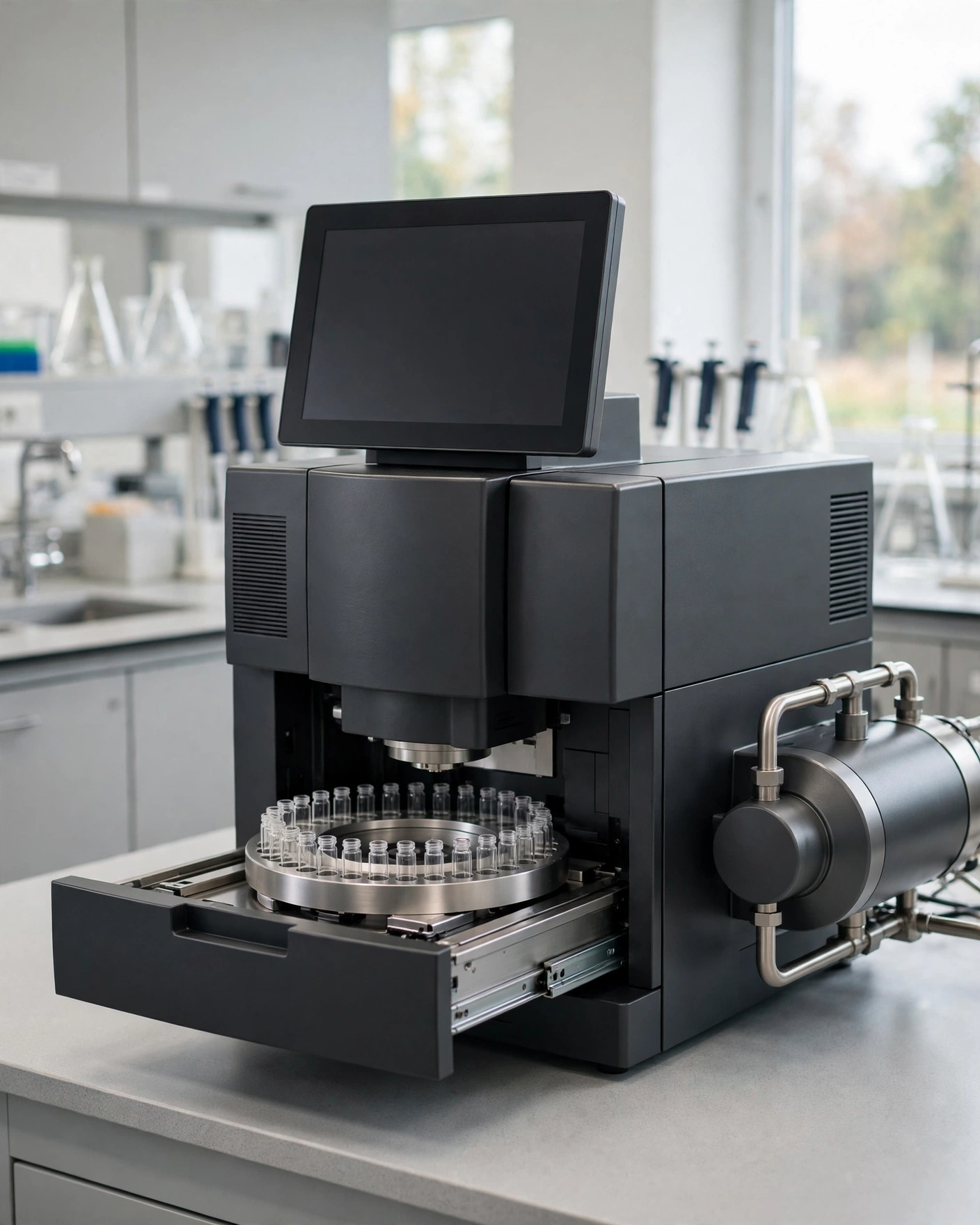
★ BEST PFAS WATER TEST KITS 2026Start with the fact that shapes this entire page: there is no credible do-it-yourself PFAS test. PFAS are regulated in parts per trillion — the EPA’s 2024 drinking-water limits set PFOA and PFOS at 4 ppt each — and measuring anything at that level requires laboratory mass spectrometry, careful contamination-controlled sampling, and methods with names like EPA 537.1 and 1633. Any strip, vial or gadget claiming to test PFAS at home is selling fiction. What does exist: a small number of legitimate mail-in laboratory routes. This roundup ranks those.
Here is the short answer: Tap Score’s PFAS test is the best overall — a broad multi-compound panel analyzed with EPA-method laboratory work, reported in plain language, at roughly $265–299. Cyclopure’s test kit is the best value — about $79 for LC-MS analysis of the headline compounds, from the company whose DEXSORB media is itself a PFAS technology. State programs and utility testing are worth a call first, because some regions test free near known contamination sites. Everything else in this category is a panel from a certified lab (Eurofins and peers) or a product to avoid.
Tap Score PFAS Test — our scores
Table of Contents
Quick picks
The bottom line: Tap Score for the fullest picture (dozens of compounds, ppt-level reporting, guided sampling); Cyclopure for a focused, affordable check on the regulated headliners; your state or utility first if you live near a known site — free programs exist exactly there.
Verdict: in PFAS testing, the laboratory is not the premium option. It is the only option. Choose between laboratories, not between a lab and a gadget.
Top 3 quick picks
- Best overall — Tap Score PFAS (~$265–299). Broad compound panel, EPA-method analysis, human-readable report.
- Best value — Cyclopure Kit (~$79). LC-MS results for the key regulated compounds at a third of the price.
- Best first call — State/utility programs (free where offered). Especially near military, industrial or airport contamination sites.
The catch
- Sampling is contamination control. PFAS are in clothing, cosmetics, food packaging and dust — the kits’ gloves-and-rules protocols are the product as much as the lab work.
- A result is a snapshot of one tap. Levels vary by source and season; treat single results as strong evidence, not eternal truth.
How we researched
We did not run a mass spectrometer, so this guide will not pretend we did. What we did instead: verified that each recommended route analyzes samples in a real laboratory using published EPA PFAS methods (537.1 / 1633 family) with reporting limits at or below the 4 ppt regulatory level for PFOA/PFOS, compared compound menus and prices as published in October 2026, and excluded every product claiming at-home PFAS measurement — a category with no credible members. Regulatory figures are the EPA’s 2024 National Primary Drinking Water Regulation for PFAS.
Best overall: Tap Score PFAS Test

Tap Score brings its usual formula to the hardest test in consumer water analysis: a sampling kit engineered to keep a ppt-level sample clean (specified bottles, gloves, and a list of things to avoid before sampling — certain cosmetics, fast-food wrappers, waterproof clothing), laboratory analysis across a broad panel of PFAS compounds using EPA-method mass spectrometry, and a report that translates ppt figures against the 2024 EPA limits in language a homeowner can act on. At roughly $265–299 it is the most expensive pick here and the most complete: if PFAS is a genuine concern at your address — near a base, an airport, an industrial site, or a known plume — this is the test that answers the whole question at once.
Turnaround runs longer than standard panels (specialist analysis, roughly two to three weeks is a fair expectation to set). And the usual mail-in discipline applies double: a contaminated sampling session does not produce a wrong-looking result, it produces a wrong result that looks fine — follow the protocol like it is the test, because it is.
Pros
- Broadest consumer PFAS panel with ppt-level reporting limits.
- Contamination-controlled sampling kit and guided protocol.
- Reports benchmarked to the 2024 EPA limits, readable by humans.
Cons
- ~$265–299 and weeks of waiting.
- Protocol is strict — a sloppy sample wastes the whole spend.
Price checked at time of writing; it changes often — see the live price before you buy.
Best value: Cyclopure Test Kit
Cyclopure is a PFAS company first — its DEXSORB adsorbent is used in treatment — and its mail-in test kit applies the same laboratory depth at consumer scale: roughly $79 buys LC-MS analysis focused on the compounds regulators headline (PFOA, PFOS and a focused set of their relatives), with reporting at ppt levels. The menu is narrower than Tap Score’s broad panel and the reporting is more technical, which is exactly the trade a value pick should make: the regulated questions answered credibly, at a third of the price. For a first check — “is there anything here at all?” — it is the rational spend, with Tap Score as the escalation if the answer comes back interesting.
Pros
- ~$79 for real LC-MS analysis — the credible floor for PFAS testing.
- Focused on the regulated compounds that drive decisions.
Cons
- Narrower compound menu and a more technical report than Tap Score.
Price checked at time of writing; it changes often — see the live price before you buy.
Best for specific needs
Two more legitimate routes, each best in its lane.
Best official route: state & utility PFAS programs
PFAS contamination is mapped, site by site, by public agencies — and where a plume is known, testing money often follows: states run private-well PFAS sampling programs near military bases, airports and industrial sites, and utilities publish their own system results (increasingly required under the 2024 regulation’s monitoring schedule). Before paying anyone, search your state environmental agency’s PFAS page and ask your utility for its latest results. If your address is in a program area, the test is free and official; if it is not, you have learned something useful about your local risk picture for $0.
Pros
- Free where offered, with agency-grade laboratories.
- Local context included — results come with the area’s story.
Cons
- Geography decides — no program, no pick.
- Timelines are the agency’s, not yours.
Also consider: certified-lab direct panels (Eurofins network)
Large laboratory networks such as Eurofins accept consumer PFAS samples through various storefronts and regional labs, typically at prices between Cyclopure and Tap Score with comparably serious methods. They are a sound route where a regional lab shortens shipping — just verify the same two things this page verifies everywhere: EPA-method analysis and ppt-level reporting limits for PFOA/PFOS specifically, stated in writing before you pay.
Head-to-head comparison
| Option | Method | Coverage | Reporting level | Price |
|---|---|---|---|---|
| Tap Score PFAS | Lab LC-MS/MS (EPA-method) | Broad multi-compound panel | ~ppt (≤4 ppt for PFOA/PFOS) | ~$265–299 |
| Cyclopure Kit | Lab LC-MS | Focused regulated set | ~ppt | ~$79 |
| State/utility programs | Official lab | Regulated panel | ~ppt | Free where offered |
| Eurofins-type direct | Certified lab | Panel by order | ~ppt | ~$150–300 |
| “At-home PFAS kits” | — | None credibly | Cannot reach ppt | Avoid at any price |
Buying guide

Verify the reporting limit, not the marketing. The only specification that matters: can the lab report PFOA and PFOS at or below 4 ppt — the EPA’s 2024 maximum contaminant levels — using a published EPA method (537.1/1633 family)? If a seller cannot state that plainly, walk away. Sample like a scientist: PFAS cling to everything and come from almost everything — follow the kit’s rules (gloves, no cosmetics or sunscreen on sampling hands, no food packaging nearby, specified bottles only) to the letter. Interpret with the map: a positive result near a known site means something different from an isolated trace; your state PFAS page and our general testing guide help place a number in context, and any filtration response should target certified PFAS reduction (NSF/ANSI 53/58 listings with PFOA/PFOS named).
Replacement cost math
- First check: Cyclopure ~$79 (or free via a state program) — the rational opening move for most households.
- Full picture: Tap Score ~$265–299 when the first check flags something, or when your address risk justifies skipping steps.
- Confirmation after treatment: budget one repeat test (~$79–299) after installing any PFAS filter — an unverified fix is a hope.
- What not to budget: any money at all for at-home PFAS products. The category’s floor is a laboratory; everything below it is priced fiction.
FAQs
Can I test my water for PFAS at home?
Not with any product you use at home yourself. PFAS are regulated at parts per trillion — the EPA limits for PFOA and PFOS are 4 ppt — and measuring at that level requires laboratory mass spectrometry (LC-MS/MS) and contamination-controlled sampling. The legitimate “home” option is a mail-in laboratory kit: you collect the sample at home under a strict protocol, and a real lab (Tap Score, Cyclopure, or a certified network lab) does the measuring. Any strip or gadget claiming instant PFAS results is not credible.
What is a safe level of PFAS in drinking water?
The EPA’s 2024 drinking-water regulation sets maximum contaminant levels of 4.0 parts per trillion each for PFOA and PFOS individually, with a hazard-index standard for a group of additional PFAS. The health-based goals (MCLGs) for PFOA and PFOS are zero, reflecting that regulators treat any exposure as worth minimizing. Practically: results at or above 4 ppt for either compound call for action — filtration certified for PFAS reduction and a conversation with your utility or health department.
How much does a PFAS water test cost?
Credible options run from about $79 (Cyclopure’s focused LC-MS kit) to roughly $265–299 (Tap Score’s broad multi-compound panel), with certified-lab direct panels in between. Some state programs test private wells free near known contamination sites — check your state environmental agency first. Anything dramatically cheaper that claims PFAS results is not performing laboratory analysis and should not be trusted.
Why is PFAS sampling so strict?
Because at parts per trillion, the world contaminates the sample. PFAS are present in cosmetics, sunscreen, food packaging, waterproof clothing, dust and many plastics, so kits specify gloves, bottle types, and a list of things to avoid before and during sampling. A careless sample can pick up PFAS from the sampler rather than the water — producing a frightening number that measures your moisturizer. Follow the protocol exactly; it is part of the instrument.
My PFAS test came back positive. What now?
First, read the number against the 4 ppt limits for PFOA/PFOS and check whether your utility or state program already knows your area — context decides urgency. For drinking water, use a filter certified for PFAS reduction (look for NSF/ANSI 53 or 58 listings naming PFOA/PFOS — many RO systems qualify), and retest after installation to verify performance. Report significant results to your health department; private-well data genuinely helps map contamination.
Does a standard home water test include PFAS?
Usually not. Broad mail-in panels cover metals, minerals, bacteria and disinfection byproducts — PFAS is a separate, specialist analysis with its own methods and price, sold as a dedicated panel (as in this roundup) or an add-on. DIY kits never include credible PFAS testing. If PFAS is your question, order the PFAS test specifically and confirm its reporting limits reach the 4 ppt regulatory level.
Conclusion
PFAS testing is where home water analysis grows up: no strips, no gadgets, no shortcuts — just a sample drawn like it matters and a mass spectrometer at the other end. Tap Score earns best overall for the broadest, clearest picture; Cyclopure earns best value for making the credible floor $79; and your state’s program may make it free. Choose one of those three doors, follow the sampling rules like a ritual, and you will have the rarest thing in this category: a PFAS number you can believe.
Price checked at time of writing; it changes often — see the live price before you buy.
Update log
- Zulqarnain: Review published.