
Brita Grand Pitcher Review (2026): Is It Worth It?
★ LARGE BRITA PITCHERYou need a pitcher that can keep up with a thirsty household — coffee in the morning, water all day, a pot of pasta at night — without a refill trip after every round of glasses. Small pitchers run dry by lunch. But big ones raise a bigger question: is the Brita Grand, Brita’s classic 10-cup pitcher, genuinely good filtration, or just a bigger plastic jug with the same basic filter inside?
Here is the short answer: the Grand is exactly that second thing — and for a lot of homes, that is fine. It pairs a genuinely roomy 10-cup body and a handy flip-top lid with Brita’s Standard filter (OB03), a taste-and-odor cartridge rated at 40 gallons. It is not a lead filter, not a PFAS filter, and not a health-contaminant system. It is a big, cheap-to-run chlorine-taste fix. Below: what the filter is actually listed to reduce, what the lid and indicator are like to live with, the yearly cost, and when to skip it for a stronger Brita or a rival instead.
Our scores
Table of Contents
Bottom line
The bottom line: the Brita Grand is the right buy if you want a big, familiar, cheap-to-run pitcher that makes tap water taste better. It is the wrong buy if your concern is lead, PFAS, or any health contaminant — the Standard filter it ships with is not certified for those jobs.
Verdict: a solid big taste-filter pitcher at a fair price — just know what its filter does and does not do.
Price is an estimate; it changes often — see the live price before you buy.
How we researched
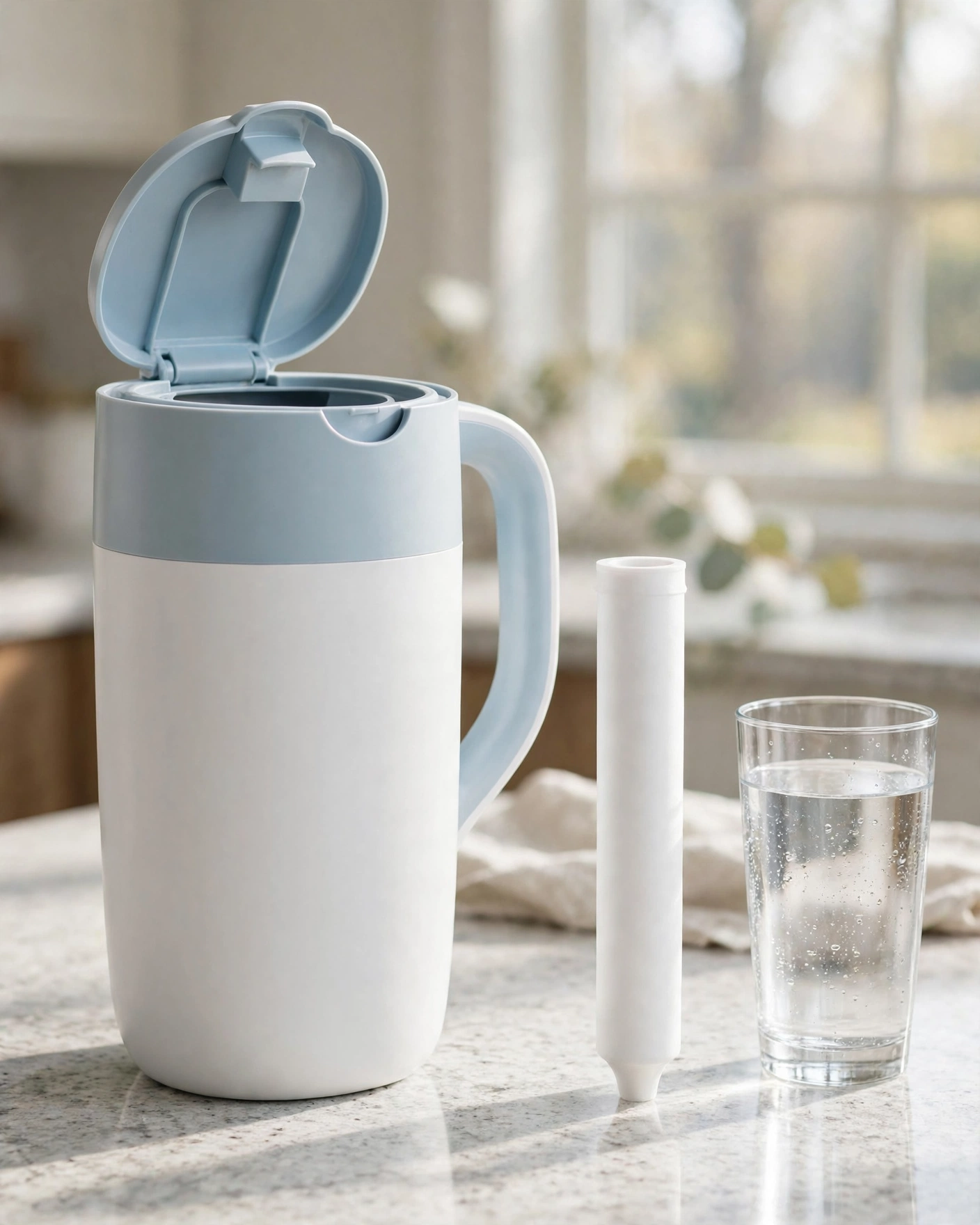
We did not receive a test unit and we did not run a lab bench test, so nothing here claims hands-on testing. Instead we researched and compared: Brita’s published specs and the Standard filter’s Performance Data Sheet, public database listings, recurring owner-review complaints, and yearly filter-cost math from rated filter life and typical prices.
Pros and cons
Pros
- Real 10-cup capacity — about 80 ounces on hand, so a family is not refilling after every round of glasses.
- Flip-top lid — one-thumb refills under the faucet, no need to pull the whole lid off.
- Cheap, everywhere filters — the Standard (OB03) cartridge is one of the most widely stocked refills in the country, and multipacks are inexpensive.
- Filter flexibility — the same body accepts the longer-life Brita Elite cartridge, so you can upgrade filtration later without a new pitcher.
- Electronic filter indicator — the lid tracks use and blinks when a change is due, which beats guessing.
Cons
- No lead certification as shipped — the included Standard filter is a taste-and-odor cartridge; lead reduction requires an Elite filter swap.
- Frequent filter changes — 40 gallons / about 2 months per Standard cartridge means roughly six swaps a year.
- Lid complaints — owners repeatedly report the lid feeling loose and occasionally popping off mid-pour.
- Heavy when full — 10 cups of water plus the pitcher is close to 6 pounds; one-handed pouring takes wrist strength.
- Black carbon specks — new cartridges shed harmless carbon fines into the first few pitchers, per Brita’s own guidance.
Certifications (database-checked)
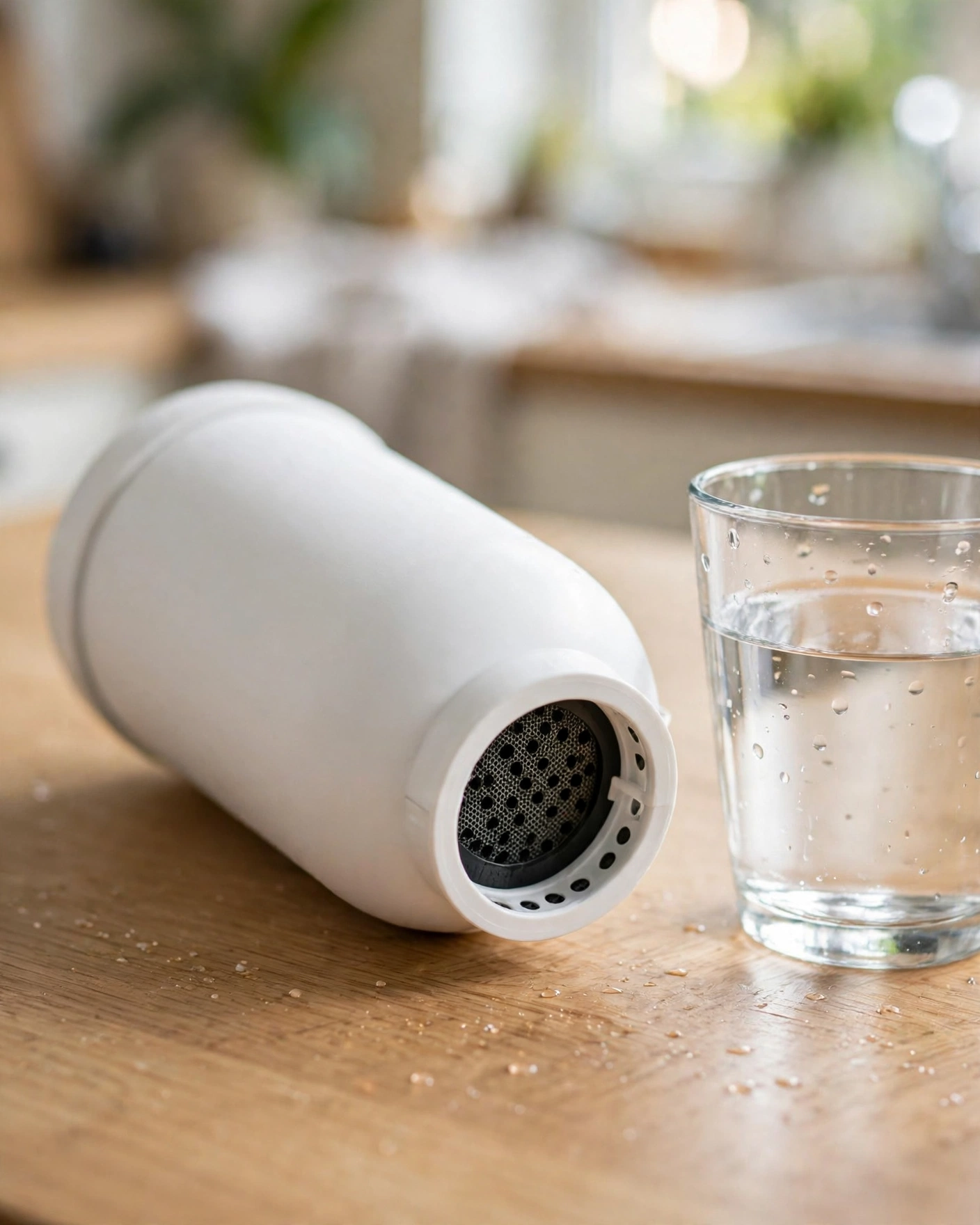
This section is where the Grand needs honesty, because the Brita name makes people assume more filtration than the included cartridge delivers. The Grand ships with the Brita Standard filter, model OB03. Per Brita’s published Performance Data Sheet, the OB03 is WQA-listed against NSF/ANSI Standards 42 and 53 for a specific list of reductions — and that list is narrower than the Elite filter’s in one crucial place: lead is not on it.
| Contaminant | Claim (brand-stated) | Source |
|---|---|---|
| Chlorine taste and odor | NSF/ANSI 42 | Brita OB03 Performance Data Sheet (WQA listing) |
| Mercury | NSF/ANSI 53 | Brita OB03 Performance Data Sheet (WQA listing) |
| Cadmium | NSF/ANSI 53 | Brita OB03 Performance Data Sheet (WQA listing) |
| Copper | NSF/ANSI 53 | Brita OB03 Performance Data Sheet (WQA listing) |
| Zinc | NSF/ANSI 42 | Brita OB03 Performance Data Sheet (WQA listing) |
| Lead | Not certified for the Standard filter | Absent from the OB03 sheet; Elite (OB06) is the lead-certified Brita pitcher filter |
Two things matter. First, “compliant with” a standard is not the same as “listed to” it — only the contaminants in the actual listing count, and only under the lab conditions the standard uses. Second, do not take our table — or Brita’s marketing — as the last word: look the listing up yourself in the public NSF database at info.nsf.org, and apply the same self-check to any pitcher you compare this against. Want certified lead reduction inside a Brita body? Our Brita Elite pitcher review covers that cartridge. Cross-brand? The PUR PLUS pitcher review is the closest certified rival in this size class.
Certification covers only the contaminants in the database entry. The Standard filter is not certified for fluoride, chloramine, PFAS, or TDS reduction — if any of those is your concern, this cartridge is the wrong tool regardless of brand.
Design and usability
The Grand is Brita’s classic large pitcher: an oval 10-cup body (about 80 ounces), BPA-free plastic per Brita’s product materials, a comfort-grip handle, and the defining flip-top lid. Press the lid tab, fill the top reservoir, and water filters down into the body. The oval footprint is the quiet advantage — less fridge-door space front-to-back than a round pitcher of the same capacity.
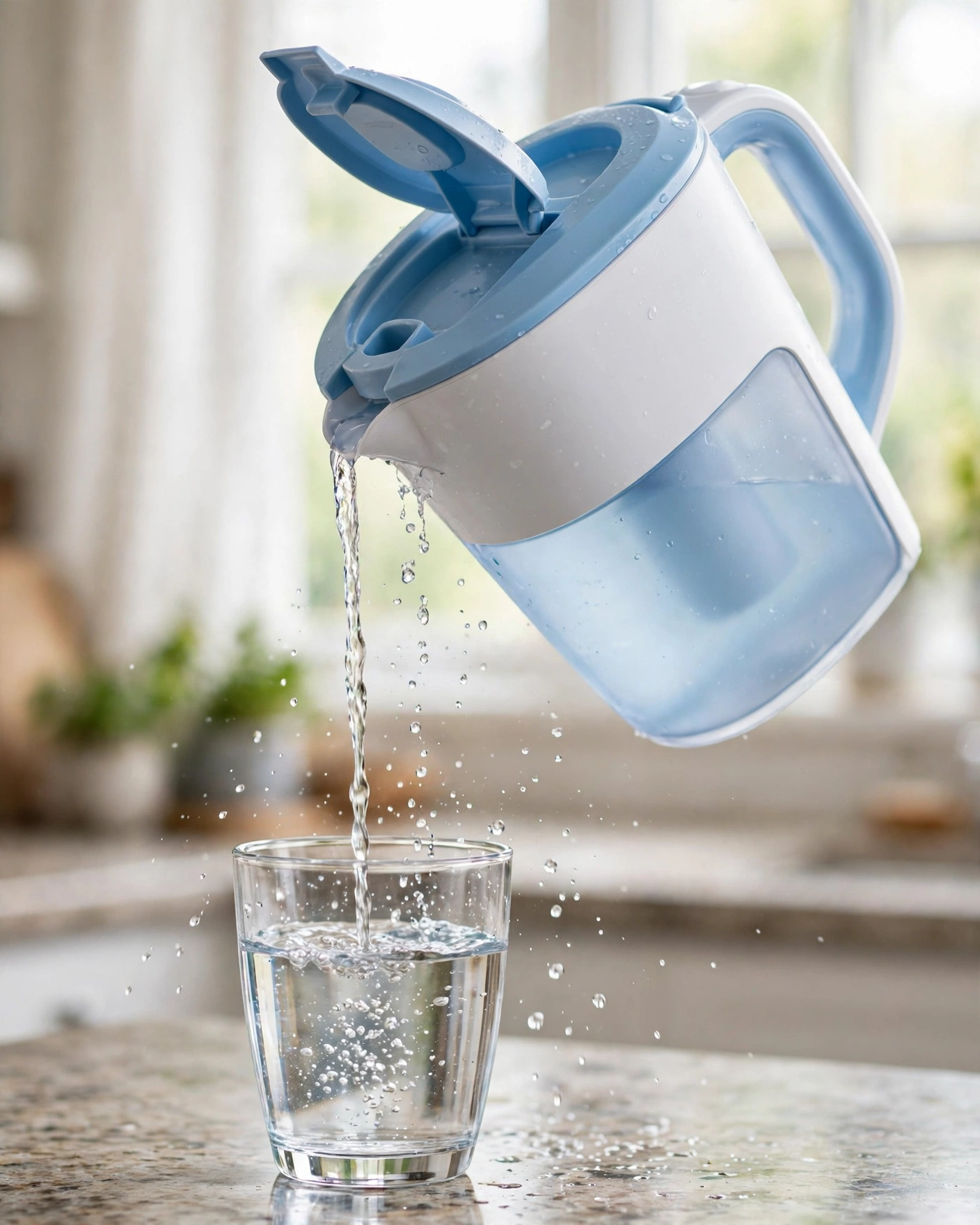
The electronic filter-change indicator sits in the lid and blinks when the cartridge is due. It is a timer-based reminder, not a water-quality sensor, so treat it as a baseline — heavy use still wears a filter out faster than the calendar assumes. Day to day, filling is fast, pouring is controlled half-full, and the whole thing gets heavy at a full 10 cups. Care is hand-wash only: Brita says pitchers are not dishwasher safe, and the heat can damage the lid’s indicator.
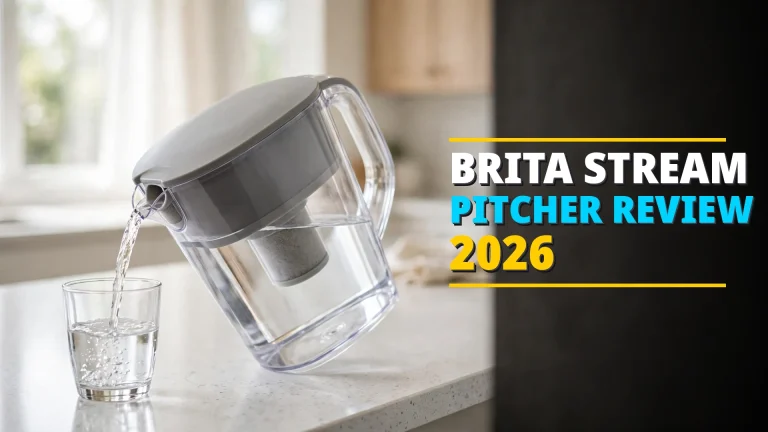
If the pour-through wait bothers you, our Brita Stream pitcher review covers the filter-as-you-pour design that skips the reservoir wait. And if 10 cups is more pitcher than your household needs, the Brita Everyday pitcher review covers the smaller sibling using the same Standard filter.
The specs
- Brand
- Brita
- Model
- Grand (OB36)
- Pitcher capacity
- 10 cups (about 80 oz)
- Included filter
- Standard (OB03)
- Filter rated life
- 40 gallons / about 2 months
- Also accepts
- Brita Elite (OB06) filter
- Certifications
- NSF/ANSI 42 & 53 (see table)
- Typical pitcher price
- ~$25–35 (estimate)
- Dishwasher safe
- No — hand-wash only
Filter cost math
A pitcher is a subscription you pay in cartridges, so the sticker price is the least useful number here. The Grand’s math is simple: the Standard filter is cheap, but it is also frequent. All prices below are estimates from typical retail listings.

| Item | Grand + Standard filter | Grand + Elite filter |
|---|---|---|
| Pitcher (upfront, estimate) | ~$25–35 | ~$25–35 |
| Filter rated life | 40 gallons / ~2 months | 120 gallons / ~6 months |
| Filters per year | ~6 | ~2 |
| Estimated yearly filter cost | ~$30–60 | ~$36–50 |
| What the money buys | Taste and odor + listed metals | Wider certified list incl. lead |
Neither column wins — six cheap Standard swaps and two pricier Elite swaps cost roughly the same per year, so the real decision is filtration scope, not budget. The one way to waste money is habit: replacing a Standard filter early “just in case” quietly doubles your yearly cost without improving your water. Let the indicator — and your taste buds — call the change. Cross-shopping the PUR line on running costs? Our PUR Ultimate pitcher review runs the same math for PUR’s cartridge schedule.
What owners complain about
The lid. This is the Grand’s signature complaint, repeated across years of owner reviews: the lid can feel loose, and some owners report it shifting or popping off mid-pour, especially with a full pitcher. The flip-top refill tab itself is well liked — it is the lid’s seat on the body that draws the criticism. Pouring two-handed when full is the workaround owners land on.

Black carbon specks. The number-one complaint across all Brita pitchers shows up here too: tiny black particles in the first pitchers from a fresh cartridge. Brita’s guidance frames this as normal carbon dust from a new filter and advises discarding the first three pitchers (or watering plants with it). Owners who rinse first generally report the specks clearing quickly.
Plastic feel and weight. A smaller thread calls the body plastic brittle-feeling, and notes that a full Grand is heavy to pour one-handed. Neither is surprising at this price and capacity, but if you have grip or wrist issues, any full 10-cup pitcher deserves a second thought.
Slow filtering near end of life. As with every pour-through pitcher, flow slows as the cartridge ages or in hard-water homes — the practical signal a change is due, even if the indicator has not blinked yet.
None of these are deal-breakers unique to the Grand — lid fit and carbon fines are category-wide Brita themes.
Who should buy it
Buy it if
- Your household drinks a lot of water and you are tired of refilling a small pitcher.
- Your goal is better-tasting water — chlorine taste and odor gone — at the lowest running cost in the Brita line.
- You want filters you can buy anywhere — any grocery or drugstore, no planning ahead.
- You like the option to upgrade later: the same body takes the Elite cartridge if your concerns change.
Skip it if
- Lead is your concern — as shipped, this pitcher is not certified for it. Budget for Elite cartridges from day one, or pick a pitcher built around a lead-certified filter.
- You want near-zero TDS water — that is a different product class entirely; no Brita carbon pitcher does that job.
- A loose-feeling lid will annoy you daily — some owners never make peace with it.
- You live alone — a 6-cup pitcher you finish and refill fresh beats 10 cups sitting in the fridge.
FAQs
How long does a Brita Grand filter last?
The pitcher ships with a Brita Standard filter (OB03), rated by Brita at 40 gallons — about 2 months for an average family. Heavy use or hard water can shorten that. The lid’s electronic indicator blinks when a swap is due; treat it as your baseline and change sooner if the flow slows or the taste changes.
Does the Brita Grand reduce lead?
Not with the filter in the box. The included Standard filter (OB03) is not certified for lead reduction — its WQA-listed claims, per Brita’s Performance Data Sheet, cover chlorine taste and odor, mercury, cadmium, copper, and zinc. The Grand body does accept Brita Elite (Longlast+) cartridges, which Brita lists as certified for lead reduction. If lead is your concern, confirm the listing in the public NSF database at info.nsf.org first.
Does the Brita Grand work with Brita Elite filters?
Yes. The Grand uses the same cartridge fit as most Brita pitchers and dispensers, so it accepts both the Standard (OB03) filter it ships with and the longer-life Elite (OB06) filter. The exception in the Brita line is the Stream pitcher, which uses its own filter-as-you-pour cartridge.
Why are there black specks in my water?
Those specks are carbon fines — tiny particles of filter media released from a new cartridge. Brita’s guidance is that carbon dust in the first three pitchers is normal; discard that water or use it for plants. Owners who follow the rinse step generally report the specks clearing quickly.
What is the difference between the Brita Grand and the Brita Everyday?
Both are 10-cup-class Brita pitchers using the same Standard filter, so the water is filtered the same way. The Grand’s differences are its oval body, its flip-top lid for one-thumb refills, and its electronic filter indicator, versus the Everyday’s simpler lid and sticker-style indicator. You are choosing on size, lid, and indicator — not on filtration.
Does the Brita Grand remove fluoride or PFAS?
No. Fluoride and PFAS (PFOA and PFOS) are not among the Standard filter’s certified reductions and do not appear on Brita’s Performance Data Sheet for the OB03 filter. If either is your main concern, you need a different product category.
How much does the Brita Grand cost to run per year?
At the rated 40-gallon, 2-month life, you need about six Standard filters a year. At typical retail prices (estimates), that is roughly $30–$60 a year in filters plus the one-time pitcher price; multipacks usually bring the per-filter cost down. See the Filter cost math section for the full breakdown.
Conclusion
The Brita Grand is not the strongest filter Brita sells, and this review has not pretended otherwise. It is the classic big Brita done honestly: a roomy 10-cup pitcher, a flip-top lid people like, an electronic change reminder, and the cheapest widely available cartridge in the category — around a Standard filter whose certified job is taste, odor, and a short list of metals, not lead or PFAS. If that matches your actual problem — chlorinated tap water and a household that drinks a lot of it — the Grand earns its counter space. If your problem is a contaminant, buy the filter certified for that contaminant instead: Elite cartridges in this same body, or a different pitcher altogether.
Price is an estimate; it changes often — see the live price before you buy.
Update log
- Zulqarnain: Review published.