EDR1RXD1 vs EDR2RXD1 vs EDR3RXD1 (2026): Which Should You Buy?
★ WHIRLPOOL FILTER DECODERYou have written down the number from your old cartridge — or found a filter box with a number on it — and now you are staring at three nearly identical model numbers: EDR1RXD1, EDR2RXD1, EDR3RXD1. The listings all show the same white cartridge. The prices are close. The names differ by a single digit. It is easy to assume they are just different packs of the same filter.
They are not. EveryDrop Filter 1, Filter 2 and Filter 3 are three different cartridges built for three different Whirlpool-family fridge designs — different sizes, different install types, different part-number families. Buy the wrong number and it will not fit your fridge. Here is the honest answer this post earns: there is no “best” filter in this lineup, there is only the filter your fridge was built to take. Your fridge manual answers that in seconds. We researched and compared all three against brand-published specs and live retailer listings — certifications, yearly cost, and what owners actually say — so you can stop guessing and match the right number to your fridge.
Table of Contents
Quick verdict
The bottom line: there is no best filter in the EDR1/EDR2/EDR3 lineup — there is only the filter your fridge was designed to take. Filter 1 is the push-in cartridge for fridges with the base-grille or older side-by-side filter housings; Filter 2 is the twist-in cartridge for interior-ceiling housings in some French-door and bottom-mount models; Filter 3 is the tall push-in cartridge for side-by-side and French-door interior housings. Brand-stated certifications, rated filter life and the price band are close enough across all three that the decision is fit, full stop.
Verdict: buy by fit, not by features — match your manual, then buy the specific number you need.
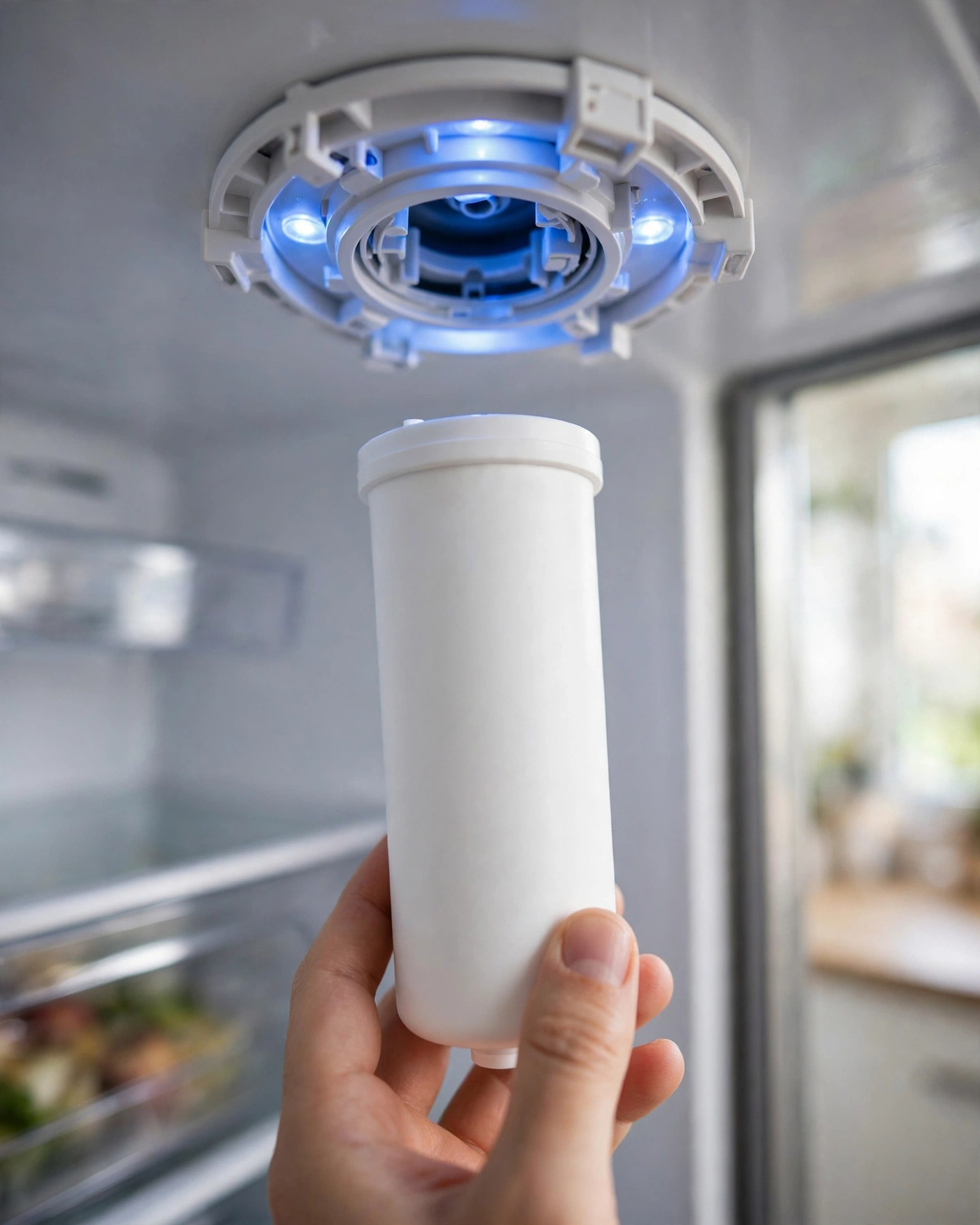
If you are dealing with Samsung’s equally confusing numbering instead, our HAF-QIN vs HAF-CIN comparison runs the same decoder for that family. The rest of this post is Whirlpool, Maytag, KitchenAid, Amana and JennAir only — because that is who these filters fit.
Pros and cons
Pros
- Genuine OEM fit — developed with the Whirlpool-family fridge line, so no adapter, no guessing.
- Same strong brand-stated certification on all three — Whirlpool states NSF/ANSI 42, 53 and 401 for Filter 1, 2 and 3 (we present this as brand-stated, not database-verified).
- Tool-free changes — push-in for Filters 1 and 3, twist-in for Filter 2; owners report swaps taking a few minutes.
- Uniform 6-month / 200-gallon rated life — one replacement rhythm no matter which number your fridge takes.
Cons
- Not interchangeable — the wrong number will not fit your fridge, even if it looks identical in a product photo.
- Genuine pricing is steep — roughly $100–120 a year in cartridges at estimate street prices.
- Numbering confusion is real — third-party listings mix up EDR numbers and repeat older contaminant counts (22/24/28) instead of the current brand statements (70/70/74).
- Counterfeit risk on marketplaces — Whirlpool is part of the AHAM FilterItOut anti-counterfeit program, and off-brand sellers are the main source of wrong-fit complaints.
Side-by-side table
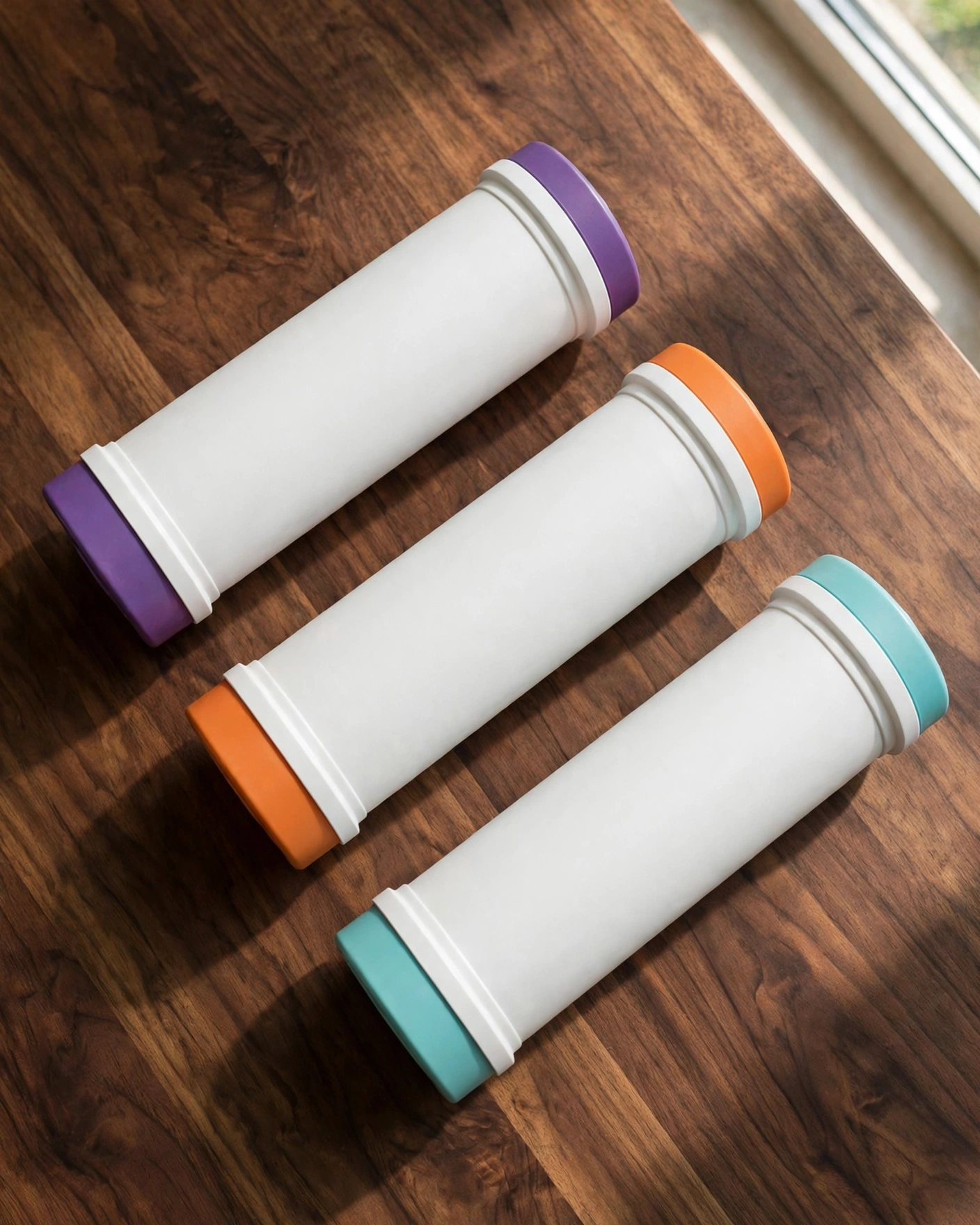
The table is the whole post in one glance. Everything that follows explains the rows that matter most.
| EveryDrop Filter 1 (EDR1RXD1) | EveryDrop Filter 2 (EDR2RXD1) | EveryDrop Filter 3 (EDR3RXD1) | |
|---|---|---|---|
| Brand color band | Purple | Orange | Aqua |
| Install type | Push-in | Twist-in | Push-in |
| Approx. size (brand-stated) | ~7.5 in tall | ~7.5 in tall | ~13.5 in tall |
| Micron rating | 0.5 to <1.0 | 0.5 to <1.0 | 0.5 to <1.0 |
| Replaces (verified part no.) | W10295370A / Kenmore 9081 | W10413645A | — (check manual) |
| Where it usually sits | Base grille / older side-by-side housings | Interior ceiling housings | Interior tall housings |
| Fridge types (brand-stated) | Bottom mount, French door, side by side, top mount | Bottom mount, French door | Bottom mount, French door, side by side |
| Brand-stated contaminant count | 70 | 70 | 74 |
| Rated filter life | 6 months / 200 gal | 6 months / 200 gal | 6 months / 200 gal |
| Typical single price (estimate) | ~$55–60 | ~$50–60 | ~$45–55 |
The most important row is “install type.” Filter 1 and Filter 3 push straight in; Filter 2 twists. That physical difference is why cross-substitution fails — the housings in the fridge are built for one motion only. Frigidaire owners face the same numbering maze with WF3CB vs ULTRAWF, and our WF3CB vs ULTRAWF decoder explains how the same “which number fits” logic works there.
Certifications
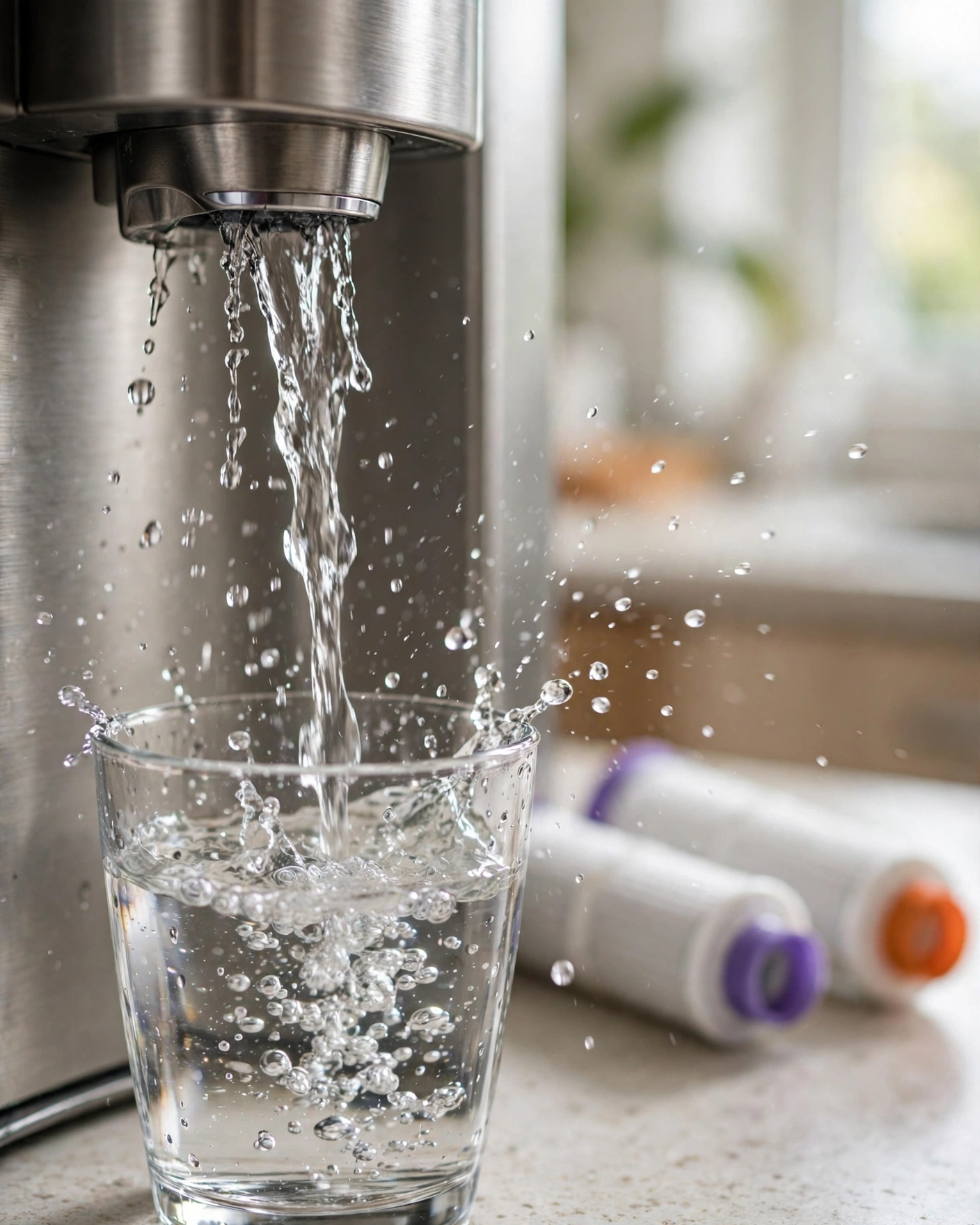
This is the good news for anyone dreading a tradeoff: on paper, Whirlpool claims the same certification tier for all three filters. The brand pages state that every genuine EveryDrop filter is certified to NSF/ANSI Standards 42, 53 and 401 using the brand’s Triple Filtration Technology — a coconut-shell-based activated carbon core working in three stages. That is the full trio, where many generic compatibles stop at NSF/ANSI 42 (taste and odor) only.
The stated contaminant counts differ slightly: Filters 1 and 2 are stated to reduce 70 potentially harmful contaminants, including lead, pesticides, pharmaceuticals and 99% of microplastics; Filter 3 is stated to reduce 74, with the same headline categories. Filter 3’s brand Performance Data Sheet (published on everydropwater.com) goes further and lists tested reductions under NSF/ANSI 42, 53, 401 and CSA B483.1 — including lead at over 99.7%, mercury, asbestos, cysts at over 99.99%, microplastics at over 99.9%, plus benzene, atrazine, endrin, MTBE, trihalomethanes and pharmaceuticals such as atenolol and ibuprofen.
A necessary caveat, stated plainly: every certification claim on this page is brand-stated — from Whirlpool’s, KitchenAid’s and Maytag’s own product pages. We did not verify each listing in the public NSF database. Also note that many third-party retailer pages still show older numbers (22, 24 or 28 contaminants) copied from earlier packaging; the current brand pages state 70/70/74. Certification also covers only the contaminants in the brand’s documents, and only under the test conditions behind them.
Cost per year
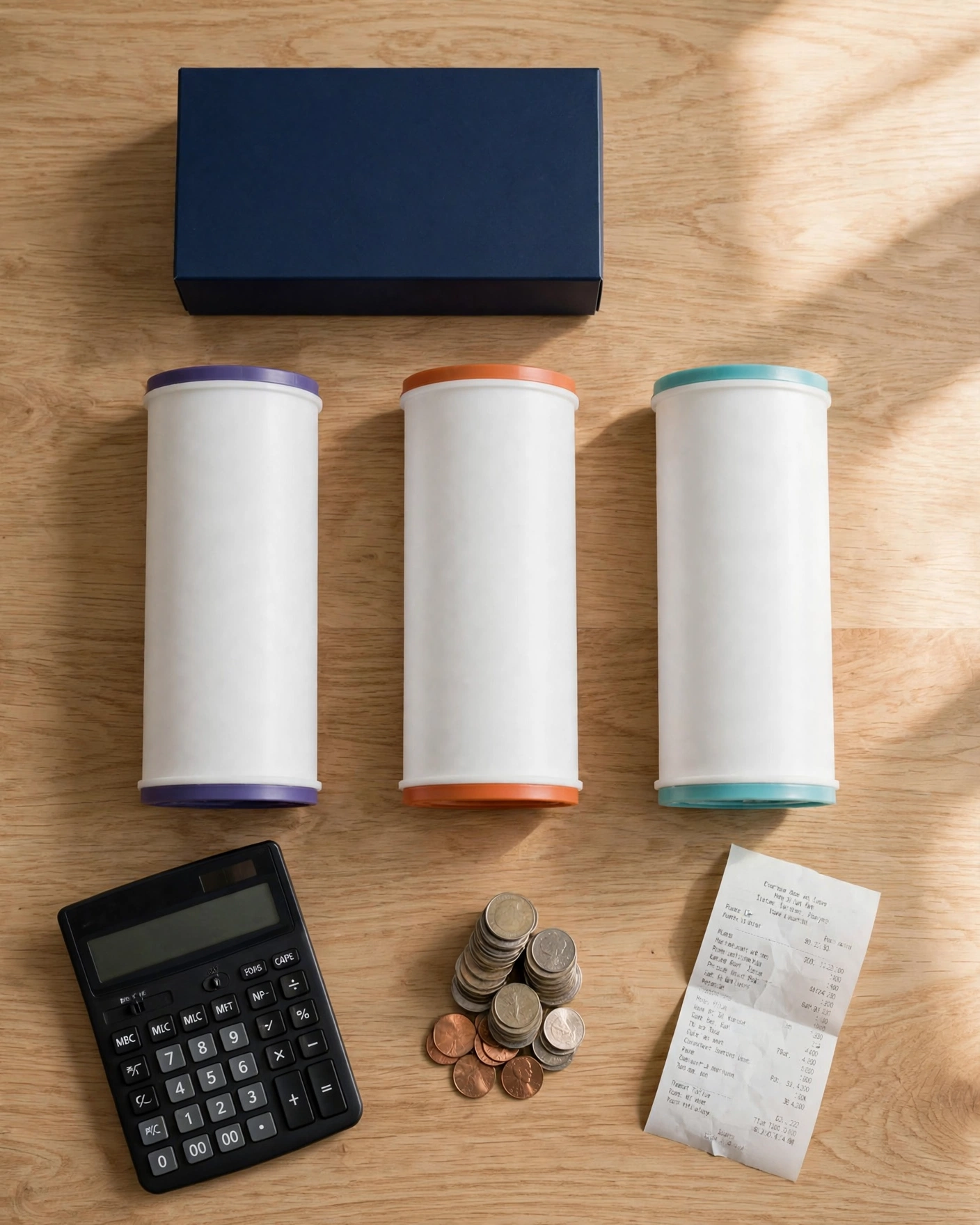
The cost math is refreshingly simple because all three share the same replacement rhythm: every 6 months or 200 gallons means two cartridges a year, whichever model number you buy.
| Item | Filter 1 (EDR1RXD1) | Filter 2 (EDR2RXD1) | Filter 3 (EDR3RXD1) |
|---|---|---|---|
| Single cartridge (estimate) | ~$55–60 | ~$50–60 (list $59.99) | ~$45–55 (list $49.99) |
| Changes per year | 2 | 2 | 2 |
| Estimated yearly cost | ~$110–120 | ~$100–120 | ~$90–110 |
| Subscription refills | Check brand store | ~$48 (about 20% off list) | Check brand store |
| Compatible alternative (estimate) | ~$25–35 each | ~$25–35 each | ~$25–35 each |
Three things worth knowing. First, Filter 2 is the one with the clearest subscription option — KitchenAid lists subscription refills at $48 against a $59.99 list price, which shaves roughly $24 a year off the genuine cost. Second, multi-packs usually drop the per-cartridge price, so the single-cartridge figures above are the high end. Third, compatible filters cost roughly half — but check their certifications: most carry only NSF/ANSI 42, so the saving buys you taste-and-odor filtration, not the full brand-stated list. (All prices are estimates from brand and retailer listings; check the live price before you buy.) Samsung households face the same yearly-cost question — our DA29-00020B replacement guide runs the same math for that filter.
Owner voices

We read through owner feedback on the brand and retailer product pages (each filter carries around 900–1,100 ratings at roughly 4.5 out of 5 on the KitchenAid and Maytag pages as of the last crawl). The themes repeat across all three numbers — which makes sense, since owners are buying by fit, not shopping between them.
What owners praise. Easy, tool-free installation is the top recurring positive — push-in or twist-in, a few minutes, no plumber. Taste and odor improvement shows up almost as often, with clearer ice cubes getting specific mentions on Filter 2 and Filter 3 pages.
What owners complain about. Price is the number-one complaint: the “genuine tax” stings when two cartridges a year cost over $100. The second complaint is fit confusion — buyers ordering the wrong EDR number because a listing looked identical, or because a third-party seller shipped EDR1 when the order said EDR2. Third: carbon fines. Owners report tiny black particles in the first glasses from a fresh cartridge; the fix is flushing several gallons through the dispenser first. Fourth: counterfeits. Whirlpool flags counterfeit filters as a real market problem, and wrong-fit or leaking complaints cluster around off-brand marketplace sellers — which is why the genuine-only buy matters for this family.
Final verdict

The bottom line: this is a fit decision, not a features decision. Identify the filter your fridge takes — Filter 1 for base-grille push-in housings, Filter 2 for twist-in interior housings, Filter 3 for tall interior push-in housings — and buy that exact number. Certifications are stated at the same tier, rated life is identical, and yearly cost lands within about $20 across all three.
Verdict: match your manual, then buy the cheapest genuine source of the one number you need.
Buy Filter 1 (EDR1RXD1) if
- Your fridge manual — or the cartridge you are replacing — names EDR1RXD1 (it replaces W10295370A / Kenmore 9081).
- Your filter sits in the base grille and pushes straight in without a twist.
Buy Filter 2 (EDR2RXD1) if
- Your manual names EDR2RXD1 (it replaces W10413645A).
- Your housing needs a quarter-turn twist to lock — Filters 1 and 3 will not seat in it.
Buy Filter 3 (EDR3RXD1) if
- Your manual names EDR3RXD1 — typically the tall (~13.5 in) interior cartridge in side-by-sides and French doors.
Skip genuine if
- You only care about taste and odor — a well-reviewed NSF/ANSI 42 compatible at roughly half the price does that job. You lose the brand-stated 53/401 list, so know what you are giving up.
- You own an LG or Samsung — these are Whirlpool-family filters only. LG owners should see our LT1000P replacement guide; Samsung owners, our HAF-QIN replacement guide.
Price checked at time of writing; it changes often — see the live price before you buy.
Price checked at time of writing; it changes often — see the live price before you buy.
Price checked at time of writing; it changes often — see the live price before you buy.
Common specs
- Brand
- EveryDrop by Whirlpool
- Filters compared
- EDR1RXD1 / EDR2RXD1 / EDR3RXD1
- Standards (brand-stated)
- NSF/ANSI 42, 53 and 401
- Filter rated life
- 6 months / 200 gallons
- Micron rating
- 0.5 to <1.0
- Technology (brand-stated)
- Triple Filtration (coconut-shell carbon)
- Fits brands (brand-stated)
- Whirlpool, Maytag, KitchenAid, Amana, JennAir, Kenmore
- Interchangeable?
- No — fit is decided by your fridge
FAQs
Can I use an EDR1RXD1 in place of an EDR2RXD1?
No. EDR1RXD1, EDR2RXD1 and EDR3RXD1 are different cartridges for different fridge designs — different sizes, different install types (push-in vs twist-in), and different part-number families. They are not interchangeable, even though they look similar on a product page. The only safe match is the number your fridge manual or the cartridge you are replacing names.
How do I find out which EveryDrop filter my fridge needs?
Three ways, in order of reliability: check your fridge manual (it names the exact filter), look up your fridge model on the brand’s site (Whirlpool, Maytag, KitchenAid, Amana or JennAir), or read the part number printed on the old cartridge. Do not guess from the number alone — EDR1, EDR2 and EDR3 fit different housings.
What is the difference between EDR1RXD1 and EDR1RXD1B?
The trailing letter is a packaging variant of the same filter cartridge — the same genuine EveryDrop filter sold through a different retail channel or in different packaging. The cartridge itself and its brand-stated certification are the same. If in doubt, match the core number (EDR1RXD1) to your fridge’s requirements.
Do all three filters reduce the same contaminants?
According to Whirlpool’s brand pages, all three are certified to NSF/ANSI Standards 42, 53 and 401 using the same Triple Filtration Technology. Filter 1 and Filter 2 are stated to reduce 70 potentially harmful contaminants; Filter 3 is stated to reduce 74. These are brand-stated claims — we did not verify each listing in the public NSF database. The certification difference between them is small; fit is the real differentiator.
How often do EveryDrop filters need replacing?
Whirlpool states every 6 months or 200 gallons, whichever comes first — that applies to Filter 1, Filter 2 and Filter 3 alike. That means two cartridges a year. Many owners reset the fridge’s filter indicator after each swap so the reminder stays in sync.
Should I flush a new EveryDrop filter before using it?
Yes. Run several gallons of water through the dispenser after installing a new cartridge to clear harmless carbon fines — the tiny black particles owners sometimes see in the first glasses. The installation guidance on retailer repair pages says the same, and owners who flush report the particles clearing quickly.
Are cheaper compatible filters as good as the genuine EveryDrop ones?
Compatibles cost roughly half and fit the same housings, but most certify only to NSF/ANSI 42 (taste and odor), not the 42/53/401 trio Whirlpool claims for the genuine line. If your only goal is better-tasting water and ice, a well-reviewed compatible may be enough. If you want the full brand-stated contaminant list, the genuine cartridge is the only one that carries it.
Conclusion
EDR1RXD1, EDR2RXD1 and EDR3RXD1 are not three versions of one filter — they are three answers to three different fridges. That is the whole decision in one sentence. The brand states the same certification tier for all three, the replacement rhythm is identical, and the yearly cost difference is trivial. So do the one thing that actually matters: open your fridge manual, find the number your fridge was built for, and buy that exact number from a genuine source. Everything else on this page is context for a question your manual already answered.
Price checked at time of writing; it changes often — see the live price before you buy.
Update log
- Zulqarnain: Review published.