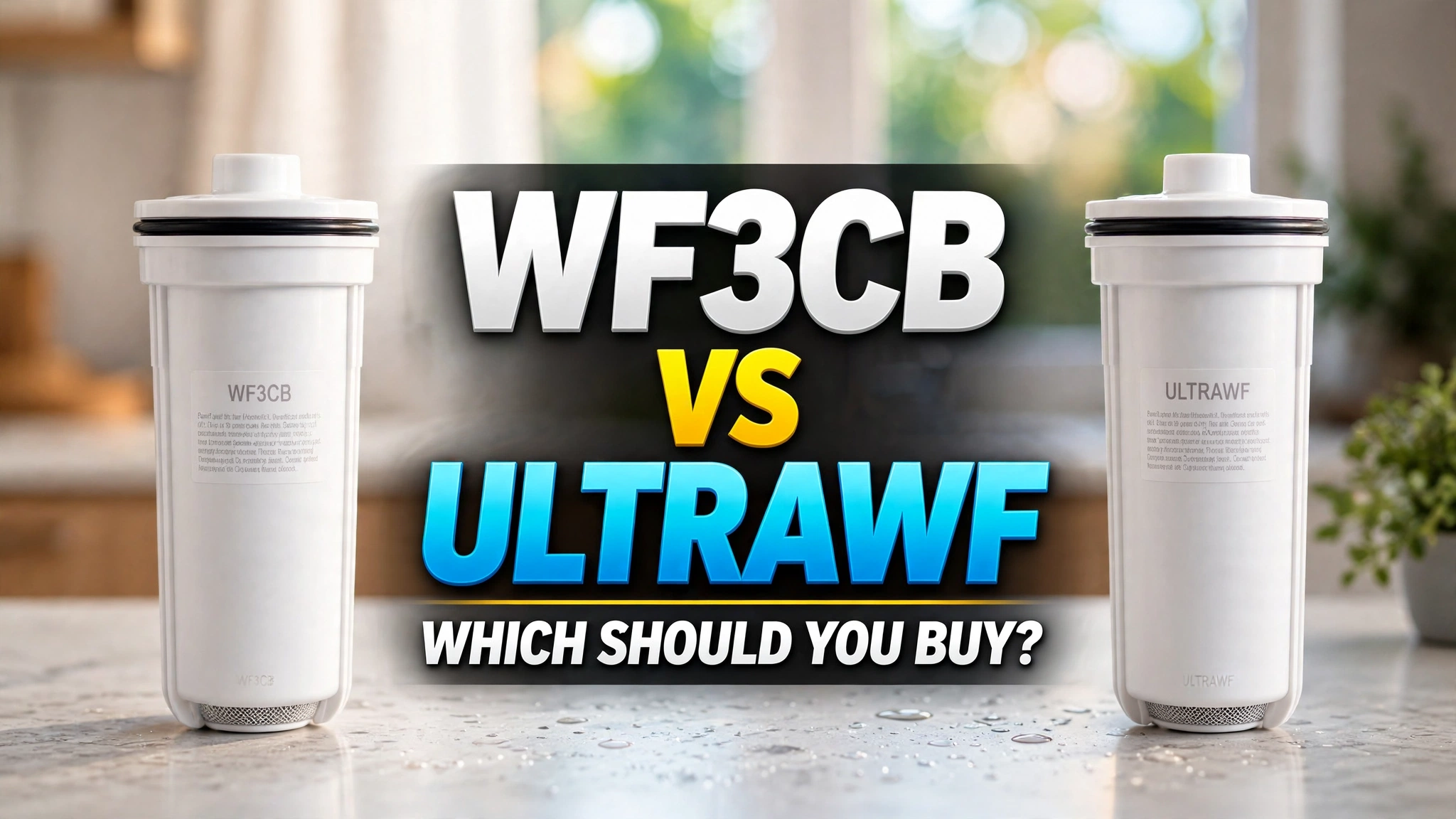

WF3CB vs ULTRAWF (2026): Which Should You Buy?
Your Frigidaire’s filter indicator just turned red, and now you are staring at two model numbers — WF3CB and ULTRAWF — wondering which one actually belongs in your fridge. Your manual says one thing, retailer listings say another, and some listings claim both numbers fit the same housing. For what should be a ten-minute swap, it is a confusing two-model maze.
Here is the short answer: ULTRAWF is Frigidaire’s newer PureSource Ultra filter, and for most buyers it is the one to pick — its Performance Data Sheet shows third-party certification against NSF/ANSI 42, 53, and 401, matching the certification base of the WF3CB it replaces. But the differences are smaller than the marketing suggests: same 200-gallon rated capacity, nearly the same certification base, nearly the same street price. This comparison walks through what actually changed, what the certifications really say, and the one fit check that matters before you buy.
PureSource 3 · Older model
Frigidaire WF3CB
~$40–50
The previous generation — essentially the same filter, but stock is fading.
PureSource Ultra · Current model
Frigidaire ULTRAWF
~$40–55
The current model — same certifications, widest stock, slightly faster flow.
Verdict: the ULTRAWF is the safe default buy; the WF3CB only makes sense if you find a genuine one at a clearly lower price. Nothing about this matchup favors the older model on paper — same capacity, same change interval, same certification base, nearly the same price.
Table of Contents
Side-by-side comparison
The headline numbers, drawn from Frigidaire’s own Performance Data Sheets for each model. The highlighted cell in each row is the one that wins that row — where the two are level, neither cell is highlighted.
| Attribute | Frigidaire WF3CB | Frigidaire ULTRAWF ★ Winner |
|---|---|---|
| Generation | Older (PureSource 3) | ✓Newer (PureSource Ultra) |
| Fit & compatibility | Fridges whose manual names the WF3CB | ✓Same twist-in housing; listed as the upgrade for WF3CB fridges — confirm with Frigidaire’s filter finder |
| Certifications | NSF/ANSI 42, 53, 401; CSA B483.1 — via IAPMO R&T | NSF/ANSI 42, 53, 401; CSA B483.1 — via IAPMO R&T |
| Filter life | 200 gallons (757 L) / 6 months | 200 gallons (757 L) / 6 months |
| Contaminant reduction | Certified to the same NSF/ANSI standards (42, 53, 401) | Certified to the same NSF/ANSI standards (42, 53, 401); sheet spells out lead, mercury, cysts, asbestos, VOCs, and 401 emerging contaminants |
| Service flow rate | 0.5 gpm max | ✓0.65 gpm max |
| Price (each, estimate) | ✓~$40–50 | ~$40–55 |
| Cost per year (estimate) | ✓~$80–100 | ~$80–110 |
| Installation | Push in, twist to lock — tool-free, a few minutes | Push in, twist to lock — tool-free, a few minutes |
| Reset / indicator | Reset the filter indicator after the swap; a red light that stays on usually means the reset was missed | Reset the filter indicator after the swap; a red light that stays on usually means the reset was missed |
| Current availability | Declining (remaining stock) | ✓Widely stocked |
Read across the rows and the story is plain: same capacity, same change interval, same certification base, nearly the same price. Nothing here says the WF3CB is a bad filter — it says it is the previous generation of essentially the same filter. When one model is the present and the other is the past, parts availability becomes the real difference.
Frigidaire WF3CB — the genuine standard
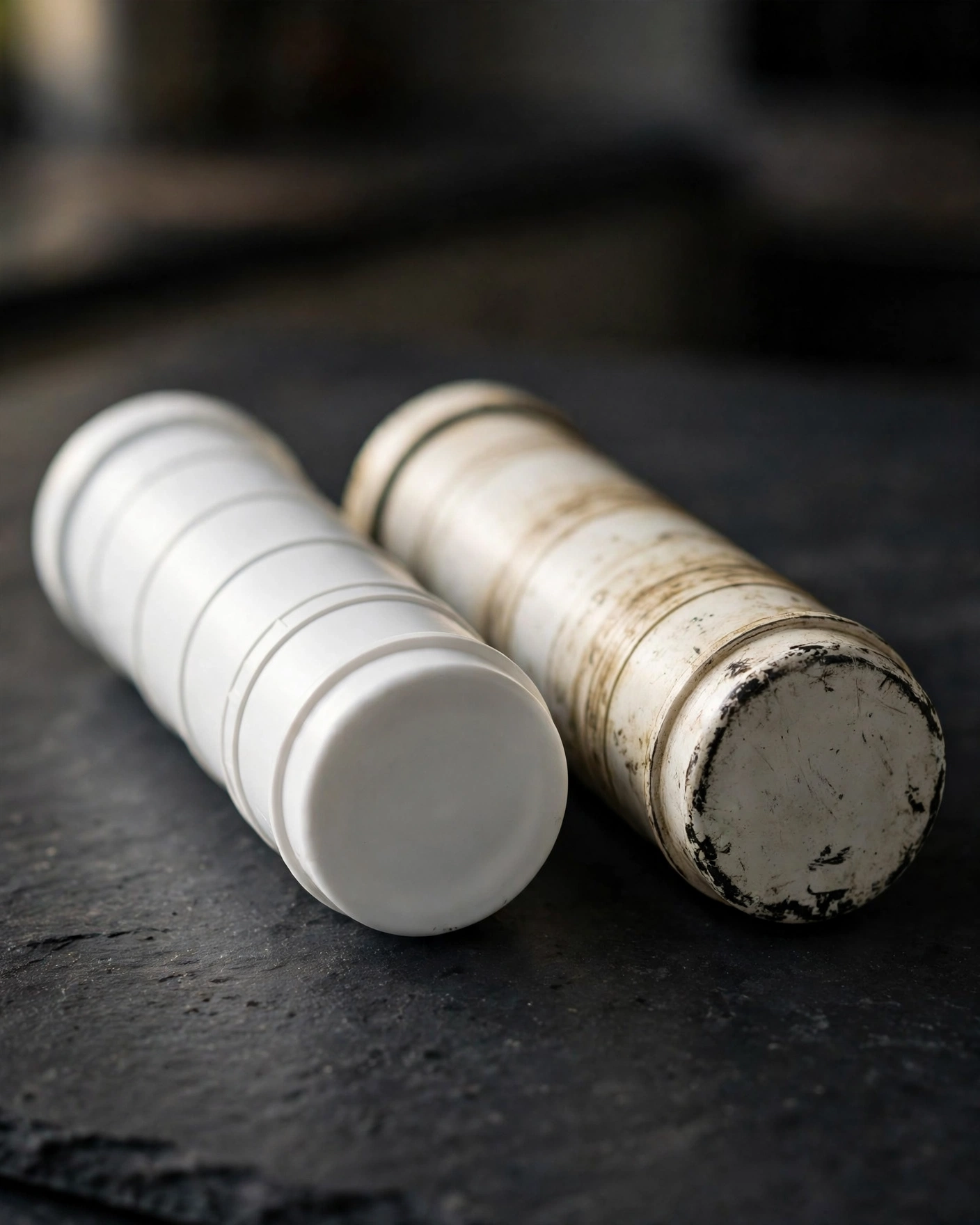
Frigidaire sells the WF3CB as its PureSource 3 filter — the older of the two lines. It is a white cylindrical twist-in cartridge, rated for the same 200 gallons (757 liters) or 6 months of service as its successor, and its data sheet states the same IAPMO R&T certification against NSF/ANSI Standards 42, 53, and 401. It is not a lesser filter — it is the previous generation of essentially the same filter.
Pros
- Same certification base as the ULTRAWF (IAPMO R&T: NSF/ANSI 42, 53, 401)
- Same 200-gallon / 6-month rated capacity
- The better buy when you find a genuine one at a clearly lower price
- Matches older fridge manuals exactly
Cons
- Availability is declining — mostly remaining stock
- Slower maximum flow rate (0.5 gpm)
- One of the most counterfeited cartridges — buy genuine, from reputable sellers
Frigidaire ULTRAWF — the upgrade
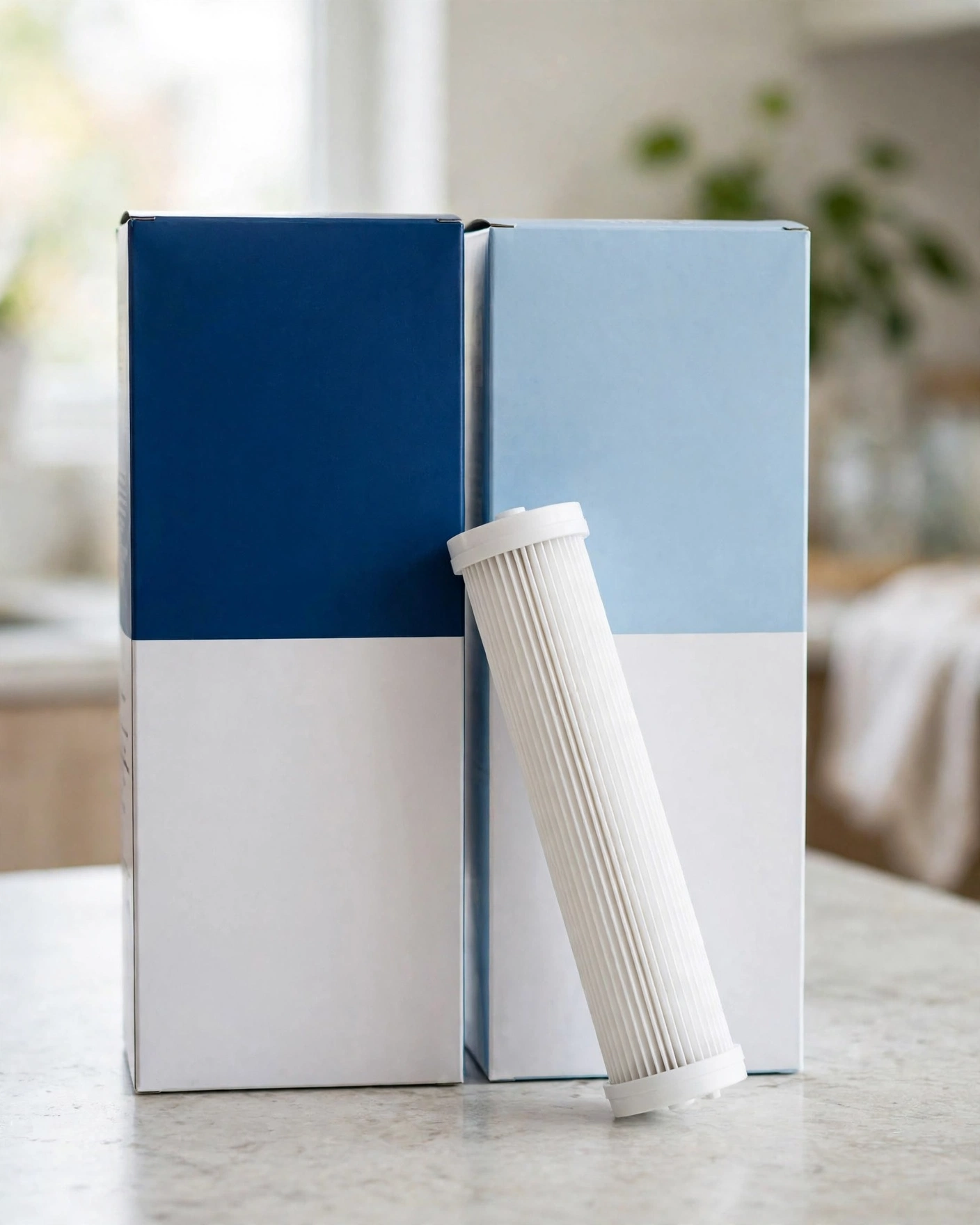
The ULTRAWF is Frigidaire’s PureSource Ultra filter — the current generation. Its Performance Data Sheet states certification by IAPMO R&T against NSF/ANSI Standards 42, 53, and 401, and spells out a long substance list: chlorine, particulates, asbestos, lead at two pH levels, mercury, benzene, cysts, atrazine, and emerging contaminants such as atenolol, ibuprofen, and trimethoprim under NSF/ANSI 401. It is also the model retailers currently stock and promote — when you shop for a Frigidaire filter today, this is the shelf you are shopping from.
Pros
- Current model — widest stock and freshest supply
- Slightly higher service flow rate (0.65 gpm) for a faster dispenser
- Same 200-gallon / 6-month life and certification base
- Data sheet spells out the full certified substance list
Cons
- Not a performance leap — capacity and certification base match the WF3CB
- Street price can run slightly higher (up to ~$55)
Certifications (database-checked)
This section is the reason to read the data sheets rather than the marketing blurbs. Both filters’ sheets state certification by IAPMO R&T — an ANSI-accredited third-party certifier — against NSF/ANSI Standards 42, 53, and 401, plus CSA B483.1. Vague “tested to NSF standards” language without a named certifier is not the same thing. Here is what the ULTRAWF’s published Performance Data Sheet actually lists (a certification covers only the substances on its sheet):
| Substance | Certified reduction claim (per sheet) | Standard |
|---|---|---|
| Chlorine taste & odor | ≥50% reduction | NSF/ANSI 42 |
| Nominal particulate (Class I), turbidity | ≥85% / ≤0.5 NTU | 42 / 53 |
| Lead (pH 6.5 and 8.5) | Reduced to ≤5 ug/L from 150 ug/L challenge | NSF/ANSI 53 |
| Mercury (pH 6.5 and 8.5) | Reduced to ≤2 ug/L | NSF/ANSI 53 |
| Cysts | ≥99.95% reduction | NSF/ANSI 53 |
| Asbestos | ≥99% reduction | NSF/ANSI 53 |
| Benzene, VOCs, pesticides (atrazine, endrin, lindane, toxaphene, etc.) | Reduced below specified maximums | NSF/ANSI 53 |
| Atenolol, ibuprofen, trimethoprim | Reduced below specified maximums | NSF/ANSI 401 |
The WF3CB sheet states the same standards (42, 53, 401) via IAPMO R&T, so both filters sit on the same certification base — which is exactly why the decision comes down to availability and price rather than filtration power. If your water concern is something no fridge filter certifies — fluoride reduction, for example — no twist-in cartridge is the right product, regardless of brand.
Compatibility: will ULTRAWF fit your fridge?
This is the question that actually drives most WF3CB-vs-ULTRAWF searches, and the honest answer is: usually, but check your model. Major retailers routinely list the ULTRAWF as the upgrade for fridges that originally shipped with the WF3CB, and Frigidaire’s own Smart Choice value line (model SCWF3CTO) is sold as a replacement for both model numbers — a strong signal that the two cartridges share the same twist-in housing.

How to be sure before you buy:
- Check your fridge’s use & care manual. The manual names the exact filter model your housing takes. If it names the WF3CB, the ULTRAWF is the model Frigidaire’s retail channel points those owners toward today.
- Use Frigidaire’s filter finder on its site. Enter your exact fridge model number — the physical length can differ between generations, and the finder is the one source that resolves that for your model.
- Do not trust the listing title alone. Marketplace listings routinely copy both model numbers into the title for search visibility. The title saying “WF3CB / ULTRAWF” tells you about the seller’s SEO, not about the filter in the box.
If you own a different brand, the same fit-check logic applies — our replacement guides walk through it model by model: the Samsung DA29-00020B replacement guide, the LG LT1000P replacement guide, the Samsung HAF-QIN replacement guide, the GE XWFE replacement guide, and the EveryDrop EDR4RXD1 replacement guide.
Cost per year
Fridge filters are a subscription you pay in cartridges, so the per-filter price matters less than the yearly total. Both filters are rated for 200 gallons or 6 months, whichever comes first — which means two changes a year under normal use.
| Item | WF3CB | ULTRAWF |
|---|---|---|
| Rated capacity | 200 gallons / 6 months | 200 gallons / 6 months |
| Cartridges per year | ~2 | ~2 |
| Street price per cartridge (estimate) | ~$40–50 | ~$40–55 |
| Estimated yearly cost | ~$80–100 | ~$80–110 |
There is no cost advantage hiding anywhere in this comparison. Prices are estimates and bounce around with sales — list prices at some retailers run higher (we have seen the ULTRAWF listed near $60), but street prices for both sit in the same ~$40–55 band. Multi-packs usually trim the per-cartridge cost for either model.
What owners say
Across major retail listings, the recurring owner themes for both filters are consistent — which makes sense, since both are the same category of twist-in cartridge from the same brand:
Installation is easy. Push-in, twist-to-lock, reset the indicator. Owners consistently report a tool-free swap taking a few minutes. The most common friction point is forgetting to reset the filter indicator after the change — after which the red light stays on and owners worry the new filter “isn’t working.”
Taste and odor improve. Chlorine taste and off-odors disappearing is the most reported positive across listings — the one benefit nobody disputes, and the one the NSF/ANSI 42 certification backs.
Price stings as a subscription. Roughly $80–110 a year in cartridges feels steep, and it is the complaint most likely to push owners toward uncertified knockoffs — a bad trade, because Frigidaire’s own product materials warn that counterfeits and knockoffs put fridges and water quality at risk. The WF3CB/ULTRAWF housing shape is one of the most counterfeited in the category: a $20 “WF3CB” from a no-name seller has no independent proof behind any claim on its label. Buy from reputable sellers and check the packaging for certification marks.
Which should you buy?
Pick the ULTRAWF if…
- You want the current model with the current certification sheet and the widest stock.
- Your manual names the WF3CB and you are replacing it — the ULTRAWF is the model retail channels point those owners toward.
- You want the slightly higher flow rate (0.65 vs 0.5 gpm) for a faster-dispensing fridge.
Pick the WF3CB if…
- You find a genuine WF3CB at a clearly lower price than the ULTRAWF from a reputable seller — it is the same filter generation down, not a lesser filter.
- Your manual names it and you prefer to match the manual exactly.
Buy neither if…
- Your concern is something no fridge filter certifies — fluoride reduction or very high lead levels need a different product category.
- You are tempted by a no-name $20 listing — an uncertified cartridge has no independent proof behind any claim on its label.
How we researched
We did not receive test units and we did not run a lab bench test — and we will not claim we did. Instead we researched and compared:
- Both official Performance Data Sheets side by side — the WF3CB (PureSource 3) and ULTRAWF (PureSource Ultra) sheets, both stating third-party certification by IAPMO R&T. Certification claims were checked against the sheets themselves — a contaminant not on a filter’s sheet does not appear on this page as a certified reduction.
- Compatibility claims from retail listings — where retailers and Frigidaire’s own Smart Choice value line treat the two models as interchangeable, and where they do not.
- Owner reviews across major retail listings, and yearly replacement-cost math from rated filter life and current street prices.
FAQs
Can I use an ULTRAWF filter instead of a WF3CB?
Yes — major retailers list the ULTRAWF as the upgrade path for fridges that originally shipped with the WF3CB, and Frigidaire’s own Smart Choice value line is sold as a replacement for both model numbers, which signals the same twist-in housing. Still, check Frigidaire’s filter finder with your exact fridge model number before you buy.
What is the difference between WF3CB and ULTRAWF?
Less than the marketing suggests. Per Frigidaire’s own Performance Data Sheets, both are rated for 200 gallons (6 months) and both are certified by IAPMO R&T against NSF/ANSI Standards 42, 53, and 401. The ULTRAWF is the newer generation with a slightly higher service flow (0.65 vs 0.5 gpm) and is the model retailers currently stock.
Is the ULTRAWF NSF certified?
Its Performance Data Sheet states certification by IAPMO R&T against NSF/ANSI Standards 42, 53, and 401, plus CSA B483.1. IAPMO R&T is an ANSI-accredited third-party certifier — the certifying body is what matters. The sheet lists certified reductions for chlorine, particulates, lead, mercury, cysts, asbestos, VOCs, pesticides, and several emerging contaminants.
How often should I replace a Frigidaire ULTRAWF or WF3CB?
Every 6 months or 200 gallons, whichever comes first, per Frigidaire’s data sheets. After installing the new cartridge, reset the filter indicator per your model’s instructions. A red light that stays on after a change almost always means the reset step was missed or the cartridge is not fully locked in.
Are cheap compatible WF3CB/ULTRAWF filters worth buying?
Usually not, unless the cartridge is certified by a named third-party body against the same standards. An uncertified cartridge has no independent proof behind any reduction claim on its label, and Frigidaire’s own materials warn that counterfeits put fridges and water quality at risk.
Conclusion
The WF3CB vs ULTRAWF question resolves more simply than the search results make it look: the ULTRAWF is Frigidaire’s current-generation filter, it carries the same certification base and capacity as the WF3CB it succeeds, and it is the model retailers actually stock. Buy the ULTRAWF as your default. The only reason to buy the WF3CB is a genuine unit at a clearly lower price from a reputable seller — and the one thing neither filter forgives is a knockoff in the housing. Check your fridge’s model against Frigidaire’s filter finder, buy the real cartridge, and reset the indicator when you swap it.
Prices checked at time of writing; they change often — see the live prices before you buy.
Update log
- Zulqarnain: Comparison published.