

Do Gravity Water Filters Remove Fluoride (2026): What the Evidence Says
Guide
Gravity filters get credit for removing almost everything, and fluoride is where that reputation quietly breaks down. Fluoride does not behave like the contaminants carbon is good at catching — it dissolves into the water as a tiny ion, drifts straight through a standard gravity element, and comes out the spigot at essentially the same level it went in. Owners are often surprised: the water tastes cleaner, the chlorine is gone, and the fluoride is still there. Whether that is a problem depends on why you are filtering — but if fluoride reduction is the goal, a standard gravity setup is the wrong tool for it.
The short answer: no — a standard gravity water filter does not remove fluoride. Its carbon elements are not designed or certified for it. A small number of gravity systems have offered separate add-on elements, made from fluoride-specific media, that hang below the main elements — that is a different product doing a different job. For fluoride removal you can verify, reverse osmosis and distillation are the established routes.
Table of Contents
Quick verdict
Run ordinary tap water through a gravity filter with its standard elements and the fluoride level barely moves — the technology inside (granular or block carbon) has no meaningful grip on dissolved fluoride. The honest picture has three layers: the standard elements, no; the optional add-on elements some systems have sold for the lower chamber, designed for fluoride but maker-tested rather than certified; and technologies built for the job, chiefly reverse osmosis, where fluoride claims can be checked against a certification listing. Our gravity filters for fluoride roundup covers the add-on route in depth; this article is the evidence underneath it.
The direct answer
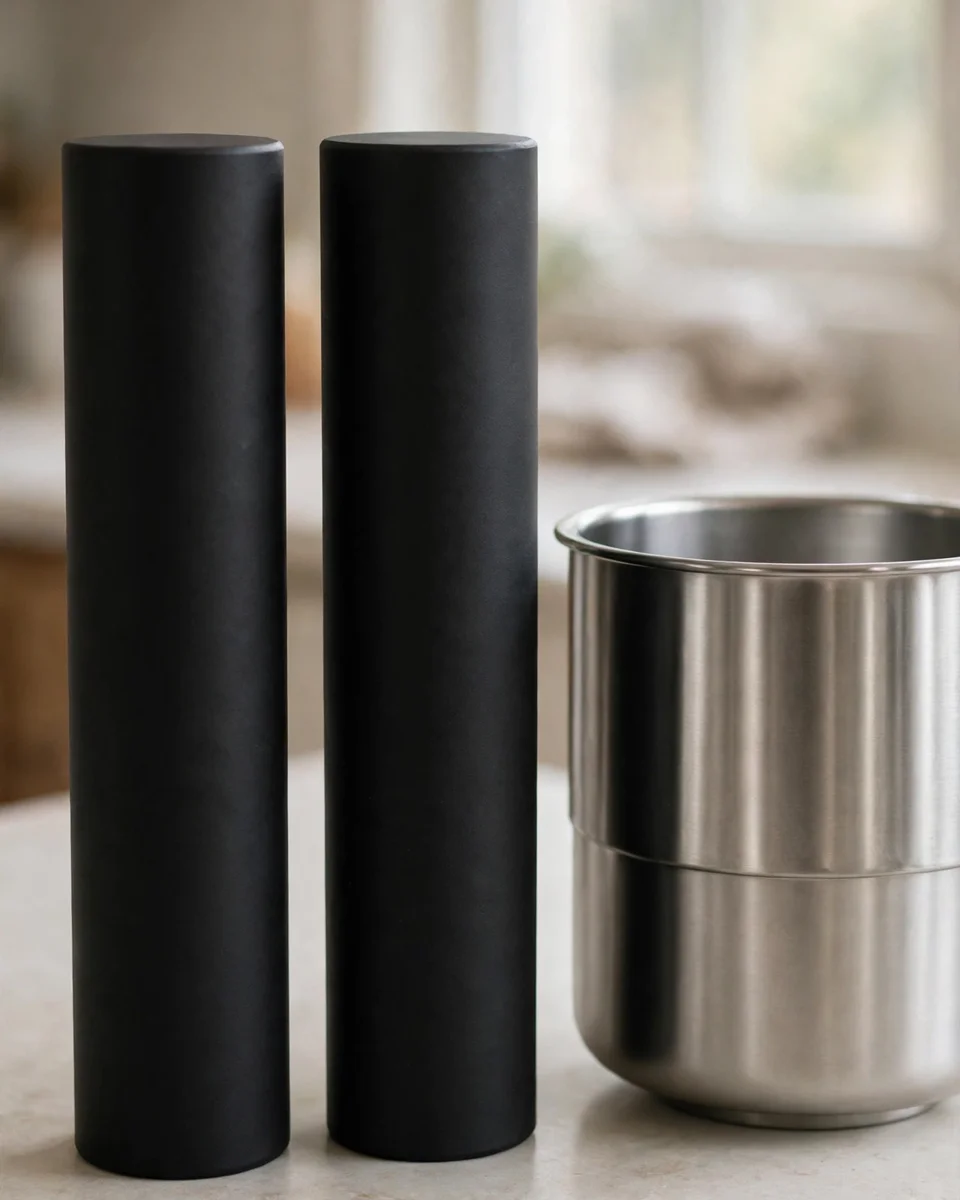
A gravity system earns its keep on chlorine, taste, sediment, many organic chemicals, and — depending on the element — contaminants like lead, which we examine separately in our guide to gravity filters and lead. Fluoride is a different category of problem. In water it exists as the fluoride ion, F−, fully dissolved and very small. Carbon filters work mainly by adsorption — contaminants sticking to the carbon’s enormous internal surface — and fluoride ions have weak attraction to plain carbon. Water treatment engineers have known this for decades, which is why fluoride removal in municipal and home treatment relies on specific media (activated alumina, bone char) or on physical separation (reverse osmosis, distillation), never on a plain carbon cartridge. If a gravity element’s packaging lists chlorine and taste but not fluoride, that silence is the answer.
What certification proves
For fluoride, the claim to look for is an NSF/ANSI 53 fluoride reduction listing on the exact model — the standard under which a certifier (NSF, IAPMO, or WQA) has tested that product, at a stated capacity, against a fluoride challenge. Reverse osmosis systems carry fluoride under NSF/ANSI 58 instead. The check takes two minutes: search the certifier’s public database for the model name and read which claims are actually listed, because a product can be certified for chlorine while carrying no fluoride claim at all — and marketing pages rarely volunteer the difference. No standard gravity element carries an NSF fluoride listing; that is a verifiable fact about the databases, not an opinion about the products. The same databases settle the bigger safety question too: no gravity filter is certified to NSF P231, the microbiological purifier protocol — gravity systems are drinking-water improvers, not purifiers, a distinction that matters in our look at gravity filters and untreated water.
What the science says
Fluoride sits in US drinking water at around 0.7 mg/L where it is added for dental health (the federal recommendation for fluoridation), with an enforceable EPA maximum of 4 mg/L and a secondary guideline of 2 mg/L. At those concentrations the ion is far below taste or visibility — you cannot judge fluoride by the glass. The treatment science is equally unglamorous: activated alumina adsorbs fluoride well but works best at a mildly acidic pH and exhausts with use; bone char works similarly; an RO membrane rejects fluoride along with most dissolved ions; distillation leaves it behind in the boiling chamber. Plain activated carbon, the heart of every standard gravity element, appears in none of those mechanisms. Gravity’s slow flow does help contaminants that carbon can adsorb, through long contact time — but contact time cannot create an attraction that is not there.
| Technology | Removes fluoride? | How sure can you be? |
|---|---|---|
| Standard gravity carbon element | No meaningful removal | No fluoride certification exists for standard elements |
| Gravity system + fluoride add-on elements | Designed to | Maker test data only; capacity and pH dependent, no NSF listing |
| Reverse osmosis (NSF/ANSI 58) | Yes | Certified models list fluoride reduction explicitly |
| Distillation | Yes | Fluoride stays in the boiler residue by basic physics |
| Basic pitcher carbon filter | No | Same carbon limitation as gravity elements |
The add-on exception

The one genuine exception to “gravity filters don’t remove fluoride” is the add-on element. Some gravity systems have historically offered separate, smaller cartridges — built around activated alumina — that thread onto the stems of the main elements and hang beneath them in the lower chamber, so water passes through carbon first and the fluoride media second. It is a legitimate treatment idea, the same media municipal plants use. The honest caveats: the performance figures attached to these add-ons are the makers’ own test claims rather than an NSF or IAPMO certification; removal depends on contact time, water pH, and how much fluoride and competing ions your water carries; and the media exhausts, so an add-on past its capacity quietly stops working while looking identical. Treat add-ons as a real but unverified middle option — and if fluoride is your primary reason for filtering, weigh them against a certified technology before spending.
Better options for fluoride
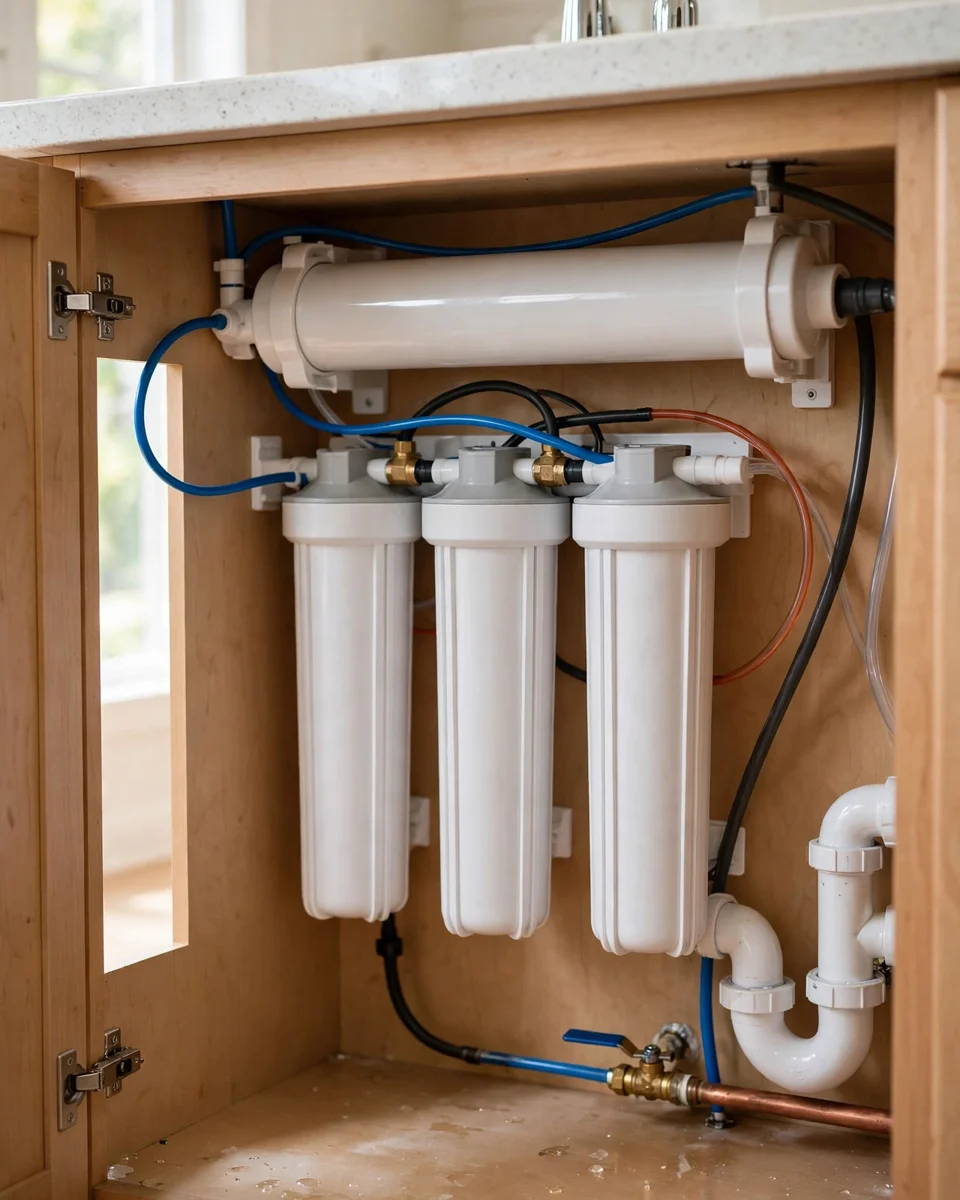
If fluoride reduction is the actual goal, the cleanest routes are these:
- Reverse osmosis — under-sink or countertop. The membrane rejects fluoride ions physically, and certified systems list the claim under NSF/ANSI 58. We compare the two gravity-adjacent approaches head-on in gravity filter vs reverse osmosis.
- Distillation — slow and energy-hungry, but fluoride simply does not travel with the steam.
- A gravity system plus its fluoride add-ons — acceptable if you already own the housing and accept maker-stated performance, replacing add-ons on schedule.
What does not belong on the list: a standard gravity element, a basic pitcher, or boiling (fluoride does not evaporate; boiling slightly concentrates it, as it does lead). If you keep the gravity system for taste and chlorine — a job it does well — the roundup of the best gravity water filters shows which models accept add-on stages, so the fluoride question can be answered inside the format you already like.
Conclusion
Gravity filters do not remove fluoride — not because they are badly made, but because fluoride is a dissolved ion that plain carbon cannot hold, and no standard gravity element carries a fluoride certification. The category’s one workaround, activated-alumina add-on elements, rests on manufacturer claims rather than independent listing. If fluoride is the contaminant you actually care about, let the technology match the chemistry: reverse osmosis or distillation, with a certification you can look up. Keep the gravity filter for what it genuinely does — and stop expecting it to do this.
Update log
October 2026: Article published; fluoride reference points per EPA drinking-water standards (MCL 4 mg/L, secondary standard 2 mg/L, fluoridation recommendation 0.7 mg/L). Add-on element performance is described as manufacturer-stated only; no removal percentages are claimed for any gravity element.
FAQs
Do gravity filters remove fluoride?
No — not with their standard elements. Those elements are carbon-based, and dissolved fluoride passes through carbon without being meaningfully adsorbed. The exception is a separate add-on element, offered for some gravity systems, built from fluoride-specific media such as activated alumina; its performance is manufacturer-stated rather than certified.
What are gravity filter fluoride add-on elements?
They are smaller cartridges that thread onto the main elements’ stems and hang below them inside the lower chamber, adding a second treatment stage aimed at fluoride (and in some products, arsenic). The media exhausts with use, depends on contact time and pH, and needs replacing on the maker’s schedule — an exhausted add-on looks and flows exactly like a working one.
Is there an NSF-certified gravity filter for fluoride?
No standard gravity element carries an NSF/ANSI fluoride reduction listing — you can confirm that in the certifiers’ public databases (NSF, IAPMO, WQA), searching the exact model. Fluoride certification exists on other technologies, notably reverse osmosis systems under NSF/ANSI 58. A product certified for chlorine or taste is not thereby certified for fluoride.
Does boiling water remove fluoride?
No. Fluoride does not evaporate or break down at boiling temperatures. As water boils away, the fluoride stays behind in a smaller volume, so the concentration actually rises slightly. Boiling is a disinfection tool for microbes; for fluoride it is counterproductive.
What is the best filter type for fluoride removal?
Reverse osmosis is the practical answer for most homes: the membrane physically rejects fluoride ions, and certified models state the claim under NSF/ANSI 58 where you can verify it. Distillation also removes fluoride reliably but is slow and uses more energy. Media-based options (activated alumina) work too, including gravity add-ons, but without the independent certification RO offers.
Can I test my water to check if the filter worked?
Yes — fluoride is one of the easier analytes for a certified lab, and a before/after pair of samples (tap water and filtered water) settles the question for your specific setup instead of relying on any product claim. Home meters and strips are not reliable at the sub-mg/L precision that matters here; a lab ion-selective or ion-chromatography result is.