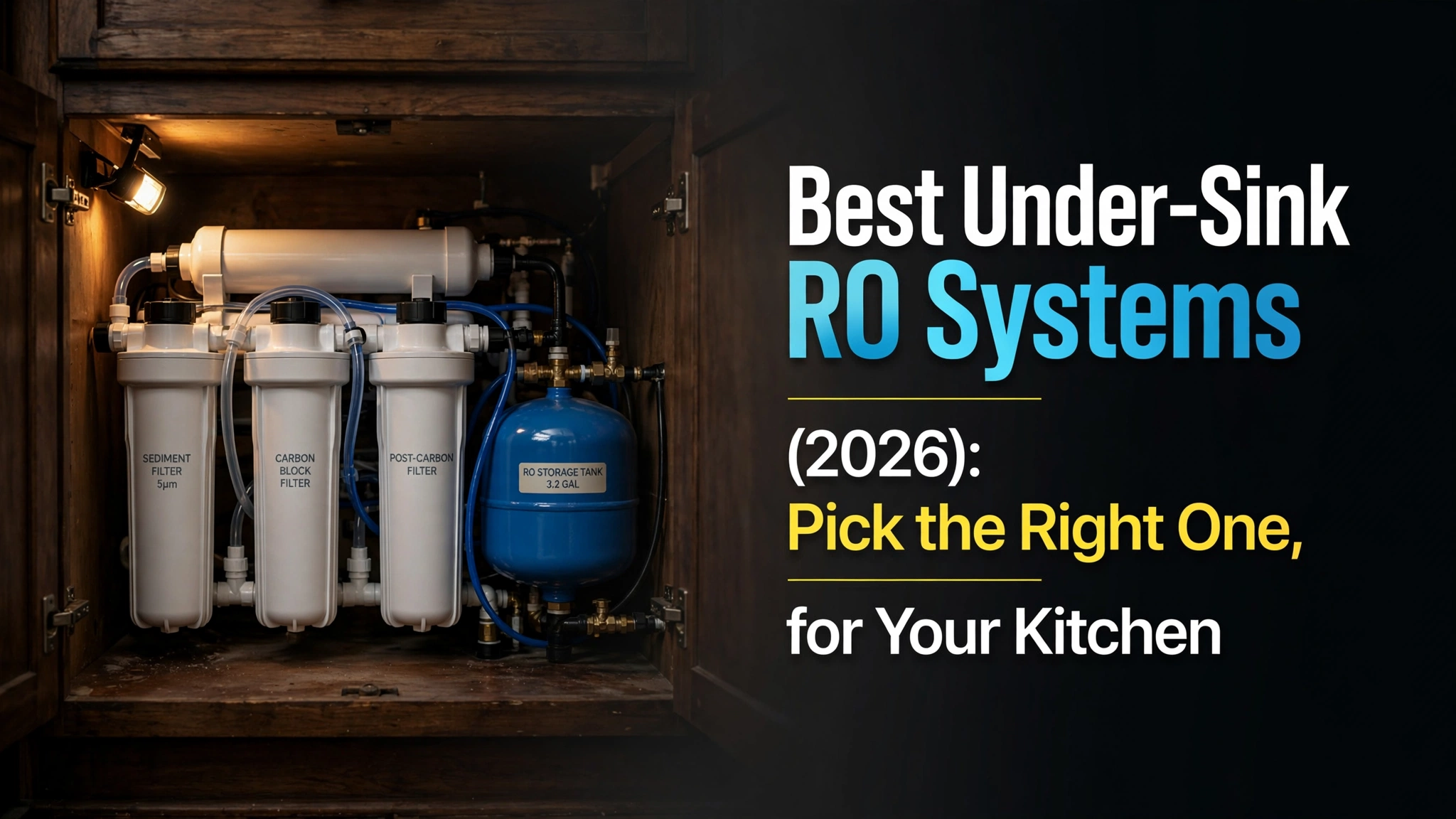

Best Under-Sink RO Systems (2026): Pick the Right One for Your Kitchen
Under-sink RO · 2026
Your tap water has a personality — and not a good one. Maybe it tastes like a swimming pool after the city doses the chlorine, maybe there’s a metallic tang you can’t quite place, or maybe it just tastes “off” in a way you can’t explain. Bottled water fixes the taste but costs a fortune over a year and fills your recycling bin with plastic. So what’s the actual answer?
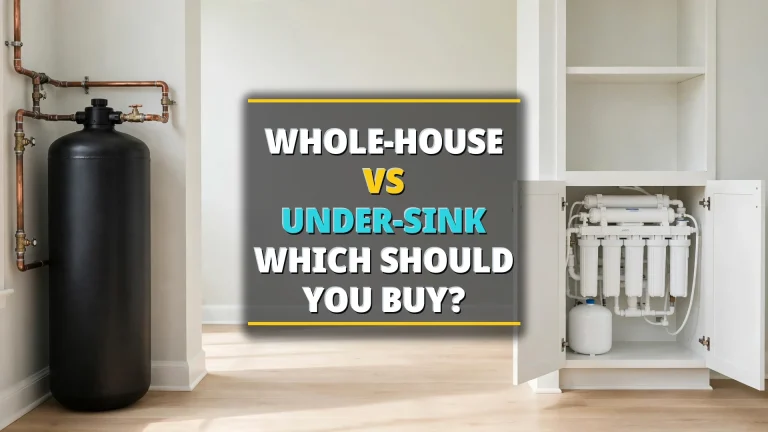
For most kitchens, it’s an under-sink reverse osmosis system. RO is the strongest type of home filtration you can buy: water is pushed through a semi-permeable membrane that rejects most of the dissolved solids a normal filter leaves behind. It installs out of sight under the kitchen sink, feeds a dedicated faucet, and costs a fraction of what you’d spend on bottled water. This is our sub-category hub for under-sink RO — the systems, the buying criteria, the running costs, and the fixes for common problems. If you’re comparing RO against simpler options first, start with the full water filters hub to see the whole landscape.
Table of Contents
Quick picks
Short on time? These are the four systems we’d point a friend to, depending on the situation. Full mini-reviews are in the next section.
How to choose
Brand names matter less than matching the system to your kitchen and your water. Get these seven things right and you’ll be happy with almost any reputable pick.
First, an honest question: do you actually need RO? If a pitcher filter or your fridge’s filter has been handling your drinking water fine and you just want slightly better taste, RO might be overkill — it’s the heaviest, most involved filter type you can put in a kitchen. But if your water report shows high total dissolved solids, or your pitcher can’t keep up with the family, RO is the step up that actually moves the needle.
Tank vs tankless
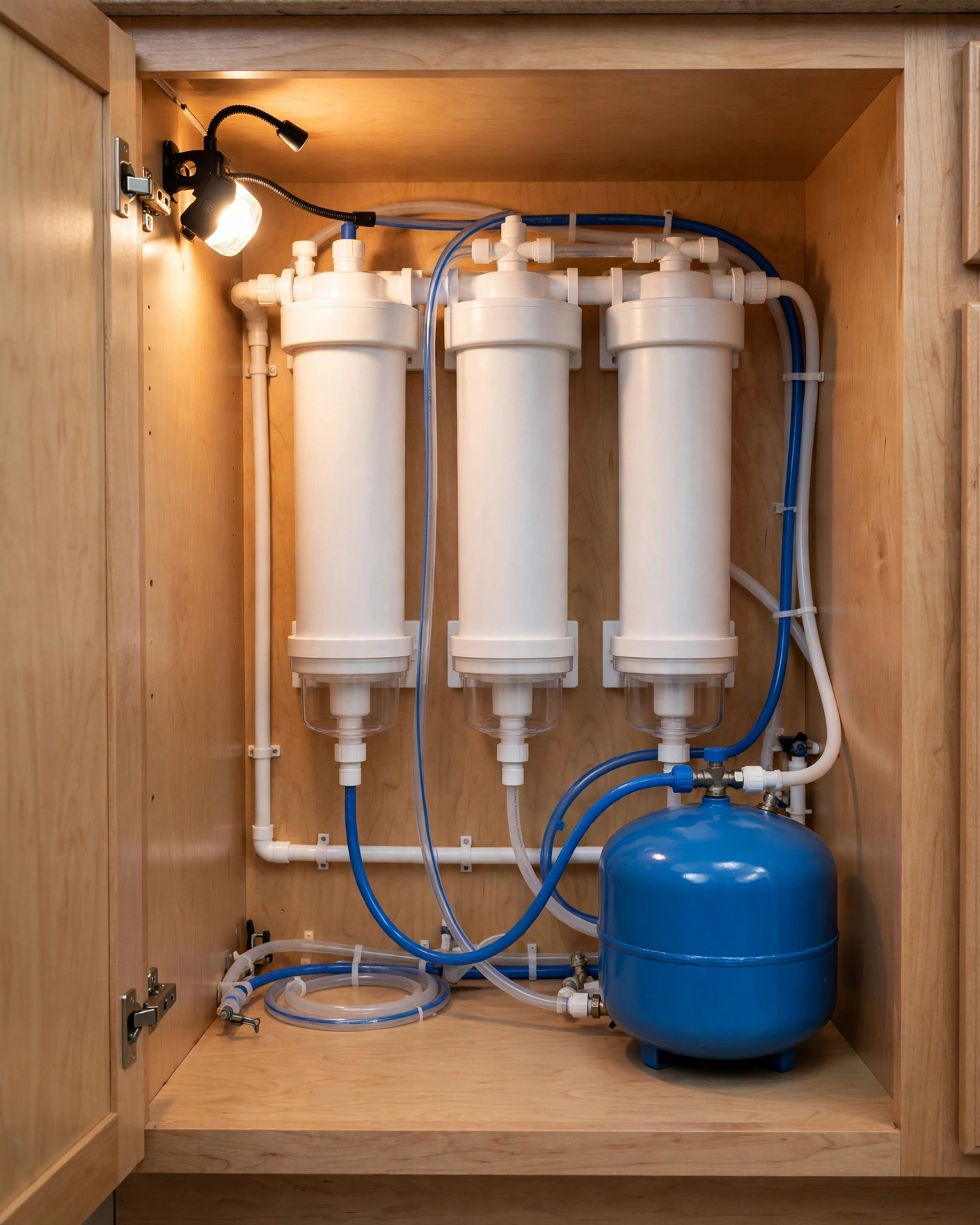
This is the biggest fork in the road. A tank system stores filtered water in a pressurized tank so it’s ready the moment you open the faucet. A tankless system filters on demand and has no tank at all.
Tank systems
- Works fine even with weak incoming water pressure
- Proven design with decades of owner history
- Generally cheaper to buy
Tankless systems
- Needs decent incoming pressure to perform its best
- Costs noticeably more
- Newer designs with shorter track records
Rule of thumb: pick a tank system to save money, pick tankless to save cabinet space and get fresher-tasting water. Tankless owners tend to love the freed-up cabinet — tank owners tend to love the lower price.
GPD rating
GPD (gallons per day) is the manufacturer’s rated output — a lab number, not a promise of what you’ll get in real life. Don’t overthink it: most families do fine with a 50–75 GPD tank system because the tank buffers the flow. Tankless models carry much higher ratings (600, 800 GPD) because there’s no tank to cover for them. Buy based on your household’s drinking and cooking water use, not on the biggest number.
Stages and filters
Five stages is the standard recipe: sediment pre-filter, carbon pre-filters, the RO membrane itself, and a polishing post-filter. Extra stages add extras — an alkaline or remineralization stage for taste, a UV stage for an added layer of treatment. More stages isn’t automatically better; each extra cartridge is one more filter you’ll buy for the life of the system.
Water pressure requirements
RO membranes are happiest with typical municipal pressure (around 40–60 psi). If your pressure is low — common in well-fed homes or upper-floor apartments — a booster-pump model like the iSpring RCC7P earns its keep by pushing water through the membrane properly instead of trickling.
Certifications
Look for NSF/ANSI listings — NSF/ANSI 58 is the standard written specifically for reverse osmosis systems. And here’s our house rule: don’t trust a certification claim on a product page alone. Look the model up on info.nsf.org, the NSF database, and confirm the listing yourself. Listings change, and a product page can lag months behind.
City water vs well water
City water is predictable — chlorine taste and dissolved solids are RO’s home turf. Well water is a project: sediment and iron can clog an RO membrane fast, so well owners usually need a sediment pre-filter (sometimes a whole separate pre-treatment stage) before the RO unit, plus the booster pump mentioned above. Our dedicated guide to the best reverse osmosis system for well water covers pre-treatment in detail.
Remineralization
RO strips most dissolved minerals along with everything else, which is why some people find RO water tastes flat. If that bothers you, look for a model with an alkaline or remineralization stage that adds minerals back after filtration. We cover that category in depth in our guide to the best RO system with remineralization.

Top picks with mini-reviews
These are the standouts in the under-sink RO category specifically. For the broader market — including countertop RO and the head-to-head ranking across all RO types — see our best reverse osmosis system roundup, which goes deeper than this hub.
iSpring RCC7 — Best overall
The RCC7 is the Honda Civic of RO systems: nothing flashy, but the five-stage tank design has been around for years, the owner base is enormous, and replacement filters are cheap and easy to find. iSpring lists the system under NSF/ANSI 58 — confirm the listing on info.nsf.org before you buy, as we recommend for every system here.
It’s rated at 75 GPD, which is plenty for drinking and cooking water for a family, and the transparent first-stage housing lets you see when the sediment filter is getting dirty — a small thing you’ll appreciate at filter-change time. The trade-off is the usual one for tank systems: the storage tank eats a real chunk of cabinet space.
Pros
- Longest track record in its price class
- Cheap, widely available replacement filters
- Clear pre-filter housings show filter condition
Cons
- Tank takes up significant under-sink space
- Stored water can taste flat if it sits for days
Typical price when we checked: around $180–230. Prices and availability change frequently — please check the current price before you buy.
APEC ROES-50 Essence — Best value classic
APEC’s ROES-50 is the RCC7’s long-time rival: a five-stage tank system at a similar price, built around the same simple, serviceable design. APEC claims a WQA Gold Seal for the Essence line — worth confirming on the certifier’s own site rather than taking the product page at face value.
Its standout trait is low running cost. The ROES-50 is often cited at roughly $75 a year in replacement filters, which makes it one of the cheapest RO systems to own long-term. If you plan to keep the system for a decade, that yearly number matters more than a $30 difference at checkout.
Pros
- Very low yearly filter costs (around $75/year by most accounts)
- Simple, standard-size filters — easy to service yourself
- Long owner history
Cons
- Bulky tank, like all classic tank systems
- Plain design with no modern conveniences
Typical price when we checked: around $180–230. Prices and availability change frequently — please check the current price before you buy.
iSpring RCC7AK — Best for taste
The RCC7AK takes the standard RCC7 and adds a sixth stage: an alkaline remineralization filter that adds minerals back into the water after the membrane has stripped them out. If you’ve tried RO water before and found it flat or “empty” tasting, this is the version built for you.
It’s listed in the NSF database under iSpring’s name — confirm the exact model on info.nsf.org. The price runs a bit higher than the base RCC7 (roughly $230–280), and you’re buying one extra replacement cartridge per cycle, so factor that into the long-term math.
Pros
- Remineralization stage improves taste for sensitive palates
- Same proven RCC7 core underneath
- NSF-listed (confirm the model on info.nsf.org)
Cons
- Higher upfront price than the base RCC7
- One more filter to replace each cycle
Typical price when we checked: around $230–280. Prices and availability change frequently — please check the current price before you buy.
SimPure UV RO — Best UV option
SimPure’s take on under-sink RO pairs a tankless design with a UV stage for an added layer of treatment — a combination that appeals to well-water households and anyone who wants belt-and-braces. SimPure says the line was tested against NSF/ANSI 58 by third-party lab SGS, but it doesn’t carry an NSF, WQA, or IAPMO certification — verify the certification status on the public databases before relying on it.
Being tankless, it frees up the cabinet and delivers filtered water on demand rather than from a stored tank. The price band (roughly $300–450) sits between the classic tank systems and the premium tankless models below. Keep in mind the UV lamp is its own replacement part with its own replacement cycle and cost.
Pros
- UV stage adds a treatment layer tank systems lack
- Tankless — no bulky storage tank
- Mid-range price for the feature set
Cons
- UV lamp adds a replacement part and ongoing cost
- Confirm certification status on the NSF database yourself
Typical price when we checked: around $300–450. Prices and availability change frequently — please check the current price before you buy.
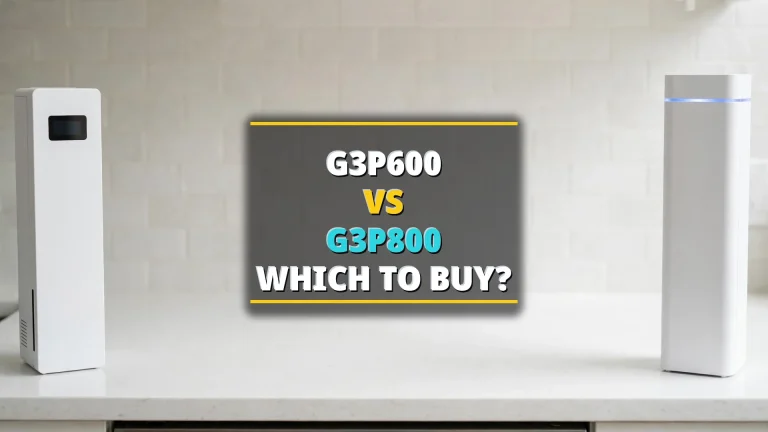
Waterdrop G3P600 — Best tankless
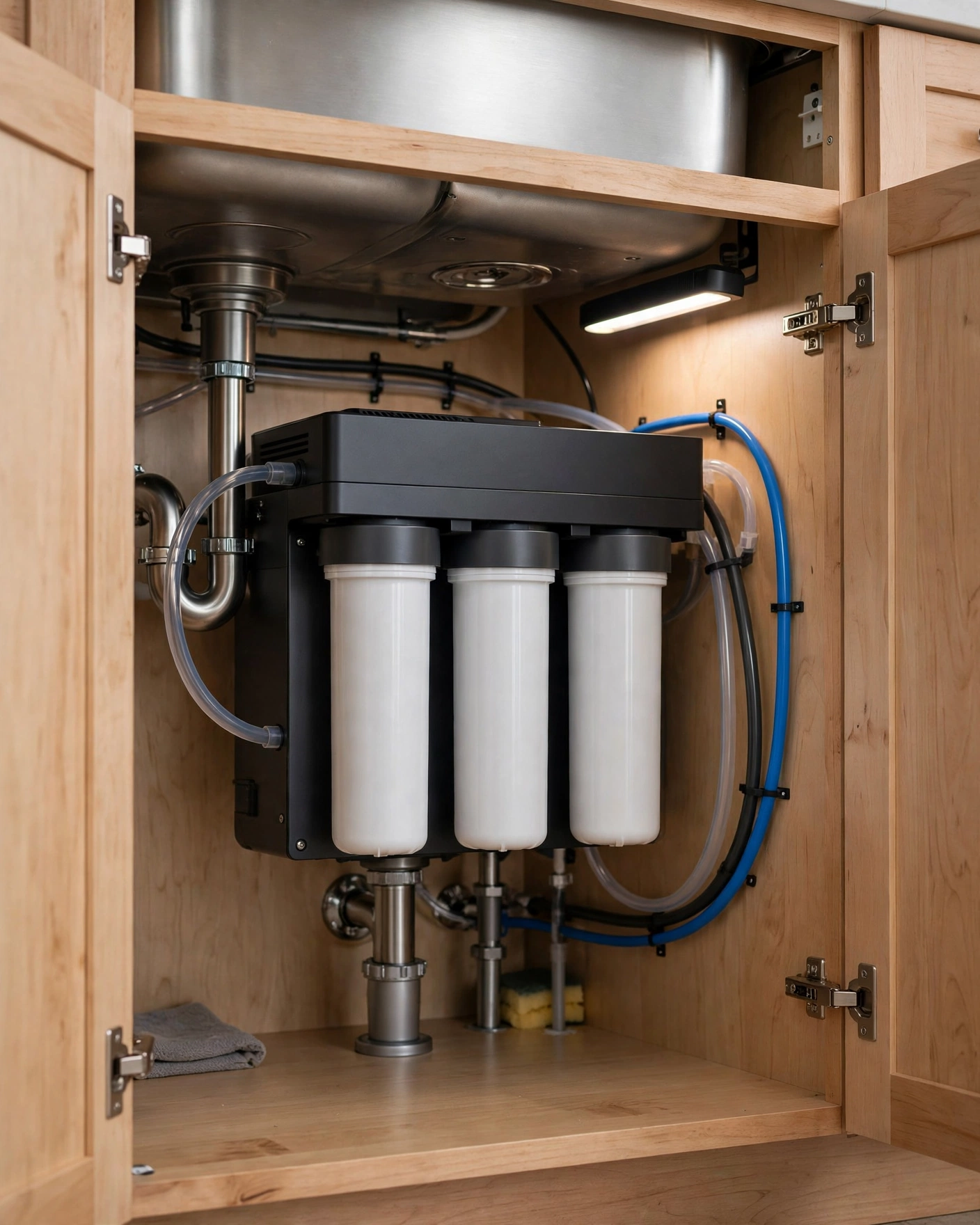
The G3P600 is the tankless system that made tankless mainstream: a slim under-sink unit rated at 600 GPD, so it filters fast enough on demand that you never miss the tank. It looks more like a small appliance than a plumbing project, which matters when it’s the thing sitting in your cabinet.
At roughly $429–539 it’s a real step up from tank systems, and its certification status was unverified at the time of writing — check info.nsf.org, WQA, or IAPMO yourself rather than relying on marketing copy. But if cabinet space and fresh-on-demand water are your priorities, this is the model most owners point to.
Pros
- Slim tankless design frees most of the cabinet
- High rated output (600 GPD) for a tankless unit
- Large, satisfied owner base
Cons
- Significantly pricier than tank systems
- Needs decent incoming water pressure to perform its best
- Certification status unverified — check the databases
Typical price when we checked: around $429–539. Prices and availability change frequently — please check the current price before you buy.
Waterdrop G3P800 — Highest rated output
The G3P800 is the G3P600’s bigger sibling, rated at 800 GPD — the highest rated output among the systems in this guide. In practice that means faster fills and enough capacity for a household that cooks a lot and drinks a lot of water. Waterdrop lists IAPMO certification for the line — confirm the model in IAPMO’s directory before you buy.
The catch is the price: roughly $849–999 puts it in a different league from everything else here. It’s the pick for buyers who’ve already decided they want top-tier tankless and want the fastest unit in the lineup, not for anyone shopping on a budget.
Pros
- Highest rated output in this guide (800 GPD)
- Premium tankless design, minimal cabinet footprint
- IAPMO-listed (confirm the model at the source)
Cons
- By far the most expensive pick here
- Overkill for small households
Typical price when we checked: around $849–999. Prices and availability change frequently — please check the current price before you buy.
iSpring RCC7P — Best for low pressure
The RCC7P is the RCC7 with a booster pump built in, and that one addition makes it the answer for homes where water pressure is weak — upper floors, rural lines, and especially wells. The pump pushes water through the membrane at proper pressure instead of letting it trickle, which keeps output and filter life closer to normal.
You get the same proven RCC7 core and the same cheap replacement filters, at roughly $290–370. The downsides of the pump: it needs a power outlet under the sink, and it makes some noise while running. Its certification status was unverified at the time of writing — check the databases yourself.
Pros
- Booster pump fixes weak-pressure problems
- Same affordable RCC7 filters as the base model
- Ideal for well-water homes
Cons
- Needs a power outlet under the sink
- Pump noise while running
- Certification status unverified — check the databases
Typical price when we checked: around $290–370. Prices and availability change frequently — please check the current price before you buy.
Geekpure 5-stage RO — Best budget
Geekpure’s five-stage RO is the cheapest legitimate way into under-sink reverse osmosis — typically around $130–220 — and it covers the same five-stage recipe as systems costing twice as much. Replacement filter sets are inexpensive, which keeps the long-term math friendly too.
The trade-offs are what you’d expect at this price: thinner documentation and support than the big names, and a certification status that was unverified at the time of writing, so checking info.nsf.org yourself matters more here than anywhere. For a tight budget, though, it’s a genuine RO system, not a toy.
Pros
- Lowest upfront price in this guide
- Cheap replacement filter sets
- Standard five-stage design — easy to service
Cons
- Thinner documentation and support
- Certification status unverified — check the databases
Typical price when we checked: around $130–220. Prices and availability change frequently — please check the current price before you buy.
Comparison table
Every pick from the reviews above, side by side. Blank cells mean we couldn’t confirm that detail at the time of writing — check the product listing before you buy.
| System | Rated GPD | Stages | Tank / tankless | Best for |
|---|---|---|---|---|
| iSpring RCC7 | 75 | 5 | Tank | Best overall — proven and affordable |
| APEC ROES-50 Essence | — | 5 | Tank | Lowest running cost |
| iSpring RCC7AK | — | 6 | Tank | Taste — alkaline remineralization stage |
| SimPure UV RO | — | — | Tankless | Added UV treatment stage |
| Waterdrop G3P600 | 600 | — | Tankless | Best tankless — cabinet space saver |
| Waterdrop G3P800 | 800 | — | Tankless | Highest rated output |
| iSpring RCC7P | — | — | Tank (pump) | Low-pressure and well-water homes |
| Geekpure 5-stage RO | — | 5 | — | Tightest budget |
Rated GPD is the manufacturer’s lab rating, not a promise of real-world output. For a broader look at how these compare across the whole RO market, see our water filters hub.
Cost of ownership
The sticker price is only half the story. An RO system asks for three main kinds of ongoing spending: replacement filters, the occasional membrane, and the install.
- Pre-filters: most owners replace sediment and carbon pre-filters once or twice a year. Budget roughly $60–120 a year across most brands — the APEC ROES-50 runs about $75 a year by most accounts, which is why it wins the running-cost crown above.
- RO membrane: the heart of the system, typically replaced every 2–3 years depending on your water. It’s the single most expensive consumable, so a system with cheap standard-size membranes saves real money over a decade.
- UV lamps and specialty stages: only if your system has them (the SimPure UV, for example). Each extra stage is another part on a replacement schedule.
- Installation: free if you DIY — most kits include push-fit fittings and color-coded tubing, and the job takes an hour or two. A plumber typically charges a couple of hundred dollars if you’d rather not touch the plumbing.
One more cost people forget: reject water. RO sends some water to the drain as it filters, so your water bill ticks up slightly. Tankless models are generally more efficient on this front than classic tank systems. If upfront price is your main constraint, our guide to the best budget reverse osmosis system rounds up the cheapest options to own.

Troubleshooting
RO systems are simple machines, and most problems have simple causes. Run through these before you call anyone.
- Slow flow or weak pressure: the most common culprit is clogged pre-filters — if you haven’t changed them in a year, start there. On tank systems, check the tank’s air pressure (it should be around 7–8 psi when empty); a flat tank fills slowly and empties fast.
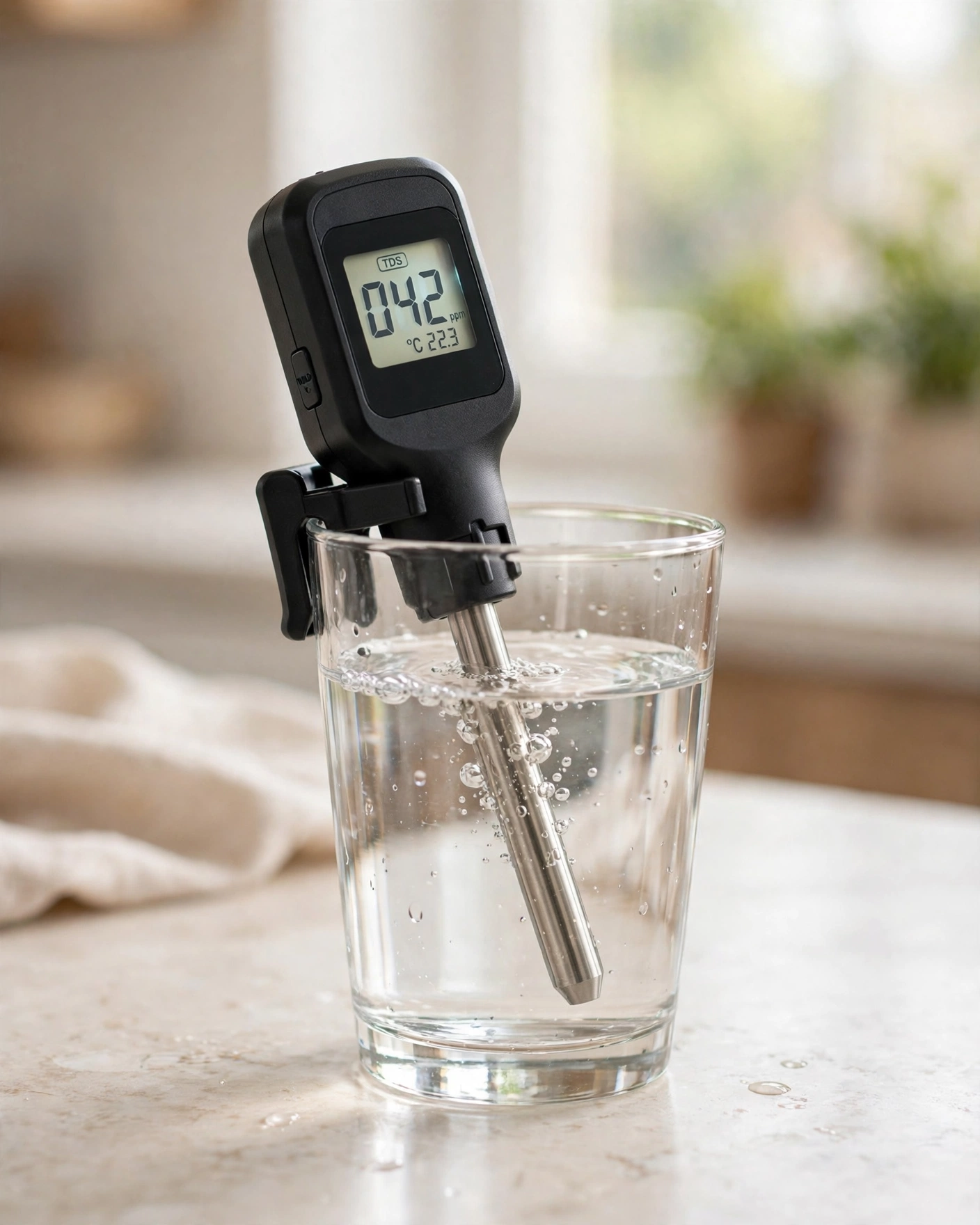
- Bad taste or rising TDS: test the water with an inexpensive TDS meter. A steady climb in the reading usually means the membrane is reaching end of life. TDS creep right after install, on the other hand, often settles down after the system flushes for a day or two.
- Leaks at fittings: almost always a quick-connect fitting where the tubing wasn’t pushed in all the way. Push each tube firmly until it seats, and check that the little locking clips (if your kit has them) are in place.
- Air gap noise: gurgling from the faucet’s air gap is normal — it’s the drain line doing its job. Loud or constant noise usually means the drain line is kinked or clogged.
- When to replace the membrane: every 2–3 years is the typical range, but let the TDS meter decide. When your filtered water’s TDS climbs well above where it started, the membrane is done.
Most installs are genuinely DIY-friendly — if you’re on the fence, our walkthrough on can i install ro system myself covers the tools, the steps, and when to call a plumber instead.
Frequently asked questions
Is a reverse osmosis system worth it for city water?
If your city water tastes of chlorine or carries a lot of dissolved solids, yes — RO is the strongest home filtration you can buy, and an under-sink unit handles drinking and cooking water for the whole household. If your water report looks clean and the taste is fine, though, you may be paying for more filtration than you need — a simpler filter type could be enough, and our water filters hub can help you decide.
Tank vs tankless RO — which is better?
Neither wins outright — they solve different problems. A tank system is cheaper, proven over decades, and works fine with weak incoming pressure, but the storage tank eats cabinet space and water that sits in it for days can taste flat. A tankless system is slim, delivers fresh filtered water on demand, and costs noticeably more while needing decent pressure. Pick a tank to save money; pick tankless to save cabinet space.
Can I install an under-sink RO system myself?
Usually, yes. Most kits ship with push-fit fittings and color-coded tubing, and a typical install takes one to two hours with basic tools — no soldering, no special skills. The two moments to pause: if your plumbing is very old or corroded, or if you’re not comfortable drilling a small hole in the drain pipe for the waste line. Either way, our step-by-step installation guide walks through the full job.
How much does an under-sink RO system cost per year to run?
Expect roughly $60–120 a year in pre-filter replacements for most brands — the APEC ROES-50 runs about $75 a year by most accounts. The RO membrane adds a bigger bill every 2–3 years. Add it up over a decade and the running cost usually exceeds the sticker price, which is why cheap replacement filters matter more than a small discount at checkout.
Do RO systems remove minerals — should I get remineralization?
Yes — RO membranes reject most dissolved minerals along with everything else, which is why some people find RO water tastes flat or “empty.” Whether that bothers you is personal; plenty of owners drink it happily. If you want the minerals back, look for a system with an alkaline or remineralization stage — we cover the options in the remineralization section above.
Which RO system is best for well water?
Well water changes the equation. Sediment and iron can clog an RO membrane quickly, so well owners typically need a sediment pre-filter before the RO unit — and often a booster-pump model like the iSpring RCC7P, since well pressure is frequently too low for a membrane to work properly. The city water vs well water section above covers pre-treatment in more detail.
What’s the best budget reverse osmosis system?
The Geekpure five-stage RO, typically around $130–220, is the cheapest legitimate under-sink RO in this guide, with inexpensive replacement filter sets too. The trade-off: thinner documentation and support than the big names, and a certification status we couldn’t verify — so look the model up on info.nsf.org yourself. The cost of ownership section above breaks down the long-term math in more detail.
Conclusion
For most kitchens, the iSpring RCC7 remains the safest recommendation: proven, affordable, cheap to run, and backed by the biggest owner community in the category. If your cabinet is cramped, the Waterdrop G3P600 is the tankless pick worth the premium; if your budget is tight, the Geekpure gets you genuine RO for the least money. Pick the one that fits your water and your kitchen, confirm the certification on info.nsf.org, and enjoy water that finally tastes like nothing.
And remember the long game: the cheapest system to buy is rarely the cheapest to own. Standard-size filters, a membrane you can replace yourself, and a unit matched to your water pressure will save you more over ten years than any sale price.