Waterdrop G3P600 vs G3P800 (2026): Which to Buy?
You keep landing on the same two white boxes: the Waterdrop G3P600 and the Waterdrop G3P800. Same brand, same slim look, same smart faucet — but a price gap of several hundred dollars. Is the pricier G3P800 actually better, or are you just paying for speed?
Short answer: for most households, the G3P600 is the smarter buy. Both are tankless RO systems with the same footprint, faucet, and twist-out filter changes, and lab testing found the G3P600 removes the same key contaminants. The G3P800 buys you three things: faster flow (800 vs 600 gallons per day), a built-in UV sterilizer stage, and a better pure-to-drain ratio (3:1 vs 2:1). Below: the specs side by side, lab results, yearly costs, and owner feedback.
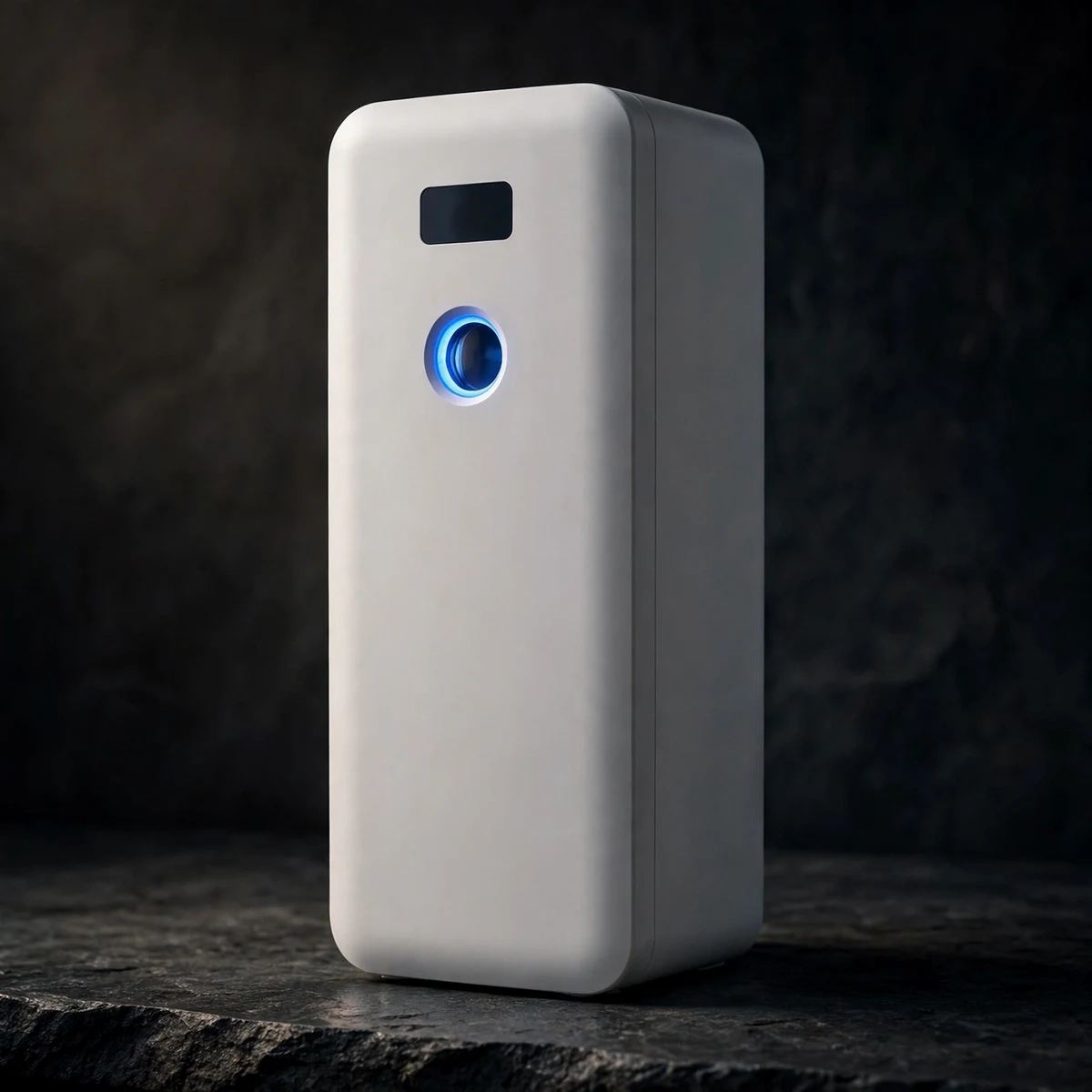
The flagship
Waterdrop G3P800
~$849–999
800 GPD flow — a glass in about 6 seconds — plus a built-in UV sterilizer stage and the most water-efficient 3:1 pure-to-drain ratio.
Best value tankless RO
Waterdrop G3P600
~$429–539
The same key contaminant removal in lab testing for several hundred dollars less — and about $145 a year in filters, vs about $219.
The bottom line: the G3P600 is the right buy for most households — one to four people with normal drinking-water use. Independent lab testing found it removes the same key contaminants as the G3P800, it costs several hundred dollars less upfront, and it is cheaper to run (about $145 a year in filters vs about $219). The G3P800 is the right buy if you have a large household and want the fastest fill (a glass in about 6 seconds), the built-in UV sterilizer stage, or the most water-efficient 3:1 drain ratio.
Verdict: G3P600 for most kitchens — G3P800 only if you will actually use the extra speed and the UV stage.
Prices checked at time of writing; they change often — see the live price before you buy.
Our scores — Waterdrop G3P600
Our scores — Waterdrop G3P800
Table of Contents
Side-by-side comparison

| G3P600 ★ Winner | G3P800 | |
|---|---|---|
| Output | 600 GPD | 800 GPD |
| Fills a 12 oz glass | ~8 seconds | ~6 seconds |
| Filtration stages | 8 (per Waterdrop) | 10, incl. UV (per Waterdrop) |
| Pure-to-drain ratio | 2:1 | 3:1 |
| UV sterilizer | No | Yes (UVC-LED) |
| Smart faucet (TDS + filter life) | Yes | Yes |
| Filter changes | Twist-out, no tools | Twist-out, no tools |
| Filter life | CF 6 mo / CB 12 mo / RO 24 mo | CF 6 mo / CB 12 mo / RO 24 mo |
| Dimensions | 18.11 × 5.67 × 17.72 in | Same |
| Weight | 14.7 kg | 14.7 kg |
| Power | Grounded outlet under sink | Grounded outlet under sink |
| Warranty | 1 year | 1 year |
| Typical price (estimate) | ~$429–539 | ~$849–999 |
Three rows in that table deserve a closer look, because competing reviews get at least one of them wrong.
The drain ratio: the G3P800’s 3:1 is better than the G3P600’s 2:1 — not worse, despite what one popular review claims. A 3:1 pure-to-drain ratio means 3 cups of purified water for every 1 cup sent to drain (75% recovery); 2:1 means 2 cups per 1 (67%). Both beat old tank-style RO systems, which can waste 3 or 4 gallons for every gallon they make. Our tank vs tankless RO guide breaks down the difference in full.
The stage counts: Waterdrop markets the G3P600 as 8-stage and the G3P800 as 10-stage, with the G3P800’s extras including the UV sterilizer. Take “stage” counts with a grain of salt — brands slice the same filtration process into different numbers of named stages. What matters is the lab data, covered in the certifications section.
The size: both units share the same chassis — 18.11 × 5.67 × 17.72 inches, 14.7 kg. The G3P800 is not a bigger box; the extra flow comes from a larger membrane and pump inside. See how both fit the wider market in our best reverse osmosis systems roundup.
The G3P600: the value pick
The G3P600 is the tankless RO we recommend to most households. BOS Water tested it directly against the G3P800 and found no meaningful difference in what they removed: both eliminated chlorine, disinfection byproducts, copper, barium and uranium completely, cut nitrate and fluoride to below what the lab could quantify, and reduced TDS by about 90%. BOS Water scored the G3P600 4.64 out of 5 and called it its favorite tankless under-sink RO.
Pros
- Lab-verified filtration — removes the same key contaminants as the G3P800 in BOS Water’s lab tests.
- Lowest yearly filter cost — about $145 a year in filters.
- Same smart features — TDS display faucet with filter-life countdown, twist-out tool-free filter changes.
- ~30-minute DIY install with the included fittings, per owner reports.
Cons
- No UV stage — the one filtration feature the G3P800 has that this one does not.
- Slower fill — about 8 seconds a glass vs about 6 for the G3P800.
- Certification listings unverified — check the certifications section before you buy.
- Needs an outlet and a faucet hole — a grounded outlet under the sink, plus a hole in the counter or sink (or reuse a sprayer hole).
If you want minerals added back into your RO water — something neither G3P model does out of the box — compare how iSpring handles it in our iSpring RCC7 vs RCC7AK comparison.
Price checked at time of writing; it changes often — see the live price before you buy.
The G3P800: the flagship
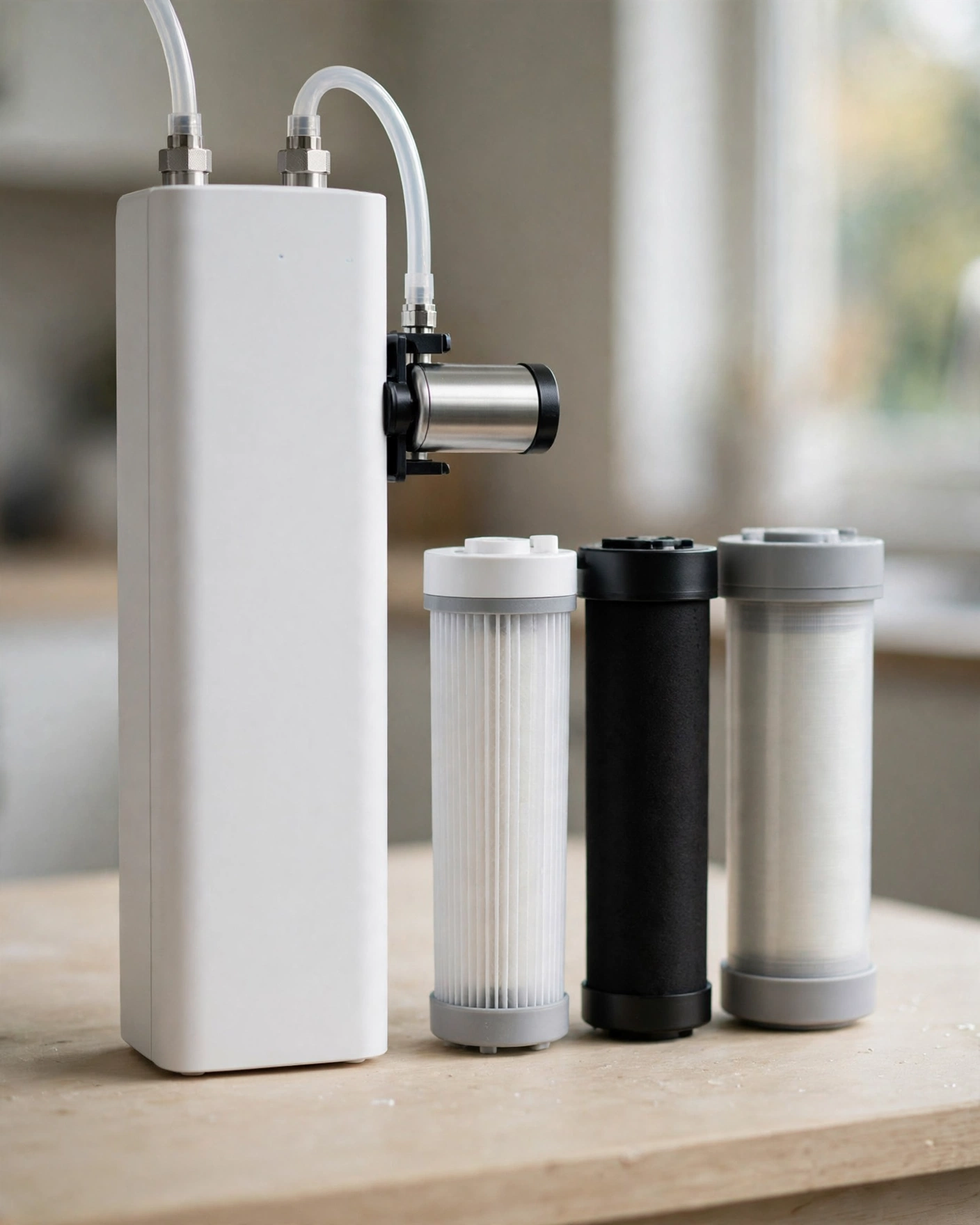
The G3P800 is Waterdrop’s top tankless model, and it has the lab numbers to back up the price. Water Filter Guru scored it 9.21 overall — the highest tankless score they published — with 94.8% TDS rejection, 46.2 dB noise at 1 foot, filter costs of about $0.11 per gallon, and the fastest flow they measured at 0.62 gallons per minute. Overnight TDS creep was just 33 ppm: the quiet payoff of going tankless, with no stored water and no stale first glass.
Pros
- Fastest measured flow — 800 GPD fills a glass in about 6 seconds (0.62 GPM measured).
- Built-in UV sterilizer — a UVC-LED stage the G3P600 does not have.
- 3:1 drain ratio — the most water-efficient option here (75% recovery).
- Strong lab results — 94.8% TDS rejection, 9.21 overall score (Water Filter Guru).
Cons
- Costs several hundred dollars more upfront than the G3P600.
- Pricier filters — about $219 a year vs about $145 for the G3P600.
- Certification claims conflict — sources disagree (see below); verify before you buy.
- Same install requirements — grounded outlet under the sink and a faucet hole.
To see how the G3P800’s lab-verified numbers stack up against tank-style rivals, read our iSpring RCC7 vs APEC ROES-50 comparison.
Price checked at time of writing; it changes often — see the live price before you buy.
Certifications: what we verified — and what you should check yourself
Certifications are where this comparison gets messy — and where other reviews quietly disagree with each other. Some sources list the G3P800 as NSF/ANSI 42, 53, 58 & 372 (IAPMO); a US retailer’s spec sheet lists both the G3P600 and G3P800 as NSF/ANSI 58 & 372 only. We could not verify either model’s listings in the public NSF database (info.nsf.org) during our research, so we are not repeating any certification claim as fact here. Before you buy, look up the exact model at info.nsf.org — it takes two minutes, and it is the only source that counts.
If a retailer page or review states a specific NSF listing for either model, treat it as a claim until you see it in the NSF database yourself. Certification covers only the contaminants in the database entry, and only under NSF’s test conditions.
What independent labs did establish — attributed, not marketing:
- G3P800 (Water Filter Guru): 94.8% TDS rejection, 46.2 dB noise at 1 foot, about $0.11 per gallon in filter costs, fastest flow measured at 0.62 GPM, 33 ppm overnight TDS creep, 9.21 overall score.
- G3P600 and G3P800 compared (BOS Water): both removed chlorine, disinfection byproducts, copper, barium and uranium completely; cut nitrate and fluoride to below what the lab could quantify; reduced TDS by about 90%. BOS Water scored the G3P600 4.64 out of 5 and named it its favorite tankless under-sink RO.
Cost per year
The sticker price is the least important number on this page. What matters is the yearly cost of running the system, because RO filters are a subscription you pay in cartridges:

| Item | G3P600 | G3P800 |
|---|---|---|
| System (upfront, estimate) | ~$429–539 | ~$849–999 |
| Pre-filter (every 6 months) | ~$41 | ~$41 |
| Carbon block (every 12 months) | ~$41 | ~$41 |
| RO membrane (every 24 months) | Price not listed | ~$191 |
| Yearly filter cost (estimate) | ~$145 (BOS Water) | ~$219 (from listed prices) |
| Rough 5-year total | ~$1,154–1,264 | ~$1,944–2,094 |
Two things jump out. First, the G3P600 is cheaper to own every year — roughly $75 a year less in filters. Second, the G3P800’s upfront premium is never “paid back” in running costs: it costs more to buy and more to run. You are paying for speed, the UV stage, and water efficiency — not savings. (All figures are approximate; prices change often.) For running costs across the whole category, see our RO system yearly cost guide.
Owner voices
We did not receive test units, so we read owner feedback for the patterns that repeat across many households rather than one-off stories:

Install is genuinely DIY. The recurring report is “about 30 minutes” with the included fittings, T-adapter, drain saddle, and tubing. The prerequisites owners flag: a grounded outlet under the sink (the booster pump needs power) and a hole for the smart faucet — or an existing sprayer hole to reuse.
The faucet is the favorite feature. Owners mention the TDS display and the filter-life countdown more than anything else — you see the water quality every time you fill a glass, and the faucet tells you which cartridge is due instead of a calendar guess.
The pump hums while water runs. Both systems run their built-in pump only while water is being drawn. Owners describe a low hum; lab testing measured the G3P800 at 46.2 dB at 1 foot — roughly refrigerator-hum level — and silent when idle.
The tankless trade-off is real. No tank means no stale water and roughly 70% more cabinet space — but you cannot feed a refrigerator or ice maker from a tankless faucet, since flow only exists while the pump runs. Both systems are rated for municipal tap water only, not untreated well water.
Which should you buy?
If you skipped to the end, here is the decision in one paragraph: buy the G3P600 unless you have a specific reason to buy the G3P800. The lab data says the filtration you actually drink is effectively the same; the G3P600 costs several hundred dollars less and saves you roughly $75 a year on filters for as long as you own it.
Buy the G3P600 if
- Your household is 1–4 people with normal drinking and cooking water use.
- You want the lowest yearly cost — about $145 a year in filters.
- You do not need a UV stage and are on municipal tap water.
Buy the G3P800 if
- Your household is 4+ people or you cook and brew heavily and want the fastest fill.
- You want the built-in UV sterilizer stage.
- You want the most water-efficient 3:1 drain ratio.
Prices checked at time of writing; they change often — see the live price before you buy.
FAQs
Is the Waterdrop G3P800 worth the extra money over the G3P600?
For most households, no. Lab testing found the G3P600 removes the same key contaminants, while costing several hundred dollars less upfront and about $75 less per year in filters. The G3P800 is worth it only if you want the fastest fill rate, the built-in UV sterilizer, or the 3:1 drain ratio.
Which system wastes less water — the G3P600 or the G3P800?
The G3P800. Its 3:1 pure-to-drain ratio means 3 cups of purified water for every 1 cup sent to drain (75% recovery); the G3P600’s 2:1 means 2 cups per 1 (67%). Despite what some reviews claim, 3:1 is the better ratio.
Are the G3P600 and G3P800 NSF certified?
We could not verify either model’s NSF listings in the public NSF database (info.nsf.org), and published sources disagree on which standards apply. Treat any certification claim as unverified until you look up the exact model yourself at info.nsf.org.
How much do replacement filters cost per year?
Roughly $145 a year for the G3P600 (per BOS Water) and about $219 a year for the G3P800, based on listed cartridge prices of about $41 for the pre-filter (every 6 months), about $41 for the carbon block (every 12 months), and about $191 for the RO membrane (every 24 months). Prices are estimates and change often.
Can I install the G3P600 or G3P800 myself?
Yes — owners consistently report a DIY install of about 30 minutes with the included fittings. Both systems need a grounded outlet under the sink and a hole for the smart faucet (or you can reuse an existing sprayer hole). Both are rated for municipal tap water only, not untreated well water.
Do these systems add minerals back into the water?
No — neither model has built-in remineralization. Waterdrop sells an optional remineralization cartridge if you prefer the taste of mineralized water.
How loud are the G3P600 and G3P800?
Both run a built-in pump only while water is being drawn, and owners describe it as a low hum. Lab testing measured the G3P800 at 46.2 dB at 1 foot — roughly refrigerator-hum level. We found no published lab noise figure for the G3P600.
Conclusion
The G3P600 and G3P800 look alike because they are alike: the same tankless platform, the same smart faucet, the same twist-out filters, the same footprint. The difference is what the extra money buys — speed, a UV stage, and a better drain ratio — not a different class of water. For most households, the G3P600 is the one to buy: lab-verified filtration, a lower price, and lower yearly costs. Choose the G3P800 if your household will genuinely use 800 gallons a day of capacity, or if the UV stage and 3:1 efficiency matter to you. And skip the certification claims in ads — verify the exact model yourself at info.nsf.org before you buy.
Prices checked at time of writing; they change often — see the live price before you buy.
Update log
- Zulqarnain: Review published.