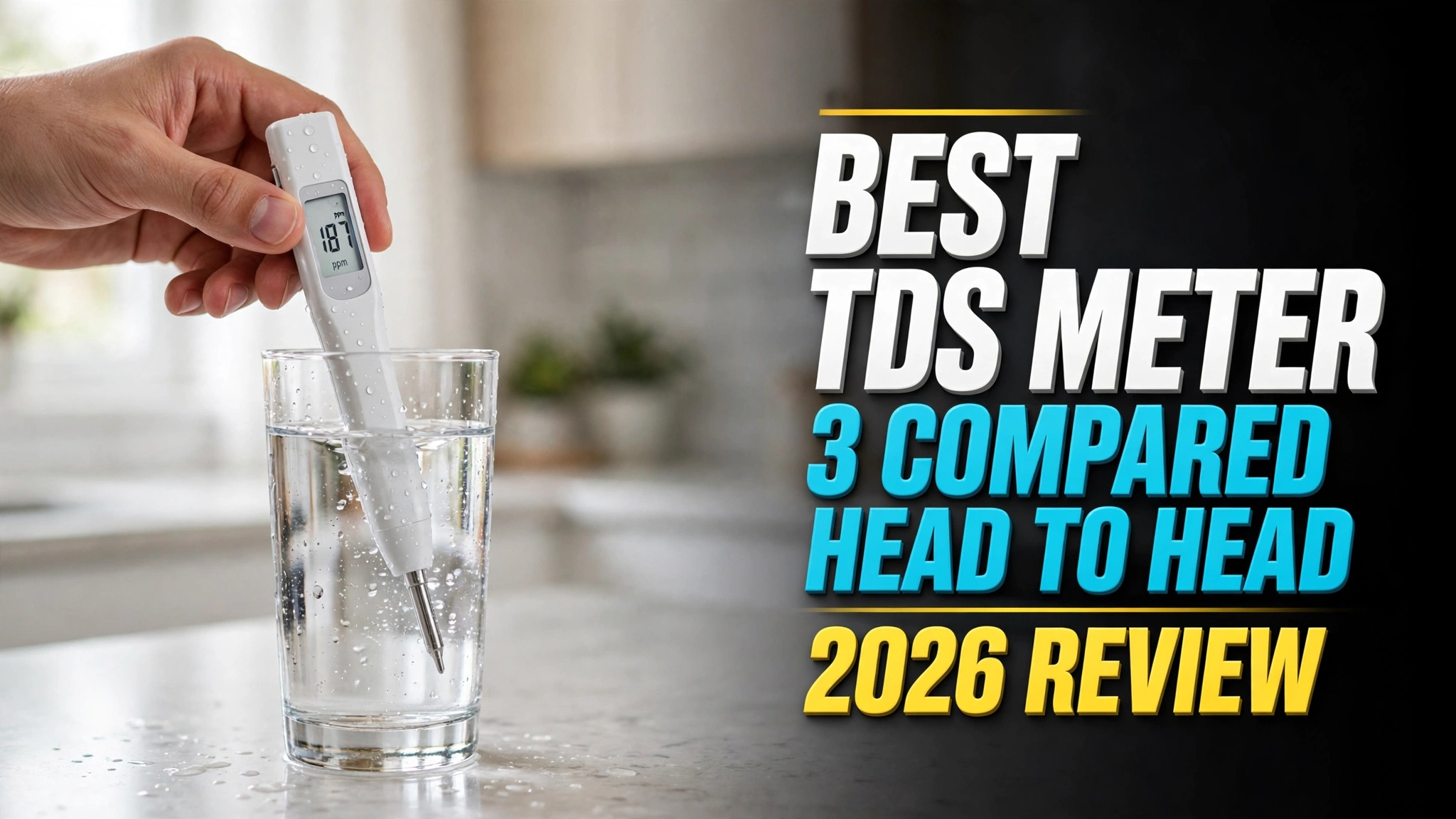

Best TDS Meter Review (2026): Is It Worth It?
★ TOP PICK: HM DIGITAL TDS-EZYou bought a reverse-osmosis system and want to know it is actually working. Or your water tastes a little off and you wonder what a number on a meter would tell you. So you search for a TDS meter — and the first thing everyone asks is: does a TDS reading even tell me my water is safe?
Here is the honest answer: no — a TDS reading does not equal water safety. TDS (total dissolved solids) measures the combined level of dissolved minerals and salts in your water by testing its electrical conductivity. It cannot tell you which contaminants are present, and it cannot detect bacteria or viruses at all. The U.S. EPA lists TDS as a secondary standard of 500 mg/L — a non-enforceable guideline about taste and appearance, not health. What a TDS meter is genuinely good for is tracking filtration performance over time: compare your tap reading to your filtered-water reading, and watch for drift. This review compares three of the most popular meters — the HM Digital TDS-EZ, the HM Digital TDS-3 with case, and the HoneForest 3-in-1 TDS/EC/temperature meter — so you can pick the right one for the job.
Our scores
Table of Contents
Quick verdict
The bottom line: if you want a simple, reliable meter for checking your RO system or fridge filter performance, the HM Digital TDS-EZ is the pick — proven brand, clear display, one-button operation. The HoneForest 3-in-1 adds temperature and conductivity (EC) readings for a few dollars less and is the best value. The HM Digital TDS-3 with its protective case is the pick for people who carry a meter in a toolbox or pool bag.
Verdict: buy any of these three for tracking filter performance — buy none of them as a water-safety device.
Price checked at time of writing; it changes often — see the live price before you buy.
Why you should trust this review
We did not receive test units and we did not run a laboratory comparison. Claiming lab-grade testing we never did would be dishonest, so we will not do it.
What we did was research and comparison: we pulled the manufacturers’ published specs for all three meters, checked the chemistry behind TDS against primary references (including the EPA’s secondary drinking water standards page), read owner reviews for the complaints that repeat, and compared prices and features side by side. Brand-stated specs are labeled as brand-stated.
How we researched
- Compared specs across the three meters — measurement range, temperature compensation, auto-shutoff, and calibration — drawn from manufacturer documentation and published listings.
- Verified the science — “a TDS reading does not equal water safety” is backed by standard water-chemistry references: TDS is a conductivity-derived estimate of dissolved minerals and salts; the EPA lists TDS under its secondary standards (500 mg/L), which address taste, odor, and appearance rather than health.
- Read hundreds of owner reviews — across major retail listings, looking for recurring complaints (inconsistent readings, short battery life, calibration drift) rather than one-off experiences.
- Checked for certifications — home TDS meters are not NSF or EPA certified devices; this review says so plainly instead of inventing a certification label (see below).
Pros and cons
Pros
- Instant answer — dip the probe, stir gently, and the reading locks within seconds.
- Genuinely useful for filter owners — comparing tap vs filtered readings over months tells you when an RO membrane or fridge cartridge is losing its edge.
- Cheap and pocket-sized — all three meters cost less than a single lab water test.
Cons
- It is not a safety test — a low TDS reading does not mean your water is free of lead, bacteria, or chemicals. Never present a ppm number as a safety pass.
- Readings drift — budget meters can vary by a few percent between dips; treat them as trend tools, not precision instruments.
- Softened water confuses it — a water softener swaps calcium for sodium, so TDS barely changes even though the water is softer.
- Limited detail — one number cannot tell you which dissolved solids are present. For that, you need a proper test — see our what does TDS mean guide.
Certifications (database-checked)
Honesty first: none of these three meters carries an NSF or EPA certification, and no home TDS meter does. TDS meters are not regulated testing devices — they are conductivity pens. That is fine for their real job (tracking trends), but any listing that implies a government “safety certification” for a pen meter is overpromising.
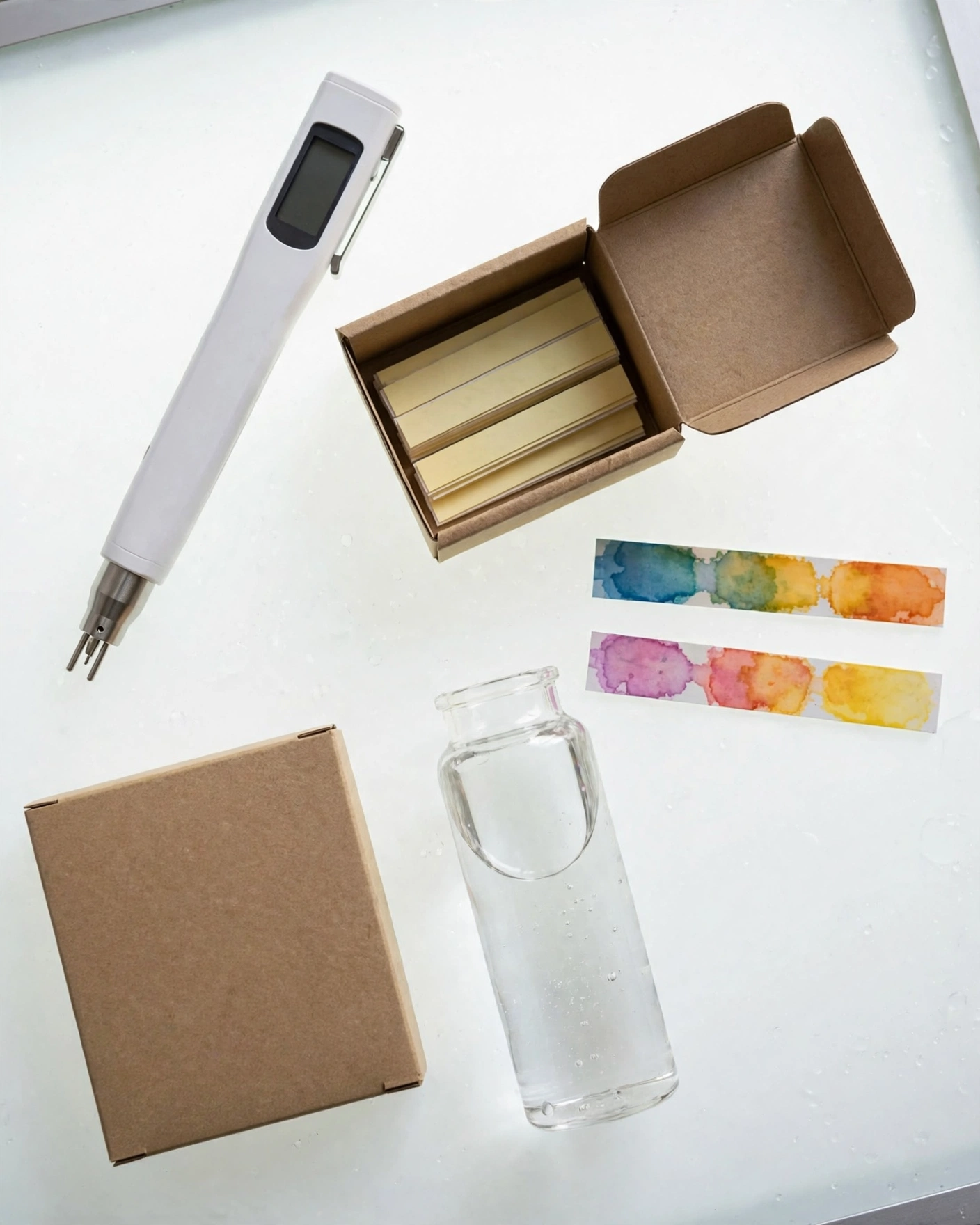
Here is the science, from standard water-chemistry references: a TDS meter passes a tiny electrical current through the water and estimates total dissolved solids from how well the water conducts. Dissolved minerals (calcium, magnesium, sodium) conduct well, so the meter sees them. Many contaminants do not conduct in a way the meter can identify — and it can never tell you which solids it is seeing. The EPA’s secondary drinking water standard for TDS is 500 mg/L, and the EPA itself frames that as a guideline for taste, deposits, and staining — not an enforceable health limit. High TDS can be harmless mineral water; low TDS can still carry contaminants a meter cannot detect. For well water especially, pair a meter with a proper analysis — our best well water test kit and best water test kit guides cover the right tools, and our comparison of home water tests vs lab tests explains when a dip-strip check is enough and when only a lab will do.
Design and usability
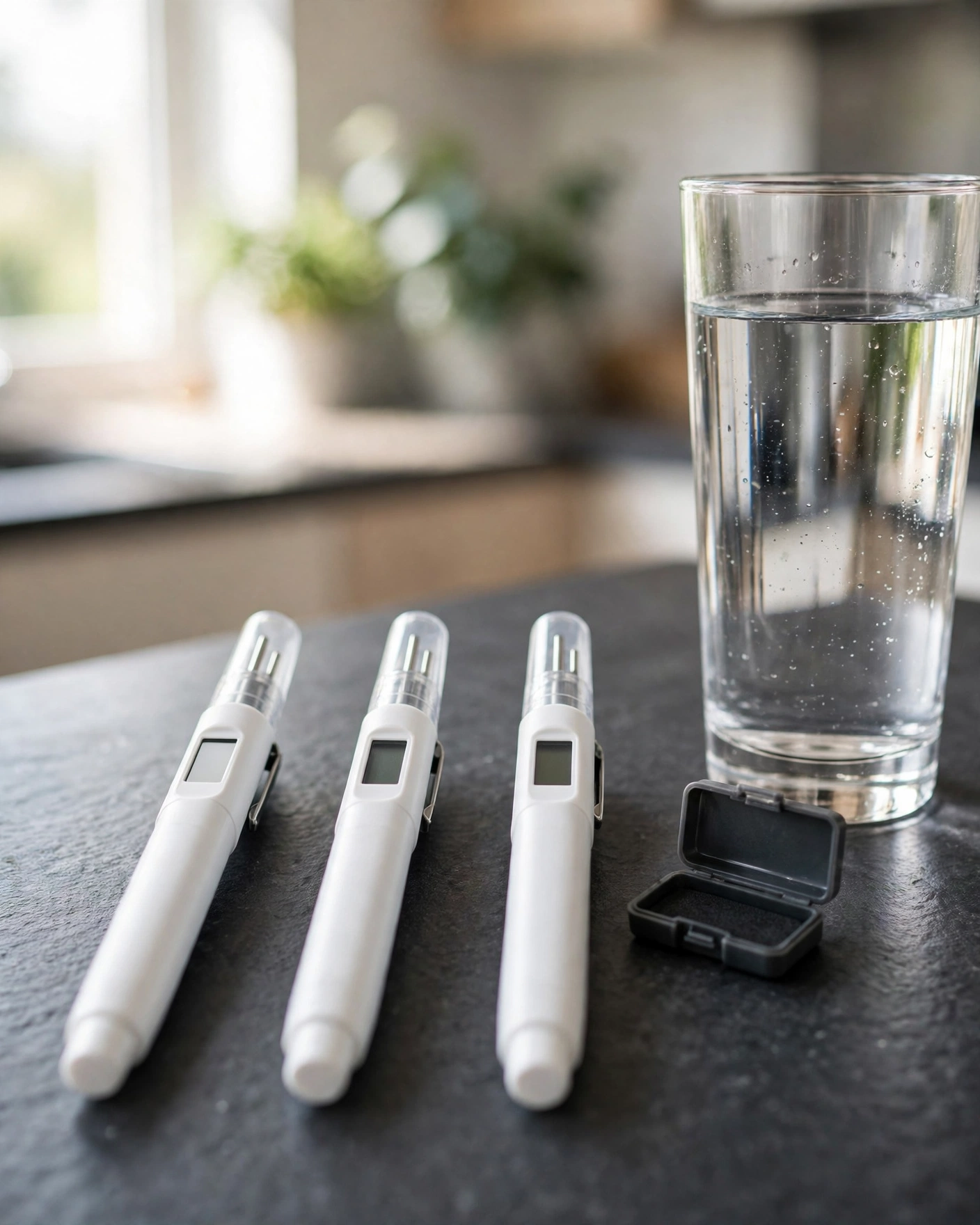
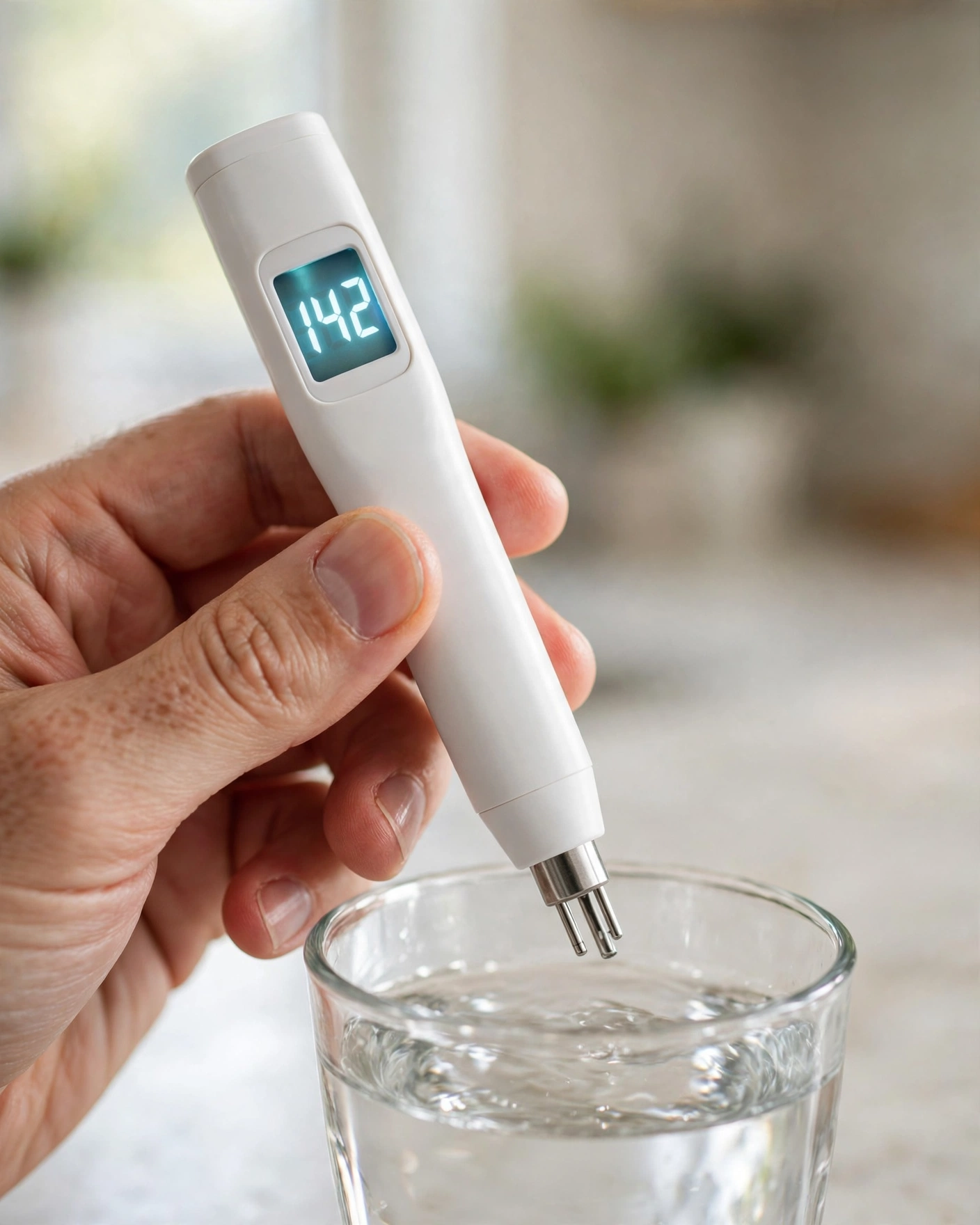
All three are pen-style testers about the size of a fat marker: power on, dip the probe tip into the sample, stir gently, and read the LCD. The differences are in the details:
HM Digital TDS-EZ — the simplest of the three. One main button, a hold function that locks the reading so you can pull the probe out and read it, and a clear LCD. It measures 0–9990 ppm (brand-stated range) with auto temperature compensation. It is the meter most RO owners buy first, because there is nothing to learn.
HM Digital TDS-3 — same HM Digital lineage, adds a protective carrying case and a slightly more rugged build. The case matters more than it sounds: probes are the fragile part of these pens, and a case keeps the tip safe in a drawer or toolbox.
HoneForest 3-in-1 — measures TDS, electrical conductivity (EC), and temperature in one pen, with a backlit display (green when TDS is under 40 ppm, red above that threshold, per the brand) and an auto-lock reading. The backlight is genuinely handy under a sink. Owners note the battery is built-in on some versions — check the listing before buying if a replaceable battery matters to you.
Cost comparison
All three meters are cheap enough that price should not be your main worry — but the differences are real:
| Meter | Price (estimated) | Measures | Notable feature |
|---|---|---|---|
| HM Digital TDS-EZ (top pick) | ~$15–20 | TDS | Hold function, proven reliability |
| HM Digital TDS-3 | ~$20–30 | TDS | Includes protective carrying case |
| HoneForest 3-in-1 | ~$10–16 | TDS, EC, temperature | Backlit display, auto-lock reading |
Price estimate above is based on typical listings at time of writing; prices change often — check the live price before you buy.
Price estimate above is based on typical listings at time of writing; prices change often — check the live price before you buy.
Price estimate above is based on typical listings at time of writing; prices change often — check the live price before you buy.
One honest note on value: the most expensive meter here costs about the same as a single mail-in lab test — and they do different jobs. Buy the meter for monthly trend checks; spend the lab-test money once when you move into a new home or suspect a specific contaminant. Our guide on whether water test strips are accurate covers how strip and meter results compare.
What owners complain about
Readings that wander. The number-one complaint across budget meters: dip twice in the same glass and get two slightly different numbers. A few ppm of drift is normal for conductivity pens; look at the trend across weeks (is your RO output creeping from 12 to 40?) rather than the exact number on any one day.
Calibration drift over time. Owners report meters reading high or low after months of use. Some models have a calibration mode; most budget meters do not. HM Digital and HoneForest both have long owner histories with predictable behavior. When in doubt, cross-check against distilled water (it should read near 0–2 ppm).
Battery quirks. Short battery life shows up in owner reviews for the cheapest unbranded meters — and occasionally for these too. The HoneForest’s built-in (non-replaceable, on some versions) battery is worth knowing about before you buy; the HM Digital models take standard button cells.
Who should buy it
Buy it if
- You own an RO system — a $15 meter is the cheapest way to watch membrane performance and know when to change cartridges.
- You want a quick sanity check on your fridge filter, pitcher, or well — compare readings over time instead of guessing.
- You run aquariums or hydroponics — where EC and TDS are everyday working numbers, and the HoneForest’s 3-in-1 reading earns its keep.
Skip it if
- You need to know your water is safe — a meter cannot do this job. Buy a proper test kit or a lab analysis instead.
- You are on a softened-water supply and want proof it is softer — TDS will not change much after a softener, since it swaps calcium for sodium.
- You want contaminant specifics — lead, nitrates, bacteria, PFAS: all need specific tests, not a ppm reading.
The specs
| HM Digital TDS-EZ | HM Digital TDS-3 | HoneForest 3-in-1 | |
|---|---|---|---|
| Measures | TDS | TDS | TDS, EC, temperature |
| Range (brand-stated) | 0–9990 ppm | 0–9990 ppm | 0–9990 ppm |
| Temperature compensation | Yes (brand-stated) | Yes (brand-stated) | Yes (brand-stated) |
| Hold function | Yes | Yes | Yes (auto-lock) |
| Display | LCD | LCD | Backlit LCD |
| Case included | No | Yes | Varies by listing |
| Auto shutoff | Yes (brand-stated) | Yes (brand-stated) | Yes, ~2 minutes (brand-stated) |
| Price (estimated) | ~$15–20 | ~$20–30 | ~$10–16 |
FAQs
Does a TDS reading mean my water is safe?
No. A TDS meter measures total dissolved solids by testing electrical conductivity — mostly minerals and salts. It cannot identify which substances are present, and it cannot detect bacteria, viruses, or many chemical contaminants. The EPA lists TDS as a secondary standard (500 mg/L) about taste and appearance, not health. A low TDS number is never a safety certificate.
What TDS level is acceptable for drinking water?
The EPA’s secondary guideline for TDS is 500 mg/L, which is about taste and appearance rather than health. Many homes sit between 50 and 300 ppm. Very low readings (near 0, as from an RO system) mean few dissolved solids — including the minerals people get from other foods and water sources. What matters most is watching your own readings change over time.
How do I use a TDS meter?
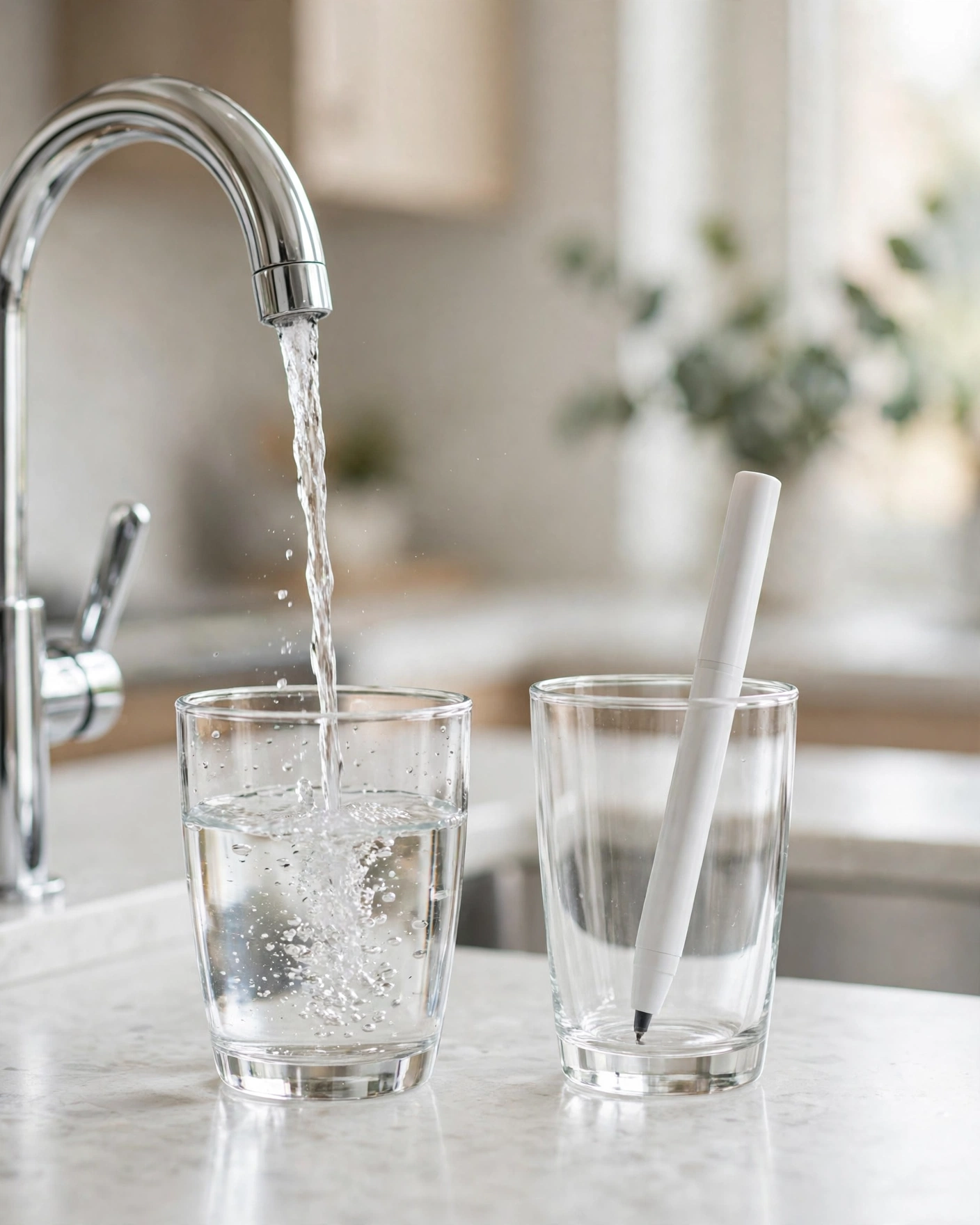
Turn the meter on, dip the probe into the water sample, stir gently, and wait a few seconds for the number to settle. Press the hold button (or wait for the auto-lock) to freeze the reading, then pull it out and read the LCD. Rinse the probe with distilled water between samples for the most consistent results.
Which is better: HM Digital TDS-EZ or the HoneForest 3-in-1?
For simple filter monitoring, the TDS-EZ is the safer pick — one job, done reliably, from a brand with a long track record. The HoneForest is the better value if you want the extra EC and temperature readings or a backlit screen. Both do the core dip-and-read job well.
Why do my TDS readings change between dips?
Small variation is normal: conductivity pens are sensitive to temperature, probe residue, and how the sample settles. Rinse the probe with distilled water, stir gently, and let the reading stabilize before locking it. Judge trends across weeks, not single dips — a filter owner cares whether the filtered reading is climbing, not whether it is 14 or 17 today.
Can a TDS meter tell me when to change my RO membrane?
Yes — this is the job these meters are made for. Test your tap water and your RO output water on the same day, and note both numbers. RO systems typically reject around 90% or more of dissolved solids. If your RO output reading starts climbing toward the tap reading, the membrane or pre-filters are losing performance and it is time to service the system.
Does a water softener lower my TDS reading?
Usually not much. A softener swaps calcium and magnesium for sodium, and the sodium still counts as dissolved solids — so the meter reads about the same. This is one of the clearest demonstrations that a TDS number is not the whole water story.
Do TDS meters need calibration?
Budget pen meters are factory-calibrated and many have no user calibration mode. You can check accuracy yourself against distilled water, which should read near 0–2 ppm. If a meter starts reading far off known baselines, it is usually cheaper to replace it than to calibrate it.
Conclusion
A TDS meter is a small tool with a specific job: showing you how dissolved-solids levels move over time, so you can spot a filter losing its edge or confirm a new system is working. It is not a safety device, it is not certified by anyone, and it cannot tell you what is in your water — only roughly how much stuff. The HM Digital TDS-EZ is the no-nonsense pick, the HoneForest 3-in-1 is the best value with its extra readings, and the TDS-3 is the one with a case. Watch the trend, not the single number.
Price checked at time of writing; it changes often — see the live price before you buy.
Update log
- Zulqarnain: Review published.