Under Sink vs Countertop Water Filtration (2026): Which Should You Buy?
Your tap water has that faint swimming-pool taste, and you have finally decided to do something about it. Then the real confusion starts: the internet tells you to choose between under-sink and countertop filtration — as if where the filter lives is the whole decision. It isn’t. A carbon filter and a reverse-osmosis system do completely different jobs, and both come in under-sink and countertop versions. Pick the placement before the technology and you can easily buy the wrong filter twice.
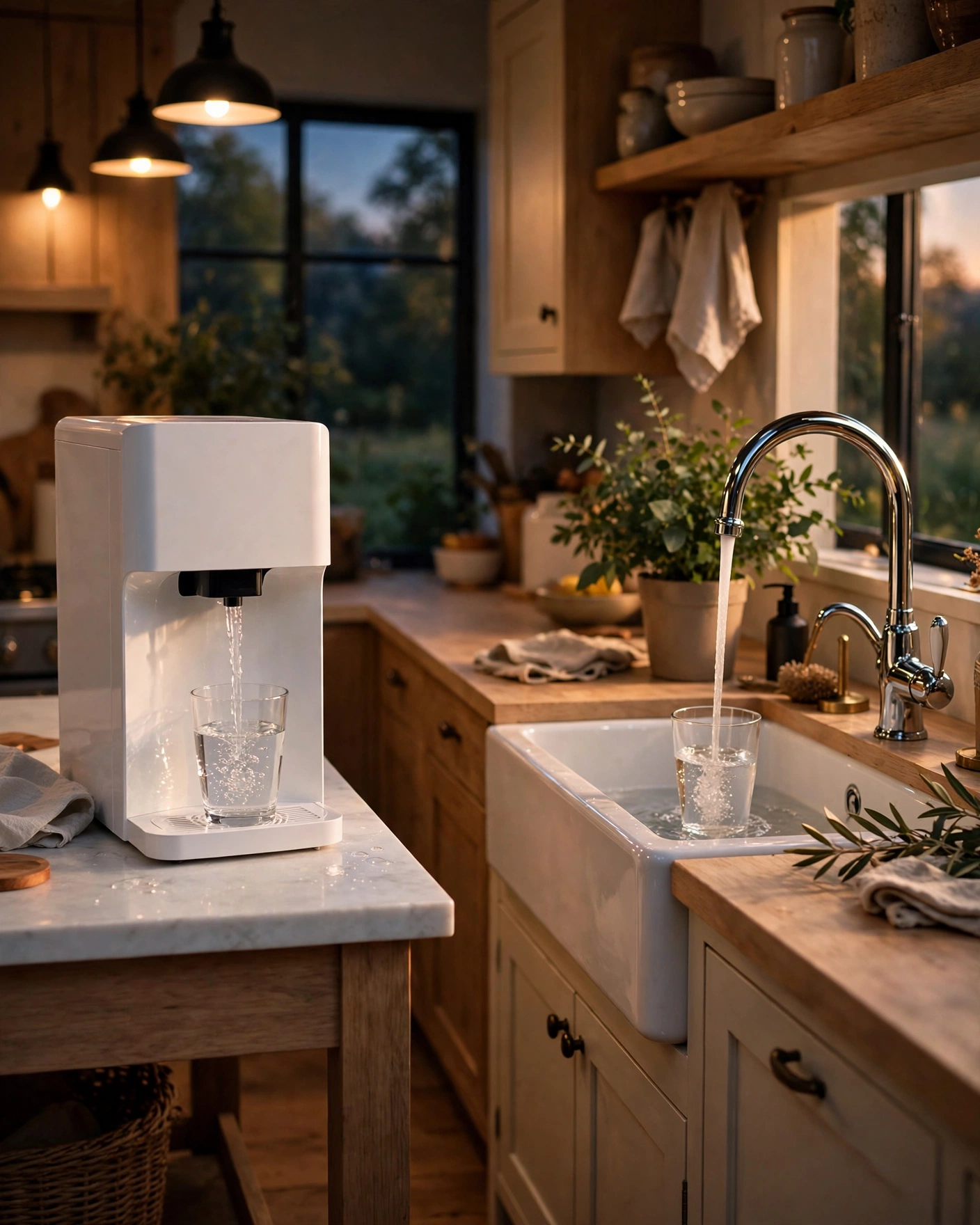
Here is the short answer from our research: placement decides convenience, not filtration quality. Filter technology decides what gets removed — carbon handles chlorine taste and odor, reverse osmosis handles dissolved solids like lead, fluoride, and arsenic. Once you know your water’s problem, the placement decision is simple: own your home and use serious volume, and under-sink wins with on-demand water from a dedicated faucet. Rent, move, or refuse to drill, and countertop wins with zero plumbing. This guide walks through both decisions — filter type first, placement second — with certification proof, real yearly costs, and what owners on both sides actually say.
The countertop pick
NOVETE Countertop RO (Cooling)
~$400–500
Zero plumbing and it moves with you — premium countertop RO that chills water on demand, at a premium yearly cartridge cost.
The under-sink pick
iSpring RCC7 (5-Stage)
~$180–230
The best long-term value in home filtration — NSF/ANSI 58-listed RO, water on demand from a dedicated faucet, and a fridge hookup countertop units can’t match.
The bottom line: under-sink and countertop are addresses, not filtration levels. An under-sink RO and a countertop RO use the same membrane technology, and independent reviewers note comparable rejection rates when both are properly maintained — the gap between the two is capacity and convenience, never purity. What actually decides your water quality is the filter type you choose, not where it sits.
Verdict: if you own your home and go through real volume — cooking, bottles, the whole family — buy under-sink. A dedicated faucet with water on demand, a pressurized storage tank, and a line that can feed your refrigerator’s ice maker make it the best long-term value in home filtration. If you rent, move within a few years, or can’t drill, buy countertop. It plugs in, needs zero plumbing, moves with you — and premium models dispense instant hot and cold water, which no under-sink system offers.
Before comparing anything else, name your water problem — this is the step most placement guides skip. If the complaint is chlorine taste and odor, a carbon filter solves it, and carbon filters exist in both under-sink and countertop forms. If you are worried about dissolved solids — high TDS, lead from old plumbing, fluoride, arsenic — you need reverse osmosis, which also comes in both forms. One caution: a TDS meter reading measures dissolved solids, not safety, so a simple water test beats guessing. The filter-type question — carbon versus RO — gets its own full breakdown in our countertop filter vs reverse osmosis guide.
If you have already settled on reverse osmosis and only need the placement call, our dedicated countertop vs under-sink RO comparison goes deeper on the RO-only version of this decision.
Table of Contents
Side-by-side comparison

| Feature | Under-sink ★ Winner | Countertop |
|---|---|---|
| Installation | Real plumbing: a tap into the cold-water line, a drain saddle on the tailpiece, a dedicated faucet — which usually needs a new hole in the sink or countertop | None. Plug in, fill the tank, done. No drilling, no landlord conversation |
| Counter space | Nothing visible — everything hides below | Takes counter space beside the sink, every day |
| Cabinet space | The housings and tank eat a real chunk of under-sink storage — measure first | Untouched |
| Water on demand | Yes — a dedicated faucet plus a pressurized storage tank (typically 3–4 gallons) means water whenever you turn the tap | Batch-style — fill the reservoir, wait, dispense, repeat |
| Cooking volume | Fill pots straight from the faucet | Carry the unit’s output to the pot, batch by batch |
| Fridge / ice maker hookup | Yes, through an add-on water line — the single most-cited reason owners choose under-sink | No — a countertop unit has no plumbing connection at all |
| Hot and cold on demand | No — under-sink systems feed from the cold line only | Yes on premium models — the NOVETE chills, the Melissani M1 does hot and cold in seconds |
| Filter changes | Every 6–12 months typical, crouching in a cabinet | Every 2–6 months typical, standing at the counter |
| When you move | It stays with the house | It moves with you |

Two things the table hides. First, “installation” is really two separate fears: the plumbing (manageable — most handy owners finish in an afternoon) and the faucet hole (the real decision point, because stone countertops mean drilling). Second, the placement decision reverses for heavy cooks: filling a stockpot from a dedicated faucet is a daily joy that batch-style countertop units can’t match. For the RO-only version of this table — membrane to membrane — see our countertop RO vs under-sink RO head-to-head.
Certifications: where the proof is (and isn’t)
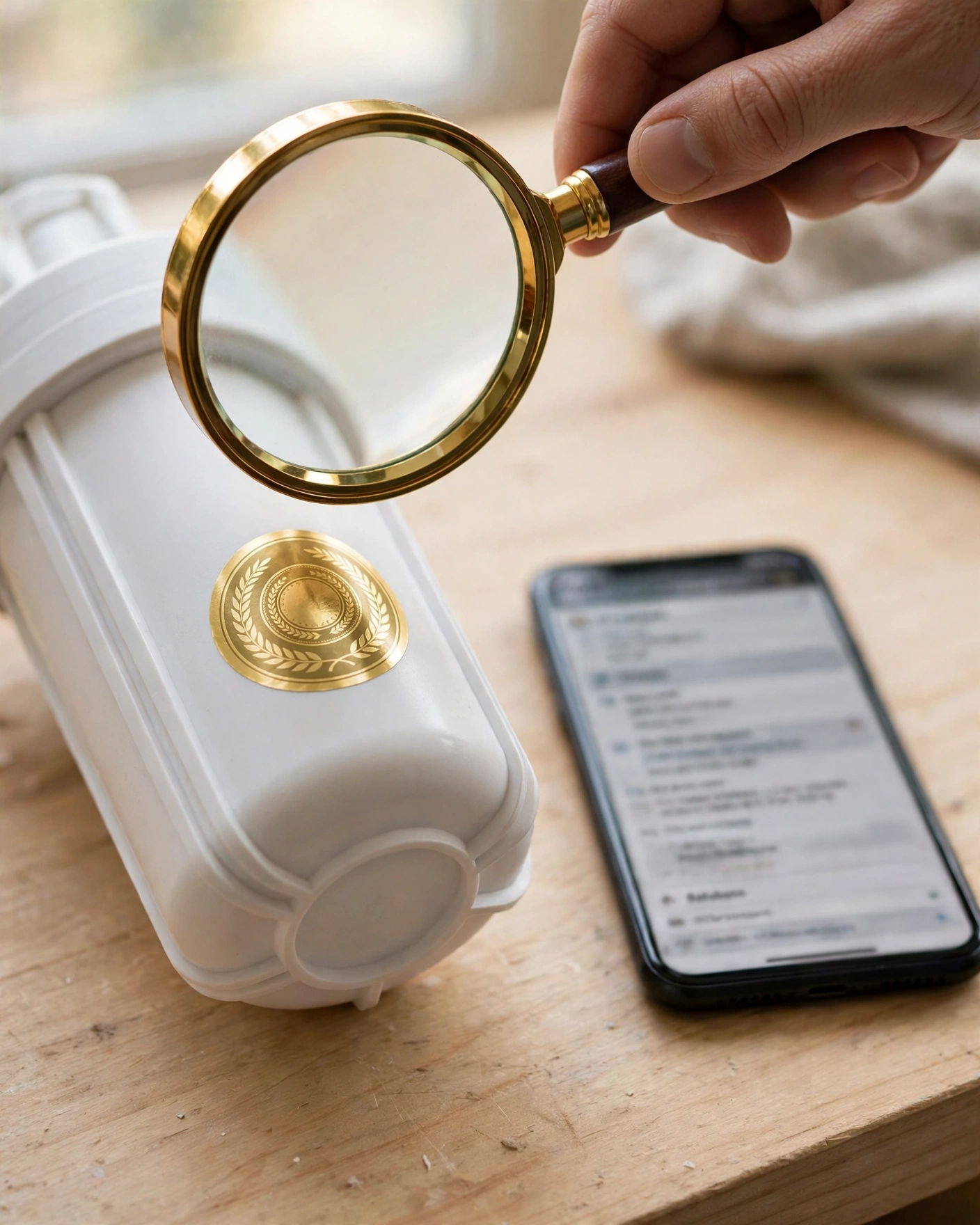
This is where the two placements genuinely differ — not in filtration, but in paperwork. NSF/ANSI 58 is the standard written specifically for reverse-osmosis systems; NSF/ANSI 42 covers taste and odor (chlorine), and NSF/ANSI 53 covers health-related contaminant reductions such as lead. Under-sink RO has decades of third-party certification history: mainstream units like the iSpring RCC7 carry NSF/ANSI 58 listings you can look up yourself in the public database at info.nsf.org — which is exactly what we recommend, because listings can change.
Countertop certification is thinner. Independent reviewer waterfilterguru found that among the countertop RO units they examined, only AquaTru held a full IAPMO certification to NSF/ANSI 42, 53, 58, and 401 — several rivals displayed seals covering only lead-free materials, not contaminant removal. For the NOVETE and Melissani M1 specifically, we could not verify NSF listings through the public database with the tools available, so treat their reduction claims as brand statements until you check info.nsf.org yourself.
One rule applies to both placements: a box that says “meets NSF standards” without a live database listing behind it is not certified. Only a current listing in the database counts — and the filter-type question (carbon vs RO) matters more for certifications than placement does. Our countertop filter vs reverse osmosis guide explains which standard covers which contaminant.
What a year of ownership really costs
| Setup | Upfront (estimate) | Yearly filters (estimate) | 3-year total (estimate) |
|---|---|---|---|
| Under-sink RO class (iSpring RCC7) | ~$180–230 | ~$60–100 | ~$360–530 |
| Under-sink carbon filter | ~$50–150 | ~$40–80 | ~$170–390 |
| Countertop RO (NOVETE / Melissani M1) | ~$300–500 | ~$100–200 | ~$600–1,100 |
| Countertop gravity / carbon dispenser | ~$30–300 | ~$60–150 | ~$210–750 |

Two things jump out. First, the countertop premium is not really the upfront price — it is the replacement rhythm: more frequent cartridge changes at higher per-cartridge prices. Second, the under-sink advantage compounds: stretch the horizon to ten years and the gap is not hundreds of dollars, it is potentially well over a thousand. That is the financial case for drilling the hole — if you are allowed to drill it.
The counterpoint: a renter who carries one $450 countertop unit across three apartments still spends less than one who installs under-sink and abandons it at move-out. Cost math only works inside your actual living situation.
Owner voices: what living with each is like
What countertop owners love
- Zero-installation day one. Unbox, plug in, fill — filtered water within the hour, no tools, no plumber.
- It moves with you. The single most-cited reason renters choose countertop: the filter leaves when you leave.
- Hot and cold on demand. Premium models replace the kettle for tea and the ice tray for cold drinks — a trick no under-sink system offers.
What countertop owners complain about
- Counter space. It never leaves the counter, and in small kitchens that matters every single day.
- Batch refilling. Filling the tank and waiting between batches is the main reason families graduate to under-sink.
- Wastewater quirks. Countertop RO owners learn to empty the reject tank — and if yours keeps ending up in the wrong tank, our countertop RO wastewater troubleshooting guide walks through the fixes that work.
What under-sink owners love
- The dedicated faucet. On-demand filtered water for glasses, pots, and bottles — no waiting, no carrying.
- Fridge and ice maker hookup. An add-on line feeds the refrigerator — impossible for countertop units, and the most-cited reason for choosing under-sink.
- Cheap filter years. Prefilters every 6–12 months and a membrane every 2–3 years keep running costs low.
What under-sink owners complain about
- Cabinet space. The tank and housings eat a real chunk of under-sink storage. Measure twice.
- Install day. The faucet hole is the scary part — stone counters mean drilling, and renters need written landlord approval first.
- Leak anxiety. More connections mean more potential drip points — a pressure check after install is non-negotiable.

Which should you buy?
Rent, move within a few years, or can’t drill? Buy countertop. The NOVETE (cooling) and Melissani M1 (hot and cold in seconds) are the two models we researched most closely — they cost more than a basic unit, but they are the ones countertop owners actually rave about, because instant chilled or hot water is something under-sink systems simply don’t offer.
Check the Melissani M1 Price on Amazon
Own your home and go through real volume? Buy under-sink. The iSpring RCC7 class — roughly $180–230 upfront and around $60–100 a year in filters — is the best long-term value in home water filtration, with a dedicated faucet and a fridge hookup countertop units will never match.
Check the iSpring RCC7 Price on Amazon
Own, but have no usable cabinet space — or want instant hot water more than anything? This is the one case where an owner should buy countertop: a hot/cold model beats a kettle and a pitcher combined, and no plumber is required.
Still deciding between the two placements in general terms? Our should-you-get-countertop-or-under-sink decision guide walks through the same choice as a step-by-step.
FAQs
Which is better for renters — under-sink or countertop?
Countertop, without hesitation. It needs no plumbing changes, no drilling, and no landlord approval — and it moves with you to the next apartment. An under-sink install means a faucet hole in the countertop, which is a permanent modification most leases forbid. If hot or cold water on demand matters to you, spend the premium on a hot/cold countertop model.
Do I have to drill a hole for an under-sink filter?
The dedicated faucet needs a hole in the sink deck or countertop — but many sinks already have a spare one, usually where a soap dispenser or sprayer would go. Stone countertops mean drilling. If you rent, get written landlord approval before you drill anything; a drilled countertop cannot be undone at move-out.
Does where the filter sits change how well it filters?
No — placement decides convenience, not filtration. What gets removed is decided by the filter technology: carbon handles chlorine taste and odor, while reverse osmosis handles dissolved solids like lead, fluoride, and arsenic. An under-sink carbon filter and a countertop carbon filter do the same job; the same is true for RO in both placements.
Which type costs less over five years?
Under-sink usually wins the long game. Estimates put an under-sink RO class system at roughly $180–230 upfront with about $60–100 a year in filters, while a premium countertop RO runs $300–500 upfront with $100–200 a year in more frequent cartridge changes. The exception is renters: one countertop unit carried across three apartments still beats an under-sink system abandoned at move-out.
Can a countertop filter remove lead or fluoride?
It depends on the technology inside, not the placement. Certified carbon filters (NSF/ANSI 53) can reduce lead; fluoride generally needs reverse osmosis or a specialty medium. Countertop RO units exist — but their certification paper trail is thinner than under-sink RO, so verify the exact model at info.nsf.org before trusting a reduction claim.
Can either type connect to my refrigerator’s ice maker?
Only under-sink, through an add-on water line — this is one of the clearest dividing lines between the two. Countertop units are self-contained appliances with no plumbing connection, so they cannot feed a fridge. If filtered ice matters to you, the decision is already made.
Conclusion
Under-sink and countertop are not rivals — they are the same filtration technologies wearing two different lifestyles. The under-sink system is the long-term play: cheaper to run, water on demand from its own faucet, a fridge hookup, and a certification paper trail you can verify in minutes. The countertop unit is the freedom play: no plumbing, no landlord, no commitment — and in its premium hot/cold form, it does something no under-sink system can. Name your water problem first, match the system to your living situation second, and you will not buy the wrong one.
Prices are estimates checked at time of writing; they change often — see the live price before you buy.
Update log
- Zulqarnain: Review published.