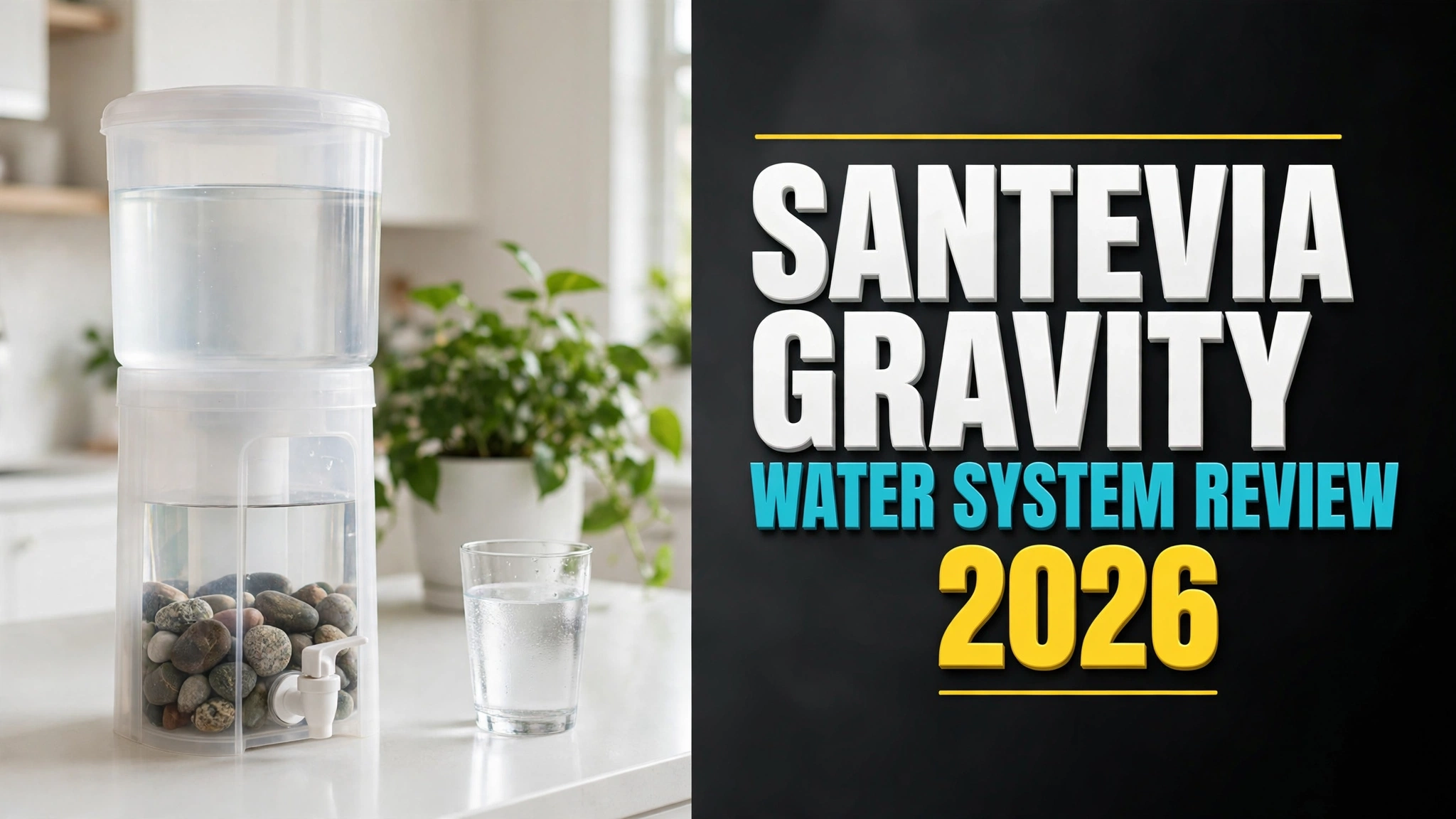

Santevia Gravity Water System Review (2026): Is It Worth It?
★ ALKALINE GRAVITY PICKMost gravity filters take things out of your water. You are looking at the Santevia because it promises the opposite as well: filter the water, then put minerals back in and raise the pH. It is a tempting pitch — smoother taste, alkaline water, no electricity. But it comes with two honest questions. Is “tested to NSF standards” the same as certified? And will you still love this tall plastic dispenser when a tank takes hours to filter?
Here is the short answer: the Santevia Gravity Water System is a real, long-running product with independent lab testing behind it, and owners genuinely like the taste. But it is tested to NSF/ANSI 42, 53, and 401 — not the same thing as holding an NSF certification listing — it filters slowly at about 2 to 3 hours per tank, and its three-part filter schedule means you are always a few months from the next replacement. This review lays out the paperwork, the upkeep, and the yearly cost so you can decide if alkaline gravity water is worth it for your kitchen.
Our scores
Table of Contents
Quick verdict
The bottom line: the Santevia Gravity Water System is the right buy if you specifically want gravity-filtered water with minerals added back and a higher pH, and you accept slow filtration and a plastic body. It is the wrong buy if you want certification paperwork you can verify in a public listing, or fast water on demand.
Verdict: a taste-first alkaline system with honest upkeep — buy it for the water style, not for the paperwork.
Price is an estimate checked at time of writing; it changes often — see the live price before you buy.
Why you should trust this review
We did not receive a test unit and we did not run a lab bench test. Claiming hands-on testing we never did would be dishonest, so we will not do it.
What we did instead was research and comparison: we read the manufacturer’s product pages and manual, separated “tested to” claims from actual certification listings, read owner reviews to find the complaints that keep repeating, and ran the replacement-cost math across all three parts of this system’s filter schedule. Every section says what it is based on, so you can check the reasoning yourself.
How we researched
- Read the manufacturer’s product page and instruction manual — capacity, dimensions, filter lives, and care steps come from Santevia’s own published materials.
- Checked the testing claims carefully — the brand states testing by ALS Environmental, an ISO/IEC 17025 accredited lab, to NSF/ANSI 42, 53, and 401 protocols. We treat “tested to a standard” and “certified and listed” as different claims, because they are.
- Read owner reviews and retailer feedback — looking for recurring complaints (slow flow, spigot drips, taste surprises), not one-off bad experiences.
- Calculated yearly filter-cost math — from the full replacement schedule: fluoride filter, ceramic pre-filter, and mineral stones.
Pros and cons
Pros
- Adds minerals back — the mineral stones add calcium and magnesium and raise pH, which is the whole reason to pick this system.
- Fluoride filter included — the system ships with the fluoride filter fitted, where many rivals sell fluoride stages separately.
- Independent lab testing — the brand publishes testing by an accredited lab to NSF/ANSI 42, 53, and 401 protocols.
- Long parts life — ceramic pre-filter lasts about a year and mineral stones about two years.
Cons
- Tested to standards, not certified — there is no NSF certification listing to look up the way there is for certified products.
- Slow — the brand itself puts a full tank at about 2 to 3 hours through the ceramic pre-filter.
- Plastic body — BPA/BPS-free SAN plastic per the brand, but it looks and feels like a dispenser, not a steel urn.
- Three-part upkeep — fluoride filter every 4 months, ceramic scrubbing every 1 to 2 months, stones to clean and replace.
Certifications (database-checked)
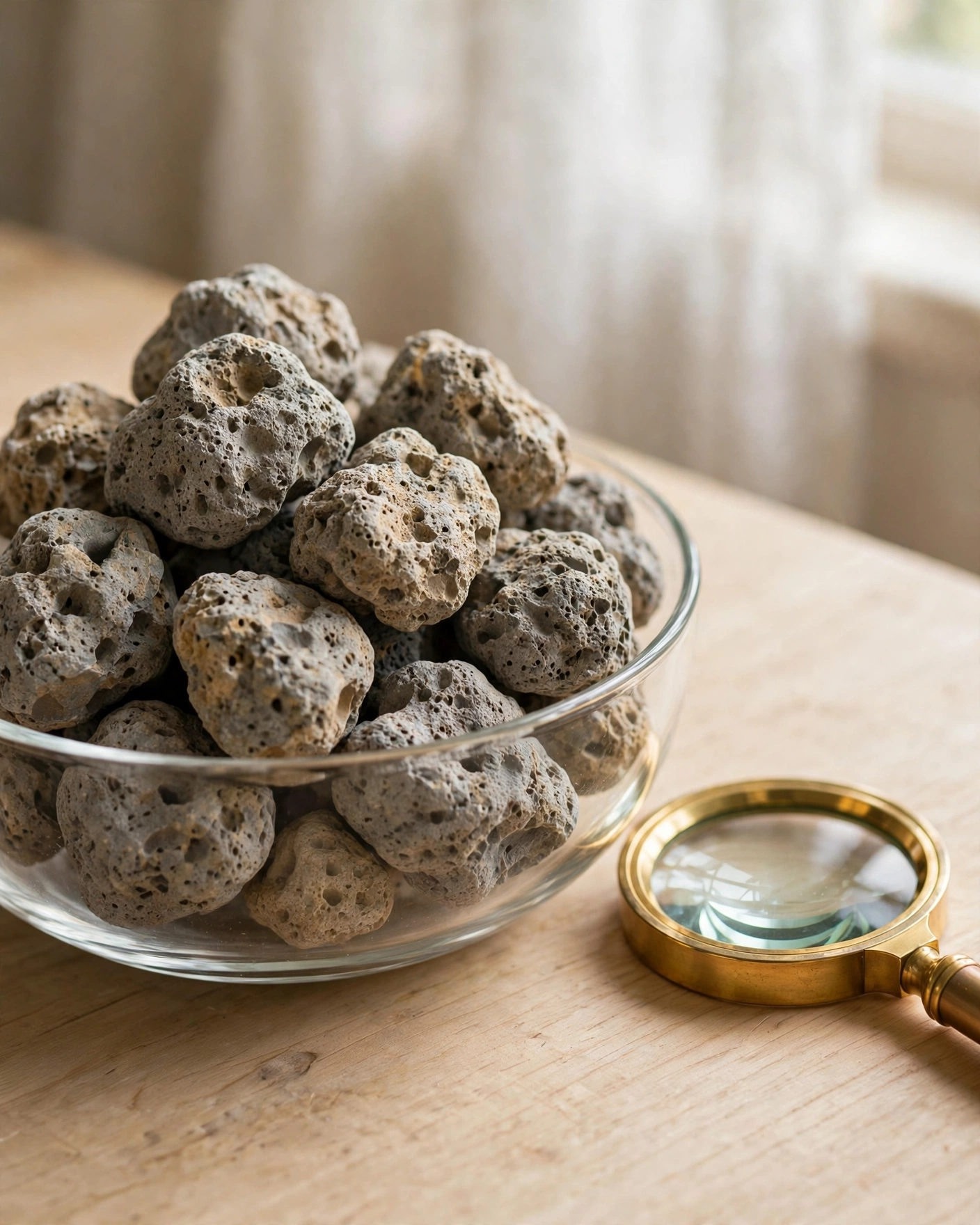
This is the section to read twice, because the wording matters. Santevia states the Gravity Water System was independently tested by ALS Environmental, an ISO/IEC 17025:2017 accredited laboratory, to NSF/ANSI Standards 42, 53, and 401 — and that it removes 90-plus contaminants, including chlorine, lead, and fluoride. That is a lab-testing claim. It is not the same as an NSF, IAPMO, or WQA certification listing, where a certifier audits the product and lists the exact verified reductions in a public database. We checked: the brand’s own language is “tested to,” and we found no certification listing to cite. So every number below is brand-stated and lab-test based — real paperwork, but a step below a listing.
| Scope | Claim | Source |
|---|---|---|
| Testing protocol | Tested to NSF/ANSI 42, 53, 401 (not a certification listing) | Santevia product page (ALS Environmental) |
| Contaminants | 90+ contaminants, incl. chlorine, lead, fluoride (brand-stated) | Santevia product page |
| Fluoride reduction | Brand states 99% with the fluoride filter fitted | Santevia FAQ |
| pH increase | Up to +2.0 pH units (brand/reviewer stated) | Santevia materials; independent roundups |
| Minerals added | Calcium and magnesium (brand-stated) | Santevia product page |
One more caution on the alkaline pitch: we make no health claims for higher-pH water, and neither should anyone selling you a filter. Buy this system because you like how mineralized water tastes, not because of promised health effects. If verifiable paperwork matters more to you than mineral taste, the steel systems in our Boroux Legacy review and Boroux Legacy vs ProOne comparison are the gravity rivals to weigh against it.
“Tested to” a standard means a lab ran the standard’s test methods on the product. “Certified” means a certifier lists the product, audits production, and publishes the verified claims. Both are paperwork — only one is a listing you can look up.
Design and usability
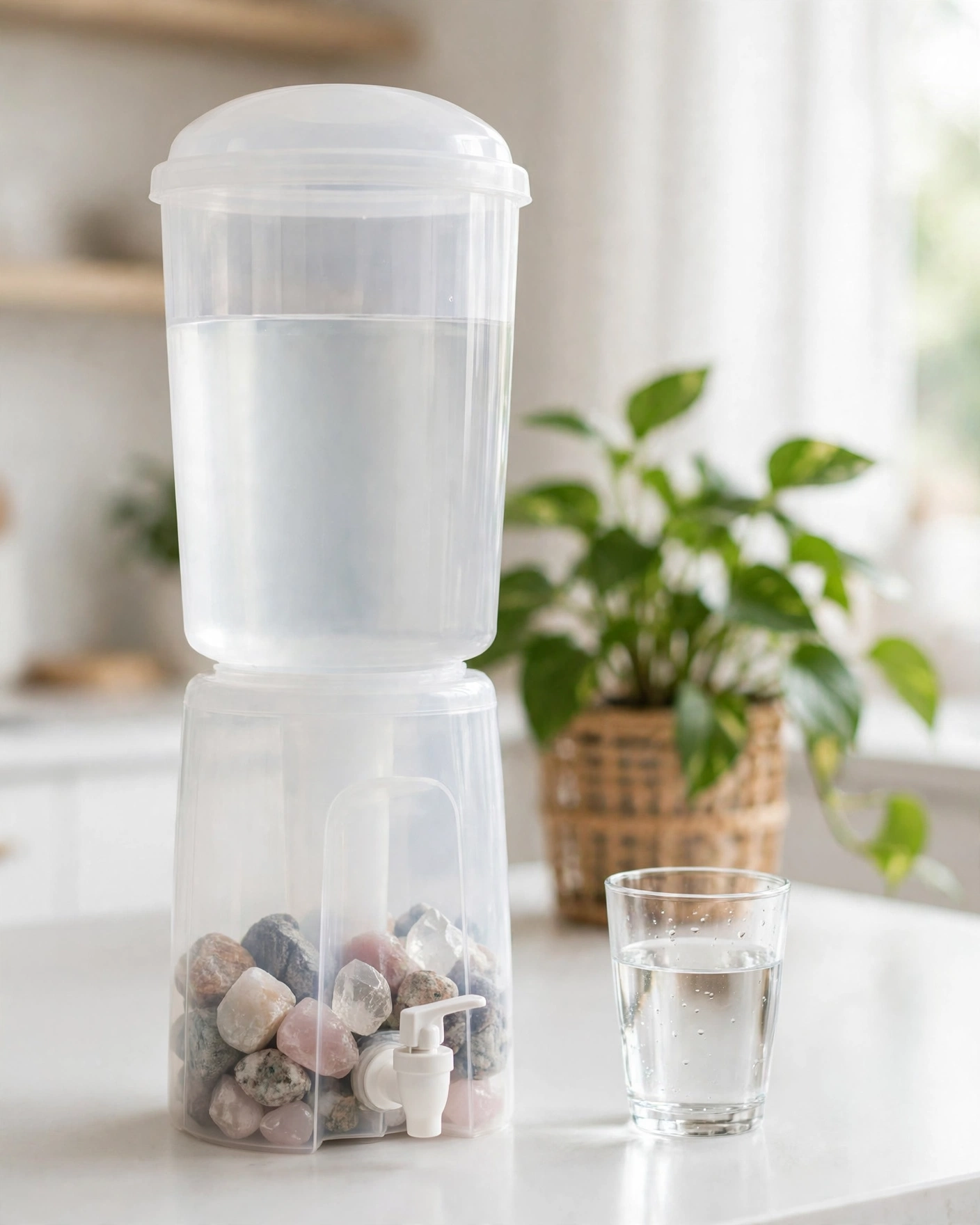
The Santevia is a two-tank countertop dispenser: a 1.3-gallon upper tank feeds a 2.6-gallon lower tank through a ceramic pre-filter and the main filter, and mineral stones sit in the filtered water adding minerals back. Assembled, it stands about 24 inches tall and 12 inches across, and weighs about 8.3 pounds empty. Like every tall gravity unit, it will not fit under standard wall cabinets — and unlike steel rivals, the body is translucent plastic, so you can at least see the water level at a glance.

The daily rhythm is fill-and-wait. The brand is upfront that the ceramic pre-filter slows things down to roughly 2 to 3 hours per tank, because fine ceramic pores trade speed for sediment capture. Owners who fill at night and drink during the day settle into it; owners who want a glass right now do not. Upkeep is part of the design too: scrub the ceramic pre-filter with the included pad every month or two, clean the whole system every 4 to 6 months, and care for the mineral stones as the manual directs. If that routine sounds heavy, our guide on how to prime gravity filter elements shows the similar hands-on care the steel-system world expects.
Filter cost math
The sticker price is the least important number on this page. This system runs three parts on three clocks, and the yearly cost is the sum of all of them:
| Item | Replacement cycle | Estimated yearly cost |
|---|---|---|
| System (upfront, estimate) | — | ~$250–350 |
| Fluoride filter | Every ~4 months (3 per year) | The main yearly cost |
| Ceramic pre-filter | Every ~12 months | One change per year |
| Mineral stones | Every ~24 months | Half a set per year, averaged |
| Estimated total yearly running cost | — | ~$140–190 (estimate) |
Set that against a steel gravity rival like the one in our ProOne Big+ review, where a pair of long-life elements can run for years between swaps: the Santevia costs more to keep, every year, in exchange for the mineral and pH stage. That is a fair trade if alkaline taste is what you came for. It is a poor trade if you just wanted clean water with minimal fuss.
What owners complain about
Slow filtration. The top complaint is speed. The brand itself rates a tank at about 2 to 3 hours, and owners with thirsty families find themselves refilling on a schedule rather than on demand. The manual’s fix for a slowing filter — scrub the ceramic pre-filter — helps, but the base rate stays slow.
Early taste surprises. Retailer feedback includes a minority of owners reporting an odd aftertaste or cloudy-looking water in the first week or so. In most reports it traces back to setup: filters not conditioned as directed, or stones not prepared per the manual. Follow the first-use steps exactly before you judge the taste.
Spigot drips. The manual lists a leaking spigot as a known troubleshooting item, and owners confirm it: the fix is to remove the spigot, seat the washers correctly, and hand-tighten the nut. Annoying, fixable, and worth checking on day one.

Plastic build and looks. More than one reviewer has said the unit resembles a pet water dispenser. It is BPA/BPS-free SAN plastic per the brand, and it is light and easy to move — but if you want a countertop showpiece, steel systems like those in our ProOne vs Berkey comparison look the part better.
Who should buy it
Buy it if
- You specifically want mineralized, higher-pH gravity water — that taste is this system’s reason to exist.
- You want a fluoride filter included from day one, not sold as an add-on stage.
- You are fine with a fill-and-wait routine and a small upkeep schedule of scrubs and swaps.
Skip it if
- You want certification you can verify in a public listing — this system is lab-tested to standards, not certified and listed.
- You need fast water — 2 to 3 hours per tank does not suit a large, thirsty household.
- You want a steel, buy-it-for-years body — this one is plastic, however practical.
The specs
- Brand
- Santevia
- Model
- Gravity Water System (9GS-101)
- Capacity
- 2.6 gallons (lower tank)
- Dimensions
- 12 × 12 × 24 in
- Material
- BPA/BPS-free SAN plastic (brand-stated)
- Filter schedule
- Fluoride 4 mo / ceramic 1 yr / stones 2 yr
- Testing
- Tested to NSF/ANSI 42, 53, 401 (brand-stated)
- Typical price (estimate)
- ~$250–350
FAQs
Is the Santevia Gravity Water System NSF certified?
Not in the listing sense. Santevia states the system was independently tested by ALS Environmental, an ISO/IEC 17025 accredited lab, to NSF/ANSI 42, 53, and 401 test protocols, and it publishes the results. That is different from holding an NSF, IAPMO, or WQA certification listing, where a certifier audits the product and publishes verified reductions in a public database.
Does the Santevia really raise the pH of water?
The brand states the mineral stones can raise pH by up to 2.0 units, and independent roundups repeat that figure. Your result depends on your source water: already-alkaline tap water moves less than soft, acidic water. Treat the number as a ceiling, not a promise, and buy for taste rather than health claims.
How often do I replace the Santevia filters?
On three clocks: the fluoride filter about every 4 months, the ceramic pre-filter about every 12 months, and the mineral stones about every 24 months. The ceramic pre-filter also needs a scrub with the included pad every 1 to 2 months, or whenever the flow slows.
How long does a tank take to filter?
About 2 to 3 hours per tank, per the brand’s own FAQ. The ceramic pre-filter is the bottleneck — its fine pores catch sediment but pass water slowly. Most owners fill the upper tank at night so filtered water is ready in the morning.
Does the Santevia remove fluoride?
The brand states the included fluoride filter reduces 99% of fluoride, based on its lab testing. Note the choice at replacement time: Santevia sells both a fluoride filter and a 5-stage filter, and only the fluoride filter is rated by the brand for fluoride. Order the right one.
Is the Santevia body plastic? Is it BPA-free?
Yes, the countertop Gravity Water System body is plastic — BPA/BPS-free SAN plastic, per the brand’s product details. It keeps the unit light at about 8.3 pounds, but if a metal body matters to you, look at stainless gravity systems instead.
How much water does it hold, and will it fit on my counter?
The lower tank holds 2.6 gallons (10 liters) and the upper tank 1.3 gallons. Assembled, it is about 12 by 12 by 24 inches, so it will not fit under standard wall cabinets. Plan an open counter spot, the way you would for any tall gravity system.
What care do the mineral stones need?
The brand and manual call for cleaning the system every 4 to 6 months — the same visit when you swap the main filter — and replacing the mineral stones at about 24 months, or sooner if the water stops tasting mineralized and the pH lift fades. Follow the manual’s cleaning steps and never use abrasive cleaners or a dishwasher.
Conclusion
The Santevia Gravity Water System is the right buy for one specific drinker: the person who wants gravity-filtered water that comes out mineralized and higher in pH, and who accepts a slow tank, a plastic body, and a three-part upkeep schedule as the price of that taste. For that buyer, it delivers something steel rivals do not. For everyone else — especially anyone who wants certification paperwork they can verify in a public listing — the honest gaps in its paperwork and pace are reasons to look elsewhere. Know which drinker you are, and the choice makes itself.
Price is an estimate checked at time of writing; it changes often — see the live price before you buy.
Update log
- Zulqarnain: Review published.