AquaTru vs Brita Cost Per Year (2026): Which Should You Buy?
Your tap water carries that faint swimming-pool note of chlorine — or your water report flags something heavier, like lead in old plumbing or fluoride you would rather not drink. You are looking at two very different fixes: a Brita pitcher for around $40, and an AquaTru countertop RO system for around $450. Same goal, ten times the price gap. Is the expensive one actually worth it, or is it overkill?
Here is the short answer: the yearly math favors Brita by a wide margin — roughly $36–40 a year in filters versus roughly $60–90 for the AquaTru. But the price gap buys a real difference in what each one is certified to remove. The Brita Elite is certified for lead and chlorine taste; the AquaTru Classic is a 4-stage reverse-osmosis system with brand-stated certifications covering fluoride, arsenic, nitrate, PFAS, and microplastics. This comparison lays out the side-by-side numbers, the certification picture, and what owners say about living with each one — so you match the product to your water, not to the marketing.
The budget pitcher pick
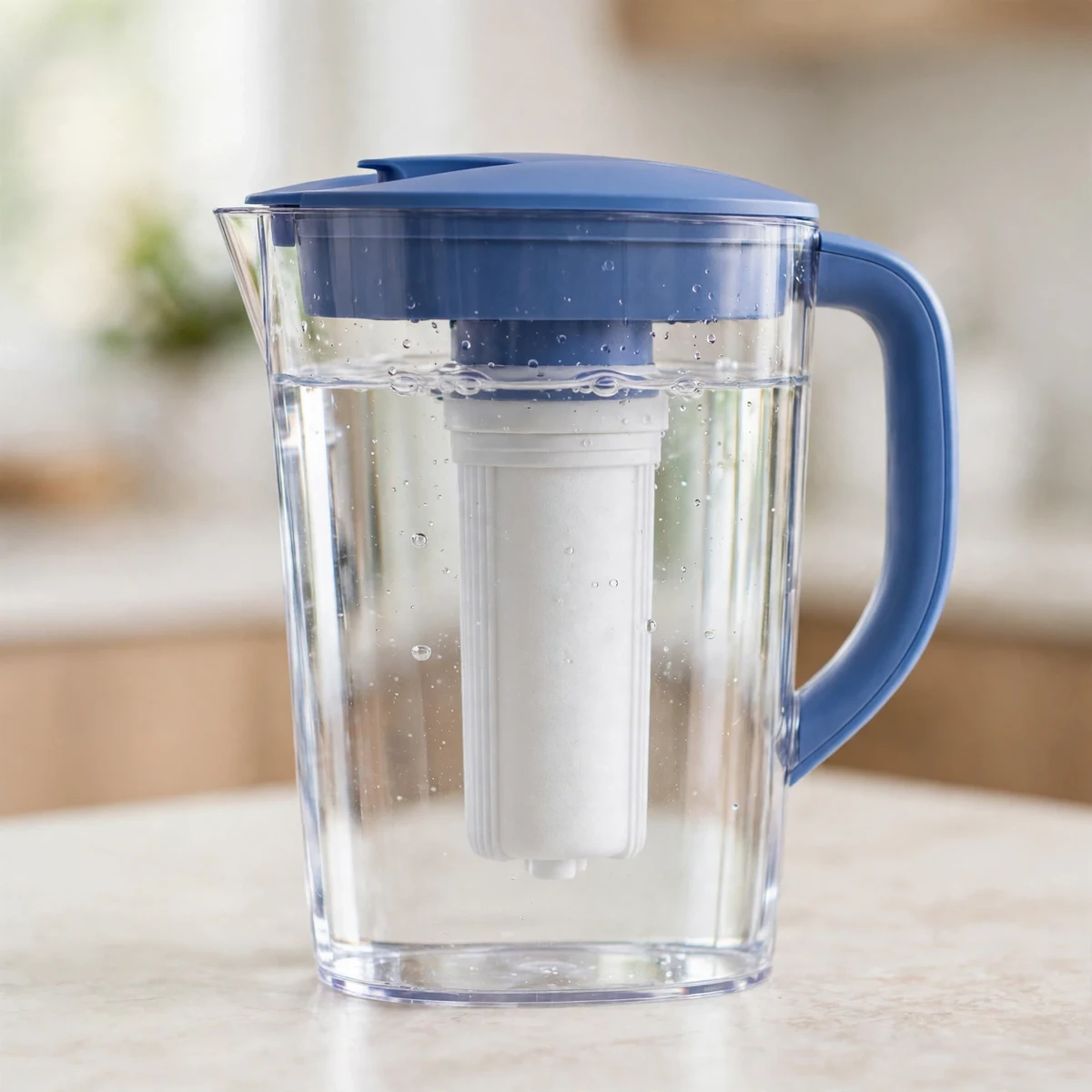
Brita Elite pitcher
~$35–41
Certified lead reduction for the least money — about $36–40 a year in filters, no power, no plumbing, fridge-friendly.
The certification-first pick
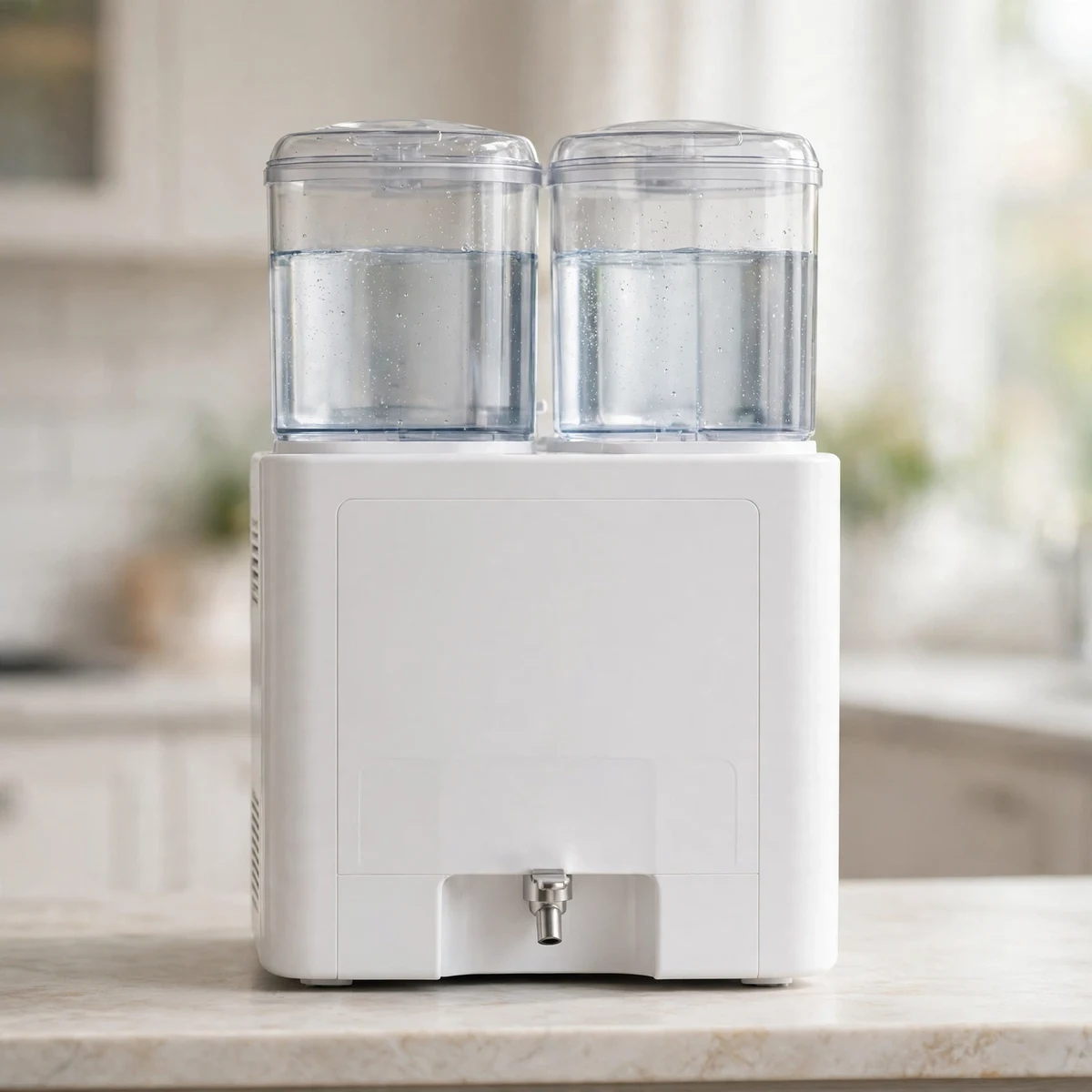
AquaTru Classic
~$449–475
The pick for certification-first buyers — 4-stage RO with brand-stated IAPMO listings covering fluoride, arsenic, nitrate, PFAS, and microplastics.
The bottom line: buy the Brita Elite pitcher if your only complaint is chlorine taste — or if you want certified lead reduction for the least money. Buy the AquaTru Classic if your water report lists fluoride, PFAS, arsenic, or nitrate, because a pitcher was never built for that job.
Verdict: a $40 problem gets a $40 solution; a water-report problem gets the RO.
Price checked at time of writing; it changes often — see the live price before you buy.
Table of Contents
Side-by-side comparison

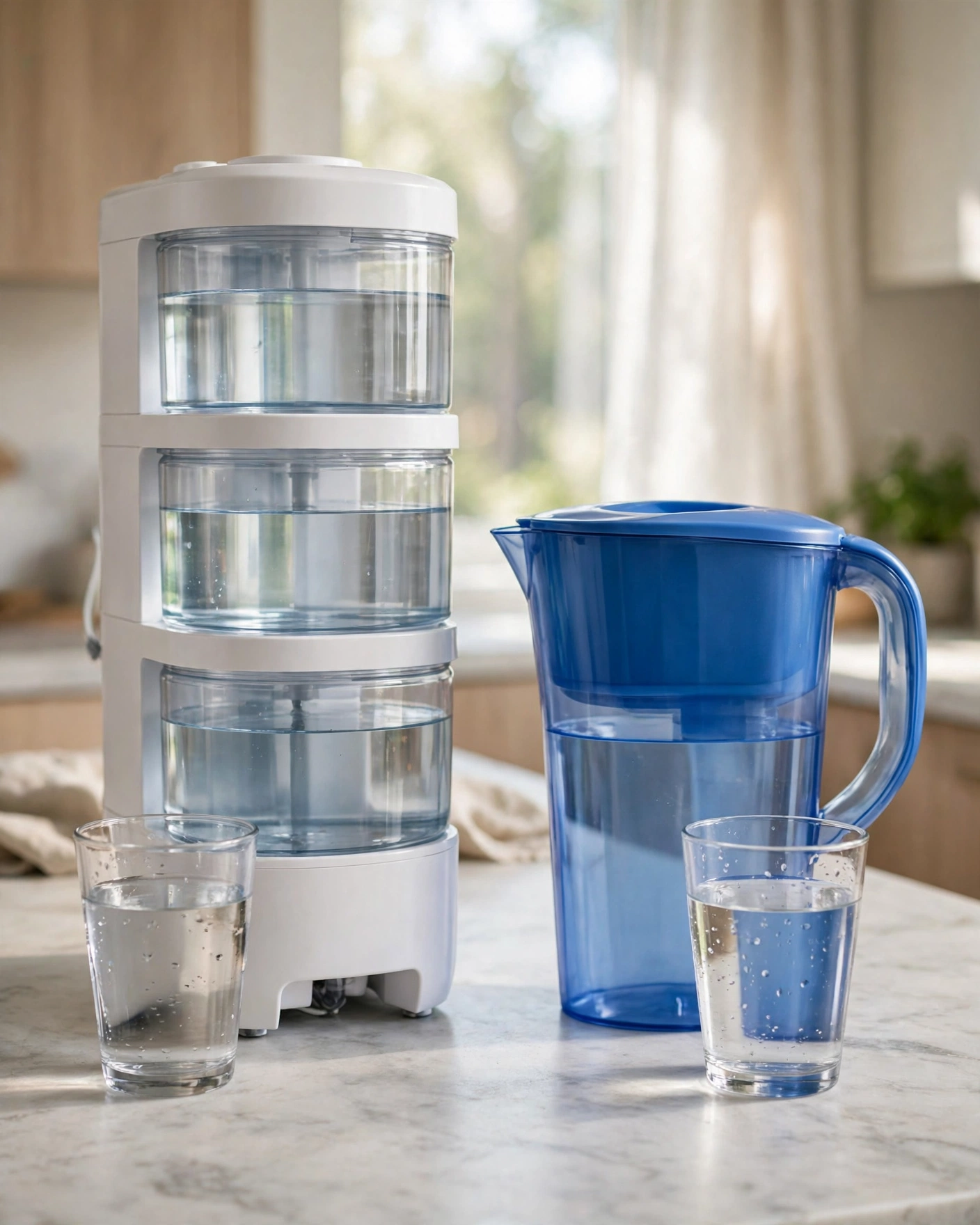
The headline numbers, side by side. Certifications are brand-stated (explained below); costs are estimates from rated filter life and current street prices.
| AquaTru Classic ★ Winner | Brita Elite pitcher | Brita Everyday pitcher | |
|---|---|---|---|
| Type | 4-stage countertop RO | Pour-through pitcher (Elite filter) | Pour-through pitcher (standard filter) |
| Typical upfront price | ~$449–475 | ~$35–41 | ~$25–31 |
| Filter rated life | 6–24 months, by stage | 120 gallons / ~6 months | 40 gallons / ~2 months |
| Yearly filter cost (estimate) | ~$60–90 | ~$36–40 | ~$45–50 |
| Certifications (brand-stated) | IAPMO R&T 42 / 53 / 58 / 401 | NSF/ANSI 42 & 53 (incl. lead) | NSF/ANSI 42 & 53 (narrower) |
| Fluoride reduction | Brand-stated (NSF/ANSI 58) | Not certified | Not certified |
| PFAS reduction | Brand-stated (PFOA/PFOS, 53) | No certified claim | No certified claim |
| Needs power and counter space | Yes | No | No |
| Best for | Water-report problems | Lead + taste on a budget | Taste-only budget |
AquaTru Classic — the certification-first pick
Pros
- Broadest certified scope in its class — brand-stated IAPMO R&T listings across NSF/ANSI 42, 53, 58, and 401, covering fluoride, arsenic, nitrate, PFAS, and microplastics.
- No installation — fill the tap-water tank, plug it in, and it filters; renters can take it when they move.
- Long RO membrane life — the membrane is rated at 2 years or 1,200 gallons, so the most expensive cartridge is not a yearly buy.
- Digital filter-life display — the unit tells you when each stage is due, removing the guesswork.
Cons
- High upfront cost — roughly ten times the price of a Brita pitcher before you buy a single replacement filter.
- Reject water to empty — RO makes a tank of reject water you pour out yourself; owners call it a daily chore.
- Slow — third-party reviewers report roughly 12–15 minutes to fill a tank; it is not on-demand.
- Counter footprint — it lives on your counter permanently, and it needs an outlet nearby.
Brita Elite pitcher — certified lead reduction for the least money
Pros
- Cheap to buy and run — about $36–40 a year in filters, the lowest running cost in this comparison.
- Certified lead reduction — NSF/ANSI 53 per Brita’s published OB06 Performance Data Sheet, at pitcher money.
- Long pitcher-filter life — 120 gallons (about 6 months) means only two swaps a year.
- No power, no plumbing — it fits on a fridge shelf and works anywhere.
Cons
- No certified fluoride or PFAS reduction — if those are on your water report, this is the wrong product.
- Small batches — 10 cups goes fast in a family; heavy drinkers refill constantly.
- Black carbon specks — the classic Brita owner complaint with new filters; rinse per the instructions.
- Slows in hard water — heavy sediment clogs the cartridge before the 6-month rating.
Why you should trust this comparison
We did not receive test units and we did not run lab tests. Claiming hands-on testing we never did would be dishonest, so we will not do it. Instead we did research and comparison: brand spec sheets and performance data sheets, certification claims checked against what the brands publish, hundreds of owner reviews mined for recurring complaints, and yearly-cost math from rated filter life and current filter prices.
Certifications
This is where the price gap comes from. “Brand-stated” means the brand publishes the claim in its own documents — we could not independently verify AquaTru’s listings in a public certification database at publish, so check the IAPMO R&T directory yourself before buying on certification alone. Brita’s claims come from its published OB06 Performance Data Sheet for the Elite filter.

| Contaminant | AquaTru Classic | Brita Elite (OB06) |
|---|---|---|
| Lead | IAPMO R&T 58 (brand-stated) | NSF/ANSI 53 (per OB06 PDS) |
| Fluoride | IAPMO R&T 58 (brand-stated; ~93% per AquaTru’s data sheet) | Not certified |
| Arsenic | IAPMO R&T 58 (brand-stated) | Not certified |
| Nitrate / nitrite | IAPMO R&T 58 (brand-stated) | Not certified |
| Chromium-6 | IAPMO R&T 58 (brand-stated) | Not certified |
| PFOA / PFOS (“forever chemicals”) | IAPMO R&T 53 (brand-stated) | No certified claim |
| Microplastics | IAPMO R&T 401 (brand-stated) | Not certified |
| Chlorine taste and odor | IAPMO R&T 42 (brand-stated) | NSF/ANSI 42 (per OB06 PDS) |
| Chloramine | IAPMO R&T 42 (brand-stated) | Not certified |
| Total dissolved solids | IAPMO R&T 58 (brand-stated) | Not certified |
Certification covers only the contaminants in the listing, and only under the certifier’s test conditions. A contaminant that does not appear in the brand’s published documents does not appear in this table — that is the honest boundary of what each product is certified to do.
If you want the full category picture beyond these two, our best countertop reverse osmosis systems roundup ranks every certified option we researched.
Cost per year
The sticker price is the least important number on this page. What matters is the yearly cost of running each one, because both are subscriptions you pay in replacement filters:

| Item | AquaTru Classic | Brita Elite pitcher |
|---|---|---|
| Upfront | ~$449–475 | ~$35–41 |
| Filter changes per year | 2 pre/carbon + 1 VOC (RO membrane every 2 yrs) | ~2 |
| Yearly filter cost (estimate) | ~$60–90 | ~$36–40 |
| 5-year total, incl. unit (estimate) | ~$750–925 | ~$215–240 |
| Cost driver | Multi-stage filter set prices | Swap frequency |
Here is the math. AquaTru’s own one-year filter set (pre/carbon plus VOC stages) runs about $59.95 at brand prices, and the RO membrane — roughly another $60 — comes due every two years. That puts a realistic year at about $60–90 in filters. The Brita Elite needs two cartridges a year at roughly $18–20 each, so about $36–40. Over five years, that is roughly $750–925 for the AquaTru against roughly $215–240 for the Brita — the RO costs about four times as much to own. (All figures are estimates from rated filter life and current street prices; re-check before you buy.)
The AquaTru premium buys certification scope, not cheaper water — you never “save” your way to a cheaper pitcher by buying RO. And the Brita only wins on cost if a pitcher is the right tool for your water: buying the cheaper product for the wrong contaminant is the most expensive mistake on this page.
We ran the full breakdown — filter schedules, reject-water math, and the bottled-water comparison — in our Countertop RO Cost (2026): Real Yearly Math.
Owner voices
We read hundreds of owner reviews for both products, looking for the complaints that keep repeating across months and retailers — not one-off bad experiences. Here is the honest pattern:

AquaTru owners like that no plumber is involved, that the water tastes clean, and that the display removes filter-change guesswork. The friction: emptying the reject-water tank is the recurring chore — several owners describe it as a daily ritual. Third-party reviewers report roughly 12–15 minutes to fill a tank, so it is not on-demand water. It occupies real counter space permanently, a few owners report drips at the tank seams, and some find RO water flat-tasting because the minerals are gone.
Brita owners like that it is cheap, simple, and fridge-friendly. The friction: black carbon specks from new filters (the manufacturer’s guidance is to rinse and discard the first pitchers), cartridges that clog faster than the 6-month rating in hard water, a 10-cup pitcher that empties fast in a family, and the occasional lid drip when pouring a full pitcher.
None of these are hidden gotchas — they are the real-world friction points, and you are better off knowing them before you buy. Renting? Our best countertop water filter for renters guide covers no-install options that travel with you.
Who should buy it
Buy the AquaTru Classic if
- Your water report lists fluoride, PFAS, arsenic, nitrate, or chromium-6 — a pitcher was never built for these.
- You want the broadest certified coverage without hiring a plumber or drilling a sink hole.
- You have counter space and an outlet to spare, and you will not resent emptying a reject-water tank.
Skip it if
- Only chlorine taste bothers you — the Brita handles that for a tenth of the price.
- You are on a tight budget — roughly four times the 5-year cost is real money.
- You need gallons on demand — a 12–15 minute tank cycle will frustrate you.
Buy the Brita Elite if
- You want certified lead reduction for the least money — nothing beats it at this price.
- You rent and need something fridge-friendly with zero installation.
- You drink a few glasses a day — the 10-cup capacity and 6-month filter life fit light use perfectly.
Skip it if
- Your report lists fluoride, PFAS, or nitrate — no certified claim means no protection.
- You need gallons a day for a family — constant refilling gets old fast.
Need something between a pitcher and a full RO? Our best no-installation countertop water filter guide covers the middle ground.
The specs
- AquaTru: type
- 4-stage countertop RO
- AquaTru: upfront (est.)
- ~$449–475
- AquaTru: filter life
- Pre/carbon 6 mo / 600 gal; VOC 12 mo / 600 gal; RO 24 mo / 1,200 gal
- AquaTru: certifications
- IAPMO R&T 42 / 53 / 58 / 401 (brand-stated)
- AquaTru: power
- Yes, outlet required
- AquaTru: clean-water tank
- ~1 gallon
- Brita: type
- Pour-through pitcher
- Brita: capacity
- ~10 cups
- Brita: filter
- Elite (OB06), 120 gal / ~6 mo
- Brita: certifications
- NSF/ANSI 42 & 53 (per OB06 PDS)
- Brita: power
- No
- Brita: upfront (est.)
- ~$35–41
Which should you buy?

The decision is your water report, not the price tag. The Brita Elite wins on cost and simplicity: certified lead reduction, chlorine taste handled, about $36–40 a year in filters. The AquaTru Classic wins on certification scope — fluoride, PFAS, arsenic, nitrate, and microplastics on a brand-stated IAPMO R&T listing — for roughly four times the 5-year cost and a daily reject-water ritual.
If your report is clean and only taste bothers you, buy the pitcher and pocket the $400 difference. If your report lists fluoride, PFAS, arsenic, or nitrate, the pitcher was never the right tool — and no amount of filter swaps will make it one. Short on counter space but sold on RO? Our best portable reverse osmosis system picks shrink the footprint.
Price checked at time of writing; it changes often — see the live price before you buy.
FAQs
Which is cheaper per year — AquaTru or Brita?
Brita, by a wide margin. Two Elite filters a year run about $36–40, while the AquaTru’s filter stages run about $60–90 a year at brand prices. Over five years the AquaTru costs roughly four times as much to own. But cheaper only matters if the product fits your water — a pitcher has no certified claim against fluoride or PFAS.
Does AquaTru remove fluoride?
AquaTru states that the Classic is certified by IAPMO R&T to NSF/ANSI 58 for fluoride, and its data sheet lists about 93% reduction. We could not independently verify the listing in a public database at publish, so treat it as brand-stated and check the IAPMO R&T directory yourself.
Does the Brita Elite pitcher remove lead?
Yes. Brita’s published Performance Data Sheet for the Elite (OB06) filter lists NSF/ANSI 53 certification covering lead, and the listing can be looked up in the public NSF database at info.nsf.org. Certification means it reduced lead under standardized test conditions — a water test is still the smart first step if lead is your main concern.
Does Brita remove PFAS (“forever chemicals”)?
Not on a certified basis. The Elite’s published Performance Data Sheet carries no PFAS claim, and we dropped an unverified third-party PFAS figure rather than publish it. The AquaTru Classic is brand-stated to NSF/ANSI 53 for PFOA and PFOS — not independently verified at publish.
How often do AquaTru filters need changing?
The pre/carbon stage every 6 months or 600 gallons, the VOC carbon stage every 12 months or 600 gallons, and the RO membrane every 24 months or 1,200 gallons. The unit’s display tracks each stage. Budget about $60–90 a year at brand filter prices.
Is a countertop RO system overkill for normal city tap water?
Often, yes. If your water report is clean and only chlorine taste bothers you, a Brita pitcher solves the problem for about $40 a year. An RO system earns its price when your report lists fluoride, PFAS, arsenic, nitrate, or chromium-6 — contaminants a pitcher is not certified to touch.
What do I do with the AquaTru’s reject water?
You pour it out. The Classic collects RO reject water in a tank you empty by hand — owners describe it as a daily chore. Third-party reviewers report roughly as much reject water as filtered water. Some owners use it on plants or for cleaning rather than pouring it down the drain.
Can the Brita Elite keep up with a family?
Barely, if everyone drinks a lot of water. Ten cups empties fast, and heavy use means more refills — though the filter itself still lasts about 6 months. Families that go through gallons a day are usually happier with a dispenser-style system or a countertop RO.
Conclusion
Match the product to the problem, not the price tag. A $40 taste problem gets the Brita Elite — certified lead reduction, two filter swaps a year, and money left over. A water-report problem — fluoride, PFAS, arsenic, nitrate — gets the AquaTru Classic, because no pitcher is certified for that job. The only wrong answer is buying the expensive system for chlorine taste, or the cheap pitcher for fluoride. Know which problem you have, and the choice makes itself.
Price checked at time of writing; it changes often — see the live price before you buy.
Update log
- Zulqarnain: Review published.