
Countertop RO Cost (2026): Real Yearly Math
Guide
A countertop reverse osmosis machine looks like a one-time purchase. It is not. The box on the counter runs three cartridges on three different clocks — one twice a year, one every year, one every two years — and those clocks, not the sticker price, decide what the system actually costs you. Most cost pages quote the machine and stop. This one follows the money for five years.
The short answer: budget roughly $350–375 for the machine, then about $130–170 a year in filters at manufacturer list prices — around $155 a year on a steady annualized schedule for an AquaTru-style unit — which puts five-year ownership near $1,100–1,200 before electricity or water. Every figure below is worked from the cartridge prices and lifespans themselves, so you can redo the math for any model.
Table of Contents
Upfront cost
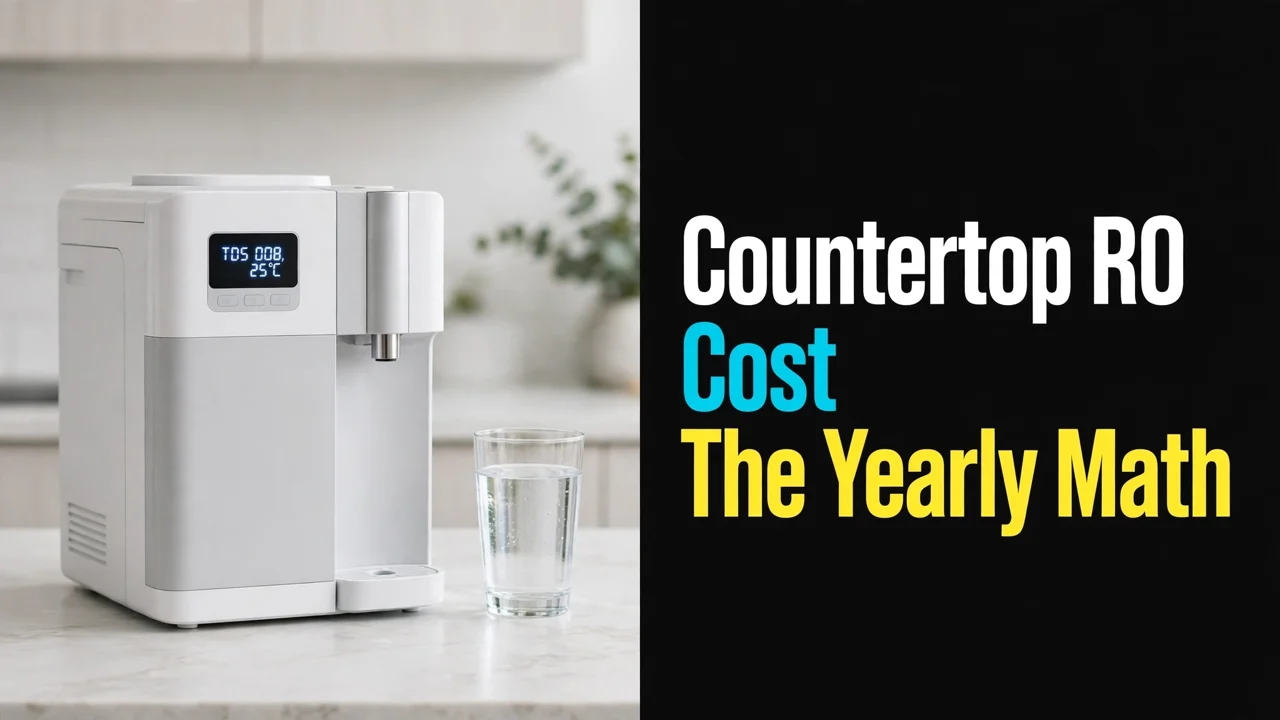
The entry ticket for tankless countertop RO — the fill-it-yourself, no-plumbing design covered in our best countertop reverse osmosis system roundup — clusters in a fairly tight band. Using AquaTru, the category’s reference point, as the worked example: the Classic lists at about $375, and the smaller Carafe at about $349, with sale pricing on the Carafe seen around $249. Competing tankless units from other brands land in roughly the same $250–450 window. There is no installation cost and no plumber: the machine sits on the counter, you fill its tank, and it filters into a carafe. That zero-install fact is the entire economic pitch against under-sink systems, and it is real — but it is a saving you collect once, on day one.
Two smaller upfront items rarely get mentioned. The first is counter space, which is a cost if your kitchen is small. The second is that the purchase price buys you exactly one set of cartridges — the first replacements start coming due at six months, so year one is not a free year.
Yearly filter cost math
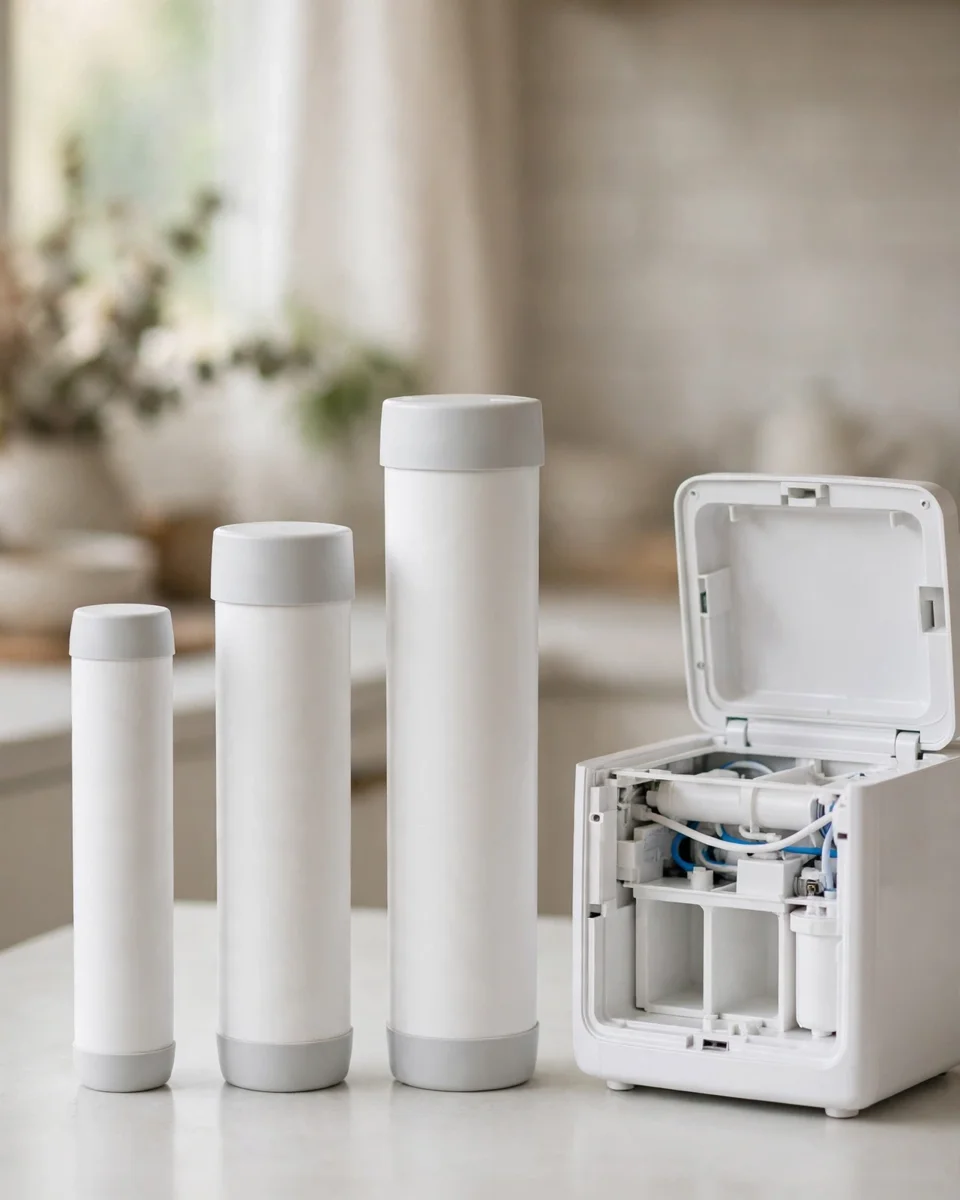
AquaTru’s four stages — dual pre-filter/carbon combo, the RO membrane, and a VOC carbon finishing filter — collapse into three things you buy, on three schedules. At the manufacturer’s listed prices (October 2026), the arithmetic looks like this:
| Cartridge | List price | Rated life | Cost per year |
|---|---|---|---|
| Pre-filter / carbon combo | ~$29.99 | ~6 months | ~$60 |
| VOC carbon filter | ~$69.99 | ~1 year | ~$70 |
| RO membrane | ~$49.99 | ~2 years | ~$25 |
| Steady-state total | ~$155 / year |
No single calendar year is exactly $155 — that is the honest annualized figure. A year when only the combo and VOC filters come due runs about $130; the year the membrane also lands pushes it toward $180. Across models the range most owners should budget is $130–170 a year, with third-party and subscription discounts able to trim it and hard water able to shorten the pre-filter’s life and push it the other way. Two things the table makes obvious: the little $30 combo filter, replaced twice a year, quietly costs more annually than the membrane everyone worries about — and the VOC filter is the single biggest line item, which is worth knowing before you fall for a machine whose finishing filter costs even more.
5-year total cost of ownership
Stack it up for the Classic at list: $375 for the machine plus five years of filters at about $155 a year ($775) gives a five-year total of roughly $1,150, or about $230 a year all-in. The Carafe starts lower — $349 list, sometimes $249 on sale — and drinks from the same filter family, so its five-year figure lands in a similar place, modestly under the Classic’s. Treat all of these as estimates built from October 2026 list prices; sales, bundles, and subscription pricing move them, which is why the per-cartridge table above matters more than any total: prices change, the method does not.
What the five-year view exposes is the shape of the spending. The machine is only about a third of what you will pay over five years. That flips the usual shopping instinct: a $50 saving on the unit is worth less than a $10-per-year saving on cartridges, and a cheap machine with expensive proprietary filters can overtake a pricier one by year three. It also means the used-market bargain is real — a secondhand unit with fresh cartridges costs you the same per year as a new one.
Vs alternatives
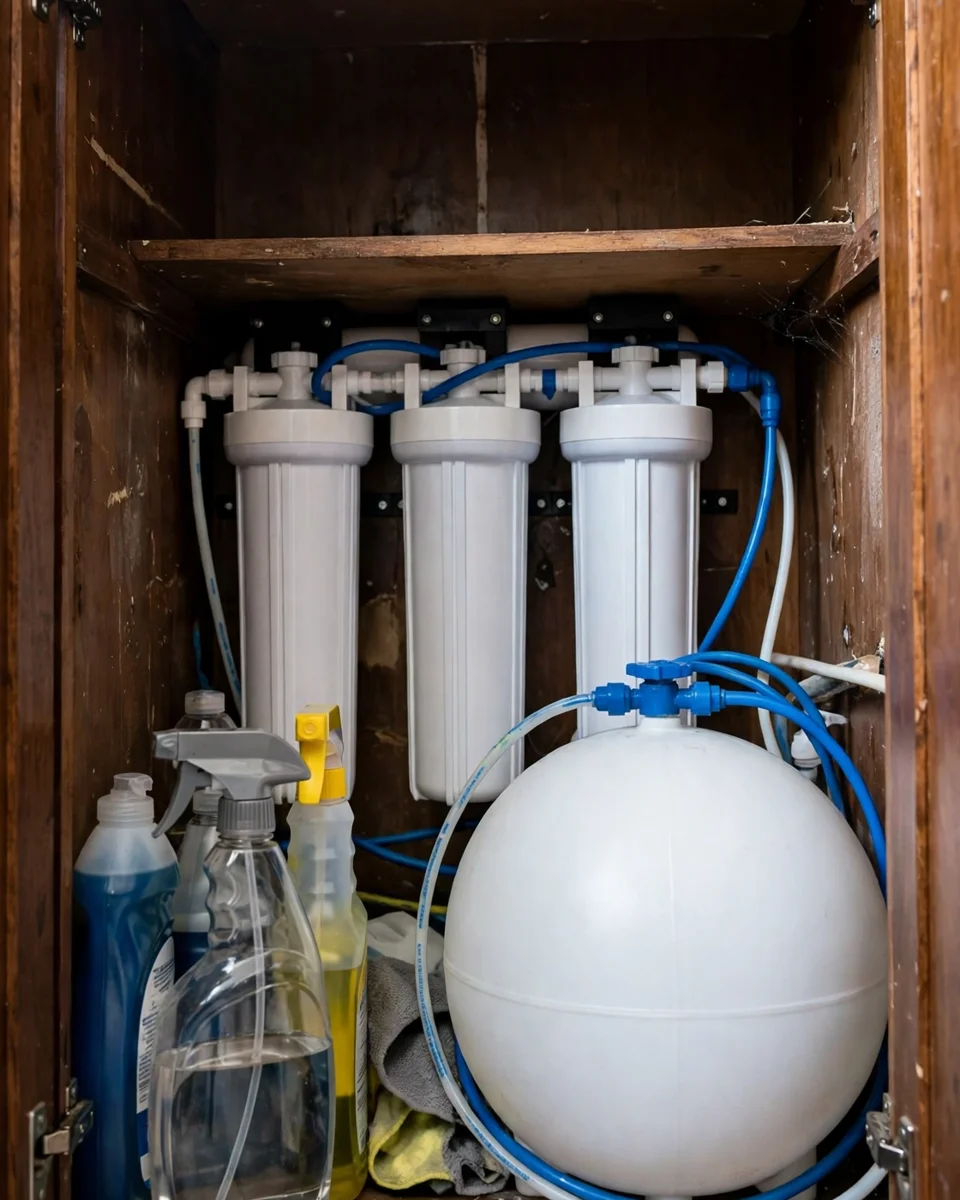
Under-sink RO is the cheaper long-term lane for homeowners: comparable systems often cost less upfront, their generic-format cartridges typically run less per year, and they filter far more water per day. The catch is everything the countertop design exists to avoid — drilling, plumbing, a cabinet surrendered to a tank, and a landlord’s permission you may not have. Pitchers invert the math entirely: the pitcher costs almost nothing, but you pay per gallon forever. Our head-to-head AquaTru vs Brita cost per year comparison works that lane in detail; the short version is that at family-level drinking volumes, pitcher cartridges rival or exceed countertop RO’s yearly filter bill while delivering carbon filtration rather than membrane filtration.
Where countertop RO wins on cost
- Zero installation spend — no plumber, no drilling, no parts.
- Renters keep the asset: the machine moves house with you (see our countertop filters for renters picks), so the five-year math survives a move.
- Predictable, calendar-based filter costs — three known prices, no surprises.
- Nothing spent on a home you do not own.
Where it loses
- Proprietary cartridges: you buy the manufacturer’s filters at the manufacturer’s price, forever.
- Higher five-year total than a comparable under-sink system.
- Small daily volume — heavy cooking and drinking households refill often.
- Electricity and reject water are small but real, and not counted in the totals above.
If you are choosing inside the category rather than between categories, the no-installation countertop filter roundup and our portable RO picks compare models on exactly this total-cost basis.
Conclusion
A countertop RO costs about $350–375 to start and roughly $130–170 a year to feed — call it $155 a year annualized on an AquaTru-style schedule, and about $1,150 across five years with the machine included. That is more than the sticker suggests and less than the pitcher habit quietly charges heavy drinkers. Run any model you are considering through the same three-line table — combo, finishing filter, membrane — before you buy the machine, because over five years, the filters are the purchase.
Update log
October 2026: Article published; cartridge prices and lifespans per manufacturer listings (AquaTru combo ~$29.99 / 6 months, VOC ~$69.99 / 1 year, membrane ~$49.99 / 2 years); multi-year totals are annualized estimates, not guarantees — verify current pricing before purchasing.
FAQs
How much does a countertop RO cost per year?
About $130–170 a year in filters at manufacturer list prices for an AquaTru-style unit — roughly $155 annualized: ~$60 for the twice-yearly pre-filter/carbon combo, ~$70 for the yearly VOC carbon filter, and ~$25 a year for the membrane spread over its two-year life. Add the machine itself (~$350–375) in year one.
What is the 5-year cost of owning a countertop RO?
Roughly $1,100–1,200 as an estimate: a ~$375 machine plus five years of filters at about $155 a year. The machine ends up being only about a third of the five-year spend, which is why comparing cartridge prices matters more than comparing unit prices.
Which countertop RO filter costs the most to replace?
On an AquaTru schedule, the VOC carbon filter is the biggest annual line item at about $69.99 once a year. The RO membrane sounds like the expensive part but annualizes to only about $25 a year because it lasts roughly two years. The pre-filter/carbon combo is the quiet one — only ~$29.99, but twice a year.
Is countertop RO cheaper than bottled water?
For most households, comfortably. A family buying bottled water by the case typically spends several hundred dollars a year; the countertop RO’s all-in cost works out near $230 a year averaged over five years, and it filters far more than drinking water alone. Light bottled-water buyers should run their own receipts against the $155 filter figure before assuming.
Can I use cheaper third-party filters in a countertop RO?
Sometimes — compatibles exist for popular models and can trim the yearly bill. The caveats are fit (tankless units are picky about cartridge dimensions and seals) and certification: any contaminant-reduction claim on the original applies to the manufacturer’s cartridge, so a generic swap can quietly change what the system is certified to do. Price the saving honestly against that trade.
Do countertop RO systems waste much water or electricity?
Both are modest. Tankless countertop units reject a portion of each tank as concentrate — you empty it, typically onto plants or down the drain — and the pump draws small amounts of power only while filtering. Neither cost is in the totals in this article; for most homes together they add up to a few dollars a year, not a line item that changes the comparison.