Do Fridge Filters Remove PFAS (2026): What the Evidence Says
Guide
The question sounds like it should have a product answer — this cartridge yes, that one no. For PFAS it mostly has a paperwork answer. PFAS are regulated in parts per trillion, a scale no home gadget can measure, which means the only evidence that any filter touches them is a certification test done in a laboratory, on that exact model, under a protocol written for PFAS. Open the listings for the cartridges in most American refrigerators and that protocol simply is not there.
The short answer: for nearly every refrigerator cartridge on the market, there is no PFAS claim at all — no listing, no test, no verified reduction. One mainstream exception exists: GE’s XWFE line carries the NSF/ANSI P473 listing, the PFOA/PFOS protocol, alongside its 42/53/401 certifications. Everything else has to be judged by the same rule — if the specific model has no PFAS listing, the honest answer is that nobody has verified it does anything.
Table of Contents
Quick verdict
Do not buy a refrigerator filter for PFAS unless it is the GE line with the P473 listing — and even then, understand you are buying one tested protocol for two compounds (PFOA and PFOS), not a blanket promise about the thousands of chemicals in the PFAS family. For every other fridge cartridge, the carbon inside may adsorb some PFAS, the way carbon does, but “may, some, unmeasured” is not a health claim. If PFAS in your water is a confirmed concern, the verified tools are reverse osmosis certified under NSF/ANSI 58 and carbon systems carrying an explicit NSF/ANSI 53 PFAS claim — technologies built and tested for the job.
The direct answer
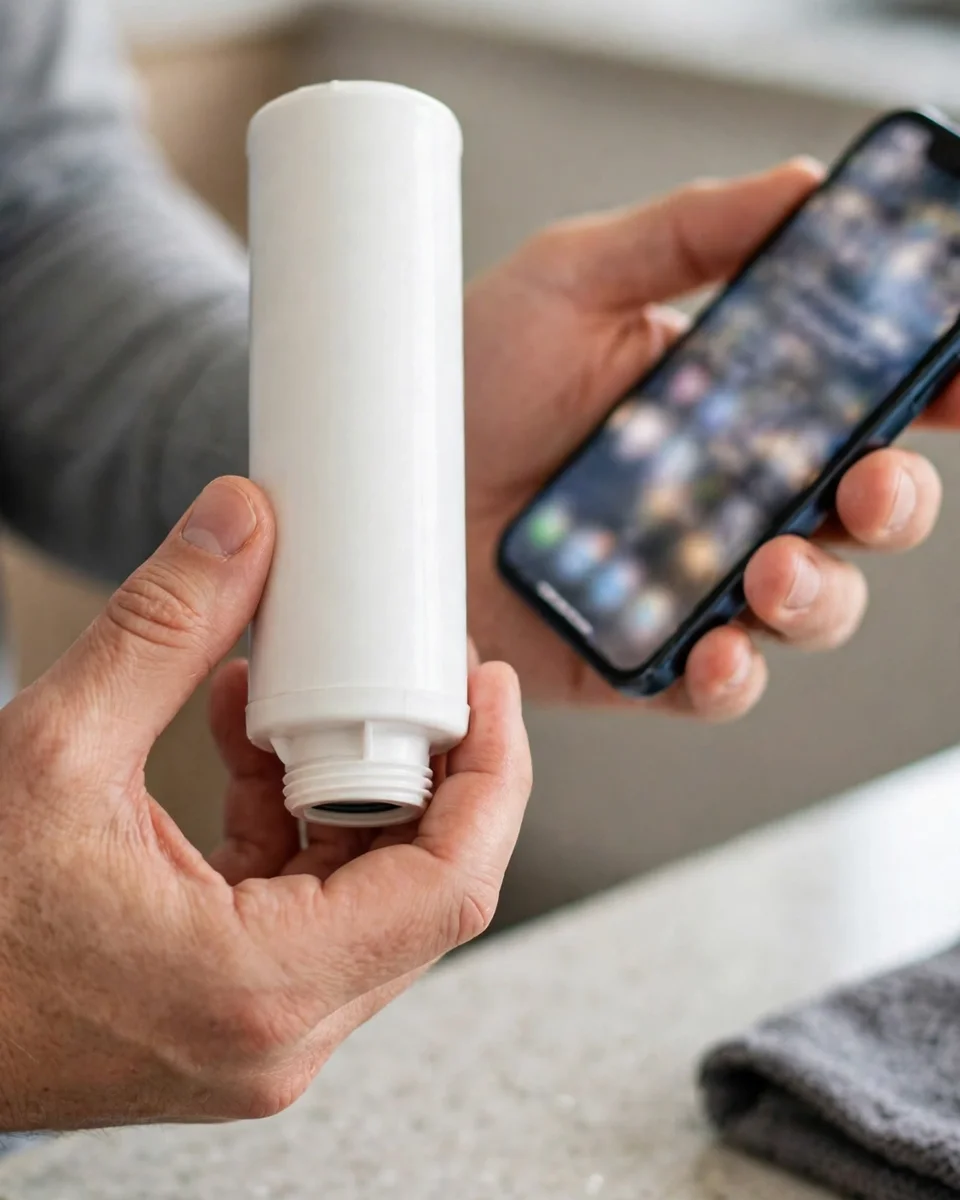
Work through the genuine line-up and the pattern is stark. Samsung’s DA29-00020B is certified to NSF/ANSI 42 only — taste, odor, chlorine — with no contaminant-reduction claims of this kind at all. The Frigidaire PureSource cartridges, LG’s LT1000P, and Whirlpool’s EveryDrop line carry the stronger 42/53/401 packages, which cover lead, cysts, and a list of chemicals and pharmaceuticals — but PFAS is not on those lists. Their certification documents name what was tested, and PFOA and PFOS were not in the test. Then there is the exception: GE’s XWFE (and the XWF generation before it) carries NSF/ANSI P473 in its listing set, the protocol written specifically for PFOA and PFOS reduction, next to its 42/53/401 certifications.
That is the entire landscape. One model line with a PFAS protocol, everyone else without one. Marketing language blurs it — “advanced filtration,” “reduces emerging contaminants,” packaging art of water droplets — but the listings are public documents, and they are where the answer lives.
The certification that proves it
PFAS reduction claims attach to a product in two ways. The dedicated route is NSF/ANSI P473, a protocol that challenges the filter with PFOA and PFOS at defined concentrations and measures what comes out. The second route is an NSF/ANSI 53 certification that explicitly includes a PFAS claim — the standard’s newer editions allow it, and products (more often dedicated under-sink and countertop systems than fridge cartridges) are listed with “PFAS” or the specific compounds named. What does not count: an NSF/ANSI 42 listing (aesthetic effects only), a 53 listing whose claim list stops at lead and cysts, or a 401 listing covering pharmaceuticals and pesticides. Each certificate is a menu of tested claims, and PFAS is only real when it appears on the menu by name.
This is the same discipline that applies to every contaminant question in this series — our guide to NSF 53 certified fridge filters walks through how to read a listing line by line and spot the gap between the logo on the box and the claims on the certificate. For PFAS the reading takes ten seconds: search the listing for P473, or for PFOA/PFOS named under 53. Absent both, the conversation is over.
What the science says

The chemistry explains both the hope and the problem. Activated carbon — the working ingredient in every fridge cartridge — genuinely does adsorb many PFAS compounds, especially the long-chain ones like PFOA and PFOS. That is why certified PFAS products are usually carbon products. But adsorption in principle is not performance in a cartridge: how much is captured depends on the carbon’s quality and quantity, the contact time as water passes (a fridge cartridge gives it seconds), which specific compounds are present — short-chain PFAS adsorb noticeably less well — and how exhausted the carbon already is. Performance also falls off a cliff as the carbon fills: a cartridge can perform on day one and pass PFAS freely by month five, with no change in taste to warn you.
And there is no way to check at home. The EPA’s 2024 drinking-water limits set PFOA and PFOS at 4.0 parts per trillion each; measuring anywhere near that takes laboratory mass spectrometry. No strip, meter, or TDS reading resolves parts per trillion — a TDS meter cannot detect PFAS at any concentration, since it reads dissolved salts, not specific molecules. That is precisely why the certification listing carries the whole evidentiary weight for this contaminant: it is the only measurement that exists.
What counts as evidence
- An NSF/ANSI P473 listing naming PFOA/PFOS, on the exact model — the protocol written for this job.
- An NSF/ANSI 53 listing that names PFAS or the specific compounds among its claims.
- A certified lab test of your own water, before and after the filter, if you need household-level proof.
What does not
- “Reduces emerging contaminants” or NSF/ANSI 401 alone — that menu covers pharmaceuticals and pesticides, not PFAS.
- The fact that the cartridge contains activated carbon — the ingredient is capable; the product’s performance is unmeasured.
- Removal percentages quoted for other products, other studies, or a brand’s pitcher line — none of it transfers to your cartridge.
- A TDS reading that drops — PFAS does not register on a TDS meter in either direction.
Better options if PFAS is the worry
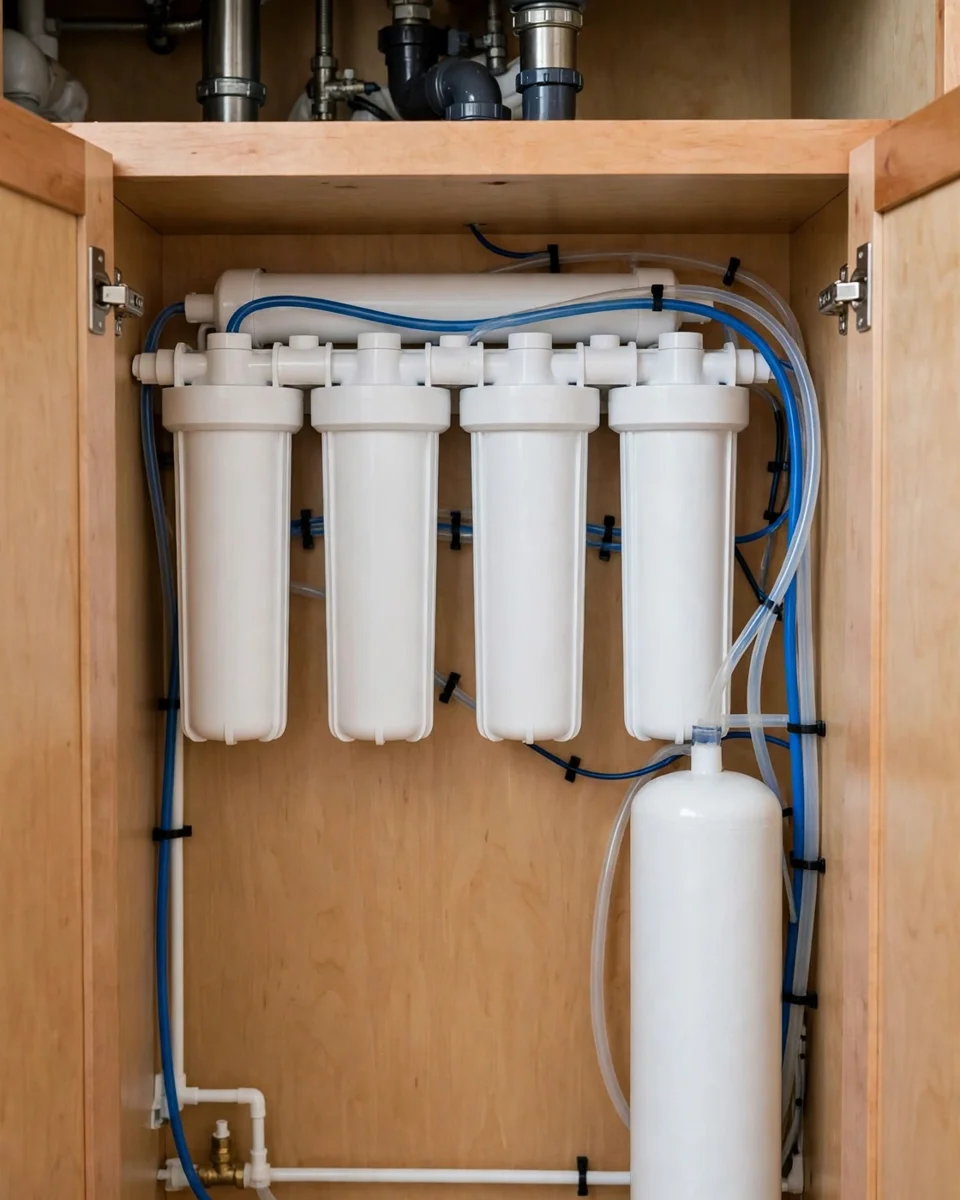
If a lab test or your utility’s reporting puts PFAS in your water at levels you want addressed, step up a category rather than sideways. Reverse osmosis certified under NSF/ANSI 58 is the most established household route — the membrane rejects the great majority of dissolved PFAS, and certified systems carry the claim in writing. Dedicated carbon systems with an explicit NSF/ANSI 53 PFAS claim — larger under-sink units with far more carbon and contact time than a fridge cartridge — are the second verified lane. Either way, the routine is the same as it is for the GE exception: confirm the listing on the specific model before you pay, and change cartridges on schedule, because exhausted carbon quietly stops performing long before it stops flowing. For PFAS, the listing is the whole game. The companion question — do refrigerator water filters remove lead — has a happier answer for most brands, and it is decided by the same listings.
Conclusion
Do fridge filters remove PFAS? For the one GE line carrying the P473 protocol, there is certified evidence for PFOA and PFOS. For essentially every other refrigerator cartridge — 42-only models and 53/401 models alike — there is no PFAS claim, no PFAS test, and therefore no verified answer beyond “unproven.” The carbon inside them is capable chemistry trapped in an unmeasured product, at a contaminant scale no home tool can check. Treat the listing as the product: when PFAS is the concern, buy the paper, not the plastic.
Update log
October 2026: Article published. Certification details reflect the listings on record for each genuine model line (NSF/IAPMO databases); no removal percentages are quoted for any consumer filter, because none are published for these cartridges in their certification listings.
FAQs
Does the GE XWFE really remove PFAS?
It is the one mainstream fridge cartridge line with a PFAS protocol in its certification set: NSF/ANSI P473, which tests PFOA and PFOS reduction, alongside its 42/53/401 listings. That is a real, verifiable claim — for those two compounds, on that model, changed on schedule. It is not a blanket claim about every PFAS compound, and it does not extend to other GE-style cartridges or compatibles without the same listing.
My filter is NSF 401 certified — doesn’t that cover PFAS?
No. NSF/ANSI 401 covers what the standard calls emerging contaminants and incidental compounds: certain pharmaceuticals, herbicides, pesticides, and chemicals like BPA. PFAS is not among its claims. A 401 listing says the cartridge was tested against that menu and passed; it says nothing about PFOA, PFOS, or any other PFAS compound.
Activated carbon removes PFAS — so my carbon cartridge must help, right?
The chemistry is real and the conclusion does not follow. Carbon can adsorb PFAS, but how much a specific small cartridge captures — across compounds, flow rates, and six months of exhaustion — is unmeasured until someone tests that product under a protocol. Plenty of capable ingredients sit in products that perform poorly. For a contaminant you cannot taste, see, or measure at home, unmeasured performance is not protection you can count.
Can I test my filtered water for PFAS myself?
Only by sending it to a laboratory. PFAS is regulated at parts per trillion — the EPA’s 2024 limits for PFOA and PFOS are 4.0 ppt — and measurement at that scale requires LC-MS analysis under methods like EPA 533 or 537.1, typically a few hundred dollars per sample. There is no strip, drop kit, or meter for it. If household-level proof matters, a before-and-after lab panel on your fridge’s output is the only honest version.
Are compatible fridge cartridges any better for PFAS?
No — the certification gap runs the other way. Mainstream compatibles typically certify to NSF/ANSI 42 at best, and none certify to 53, 401, or P473. For chlorine and taste that trade-off may be acceptable; for PFAS it means there is not even a manufacturer’s claim on record, let alone a tested one.
What is the best filter type for PFAS in drinking water?
The two verified household routes are reverse osmosis certified under NSF/ANSI 58 and carbon systems carrying an explicit NSF/ANSI 53 PFAS claim. Both are tested under protocols that name the compounds. Choose between them on budget, space, and water waste (RO sends some water to drain) — but choose the model by its listing, and keep up with cartridge changes, because PFAS performance is the first thing exhausted media loses.