iSpring RCC7P vs RCC7AK (2026): Which Should You Buy?
You are comparing two iSpring models and the letters are doing all the confusing. The RCC7P and the RCC7AK look nearly identical under the sink — same family, same 75 gallons per day, same white housings and blue tank. But that one-letter difference hides two completely different products: the P packs a booster pump for homes with low water pressure, while the AK adds an alkaline remineralization stage for better-tasting water. Pick the wrong letter and you pay for a feature you do not need — or miss the one you do.
Here is the short answer. Measure your feed water pressure first — it makes the choice for you. Below about 40 psi (common with wells and rural supplies), the RCC7P is the right buy: its pump boosts pressure to 70–80 psi so the membrane works properly and the tank fills faster. If your pressure is fine but you dislike the flat taste of RO water, the RCC7AK is the right buy: its sixth stage adds minerals back for a more natural taste.
The booster-pump model
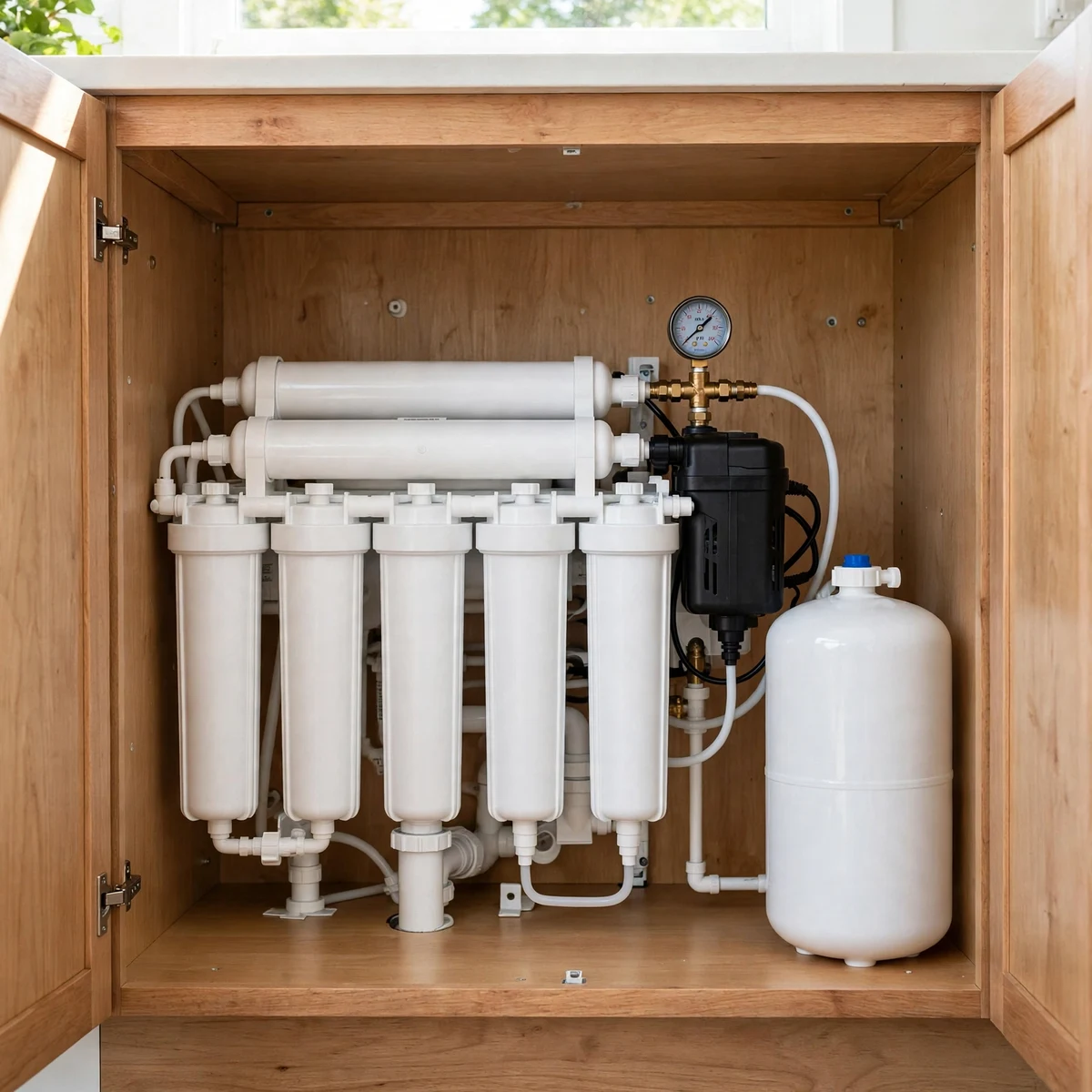
iSpring RCC7P
~$290–390
Built-in booster pump boosts low feed pressure to 70–80 psi — the only one of the two that works properly below ~40 psi.
Top pick for most homes
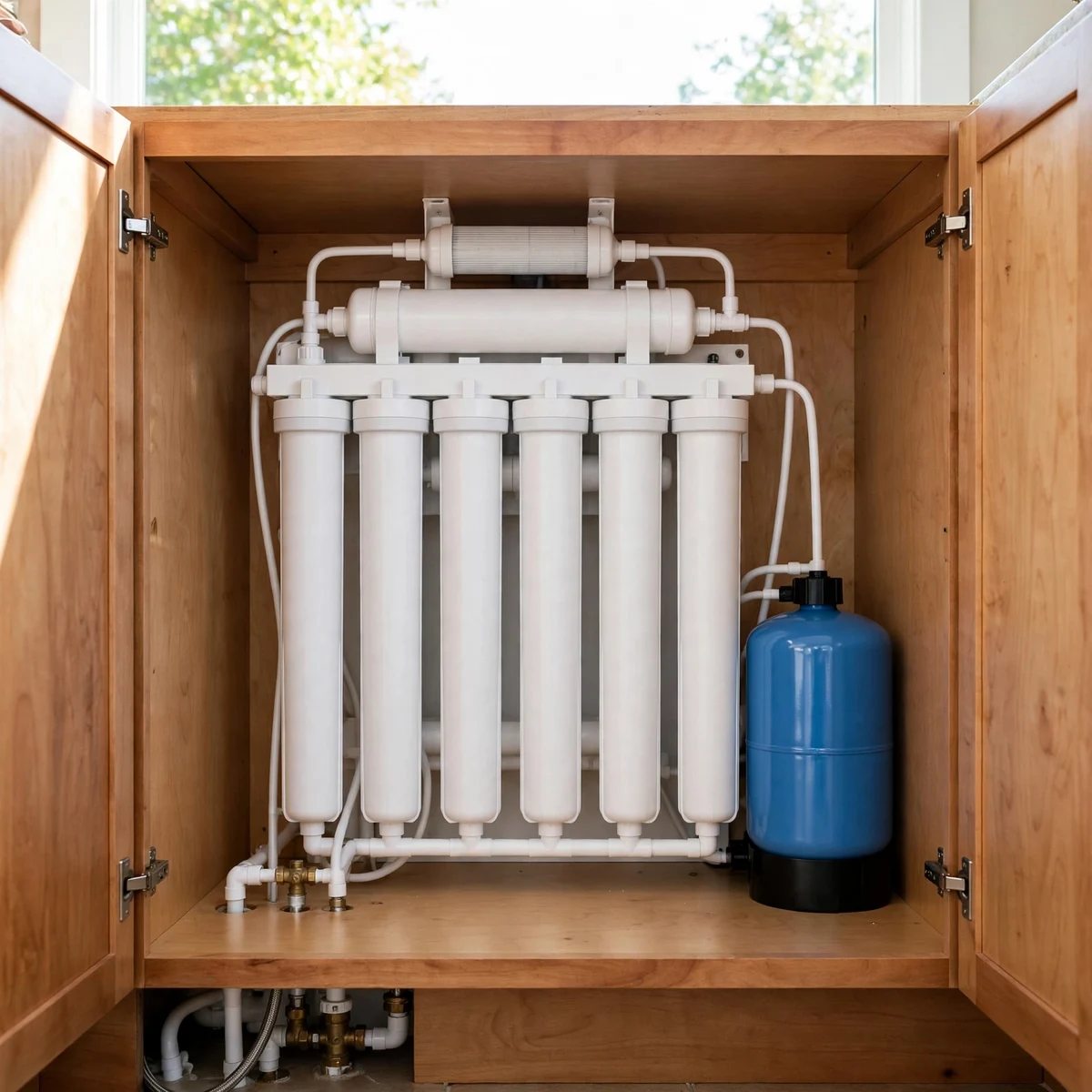
iSpring RCC7AK
~$230–280
Sixth-stage alkaline remineralization restores minerals for fuller, more natural-tasting water — and it needs no electricity.
The bottom line: these are answers to two different questions. The RCC7P answers “my water pressure is too low for RO to work properly” with a built-in booster pump. The RCC7AK answers “I want RO-pure water that doesn’t taste flat” with an alkaline remineralization stage. The 5-stage RO core is identical — the difference is entirely in the extras.
Verdict: low feed pressure (below ~40 psi) → RCC7P. Adequate pressure + a taste preference → RCC7AK. Want both? The combined RCC7P-AK model exists.
Price checked at time of writing; it changes often — see the live price before you buy.
Table of Contents
Side-by-side comparison
Both start from the same place: a 5-stage RO core (sediment, two carbon stages, the membrane, a post-carbon polish), 75 GPD, and a 3.2-gallon tank. Everything that matters for filtration is identical — the split is the pump versus the sixth stage.
| Feature | RCC7P | RCC7AK ★ Winner |
|---|---|---|
| Stages | 5 | 6 (adds alkaline remineralization) |
| Daily output | 75 GPD | 75 GPD |
| Storage tank | 3.2 gallons, pressurized | 3.2 gallons, pressurized |
| Signature feature | Built-in booster pump | Alkaline remineralization filter |
| Feed pressure needed | Works from ~30 psi up (pump boosts to 70–80 psi) | Needs ~40+ psi feed pressure |
| Electricity | Yes — pump needs an outlet under the sink | No — fully passive |
| Wastewater ratio | Lower — pump cuts waste up to ~50% (brand-stated) | ~3:1, standard for tank systems |
| Water taste | Classic flat RO taste | Richer, more natural taste (minerals restored) |
| Certifications | NSF/ANSI 58, brand-stated (WQA) | NSF/ANSI 58, brand-stated (WQA) |
| Typical street price | ~$290–390 (estimate) | ~$230–290 (estimate) |
| Best for | Well/rural homes with low feed pressure | City homes that want better-tasting RO water |
iSpring RCC7P — the booster-pump model
RO membranes need pressure to do their job — and when feed pressure is low, rejection drops, the tank fills slowly, and more water goes down the drain. The RCC7P’s answer is a built-in booster pump with pressure sensors: below about 40 psi feed pressure, it boosts to roughly 70–80 psi and shuts off when the tank is full. Think of it as the standard 5-stage RCC7 with a pump added — same filters, same membrane, same tank.

Pros
- Fixes low-pressure homes — the only one of the two that works properly below ~40 psi feed pressure.
- Faster tank refills — owners report the tank filling noticeably faster with the pump, and the brand claims up to ~50% faster production.
- Less wastewater — higher pressure means more water through the membrane, cutting waste by up to ~50% per the brand’s figures.
- Quiet operation — the pump runs only while producing water and owners consistently describe it as barely audible over normal kitchen noise.
Cons
- Needs a power outlet — no outlet under the sink means an electrician or an extension compromise.
- More parts, more complexity — the pump and its sensors are another thing that can eventually fail.
- Flat RO taste — with no remineralization stage, the water tastes like standard RO: clean but “empty.”
- Higher upfront cost — typically ~$60–100 more than the RCC7AK at street prices.
On wastewater: a standard tank RO system sends roughly 3 gallons down the drain per gallon of drinking water; the pump’s higher pressure shrinks that ratio. Our tank vs tankless RO comparison breaks down waste ratios across system types.
Price checked at time of writing; it changes often — see the live price before you buy.
iSpring RCC7AK — the alkaline model
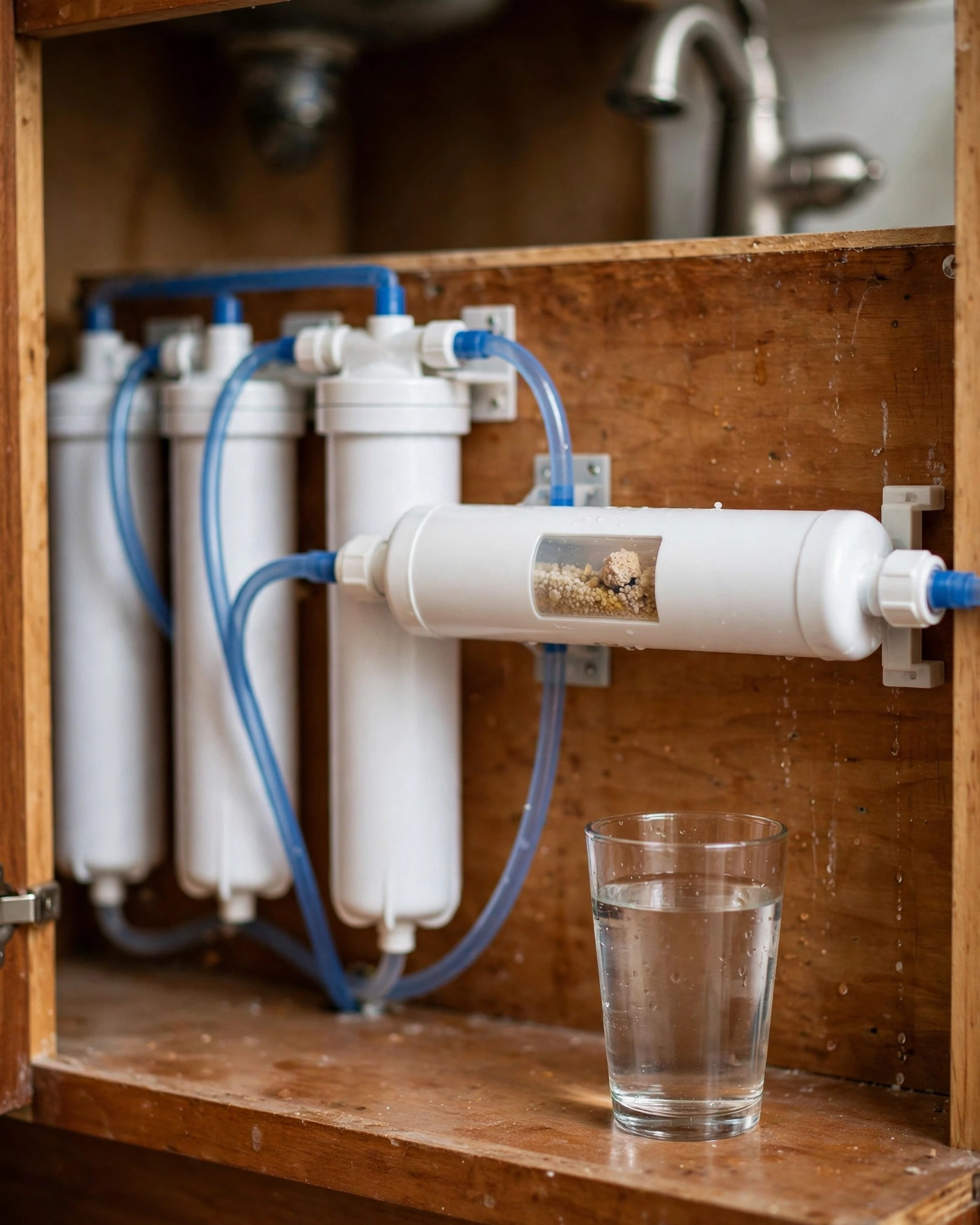
The RCC7AK is the same 5-stage core plus a sixth stage: an inline alkaline filter with mineral stones and calcite. After the membrane strips the water, this stage restores some minerals and nudges pH to roughly 7.0–7.5 (brand-stated). The point is taste, not nutrition — owners consistently describe the AK’s output as fuller and more spring-like than flat RO water. No electricity, no extra moving parts.
Pros
- Better-tasting water — the most consistently praised difference in owner reviews; no more flat RO taste.
- No electricity needed — fully passive system; works under any sink with adequate water pressure.
- Strong independent test results — TechGearLab’s lab testing scored it 91 overall, with 9.8/10 on lead and metals and top marks on microplastics.
- Lower upfront price — typically the cheaper of the two to buy.
Cons
- No help for low pressure — if your feed pressure is below ~40 psi, this system underperforms; you need the pump model.
- One more cartridge to replace — the alkaline stage is a yearly consumable (~$19, estimate).
- Slightly bulkier — the sixth stage takes a bit more cabinet space.
- Taste is subjective — some people genuinely prefer the neutral taste of plain RO water.
If you are weighing the AK against the plain base model instead of the pump model, our RCC7 vs RCC7AK breakdown covers that matchup directly. And if you are cross-shopping brands rather than iSpring models, see our iSpring RCC7 vs APEC ROES-50 comparison.
Price checked at time of writing; it changes often — see the live price before you buy.
Certifications
Both carry iSpring’s brand-stated NSF/ANSI 58 certification — the point-of-use RO standard — via the WQA Gold Seal program. iSpring’s owner’s manual lists the RCC7 and RCC7P as certified for the specific performance claims verified by test data; the RCC7AK is marketed under the same certification.
Two pieces of fine print matter. First, certification scope depends on the exact model suffix: a 2026 check of the public NSF database found the -BN (brushed nickel) and -BLK (black) faucet variants of the RCC7AK listed for nine claims including lead and fluoride reduction, while the plain RCC7AK listing is narrower, covering TDS reduction. Always look up your exact model suffix at info.nsf.org before relying on a specific claim.
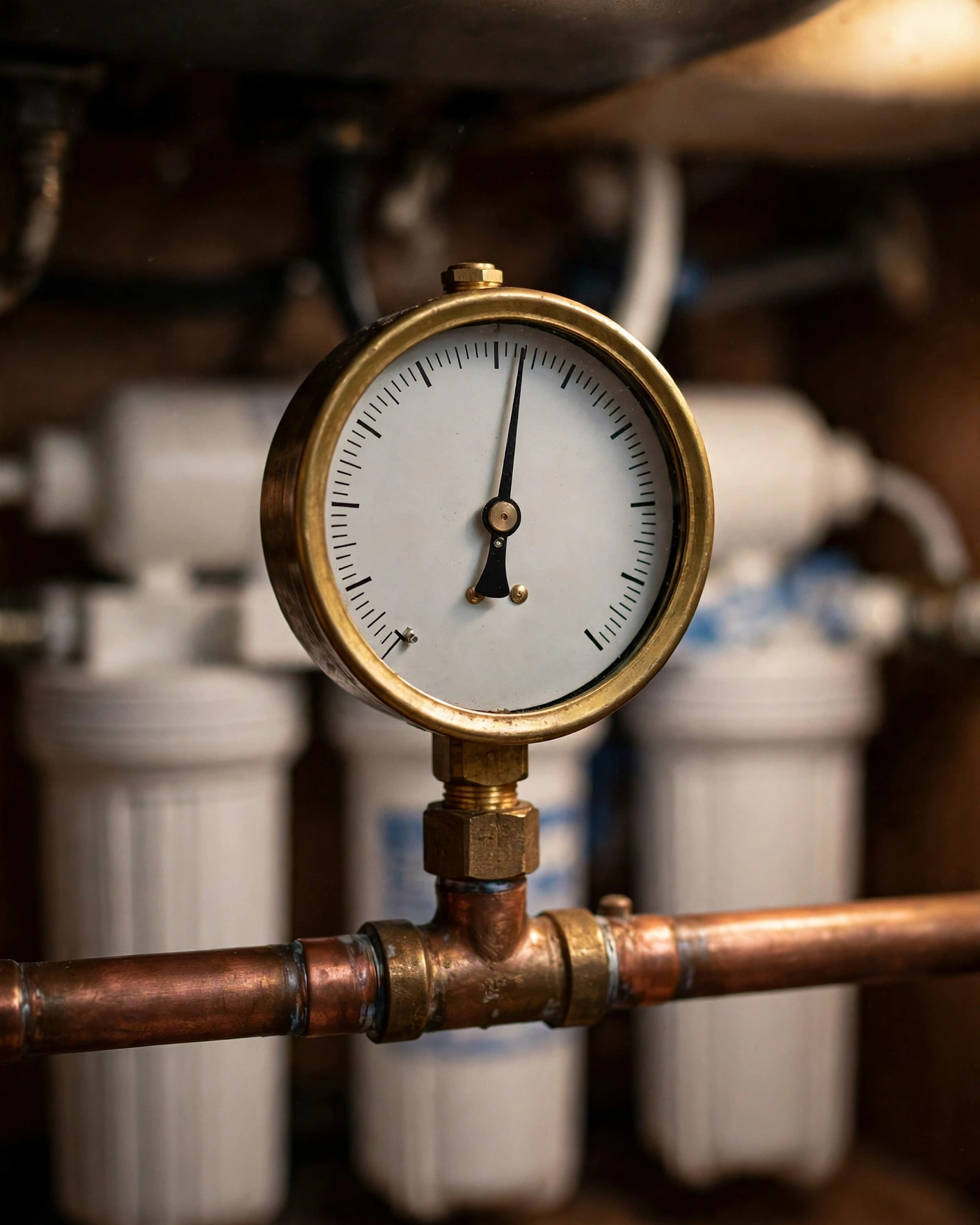
Second, certification testing assumes specified test conditions — including pressure. In a very-low-pressure home, a non-pump system may not reproduce its certified rejection rates, which is the technical case for the RCC7P beyond mere convenience.
One more framing point: the remineralization stage is a taste feature, not a health feature. It fixes the flat taste of mineral-stripped water; it does not turn the water into a meaningful mineral source — food dwarfs water as a source of dietary minerals. No credible evidence supports health claims for alkaline remineralization, and we do not repeat them.
Certification claims here are brand-stated — we researched and compared published materials but did not independently query the NSF database for this article. “Brand-stated” is not a downgrade; it is the honest label. Verify your exact model suffix at info.nsf.org before relying on any specific contaminant claim.
Cost per year
The sticker price is the least important number on this page. What matters is the yearly cost of running the thing, because RO systems are a subscription you pay in filter cartridges:

| Item | RCC7P | RCC7AK |
|---|---|---|
| System price (upfront) | ~$290–390 | ~$230–290 |
| 1-year filter pack | ~$40–80 (F7-GAC pack) | ~$81 (F9K pack) |
| RO membrane (every 2–3 yrs) | ~$43 | ~$43 |
| Alkaline stage (yearly) | — | ~$19 |
| Approx. yearly running cost | ~$60–100 | ~$110–125 |
Two things jump out. First, the RCC7AK is cheaper to buy but slightly more expensive to run — that yearly alkaline stage adds up. Second, neither system is expensive to own: $60–125 a year in consumables is a few weeks of bottled water. The pump’s electricity use is negligible — it runs only while the tank refills.
For how these numbers compare across the whole category, see our RO system yearly cost guide.
Owner voices
RCC7AK owners keep coming back to taste. The recurring theme across retailer reviews is the sixth stage: owners switching from plain RO describe noticeably fuller, more natural-tasting water, and the system carries roughly 21,600 Amazon ratings at about 4.6 stars. One Tractor Supply reviewer who upgraded from an older RCC7 called the remineralization addition the upgrade worth making.
RCC7P owners keep coming back to the pump. Consistent themes: dramatically faster tank refills, a pump that is effectively silent during normal kitchen activity, and an install most DIYers finish in about an hour thanks to color-coded tubing. iSpring’s customer support comes up repeatedly across both models — including the widely circulated story of a support rep shipping a free replacement for a decade-old leaking unit.
The complaint threads are honest and worth knowing. On the RCC7P: you need a power outlet under the sink — a real project if you don’t have one — and the pump adds parts to eventually service. On the RCC7AK: the alkaline stage is a yearly consumable some buyers forget to budget for, and prefilters clog faster than rated in hard-water areas. Normal friction for under-sink RO ownership, not deal-breakers.
Which should you buy?
The honest answer starts at your water meter, not the product page:
Buy the RCC7P if
- Your feed water pressure is below ~40 psi — well water, rural supplies, or weak municipal pressure. This is the only one of the two built for your situation.
- You want faster tank refills and less wastewater — the pump delivers both.
- You have (or can add) a power outlet under the sink.
Buy the RCC7AK if
- Your feed pressure is adequate (40+ psi) — the case for most city homes — and you want better-tasting RO water.
- You want no electricity, no moving parts beyond the base system.
- You prefer the lower upfront price and don’t mind the yearly alkaline cartridge.
Consider the plain RCC7 if
- Your pressure is fine and you don’t care about the alkaline taste difference — it’s the same RO core for less money.
Want both features? The combined RCC7P-AK exists — 6-stage alkaline filtration with the booster pump, typically around $370 at major retailers (estimate). It costs more than either model alone, but it’s the honest answer for a low-pressure home that also wants remineralized taste.
For the wider field beyond these two iSpring models, our best reverse osmosis systems roundup compares the RCC7 family against the rest of the category.
Price checked at time of writing; it changes often — see the live price before you buy.
Price checked at time of writing; it changes often — see the live price before you buy.
FAQs
Is the RCC7P the same as the RCC7AK?
No — they solve different problems. The RCC7P is a 5-stage RO system with a built-in booster pump for homes with low feed water pressure (below ~40 psi). The RCC7AK is a 6-stage RO system with an alkaline remineralization filter for better-tasting water, and it needs adequate feed pressure to work properly. Don’t confuse either with the RCC7P-AK, which is a separate model combining both features.
How do I know if my water pressure is too low for an RO system?
Screw a water pressure gauge (a few dollars at any hardware store) onto an outdoor spigot or laundry tap and read it with no water running elsewhere. Below ~40 psi, a standard RO system underperforms — slow fills, weaker rejection, more wastewater. That’s what the RCC7P’s booster pump is built for. Most city homes measure 40–80 psi and don’t need the pump.
Does the alkaline filter make the water healthier?
No credible evidence supports health claims for alkaline remineralization, and we don’t repeat them. The stage adds minerals back after the membrane strips them, fixing the flat taste of pure RO water. Treat it as a taste feature — food dwarfs water as a source of dietary minerals.
Can I add an alkaline filter to the RCC7P later?
Yes — iSpring sells inline alkaline filters as separate parts. Booster pumps are also sold separately, but retrofitting either costs more in parts and effort than buying the model that already has it. If you know you want both, the factory-built RCC7P-AK is the simpler path.
Does the RCC7P need electricity?
Yes. The booster pump needs a standard power outlet under the sink. It draws little power and runs only while the tank is refilling — pressure sensors switch it on when feed pressure drops and off when the tank is full. Owners consistently report it as barely audible over normal kitchen noise.
Which one is cheaper to own over time?
The RCC7AK is cheaper to buy but slightly more expensive to run: roughly $110–125/year in filters including the alkaline stage, versus roughly $60–100/year for the RCC7P (all estimates). Over five years the difference is a few hundred dollars — small compared to picking the wrong system for your water pressure.
Do I need the pump if I’m on city water?
Usually not. Most municipal supplies deliver 40–80 psi, which is plenty for the RCC7AK or the plain RCC7. The pump earns its keep in well-water and rural homes where feed pressure drops below ~40 psi. When in doubt, measure your pressure with a screw-on gauge before you buy — it’s a five-minute check that settles the whole comparison.
Conclusion
The RCC7P vs RCC7AK question looks confusing and isn’t. One model fixes low water pressure; the other fixes flat-tasting RO water. Check your feed pressure — below ~40 psi, buy the RCC7P; adequate pressure with a taste preference, buy the RCC7AK; want both, look at the RCC7P-AK. Everything else — the 75 GPD membrane, the 3.2-gallon tank, the filters, the brand-stated NSF/ANSI 58 certification — is shared. Make the decision on the one thing that actually differs, and you can’t go wrong.
Price checked at time of writing; it changes often — see the live price before you buy.
Update log
- Zulqarnain: Review published.