

Why Is My Berkey So Slow? (2026): Fixes That Work
Guide
It rarely happens overnight. The top chamber takes a little longer this month than last, the glass fills a little slower, and one morning you realize the system that used to filter a full chamber by breakfast now needs until lunch. Slow flow is the most common complaint gravity filter owners ever have — and the most misdiagnosed, because the instinct is to price replacement elements when the actual cause is usually a film on the elements’ surface that ten minutes and a scouring pad would have removed.
The short answer: work the ladder in order — check the free causes first (low upper chamber, spigot airlock), then re-prime, then scrub the elements under running water, and only then think about replacements. In practice, the scrub restores the great majority of “dead” systems, because flow dies from the outside in: sediment and mineral film seal the surface long before the media inside is spent.
Table of Contents
Quick verdict
Before spending anything, time the system honestly: fill the upper chamber fully (a half-full chamber has half the pressure and should run slow) and see how long a full cycle takes. If a full chamber drains at a reasonable pace, your system is healthy and your expectations were set by the top half of the cycle. If it crawls even full, run the fixes below in order — each is cheaper than the next, and stopping at the first one that works is the whole strategy. New owners whose systems were slow from day one should start at Fix 2 and our priming guide; that is almost certainly the skipped step.
Diagnose before you touch anything
Where the slowdown lives tells you where to work. Lower chamber fills slowly → the elements or the path into them (priming, surface film, sediment load). Lower chamber fills fine but the glass fills slowly → the spigot: airlock, a partially blocked outlet, or a washer swollen into the passage. One side fast, one side slow (systems with two elements) → compare the pair: the slow side’s element is the fouled or air-locked one. Everything slow since a move, a cleaning, or a dry spell → the elements dried out and took air back in; that is a re-prime, not a replacement. Write down which pattern you have before lifting a tool — half of troubleshooting is refusing to fix the wrong part.
Fix 1: the free checks
- Fill the upper chamber to the top. Gravity systems are pressure systems with a tiny pressure budget; the top few inches of water height do a disproportionate share of the pushing. A chamber habitually filled halfway filters at a crawl by design.
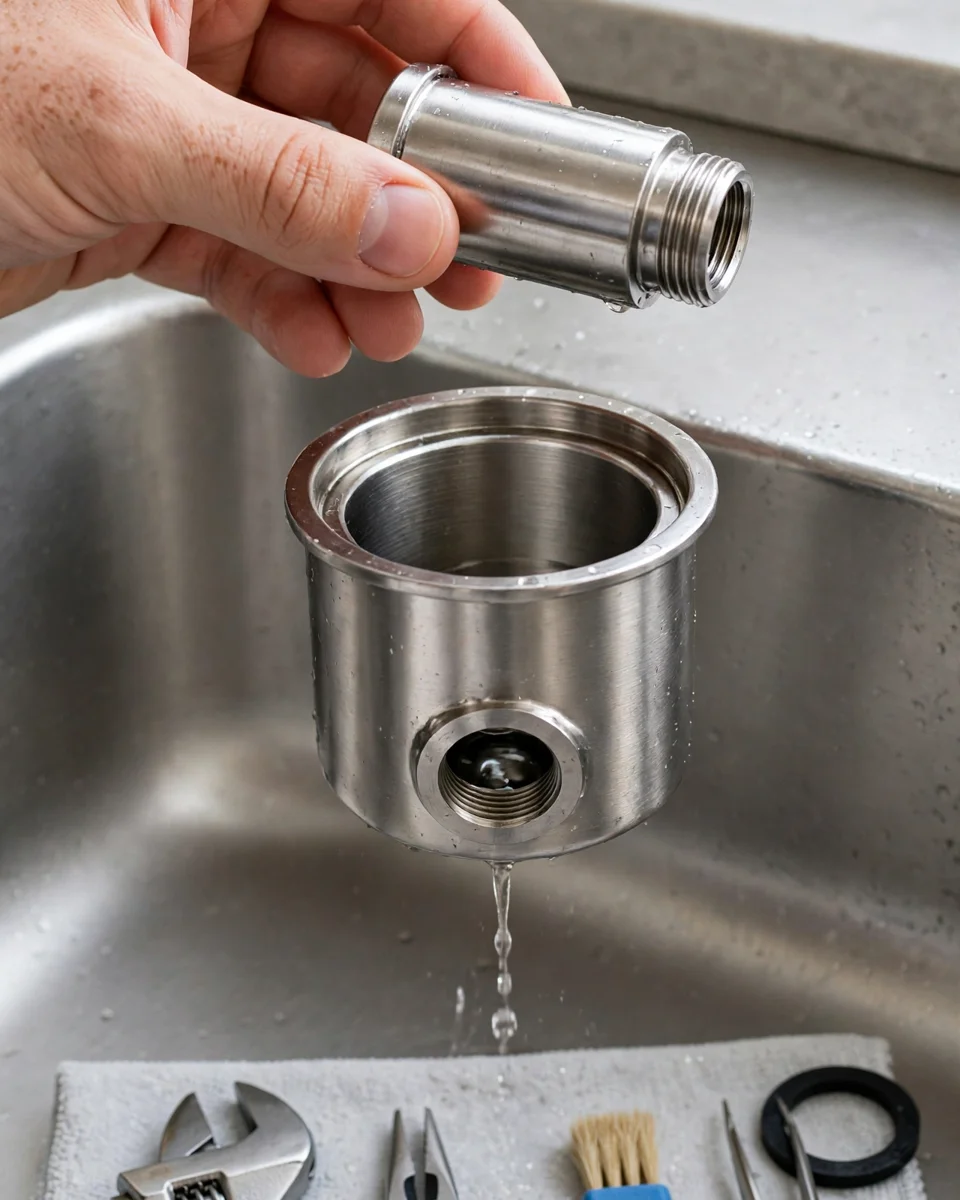
- Break the spigot airlock. Air trapped in the spigot body throttles the outlet. With the lower chamber full, open the spigot and tilt the unit gently, or remove the spigot (over a sink — the chamber drains), check the passage and washers for debris or a swollen washer intruding into the bore, reassemble, and retest.
- Check the vents and the lid. The upper chamber needs air to replace the water leaving it; a sealed-tight lid or blocked vent hole vacuum-locks the flow. Loosen the lid a quarter turn and see if the pace changes.
- Re-seat the elements. A wing nut that has crept loose lets water bypass rather than filter (fast but wrong) — while an element seated crooked can kink its washer into the hole and throttle it. Snug and straight is the target.
Fix 2: re-prime
Elements that have dried out — after a holiday, a move, a storage spell, or a long stretch where the system sat empty — take air back into their pores, and gravity cannot evict it. The fix is the original prime, repeated: washer on the stem, seal to the faucet, gentle pressure until the full surface sweats. It takes ten minutes for a pair and restores the “new filter” pace in systems whose elements are otherwise clean. If your system was slow from the day it arrived, this is not step two — it is the diagnosis: it was never primed, or primed halfway. Do the full sweat this time, per the priming walkthrough, and judge the system afterward.
Fix 3: scrub the elements
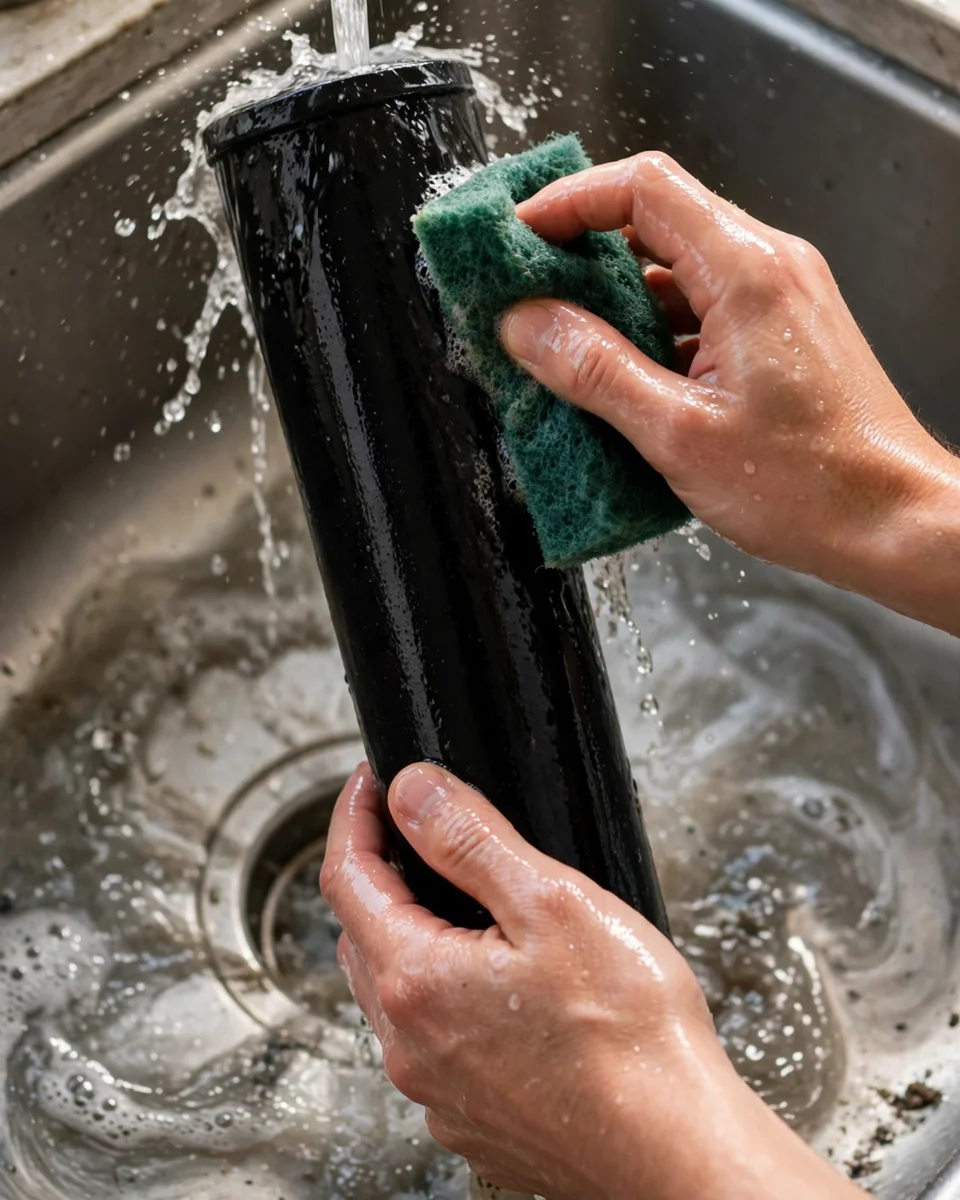
This is the fix that resurrects most systems, and it is the manufacturer’s own maintenance instruction — not a hack. Over months, the elements’ outer surface collects a film: fine sediment, mineral scale from hard water, and general particulates, compacted into a skin that seals the pores from outside. Remove the elements, and under running water scrub the entire surface firmly with a stiff scouring pad (the green Scotch-Brite style). You will see the rinse water run grey at first — that is the film leaving. Scrub until the runoff clears and the surface looks uniformly matte black again, rinse thoroughly, and — because scrubbing and handling partially disturb the prime — re-prime each element before reinstalling. Two rules the manufacturer is explicit about: never use soap or detergent on the elements (it ruins them), and scrub the outside only. Done right, flow typically returns to near-new; owners of hard-water or silty-well systems simply do this more often.
Fix 4: protect against sediment

If you are scrubbing every few weeks, the elements are not the problem — the water is. Gravity elements are finishers, not roughing filters: every visible particle you pour in lands on that surface film. Cheap defenses change the maintenance interval from weeks to seasons. Let silty water settle in a separate jug for a few hours and pour off the clear top. Pre-filter through cloth or a paper coffee filter for visibly dirty sources. On well water with chronic sediment, an inexpensive spin-down or cartridge sediment pre-filter on the supply line pays for itself in element life. And watch the add-on fluoride elements, if fitted: they are smaller, exhaust faster, and a spent add-on throttles the whole pair long before the main elements do — swapping or removing them is a legitimate diagnostic step.
When it really is time to replace
Keep maintaining if
- Scrubbing restores full flow — the media inside still has life; repeat as needed.
- The slowdown followed a dry spell, move, or cleaning — re-prime territory.
- Only the dispensing is slow while filtering is normal — spigot, not elements.
- The red dye test runs clear after maintenance — seals and elements are sound.
Replace if
- A scrub and full re-prime restore little or nothing, repeatedly — the pore structure itself is spent or fouled beyond the surface.
- The dye test runs pink after seals, washers, and plugs are verified — an element is compromised.
- An element is cracked, chipped, or its stem is damaged — mechanical failure, no fix exists.
- Taste or odor breaks through freshly scrubbed, properly primed elements — the adsorptive media is exhausted, whatever the flow says.
Conclusion
A slow Berkey is almost never a dead Berkey. The causes form a short, ordered list — low head pressure, spigot airlock, lost prime, surface film, sediment overload — and the fixes run from free to ten minutes to a scouring pad. Work them in order, scrub without soap, re-prime after scrubbing, and protect the elements from dirty water so you do it rarely. Reserve replacement money for the cases that actually call for it: a failed dye test, a cracked element, or a system that stays slow after everything above. That discipline is the difference between owning a gravity filter for a decade and buying one every year.
Update log
October 2026: Guide published; maintenance procedure (scrubbing with a scouring pad, no soap, re-priming) follows the manufacturer’s published element-care instructions.
FAQs
How fast should a Berkey filter, really?
With a full upper chamber and healthy primed elements, a typical two-element system filters on the order of a few gallons per hour at the start of a cycle, easing off as the level — and pressure — drops. Judge it by the full-chamber cycle, not by the last inch: every gravity system slows as it empties, by physics, not by fault.
How often will I need to scrub the elements?
It depends entirely on your water. On clean municipal water, many owners go a year or more between scrubbings; on silty well water it can be monthly without pre-filtration. Let the flow tell you — when a full chamber starts taking noticeably longer than it used to, that is the maintenance light coming on.
Does scrubbing wear out the elements?
The manufacturer designs for it: the outer layer is meant to be scrubbed to expose fresh surface, and the elements tolerate many cleaning cycles over their service life. What ruins elements is not scrubbing — it is soap, detergents, and letting them freeze or bake dry in harsh conditions. Scrub firmly, rinse well, never soap.
My Berkey was slow from the very first day. Why?
Almost certainly priming — skipped, or stopped at a half-sweat. New elements ship dry and air-locked, and gravity alone needs days to make headway against that. Prime each element at the faucet until the entire surface beads, keep them wet, and reinstall; the transformation is usually immediate and dramatic.
The water filters fine but pours slowly from the spigot. What is that?
A spigot-side problem, most often an airlock in the spigot body or a washer swollen into the passage. Remove the spigot over a sink, inspect and clear the bore, check the washers’ shape, reassemble, and tilt the unit while dispensing to burp trapped air. The elements are innocent in this one — do not scrub them for a plumbing symptom.
Can hard water slow a gravity filter down?
Yes — mineral scale is a major ingredient in the surface film that seals the pores, which is why hard-water households scrub more often. The scrub removes the scale layer and restores flow. A softener or pre-treatment upstream reduces how fast the film rebuilds, but the elements themselves are not harmed by hard water — just busier.