
Brita vs Clearly Filtered (2026): Which Should You Buy?
You want better water, and the internet keeps handing you two completely different answers. On one side: BRITA, the pitcher in every grocery store, cheap to run, certified for what it claims. On the other: CLEARLY FILTERED, the premium DTC pitcher that promises to strip out 365-plus contaminants — fluoride, PFAS, glyphosate — but costs several times more per year and takes about twelve minutes to fill. They do not compete on the same terms — which is exactly why the choice is so confusing.
Here is the short answer. BRITA is the certified, mass-market option: the ELITE filter (OB06) is WQA-listed to NSF/ANSI 42 and 53 including lead, lasts about 120 gallons per cartridge, and costs roughly $36–50 a year to run (estimates). CLEARLY FILTERED is the premium challenger: certified only to NSF/ANSI 42 and 372, broader claims resting on brand-published lab data, at roughly $110–260 a year in cartridges with a slow pour (estimates). We researched and compared the two.
The premium lab-data challenger
Clearly Filtered Pitcher
~$90–110
Broader coverage on paper — 365-plus contaminants in brand lab data — but certified only to NSF/ANSI 42 and 372, at about triple the yearly filter cost.
The certified mass-market pick
Brita Elite Pitcher
~$35–41
WQA-listed to NSF/ANSI 42 and 53 including lead, roughly 120 gallons per cartridge, and the lowest yearly filter cost of the two.
The bottom line: this is certification versus claims. BRITA’s ELITE filter carries third-party listings you can look up — WQA-listed NSF/ANSI 42 and 53, including lead — at a grocery-store price. CLEARLY FILTERED sells broader coverage on paper (365-plus contaminants in its brand lab data) with a narrower certification record (42 and 372 only), at about three times the pitcher price and triple the filter bill.
Verdict: most households should buy BRITA. Buy CLEARLY FILTERED only if you want its lab-data coverage and accept the price and the slow pour.
Cross-shopping the DTC side too? Our CLEARLY FILTERED vs ZEROWATER comparison runs the same evidence check.
Table of Contents
Side-by-side comparison
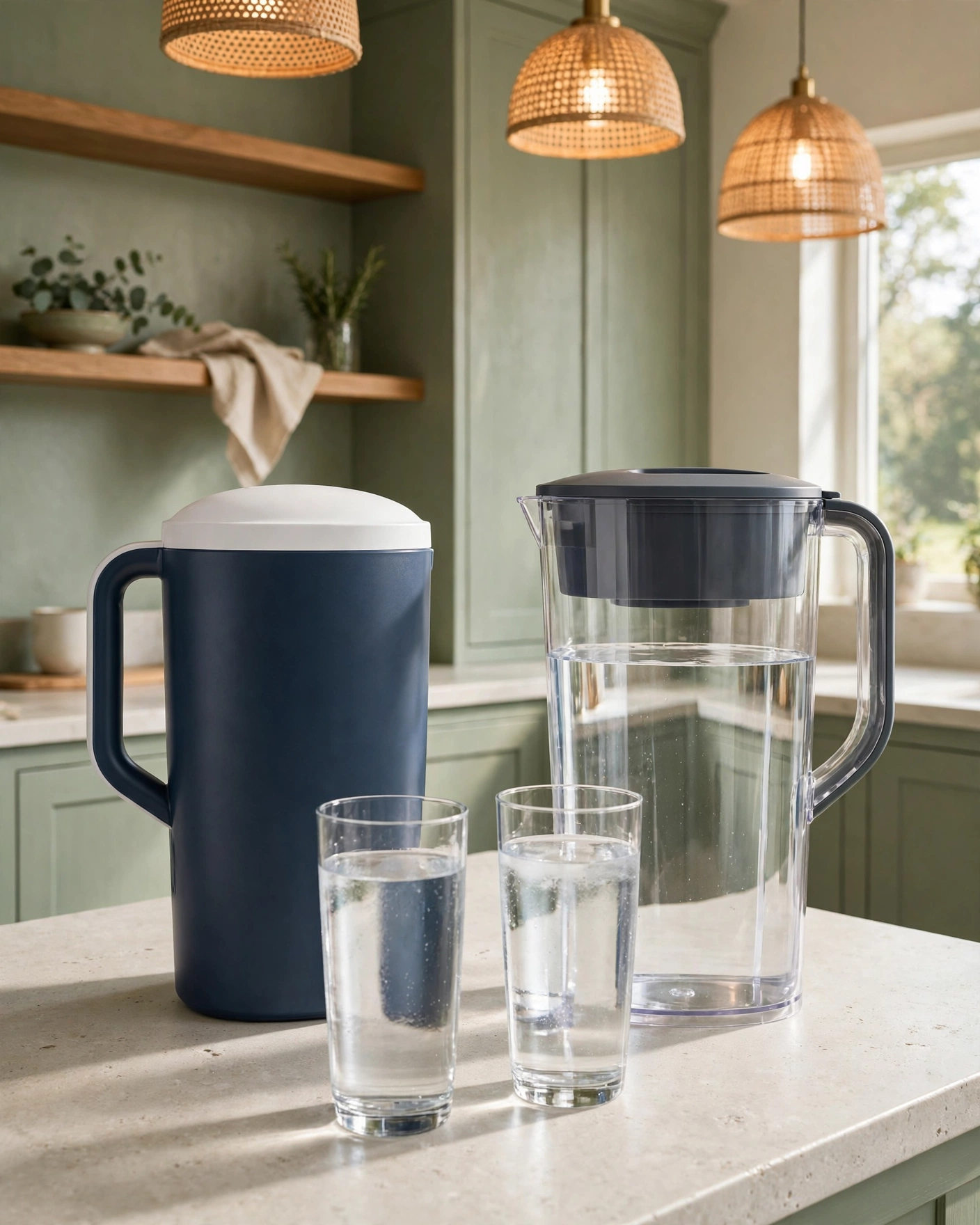
BRITA’s flagship ELITE filter (OB06) against CLEARLY FILTERED’s pitcher filter — every price an October 2026 estimate.
| Feature | BRITA ELITE (OB06) ★ Winner | CLEARLY FILTERED pitcher |
|---|---|---|
| Filter technology | Activated carbon + ion exchange | Multi-layer composite + carbon |
| Certifications (listed) | WQA-listed 42 and 53, including lead | NSF/ANSI 42 + 372 ONLY |
| Lead/PFAS/fluoride | Lead certified under 53 | Brand lab data only — not certified |
| Filter life | ~120 gallons / ~6 months | ~100 gallons / ~3–4 months |
| Change signal | Lid indicator / gallons / months | None — count your own gallons |
| Minerals and taste | Minerals retained — water tastes familiar | Mineral retention is the brand’s design claim |
| Flow speed | Fast pour-through | Slow — ~12 minutes per reservoir fill |
| Pitcher price (estimate) | ~$35–41 | ~$90–110 |
| Yearly filter cost | ~$36–50 | ~$110–260 |
| Best for | Certified lead reduction, lowest running cost | Lab-data coverage despite the trade-offs |
Prices are October 2026 street estimates and they move often. Filter life is the manufacturers’ rated number; your local water changes it.
Want all three mass-market brands scored the same way? Our BRITA vs PUR vs ZEROWATER comparison runs this same table.

Certifications
This is the section that matters most — the two brands are not playing the same sport. One sells third-party listings; the other sells its own lab data. They are not the same thing.
BRITA ELITE (OB06)
The ELITE filter (model OB06) is WQA-listed against NSF/ANSI 42 and 53. Per BRITA’s published Performance Data Sheet, the listed reductions include lead — the headline claim — plus mercury, cadmium, asbestos, benzene, and tetrachloroethylene (PCE) under 53, and chlorine taste and odor with particulates (Class I) under 42. Look up the listing yourself at info.nsf.org or in the WQA directory.
| Contaminant | Claimed certification | Source |
|---|---|---|
| Lead | NSF/ANSI 53 (verified) | BRITA OB06 Performance Data Sheet |
| Chlorine taste and odor | NSF/ANSI 42 (verified) | BRITA OB06 Performance Data Sheet |
| Benzene | NSF/ANSI 53 (verified) | BRITA OB06 Performance Data Sheet |
| Tetrachloroethylene (PCE) | NSF/ANSI 53 (verified) | BRITA OB06 Performance Data Sheet |
| Asbestos and mercury | NSF/ANSI 53 (verified) | BRITA OB06 Performance Data Sheet |
| Particulates (Class I) | NSF/ANSI 42 (verified) | BRITA OB06 Performance Data Sheet |
CLEARLY FILTERED
CLEARLY FILTERED’s pitcher filter is certified to NSF/ANSI 42 and NSF/ANSI/CAN 372 only — listed by WQA. Note what that means: 372 covers the product’s materials, not lead removal. And there is no NSF/ANSI 53 or 401 listing, so the lead, PFAS, fluoride, glyphosate, and microplastics claims come from the brand’s published third-party lab data (365-plus contaminants), not a certifier’s listing.
A listing covers only the contaminants named in it, under test conditions. If your concern is on neither list, neither pitcher is the right product.
BRITA’s closest fight on certified lead claims is PUR — our BRITA vs PUR comparison runs the same listing check there.
Cost per year
CLEARLY FILTERED costs about three times the pitcher price upfront. Per year the gap gets bigger — its filters cost more and get replaced more often.
| Item | BRITA ELITE pitcher | CLEARLY FILTERED pitcher |
|---|---|---|
| Pitcher upfront (estimate) | ~$35–41 | ~$90–110 |
| Filter rated life | 120 gallons / ~6 months | ~100 gallons / ~3–4 months |
| Filters per year (typical) | ~2 | ~3–4 |
| Cartridge price (estimate) | ~$18–25 each | ~$55–65 each |
| Estimated yearly filter cost | ~$36–50 | ~$110–260 |
| 5-year filter cost (estimate) | ~$180–250 | ~$550–1,300 |
Two ELITE cartridges a year put most households around $36–50 in filters (estimates) — and the six-month cycle means fewer chances to run a spent filter by accident. On the standard BRITA filter (OB03): six cartridges a year at lower per-filter prices lands roughly $40–60.
CLEARLY FILTERED’s math is the sticker shock: three to four cartridges a year at $55–65 each — roughly $110–260 a year in filters alone, before the $90–110 pitcher. There is no lid indicator, so tracking those 100-gallon lives is on you.
More yearly pitcher math lives in our PUR vs ZEROWATER comparison.

Owner voices
Specs say what a filter is rated to do. Owners say what it is like to live with — these themes repeat across listings and owner posts, paraphrased but consistent.
BRITA ELITE owners
Black specks in the first pitchers. The most repeated BRITA complaint: tiny black particles from a fresh filter. The manufacturer calls them harmless carbon fines; rinse and soak the filter and discard the first pitchers.
Lid and spout fit. A persistent minor thread: the lid does not always seat perfectly, and some owners report drips when pouring.
Filter life versus hard water. The 6-month ELITE rating assumes average water — hard-water owners report slower flow and off taste sooner. Replace by the indicator, not the calendar.
CLEARLY FILTERED owners
Slow flow. The number-one theme: about twelve minutes to filter one reservoir fill. Owners time it, complain about it, and mostly accept it as the price of the denser filter. Plan refills ahead of meals, or you will be pouring from a half-empty pitcher.
Filter cost shock. The second theme: the per-cartridge price surprises buyers who thought of it as “a pitcher” — three to four cartridges a year at $55–65 each is the line item that makes people reconsider.
Fiddly first prime. New filters need the included squeeze-bag prime — fiddly the first time, under ten minutes once learned. Skip it and flow is poor on day one.
No change indicator. There is no filter-life indicator, so owners must track the 100-gallon life themselves. Miss it and you are drinking through an exhausted cartridge.
The slow-pour debate follows CLEARLY FILTERED into every matchup — our BRITA vs ZEROWATER comparison collects the same owner themes.
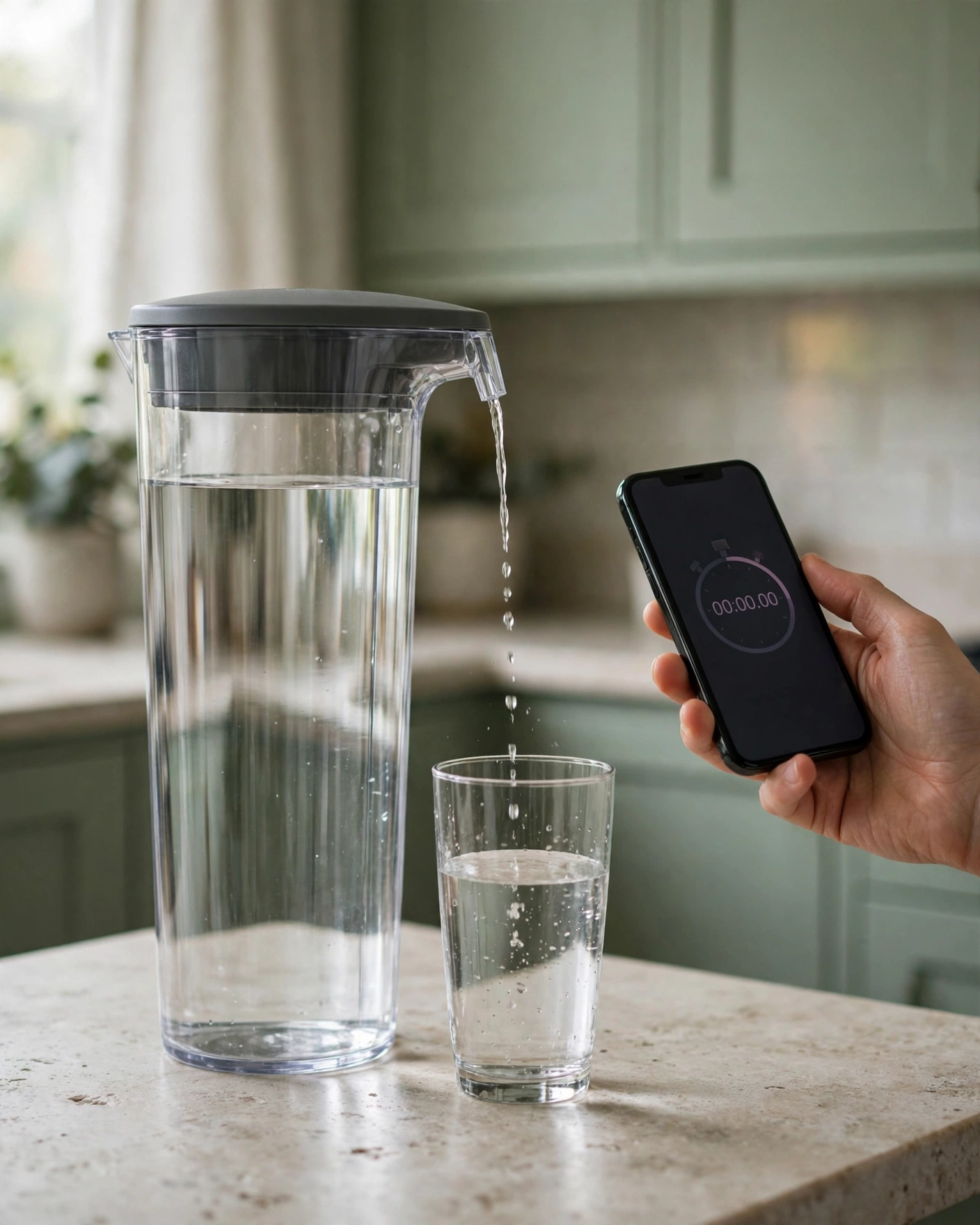
Which should you buy?
The bottom line: buy BRITA ELITE for listed, checkable lead reduction, fast filtering, and the cheapest filter bill in the pitcher class. Buy CLEARLY FILTERED for the broadest lab-data contaminant coverage among pitchers — lead, PFAS, fluoride, glyphosate on the brand’s reports — and accept uncertified coverage, triple the pitcher price, and a twelve-minute fill.
The deciding question is not “which brand” but what kind of evidence you pay for: third-party listings you can look up, or lab reports you cannot verify independently.
Choose BRITA if
- You want certified lead reduction at pitcher prices — listed, lookup-able, done.
- You hate waiting for water — pour-through filtering is fast.
- You want the lowest yearly cost of the two by a wide margin.
- Cartridges are easy to buy anywhere — grocery stores, not one website.
Choose CLEARLY FILTERED if
- Fluoride, PFAS, and glyphosate reduction matter to you, and you trust the brand’s lab data.
- You accept ~$110–260 a year in cartridges and a ~12-minute pour as the price of that coverage.
- You like the premium DTC package: TRITAN build (brand-stated BPA/BPS-free), limited lifetime warranty, and direct support.
- You are willing to prime filters and track changes yourself — no indicator, no hand-holding.

Prices are estimates and change often — see the live price before you buy.
FAQs
Which is better, BRITA or CLEARLY FILTERED?
Buy BRITA if you want certified, mass-market filtration: the ELITE filter (OB06) is WQA-listed to NSF/ANSI 42 and 53 including lead, and costs about $36–50 a year in cartridges (estimates). Buy CLEARLY FILTERED if you want broader contaminant claims from brand-published lab testing rather than certification, at about $110–260 a year in cartridges and a slower pour (estimates).
Is CLEARLY FILTERED certified to remove lead?
No — the key distinction. CLEARLY FILTERED’s pitcher is certified to NSF/ANSI 42 (chlorine taste and odor) and NSF/ANSI/CAN 372 (materials only), with no NSF/ANSI 53 or 401 listing. Lead reduction sits in the brand’s published lab data, not a certification. BRITA’s ELITE (OB06), by contrast, is WQA-listed to NSF/ANSI 53 including lead — check both at info.nsf.org before you buy.
How much does CLEARLY FILTERED cost per year?
More than most pitcher owners expect. Cartridges run about $55–65 each (estimates), rated up to 100 gallons, with a change every 3–4 months for a two-person household — around $110–260 a year in filters alone (estimates), before the $90–110 pitcher. BRITA ELITE runs about $36–50 a year in filters; the standard BRITA filter about $40–60.
Why is CLEARLY FILTERED so slow?
Contact time. Its taller, denser cartridge forces water through more media, and independent timed checks put a reservoir fill at roughly 12 minutes. BRITA’s simpler cartridges filter noticeably faster.
Does BRITA remove fluoride?
Fluoride is not part of BRITA’s ELITE or standard filter listings — the ELITE (OB06) covers 42 and 53 items like lead and mercury, not fluoride. CLEARLY FILTERED claims fluoride reduction in its brand-published lab data, which is not a certification.
Do I need to prime the CLEARLY FILTERED filter?
Yes. New filters need priming with the included squeeze bag — fiddly the first time, under about 10 minutes once learned. BRITA filters only need a quick rinse and soak. Skipping the prime is the most common reason new CLEARLY FILTERED owners report poor flow on day one.
Update log
- Zulqarnain: Review published.