

How Often to Clean a Gravity Water Filter (2026)
Guide
A gravity filter looks maintenance-free: no power, no plumbing, nothing moving. Then one month the water tastes faintly musty, the next month the flow slows to a drip, and owners start guessing — scrub everything? Replace everything? The system actually runs on four separate clocks, and mixing them up causes most of the damage: people soap the elements (which ruins them) while never washing the chambers (which is where the slime actually grows).
The short answer: wash both stainless chambers about once a month, clean or replace the spigot parts on the same day, and touch the filter elements only when flow drops — a gentle scrub under running water, never soap, never bleach. Going unused for more than a few days? Drain it, and store the elements bone dry. That is the whole schedule; the rest of this guide is the why and the how.
Table of Contents
Quick verdict
Set a monthly reminder for the chambers and spigot — fifteen minutes with warm soapy water. Leave the elements alone until the flow tells you otherwise; a falling flow rate is the cleaning signal, and our slow flow fix guide works through the diagnosis order when it happens. And treat storage as its own procedure, not an afterthought: most “my stored filter tastes like a swamp” stories are just damp elements sealed in a closed chamber for a month.
The schedule at a glance
| Part | When | How |
|---|---|---|
| Upper + lower chambers | About monthly | Warm water, mild dish soap, soft sponge; rinse well |
| Lid | With the chambers | Same wash — the underside grows film too |
| Spigot | Monthly; deep-clean if flow sputters | Remove, wash in soapy water, clear the bore with a small brush; replace washers as they age |
| Ceramic elements | When flow drops noticeably | Gentle scrub with a clean scouring pad under running water — no soap, ever |
| Black purification elements | When flow drops; they are not endlessly scrub-able | Rinse only, per maker guidance; scrubbing abrades the media — replacement is the real fix at end of life |
| Whole system, going into storage | Any break longer than ~3–4 days | Drain, wash chambers, dry elements fully (days, not hours) before reassembly |
Chambers: the monthly wash

The lower chamber is a tank of still, room-temperature water sitting in your kitchen — ideal biofilm real estate. That slippery film on the steel and the faint pond smell in month-old systems are chamber problems, not element problems, and they yield to the simplest wash in this guide: empty both chambers, wash with warm water and a little mild dish soap using a soft sponge or cloth, rinse until no suds remain, and dry or reassemble immediately. Do the lid’s underside while you are there. If your source water is sediment-heavy, the upper chamber earns a rinse more often — grit that settles there is grit the elements never have to meet. One caution: skip steel wool and abrasive powders on the chambers; scratches give the next film something to hold onto.
Elements: clean on symptom, not on schedule
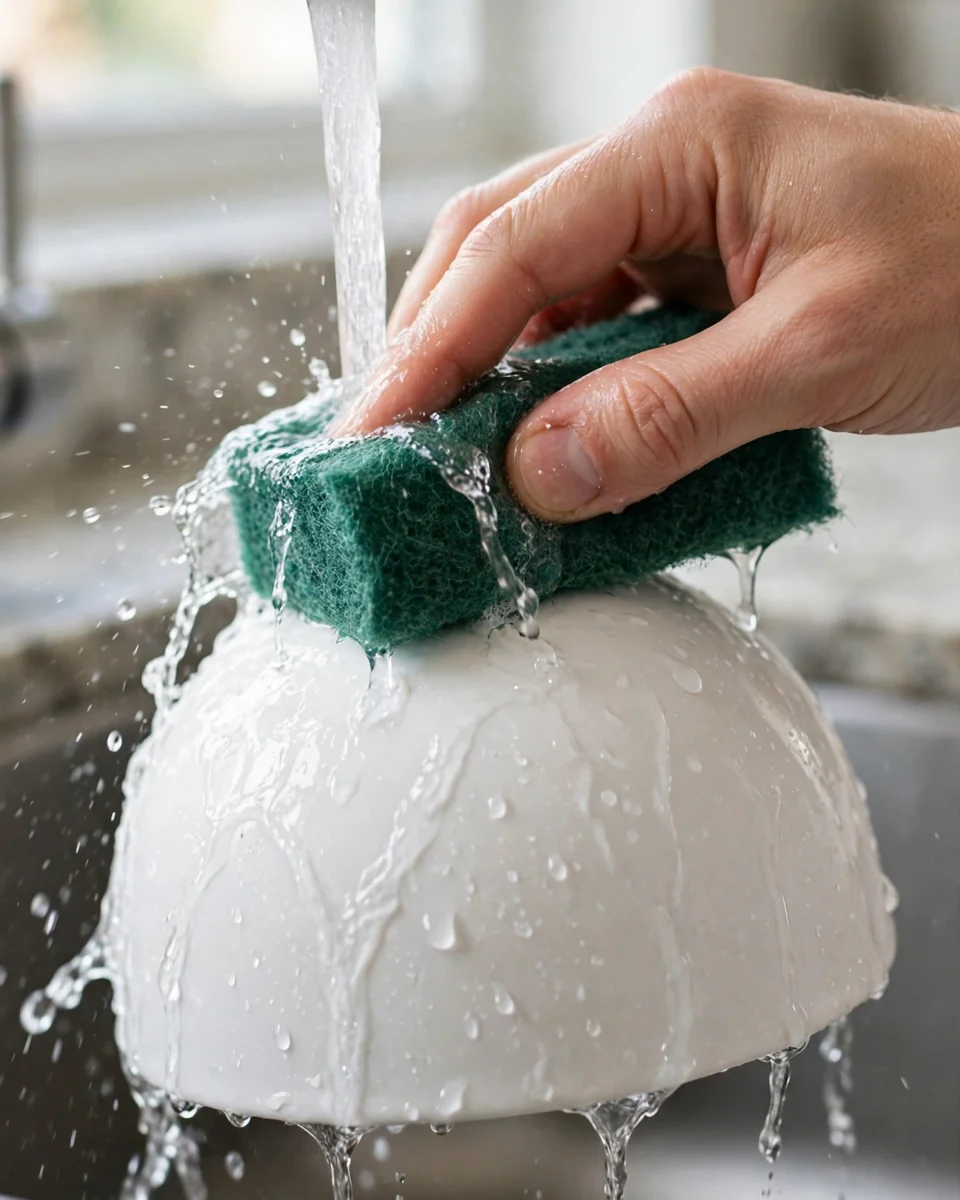
Elements are where owners do the damage, usually with kindness. The rules split by type. Ceramic candles and domes are built to be scrubbed: when flow drops, hold the element under running water and rub the surface gently with a clean, soap-free scouring pad. You are shaving off the clogged outer skin of the ceramic; the element gets fractionally thinner each time, which is also why it eventually needs replacing after many cleans. Black purification elements are different — the media is the working surface, abrasion wears it, and makers generally direct rinsing only, plus re-priming when flow falls (priming is covered step by step in our priming guide). Across both types, three bans are absolute: no soap or detergent on any element (residues clog pores and flavor the water for weeks), no bleach or disinfectant on purification elements (it attacks the media), and no boiling. Handle elements by their base and wing nuts with clean hands, and never set a wet element down on a dirty counter — it drinks whatever it touches.
The spigot: the forgotten part
Every drop you drink passes through the spigot, and it is the part nobody cleans. Its bore stays wet, its washers age, and airborne kitchen grime lands on the outlet daily. Monthly, when the chambers come apart: unscrew or pull the spigot per your system’s design, wash it in the same soapy water as the chambers, run a small bottle brush or pipe cleaner through the bore, rinse, and check the silicone washers — flattened, cracked, or slimy washers are replaced, not scrubbed back to life (they cost pennies and cause most slow drips blamed on “the system leaking”). Between washes, a simple habit helps: keep the outlet capped if your model offers a cap or cover, and never let the spigot sit submerged in a full drip tray.
Storing the system
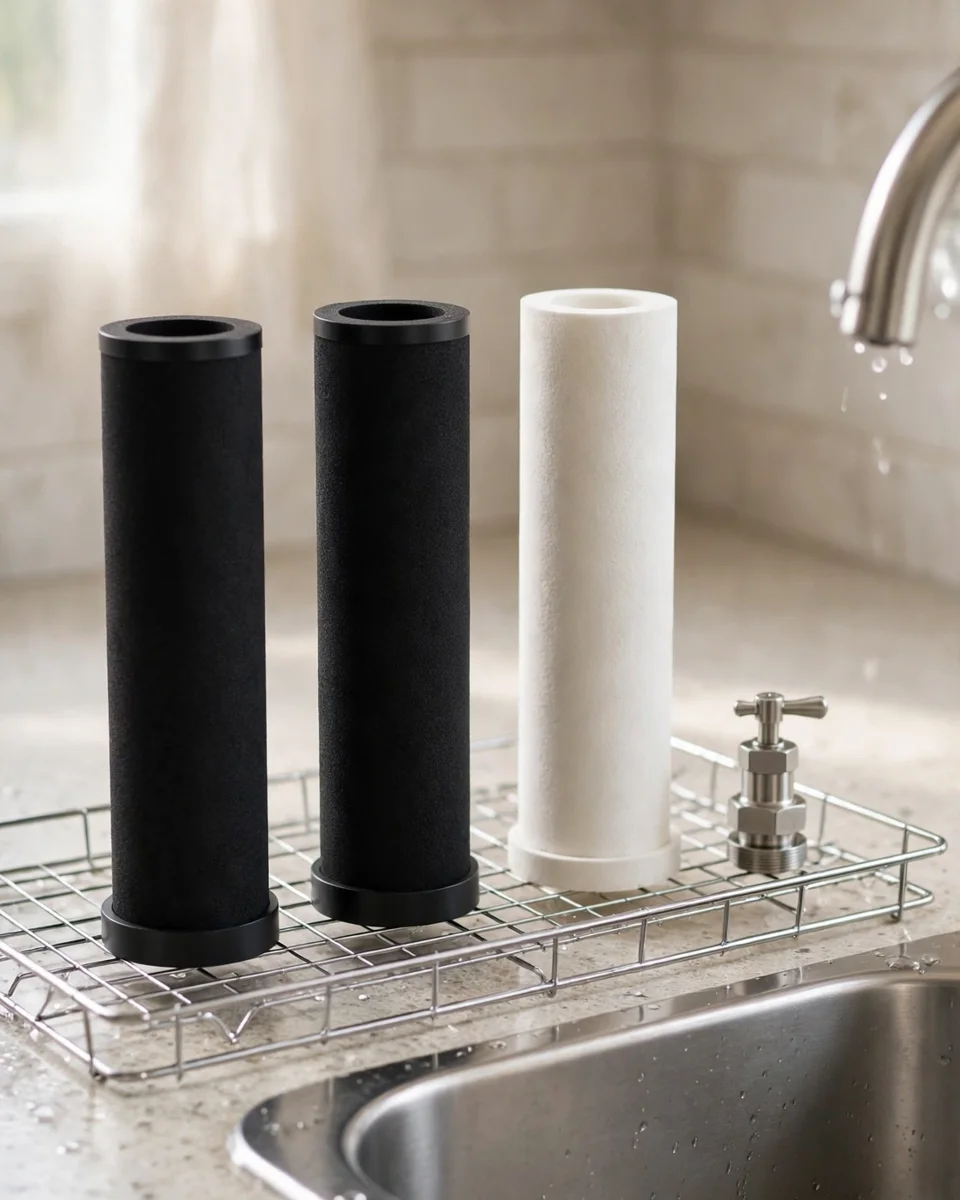
Store it right
- Going away 3–4+ days: drain both chambers rather than leaving water standing.
- Wash the chambers; leave them open or loosely lidded so air moves.
- Dry elements completely — black elements can take several days of air-drying; they should feel dry and light, not cool and damp.
- Store elements in a clean, breathable place; on return, reassemble, re-prime if your elements need it, and run a full batch to waste.
Store it wrong
- Sealing damp elements inside closed chambers “to keep dust off” — the classic mold recipe.
- Storing the system full of water for weeks; the lower chamber becomes the swamp the taste describes.
- Freezing wet elements in a garage or cabin — ice expansion cracks ceramic and damages media.
- Putting elements in a sealed plastic bag while still damp.
If a stored system does come back musty, the recovery is mechanical: wash chambers, scrub or rinse elements per type, run two full batches through and discard them, and taste the third. If off-flavors survive that, the elements are telling you their service life is over — replacement guidance by system type is in our gravity filter roundup.
Conclusion
Four clocks, four jobs: chambers monthly with soap and a sponge, spigot on the same day, elements only when flow drops and never with soap or bleach, and a full drain-and-dry before any real storage. Follow that split and a gravity system stays what it was bought to be — the lowest-maintenance filter in the house — instead of becoming a science project with a spigot.
Update log
October 2026: Cleaning-schedule guide published; cadence reflects typical manufacturer care guidance for stainless gravity systems (chamber wash monthly, elements on flow symptoms, full dry-out for storage).
FAQs
Can I put the chambers in the dishwasher?
Most stainless chambers tolerate it, but hand-washing is the safer default: dishwasher detergents are harsh, cycles run hot, and you must remove the spigot and elements first in any case. The sink wash takes five minutes and rinses cleaner. Never put filter elements of any type in a dishwasher.
Why does my filtered water taste musty even after cleaning the elements?
Because the taste usually lives in the lower chamber and spigot, not the elements — biofilm on the steel and in the spigot bore flavors water that was filtered perfectly well. Wash the chambers, deep-clean or replace the spigot washers, and run a batch to waste. If the taste persists after that, age is the likely story and the elements are due.
How many times can I scrub a ceramic element?
Many — scrubbing is the designed maintenance for ceramic. Each clean shaves a little ceramic away, so the end comes when the element gets thin, cracks, or stops restoring flow after a scrub. As a rough ownership pattern, ceramics serve for years of periodic scrubbing on municipal water, and fewer on sediment-heavy well water that clogs them faster.
What if I left water sitting in the filter for two weeks?
Dump both chambers completely — do not drink down the stored water. Wash the chambers with soap, rinse or scrub the elements per their type, reassemble, and run one or two full batches through to waste before drinking. Still water at room temperature for two weeks is a bacteria incubator regardless of how good the elements are.
Can I use vinegar on any part of the system?
On the stainless chambers, a diluted vinegar wipe is a common way to shift mineral spots — rinse thoroughly afterward. Keep vinegar (and every other cleaner) off the filter elements themselves: acids and residues can damage media and clog pores. The elements’ entire cleaning kit is clean water, a plain scouring pad for ceramics, and patience.
Do I need to clean a brand-new system before first use?
Yes — wash the chambers and spigot with mild soap and rinse well, then prime the elements exactly as their instructions direct and run the first batch (or two) to waste. New systems carry manufacturing and packing residue, and new elements release loose media fines; that first discarded batch is part of the product, not a defect.