
Best Water Filter Pitcher For Apartments (2026): Top Picks
★ TOP APARTMENT PICKLiving in an apartment means drinking tap water you did not choose, from pipes you cannot see, under a lease that says no to any plumbing changes. You want better-tasting water — less chlorine smell, maybe certified lead reduction if your building is old — but a 10-cup monster of a pitcher might not fit your fridge, and the cheapest pitcher on the shelf can quietly cost more per year in filters than the “premium” one.
Here is the short answer: the Brita Elite 10-cup is the best apartment pitcher for most renters. It pairs brand-stated certified lead reduction with a 120-gallon filter life — roughly two filter changes a year — in a body that fits most refrigerator shelves and doors. On a tight budget, the Brita Everyday 10-cup costs less upfront and handles taste fine. And for specific needs, the PUR PLUS 11-cup carries the widest brand-stated certification list here, while the ZeroWater 10-cup is the pick if you want near-zero dissolved solids. Below, all four are compared on what actually matters in an apartment: fridge fit, capacity, yearly filter cost, and certifications.
Table of Contents
Quick picks: top 3
Best overall — Brita Elite 10-cup: certified lead reduction (brand-stated, NSF/ANSI 53) plus a 120-gallon / ~6-month filter, which means the lowest yearly filter cost of any certified pick here and only two cartridge swaps a year.
Best budget — Brita Everyday 10-cup: the cheapest honest start — lowest upfront price here, chlorine taste handled, though filter swaps come about six times a year and lead is not on its certified list.
Best for specific needs — PUR PLUS 11-cup: the widest brand-stated certification list in this roundup (PUR cites NSF/ANSI 42, 53 and 401), at the cost of the largest body and the shortest filter cycle. Near-zero-TDS fans should read the ZeroWater section instead.
How we researched
- Pulled the published Performance Data Sheets and manuals for all four filters and read the certification tables line by line — copper, mercury, cadmium, lead, chlorine, and which NSF standard each claim sits under.
- Published certification claims as brand-stated only, with a self-check at info.nsf.org for every claim. A filter that is “compliant” with a standard is not the same as one certified against it — the database listing is what counts.
- Ranked for apartment reality: compact size and fridge fit, reservoir capacity versus footprint, filter cost per year (the renter’s real budget), zero-installation requirement, and the strength of the certified reduction claims.
- Read hundreds of owner reviews across major retail listings, looking for recurring complaints — the same problem mentioned by many owners over many months — not one-off bad experiences.
- Ran the replacement-cost math from rated filter life (gallons and months) and street-price estimates, using a ~40-gallon-per-month household as the worked example.
One thing we did not do: buy and lab-test pitchers. This is a research-and-compare guide — spec sheets, certification documents, owner reviews, and arithmetic. Every claim says what it is based on so you can check the reasoning yourself.
Best overall: Brita Elite 10-cup pitcher
The bottom line: if you want one pitcher that covers taste and certified lead reduction with the least yearly hassle, this is it. The Elite filter is rated at 120 gallons or about 6 months — three times the life of the standard Brita cartridge — so a renter changes filters roughly twice a year instead of six times. Listing-stated dimensions are about 10.1″ long × 5.4″ wide × 10.7″ tall, which clears most refrigerator shelf spacing and many doors.
Verdict: the apartment default for one- and two-person renters.
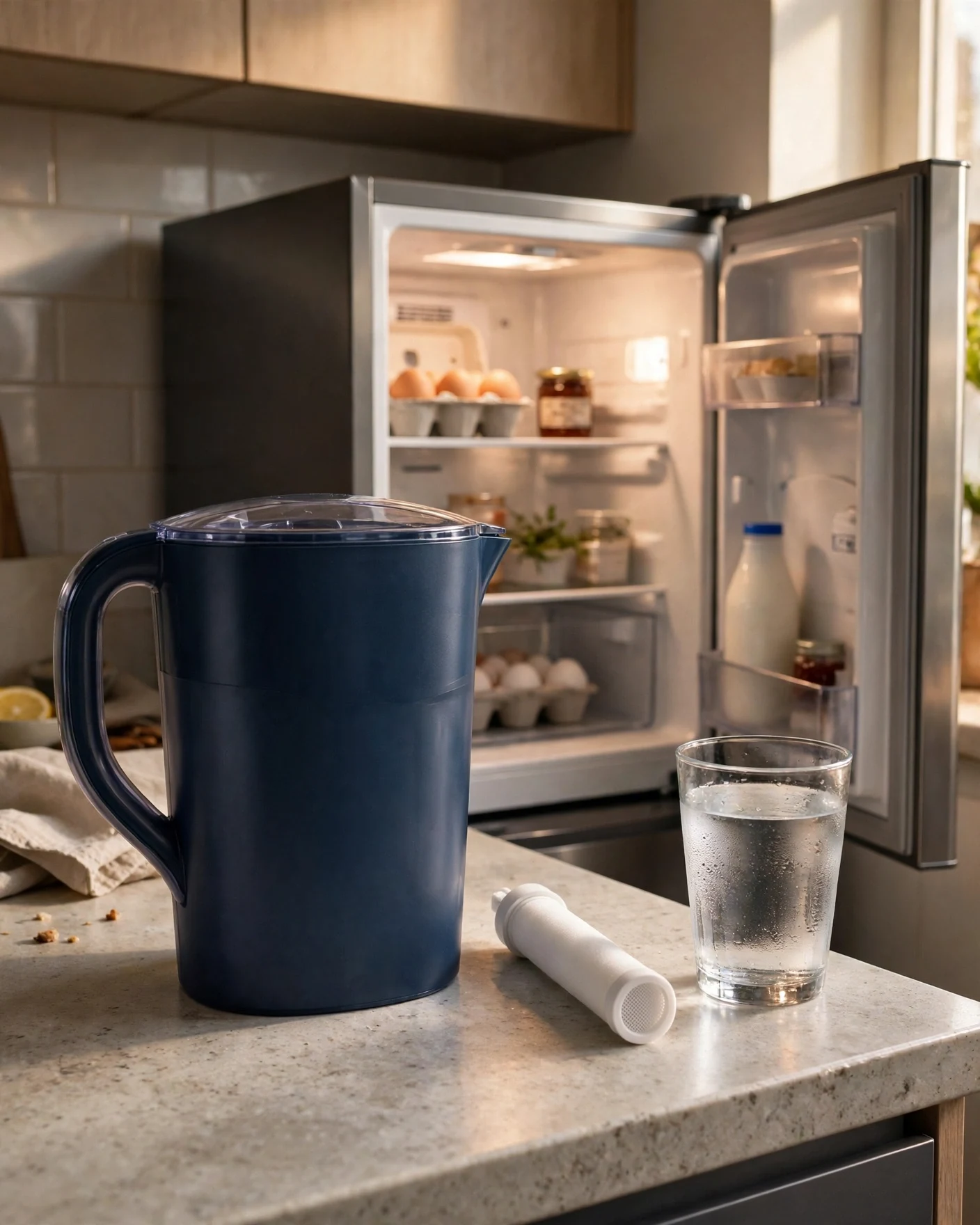
Certification, stated plainly. Brita states that the Elite filter (model OB06) is certified to NSF/ANSI 42 and 53, including lead reduction under NSF/ANSI 53, with benzene, asbestos, mercury, and Class I particulates on the same published Performance Data Sheet, plus NSF/ANSI 401 emerging-compound claims. That is the brand’s published data sheet talking — check the exact current listing yourself at info.nsf.org before you buy, because certification covers only the contaminants in the listing and only under standard test conditions. For renters in older buildings with lead pipes, that NSF 53 lead line is the single most important sentence on this page — and no pitcher on this page, this one included, is a substitute for knowing your building’s water through a test or the utility’s annual report.
Living with it in a small space. Ten cups is a day of drinking water for one or two people without constant refilling, the lid carries a filter-change indicator so you are not guessing at the 6-month mark, and replacement cartridges are stocked everywhere cheap Brita pitchers are sold. Our full Brita Elite pitcher review goes deeper on the certifications and the yearly math if you want the detail before deciding.
Watch-outs. The most common recurring owner complaint is tiny black carbon specks in the first pitchers from a fresh cartridge; the manufacturer’s setup guidance is to rinse and soak the new filter first, which owners report clears it. Hard-water apartments can also clog the cartridge before the rated 6 months. And a full 10-cup pitcher weighs close to 6 pounds — trivial on a counter, a real consideration if lifting is an issue.
- Capacity
- 10 cups
- Filter
- Elite (OB06)
- Rated filter life
- 120 gal / ~6 months
- Certifications
- NSF/ANSI 42 & 53 incl. lead (brand-stated)
- Size (listing-stated)
- ~10.1″ × 5.4″ × 10.7″
- Estimated price
- ~$35–41
Price shown is an estimate checked at time of writing; it changes often — see the live price before you buy.
Best budget: Brita Everyday 10-cup pitcher
The bottom line: the Everyday is the lowest upfront price here (~$28–30 estimated) and it does the core pitcher job — chlorine taste and odor — well. What you give up is reach: Brita’s published data sheet for the standard OB03 filter lists NSF/ANSI 53 reductions for copper, mercury, and cadmium and NSF/ANSI 42 for chlorine taste and odor — but lead is not on the standard filter’s certified list.
Verdict: the right buy for taste-only renters on a budget; the wrong buy if lead is your worry.
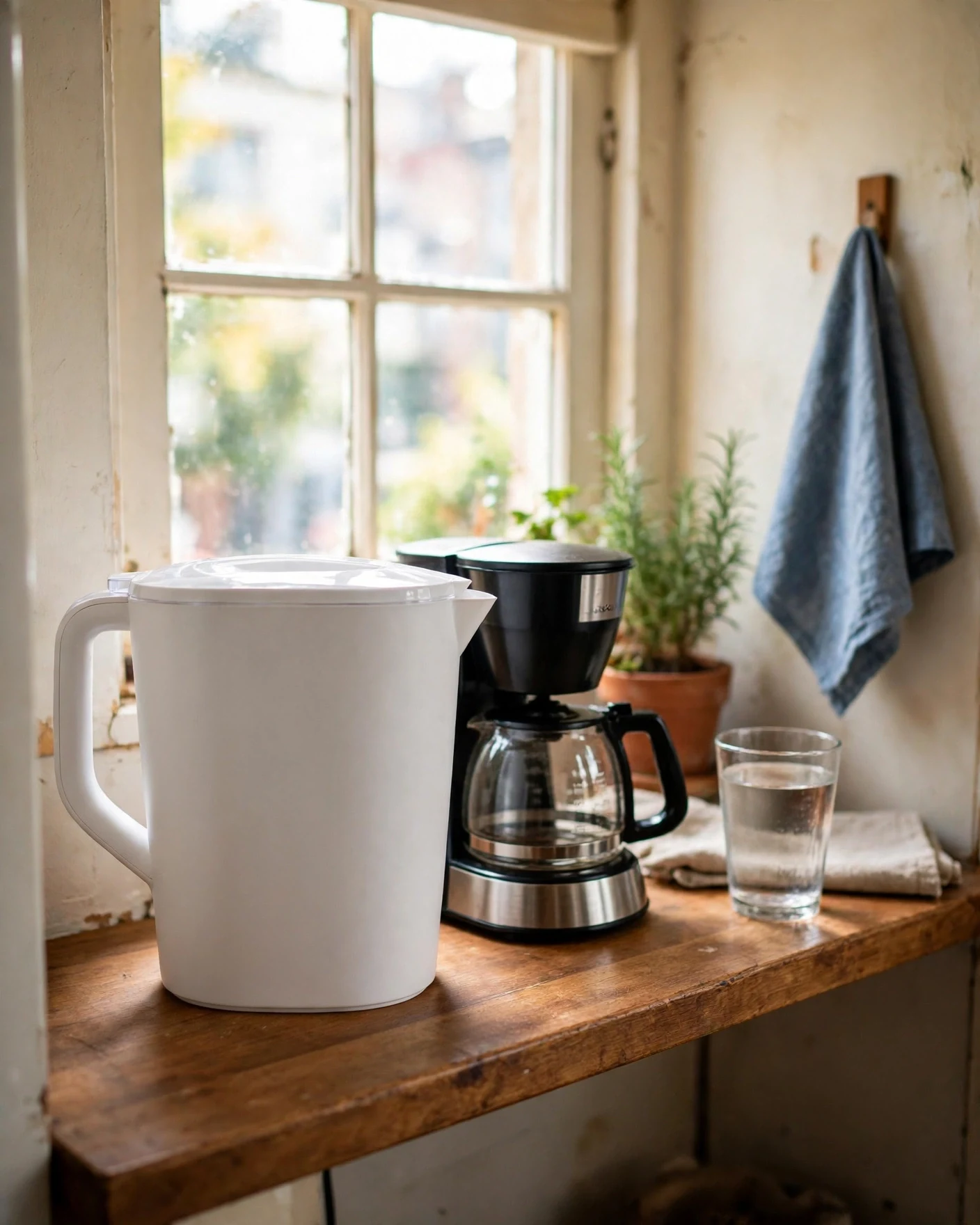
Why it still makes the list. Most apartment water complaints are taste complaints: chlorine from municipal treatment, musty notes from a building’s storage tank. The standard filter handles that, the cartridges are the cheapest in this roundup and sold in multipacks everywhere, and the pitcher body is the same compact 10-cup footprint family as the Elite. Our Brita Everyday pitcher review covers the model on its own if you are deciding between the two Britas.
The honest cost. The standard cartridge is rated at 40 gallons or about 2 months, so expect roughly six swaps a year — more cartridge shopping, more plastic, and a yearly filter bill that lands surprisingly close to the Elite’s once you add it up (the cost-math section below shows the arithmetic). The lid that does not stay on is the other recurring owner complaint thread across Brita pitcher models generally: acceptable at this price, annoying in daily use.
- Capacity
- 10 cups
- Filter
- Standard (OB03)
- Rated filter life
- 40 gal / ~2 months
- Certifications
- NSF/ANSI 42 & 53 (no lead) (brand-stated)
- Size
- Compact 10-cup body
- Estimated price
- ~$28–30
Price shown is an estimate checked at time of writing; it changes often — see the live price before you buy.
Best for specific needs: PUR PLUS and ZeroWater
Two different “specific needs” live here, and they pull in opposite directions. The PUR PLUS is for the renter who wants the widest certified contaminant list a pitcher offers. The ZeroWater is for the renter who wants water with near-zero total dissolved solids — a taste and minerals goal, not a certification-count goal.
PUR PLUS 11-cup — widest brand-stated certification list
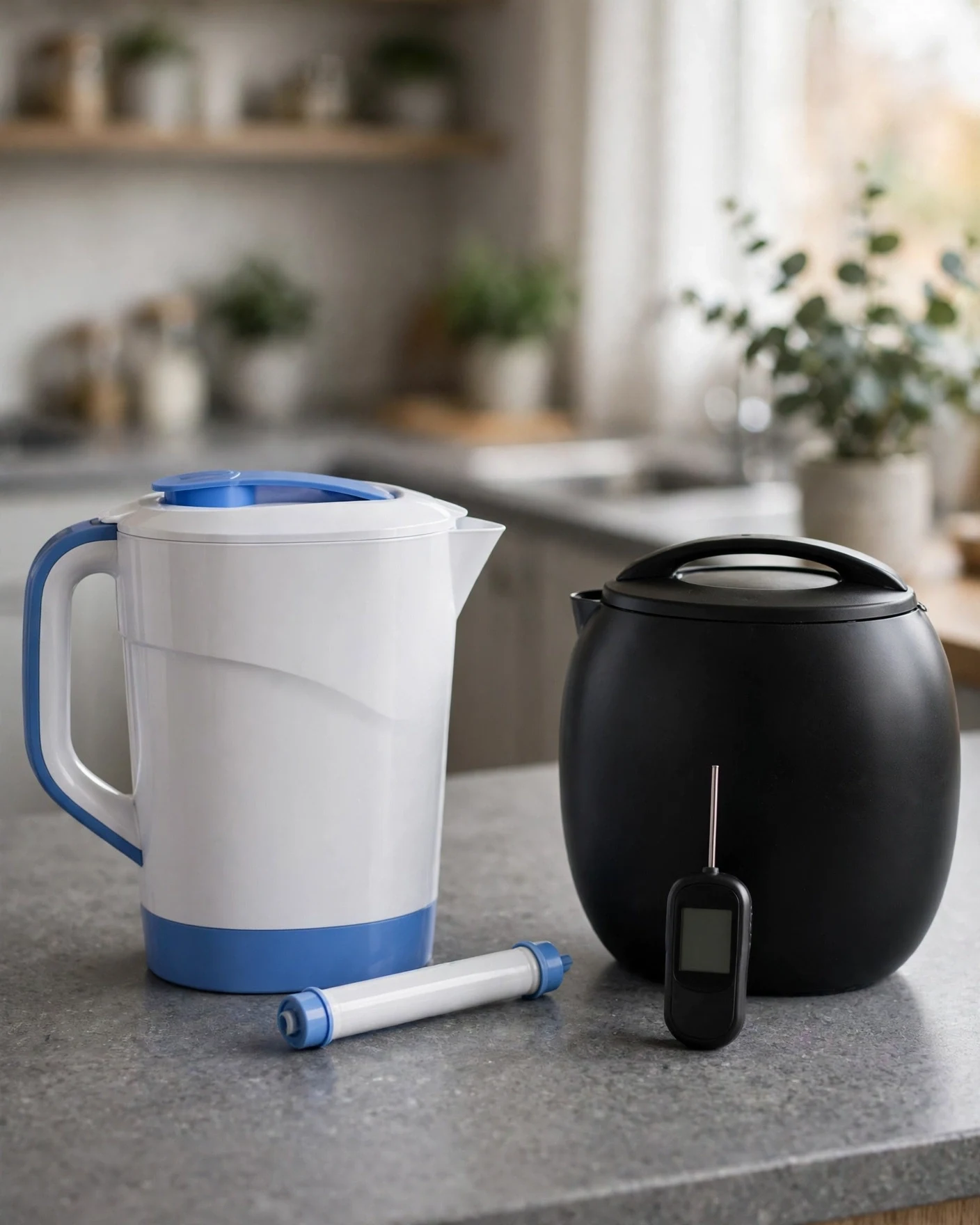
PUR states that the PLUS pitcher system with the CRF-950Z cartridge is certified by WQA against NSF/ANSI Standards 42, 53, and 401, and certified by NSF against the same three standards, for the reductions on its Performance Data Sheet — that includes lead under NSF/ANSI 53 and emerging compounds under 401. One honest complication: some third-party comparisons summarize the CRF-950Z pitcher at NSF/ANSI 42 and 53 only. Treat the brand’s published manual and data sheet as the claim, and verify the exact current listing at info.nsf.org before you buy — that is the only version of this claim we will stand behind.
The trade-offs are size and cadence. Eleven cups is the largest capacity here, which means the largest body — measure your shelf before ordering. The cartridge runs 40 gallons, up to about 1–2 months per PUR’s manual, so budget for frequent swaps. Estimated pitcher price: ~$38–44.
Price shown is an estimate checked at time of writing; it changes often — see the live price before you buy.
ZeroWater 10-cup — near-zero dissolved solids
ZeroWater’s 5-stage ion-exchange filter aims at a different target: stripping dissolved solids down toward zero, which the included TDS meter lets you watch happen. The brand states the filter is IAPMO certified to reduce lead, chromium, PFOA/PFOS, and mercury — again, brand-stated, so check the IAPMO/NSF listings yourself. Two warnings matter more than the pitch. First, a TDS reading is not a safety score: zero dissolved solids means the minerals are gone, not that a specific contaminant was certified away. Second, the filters are the budget trap of this roundup — brand guidance puts life at roughly 20–40 gallons depending on your tap water’s starting TDS, and in high-TDS apartments owners report exhausting cartridges in weeks, with a sour or fishy taste as the spent-resin signal. Estimated pitcher price: ~$35–44. If near-zero TDS is your goal, price the replacement cartridges before you buy the pitcher.
Side-by-side comparison
One table, the four pitches side by side — drawn from published specs and brand-stated certifications. All prices and yearly costs are estimates; the live listing decides the real number.
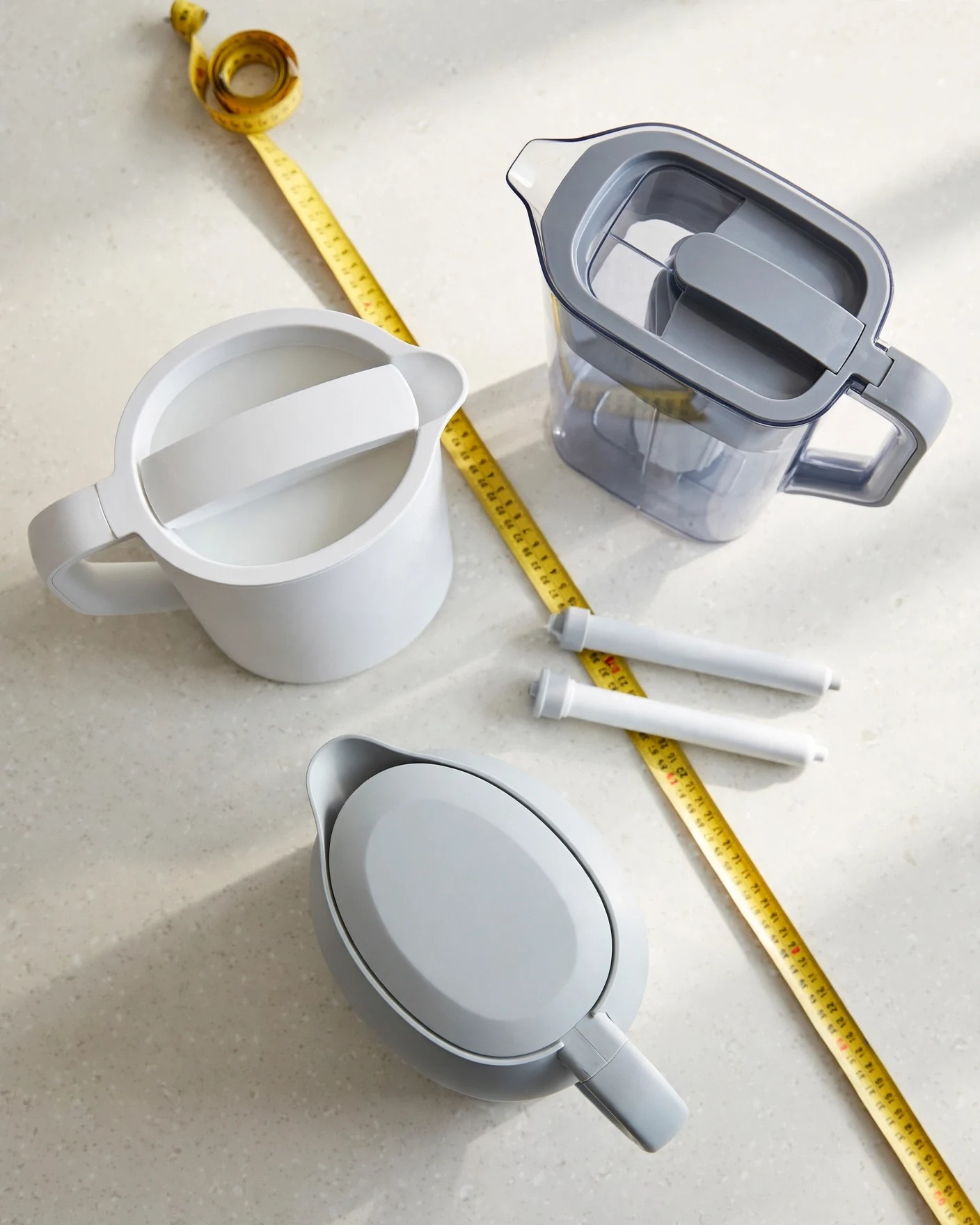
| Pitcher | Capacity | Filter rated life | Certifications (brand-stated) | Est. yearly filter cost* |
|---|---|---|---|---|
| Brita Elite 10-cup | 10 cups | 120 gal / ~6 mo | NSF/ANSI 42 & 53 incl. lead; 401 claims on PDS | ~$60–80 |
| Brita Everyday 10-cup | 10 cups | 40 gal / ~2 mo | NSF/ANSI 42 & 53, no lead | ~$60–95 |
| PUR PLUS 11-cup | 11 cups | 40 gal / 1–2 mo | NSF/ANSI 42, 53 incl. lead, 401 (per PUR manual) | ~$108 (TechGearLab estimate) |
| ZeroWater 10-cup | 10 cups | ~20–40 gal, TDS-dependent | IAPMO: lead, chromium, PFOA/PFOS, mercury | $240–960 (TechGearLab estimate) |
*Yearly filter cost assumes about 40 gallons of filtered water a month (480 gallons a year) and street-price estimates per cartridge. Everyday/PUR estimates assume cartridge-multipack pricing; ZeroWater’s wide range reflects how fast high-TDS water exhausts its cartridges (TechGearLab estimate, via our claims register). Real costs move with your water and where you shop.
Apartment buying guide: what actually matters
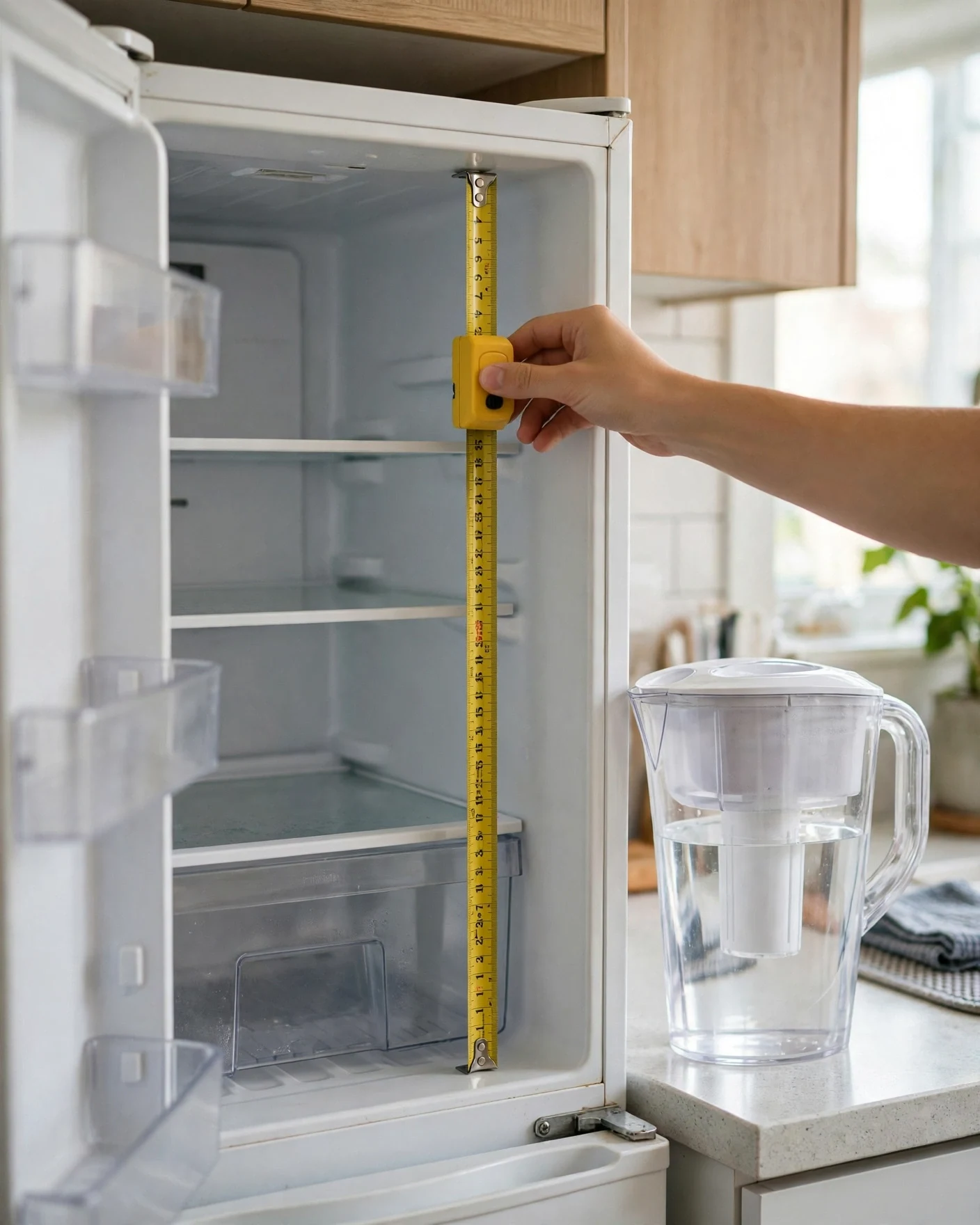
Measure your fridge shelf first
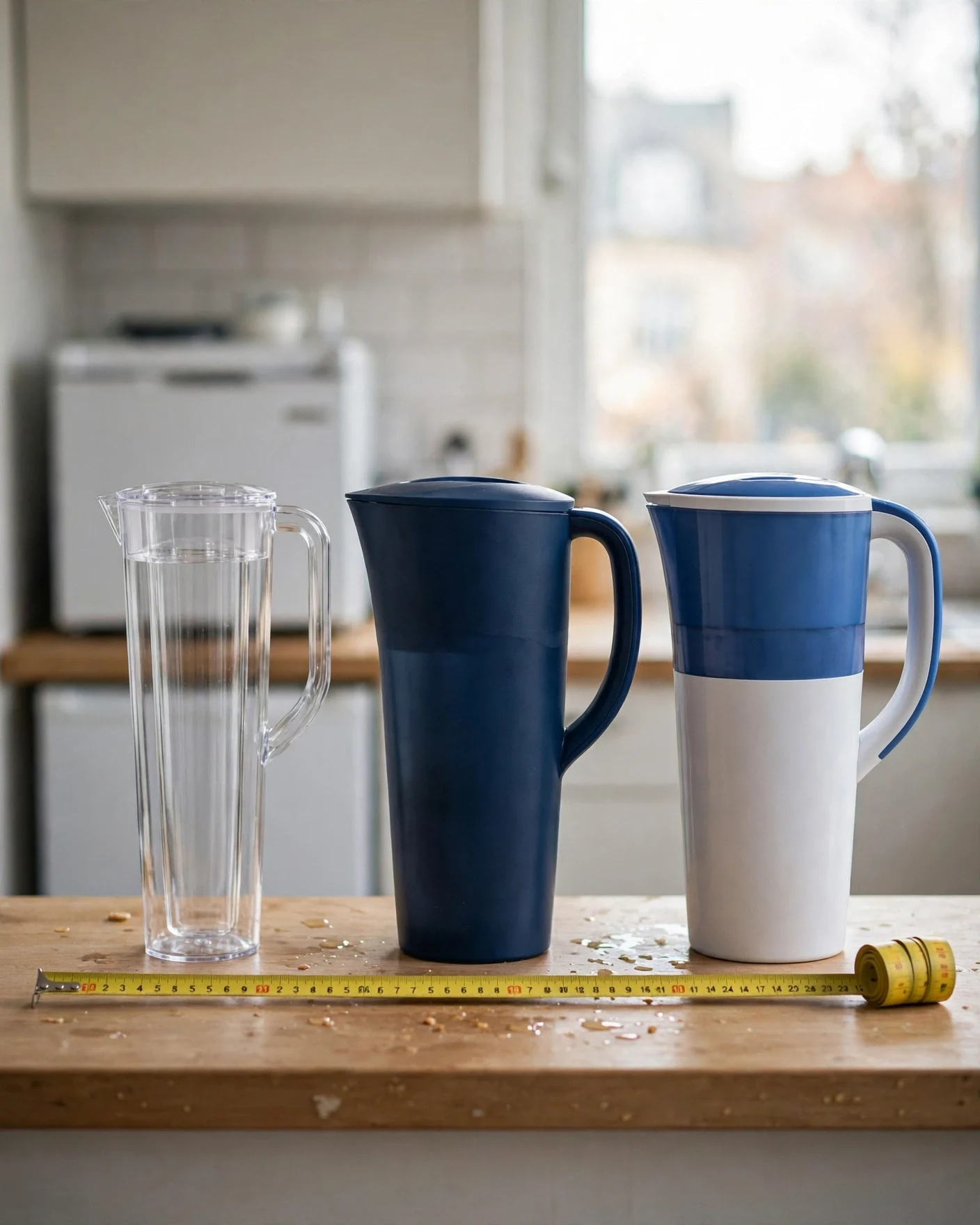
This is the step everyone skips and the step that causes every return. Open your refrigerator and measure the shelf height — door shelf and inside shelf. Most 10-cup pitchers land around 10.5–11 inches tall (listing-stated dimensions), and the 11-cup PUR is taller still. If your shelf clears less than about 11 inches, you are choosing between a 6-cup body (Brita sells smaller pitcher bodies that take the same filters) or keeping the pitcher on the counter. Two minutes with a tape measure beats a month of regret.
Pick by your water goal, not by the brand
- Chlorine taste only → the cheapest standard-filter pitcher (Brita Everyday) does this fine.
- Lead in old building pipes → you need NSF/ANSI 53 for lead specifically — the Elite or the PUR PLUS, brand-stated, verified at info.nsf.org. The standard Brita filter is not certified for lead.
- Widest certified list → PUR PLUS, per PUR’s published manual (42, 53, 401).
- Near-zero dissolved solids → ZeroWater, accepting the filter-cost penalty.
For the full pitcher landscape beyond the apartment angle — dispensers, smaller bodies, and the rest of the comparison set — our main best water filter pitcher guide covers the category in full.
The landlord test: zero installation
Every pitcher on this page passes the renter test by design: no faucet adapters, no drilling, no countertop holes. You fill the reservoir, it pours. If your lease forbids even faucet-mount attachments, pitchers and gravity systems are your only categories — and pitchers win for fridge-chilled water. No landlord permission needed for any of the four picks here.
What a pitcher cannot do
Honest boundaries save money. Pitchers are built for treated municipal water: they are not a treatment for well water, which can carry microbes and minerals pitchers are neither rated for nor certified against — if your apartment or rental draws from a private well, start with our pitcher guide for well water to see why the answer usually is not a pitcher. Pitchers also do not fix building-level problems like sediment bursts after pipe work, and no pitcher here targets fluoride. And remember: boiling does not remove lead — it concentrates it — so the old “just boil it” advice is not a substitute for a certified filter.
Replacement cost math
The sticker price is the least important number on this page. A pitcher is a filter subscription — the cartridges are the real price. Here is the math for a small household filtering about 40 gallons a month (480 gallons a year). All figures are estimates; re-check live listings before you buy.
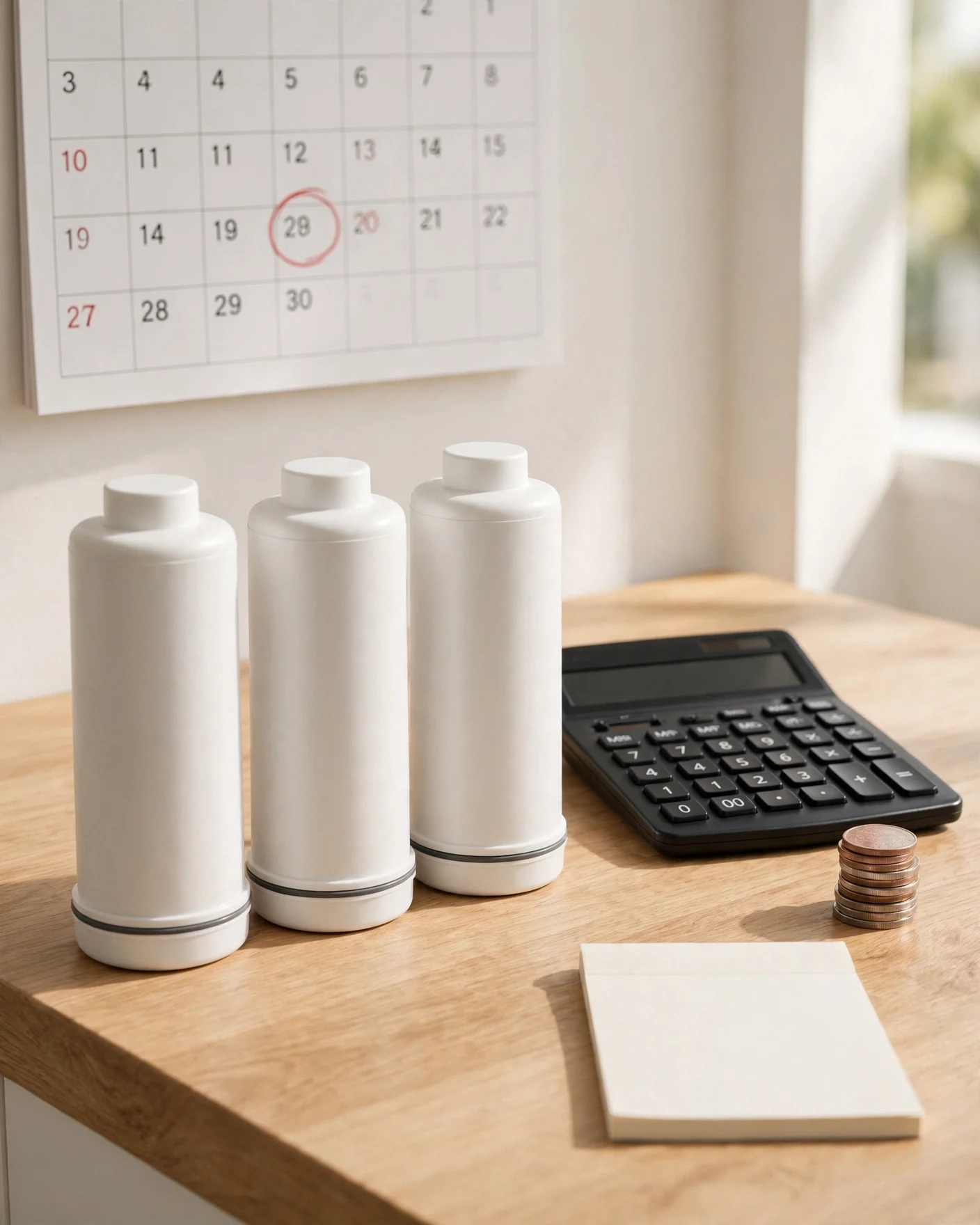
| Filter | Rated life | Filters per year | Est. yearly cost |
|---|---|---|---|
| Brita Elite | 120 gal / ~6 mo | ~4 | ~$60–80 |
| Brita standard | 40 gal / ~2 mo | ~12 | ~$60–95 |
| PUR CRF-950Z | 40 gal / 1–2 mo | ~12 | ~$108 (TechGearLab estimate) |
| ZeroWater | ~20–40 gal (TDS-dependent) | ~12–24 | $240–960 at 40–160 gal/mo (TechGearLab estimate) |
Three things jump out. First, the Elite’s longer life is its whole economy: roughly 4 filters a year versus 12 for the standard cartridge — so the “premium” pitcher costs about the same in filters while adding certified lead reduction. Second, the ZeroWater line is the one to read twice: at the high end of that $240–960 TechGearLab estimate, you are spending more on cartridges in a year than on several pitchers. Third, usage beats ratings: the 40-gallon/month scenario is already generous for one person — if you filter less, every number above shrinks, but the ranking order stays the same. For the same arithmetic applied across filter categories, see our Brita filter cost per year breakdown.
FAQs
What size water filter pitcher fits a small apartment fridge?
Measure the shelf height inside your fridge — door and interior shelves both. Most 10-cup pitchers are about 10.5 to 11 inches tall per their listings, so you need that much clearance; the 11-cup PUR PLUS is taller. If your shelf is shorter, look at a 6-cup pitcher body or keep the pitcher on the counter. Two minutes with a tape measure prevents the most common apartment pitcher return.
Do I need my landlord’s permission to use a filter pitcher?
No. A pitcher involves no plumbing changes, no faucet attachments, and no drilling — you fill it and it pours. It is furniture for your fridge shelf, not a modification to the apartment. If your lease forbids even faucet-mounted attachments, pitchers are the safe category.
Will a pitcher remove lead from my apartment’s old pipes?
Only if the filter is certified to NSF/ANSI 53 specifically for lead — the Brita Elite and the PUR PLUS both carry brand-stated lead claims, which you should verify in the public NSF database at info.nsf.org. The standard Brita filter is not certified for lead. And no pitcher is a substitute for knowing your water: start with a water test or your utility’s annual report, because certification covers only test-condition reductions, not every lead scenario.
How much do pitcher filters really cost per year?
Estimates for about 40 gallons of filtered water a month run roughly: Brita Elite ~$60–80 a year (about 4 filters), standard Brita ~$60–95 (about 12 filters), PUR PLUS ~$108 (TechGearLab estimate), and ZeroWater $240–960 at 40–160 gallons a month (TechGearLab estimate — high-TDS water exhausts its cartridges fast). All figures are street-price estimates; check the live listing before you buy.
Does boiling water remove lead?
No — boiling does the opposite. CDC and EPA guidance notes that boiling does not remove lead; as water evaporates, the lead left behind becomes more concentrated in what remains. If lead is the concern, a filter certified for lead reduction is the answer, not the kettle.
Is zero-TDS water healthier than regular filtered water?
Not necessarily. A TDS reading measures dissolved solids — mostly minerals — not safety; a filter can read 0 TDS while a specific contaminant was never certified away. Zero-TDS water is a taste and mineral preference, and some people find it flat. For safety questions, certifications beat meter readings.
Conclusion
The apartment pitcher decision is simpler than the shelf makes it look. If you want taste plus certified lead reduction with the fewest filter swaps, buy the Brita Elite. If every dollar upfront counts and taste is the whole job, the Brita Everyday earns its place. If you want the widest certified contaminant list, the PUR PLUS does that job at the cost of size and swap frequency — and if near-zero dissolved solids is your goal, the ZeroWater delivers it, provided you budget for the cartridges. Measure the fridge, pick by the water goal, and let the yearly filter math — not the sticker price — make the final call.
Price checked at time of writing; it changes often — see the live price before you buy.
Update log
- Zulqarnain: Review published.