
Shower Filter for Chloramine (2026): What Actually Works
Guide
Here is a frustrating purchase many people have already made: a well-reviewed shower filter, glowing chlorine claims, installed correctly — and the chemical smell in the steam barely changes. The filter is not fake and the reviews were not lying. The water is different. A growing number of cities disinfect with chloramine instead of chlorine, and chloramine was engineered to be stubborn. Standard shower cartridges that strip chlorine in seconds can run chloramine through almost untouched, because the two chemicals, despite the similar names, behave like distant cousins rather than twins.
The short answer: for chloramine at shower scale, two media are consistently recognized as up to the job — catalytic carbon and vitamin C (ascorbic acid). Ordinary carbon and most generic multi-stage blends are chlorine tools pointed at a chloramine problem. First confirm your city actually uses chloramine (one document tells you), then buy the media that matches.
Table of Contents
Quick verdict
Chloramine city? Shortlist filters whose cartridge is catalytic carbon or vitamin C, sized generously — contact time is everything at shower flow rates. Chlorine city? Almost any reputable cartridge from our best shower filter roundup does the job, and you can ignore this entire problem. The expensive mistake is buying for the chemical you do not have; the five-minute check below prevents it.
Chloramine vs chlorine: why it matters
Free chlorine is a restless chemical: it reacts quickly, breaks down in sunlight and heat, and evaporates from standing water — which is why it is easy to filter and why it struggles to protect water across a sprawling pipe network. Chloramine is what utilities make when they bind chlorine to ammonia (the working form is monochloramine). The bond makes it far more stable: it survives the long trip through city mains, keeps disinfecting at the far ends of the system, and forms fewer of some regulated byproducts. Those are real advantages for a water utility. For you, the same stability is the catch in three ways: it does not gas off while water stands, it does not boil away on any practical timescale, and — the one that empties wallets — it reacts too slowly with ordinary filter carbon. Carbon removes chlorine by reacting with it on contact; a shower gives that contact a second or two per pass. Chloramine needs far more time than a standard cartridge can offer at shower flow, so most of it simply rides through. Our shower filters and chlorine explainer covers the chlorine side of this chemistry; chloramine is where that easy story ends.
Step one: confirm your city uses it

Your utility’s annual water quality report (the Consumer Confidence Report) states the disinfectant plainly — search the PDF for “chloramine” or “monochloramine.” Utility websites usually answer it in their FAQ as well (“Why does my water taste different?”), and one phone call settles it if the documents hide. Two wrinkles worth knowing: some utilities switch seasonally — running chloramine most of the year with a temporary free-chlorine period for system maintenance — so a filter that seemed to work in spring can disappoint in autumn without anything breaking. And smell is not a reliable test: chloramine’s odor is subtler than chlorine’s pool-like punch, so “my water doesn’t smell that bad” proves nothing about which disinfectant is in it.
What actually removes chloramine
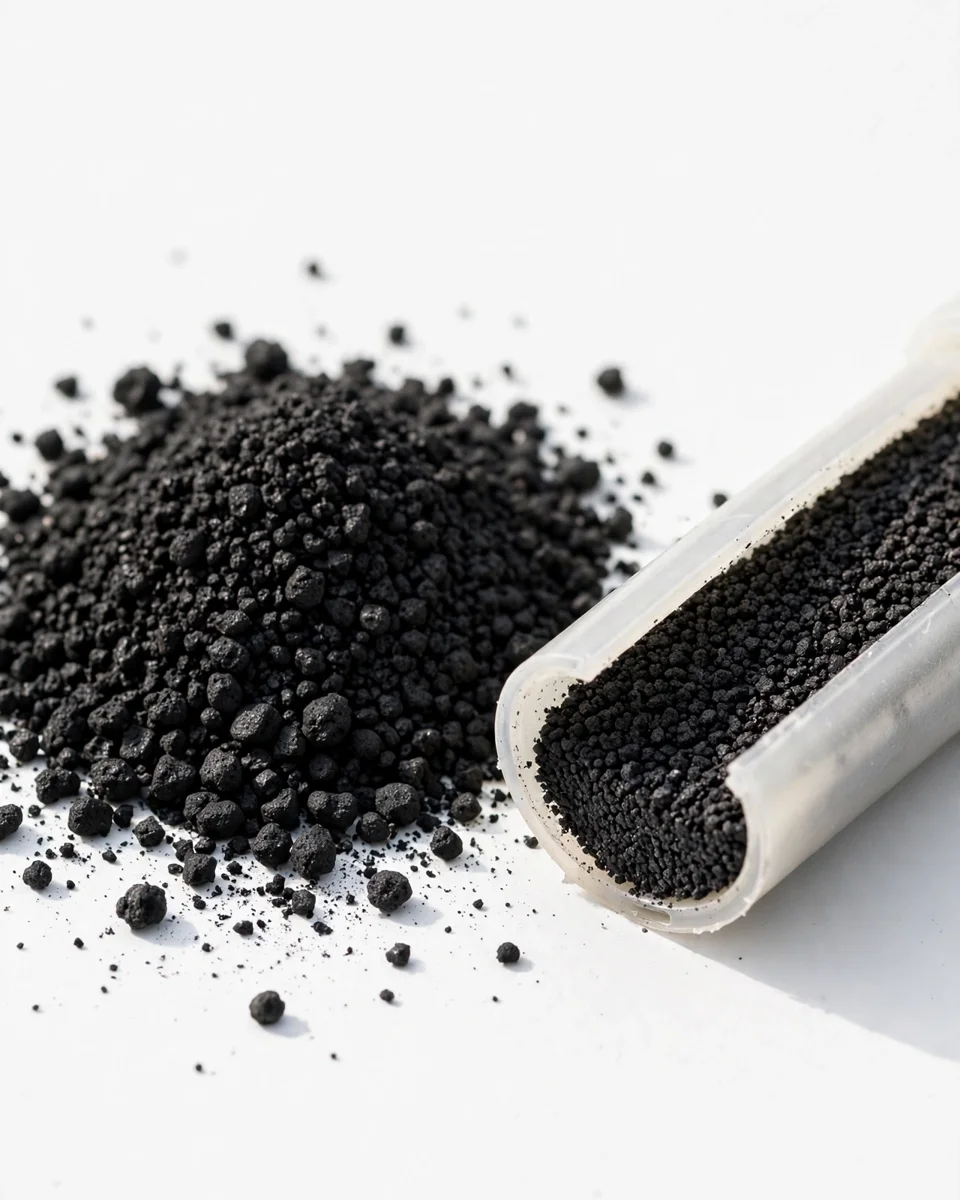
Catalytic carbon is activated carbon whose surface has been treated to do chemistry faster. Where standard carbon waits for a slow reaction, catalytic carbon actively splits the chloramine bond as water passes, then adsorbs the pieces. It is the established answer in drinking-water treatment for chloramine, and in a shower cartridge it is the difference between a claim and a capability — provided the cartridge holds enough of it. Bed size is the quiet spec that matters: a slim cartridge of catalytic carbon at high flow still gives the water little time to react, so favor designs with a substantial media bed and honest flow ratings.
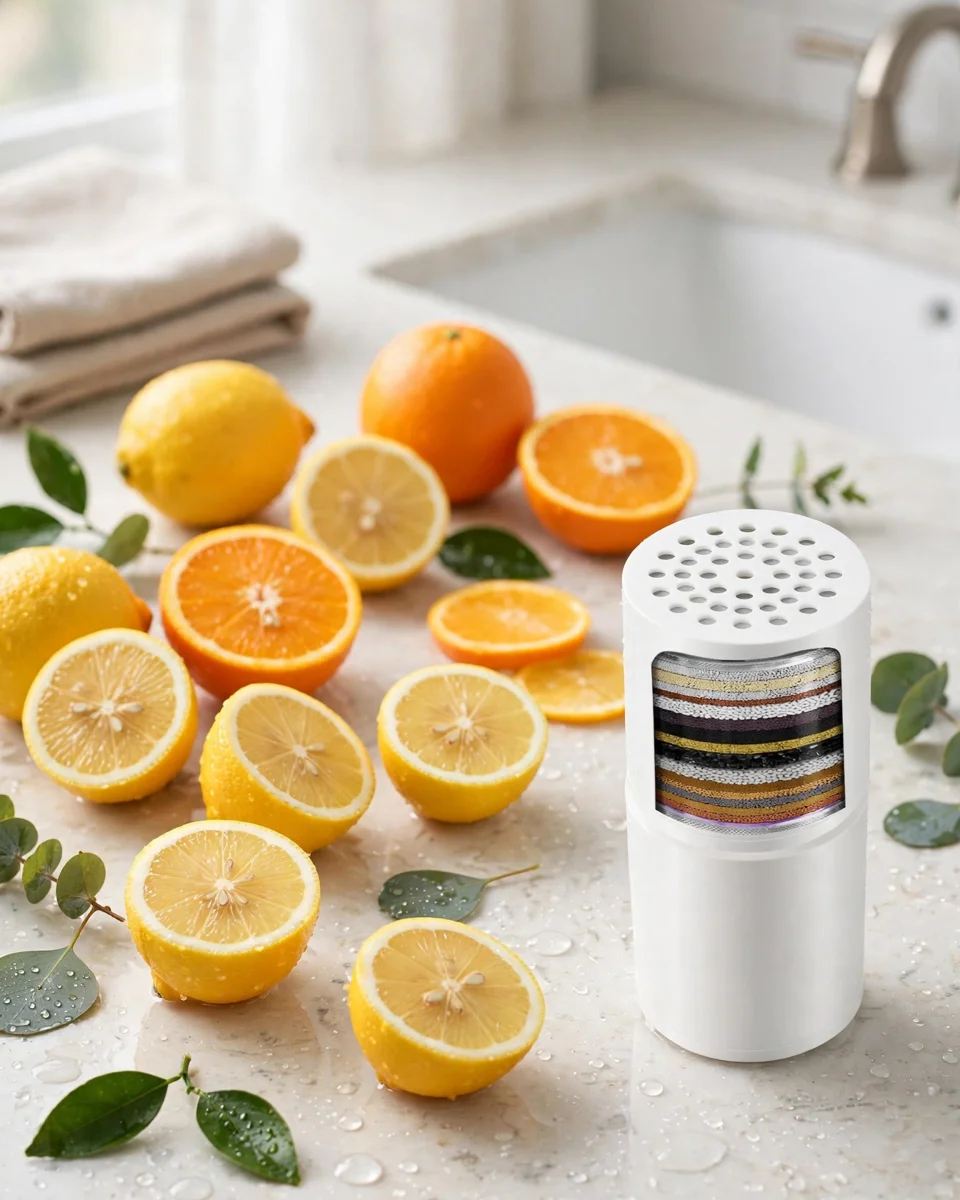
Vitamin C (ascorbic acid) takes a chemical shortcut: it neutralizes chloramine directly on contact, no slow adsorption required, and handles free chlorine the same way. It is a legitimate, long-used dechlorination chemistry (aquarium keepers and labs rely on it), packaged in shower cartridges that dissolve gradually as they work. The trade-offs are duration and diligence: the media is consumed by the reaction itself, so cartridges tend to live on the shorter side, their performance depends on replacing them on schedule, and the neutralization is a per-pass effect — there is no reservoir of protection once the ascorbic acid is spent.
What does not, despite the label
| Media | Free chlorine | Chloramine |
|---|---|---|
| Catalytic carbon | Strong | Yes — the recognized carbon answer, given enough bed size |
| Vitamin C (ascorbic acid) | Strong | Yes — neutralizes on contact; consumed as it works |
| Standard granular carbon (GAC) | Strong | Weak at shower contact times — mostly passes through |
| KDF / copper-zinc blends | Strong on free chlorine | Not the established answer on its own; treat blend claims cautiously |
| Generic “multi-stage” mixes | Varies | Only as good as their catalytic-carbon or vitamin-C content — ask which, and how much |
A labeling caution that applies across the category: shower-filter certification in the US (NSF/ANSI 177) is written around free chlorine reduction. Chloramine performance in a shower device generally rests on the maker’s own testing rather than a certification written for it, so the media type and bed size — facts you can verify from the cartridge description — are more trustworthy guides than a star rating or a percentage in a headline. When a product page says “removes chlorine and chloramine,” the follow-up question is always: with which media, and how much of it?
Buying checklist for chloramine cities
What to look for
- Media named explicitly: catalytic carbon or vitamin C — not just “carbon blend.”
- A substantial cartridge (more media = more contact time at the same flow).
- Stated flow ratings that match your shower habits; oversized promises at fire-hose flow are a tell.
- A replacement schedule you will actually keep — chloramine media that is spent is decoration.
What to discount
- “Removes 99% of chlorine and chloramine” with no media named.
- Tiny cartridges claiming whole-year life at family shower volumes.
- Any suggestion the filter also softens water — a separate myth, handled in our softening explainer.
- Assuming yesterday’s chlorine-city purchase transfers — it usually does not.
Finally, keep the plumbing side in shape: even the right media underperforms in a choked housing, so pair this guide with our shower filter pressure drop fixes if flow, not chemistry, is your complaint.
Conclusion
Chloramine defeats standard shower filters by patience, not by force: it simply refuses to react in the second a shower allows. Beat it by choosing media that changes the reaction — catalytic carbon with a real bed to work in, or vitamin C that neutralizes on contact — and by confirming from your water quality report that chloramine is your city’s disinfectant in the first place. Match the media to the molecule, and the shower you were promised is the one you get.
Update log
October 2026: Guide published; media comparisons reflect general performance at shower flow rates. No laboratory degradation statistics are cited for any media.
FAQs
How do I know if my tap water has chloramine?
Check your utility’s water quality report (Consumer Confidence Report) — the disinfectant is named, often as chloramine or monochloramine. Utility websites and customer lines answer it directly too. Home chlorine test kits typically measure total chlorine, which cannot separate the two; the utility’s document is the reliable source.
Does a regular carbon shower filter remove chloramine?
Mostly no, at shower flow rates. Standard granular carbon removes free chlorine quickly but reacts with chloramine too slowly for the brief contact a shower cartridge provides, so the bulk of it passes through. Carbon earns a chloramine claim when it is catalytic carbon — surface-treated for exactly this reaction — in a bed large enough to matter.
How does a vitamin C shower filter work?
The cartridge holds ascorbic acid, which reacts with chloramine (and chlorine) and neutralizes it chemically as water passes — no adsorption, no waiting. Because the ascorbic acid is consumed by the reaction, performance lasts exactly as long as the media does; these cartridges live and die by their replacement schedule.
Is chloramine in shower water harmful?
Chloramine is an EPA-approved disinfectant used at regulated levels, and cities choose it for stability and byproduct reasons. The common household complaints are comfort ones — dry-feeling skin and hair, and a chemical note in steam — the same reasons people filter chlorine. If you have specific health concerns, your utility’s published levels and your clinician are the right sources, not a filter box.
Can I just let shower water sit out to remove chloramine, like chlorine?
No — that difference is the whole problem. Free chlorine gasses off from standing water in a day or so; chloramine’s stability means it persists for far longer and does not boil off on a practical timescale either. Utilities picked it precisely because it does not fade. Filtration with the right media is the workable route.
My filter worked last year but not now. Did my city change something?
Possibly — and it is a common story. Utilities adopt chloramine over time, and some switch between disinfectants seasonally for maintenance, running free chlorine for a few weeks a year. If a formerly effective filter suddenly disappoints, check whether your utility changed disinfectants before blaming the cartridge; the water quality report and the utility’s news page will say.