Replacement Cartridges Cost (2026): Real Yearly Math
Guide
A refrigerator water filter looks like a $45 purchase. It is actually a subscription: the cartridge expires on a timer of about six months or 200 gallons, the fridge reminds you with a light, and the cycle repeats for as long as you own the appliance — typically a decade or more. Priced that way, the honest question is never “what does one filter cost?” but “what does this fridge cost me per year, and what else could that money buy?” This article runs that math with the price bands we track across the major cartridge families.
The short answer: a genuine fridge cartridge costs roughly $60–120 per year depending on brand, because nearly every model changes twice a year. Certified compatibles cut that to roughly a third. Over five years the genuine lane totals about $300–600 — real money, but still cheaper than most under-sink RO running costs, and the comparison that actually matters is against the water your household drinks, not against zero.
Table of Contents
The upfront number lies politely
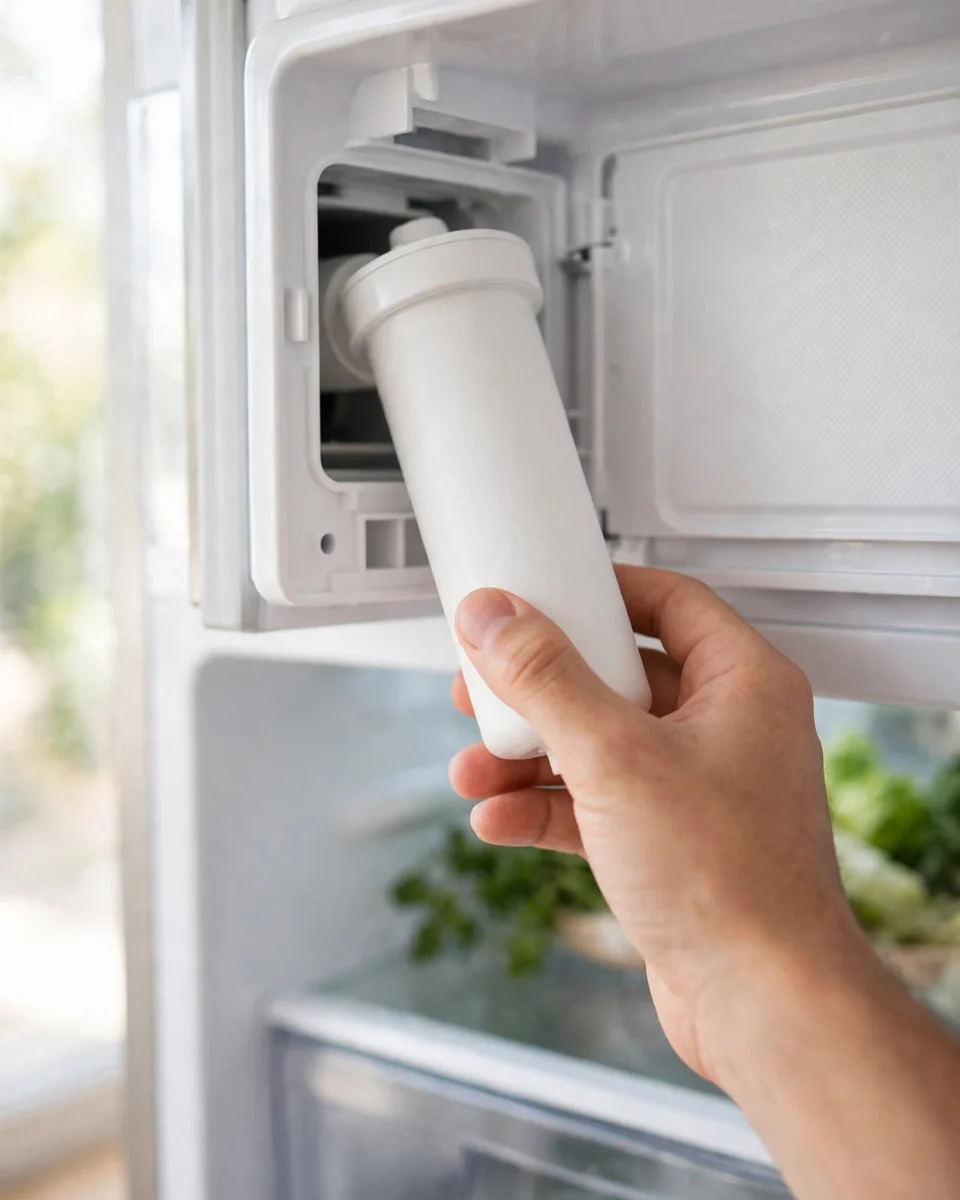
Three facts set the whole budget. First, the cadence: nearly every refrigerator cartridge — Samsung, Frigidaire, LG, GE, EveryDrop — is rated for about six months of service. Second, the indicator light that enforces it is mostly a timer, not a sensor: it counts months, which is why it turns red right on schedule whether your water ran hard or barely flowed. Third, most households genuinely use the water — fridge dispensers are the default drinking source in many kitchens — so “just change it less often” trades away the filtration the cartridge exists to provide. Budget on two changes a year, and the per-cartridge sticker turns into an annual line item you can finally compare.
The yearly math, brand by brand
These are the street-price bands we track for genuine cartridges, doubled for the two-change year. Treat them as 2026 estimates — prices move with sales and multipacks — but the ranking barely changes.
| Cartridge family | Per cartridge | Per year | Certification that comes with it |
|---|---|---|---|
| LG LT1000P | ~$30–40 | ~$60–80 | LG lists NSF/ANSI 42/53/401 |
| Frigidaire WF3CB | ~$40–50 | ~$80–100 | IAPMO-listed NSF/ANSI 42/53/401 |
| Samsung DA29-00020B | ~$40–55 | ~$80–110 | NSF/ANSI 42 only (per the NSF database) |
| Frigidaire ULTRAWF | ~$40–55 | ~$80–110 | IAPMO-listed NSF/ANSI 42/53/401 |
| EveryDrop Filter 4 (EDR4RXD1) | ~$45–60 | ~$90–120 | Whirlpool lists NSF/ANSI 42/53/401 |
| GE XWFE | varies (170-gal rating) | ~$90–110 | NSF/ANSI 42/53/401 + P473 |
Read the last column before the price column. The Samsung row is the interesting one: at genuine-Samsung money you get the least certification on the table — its NSF listing covers Standard 42 (taste and odor) only, as our DA29-00020B replacement guide documents. The Frigidaire pair carry broader IAPMO listings, compared in the WF3CB and ULTRAWF guides. Price and proof are not the same axis, and the cheap seats are not where intuition puts them.
Five-year total cost of ownership

Multiply the yearly bands by five and the “expensive filter” question sharpens: genuine ownership runs about $300–600 over five years, or $500–1,000 across a fridge’s typical ten-year life. The certified-compatible lane — cartridges from brands that publish their own NSF/IAPMO listings — runs about $11–17 per cartridge in the mainstream families, roughly $110–170 over five years; our roundup of the cheapest NSF-certified fridge filters tracks that lane model by model. The genuinely risky lane is the uncertified no-name tier below even that, where the saving is small and what is inside the cartridge is simply unknown — unknown media, unknown materials, and no listing to check. The five-year difference between certified-compatible and genuine is a few hundred dollars; the difference between certified and uncertified is the entire point of the filter.
Where genuine earns its price
- The certification is printed by the certifier, not the seller — listings checkable in the NSF/IAPMO databases.
- Fit and seals are the OEM’s own tooling; leak risk is lowest here.
- Warranty conversations stay simple — nobody argues about whose part it was.
Where it does not
- Paying genuine money for a taste-only (NSF 42) listing when certified compatibles carry 53/401 listings for your model.
- Single-pack buying at full retail —Subscribe & Save and twin packs move the yearly number materially.
- Stretching changes to “save” — the saving is ~$20–40 a year against exhausted media filtering nothing.
Against the alternatives
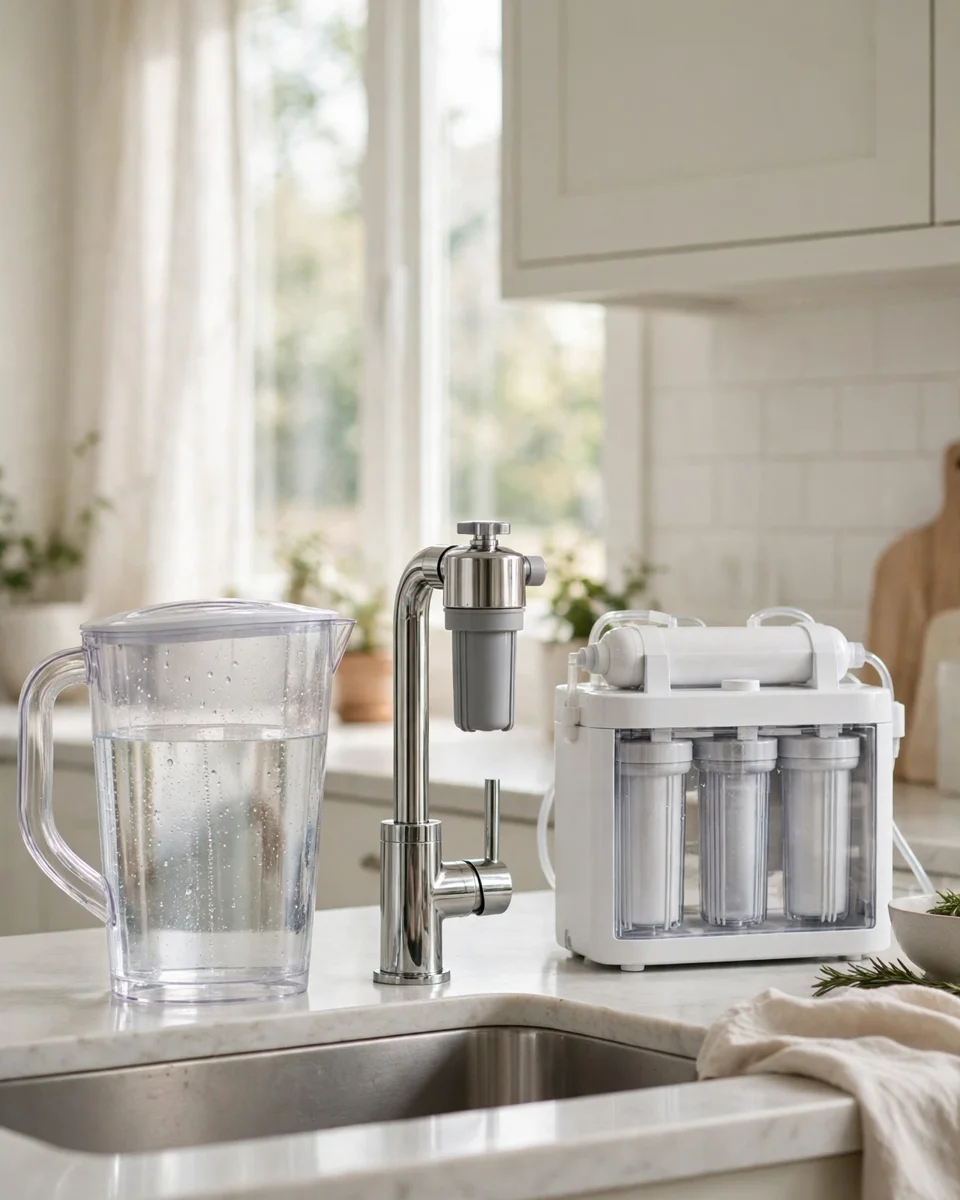
The fridge cartridge also competes with every other way of filtering the same glass of water. A pitcher lane runs cheaper per year at the cartridge level — but capacity, fridge-door space, and constant refilling are its own costs, and the per-gallon math against bottled habits is in our ZeroWater vs Brita yearly cost comparison. Under-sink RO costs more up front and similar-or-more per year in filters, but removes things no fridge cartridge touches (fluoride, nitrate, PFAS at membrane level). The fridge filter’s honest position: the convenience champion — cold, filtered, at the door, for roughly the price of a streaming subscription or two. Whether that is “worth it” depends entirely on whether the certification column matches what your water actually needs.
Conclusion
Run the yearly number, not the sticker number: genuine fridge cartridges cost about $60–120 a year, certified compatibles about $22–34, and five-year ownership lands between roughly $110 and $600 depending on lane. The expensive option is not automatically the certified one — Samsung’s genuine cartridge carries the narrowest listing on the table — so the rational buy is the cheapest cartridge whose certification you can verify in the certifier’s database for your exact model. Everything below that line is not savings; it is an unmarked box doing an unknown job.
Update log
October 2026: Article published. Prices are tracked street-price bands (2026 estimates) for the major cartridge families; certification listings per the NSF and IAPMO public databases and manufacturer listings as noted in the linked model guides.
FAQs
How much do refrigerator water filters cost per year?
For genuine cartridges, roughly $60–120 per year depending on brand, because nearly every model is changed twice a year at about six-month intervals. Certified compatible cartridges run about $22–34 per year in the mainstream families. All figures here are 2026 street-price estimates.
Can I change my fridge filter once a year instead of twice?
You can, and many people do — the fridge will not stop you, and the indicator is a timer you can reset. The trade is performance: carbon media exhausts with gallons and time, so the second six months run on a cartridge whose rated capacity is spent. For a taste-only (NSF 42) cartridge the cost of stretching is mostly taste; for health-contaminant claims, the rated life is the claim’s boundary.
Are expensive refrigerator filters worth it?
Sometimes — when the price buys verified certification for your model. It is not worth it when genuine money buys only a taste-and-odor listing while a certified compatible carries broader NSF/ANSI 53/401 listings for the same fitting. Compare the certifier’s database entry, not the price tag.
Do multipacks actually save money?
Yes, typically 10–30% per cartridge versus singles at full retail, and subscription discounts stack further. The caution is shelf commitment: a six-pack is a three-year supply, so only stock up once you are sure the model is right for your fridge and you are happy with that lane (genuine or certified compatible).
What is the cheapest safe way to run a fridge filter?
A certified compatible from a brand that publishes its own NSF or IAPMO listing for your exact cartridge family, bought in a twin pack. That combination lands near $25–35 a year with the certification column intact. The uncertified tier below it saves only a few dollars more and removes the one thing that makes a filter verifiable.
Does using a cheaper filter void the fridge warranty?
No — under the Magnuson-Moss Warranty Act a manufacturer cannot void coverage merely because you used a third-party filter; they would have to show the part caused the failure. Our dedicated article on aftermarket filters and warranties covers the rule and its practical limits.