RO Water vs Alkaline Water (2026)
Two camps dominate home water talk. One strips water down to almost nothing — reverse osmosis. The other pushes water in the opposite direction — alkaline water, sold with promises about pH, antioxidants and better hydration. They sound like opposites, and in one way they are: RO is a purification technology; “alkaline” is a property that marketing built a health story on.
Here is the short answer: RO wins on everything measurable — it removes 95–99% of dissolved contaminants (lead, PFAS, arsenic, nitrates) for about $200 plus ~$75 a year. Alkaline water wins on nothing proven. Major medical references, including Mayo Clinic, note there is no scientific evidence that alkaline water delivers health benefits beyond normal hydration — your blood pH is tightly regulated regardless of what you drink. Where alkaline options do make sense is taste: an alkaline (remineralizing) stage on an RO system softens RO’s flat flavor for about $40–70 more. For specific systems, see our best reverse osmosis systems roundup.
Proven Purification · Reverse Osmosis
RO Water
~$190–230 per system
Removes 95–99% of dissolved contaminants — the strongest verified protection at home.
Taste Preference · Alkaline
Alkaline Water
~$270 (RO + alkaline stage)
Higher pH and a rounder taste via remineralization — health claims beyond that are unproven.
Verdict: buy RO for your water; add an alkaline stage only for your taste buds. Purification is a fact you can measure with a TDS meter. Alkaline health benefits are a claim no major medical body endorses. The smart money buys the membrane first.
Table of Contents
Side-by-side comparison
Representative setups: a quality tanked RO system (iSpring RCC7 class) versus the same class of RO with an alkaline remineralization stage (APEC ROES-PH75 class). Standalone ionizers are covered in the cost section.
| RO Water | Alkaline (RO + Stage) | |
|---|---|---|
| pH at the glass | ~5.5–7 (drops as it absorbs CO₂) | ~8–9.5 |
| Contaminant removal | 95–99% of dissolved solids, lead, PFAS, arsenic | Same membrane — identical removal |
| Minerals in water | Near zero | Some calcium/magnesium added back |
| Health evidence | Purification benefits are measurable | Alkaline-specific claims unproven |
| System price | ~$190–230 | ~$260–290 |
| Running cost | ~$75/year | ~$85–100/year |
| Taste | Clean, some call it flat | Rounder, closer to spring water |
RO water — what it is
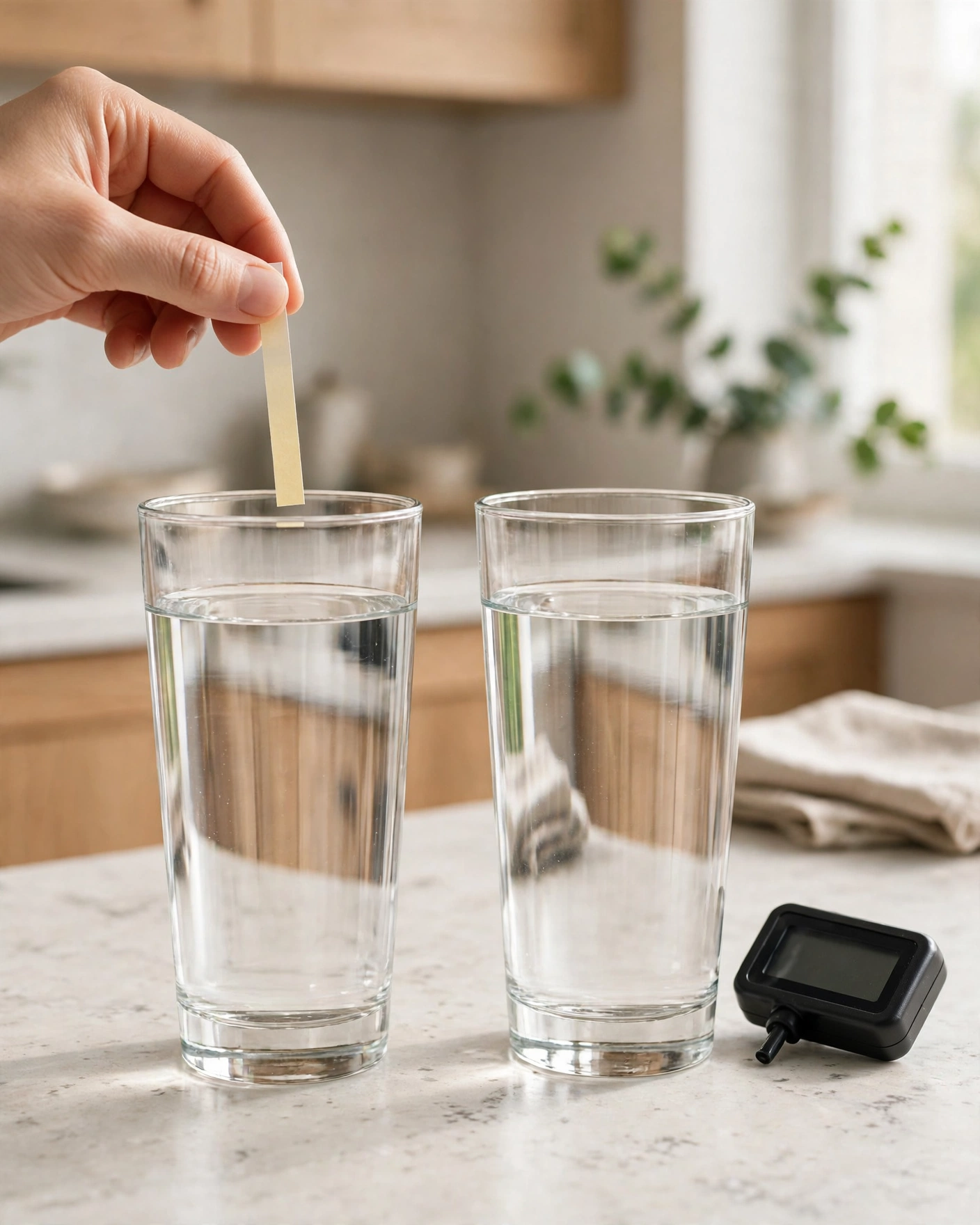
Reverse osmosis pushes water through a membrane with pores around 0.0001 microns. What comes out is water with 95–99% of dissolved material removed: lead, PFAS, arsenic, fluoride, nitrates, pharmaceutical residues, the lot. Systems like the iSpring RCC7 are certified to NSF/ANSI 58 for the system, and a TDS meter confirms the performance in your own kitchen for about $15.
Two honest footnotes, because RO critics lead with them. First, pH: freshly purified RO water is near neutral but absorbs carbon dioxide from air and storage, so a glass typically tests around 5.5–6.5. That is comparable to many soft drinks’ gentler cousins and plain rainwater — your stomach and blood chemistry handle it trivially. Second, minerals: RO removes calcium and magnesium along with everything else. For a normal diet, water is a minor mineral source (food provides the overwhelming majority), and an alkaline remineralization stage — the other side of this comparison — exists for people who want some back.
Pros
- Broadest verified removal of any home technology — 95–99% of dissolved contaminants.
- Cheapest serious purification — ~$200 in, ~$75/year.
- Provable at home with a $15 TDS meter.
Cons
- Flat taste for some palates (the alkaline stage exists because of this).
- Waste water — classic tanked systems send roughly 3–4 gallons down the drain per gallon purified (tankless models do better).
- Near-zero minerals — a preference issue more than a health one.
Alkaline water — what it is
“Alkaline water” reaches your glass three ways, and they are not equal. Electric ionizers ($1,500–4,000+) split water into alkaline and acidic streams with electrolysis and heavy marketing. Alkaline stages on RO systems (like APEC’s ROES-PH75, ~$270) pass purified water through calcite and mineral media, raising pH to roughly 8–9.5 and adding back some calcium and magnesium. Alkaline pitchers and drops ($25–60) nudge pH in a jug. Only the middle option starts from purified water — an ionizer fed with contaminated tap water produces contaminated alkaline water, which is the category’s dirtiest secret.
What alkaline water demonstrably does: tastes rounder to many people, and tests at pH 8–9.5. What it is claimed to do — neutralize body acid, deliver antioxidants, slow aging, hydrate “deeper” — has not held up in credible research, a point the evidence section takes head-on.
Pros
- Taste — remineralized water genuinely pleases palates that find RO flat.
- RO + alkaline stage keeps the purification — same membrane doing the safety work.
- Adds back calcium/magnesium for those who want minerals in the glass.
Cons
- No proven health benefit beyond hydration, per major medical references.
- Ionizers are wildly overpriced ($1,500–4,000+) and purify nothing by themselves.
- pH claims collapse in the stomach — gastric acid (≈pH 2) neutralizes a glass of pH 9 water instantly.
What the evidence says
Hold the two sides to the same standard. RO’s core claim — contaminant removal — is certified (NSF/ANSI 58 system listings), reproducible, and measurable at home. Alkaline water’s core claim — health benefits from higher pH — is not supported by credible clinical evidence: Mayo Clinic’s published position is that there is no scientific proof alkaline water is more beneficial than regular water, and gastroenterology commentary makes the mechanical point that blood pH is regulated by your lungs and kidneys within a tight range no beverage moves. Small studies exist (a 2016 reflux study found pH 8.8 water denatured pepsin in vitro — interesting, preliminary, and a long way from the marketing). Our rule on this page: alkaline water is a taste product with unproven health claims, priced and judged as one.
Compatibility & installation
Both setups live under the sink on the same cold-water line with a dedicated faucet. A tanked RO installs in one to two hours with hand tools; adding an alkaline stage is one more inline cartridge — many owners retrofit it onto an existing RO in fifteen minutes. Ionizers sit on the counter, need power, and connect to the faucet or line. Renters note: RO needs a small hole for its faucet (or a countertop RO unit avoids it); alkaline pitchers need nothing at all, and purify almost nothing either.
Cost per year
- RO system (RCC7 class): ~$190–230 in, ~$75/year in filters and membranes → five-year ≈ $565–605.
- RO + alkaline stage (ROES-PH75 class): ~$260–290 in, ~$85–100/year (the mineral stage is an extra annual cartridge) → five-year ≈ $685–790.
- Electric ionizer: $1,500–4,000+ in, plus filters and eventual plate replacement → five-year ≈ $1,800–4,500+, for water that still needs a real filter in front of it on questionable tap water.
- Per gallon: RO ≈ 3–5¢; RO+alkaline ≈ 4–6¢; ionizer ≈ 40¢+ at typical use. The pH premium is the most expensive water in this comparison by an order of magnitude.
What owners say
RO owners talk about contaminants and TDS numbers — measurable satisfaction. Alkaline-stage owners talk about taste, and many are frankly ex-RO owners who kept the system and fixed the flavor. Ionizer owners are the most evangelical and the hardest to separate from placebo — satisfaction is sky-high, but so it is for most $3,000 wellness purchases. The most useful signal in owner forums: people almost never remove an RO system once installed; ionizers, by contrast, appear in resale listings constantly.
Which should you buy?
Pick RO if…
Your goal is safer water — lead, PFAS, arsenic, nitrates, or just verified purity. This is the only option here that does that job, and it is also the cheapest. Start with our RO systems roundup.
Pick RO + an alkaline stage if…
You want RO purification but prefer the taste of mineral water, or a household member simply drinks more water when it tastes rounder. A legitimate preference purchase — just buy it as flavor, not medicine.
Buy neither (an ionizer) if…
You were about to spend four figures on alkaline health promises. The evidence does not support them, the machine does not purify, and the same money buys a top-tier RO plus a decade of filters.
How we researched
Removal figures are the RO membrane class standard (95–99% TDS rejection) backed by NSF/ANSI 58 system certifications such as the iSpring RCC7’s. The health-claims assessment follows major medical references — including Mayo Clinic’s published position that alkaline water’s benefits lack scientific evidence — rather than brand material. Prices are October 2026 street estimates (RCC7 class ~$190–230; APEC ROES-PH75 ~$260–290; ionizers $1,500–4,000+). We did not run lab tests.
FAQs
Is alkaline water actually healthier than RO water?
There is no credible evidence that it is. Major medical references, including Mayo Clinic, state that alkaline water’s claimed health benefits — beyond ordinary hydration — are not supported by scientific research, and your blood pH is tightly regulated by your body regardless of what you drink. RO water’s advantage is the opposite kind of claim: measurable contaminant removal, certified to NSF/ANSI 58 and verifiable with a TDS meter. Alkaline water is a taste preference; RO is a purification technology.
Is RO water too acidic to drink?
No. RO water leaves the membrane near neutral and typically tests around pH 5.5–6.5 after absorbing a little carbon dioxide from the air — similar to rainwater and far less acidic than coffee, juice or soda. Your stomach (around pH 2) and your blood’s buffering system handle it without any measurable effect. The mildly low reading is a chemistry curiosity, not a health concern for healthy people.
Does RO remove minerals your body needs?
It removes nearly all minerals from the water, yes — calcium and magnesium included. For most people eating a normal diet this matters little, because food supplies the overwhelming majority of mineral intake; water is a minor source. If you prefer minerals in your glass, an alkaline remineralization stage (as in the APEC ROES-PH75) adds some calcium and magnesium back after purification — the sensible middle path in this comparison.
Can I make alkaline water from my existing RO system?
Usually, yes. An inline alkaline remineralization cartridge — calcite and mineral media in a slim housing — plumbs into the RO’s output line in about fifteen minutes and costs roughly $30–60, raising pH toward 8–9.5 and rounding out the taste. It is the same stage sold pre-installed in systems like the APEC ROES-PH75, and it changes flavor and pH only; the membrane keeps doing the purification.
Conclusion
RO water vs alkaline water is a contest between a measurement and a story. The measurement wins: reverse osmosis verifiably removes the contaminants people actually worry about, at the lowest cost per gallon in home filtration. Alkaline water’s health story remains unproven — but as a taste upgrade layered on top of RO, a remineralizing stage is a fair $40–70 indulgence. Purify first, flavor second, and let four-figure ionizers sell their promises to someone else.
Price checked at time of writing; it changes often — see the live price before you buy.
Update log
- Zulqarnain: Review published.