
How to Flush a New Fridge Water Filter: Step by Step (2026)
Guide
This is the procedure page: exactly how to flush a new refrigerator water filter, with the setup, the cycle rhythm, and the gallon targets for the three setups — dispenser fridges, ice-maker-only fridges, and external inline filters. (For why the flush matters — the carbon fines, the air, the taste — see the companion explainer, How to Flush a New Refrigerator Water Filter.)
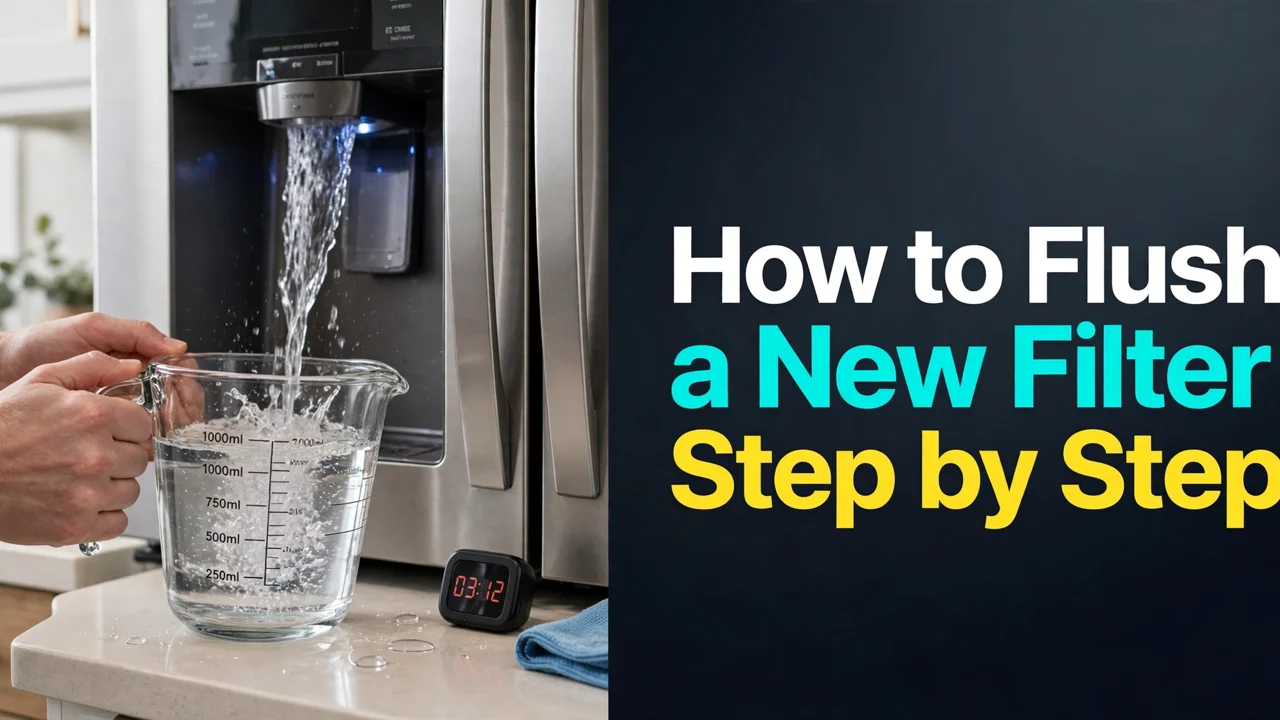
Procedure in one line: install the cartridge, set a big jug at the dispenser, and run 2–4 gallons in 30-seconds-on / 30-seconds-off cycles (brand figure if you have it: LG ~2.5 gal, GE ~2, EveryDrop ~4, Samsung up to ~5), then dump the first batch of ice and reset the filter light. Total time: about 10 minutes, most of it waiting.
Table of Contents
Before you start: setup

- Container: a 1-gallon jug minimum, or a stockpot. Flushing into drinking glasses is how flushes die at half a gallon.
- Timer: phone or kitchen timer — the cycles and the total both matter.
- Cartridge seated: confirm the new filter is fully home (turn hard-stopped or clicked) before water runs; flushing through a half-seated cartridge just makes a wet floor, per our leak guide.
- Towel: under the container, because the first cycle sputters.
The procedure: dispenser fridges
- Cycle 1 — purge. Dispense for 30 seconds into the jug. Expect sputter, spurts of air, and grayish water. Rest 30 seconds (this lets the reservoir refill and air collect at the top of the cartridge, ready to leave next cycle).
- Repeat to your target volume. Keep cycling 30 on / 30 off, emptying the jug as needed, until you reach the brand figure — or the default 2–4 gallons. At a typical 0.5-gpm flow, each “on” cycle moves about a quart; a 3-gallon flush is roughly 12 cycles and 12 minutes.
- Check the water. In the final cycle, catch a glass: it should run clear, stream steady, no visible specks against the light.
- Taste test. Neutral is done. Slight dustiness lingering at the full target? Add one more gallon — long plumbing runs and sediment-heavy water extend the job legitimately.
One caution: if the dispenser stops mid-cycle or the stream collapses to nothing, you have likely outrun the reservoir rather than broken something — wait a full minute and resume. A stream that stays feeble after the full flush is a different problem; work our slow-flow diagnosis.
No dispenser? Flush through the ice maker
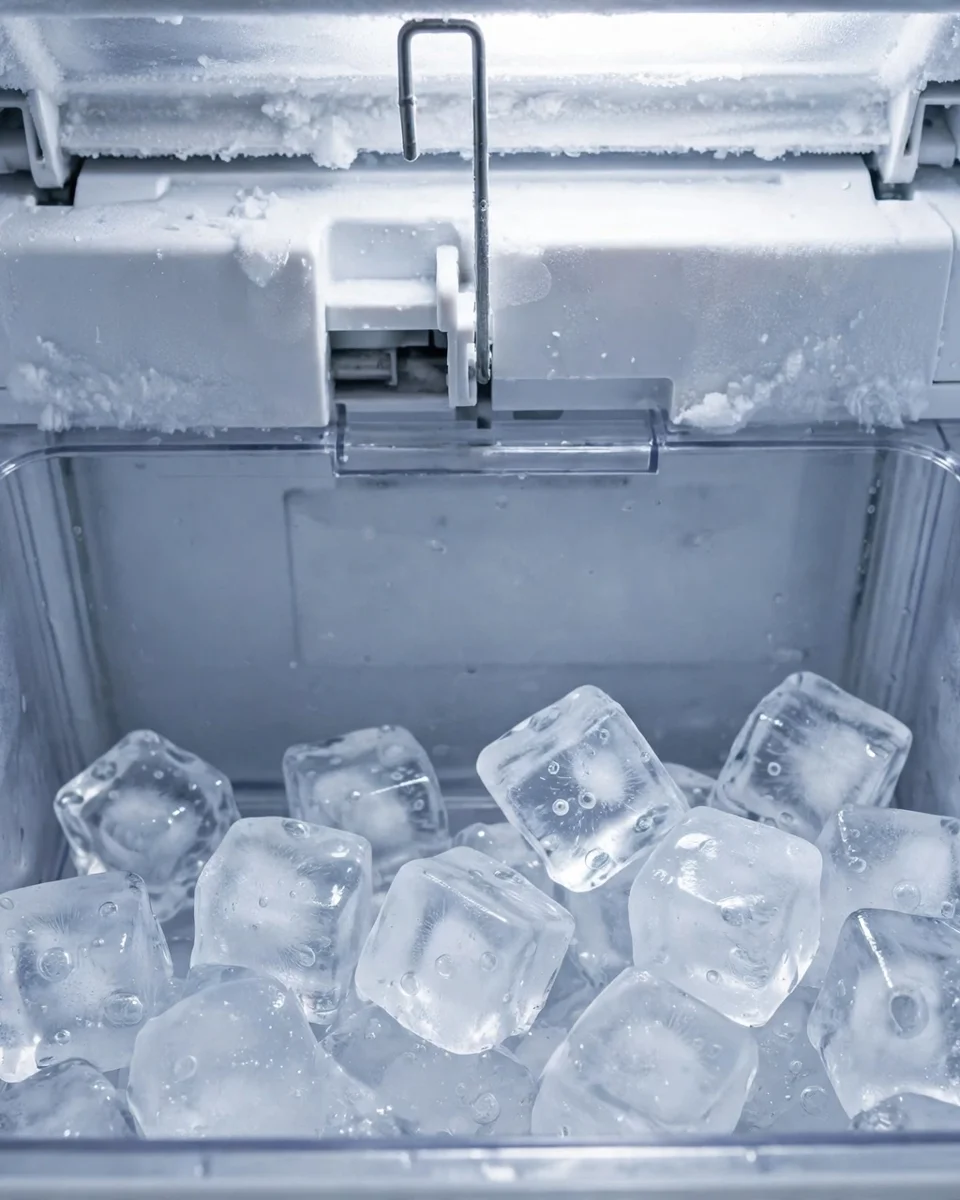
Fridges with an ice maker but no through-door dispenser flush through cube production instead. Empty the ice bin, let the maker run, and discard the first two to three full batches — each batch carries the previous water further out of the line and cartridge, and cube two or three is where the fines have effectively cleared. It is slower (a day of ice cycles) but needs no intervention. If the fridge also has an internal water dispenser inside the compartment (some models hide one on the inner wall), use it — that is a dispenser for flushing purposes.
External inline filters

An inline cartridge on the line behind the fridge flushes exactly as above — through the dispenser or ice maker it feeds. One inline-specific step comes before reconnecting: many installers pre-flush the new inline cartridge into a bucket at the sink or tub (a few quarts) so the worst of the fines never enter the fridge’s line and reservoir at all. If yours is already connected, the standard procedure handles it; just expect the gray phase to be slightly more visible and do not shorten the gallons.
Finish: reset and record
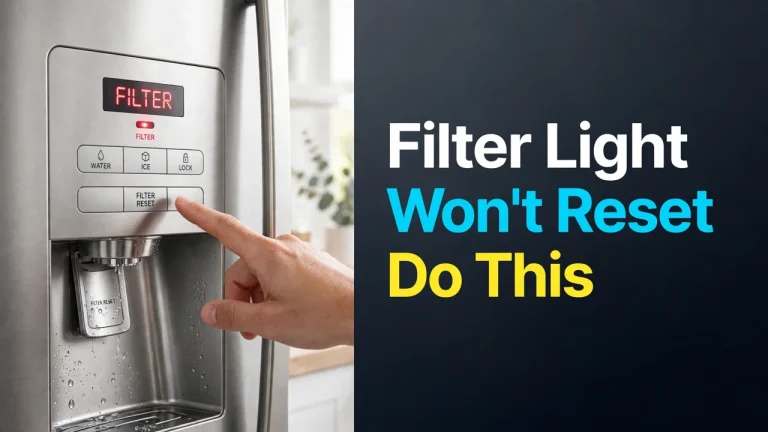
With the water running clear: reset the filter indicator (hold the filter button ~3 seconds, or your model’s method — the reset instructions guide covers the order and the stubborn cases), write the date on the cartridge label or a phone note, and set a six-month reminder. That last step is the difference between a maintained filter and a mystery filter, and it takes twenty seconds twice a year.
Conclusion
Setup (big jug, timer, seated cartridge), cycles (30 on, 30 off), target (2–4 gallons or your brand’s number), ice (first batch dumped), finish (reset, date, reminder). That is the whole procedure — ten unhurried minutes that decide whether the next six months of water taste like the filter’s promise or its packaging.
Update log
October 2026: Procedure published with brand flush volumes from Samsung, LG, GE and Whirlpool owner documentation.
FAQs
How long does flushing a new fridge filter take?
About 10–15 minutes of clock time for a 2–4 gallon flush, because the recommended rhythm is intermittent: 30 seconds dispensing, 30 seconds resting. The dispensing itself totals roughly 4–8 minutes at a typical 0.5-gpm filtered flow.
Why dispense in cycles instead of one continuous run?
Two reasons: continuous dispensing can pause or strain some dispenser systems, and the rest intervals let the reservoir refill while air migrates to the top of the cartridge so the next cycle expels it. Cyclers finish with steadier streams than continuous runners in practice.
How do I flush the filter if my fridge has no water dispenser?
Through the ice maker: empty the bin and discard the first two to three batches of cubes, which progressively clear the line and cartridge. If the fridge has an internal dispenser on the compartment wall, use that instead — it flushes like any dispenser.
What do I do with all the flushed water?
Anything except drinking it, out of taste rather than safety: water plants, fill the kettle for washing-up water, mop with it, or pour it down the drain. The fines are food-grade carbon; the flush water is simply not pleasant.
The water is still sputtering after 4 gallons. Keep going?
Add one more gallon in cycles; long lines and big reservoirs hold more air. If sputtering persists well past 5 gallons, stop flushing and check the cartridge seat — a half-seated filter keeps admitting air no volume of flushing will fix. Our slow-flow guide orders those checks.
Do I flush a filter that sat in the fridge while I was on vacation?
A short version, yes: after a week or more away, run a quart or two through the dispenser and dump the first ice. That is not the new-filter flush — it just clears water that stood in the lines, which picks up a stale note. The full gallon procedure is only for new cartridges.