Home Water Test vs Lab Test (2026)
You want to know what’s in your water. Two doors: a $35 kit from the hardware shelf that answers today, or a $165 mail-in box that ships your water to a certified laboratory and answers next week. Both call themselves “water testing.” They deliver different species of truth, and choosing wrong means either overspending on certainty you didn’t need or under-buying the only kind that counts.
Here is the short answer: a lab test is the only result you can act on — certified methods, real numbers, detection limits low enough to judge against health standards, and a report that holds up with landlords, buyers and health officers. A home kit is a screening tool — fast, cheap, broad, and approximate; its job is to tell you whether a lab test is warranted and to monitor between lab rounds. Used in that order — home kit to screen, lab to decide — the two are partners. Used as substitutes, both disappoint.
For Decisions · Laboratory
Lab Test (Mail-In)
~$60–300 by panel
Certified methods and defensible numbers — the result you can spend money or make health calls on.
For Screening · DIY
Home Test Kit
~$25–50
Same-day, broad and cheap — perfect for “should I worry?” and for watching trends.
Verdict: the lab wins on everything except speed and price — which happen to be the two things that make home kits worth owning. Screen at home as often as you like; the moment a result would change a decision, confirm it in a lab.
Table of Contents
Side-by-side comparison
Representative options: a Safe Home-class DIY kit (~$35) versus a Tap Score-class mail-in lab panel (~$165). State and county labs sit between them on price — covered in our well water roundup.
| Home Test Kit | Lab Test | |
|---|---|---|
| Result type | Color bands / presence-absence | Measured values with units |
| Detection limits | Coarse — often near or above action levels | Far below health benchmarks |
| Contaminants | ~8–17 basics | 100+ on broad panels, incl. PFAS options |
| Turnaround | Minutes to ~2 days | ~5–14 days |
| Price | ~$25–50 | ~$60–300 by panel |
| Defensible (sales, disputes, health calls) | No | Yes |
| Best role | Screening & monitoring | Diagnosis & decisions |
Lab testing — what you get
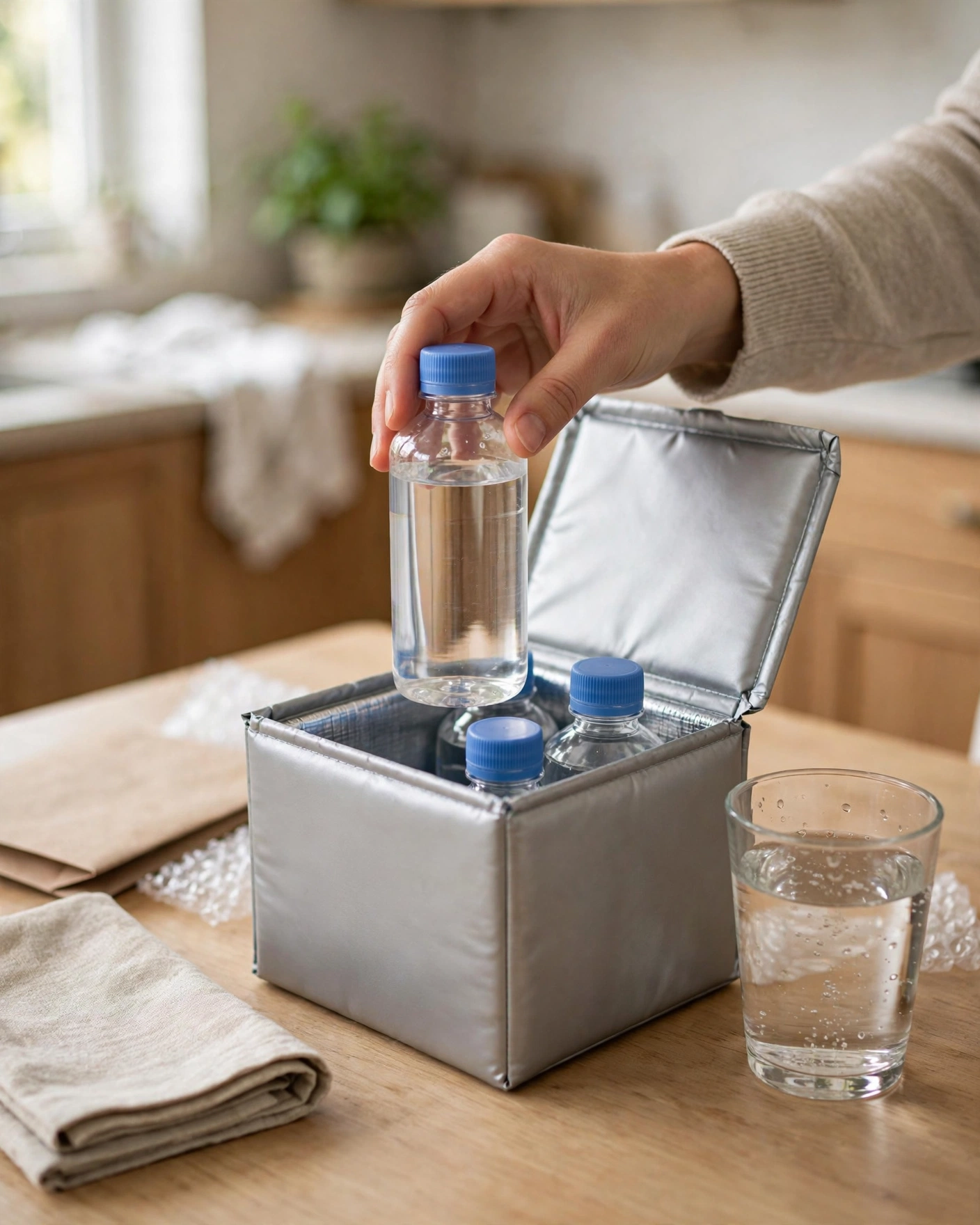
A lab test — mail-in services like Tap Score, or your state/county drinking-water lab — analyzes your sample with the same certified method family utilities are required to use: instruments that return concentrations (“lead: 3.2 µg/L”), quality-controlled, with detection limits comfortably below the levels regulators care about. That precision is what makes the result usable: you can compare it to EPA standards, hand it to a home buyer, a pediatrician or a health officer, and act — remediate, filter, or relax — on solid ground.
The frictions are time, money and your own sampling. Panels run roughly $60 (targeted, e.g., lead) to $300 (broad, with PFAS); results take about a week, sometimes two; and a bacteria sample drawn carelessly (touched rim, warm car ride, missed deadline) can invalidate the round. The instructions in the box are part of the instrument — follow them like it matters, because it does.
Pros
- Numbers you can defend — certified methods, real detection limits.
- The only route to PFAS, precise lead, and defensible bacteria results.
- Reports benchmarked to health standards, readable by non-chemists.
Cons
- Days to weeks, not minutes.
- $60–300 per round — a decision, not a habit, for most budgets.
- Sampling technique is on you.
Home kits — what you get
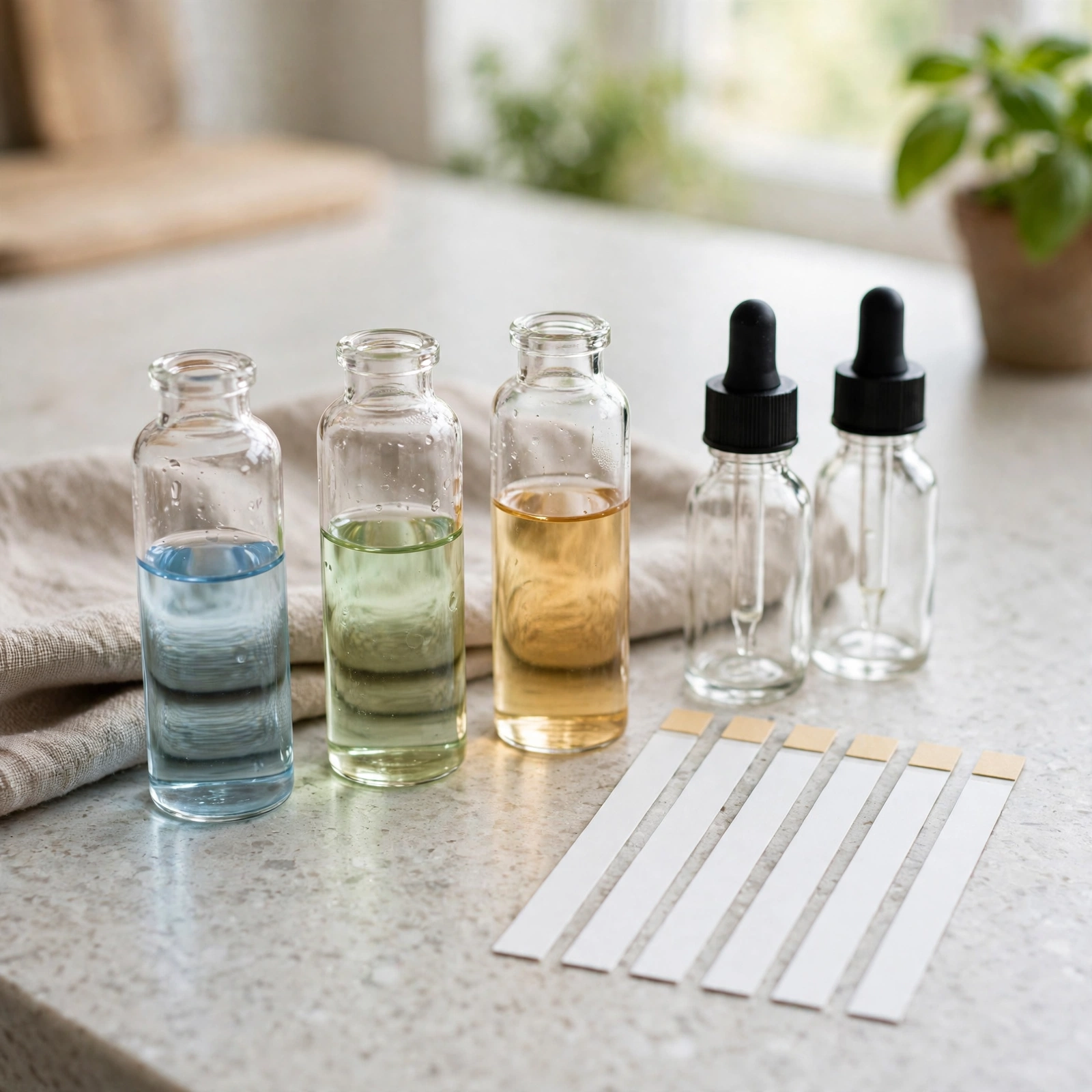
Home kits split into strips (a minute, pennies, the roughest bands — the subject of our strips vs lab comparison) and reagent/vial kits like Safe Home’s, which slow down, measure drops, and produce clearer thresholds for bacteria, lead, nitrates, pesticides and more at $25–50. What both share: results in bands (“between 5 and 15”) or presence/absence, at detection limits that can sit near the very thresholds you are testing against. That is fine for their true jobs — noticing change, checking a fix worked, deciding whether to escalate — and quietly dangerous when treated as a verdict on a health question.
Pros
- Answers today, at a tenth of the lab’s price.
- Broad basic menu and repeatable enough for trend-watching.
- The perfect trigger mechanism — a worrying result sends you to the lab informed.
Cons
- Band-level precision; metals and bacteria results are screening-grade.
- No PFAS, no defensibility, no standing with officials or buyers.
Methods & standards
The technical gap in one paragraph: labs run standardized, audited methods (the EPA method family) on calibrated instruments, with blanks, spikes and duplicates proving each batch behaved. Home kits run colorimetric chemistry in your kitchen, read by eye against a printed chart, with no quality control beyond your care. Neither is fraudulent — they are different instruments for different questions, like a bathroom scale versus a clinic’s. Confusion only harms when the bathroom scale is asked to diagnose.
Sampling & process
Home kit: fill, dip or dose, wait, compare colors — twenty minutes at the sink. Lab: the kit arrives with sterile bottles and strict instructions (which tap, flush or first-draw, fill lines, cold pack, shipping deadline); you execute a small protocol and wait for the report. First-draw sampling matters specifically for lead (water that sat in your pipes overnight) — a detail home kits rarely structure properly and lab kits always do. Whichever route you choose, a sample drawn from the wrong tap or after the wrong flush answers a question you did not ask.
Cost per year
- Home kits only: ~$35–75/year buys unlimited screening — and zero defensible answers.
- Lab only: one broad panel ~$165–265/year (or every few years for stable city water) — defensible, but no monitoring between rounds.
- The hybrid most households should run: a lab baseline (~$165) + a $35 DIY kit and $20 of strips for the intervals → ~$60–90/year averaged, with both speed and certainty covered.
- Public-lab shortcut: state/county coliform and chemistry tests at $20–60 can replace much of the commercial lab spend for well owners (see the well roundup).
What users say
Home-kit fans praise immediacy and the feeling of control; their regrets cluster around ambiguous colors at decision time (“is that 5 or 15?”) and bacteria scares that a lab later traced to sampling. Lab users praise the report — a number, a benchmark, a next step — and grumble only about the wait and the invoice. The most satisfied pattern in reviews is the hybrid: households that lab-tested once, learned their water’s actual profile, and now monitor the two or three parameters that matter with cheap home tools.
Which should you buy?
Pick the lab test if…
A decision rides on the result: a baby arriving, an old house’s lead question, a home purchase, a filtration investment, a dispute, or any symptom you are tempted to attribute to water. Start with the panels in our test kit roundup.
Pick the home kit if…
You are screening a new home on day one, checking that a softener or filter change did something, or monitoring known parameters between lab rounds. Buy the reagent-style kits over strips when the menu includes bacteria or lead.
Buy neither (yet) if…
Your only worry is taste and your water is municipal with a clean consumer report — filter for flavor first and test when a specific concern names itself. Testing without a question buys data without decisions.
How we researched
This comparison rests on the documented method difference — certified laboratory analysis (EPA method family, calibrated instruments, quality control) versus colorimetric home chemistry — and on each format’s published specifications: analyte menus, detection limits where makers publish them, turnaround and October 2026 prices (Safe Home-class kits ~$25–50; Tap Score-class panels ~$60–300 by scope). We did not run split samples through both formats; where precision is characterized, it follows the methods’ documented performance, not a home experiment.
FAQs
Are home water test kits accurate compared to a lab?
They are accurate enough to screen, not to decide. Reagent-style home kits reliably flag gross problems and track big changes, but they report in wide color bands with detection limits near the thresholds that matter. A certified lab returns measured concentrations using standardized, quality-controlled methods — often 10 to 100 times more sensitive. Treat any home-kit result that would change a decision as a prompt to confirm it in a lab.
When is a lab water test worth the money?
When the answer changes what you do: before buying a home, when lead is the question in an older house, when a baby will drink formula made with the water, before investing in a filtration system, after any DIY test flags a problem, and for well owners’ periodic deep panels. In those moments the lab’s $60–300 buys a number you can act on — and defend — which no color chart can provide.
Can a home test kit detect lead and PFAS?
Lead: home kits can indicate elevated lead, but their thresholds are too coarse for the decisions lead demands — get a lab number (first-draw sampling matters). PFAS: no home kit credibly tests at the parts-per-trillion levels regulators set; PFAS is laboratory-only, via mail-in panels such as those in our PFAS test kit roundup. Any DIY product claiming PFAS detection should be treated as marketing.
How long do lab water test results take?
Typically about 5–14 days from sampling for mail-in services, depending on the panel — bacteria and standard chemistry toward the fast end, PFAS and broad panels toward the slow end. State and county labs run on similar timescales with stricter sample-delivery deadlines. Home kits, by contrast, answer in minutes to about two days (bacteria incubation), which is exactly their role in the partnership.
Conclusion
Home test versus lab test is not a rivalry; it is a relay. The home kit runs the first leg — fast, cheap, everywhere, alert to change. The lab runs the anchor leg — slow, pricey, and the only finisher whose time officials will record. Households that understand the handoff test more often and worry less: screen freely at the sink, and when a result starts to matter, put it in a bottle and mail it to the people with the instruments.
Price checked at time of writing; it changes often — see the live price before you buy.
Update log
- Zulqarnain: Review published.