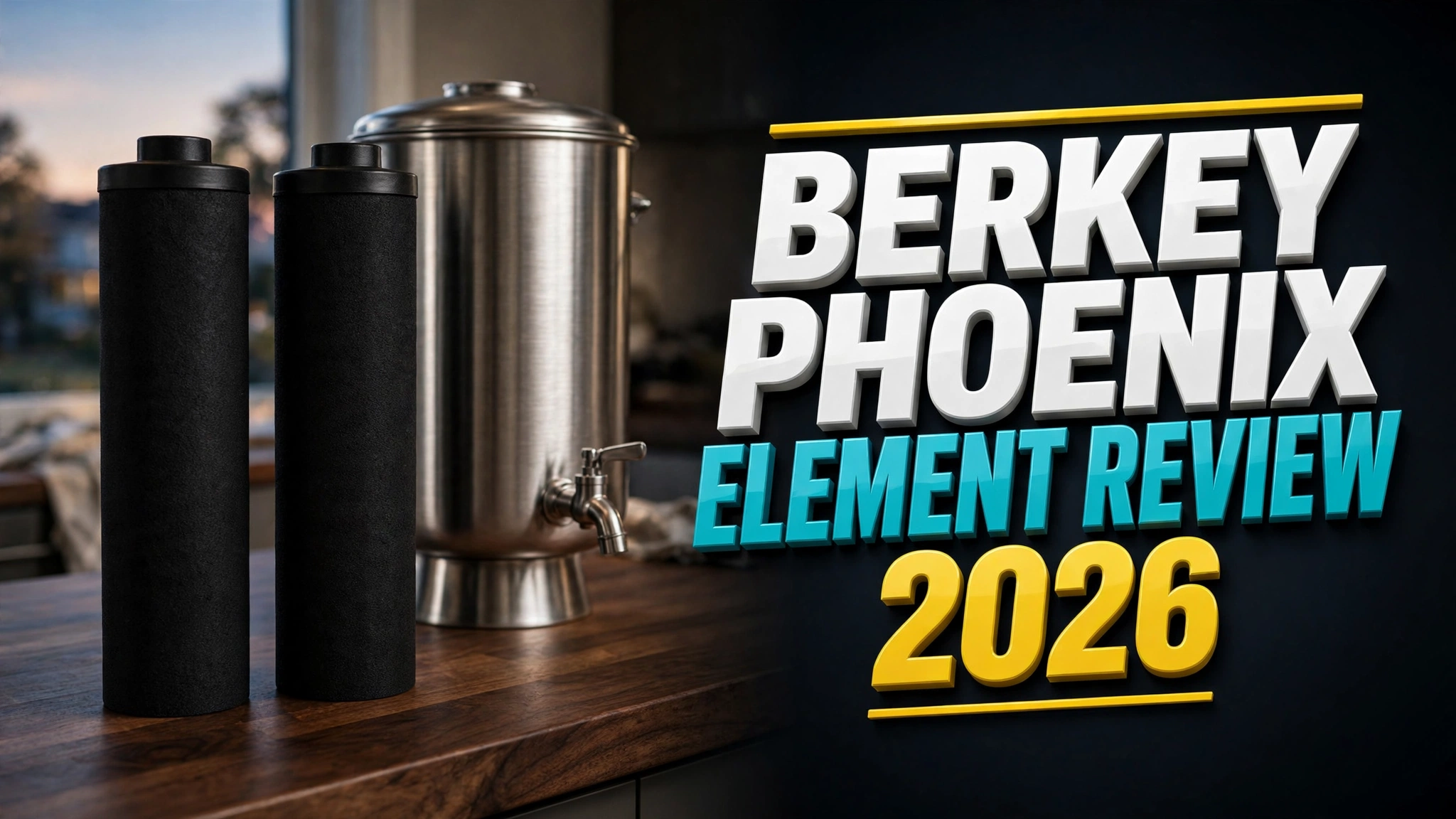

Berkey Phoenix Element Review (2026): Is It Worth It?
★ REPLACEMENT ELEMENT FOR BERKEY OWNERSYour gravity system’s flow has slowed to a crawl, or the replacement elements you always bought are suddenly nowhere to be found. If you own a Berkey system, that confusion has a cause: the original Black Berkey elements stopped being sold as standalone replacements, and the official replacement is now the Berkey Phoenix Gravity New Millennium Edition element. Is the Phoenix a worthy successor — or a downgrade sold at replacement prices?
Here is the short answer: the Phoenix is a solid carbon block element with published independent lab data — including 99.5%+ lead and arsenic reduction in dealer-reported tests — and the listings dealers report show NSF/ANSI 42 and 372 certification. At about $120 a pair with a 5,500-gallon rated life, it is also one of the cheapest ways to keep a steel gravity system alive. But you must prime it properly, it does not remove fluoride on its own, and the legal status of Berkey products is worth understanding before you invest more. This review covers the element itself: what it reduces, what it costs per gallon, and who should buy it.
Our scores
Table of Contents
Quick verdict
The bottom line: the Berkey Phoenix element is the right buy if you already own a Berkey-style gravity system and need the manufacturer-authorized replacement with published lab data — about 2 cents a gallon over its rated life. It is the wrong buy if you expected a “set and forget” cartridge, because priming and occasional scrubbing are mandatory.
Verdict: a legitimate, well-priced successor element — keep your steel system alive with it, but buy it with your eyes open about setup.
Price is an estimate checked at time of writing; it changes often — see the live price before you buy.

Why you should trust this review
We did not receive a test unit and we did not run a lab bench test. Claiming hands-on testing we never did would be dishonest, so we will not do it.
What we did instead was research and comparison: we read the authorized dealers’ published specifications and lab reports, separated their test claims from certification claims, read the dealers’ troubleshooting pages for the recurring owner problems, and ran the per-gallon cost math from the rated life and real element prices. Every section says what it is based on, so you can check the reasoning yourself.
How we researched
- Read authorized dealer specs and lab reports — element construction, rated life, price, and reported test results come from the dealers the manufacturer points to.
- Checked certification claims carefully — dealer listings report NSF/ANSI 42 and NSF/ANSI/CAN 372 certification for the Phoenix; we treat that as dealer-reported until it can be confirmed in the NSF public database.
- Read the dealers’ own troubleshooting FAQs — the recurring complaints (slow flow, priming mistakes, maintenance) are the dealers’ own #1 issues, not our invention.
- Calculated per-gallon cost — from the rated 5,500-gallon pair life and current pair pricing.
Pros and cons
Pros
- Published lab data — dealer-published independent reports cover lead, arsenic, PFAS, VOCs, pesticides, and pharmaceuticals.
- Very long rated life — 5,500 gallons per pair, which is years for most households.
- Excellent per-gallon value — about 2 cents a gallon over the rated life.
- Drop-in fit — fits all Berkey gravity systems and accepts the PF-2 fluoride add-on.
Cons
- Priming is mandatory — skip it and the elements can run up to 10x slower than rated.
- No fluoride reduction alone — fluoride needs the separate PF-2 add-on at about $103 a pair (estimate).
- Scrub-and-maintain routine — flow slows with sediment and mineral buildup; periodic cleaning is part of ownership.
- Unresolved legal status — Berkey elements are subject to EPA stop-sale orders reported by dealers; their legal status is unresolved — check current availability before buying.
Certifications (database-checked)
This element’s paperwork comes in two layers, and you should keep them separate. Layer one is dealer-reported certification: authorized dealers state the Phoenix carries NSF/ANSI 42 (aesthetic effects, including chlorine) and NSF/ANSI/CAN 372 (lead-free materials). One overseas dealer listing at the time of research described the certification as “pending” — so treat it as reported-by-dealers and verify the entry in the NSF public database at info.nsf.org before you buy. Layer two is independent lab testing published by dealers: reports from CVR Labs and others cover lead, arsenic, PFAS, VOCs, pesticides, and pharmaceuticals.

| Scope | Claim | Source |
|---|---|---|
| NSF/ANSI 42 | Certified (dealer-reported — verify in NSF database) | Authorized dealer listings |
| NSF/ANSI/CAN 372 | Certified (dealer-reported — verify in NSF database) | Authorized dealer listings |
| Lead | 99.5%+ reduction at 200 µg/L challenge (dealer-published lab report) | CVR Labs report via dealers |
| Arsenic | 99.5%+ reduction at 200 µg/L challenge (dealer-published lab report) | CVR Labs report via dealers |
| PFAS (7 compounds) | 99.8%+ initial reduction; PFOA/PFOS sustained through 1,500 L (dealer-published) | Dealer lab-result pages |
| Pharmaceuticals | 99.9%+ on 13 compounds tested (dealer-published) | Dealer lab-result pages |
Two honest caveats. Lab reductions were measured under test challenges, not in your tap — and one independent reviewer testing with real-world water got inconsistent arsenic and uranium results with high metal loads, noting the element can saturate faster than expected. Also note what is not certified: there is no reported NSF/ANSI 53 health-effects listing for this element, so do not compare its paperwork one-to-one with a 53-listed product. For context on how this element fits the wider Berkey story, see Berkey vs Boroux and our Berkey EPA lawsuit update.
Dealer-published lab reports are data from labs the dealers hired — meaningful, but not the same as a certification listing in a public database. Check both.
Design and usability
The Phoenix is a tall black carbon-block cylinder with a threaded stem: solid coconut-shell carbon with a CTC-60 adsorption blend, no loose media inside. It screws into the upper chamber of any Berkey gravity system with a wing nut, in about two minutes per element. New Berkey systems still ship with Black Berkey elements while supplies last; the Phoenix is the part you buy when replacements are due.
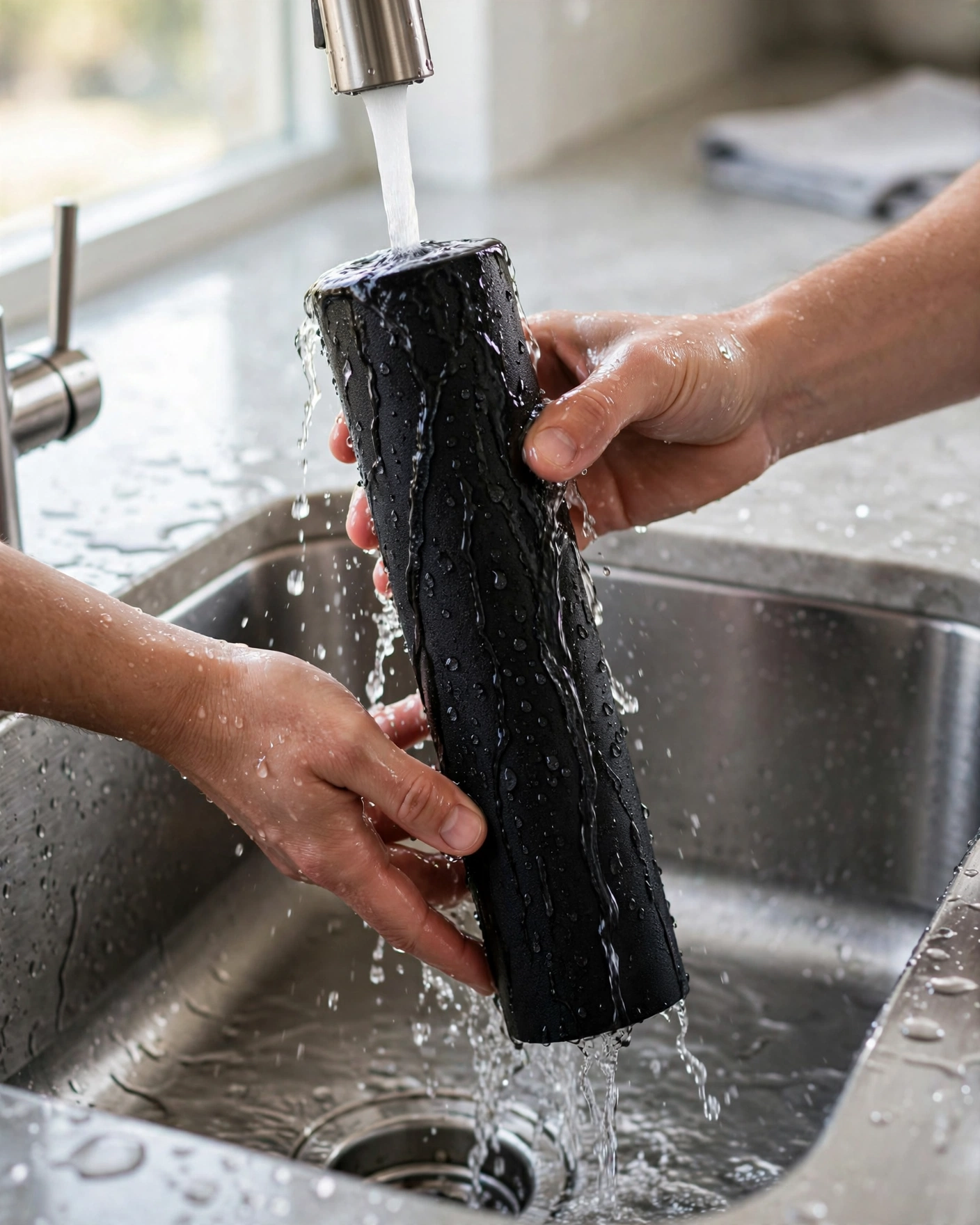
Setup has one non-negotiable step: priming. The elements arrive dry with air trapped in their microscopic pores, and water cannot pass until that air is displaced. Press the priming tool against a running cold-water faucet until water beads across the entire outside of each element, then install. Skipping this step is, per the dealers’ own troubleshooting pages, the cause of most “my system barely filters” complaints. After priming, run one full chamber to waste before drinking. If fluoride matters to you, the PF-2 add-on threads onto the bottom of each element and hangs in the lower chamber — see what happened to Berkey for the current state of the brand before you build around it.
Filter cost math
This is where the Phoenix quietly wins. Elements are not priced per month — they are priced per gallon over years:

| Item | Phoenix pair | Short-life gravity filter (for comparison) |
|---|---|---|
| Price (estimate) | ~$120 per pair | ~$50–100 per filter |
| Rated life | 5,500 gallons per pair | ~200 gallons per filter |
| Cost per gallon | ~2 cents | ~25 cents or more |
| Years at 2 gal/day | ~7.5 years (replacement likely sooner in practice) | Under 4 months |
| Optional PF-2 fluoride add-on (estimate) | ~$103 per pair, ~1,000 gallons / 12 months | Built into some rivals |
The 7.5-year number is arithmetic, not advice: dealers recommend a 12-month replacement routine for consistent flow and performance, and hard or sediment-heavy water shortens real life further. Even replaced annually, the Phoenix undercuts nearly every short-life gravity filter on yearly cost. The real price of ownership is maintenance, not money — which is where our best Berkey alternative roundup helps if you would rather not scrub elements at all.
What owners complain about
Slow flow from skipped or bad priming. The dealers call this their #1 issue, and owner forums agree: a new system that barely drips almost always traces to incomplete priming. The fix is to pull the elements, scrub if needed, re-prime fully, and reinstall. Owners who prime thoroughly report the problem vanishing — which makes this a learning curve, not a defect.
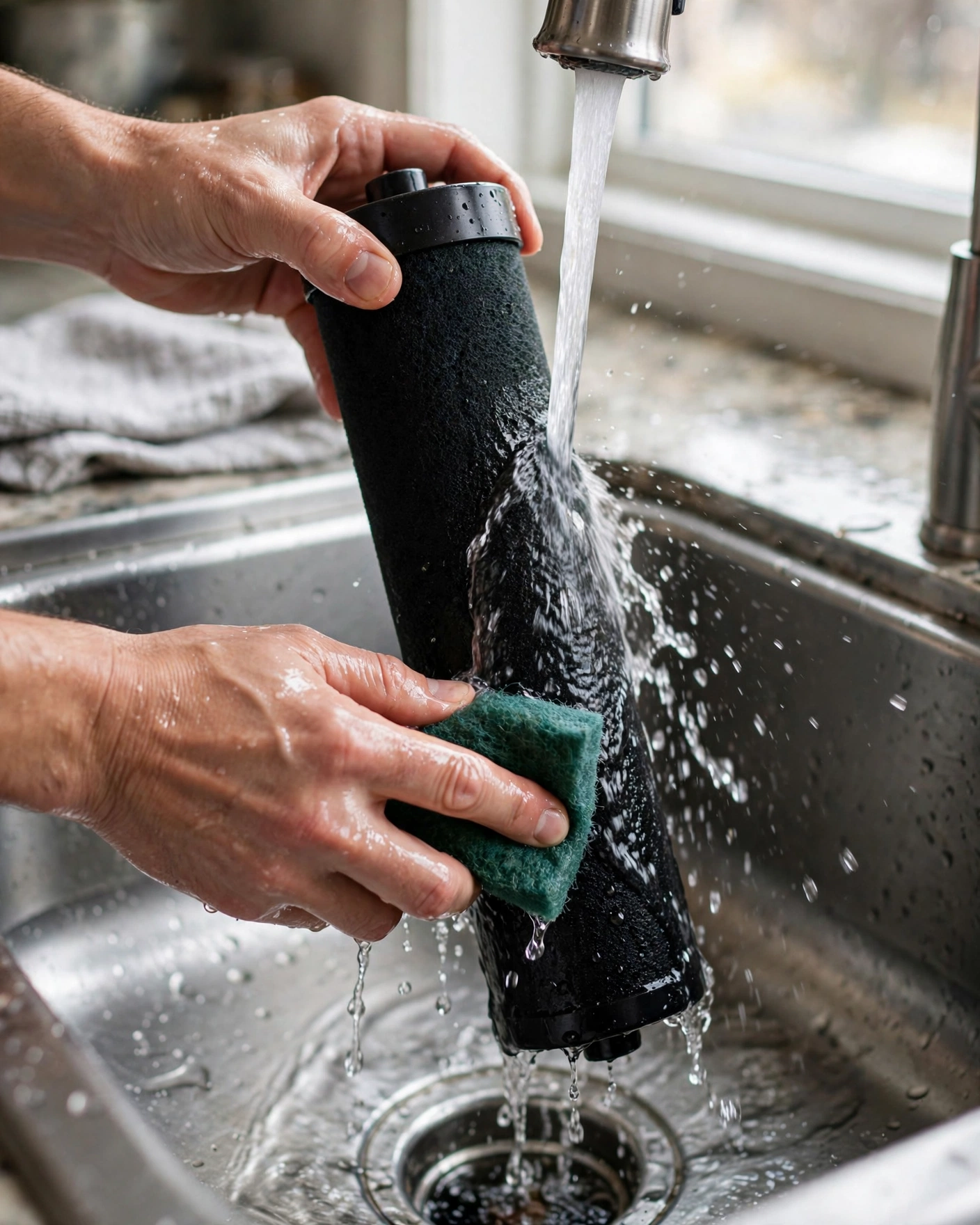
The scrubbing routine. Every few months, mineral and sediment buildup slows the flow again, and the fix is to scrub the element surfaces with a scouring pad under cold running water. Owners who expected a hands-off cartridge find this chore the real cost of ownership. Never use soap — it absorbs into the media and you cannot rinse it out.
Red dye test anxiety. Dealers recommend the red food coloring test to check the seal — pink water in the lower chamber means a seal failure. Owners who get a pink result panic; usually the fix is reseating the washers and re-priming, then retesting.
Availability whiplash. Because the original Black Berkey elements stopped being sold as replacements, long-time owners spent months confused about what to buy. The Phoenix is the authorized path now, but the episode left owners nervous about the brand’s future — read is Berkey banned? for the full, honest picture before stocking up.
Who should buy it
Buy it if
- You own a Berkey gravity system and need the manufacturer-authorized replacement element.
- You want published lab data and very long element life at about 2 cents a gallon.
- You accept priming and occasional scrubbing as normal ownership.
Skip it if
- You want a hands-off cartridge — this element needs priming and periodic cleaning.
- You need fluoride reduction without extras — the PF-2 add-on costs extra and lasts far less long than the main elements.
- The brand’s unresolved legal status makes you nervous — Berkey elements are subject to EPA stop-sale orders reported by dealers; their legal status is unresolved — check current availability before buying, and consider the best Berkey alternative guide instead.
The specs
- Brand
- Berkey (NMCL)
- Model
- Phoenix Gravity New Millennium Edition
- Media
- Solid coconut-shell carbon block, CTC-60 blend
- Rated life
- 2,750 gal per element / 5,500 gal per pair
- Certifications (dealer-reported)
- NSF/ANSI 42 & 372
- Fit
- All Berkey gravity systems; PF-2 compatible
- Pair price (estimate)
- ~$120
- Priming
- Required before first use
FAQs
What is the Berkey Phoenix element?
It is the manufacturer-authorized replacement element for Berkey gravity systems, made by NMCL — the same maker as the original Black Berkey elements. It uses a solid coconut-shell carbon block with a CTC-60 adsorption blend, fits all Berkey gravity systems, and is the part dealers point you to when old elements wear out.
How long does a pair of Phoenix elements last?
A pair is rated at 5,500 gallons — 2,750 per element. At 2 gallons a day that is over 7 years in arithmetic, but real life is shorter: hard or sediment-heavy water clogs elements sooner, and dealers suggest a 12-month replacement routine for consistent flow and performance. Track gallons, not calendar years.
Is the Phoenix element NSF certified?
Authorized dealers report NSF/ANSI 42 and NSF/ANSI/CAN 372 certification — but do not take a dealer’s word as the final answer. One overseas listing described the certification as pending, so check the product’s entry in the NSF public database at info.nsf.org before you buy.
Do Phoenix elements remove fluoride?
No — the main elements do not reduce fluoride. Fluoride reduction needs the optional PF-2 filters, which screw onto the bottom of each element and hang in the lower chamber. A PF-2 pair costs about $103 (estimate) and is rated at roughly 1,000 gallons or 12 months — far shorter than the main elements.
Do I have to prime Phoenix elements?
Yes. The elements arrive dry with air trapped in their pores, and unprimed elements can flow up to 10 times slower than rated — or look like they are not working at all. Press the priming tool against a running cold-water faucet until water beads across the entire surface of each element, then install and run one full chamber to waste.
Will the Phoenix fit systems other than Berkey?
It is designed as a drop-in replacement for Berkey gravity systems — dealers state it fits all of them — and it is compatible with the PF-2 fluoride add-on. If your system is not a Berkey, do not assume the stem size and chamber spacing match; measure and check with the dealer before ordering.
Why is my Berkey filtering so slowly?
The most common cause is incomplete priming: remove the elements and re-prime until water beads across the full surface. If flow improved after setup but slows again within weeks, mineral buildup or sediment is clogging the media — scrub the elements with a scouring pad under cold running water (no soap) and re-prime. Persistent slowness after both means the elements are spent.
Can I still buy Black Berkey elements?
Dealers state the original Black Berkey elements are no longer sold as standalone replacements — an EPA regulatory matter stopped that — while new Berkey systems still ship with them while supplies last. The Phoenix is the authorized replacement. Note the honest caveat: Berkey elements are subject to EPA stop-sale orders reported by dealers; their legal status is unresolved — check current availability before buying.
Conclusion
The Berkey Phoenix element is the right buy for one specific owner: the person with a Berkey gravity system who needs the authorized replacement and accepts priming plus occasional scrubbing as normal ownership. For that buyer, the published lab data and ~2-cent-per-gallon economics are genuinely hard to beat. For everyone else — especially anyone nervous about the brand’s unresolved legal status or anyone who wants a hands-off cartridge — the honest answer is to look at the alternatives first. Know which buyer you are, and the choice makes itself.
Price is an estimate checked at time of writing; it changes often — see the live price before you buy.
Update log
- Zulqarnain: Review published.