
Shower Filter Pressure Drop (2026): Fixes That Work
Guide
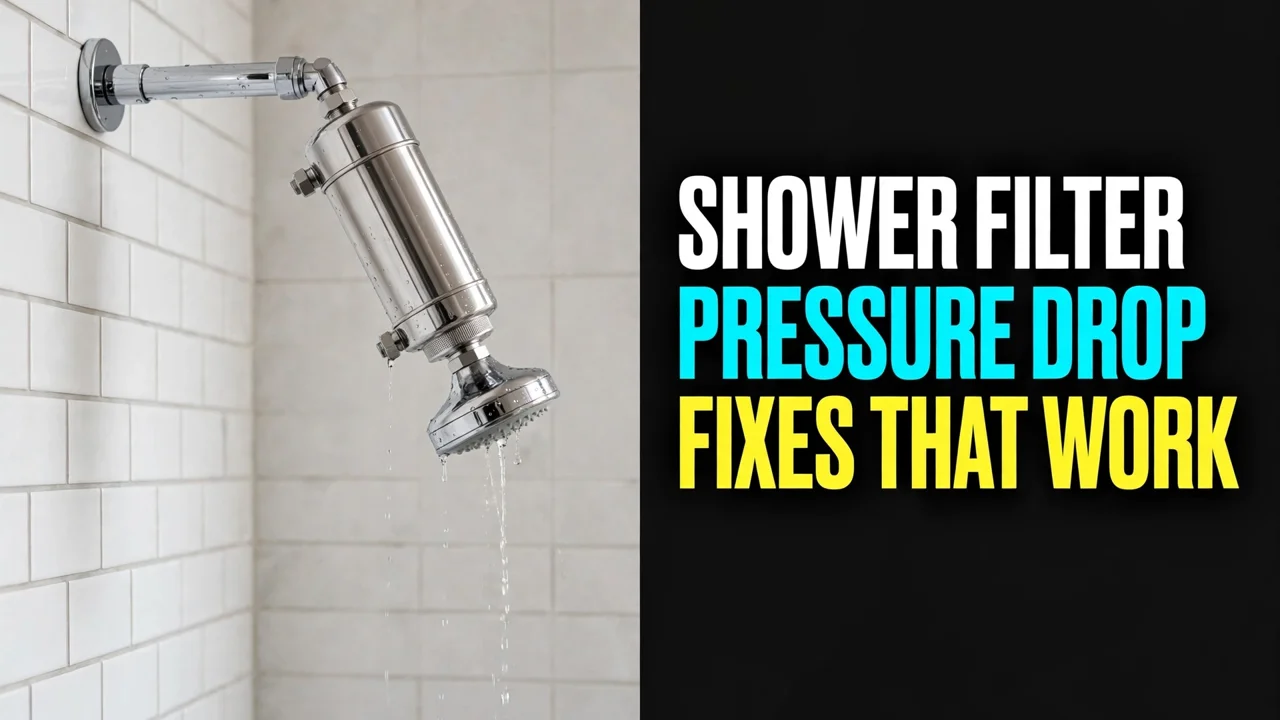
A shower filter always costs a little pressure — water has to push through a bed of filter media, and physics collects its toll. But there is a difference between “slightly gentler” and standing under a sad trickle wondering what happened to your shower. When flow falls off a cliff, owners usually blame the filter brand and buy a different one. Most of the time the brand is innocent: one of four specific, fixable causes is choking the water, and three of them take under ten minutes to put right.
The short answer: run the bypass test first — take the filter off and run the shower. If the pressure comes back, work through the screen washer, the cartridge seating, and the cartridge’s age, in that order. A typical shower cartridge lasts about 2–3 months (roughly 10,000 gallons); past that, a weak shower is usually just the filter telling you it is done.
Table of Contents
Quick verdict
Ninety percent of shower-filter pressure complaints resolve in this order: clogged inlet screen, badly seated cartridge, exhausted cartridge, or a low-flow showerhead stacking its restriction on top of the filter’s. The fixes below go cheapest-first, and the whole diagnostic takes one towel and about fifteen minutes. If you end up shopping for a replacement anyway, the models in our best shower filter roundup list their rated flow — pick with your home’s pressure in mind, not just the media list.
Step one: the bypass test
Unscrew the filter from the shower arm, reattach the showerhead directly, and run the water. Two outcomes, two completely different problems. Strong flow without the filter: the restriction lives in the filter assembly — keep reading, the next three fixes are yours. Still weak without it: the filter was never the problem; skip to the last section on house-side causes. Do not skip this test. Every other step in this guide assumes its answer, and guessing wrong means replacing good cartridges while a $2 screen stays clogged.
Fix one: clean the screen washer
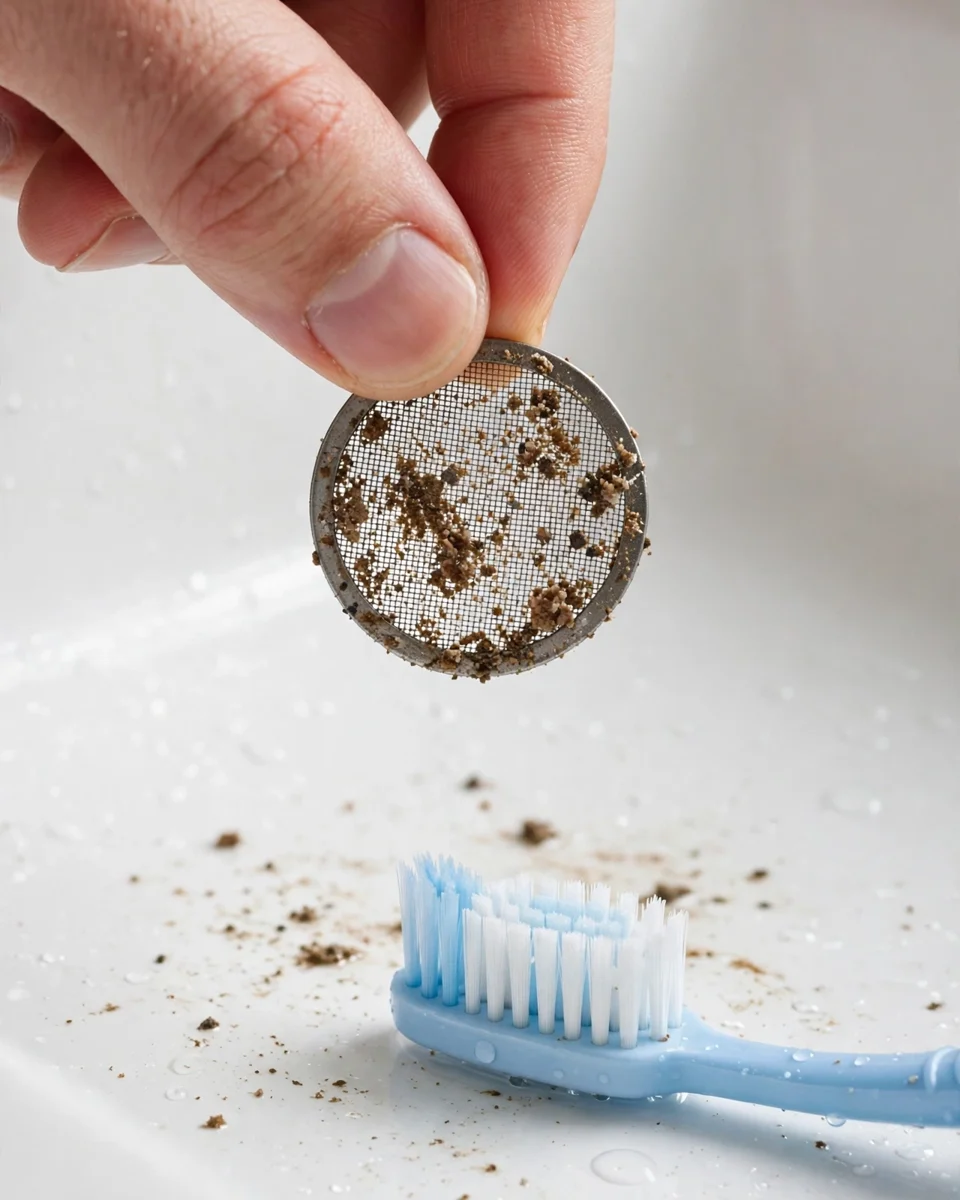
Inside the filter’s inlet fitting — and often inside the showerhead’s connector too — sits a small mesh screen washer. Its job is to stop grit, sand, and pipe scale before they reach the cartridge. In homes with sediment-heavy water, well water, or recent plumbing work nearby, that screen loads up fast, and because it sits before the filter, it throttles everything behind it. Unscrew the filter, fish the screen out with a fingertip or tweezers, rinse it under a tap, and brush stubborn grit away with an old toothbrush. Reassemble and test. Owners are routinely startled by how much of their “dead filter” was this screen.
Fix two: reseat the cartridge
Open the housing and check three things. Orientation: many cartridges are directional — an arrow or a tapered end that must face the flow; a reversed cartridge restricts and filters badly. Seating: the cartridge should sit flat on its gasket, not cocked at an angle; a tilted cartridge lets the housing close cross-threaded and pinches the flow path. Gaskets: a displaced or doubled-up rubber washer (a classic after a rushed cartridge swap, when the old washer stays behind) blocks more water than any media bed. Reseat everything once, hand-tight, and test again before concluding anything about the cartridge itself.
Fix three: admit the cartridge is done
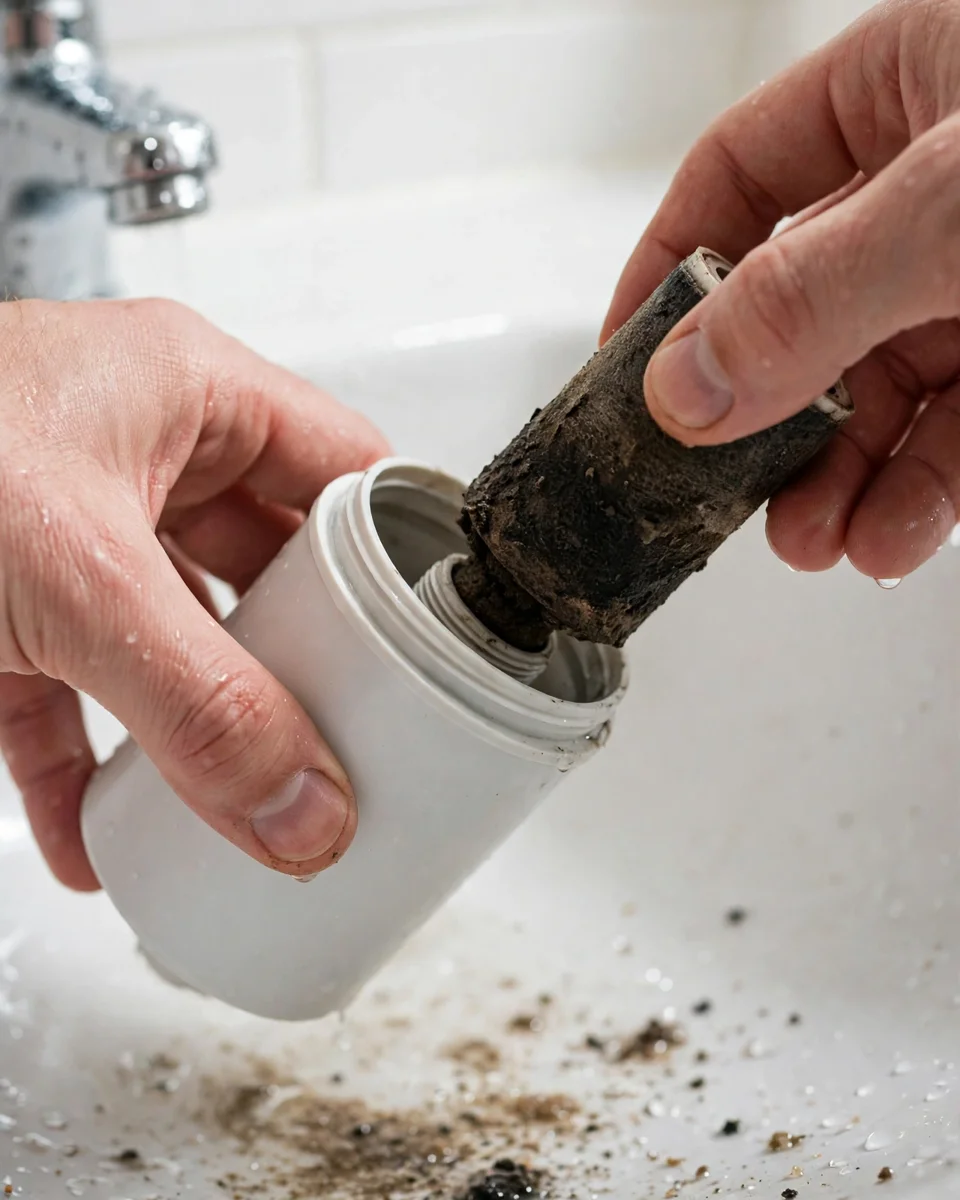
Here is the arithmetic nobody does: a 10-minute daily shower at a modest 2 gallons per minute moves about 600 gallons a week through a part the size of a soup can — two showers a day doubles that. Typical shower cartridges are rated around 2–3 months or roughly 10,000 gallons, and sediment-rich water spends that budget faster. As the media bed loads with trapped sediment it compacts and exhausts; flow declines gradually, then all at once. Rinsing the cartridge under a tap removes loose surface grit and buys days, not months — the media inside is spent, not dirty. If the cartridge is at or past its rated life, replacement is not a defeat; it is the maintenance the product always required, and it is the single most common ending to this troubleshooting story. Chlorine performance fades on the same schedule — our shower filters and chlorine explainer covers what the media does while it is fresh.
The compounding problem: filter plus low-flow head
Sometimes every part is healthy and the shower still disappoints, because restrictions stack. A water-saving showerhead is itself a deliberate restrictor — many are rated at 1.5–1.75 gallons per minute where older heads ran 2.5. Add a filter’s media bed in front of it, in a house whose static pressure was never generous, and the combination lands below what either part produces alone. The fixes are matching, not repair: choose a showerhead designed to feel strong at low flow (pressure-compensating models exist for exactly this), or a filter housing rated for high flow. What does not work is drilling out restrictors or running two filters in series — the first risks code and warranty trouble, the second doubles the very restriction you are fighting.
When the problem is not the filter

Signs it is the filter path
- Bypass test restores full flow immediately.
- Flow declined gradually over weeks, matching cartridge age.
- Other taps in the house are unchanged and strong.
- A fresh cartridge fixes it on the spot.
Signs it is the house
- Bypass test changes nothing — weak with and without the filter.
- Every fixture lost pressure at the same time (think pressure-reducing valve, a partly closed main, or municipal work).
- The showerhead’s own nozzles are scaled over — soak the head in vinegar overnight and retest.
- Pressure is fine cold and collapses hot: a water-heater or mixing-valve issue, not filtration.
One boundary worth knowing while you troubleshoot: a shower filter treats chlorine and sediment for comfort — it is not a softener, and chasing softer water through cartridge swaps is its own dead end, covered in our do shower filters soften water explainer. And if your city’s disinfectant is chloramine rather than chlorine, media choice matters more than pressure tricks — see our shower filter for chloramine guide.
Conclusion
Pressure drop after a shower filter is a diagnosis problem wearing a shopping problem’s clothes. Bypass test first; then the screen washer, the cartridge seating, and the cartridge calendar, in that order; then the honest possibility that a low-flow head and a filter are simply stacked against your home’s pressure. Work the list and the strong shower almost always comes back — usually for the price of a cartridge you owed the calendar anyway.
Update log
October 2026: Troubleshooting guide published; cartridge life figures are typical manufacturer-rated ranges (about 2–3 months / 10,000 gallons) and vary by model and water quality.
FAQs
Do all shower filters reduce pressure?
Slightly, yes — pushing water through any media bed costs some flow, and manufacturers rate their filters’ flow for this reason. A healthy filter on a healthy cartridge should cost a modest amount you may barely notice. A dramatic drop is not the normal tax; it is a symptom, and this guide’s checklist (screen, seating, cartridge age) finds it.
How long does a shower filter cartridge last?
Typically about 2–3 months, or roughly 10,000 gallons, whichever arrives first — heavy daily use and sediment-rich water shorten it. Pressure drop plus a chlorine smell returning are the two practical end-of-life signals; when both show up together, the calendar is rarely wrong.
Can I clean a shower filter cartridge instead of replacing it?
You can rinse loose sediment off it, and that occasionally restores a little flow for a short while. But the flow problem in an old cartridge is compacted, exhausted media — that does not wash out. Cleaning is a diagnostic (if a rinse changes nothing, the cartridge is done), not a renewal.
Why did my new filter have weak pressure from day one?
Work the same list, minus age: a screen washer already loaded from your old setup, a cartridge seated backwards or a doubled gasket from the swap, or the compounding problem — a new filter stacked on a low-flow head in a low-pressure house. Also confirm you removed any shipping plugs or films the cartridge shipped with; more than one “defective” filter was just still wearing its packaging.
Will a high-pressure showerhead fix filter pressure drop?
It fixes the compounding version of the problem: pressure-compensating heads are designed to deliver a strong-feeling spray at lower flow, which offsets the filter’s restriction. It cannot fix a clogged screen or a spent cartridge — diagnose first, then match the head to your home’s pressure if the combination is the issue.
My pressure dropped right after the city worked on water mains. Related?
Very likely. Main work stirs sediment into the lines, and that grit lands in the first fine screens it meets — your filter’s inlet screen and the cartridge itself. Clean the screen washer first; if flow stays poor, the cartridge probably took the sediment load and aged months in a week.