
Frigidaire ULTRAWF Replacement Filter (2026): Which One to Buy
Guide
Your Frigidaire takes the ULTRAWF, and it is time for a replacement filter. The genuine PureSource Ultra cartridge streets around $40–55, compatibles cluster near $12–16, and half the listings borrow the genuine filter’s certification claims. Sorting out which replacement is honest — and which is just a similar-shaped cylinder — takes more than the product page gives you.
Here is the short answer: the genuine ULTRAWF is certified by IAPMO R&T against NSF/ANSI 42, 53 and 401, including certified lead reduction, and is rated for 200 gallons or 6 months at a faster 0.65 gpm maximum flow. Compatibles fit and flow, but their listings top out at NSF/ANSI 42 — the lead, cyst and emerging-contaminant claims belong to the genuine cartridge only. For most ULTRAWF fridges the genuine cartridge is the buy; this guide shows the math and the exceptions.
Check Current PriceTable of Contents
Quick verdict
Buy the genuine ULTRAWF. It is the current PureSource generation, it carries the full IAPMO-certified claim set (42, 53, 401), and at roughly $80–110 a year it costs about what the older WF3CB did. A listed compatible is a fair budget pick only for taste and odor — the moment your concern is lead, cysts or anything under NSF/ANSI 53 or 401, no mainstream compatible certifies it. If your fridge is an older model whose manual names the WF3CB, read our WF3CB replacement filter guide instead — the two cartridges are not automatic substitutes, and our WF3CB vs ULTRAWF comparison explains where the lines cross.
First, confirm the ULTRAWF is your filter

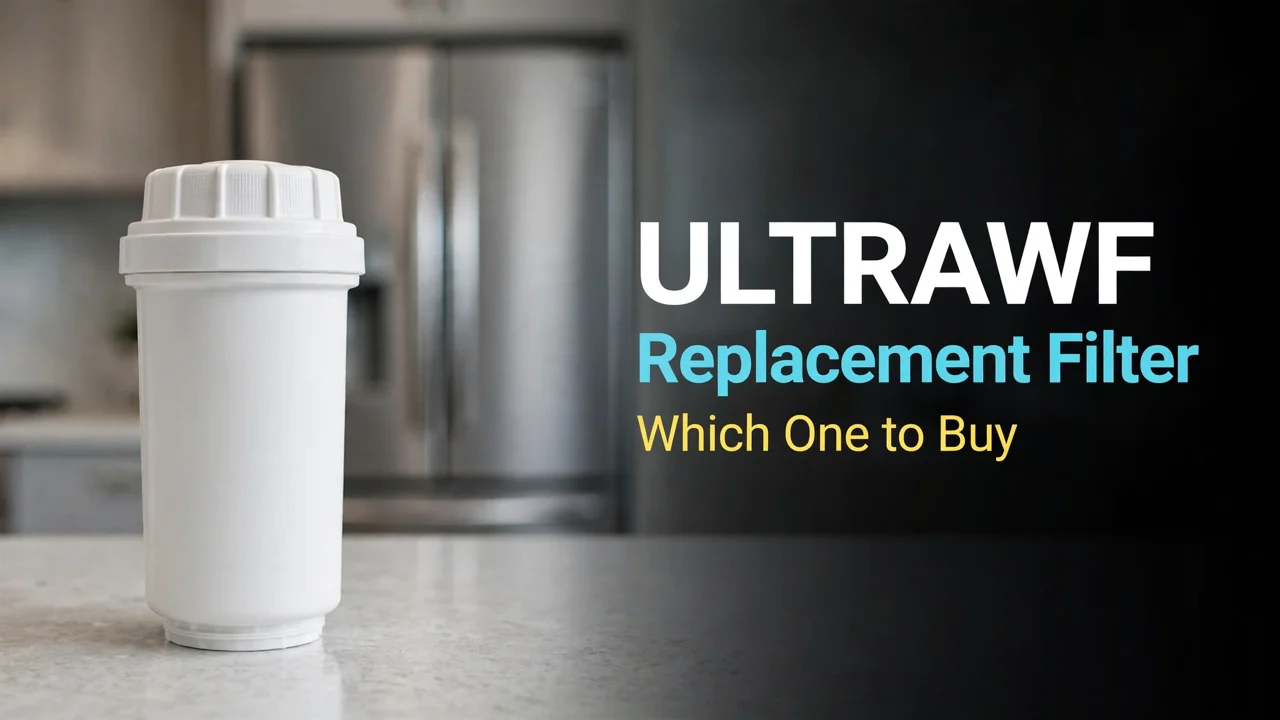
The ULTRAWF is Frigidaire’s PureSource Ultra cartridge — the current generation specced in newer Gallery and Professional French-door and side-by-side models. It is a chunky twist-in cartridge rated for 200 gallons (757 L) or 6 months. Confirm the model number on your old cartridge’s label or in your manual’s filter specification before ordering: a fridge that specs the WF3CB (PureSource 3) is a different case, and the housing check matters more than any retailer’s “fits your fridge” badge. Frigidaire’s own filter finder, searched by fridge model number, is the deciding source when the manual is missing.
Your replacement options, compared

Checked against Frigidaire’s Performance Data Sheet for the ULTRAWF and the certifier listings for the alternatives:
| Option | Price per filter | Certification | Rated life | Best for |
|---|---|---|---|---|
| Genuine Frigidaire ULTRAWF | ~$40–55 | IAPMO R&T: NSF/ANSI 42, 53, 401 + CSA B483.1 | 6 months / 200 gal | Full certified claims, incl. lead |
| Listed compatible (PUREPLUS, ICEPURE, Waterdrop) | ~$12–16 | NSF/ANSI 42 listings at best — no 53/401 | 6 months / 200 gal (claimed) | Taste and odor on a budget |
| No-name multipack | ~$8–11 | Seller’s own claims only | 6 months / 200 gal (claimed) | Rock-bottom price, unverified claims |
The genuine data sheet spells out the certified reductions: chlorine and particulates under 42; lead at two pH levels, mercury, cysts, asbestos and benzene under 53; and emerging contaminants such as atenolol, ibuprofen and trimethoprim under 401. That breadth is why the ULTRAWF also anchors our NSF 53 certified fridge filter roundup. Compatible listings routinely print the same contaminant list — without the listing behind it.
Check Current PriceWhat the genuine premium actually buys
Genuine ULTRAWF — pros
- Full certified claim set — IAPMO R&T listing across NSF/ANSI 42, 53 and 401, checkable in the certifier’s directory.
- Faster rated flow — 0.65 gpm maximum, up from the WF3CB’s 0.5 gpm.
- Current generation — the cartridge Frigidaire stocks and supports now; no fading-supply problem.
Genuine ULTRAWF — cons
- 3–4x compatible pricing — roughly $80–110 a year at two changes.
- Counterfeits circulate — buy from Frigidaire, an appliance-parts retailer, or the brand storefront.
- Not a WF3CB substitute by default — older fridges need the finder check first.
Using a compatible does not void your fridge warranty under the Magnuson-Moss Warranty Act — but damage from a leaking, badly made cartridge is not the manufacturer’s problem, which is why the listed brands are the floor for a compatible pick.
Fitting your replacement

Open the round housing cover, twist the old cartridge out, push the new one in and twist until it locks — tool-free, a few minutes. Then flush about 2 gallons through the dispenser: the first water often runs cloudy with trapped air and carbon fines, and it clears as you flush. Reset the indicator by holding the Filter Reset or Filter Status button for about 3 seconds until the light turns green. If flow feels weak in the first day, the cartridge is usually not fully seated — our guide to slow water flow after replacing a filter works through the causes in order.
Conclusion
The ULTRAWF is the easy genuine buy in Frigidaire’s line: current generation, full IAPMO-certified claims including lead, faster rated flow than the cartridge it succeeded, and no supply anxiety. Compatibles save real money — roughly $55–80 a year — but they spend it from your certification coverage, keeping only taste-and-odor claims. Pick the genuine cartridge if your water concern goes beyond taste; pick a listed compatible if it does not, and either way change it at 6 months or 200 gallons.
Update log
October 2026: Guide published with certifications checked against Frigidaire’s ULTRAWF Performance Data Sheet and the IAPMO listing, and prices taken from current retailer listings.
FAQs
Is the ULTRAWF the same as the PureSource Ultra?
Yes — ULTRAWF is the model number of Frigidaire’s PureSource Ultra refrigerator filter. The cartridge is also the current-generation successor to the WF3CB (PureSource 3), with the same certification base and a higher maximum flow rate.
Does the ULTRAWF remove lead?
Yes, as a certified claim. Frigidaire’s Performance Data Sheet shows IAPMO R&T certification to NSF/ANSI 53, including lead reduction at two pH levels, alongside 42 for chlorine, taste and odor and 401 for emerging contaminants. Compatible ULTRAWF cartridges do not carry the 53 listing.
What is the difference between the ULTRAWF and the WF3CB?
Both are Frigidaire PureSource cartridges with the same IAPMO certification base (NSF/ANSI 42, 53, 401) and the same 200-gallon, 6-month rating. The ULTRAWF is the newer generation with a higher maximum flow rate (0.65 vs 0.5 gpm) and current stock; the WF3CB is the previous generation with fading availability. They are specced for different fridge models, so confirm yours in the manual or Frigidaire’s filter finder.
How often do I replace the ULTRAWF?
Every 6 months or 200 gallons, whichever comes first. The indicator light is a timer on the same schedule. Sediment-heavy water or heavy dispenser use can exhaust the cartridge sooner — slowing flow is the signal.
Are ULTRAWF compatibles certified?
Only partly. Mainstream ULTRAWF compatibles hold NSF/ANSI 42 listings at best (chlorine, taste and odor). None certify 53 or 401, so the certified lead, cyst and emerging-contaminant claims belong to the genuine Frigidaire cartridge — regardless of what a compatible’s product page prints.
Why does my water taste odd right after installing a new ULTRAWF?
A new cartridge releases loose carbon fines and trapped air at first, which can make the water look cloudy and taste flat or slightly bitter. Flush about 2 gallons through the dispenser and it clears. If off-taste persists past a full flush, remove and reseat the cartridge to be sure it is fully locked in.