
How To Spot Fake Refrigerator Water Filter (2026): Certification Check
Guide
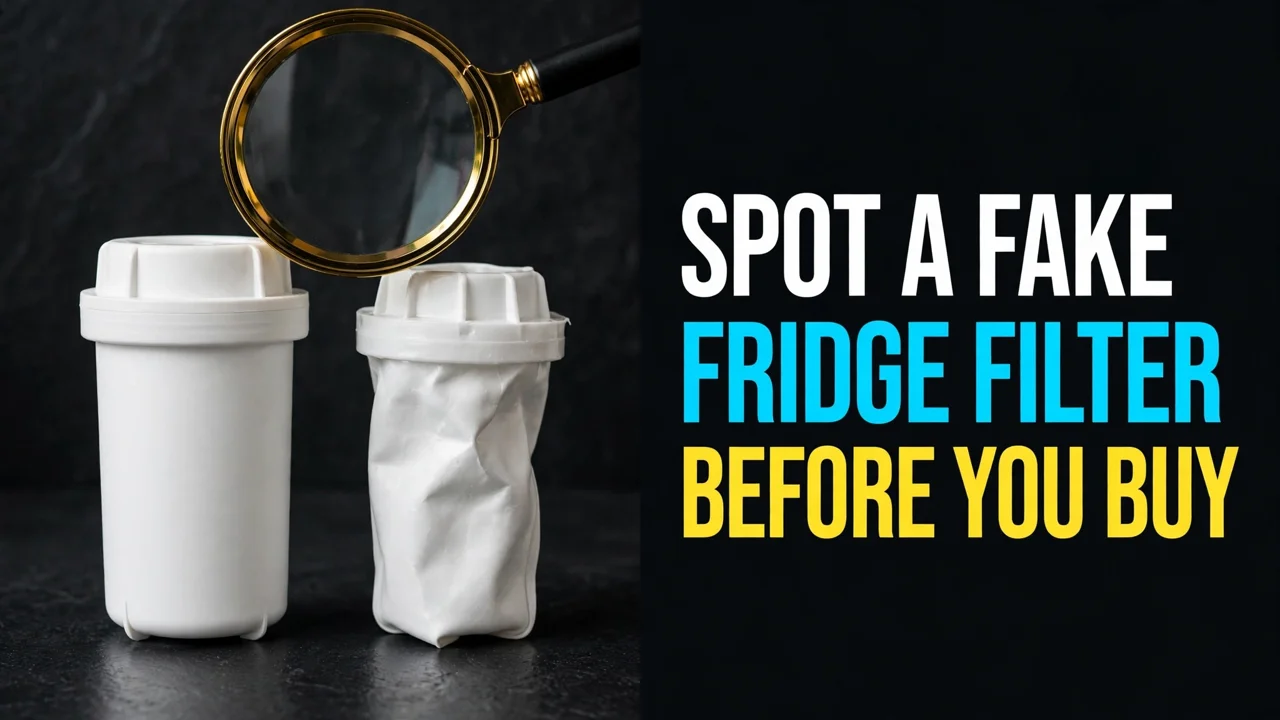
Counterfeit fridge filters are a strange kind of fake: they fit, they click in, the water flows — and inside the cartridge there may be little more than loose carbon dust in a plastic shell, with none of the certified media the real model was tested with. You cannot taste the difference between a certified cartridge and an empty promise, which is exactly why the fake market works. The good news: spotting one rarely depends on your eyes. It depends on a two-minute check in a public database that counterfeiters cannot fake their way into.
The short answer: ignore the box and check the listing. A genuine (or legitimately certified) cartridge’s exact model number appears in the NSF or IAPMO certification database with the standards it was tested to; a counterfeit either is not listed at all, or borrows a listing that belongs to a different model. Price, packaging and weight are useful suspicion-raisers — the database is the verdict.
Table of Contents
What the label actually means
Three phrases on filter packaging sound identical and are not. “Certified to NSF/ANSI 53” means an accredited certifier tested that model and lists it — a claim you can verify. “Tested to NSF/ANSI standards” means someone, possibly the seller, ran something resembling the test protocol — with no certifier, no listing, and no ongoing audits. “Fits model X” is a geometry statement only. Counterfeits and gray-market cartridges live in the gap between those phrases, often copying the genuine model’s artwork wholesale — including, in documented cases across the industry, certification marks the cartridge never earned. That is why every check that matters starts from the certifier’s own records rather than anything printed on the box.
The two-minute database check

The method, in order:
- Get the exact model number — from the cartridge itself or your fridge manual (for example DA29-00020B, WF3CB, LT1000P, XWFE), not the marketplace listing title.
- Search it in both databases — the NSF listings search and the IAPMO product database. Different brands certify with different bodies; a genuine listing in either counts.
- Match the company name to the listing — the listing names the certificate holder. If your cartridge’s brand differs from the listed company and there is no obvious parent-brand relationship, that is a red flag.
- Read the standards column — 42 means taste/odor scope; 53 and 401 carry the health-contaminant claims; P473 covers PFOA/PFOS. A cartridge “certified” only under 42 is not fake — but it is not what ads implying lead removal are selling.
- For compatibles, search the compatible’s own brand + model — legitimate third-party brands hold their own listings. No listing under their name = uncertified, whatever the box says.
Run the check again whenever your source changes, not just the first time. Listings are living records: certificates lapse, get transferred between companies, or get narrowed when a model is revised, and a seller who shipped a listed cartridge last year can ship a different supply this year. The check costs two minutes at each purchase — cheap insurance for the one filter your household actually drinks from.
Brand-by-brand: what genuine looks like on paper
| Family | Certifier record for the genuine cartridge | Family-specific note |
|---|---|---|
| Samsung DA29-00020B | NSF database: NSF/ANSI 42 only | The genuine article itself carries no 53/401 claims — a “genuine” box promising lead removal is mislabeled either way |
| Frigidaire WF3CB / ULTRAWF | IAPMO-listed NSF/ANSI 42/53/401 | Two distinct models — check the listing under the exact one you bought |
| LG LT1000P | LG lists NSF/ANSI 42/53/401 | LG’s own support pages describe genuine markings (logo, and on some models a watermark visible under light) |
| GE XWFE | NSF/ANSI 42/53/401 + P473 | The genuine cartridge carries an RFID chip the fridge reads; a chipless lookalike typically triggers the fridge’s filter alarm |
| EveryDrop Filter 4 | Whirlpool lists NSF/ANSI 42/53/401 | Sold under both EveryDrop and Whirlpool branding — the listing follows the model, not the storefront name |
Our per-model replacement guides walk each family’s listing in detail — Samsung DA29-00020B, Frigidaire WF3CB, ULTRAWF, LG LT1000P and GE XWFE.
Physical tells — useful, never conclusive
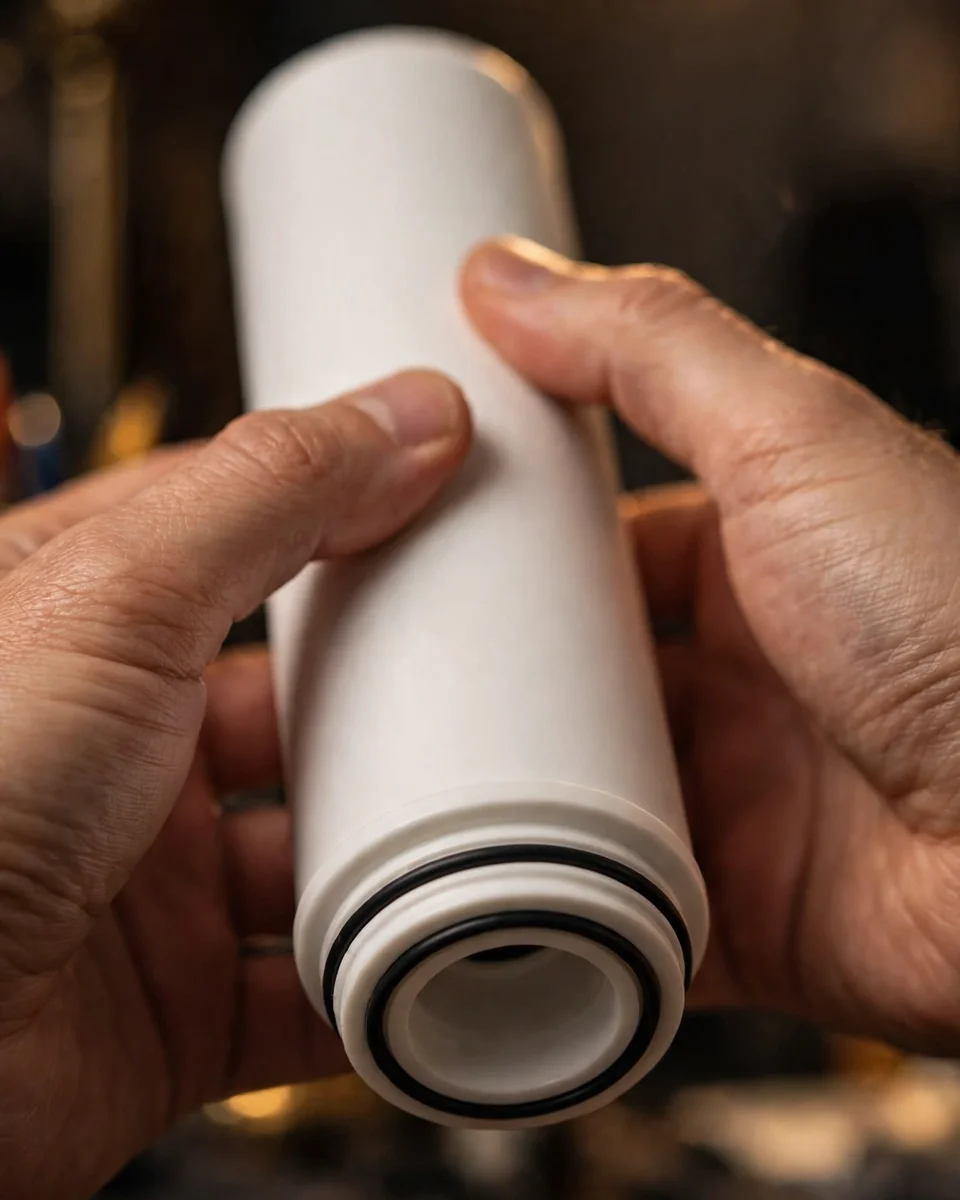
With the database check done, the physical signs help you decide how suspicious to be of a cartridge already in hand. Treat every one of these as a heuristic, not a test:
- Price far below the band — genuine cartridges cluster in known bands (roughly $30–60 for the big families). A “genuine Samsung” at $12 is priced like the compatibles it probably is — or worse.
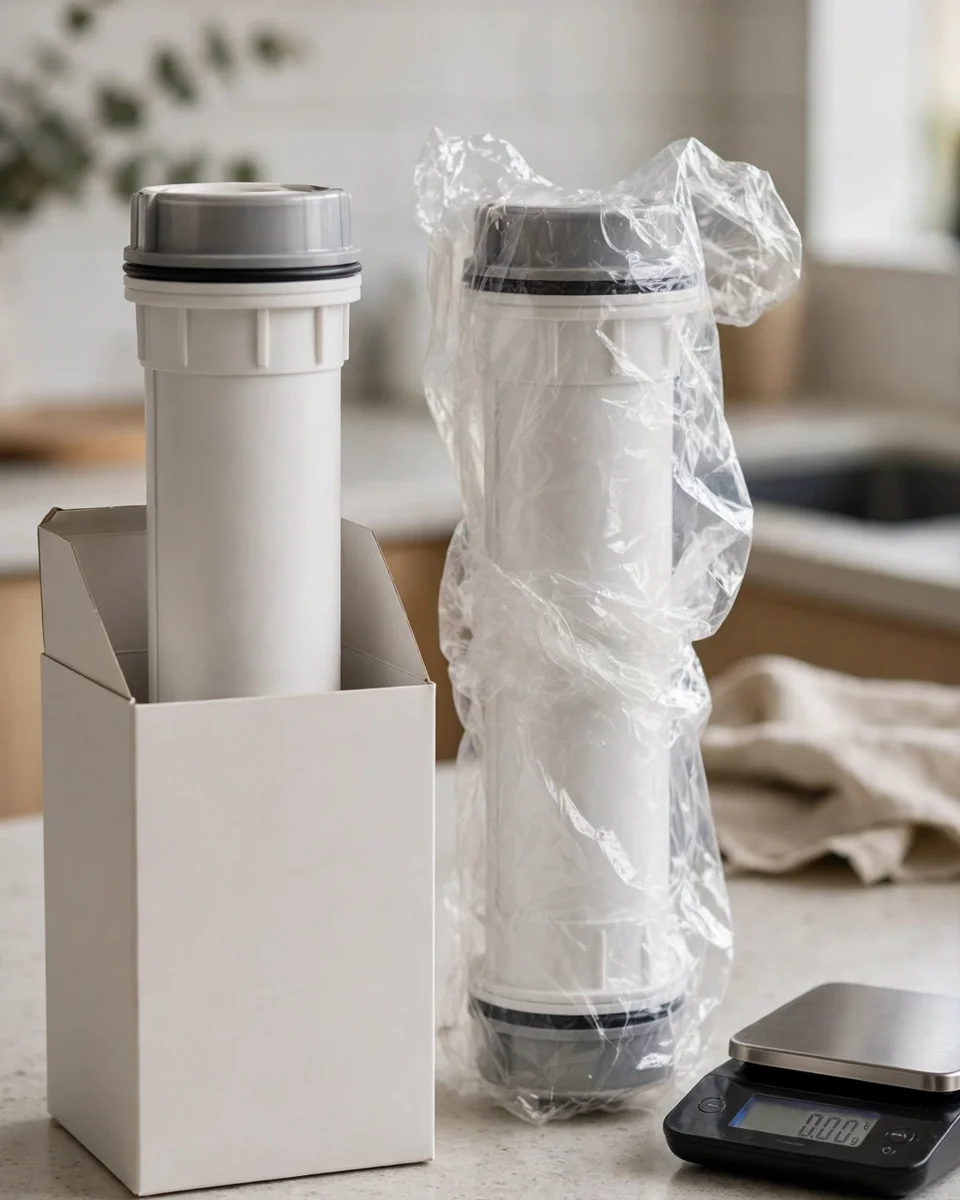
- Weight and fill — a genuine cartridge has a dense, consistent feel; a noticeably light cartridge with media rattling loosely inside is a bad sign.
- Print and molding quality — blurred logos, misspelled words, crooked labels, rough seams and ill-fitting O-rings are classic copy-shop tells.
- Missing authentication features — on models that have them (GE’s RFID chip is the clearest example; some brands use holograms or watermark marks), absence is close to conclusive.
- Seller channel — authorized retailers and the manufacturer’s own store are a chain of custody; anonymous marketplace sellers with rotating storefront names are not.
What to buy instead
Lanes that check out
- Genuine cartridges from the manufacturer or an authorized retailer — listing verifiable, chain of custody clean.
- Certified compatibles whose own brand + model appears in the NSF/IAPMO database for your fitting — often half the price, certification intact.
- Any cartridge whose seller can point to the listing, not just the logo artwork.
Lanes that do not
- “OEM-style” / “fits Brand X” cartridges with no listing under any name.
- Genuine-branded boxes at compatible prices from anonymous storefronts.
- Anything whose only evidence is the phrase “tested to standards” — that phrase is the tell.
Conclusion
Spotting a fake fridge filter is not an eyeball skill; it is a records check. The certifier databases are public, free, and impossible for a counterfeiter to enter — two minutes with the exact model number separates listed from unlisted, and the standards column tells you what the cartridge was actually proven to do. Use the physical tells to decide what deserves suspicion, use the price bands to decide what deserves a second look — and let the listing make the final call, every time.
Update log
October 2026: Article published. Certification statuses per the NSF and IAPMO public databases and manufacturer listings current at writing; physical tell-tales are presented as heuristics, not verification — the database check is the verification.
FAQs
How can I tell if my refrigerator water filter is fake?
Check the exact model number in the NSF and IAPMO certification databases. A genuine or legitimately certified cartridge is listed, under its maker’s name, with the standards it was tested to. If no listing exists for that brand and model, the cartridge is uncertified regardless of what its box prints. Price far below the genuine band, light weight, and sloppy printing raise suspicion — the database settles it.
Is “tested to NSF standards” the same as NSF certified?
No. Certification means an accredited body (NSF, IAPMO, CSA, WQA) tested the model, lists it publicly, and re-audits it. “Tested to” language means the seller claims testing resembling the protocol happened somewhere — with no listing to check. Treat “tested to” as uncertified.
Are compatible fridge filters automatically fake?
No — two different categories hide under “not the original brand.” Certified compatibles hold their own NSF/IAPMO listings and are legitimate products. Counterfeits copy a genuine brand’s identity without its certification or media. The listing check separates them: search the compatible’s own brand and model, not the fridge brand’s.
What happens if I use a counterfeit filter?
Most likely: water that tastes fine and is filtered far less than you believe — the failure is silent. The practical risks are unverified media and materials, poor seals (leaks, bypass), and zero recourse. If you discover one in your fridge, replacing it with a listed cartridge is the whole remedy; no flushing ritual makes an uncertified cartridge certified.
Why does my GE fridge reject some filters?
GE’s XWFE platform authenticates the cartridge: the genuine XWFE carries an RFID chip the fridge reads, and a cartridge without a working chip typically triggers the filter alarm or an error state. A chipless “XWFE-compatible” that your fridge refuses is showing you the authentication doing its job.
Where is the safest place to buy fridge filters?
The manufacturer’s own store or an authorized retailer — the chain of custody is the protection. On marketplaces, buy from the brand’s official storefront rather than third-party sellers using similar names, and run the two-minute listing check on whatever arrives before it goes in the fridge.