
Can Gravity Filters Make River Water Safe (2026): What the Evidence Says
Guide
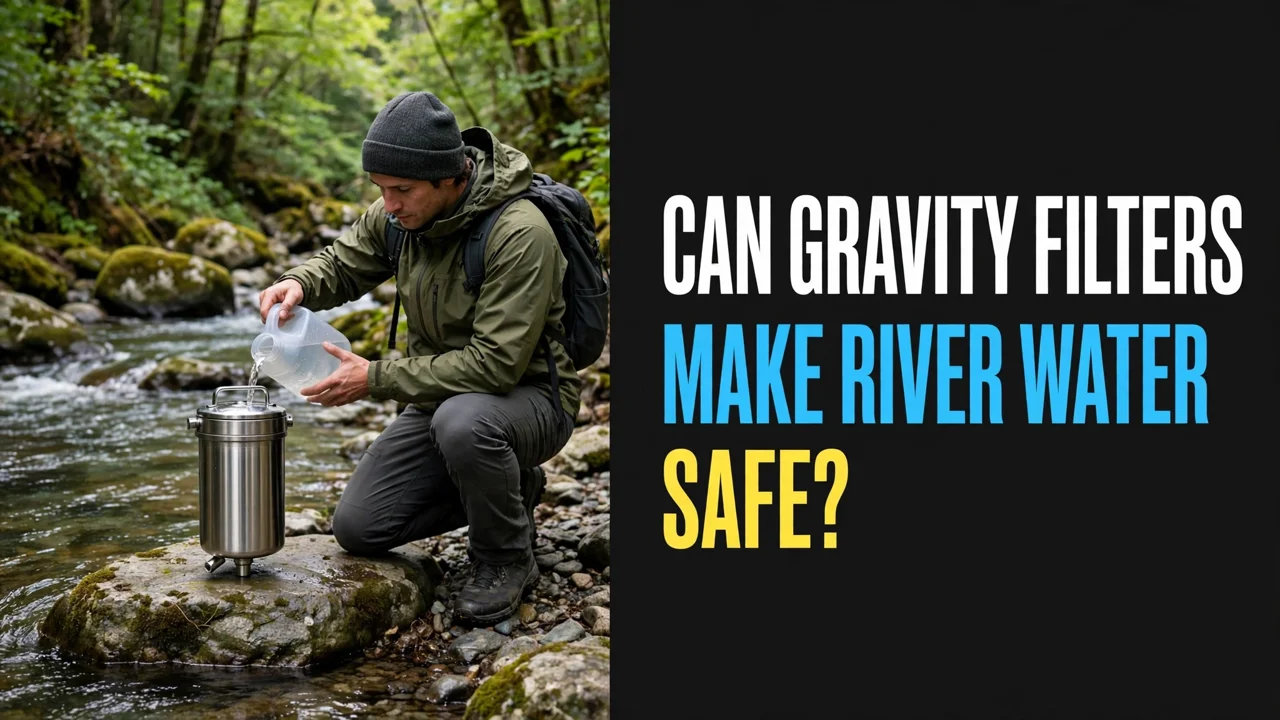
The scene is easy to picture: a clear mountain river, a stainless gravity filter on the bank, and a long drink at the end of a hike. It is also the exact scenario gravity filters were not certified for. These systems were designed to improve treated municipal water — better taste, less chlorine, fewer chemicals — and their elements do real work on river water too. But “improved” and “safe” are separated by one category of contaminant that no gravity element is certified to stop, and it is the category most likely to ruin your month. This article draws that line precisely, then gives the protocol that actually closes it.
The short answer: no. A gravity filter alone does not make river water safe to drink. Quality elements can strain out sediment, bacteria, and protozoan cysts — but viruses pass through, and no gravity filter is certified to NSF P231, the microbiological purifier protocol, or certifies virus removal at all. For untreated surface water, filtration is step one; disinfection — boiling, chemical treatment, or UV — is the step that makes it safe.
Table of Contents
Quick verdict
Gravity filtration of river water is half a treatment system. The filter half genuinely works: it clears turbidity, and good elements reduce the bacteria and protozoan cysts that cause most backcountry illness. The missing half is viruses — norovirus, hepatitis A, and their relatives are far smaller than bacteria, are present wherever human or animal waste reaches water, and are not certified to be removed by any gravity element. The fix is neither exotic nor expensive: filter first to clarify the water, then disinfect. Campers have run exactly this two-step for decades. What you should not do is let clear, good-tasting filtered river water talk you out of step two — clarity is a property water shares with plenty of contaminated sources.
What is in river water
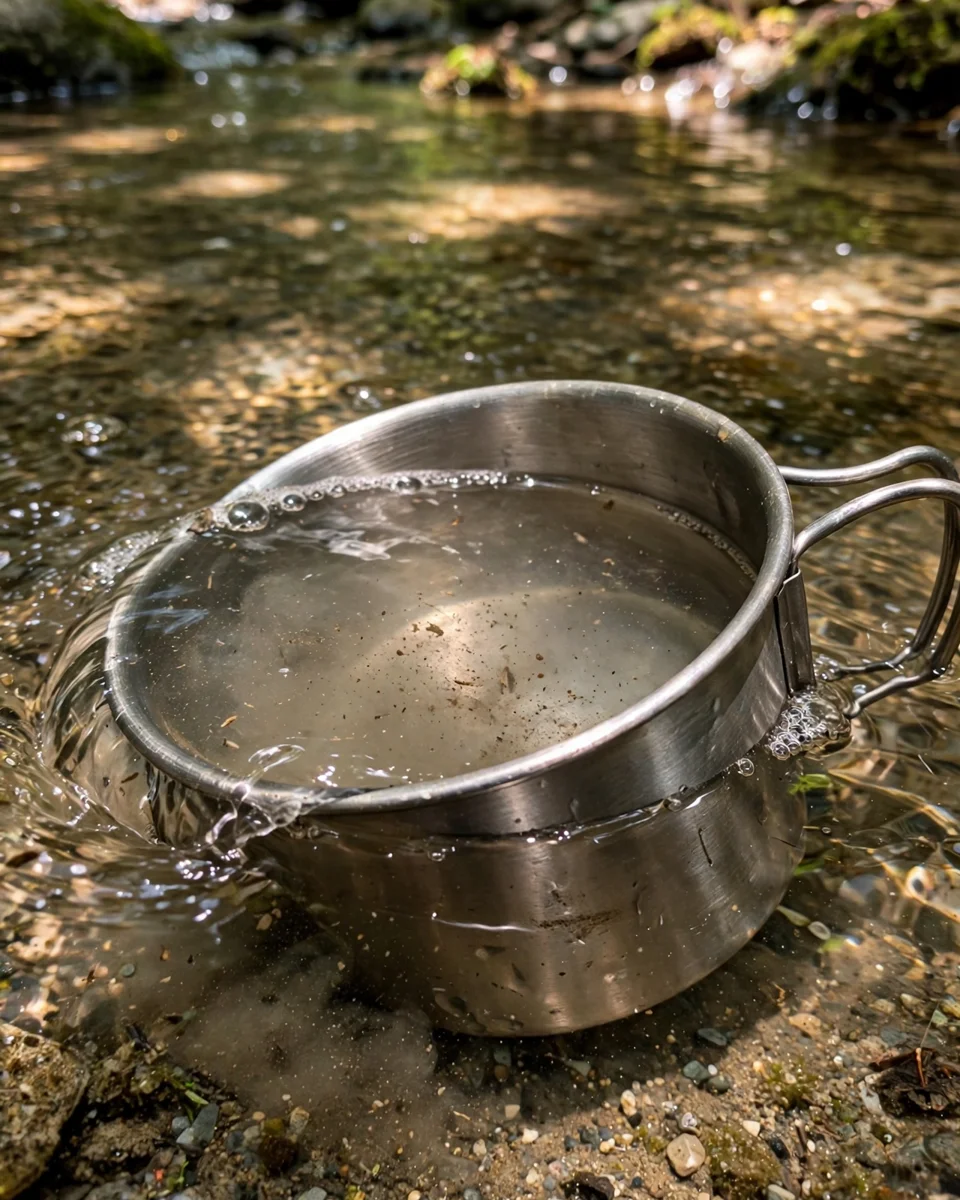
| Contaminant | Typical size | Gravity filter alone |
|---|---|---|
| Sediment and turbidity | Large | Removed — this is what pre-filtering and elements do best |
| Protozoan cysts (Giardia, Cryptosporidium) | 3–15 µm | Strained out by quality elements (maker-claimed performance) |
| Bacteria (E. coli, Campylobacter, Leptospira) | 0.2–2 µm | Largely filtered by quality elements (maker-claimed, not purifier-certified) |
| Viruses (norovirus, hepatitis A) | 0.02–0.3 µm | Not reliably removed — no gravity filter certifies virus removal |
| Dissolved chemicals (farm runoff, metals) | Molecular | Partially adsorbed by carbon, source-dependent, never guaranteed |
Read the table the way a risk assessor would: the rows the filter handles well are the visible, mechanical ones. The row it does not handle — viruses — is invisible, tasteless, and entirely capable of being present in a sparkling stream below a campsite, a pasture, or a beaver pond. Sediment adds a practical problem on top: silty water clogs elements fast, which tempts people to skip filtration altogether and drink “clear enough” water — trading away the rows the filter does cover.
What certification proves
There is a standard written precisely for the claim “this device makes untreated water microbiologically safe”: NSF P231, the microbiological purifier protocol, built on the EPA’s purifier guide standard — demanding verified reduction of bacteria, viruses, and cysts. No gravity filter is certified to NSF P231, and no gravity filter certifies virus removal. That is a checkable statement about the certifiers’ public databases, and it is the single most important fact in this article. Gravity elements are certified, where they are certified at all, under drinking-water standards (NSF/ANSI 42/53) that assume the water is already microbiologically treated. Makers’ own log-reduction numbers for bacteria and cysts may be perfectly honest lab results — but they are the makers’ results, for the organisms tested, and viruses are conspicuously absent from them. When a gravity product’s marketing leans on words like “purifier” without a P231 listing behind it, the listing is the part to believe.
What the science says
The physics is a size chart. Protozoan cysts run 3–15 micrometres; bacteria, roughly 0.2–2; viruses, 0.02–0.3 — an order of magnitude smaller than the smallest bacteria. Fine filter media strain by size and adsorb by surface chemistry, and gravity elements do both respectably down into the bacterial range, which matches their makers’ bacteria-and-cyst claims. Viruses sit below that practical floor for this format: too small to strain, and present in surface water precisely where people and animals are upstream — which is everywhere people actually camp. Public-health guidance reflects this: the CDC’s backcountry advice treats filtration and disinfection as distinct tools, recommends boiling as the most reliable kill step for all three organism classes, and notes that filters alone do not remove viruses. Add the chemical caveat — carbon adsorbs some dissolved contaminants but guarantees nothing about a specific watershed’s runoff — and “filter it and drink” fails on every axis the evidence can check.
The safe protocol
- Choose the best source available — flowing water over still, upstream of camps, trails, and grazing where you can manage it.
- Pre-filter the grit — let sediment settle, or pour through a cloth or bandana, so the element is not choked in the first litre.
- Filter as normal. This removes sediment, cysts, and the bulk of bacteria, and produces clear water — clarity matters because disinfection works poorly in cloudy water.
- Then disinfect — pick one:
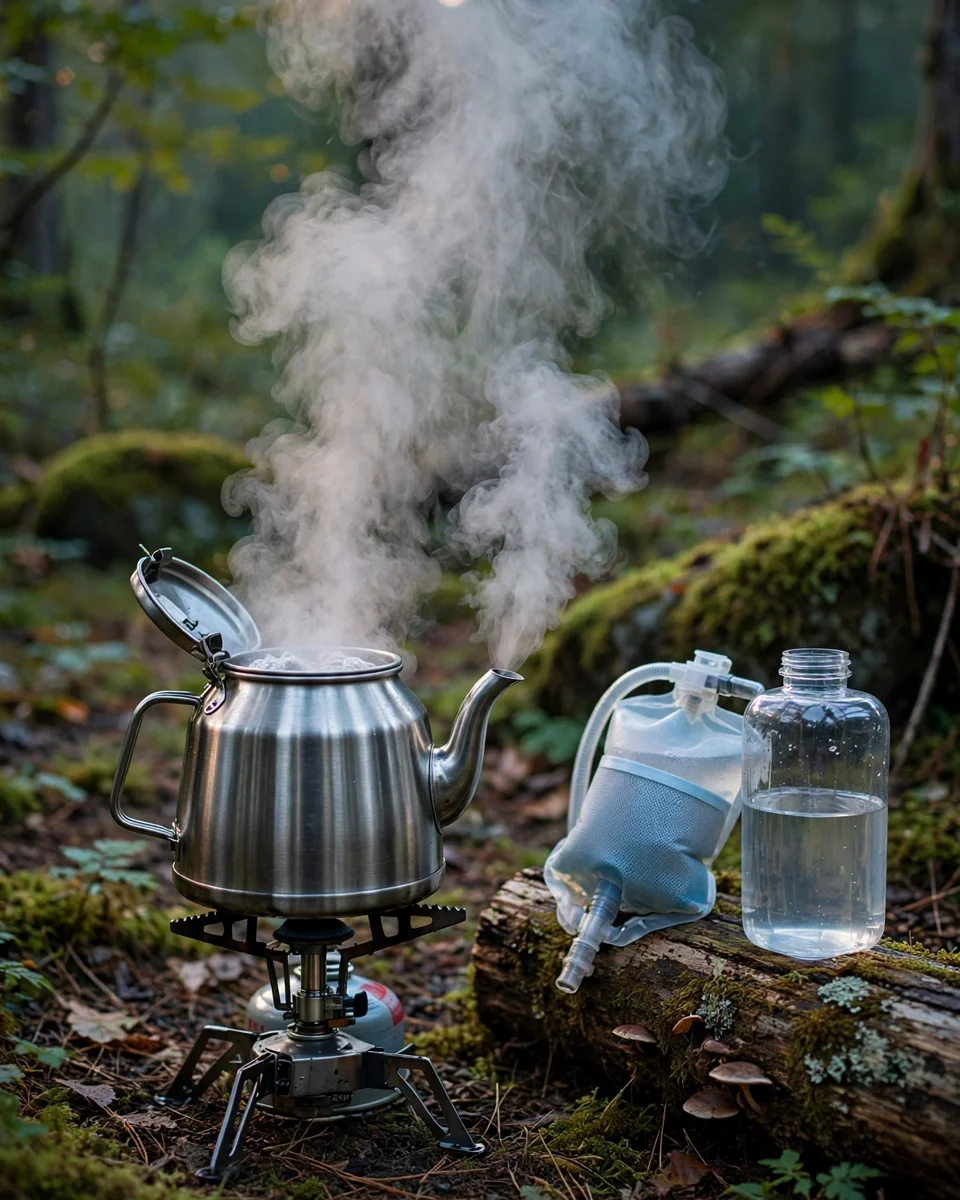
- Boil: a rolling boil for 1 full minute (3 minutes above roughly 6,500 feet). The most reliable option; covers viruses, bacteria, and cysts.
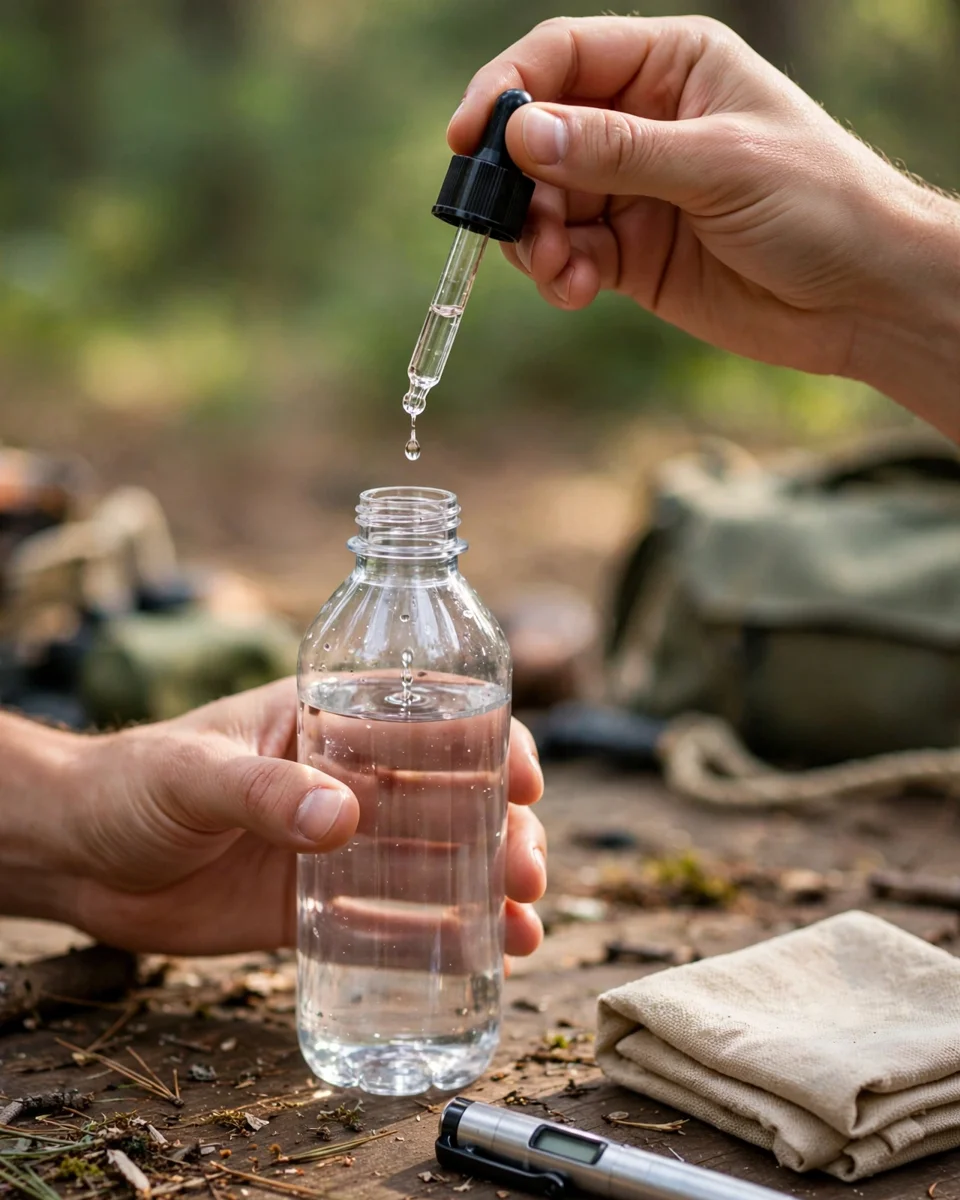
- Chemical: chlorine dioxide drops or tablets at the label dose, with the full stated contact time — extended in cold or cloudy water.
- UV: a UV pen used on clear, filtered water, stirred for the device’s full cycle; ineffective in turbidity, which is why it comes after the filter.
- Store treated water covered and keep untreated water and hands away from the clean container’s mouth.
Note what the two steps divide between them: the filter handles particles and the larger organisms; disinfection handles viruses and whatever bacteria remain. Neither step substitutes for the other — boiling silty water leaves you drinking sterilized grit (and does nothing for chemicals), while filtered-only water keeps its viruses. Emergency guidance for floods and outages follows the same logic, which is why our guide to the best gravity water filters scores emergency readiness on the pairing, not the filter alone.
When the filter alone is enough
Filter alone is fine
- Treated municipal tap water — the gravity format’s designed job: chlorine, taste, sediment, and certified chemical claims per element.
- Rainwater or stored water that has itself been disinfected, where the filter is polishing, not purifying.
- Any source your local health authority has declared treated and safe, filtered for taste and specific certified contaminants — the situation covered in our lead and fluoride evidence articles.
Filter alone is not enough
- Rivers, streams, lakes, and ponds — any untreated surface water, however clear.
- Shallow wells or springs of unknown sanitary status.
- Floodwater and post-disaster sources, where chemical and sewage contamination stack on top of microbes.
- Any water where the drinkers include infants, pregnant people, or the immunocompromised and the source is untreated — the cost of the extra step is minutes; the cost of skipping it is not.
If your use case is genuinely “one device, untreated water,” the product category to research is certified purifiers and the filter-plus-disinfectant pairing — a different shelf from gravity systems, as the head-to-head in gravity filter vs reverse osmosis shows for the home side of the same lesson: match the technology to the claim, and demand the certification that matches both.
Conclusion
Can gravity filters make river water safe? No — and the honest negative is more useful than a marketed yes. A gravity filter is an excellent first half of backcountry water treatment: it clears sediment and removes the cysts and most bacteria behind the commonest wilderness illnesses. But viruses pass through uncertified and unopposed, and no gravity filter carries the NSF P231 purifier certification — or any virus claim — that “safe” would require. Filter, then disinfect: one minute at a rolling boil, a chemical dose at full contact time, or UV on clear water. Two steps, a few minutes, and the river becomes what the filter alone only makes it look like.
Update log
October 2026: Article published; protocol per CDC backcountry water guidance (rolling boil 1 minute; 3 minutes at altitude). Certification status stated as of publication: no gravity filter holds NSF P231 microbiological purifier certification, and none certifies virus removal. No brand-specific claims are made.
FAQs
Can a gravity filter make river water safe to drink?
Not by itself. A quality gravity element strains out sediment, protozoan cysts, and most bacteria, but viruses — norovirus, hepatitis A — are far smaller, and no gravity filter is certified to NSF P231 or certifies virus removal. For untreated surface water, always pair filtration with disinfection: boil for one full minute, use chemical treatment at full contact time, or apply UV to clear filtered water.
What do gravity filters fail to remove from river water?
Viruses are the critical gap — at 0.02–0.3 micrometres they pass below the practical floor of gravity media, and no gravity product certifies their removal. Dissolved chemicals are a second, partial gap: carbon adsorbs some, depending on the specific compound and watershed, but nothing about a river’s chemistry is guaranteed by the format.
Are gravity filters certified as water purifiers?
No. The purifier claim has a specific protocol — NSF P231, based on the EPA purifier guide standard — requiring verified reduction of bacteria, viruses, and cysts. No gravity filter holds that certification. Gravity elements are certified, where certified at all, under drinking-water standards (NSF/ANSI 42/53) that assume the incoming water is already microbiologically treated.
How long should I boil river water after filtering?
Bring it to a rolling boil for one full minute — three minutes at altitudes above roughly 6,500 feet, per CDC guidance. Filter first: boiling disinfects but does not remove sediment or chemicals, and clear water also makes every other disinfection method work properly if boiling is not an option.
Do UV pens or disinfection drops work instead of boiling?
Yes, with conditions. Chlorine dioxide drops or tablets inactivate viruses and bacteria when used at the label dose for the full contact time (longer in cold water). UV pens inactivate all three organism classes but only in clear water — suspended particles shield microbes from the light — so UV belongs after filtration, exactly as in the filter-then-disinfect protocol.
The river looks crystal clear. Is filtering alone enough then?
No. Clarity tells you about sediment, and nothing about viruses or bacteria, which are invisible at any concentration that matters. Clear water below a campsite, pasture, or wildlife pond can carry all of them. The two-step protocol costs a few minutes; treat every untreated surface source the same way regardless of how it looks.