
How Often Should You Change RO Filters? The Schedule by Stage (2026)
Guide
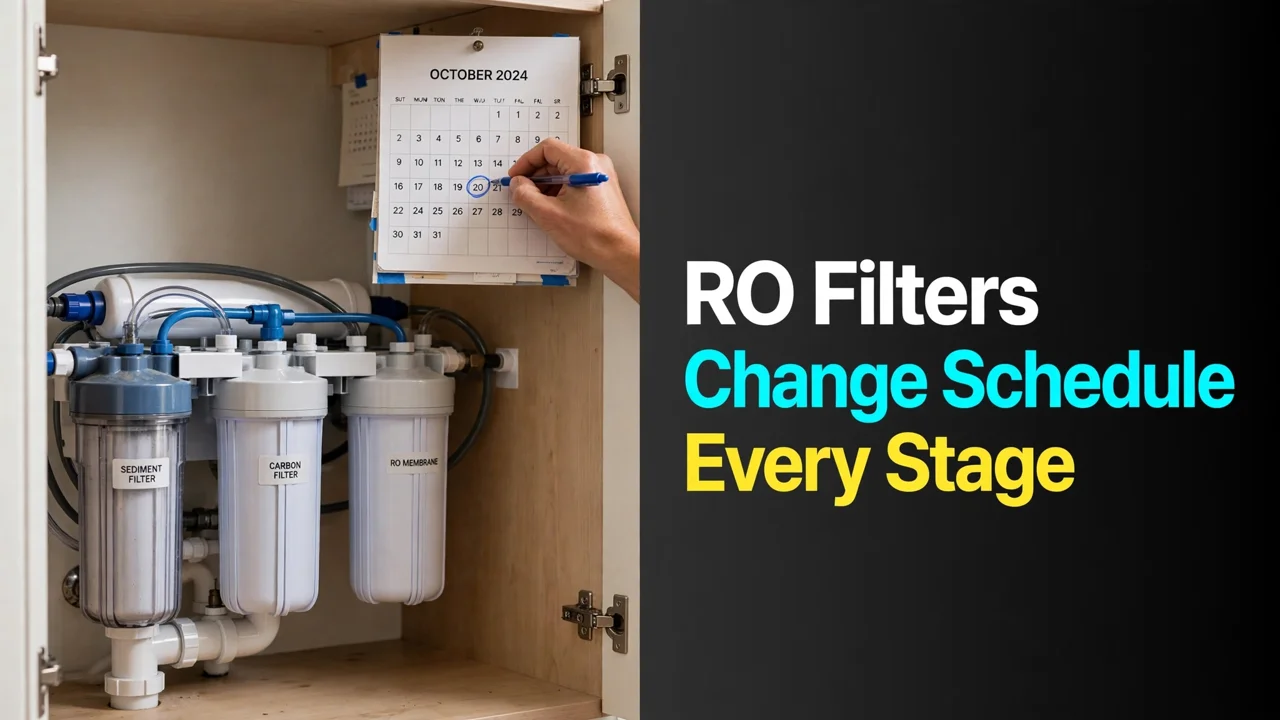
An RO system is not one filter on one schedule — it is four or five stages aging at completely different rates, and changing them all on the same day is either wasteful or negligent depending on the stage. The sediment filter may be exhausted in four months while the membrane behind it has three good years left. This guide gives the working schedule stage by stage, the signs that override the calendar, and the two-minute test that tells you the truth about the expensive part.
The schedule in one table: sediment prefilter every 6–12 months (3–6 on well water), carbon prefilter every 6–12 months, membrane every 2–3 years (verified by a TDS rejection test, not just the date), post-carbon every 12 months. Total typical running cost for a standard system: roughly $40–90 a year. Miss the prefilters and the bill arrives as a dead membrane instead — the economics are the argument.
Table of Contents
The schedule, stage by stage
| Stage | Change interval | Why that interval |
|---|---|---|
| Sediment prefilter | 6–12 months (3–6 on wells) | It clogs by loading, not by time — turbid water fills it fast. A clogged sediment stage starves everything downstream. |
| Carbon prefilter | 6–12 months | Its critical job on city water is removing chlorine before the membrane — chlorine destroys membrane material. Exhausted carbon passes chlorine through silently. |
| RO membrane | 2–3 years typical (up to ~5 in gentle conditions) | It degrades by fouling and exposure, not by the calendar. Verify with the TDS test below before replacing — and before keeping. |
| Post-carbon (polishing) | 12 months | It scrubs tank taste; exhausted carbon here is a flavor problem, not a safety one. |
| Remineralization stage (if fitted) | 6–12 months, per the maker | Media depletes with throughput; taste flattens as it goes. |
Bundle the work: one annual session for sediment + carbon + post-filter, with the membrane assessed by test at the same visit every second or third year. While the housings are open, wipe the sumps and check every O-ring — the towel test from our RO leak guide applies after repressurizing.
Why the prefilters protect the payoff
The membrane is the expensive, hard-working stage — and it cannot protect itself. Sediment that passes a clogged prefilter abrades and fouls it; chlorine that passes an exhausted carbon prefilter chemically attacks it (this is why city-water systems die young when carbon changes slip). The arithmetic is stark: roughly $15–30 a year of prefilters defends a $40–80 membrane and the water quality it produces. Owners who “save money” by stretching prefilters to two years reliably buy membranes at year two instead. Prefilters are not the system’s running cost; they are the membrane’s insurance premium.
The membrane verdict: test, do not guess
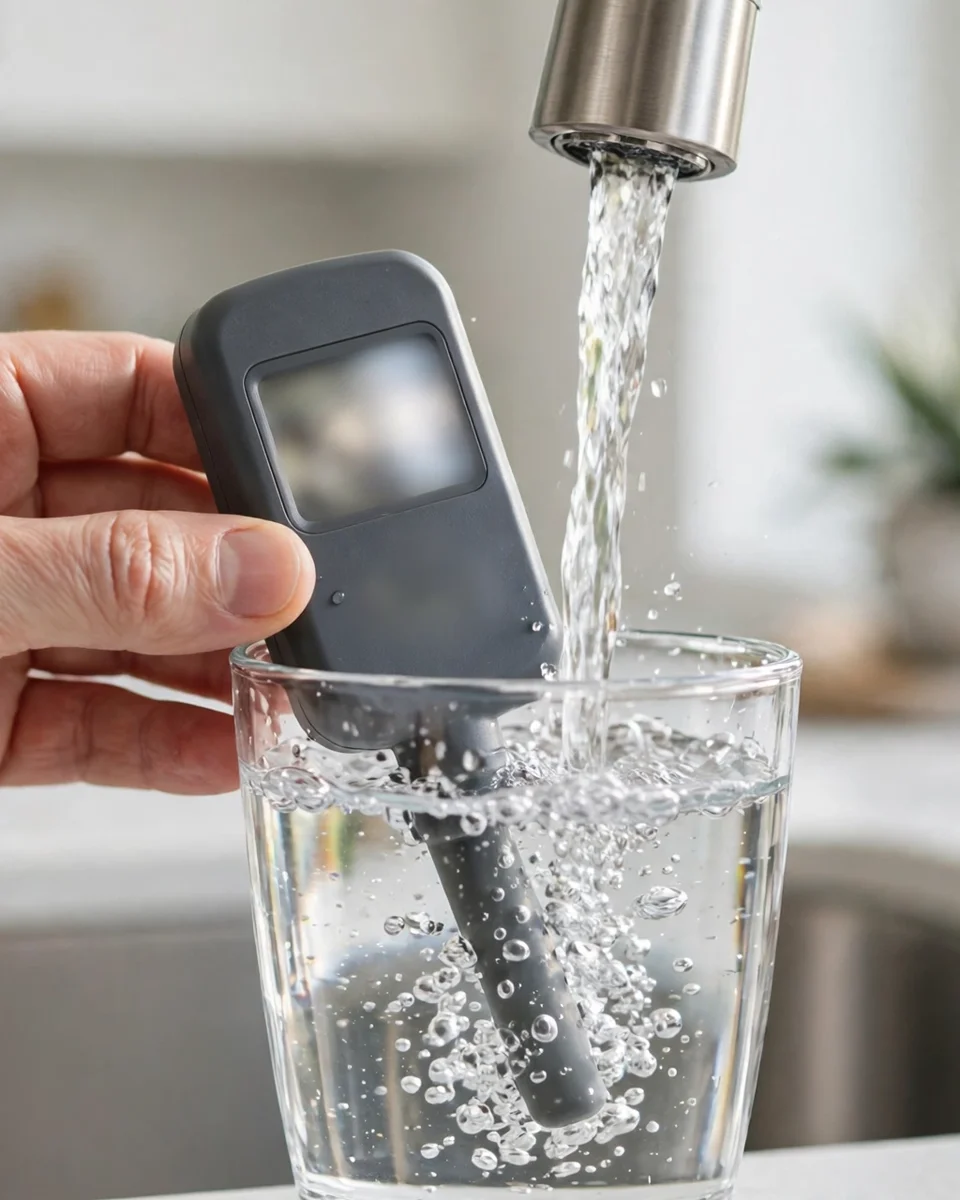
A $10–15 TDS meter settles the membrane question with arithmetic. Measure your tap water’s TDS, then the RO water’s TDS (from the RO faucet, after the system has produced recently). Rejection % = (1 − RO TDS ÷ tap TDS) × 100. A healthy membrane rejects 90%+ (often 95%+ when new). Between roughly 85–90% the membrane is aging — plan its replacement. Below ~85%, replace it: contaminant rejection on the things TDS cannot measure falls alongside. (Background on what TDS does and does not mean: our TDS explainer.) Log the two numbers at every annual service; a drifting trend predicts the end a year early.
Signs that override the calendar
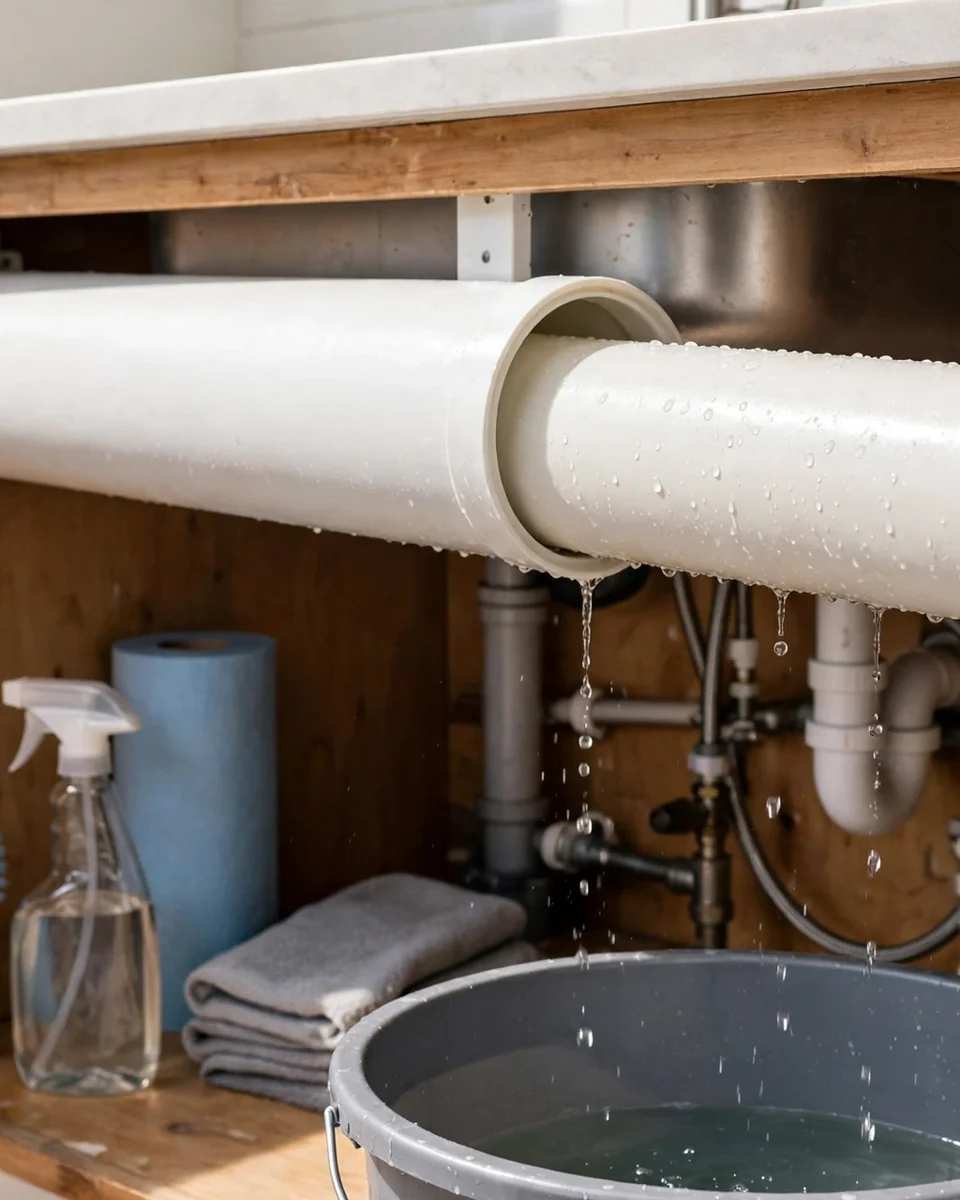
- Tank fills slowly / production drops: clogged sediment stage first, then membrane fouling. Change the cheap stage and re-measure before condemning the membrane.
- Taste returns (chlorine, flat, stale): carbon stages — prefilter exhaustion endangers the membrane, post-filter exhaustion just tastes bad. Both say change now.
- RO TDS creeping up month over month: the membrane is going, even at 18 months. Test, don’t hope.
- System runs to drain constantly: often a failed automatic shut-off or a membrane passing water — investigate rather than changing stages blindly.
- After any long vacancy: a system that sat unused for months deserves fresh prefilters and a tank sanitized per the maker’s instructions before returning to service.
Tankless and special stages
Tankless systems fold stages into composite cartridges, so their schedule is the maker’s: typically a combined prefilter every 6–12 months and the RO composite every 12–24 months — pricier per change, as our tankless analysis details. The TDS rejection test still works and still outranks the box’s promises. UV lamps (where fitted for well water) are an annual change regardless of whether the lamp still glows — UV output decays below disinfection strength while the light looks fine. That last point is the most ignored maintenance fact in home water treatment.
Conclusion
Run two clocks: an annual service for sediment, carbon and post-filter (twice a year for the sediment stage on wells), and a tested 2–3-year horizon for the membrane, judged by rejection numbers you wrote down. The system’s total appetite — about $40–90 a year on a standard setup — is small; the only expensive outcome is the neglected one.
Update log
October 2026: Schedule published from mainstream manufacturer maintenance guidance; intervals are typical ranges — your water quality moves them, and the TDS test arbitrates the membrane.
FAQs
How often should RO filters be changed, in short?
Sediment and carbon prefilters every 6–12 months (sediment as often as 3–6 months on well water), post-carbon every 12 months, and the membrane every 2–3 years — with the membrane’s timing verified by a TDS rejection test rather than the calendar alone.
What happens if I never change the RO prefilters?
The system degrades in sequence: the sediment stage clogs and production slows; the exhausted carbon stage stops removing chlorine, which chemically damages the membrane; water quality and flow fall together, and the eventual bill is a membrane (or a membrane plus a tank flush) instead of two inexpensive cartridges.
How do I know if my RO membrane needs replacing?
Test it: measure tap TDS and RO-water TDS with an inexpensive meter and compute rejection — (1 − RO ÷ tap) × 100. Above 90% is healthy; 85–90% is aging; below about 85% means replace. Falling production with fresh prefilters is the supporting symptom.
Can an RO membrane last 5 years?
Yes, in gentle conditions: soft, low-TDS feed water, prefilters changed on schedule, moderate household use. It is the exception, not the plan — and the rejection test is how you earn the right to keep it. Calendar age alone neither condemns nor acquits a membrane.
Do I need to sanitize the RO system?
Manufacturers commonly recommend sanitizing the system (tank and housings, without the membrane and filters installed) at membrane changes or annually in heavy use, following the maker’s procedure and food-safe sanitizer. At minimum, wipe housings at every change and sanitize after any long vacancy before returning the system to service.
Why does my RO water taste bad even with new filters?
Three usual suspects: the system was not flushed after the change (run a full tank to drain), the tank itself is the flavor source (old tank, or one due for sanitizing), or the membrane — not the filters you changed — is the exhausted stage. A TDS test separates the third from the first two in two minutes.