
Best Well Water Test Kits (2026)
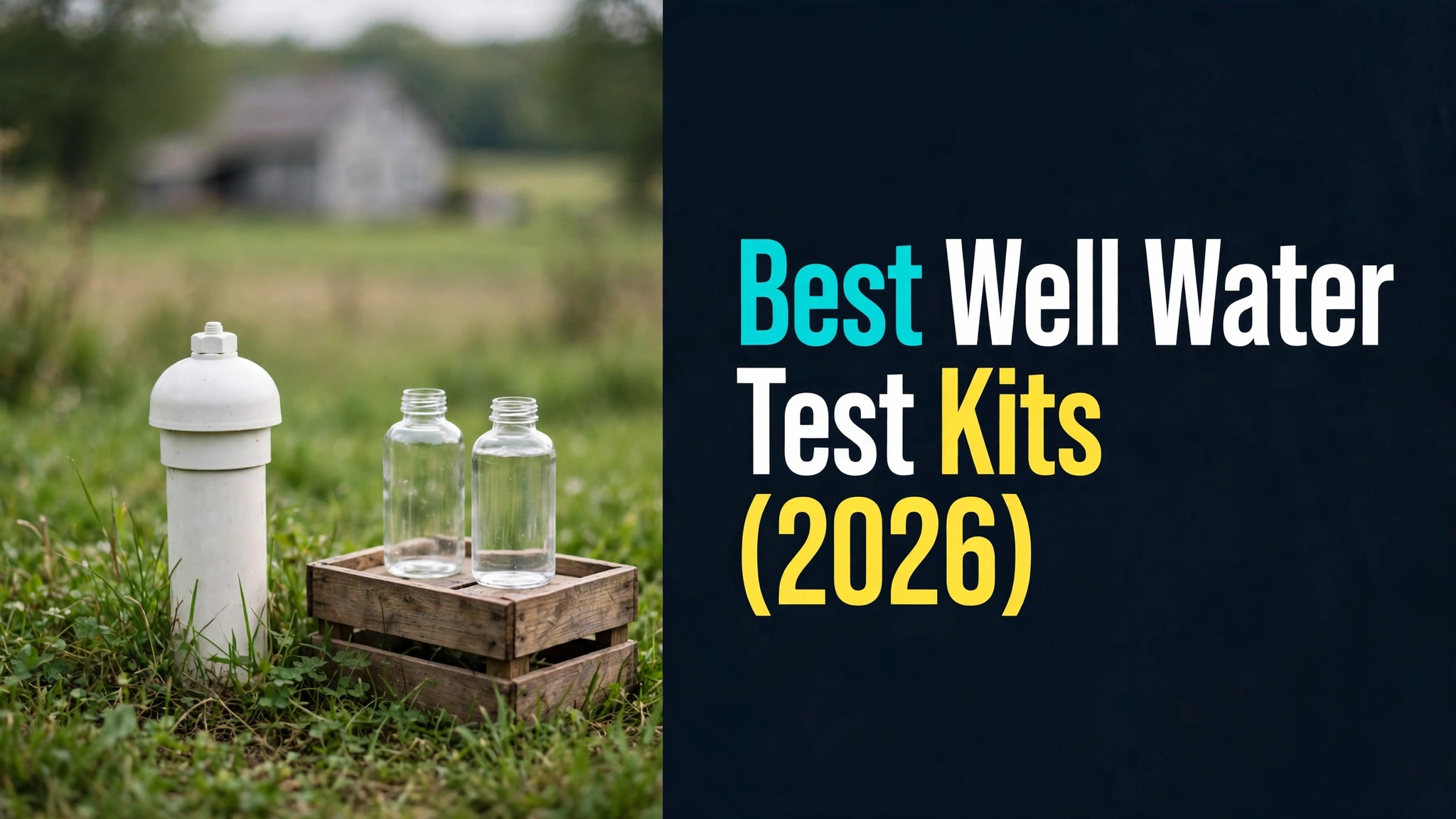
★ BEST WELL WATER TEST KITS 2026A private well has no water company, no annual report and no one testing it but you. Federal and state guidance is unambiguous about the owner’s homework: test for coliform bacteria and nitrates every year, and run a broader panel every few years or whenever something changes. The kits below are ranked for exactly that job — well water’s specific risks, not generic tap-water checkups.
Here is the short answer: Tap Score’s Advanced Well Water Test is the best overall well test — a mail-in certified-lab panel built for wells (bacteria, nitrates, metals, minerals and more) at roughly $199–265 depending on panel. Your state or county lab is the best value in well testing — official coliform and basic chemistry tests often run $20–60 through public health programs. Watersafe’s Well Water kit is the best DIY option for same-week screening between lab rounds. The discipline matters more than the brand: annual bacteria + nitrate checks are the non-negotiable core, and this page is organized around keeping that habit cheap and real. City-water readers belong in our general water test kit roundup.
Tap Score Advanced Well — our scores
Table of Contents
Quick picks
The bottom line: run the Tap Score well panel as your deep baseline (and every few years after), use the state/county lab for cheap official annual bacteria checks where available, and keep a Watersafe DIY kit for the moments in between — a flood, a repair, a strange taste.
Verdict: well testing is a calendar habit with a lab at the end of it. Buy the habit first; the kits are just how it happens.
Top 3 quick picks
- Best overall — Tap Score Advanced Well (~$199–265). The complete well panel: bacteria, nitrates, arsenic, lead, iron, manganese, hardness and more.
- Best value — State/county lab testing (~$20–60 per test). Official methods, official paperwork, public-health pricing.
- Best DIY — Watersafe Well Water Kit (~$30–40). Bacteria-forward screening with nitrate, pesticide, lead and hardness checks at home.
The catch
- DIY bacteria tests screen; they do not certify. For real-estate transactions, daycare licensing or a positive DIY result, only a lab culture counts.
- Sampling technique decides accuracy. A badly drawn sample fails even a perfect lab — sterilize, flush per instructions, ship promptly.
How we researched
We did not culture bacteria in our own lab, so this guide will not pretend we did. What we did instead: ranked options against the standing EPA and CDC guidance for private wells (annual coliform + nitrate testing; broader chemistry every few years and after changes), compared each option’s analyte menu and method (certified lab culture/analysis vs DIY screening), and priced them at October 2026 street and published public-lab rates. Where a program’s price varies by state — the public-lab pick — the range is stated as a range.
Best overall: Tap Score Advanced Well Water Test
Tap Score’s well panel is the consumer product that most closely replicates what a state lab would run: coliform/E. coli, nitrates and nitrites, the well-owner metal set (arsenic, lead, iron, manganese, copper), hardness, pH, TDS and a long tail of additional analytes, analyzed with certified methods and reported in plain language against health benchmarks. For a new well, a new home purchase, or the every-few-years deep check, it is the single most complete answer you can buy without driving samples to a lab yourself.
Sampling discipline is the owner’s half of the bargain: Tap Score’s instructions (which tap, how long to flush, sterile bottles for the bacteria sample, cold shipping) exist because bacteria results are meaningless otherwise. Follow them exactly and the ~$199–265 buys defensible numbers. Follow them loosely and you have bought expensive reassurance. That caveat applies to every mail-in and public lab equally.
Pros
- Complete well panel — bacteria, nitrates, arsenic and the full metal/mineral set.
- Certified lab methods with readable, benchmarked reports.
- Mail-in convenience — no lab drive, no appointment.
Cons
- $199–265 per round — pricey as an annual habit for some budgets.
- Results depend on your sampling — technique is not optional.
Price checked at time of writing; it changes often — see the live price before you buy.
Best value: your state or county laboratory
The best-kept secret in well testing has a government phone number. Most states run drinking-water laboratory programs (through health or environmental departments, often with county collection points) that test private wells for coliform bacteria at roughly $20–40 and offer basic chemistry panels at similar public-health prices — a fraction of commercial mail-in rates, with official methods and paperwork that satisfies lenders, buyers and health officers. The frictions are real: office hours, sample-holding times (bacteria samples are perishable — often must reach the lab within 24–30 hours), and menus limited to the essentials. For the annual bacteria + nitrate core, though, nothing beats it, and every well owner should know their program’s number before they need it.
Pros
- Cheapest certified testing available — often $20–60.
- Official results accepted for transactions and disputes.
- Local expertise — they know your aquifer’s usual suspects.
Cons
- Logistics — office hours and strict sample deadlines.
- Essential menu only — exotic analytes still need a commercial lab.
Best for specific needs
Two more routes cover the gaps between lab rounds.
Best DIY screening: Watersafe Well Water Test Kit

Watersafe’s well kit (~$30–40) bundles a bacteria presence test with checks for nitrates, nitrites, pesticides, lead, iron, hardness, pH and chlorine — the well-owner worry list in one box, with results at home in about two days (bacteria incubation). It is a screening instrument: a negative is reassuring, a positive is a phone call to the lab, not a verdict. Kept on the shelf for post-flood and post-repair checks, it is exactly the right tool.
Pros
- Well-specific menu including a bacteria test, at home.
- Cheap enough to keep in reserve for event-driven checks.
Cons
- Presence/absence answers — positives need lab confirmation, always.
Also consider: Safe Home well-focused kits
Safe Home’s DIY line offers well-oriented bundles with its vial-and-reagent format (bacteria, lead, nitrates and more) and a mail-in upgrade path in the same brand. If the Watersafe format does not suit you, this is the comparable alternative — same screening tier, same escalation rule. Our general test kit roundup covers the brand in full.
Head-to-head comparison
| Option | Method | Covers | Turnaround | Price |
|---|---|---|---|---|
| Tap Score Advanced Well | Mail-in certified lab | Bacteria, nitrates, arsenic, metals, minerals (100+ analytes on broad panels) | ~5–10 days | ~$199–265 |
| State/county lab | Official lab | Coliform, nitrates, basic chemistry (varies) | Days | ~$20–60/test |
| Watersafe Well Kit | DIY screening | Bacteria, nitrates, pesticides, lead, iron, hardness | ~2 days | ~$30–40 |
| Safe Home well kits | DIY + mail-in upgrade | Bacteria, lead, nitrates & more | Same day–days | ~$30–60 |
Buying guide

The annual core is bacteria + nitrates. Coliform signals surface contamination reaching the well; nitrates (from fertilizer, septic, manure) are the classic rural exceedance and a particular risk for infants. Everything else is periodic. Sample where the guidance says: an untreated tap (before softeners/filters) tells you about the well; a kitchen tap tells you about your glass — know which question you are asking, and follow sterile technique for bacteria samples (clean hands, no touching the bottle mouth, keep it cold, ship or deliver immediately). Test after events: floods, well or pump repairs, a new septic system nearby, or any change in taste, odor or color — don’t wait for the annual date.
Replacement cost math
- Minimum responsible habit: state/county lab coliform + nitrate annually → ~$40–100/year where available.
- Mail-in habit: Tap Score well panel every 2–3 years + state-lab annual checks between → ~$110–190/year averaged.
- DIY-supplemented: add a Watersafe kit (~$35) for event-driven checks every year or two → +$20–35/year.
- Perspective: a single ER visit or a failed home sale costs more than a decade of testing. Well testing is the cheapest insurance a rural homeowner buys.
FAQs
How often should well water be tested?
At least once a year for coliform bacteria and nitrates — that is the standing EPA and CDC guidance for private well owners. Run a broader chemistry panel (metals like arsenic and lead, hardness, iron, manganese) every few years, and test immediately after floods, well or pump repairs, nearby septic or land-use changes, or any change in taste, odor or appearance.
What is the best test for well water bacteria?
A laboratory coliform culture — through a mail-in certified lab like Tap Score or your state/county drinking-water lab — is the reliable standard, because bacteria sampling demands sterile technique and timely analysis. DIY kits like Watersafe include a bacteria presence test useful for screening between lab rounds, but a positive DIY result should always be confirmed by a lab before you act on it.
Can I test my well water for free?
Sometimes close to it. Many state and county health programs test private wells for coliform bacteria at low public-health rates (often $20–40), and some offer free testing after floods or contamination events. A few states subsidize broader panels for well owners. Call your county health department or state drinking-water lab — it is the best first phone call in well testing, and this roundup’s best-value pick.
What should a well water test include?
The annual core: total coliform (with E. coli) and nitrates/nitrites. The periodic panel: arsenic, lead, copper, iron, manganese, hardness, pH, TDS and sodium — plus regional additions your local lab or health department recommends (radon, uranium or specific pesticides in some geologies). Tap Score’s well panel and state-lab menus both organize around exactly this structure.
Where should I sample — at the well or at the tap?
Both answer different questions. An untreated sample point (an outdoor spigot before any softener or filter, or the pressure-tank tap) tells you about the well itself. A kitchen-tap sample tells you what you actually drink, including anything your plumbing adds or your treatment removes. For annual bacteria and nitrate checks, follow the lab’s instructions — usually a cold-water tap, aerator removed, after a short flush — exactly as written.
My DIY kit says bacteria are present. What now?
Do not panic, and do not drink it untreated until you know more. Confirm with a laboratory coliform test (state/county lab or mail-in) drawn with strict sterile technique — DIY positives are frequently sampling contamination. If the lab confirms coliform, the standard path is well inspection (cap, casing, septic distance), shock chlorination, and retesting; if E. coli is confirmed, boil water until the system is cleared and retested clean.
Conclusion
Well ownership is water management, and testing is its calendar. The Tap Score Advanced Well panel earns best overall because it delivers the complete, defensible picture in one mail-in round; the state or county lab earns best value because official annual bacteria checks at $20–60 are the backbone habit every well owner can afford; and a Watersafe kit on the shelf covers the surprises in between. Pick your combination, put the annual date somewhere you will see it, and your well will never be a mystery to you again.
Price checked at time of writing; it changes often — see the live price before you buy.
Update log
- Zulqarnain: Review published.