ZeroWater vs Brita: Yearly Cost (2026)
Both pitchers cost about the same on the shelf. Twelve months later, one of them has quietly cost you three to four times more than the other. Pitcher economics are never about the pitcher — they are about how many gallons each filter survives, and that is where ZeroWater and Brita live on different planets.
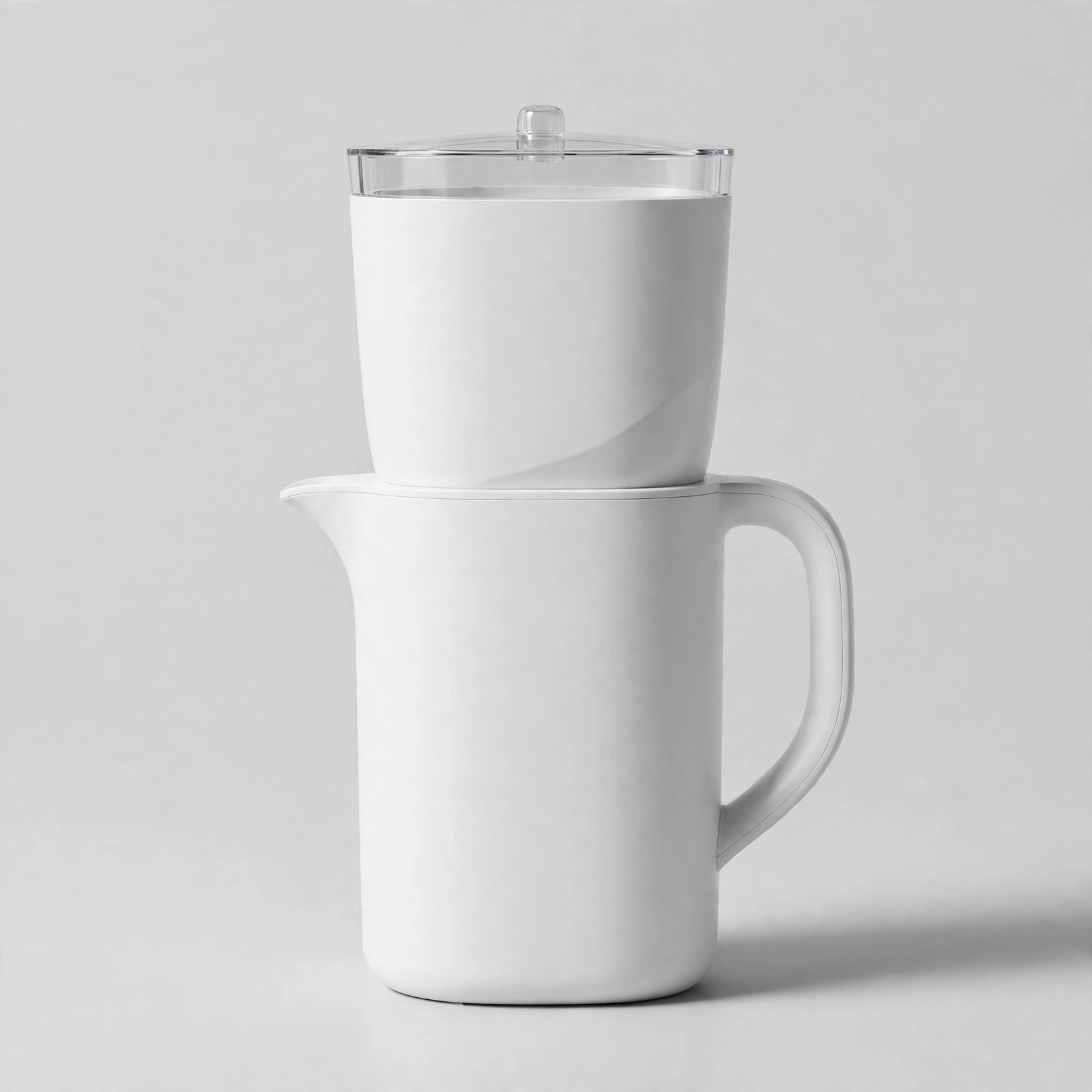
Here is the short answer: Brita wins the yearly-cost fight easily. A Brita Elite filter lasts 120 gallons (about six months for many households) at roughly $28–30, putting a typical year’s filtration around $60–90. ZeroWater’s 5-stage filters last roughly 15–40 gallons depending on your tap water’s TDS at about $15 each, so the same household spends $150–350+ per year — in high-TDS areas, worse. What ZeroWater buys with that money is real: it removes nearly all dissolved solids (its included TDS meter proves “000”), something Brita does not attempt. This is a cost comparison, and Brita takes it; whether ZeroWater’s extra purification is worth its extra $150–250 a year is the question the rest of the page answers honestly.
Lowest Yearly Cost · Brita
Brita (Elite)
~$60–90 / year
120 gallons per Elite filter means two or three filters a year — and that’s the whole bill.
Deepest Pitcher Filtration · ZeroWater
ZeroWater
~$150–350+ / year
Near-total TDS removal from a pitcher — paid for in $15 filters, every few weeks.
Verdict: on cost, Brita — and it is not close. ZeroWater is the better purifier; Brita is the better purchase for most households. Only pay ZeroWater’s premium if dissolved solids are specifically your problem (the meter will tell you), because everyone else is buying filters by the armful for removal they never needed.
Table of Contents
Side-by-side comparison
Costs assume a household filtering about a gallon a day (~365 gal/year), at October 2026 street prices. Your local TDS moves ZeroWater’s numbers a lot — that sensitivity is itself a finding.
| Brita (Elite) | ZeroWater | |
|---|---|---|
| Pitcher price | ~$25–40 | ~$35–45 (TDS meter included) |
| Filter price | ~$28–30 (Elite) | ~$15 |
| Filter life | 120 gal (Elite); 40 gal (Standard) | ~15–40 gal (TDS-dependent) |
| Filters per year @ 365 gal | ~3 Elite | ~10–24 |
| Yearly filter cost | ~$85 (Elite) / ~$65 (Standard) | ~$150–360 |
| Cost per gallon | ~$0.18–0.23 | ~$0.40–1.00 |
| TDS removal | Minimal (not the goal) | Near-total (“000” reading) |
| Certified reductions | NSF 42/53 (Elite: lead, mercury, etc.) | NSF 42/53 (lead, chromium, PFOA/PFOS listings*) |
*Per ZeroWater’s published NSF listings for its pitcher filters; verify your model’s current listing, as certifications are model-specific.
Brita — the low-cost rhythm

Brita’s cost advantage is one number: 120 gallons. The Elite filter (about $28–30) carries NSF/ANSI 42 and 53 certification — chlorine taste plus lead, mercury, cadmium and more per its listing — and lasts roughly six months at a gallon a day. Even the cheap Standard filter ($6–8, 40 gallons) lands near $65 a year. The pitcher itself is a $25–40 one-time shrug. What Brita does not do is touch dissolved solids meaningfully: TDS in ≈ TDS out, because carbon filtration is aimed at taste and specific contaminants, not total mineral removal. For most municipal water, that aim is correctly calibrated — which is why its cost crown is safe. Pitcher shoppers can compare the field in our pitcher filter roundup.
Pros
- ~$60–90 a year, all-in — the cheapest reputable pitcher filtration.
- Elite is NSF 42/53 certified, including lead.
- Filters everywhere, including store brands and bulk packs.
Cons
- TDS barely moves — dissolved solids are not its brief.
- Standard filters are the false economy — Elite is the value pick.
ZeroWater — the premium rhythm
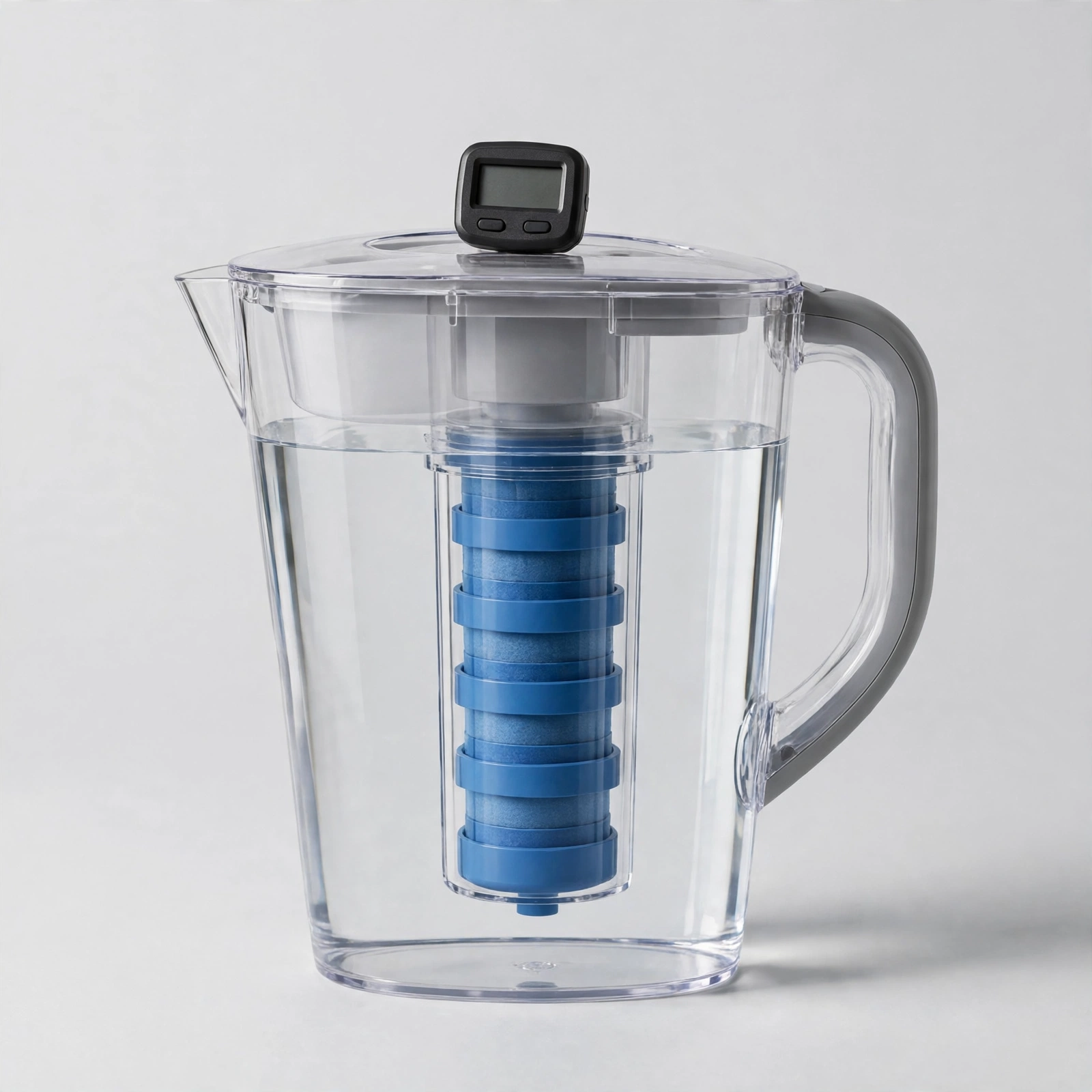
ZeroWater’s 5-stage ion-exchange filter does something no other pitcher does: it strips dissolved solids to a meter reading of 000, RO-style, and includes the TDS meter so you can watch it happen. Its filters hold NSF/ANSI 42/53 certifications (including lead and, per its listings, PFOA/PFOS). The catch is consumable physics: ion-exchange media exhausts against your water’s TDS. On soft municipal water (~100 TDS) a $15 filter may last 40 gallons; on hard, high-TDS water (300–500+) it can fade in 15 gallons or fewer — and owners learn to taste the exact moment it goes (the infamous “fishy” sour note of exhausted resin). At a gallon a day that is a filter every two to five weeks: $150–360 a year, forever.
Pros
- Near-total TDS removal — unique among pitchers, meter-verified.
- NSF 42/53 certified with strong listed reductions.
- The answer for high-TDS well or city water you can taste.
Cons
- Filter burn rate — the yearly bill is 2–4× Brita’s, worse as TDS climbs.
- Exhausted filters announce themselves with an off taste — no graceful fade.
Certifications
Both brands play this straight. Brita’s Elite is certified to NSF/ANSI 42 and 53 (its Standard filter to 42). ZeroWater’s pitcher filters are certified to 42 and 53 as well, with PFOA/PFOS among its published listings — genuinely strong paperwork for a pitcher. Certification, unusually, is not the separator here: both reduce what they claim to reduce. The separator is what each chooses to remove (Brita: targeted contaminants — cheaply, slowly exhausting. ZeroWater: nearly everything dissolved — thoroughly, quickly exhausting) and what that choice costs per gallon.
Compatibility & use
Both live in the fridge door or on the counter, fill at the tap, and need no installation. Practical differences: ZeroWater filters are proprietary to its pitchers and its larger dispensers; Brita filters fit Brita pitchers and a sea of store-brand clones, which is another quiet cost advantage. Speed favors Brita slightly (faster flow through the carbon), capacity favors neither (both ~10–12 cup class, plus dispenser models). One use note for ZeroWater households: the included TDS meter is not a toy — it is your change indicator. When the reading climbs past ~006, the filter is done, whatever the calendar says.
Cost per year — the full math
- Brita Elite: 365 gal ÷ 120 gal/filter ≈ 3 filters × ~$28 = ~$85/year (~$0.23/gal).
- Brita Standard: 365 ÷ 40 ≈ 9 filters × ~$7 = ~$65/year (~$0.18/gal) — cheaper, weaker certification.
- ZeroWater, low-TDS water (~40 gal/filter): ≈ 9 filters × $15 = ~$137/year (~$0.38/gal).
- ZeroWater, high-TDS water (~15–20 gal/filter): ≈ 18–24 filters × $15 = ~$270–360/year (~$0.75–1.00/gal).
- Five-year totals (pitcher + filters): Brita ≈ $450–490; ZeroWater ≈ $725–1,845 depending entirely on your tap’s TDS.
The strategic insight hiding in those numbers: at high-TDS burn rates, ZeroWater’s yearly cost approaches under-sink RO territory ($75/year after a ~$200 install) while delivering pitcher quantities. High-TDS households are exactly the ones who should skip both pitchers and read our gravity vs RO comparison — the meter reading that makes ZeroWater expensive is the same one that makes RO cheap.
What owners say
Brita owners are bored in the best way — set a reminder twice a year, water tastes fine, done. ZeroWater owners are enthusiasts with a spreadsheet problem: they love the 000 reading, post their TDS numbers, and split into camps — low-TDS owners who find it reasonable, and high-TDS owners doing the math at filter nine and feeling ambushed. Nobody on either side disputes the other’s product works. The argument is only ever about the bill.
Which should you buy?
Pick Brita if…
Your water is ordinary municipal supply and your goals are taste, chlorine and certified lead reduction at the lowest yearly cost. Choose the Elite filter — the Standard’s savings are an illusion at this usage.
Pick ZeroWater if…
Dissolved solids are your actual problem — high-TDS well water, a taste you can measure, hydroponics or aquarium top-offs, or a specific dissolved contaminant in its certified list — and you accept $150–360 a year as the price of 000. Buy filters in multipacks and meter religiously.
Buy neither if…
Your TDS is high and your usage is heavy. That combination makes pitchers the most expensive way to filter water in this entire category — an under-sink RO pays for itself against ZeroWater’s burn rate in about a year.
How we researched
Filter prices and pitcher prices are October 2026 street estimates from major retailers. Filter-life figures are the brands’ own (Brita Elite 120 gal / Standard 40 gal; ZeroWater’s TDS-dependent range as the brand itself publishes it), and yearly totals are simple arithmetic at one gallon per day — the method section of our cost comparisons always shows its assumptions so you can re-run them with yours. Certification scopes follow each brand’s NSF listings. We did not run lab tests.
FAQs
How much does ZeroWater cost per year compared to Brita?
At about a gallon a day: Brita runs roughly $65–90 a year (three Elite filters at ~$28, or about nine Standard filters). ZeroWater runs roughly $150–360 a year, because its $15 filters last only 15–40 gallons depending on your water’s TDS — about 10 to 24 filters annually. Per gallon that is roughly $0.18–0.23 for Brita versus $0.40–1.00 for ZeroWater.
Why do ZeroWater filters run out so fast?
ZeroWater uses ion-exchange media that removes dissolved solids — and the media exhausts in proportion to how much dissolved material your water carries. On low-TDS water a filter can last around 40 gallons; on high-TDS water (300–500+), 15 gallons or fewer. The included TDS meter tells you when: ZeroWater advises changing the filter when the reading rises above 006.
Is ZeroWater worth the extra cost over Brita?
Only if dissolved solids are your problem. ZeroWater uniquely removes nearly all TDS from a pitcher, with NSF 42/53 certification behind its listed reductions — valuable on high-TDS well or city water. For ordinary municipal water where the goals are taste, chlorine and lead, Brita’s Elite delivers certified performance for a third of the yearly cost, and the extra $150–250 a year buys removal you will never notice.
Which pitcher removes lead — Brita or ZeroWater?
Both, in their certified models. Brita’s Elite filter is certified to NSF/ANSI 53, which covers lead reduction (the basic Standard filter is a 42-only cartridge). ZeroWater’s pitcher filters are also certified to 42 and 53, with lead among the listed reductions. Check the specific model’s current NSF listing before buying, whichever brand you choose.
Conclusion
ZeroWater vs Brita on yearly cost is a rout: roughly $85 against $150–360, driven by one variable — filter life — interacting with one fact about your home — its TDS. Brita’s long-lived, certified Elite is the rational default for most kitchens. ZeroWater remains the connoisseur’s pitcher: the only one that truly purifies dissolved solids, priced like it knows it. Measure your water first; the meter reading picks your winner.
Price checked at time of writing; it changes often — see the live price before you buy.
Update log
- Zulqarnain: Review published.