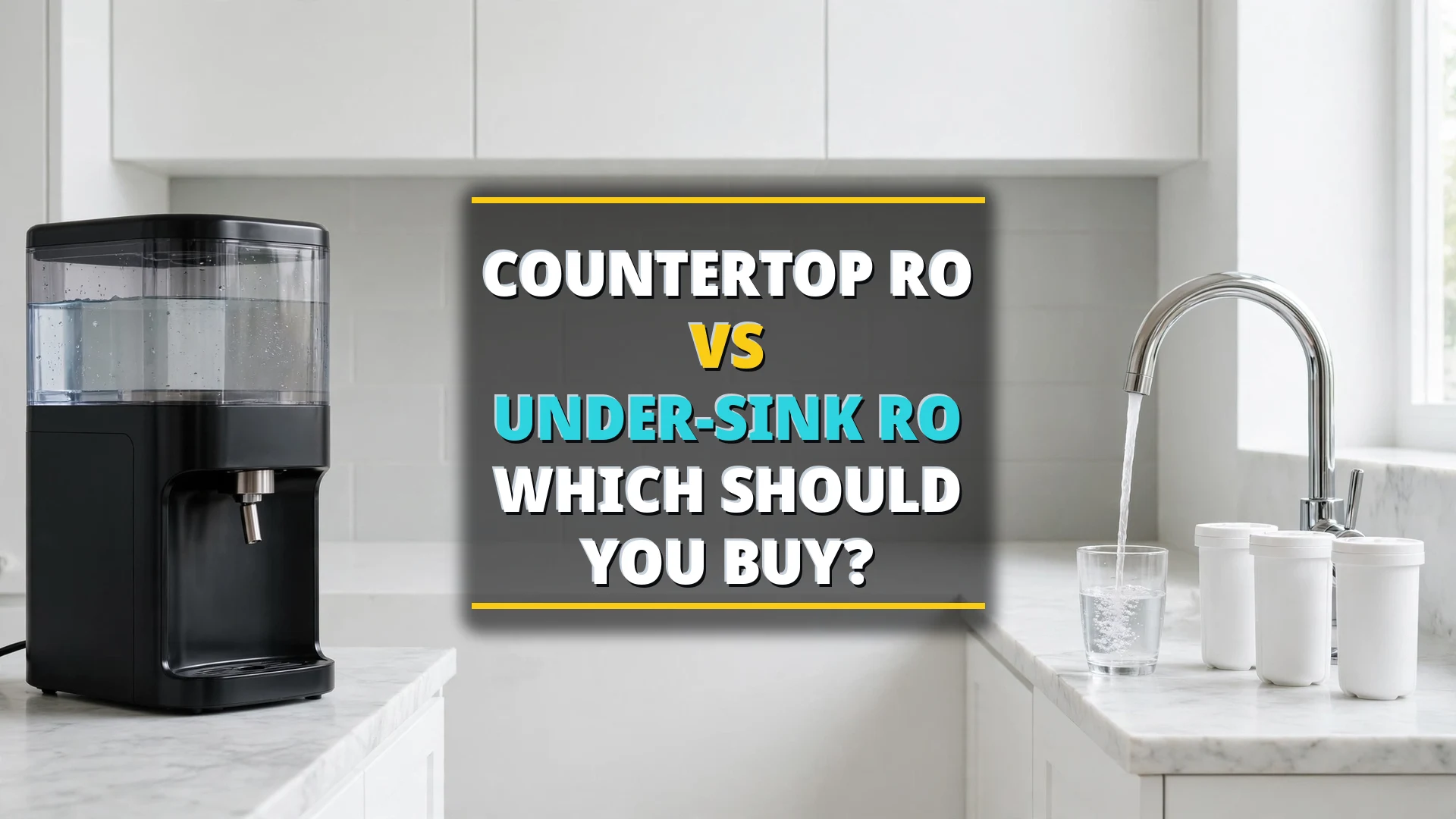

Countertop RO vs Under Sink RO (2026): Which Should You Buy?
You want reverse-osmosis water at home, and you have narrowed it to two shapes: a box that sits on the counter, and a system that hides under the sink. The countertop one looks easy — no drilling, no plumber, you can take it with you. The under-sink one looks serious — a dedicated faucet, water on demand, a line to the fridge. Same promise on both boxes: cleaner water. So which one is actually the smarter buy for your kitchen?
Here is the short answer from our research: both types filter with the same RO membrane technology, so the water quality is close — independent reviewers note a well-kept countertop unit rejects contaminants about as well as an under-sink one. The decision is about your home, not your water. Own your place and want the best long-term value? Go under-sink. Rent, move often, or want plug-in simplicity with instant hot or cold water? Go countertop. Below: the side-by-side numbers, installation reality, certification proof, yearly cost math, owner feedback, and the two countertop models we researched most closely.
The no-install format
Countertop RO
~$150–500
Plugs in, travels with you, and premium models dispense instant hot and cold water.
The long-term value format
Under-sink RO
~$180–300
Water on demand from a dedicated faucet, a pressurized storage tank, and a line that can feed your fridge’s ice maker.
The bottom line: buy under-sink if you own your home and want the best long-term value — water on demand from a dedicated faucet, a pressurized storage tank, and a line that can feed your fridge’s ice maker. Buy countertop if you rent, move, or refuse to drill — it plugs in, travels with you, and premium models dispense instant hot and cold water.
Verdict: owners go under-sink; renters go countertop — unless instant hot water matters to you, in which case a premium countertop model wins regardless.
Prices are estimates checked at time of writing; they change often — see the live price before you buy.
Table of Contents
Side-by-side comparison
The rows that matter most — installation, water on demand, the fridge hookup, and hot water — are where the decision usually gets made.
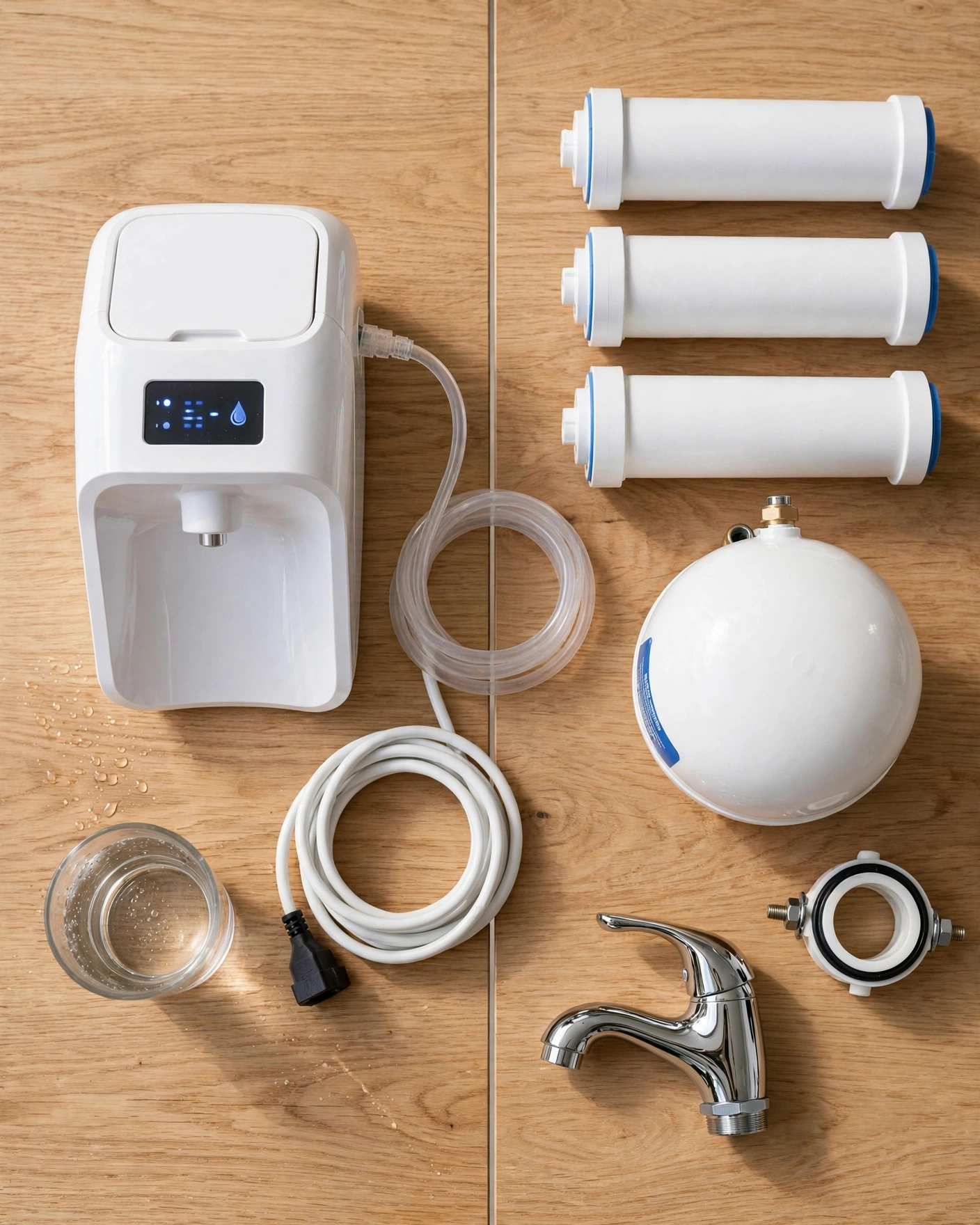
| Countertop RO | Under-sink RO ★ Winner | |
|---|---|---|
| Installation | Plug in, fill the tank — no plumbing | Cold-water tap, drain saddle, dedicated faucet, storage tank |
| Typical upfront cost | ~$150–500 (premium hot/cold models higher) | ~$180–300 (classic tank systems) |
| Estimated yearly filter cost | ~$80–150 | ~$60–80 |
| Water on demand | Batch-style: dispense, then wait for refill | Yes — pressurized tank (typically 3–4 gal) |
| Fridge / ice maker hookup | No | Yes, via an add-on line |
| Hot or cold water | Yes, on premium models (instant hot/cold) | No — cold line only |
| Counter space | Takes a real footprint | Clear — only a small faucet shows |
| Cabinet space | None used | Tank and housings eat storage |
| Portability | Fully portable — take it when you move | Permanent fixture |
| Filter change rhythm | Cartridges every few months (typical) | Prefilters 6–12 months; membrane every 2–3 years (typical) |
| Best for | Renters, movers, hot-water lovers | Homeowners, families, high water use |
Cost figures are estimates from current street prices and typical filter schedules, checked at time of writing. They move — treat them as planning numbers, not quotes.
What installation really asks of you
An under-sink install taps the cold-water line, adds a saddle clamp to the drain pipe for the reject water, mounts a dedicated faucet (usually meaning a drilled hole in the sink deck), and tucks a storage tank and filter housings into the cabinet. Plan an afternoon and check every connection twice — one independent reviewer logged nine potential leak points during a tankless install, which tells you the job rewards patience more than skill.

A countertop install is the opposite: plug it in and fill the feed-water tank. No drilling, no drain line, no landlord negotiations. That is the entire reason the category exists — and why it is the default for renters, dorms, and offices. If you are still weighing the renter-vs-owner question itself, our should-you-buy guide for countertop vs under-sink filters walks through that decision step by step.
Certifications: where the proof is (and isn’t)
Most product pages talk about filtration in marketing language; only some of it is backed by an independent listing. The standard that matters for RO is NSF/ANSI 58 — the certification written specifically for reverse-osmosis drinking-water systems. NSF/ANSI 42 covers taste and odor, 53 covers health-related contaminants, 401 covers newer concerns like pharmaceuticals, and 372 covers lead-free materials (the housing, not what the filter removes — a distinction that matters).

Independent tester waterfilterguru checked the certification claims across the countertop RO models on the market and found that only AquaTru held a full performance certification (IAPMO to NSF/ANSI 42, 53, 58, and 401) — several competitors displayed seals that covered only lead-free materials. The lesson is not that one brand is magic; it is that a claim of meeting NSF standards is not the same as holding an NSF certification, and a badge on the box means nothing until you match the exact model number in the public database at info.nsf.org (or the WQA / IAPMO listings).
For the NOVETE and Melissani M1 featured below, we could not verify current NSF/WQA/IAPMO listings from public sources at time of writing, so this page makes no certification claims for them. Before you buy any RO system, look up its exact model number yourself: it takes two minutes and it is the single most reliable quality signal in this category. And if you are not sure you even need RO rather than a simpler filter, our countertop filter vs reverse osmosis explainer lays out when each technology is the right tool.
What a year of ownership really costs
The sticker price is the least important number on this page. RO systems are a subscription you pay in cartridges, so the honest comparison is three years of ownership — and it is closer than the upfront prices suggest.

| Premium countertop RO | Classic under-sink RO | |
|---|---|---|
| Upfront (unit) | ~$300–500 | ~$180–230 |
| Filters per year (est.) | ~$80–150 | ~$60–80 |
| Year 1 total (est.) | ~$380–650 | ~$240–310 |
| 3-year total (est.) | ~$540–950 | ~$360–470 |
Two things jump out. First, the under-sink system wins on pure cost at every horizon. Second, the premium you pay for countertop buys convenience, not savings: no install, portability, and instant hot/cold water. Buy countertop for the flexibility and the math stops mattering. For a deeper breakdown, see our under-sink vs countertop filtration cost comparison.
Owner voices: what each side loves and hates
Spec sheets tell you what a system is supposed to do; owner reviews tell you what it is like to live with. The same themes repeat on both sides:

What countertop owners love
- It was running in ten minutes. The most repeated praise: unbox, plug in, fill, done. No plumber, no YouTube tutorial, no second trip to the hardware store.
- Instant hot water replaced the kettle. Owners of hot/cold models say the fast hot dispense changed their tea and coffee routine — the feature under-sink systems cannot match.
- It moved with them. Renters report packing the unit in its box and setting it up in the new apartment the same day.
What countertop owners complain about
- Refilling the tank gets old. The number-one gripe: a busy household empties the feed tank fast, and refilling becomes a daily chore.
- Counter space is real. These units are roughly the size of a large coffee maker — in a small kitchen, that footprint stings.
- Room-temperature water on basic models. Hot/cold is a premium feature; budget units dispense room-temp water only, which surprises some buyers.
What under-sink owners love
- The dedicated faucet. Water on demand, a full glass instantly — no refilling, no waiting, ever.
- The fridge hookup. An add-on line feeds the ice maker and water dispenser — the most-cited reason owners chose under-sink over countertop.
- Set-and-forget maintenance. Prefilter swaps every 6–12 months and a membrane every few years, versus the cartridge rhythm of countertop units.
What under-sink owners complain about
- Installation is a project. Plan an afternoon, double-check every fitting, and keep a bucket nearby the first week.
- Cabinet space disappears. The tank and housings eat a real chunk of under-sink storage. Measure before you buy.
- No hot water, ever. Under-sink RO feeds from the cold line only — if instant hot water matters, this category cannot help.
The two countertop models we researched most closely
If this comparison lands you on the countertop side, these are the two models that kept surfacing — both premium units with temperature features basic models lack. Prices are estimates; features are manufacturer-stated.
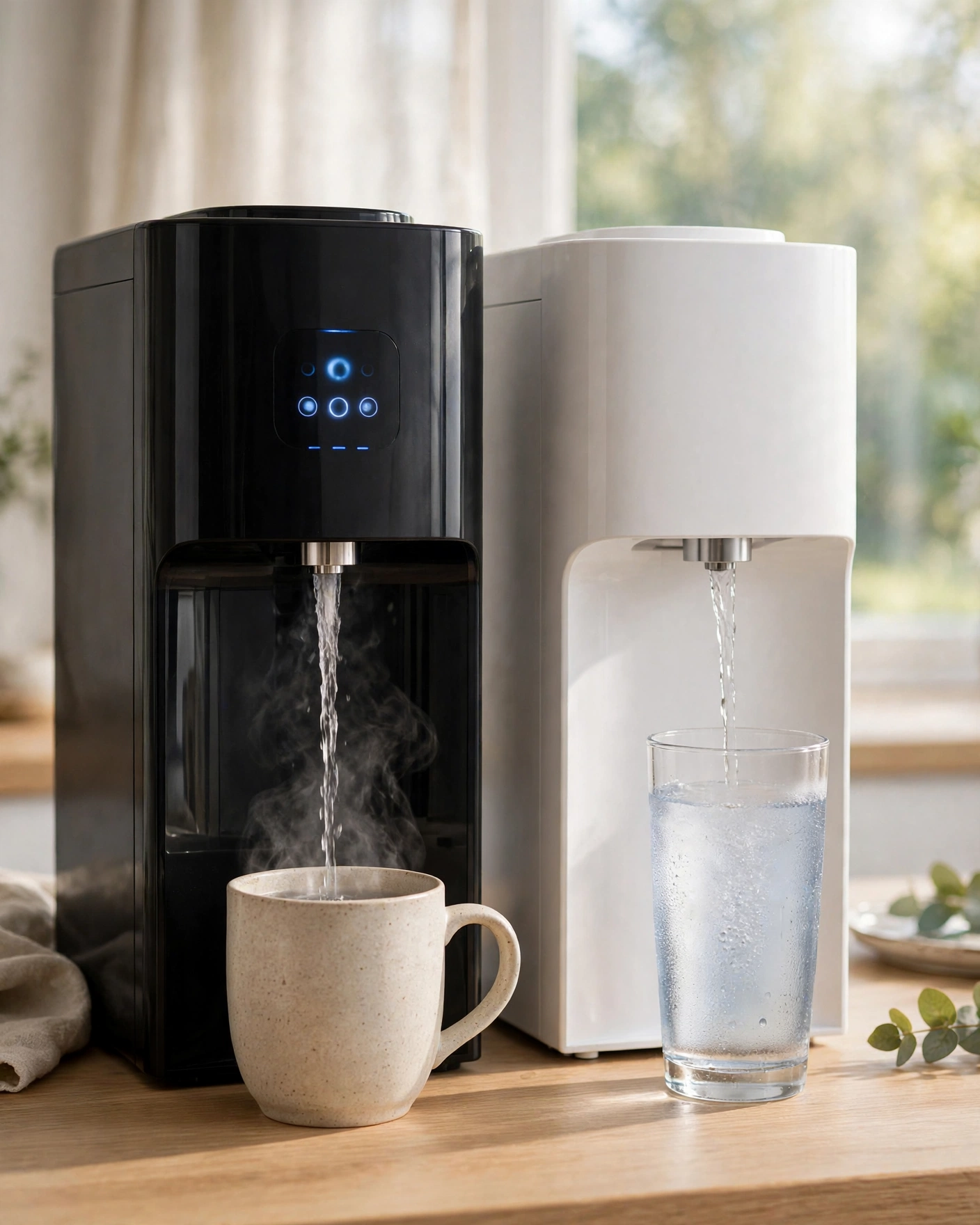
NOVETE countertop RO with cooling
The standout feature is in the name: this countertop RO chills — the brand states down to 32°F — making it the pick for iced-water drinkers and hot climates. Estimated street price: ~$400–500.
- Chilled water on demand — the one feature no under-sink system and few countertop rivals offer.
- No-install setup — plug in and fill, like every countertop unit.
- Premium price — the most expensive way to get into countertop RO.
Price checked at time of writing; it changes often — see the live price before you buy.
Melissani M1 countertop RO (hot/cold)
The M1’s pitch is speed: fast hot and cold dispensing — the brand advertises 3-second hot water — in a compact box. Estimated street price ~$300–400 undercuts the NOVETE while covering the hot-water use case most buyers want.
- Instant hot + cold — the kettle-replacement feature owners rave about.
- Lower premium than the cooling rival — ~$300–400 estimated vs ~$400–500.
- Still a countertop footprint — and batch-style refilling like every unit in this class.
Price checked at time of writing; it changes often — see the live price before you buy.
For the full countertop field — every major model researched and ranked — see our best countertop reverse osmosis systems roundup.
Which should you buy?
Rent, move within a few years, or cannot drill? Buy countertop. The NOVETE and Melissani M1 are the two models we researched most closely — both cost more than a basic unit, but they do things under-sink systems cannot: instant cold, instant hot, and zero installation.
Own your home and drink a lot of water? Buy under-sink. A classic 5-stage tank system — roughly $180–230 upfront and ~$60–80 a year in filters — is the best long-term value in home water filtration, with a dedicated faucet and a fridge hookup countertop units will never match.
Own but want instant hot water, or have no usable cabinet space? This is the one case where an owner should buy countertop: a hot/cold model beats a kettle and a plumber in the same afternoon.
Want the same decision in different words? Our countertop vs under-sink reverse osmosis guide covers the identical question from the under-sink side.
FAQs
Is a countertop RO as good as an under-sink RO at filtering water?
At the membrane level, yes — both use RO membrane technology, and independent reviewers note that a well-maintained countertop unit rejects contaminants about as well as an under-sink one. The differences are capacity, convenience, and installation — not purity. Where certification proof matters, check the exact model’s NSF/ANSI 58 listing rather than trusting the form factor.
Do I need a plumber to install an under-sink RO system?
Usually not. A standard install taps the cold-water line, adds a saddle clamp to the drain pipe, mounts a dedicated faucet, and connects the storage tank — a patient DIYer can do it in an afternoon with basic tools. If your sink has no spare faucet hole or your drain access is awkward, that is when a plumber earns their fee.
Can a countertop RO connect to my fridge’s ice maker?
No. Countertop units are standalone appliances with no plumbing connection, so they cannot feed a refrigerator line. The fridge and ice-maker hookup is an under-sink specialty via an add-on water line — it is the most-cited reason owners choose under-sink over countertop.
Which costs less over five years: countertop or under-sink RO?
Under-sink, at every horizon we modeled. A classic tank system runs roughly $180–230 upfront with ~$60–80 a year in filters; a premium countertop unit runs ~$300–500 upfront with ~$80–150 a year in filters. The countertop premium buys no-install convenience, portability, and hot/cold water — not savings. All figures are estimates; check current prices before you buy.
Does reverse osmosis remove fluoride and lead?
RO is the technology used for dissolved contaminants that basic carbon filters cannot touch — including fluoride, nitrates, lead, and PFAS. But “RO” on the box is not proof for a specific model: check the product’s performance data sheet and its NSF/ANSI 58 listing in the public database to confirm exactly which contaminants it is certified to reduce, and under what test conditions.
Do countertop RO units waste a lot of water?
All RO systems send some water to drain as concentrate — that is how the membrane stays clean. How much varies by model, so check the pure-to-drain ratio on the spec sheet of the unit you are considering rather than assuming a category average. Some countertop designs collect the reject water in a tank you can reuse for plants or cleaning instead of sending it down the drain.
Can I take a countertop RO with me when I move?
Yes — that is one of its best features. Unplug it, drain the tanks, pack it in its box, and set it up in the new place the same day. No uninstall appointment, no patched holes, no landlord sign-off. Under-sink systems stay with the house.
Conclusion
Countertop and under-sink RO are the same membrane technology in different form factors. Own your home? Under-sink is the better long-term buy — cheaper to run, water on demand, fridge hookup. Rent, move, or want instant hot/cold water with no plumber? Go countertop, and price the NOVETE and Melissani M1 first. Know which buyer you are, verify the certification listing before you pay, and the decision makes itself.
Price checked at time of writing; it changes often — see the live price before you buy.
Update log
- Zulqarnain: Review published.