
Does Brita Remove Fluoride (2026): What the Evidence Says
Guide
Fluoride splits water-filter buyers into two camps: people who want it gone and people who are quietly glad it is there. Whichever camp you are in, the Brita question has a clean, checkable answer — because unlike a lot of filter marketing, this one is settled by what the manufacturer itself claims. Brita publishes the contaminant lists for both of its pitcher cartridges, and fluoride is on neither of them.
The short answer: no. Brita makes no fluoride-reduction claim for the standard cartridge or for Elite, and the carbon-and-resin media inside them does not meaningfully remove fluoride. If fluoride removal is your goal, the technologies that do it are reverse osmosis, distillation, and activated alumina — covered below.
Table of Contents
Quick verdict
Keep your Brita for what it is certified to do — chlorine taste, odor, and (with the Elite cartridge) a list of health contaminants that includes lead, as detailed in do Brita filters remove lead. Just do not count it as a fluoride device in either direction: it neither removes fluoride on purpose nor is it secretly stripping it out. Your water leaves the pitcher with essentially the same fluoride it came in with.
Where the fluoride comes from

In most U.S. cities the fluoride is deliberate: utilities dose it to about 0.7 milligrams per liter, the level the Department of Health and Human Services recommends for preventing tooth decay while limiting dental fluorosis. The EPA’s enforceable ceiling is 4.0 mg/L, with a non-enforceable secondary guideline of 2.0 mg/L aimed at cosmetic fluorosis in children. Some well water carries natural fluoride from rock formations, occasionally above those levels. Either way, by the time it reaches your tap the fluoride is present as the dissolved fluoride ion — and that chemistry, not the brand of pitcher, decides what can remove it.
What the certifications prove
The check takes two minutes and needs no lab: read the NSF/ANSI listings for the two cartridges. The standard cartridge is listed under NSF/ANSI 42 (aesthetic effects — chlorine taste and odor). Brita lists the Elite under NSF/ANSI 42, 53 and 401, with health claims that include lead, mercury, cadmium, benzene and certain pesticides and industrial compounds. Fluoride appears in neither cartridge’s claims — not as a reduction target, not in the fine print. Manufacturers claim everything they are legally allowed to claim; a missing claim on a flagship product page is itself evidence. And certification language cuts both ways: if a filter could pass a fluoride protocol, the listing would say so, because “removes fluoride” sells units. The same database check (info.nsf.org) settles the PFAS version of this question in do water filter pitchers remove PFAS — again, model by model, claim by claim.
What the science says
Activated carbon — the working media in both Brita cartridges — removes contaminants mainly by adsorption: molecules stick to the carbon’s enormous internal surface. It is excellent at chlorine and the organic chemicals behind bad taste, and poor at small dissolved inorganic ions. The fluoride ion is tiny, carries a charge, and is surrounded by a tight shell of water molecules; it has little reason to stick to carbon and mostly sails through. The cartridge’s ion-exchange resin does not rescue the claim either: the resin used in pitcher cartridges is a cation exchanger, built to grab positively charged metal ions such as lead and copper. Fluoride is an anion — negatively charged — so it is the wrong shape for that net as well. The result matches the paperwork: any fluoride reduction through a fresh carbon cartridge is incidental and small, and no standard certifies it. This is not a Brita failure; it is physics that applies to essentially every mainstream carbon pitcher, which is why fluoride questions belong to different technologies entirely.
Better options if fluoride removal is the goal
Technologies that genuinely remove fluoride
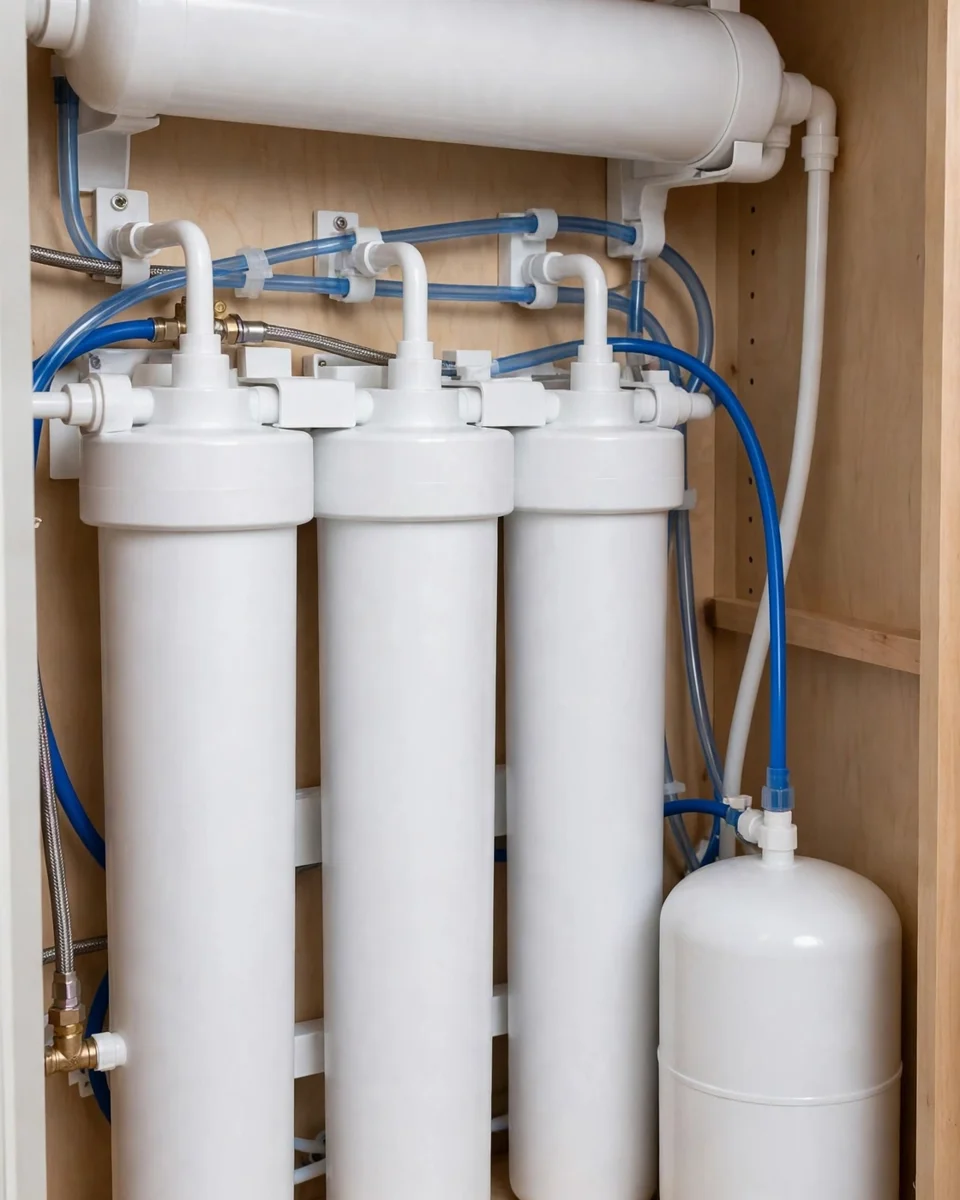
- Reverse osmosis — the membrane rejects the fluoride ion along with most dissolved solids; many systems carry fluoride in their NSF/ANSI 58 listings. Countertop and under-sink formats both exist.
- Distillation — boiling and re-condensing leaves fluoride behind in the boiling chamber; slow and energy-hungry, but thorough and simple.
- Activated alumina — a dedicated adsorptive media that does target fluoride, used in specialty cartridges and some whole-house setups; needs correct contact time and maintenance.
- Bone char carbon — a specialty carbon variant with fluoride affinity, sold in niche cartridges; verify claims per model, as listings vary.
What will not do it
- Any mainstream carbon pitcher — Brita standard or Elite, and their competitors — for the chemistry reasons above.
- Boiling: it removes nothing dissolved and concentrates fluoride slightly as water evaporates.
- Letting water stand, chilling it, or running it through a fridge filter — the ion stays dissolved through all of it.
- A TDS meter reading: a drop in TDS after a pitcher does not isolate fluoride, and carbon pitchers barely move TDS anyway.

One consideration before you spend: removing fluoride also removes the dental benefit it was added for, which matters most for children. Households often land on a split solution — RO or distilled water for drinking, tap for everything else — or filter only the water used to mix infant formula, where fluorosis guidance is most cautious. If you are shopping pitchers for other reasons entirely, the best water filter pitcher roundup ranks them on the jobs they actually certify for.
Conclusion
Does Brita remove fluoride? No — and unusually for this industry, nobody official is claiming otherwise. Neither cartridge lists fluoride, and the carbon-and-cation-resin media inside them is chemically the wrong tool for a small dissolved anion. If fluoride removal is the goal, shop by technology — reverse osmosis, distillation, or activated alumina — and confirm the specific model’s NSF listing names fluoride. The pitcher on your counter is a taste filter with, in Elite form, a solid health-contaminant list. Fluoride is simply not on it.
Update log
October 2026: Article published. Claim statements reflect the manufacturers’ published NSF/ANSI listings as of this date; verify current listings at info.nsf.org, as certifications change.
FAQs
Does the Brita Elite remove fluoride?
No. The Elite’s listings (NSF/ANSI 42, 53 and 401, per Brita) cover chlorine, lead, mercury, cadmium, benzene, certain pesticides and more — but fluoride is not among them, and its carbon media would not meaningfully remove a dissolved fluoride ion regardless. Elite is the lead answer in the Brita line, not the fluoride answer.
What type of filter actually removes fluoride?
Three proven routes: reverse osmosis (look for fluoride in the model’s NSF/ANSI 58 listing), distillation, and activated alumina media. Bone char carbon is a fourth, niche option. Ordinary activated carbon — the media in nearly all pitchers, fridge filters and faucet filters — does not meaningfully remove fluoride.
How much fluoride is in tap water?
Most fluoridated U.S. systems target about 0.7 mg/L, the HHS-recommended level. The EPA’s enforceable maximum is 4.0 mg/L and its secondary (cosmetic) guideline is 2.0 mg/L. Your utility’s Consumer Confidence Report lists your actual local level, and well owners can get it from any standard lab panel.
Does boiling water remove fluoride?
No. Boiling disinfects microbes but leaves dissolved fluoride untouched — and as water evaporates, the fluoride left behind becomes slightly more concentrated. The same is true in reverse for lead, which boiling also concentrates. Boiling is never a dissolved-contaminant strategy.
Should I remove fluoride from my water?
That is a household decision, not a filter specification. Fluoridation at 0.7 mg/L is endorsed by U.S. public-health agencies for dental benefit; some households still prefer to reduce it, especially for mixing infant formula. What this article can settle is the mechanical part: whichever you decide, a carbon pitcher will not change your fluoride level either way.
Do ZeroWater or PUR pitchers remove fluoride?
Not per their mainstream listings either — the fluoride problem is about media chemistry, not brand. Ion-exchange-heavy pitcher cartridges (ZeroWater’s design) trade ions rather than rejecting them and are not certified for fluoride removal. For any pitcher, the answer lives in its NSF listing: if fluoride is not named there, the cartridge is not a fluoride device.