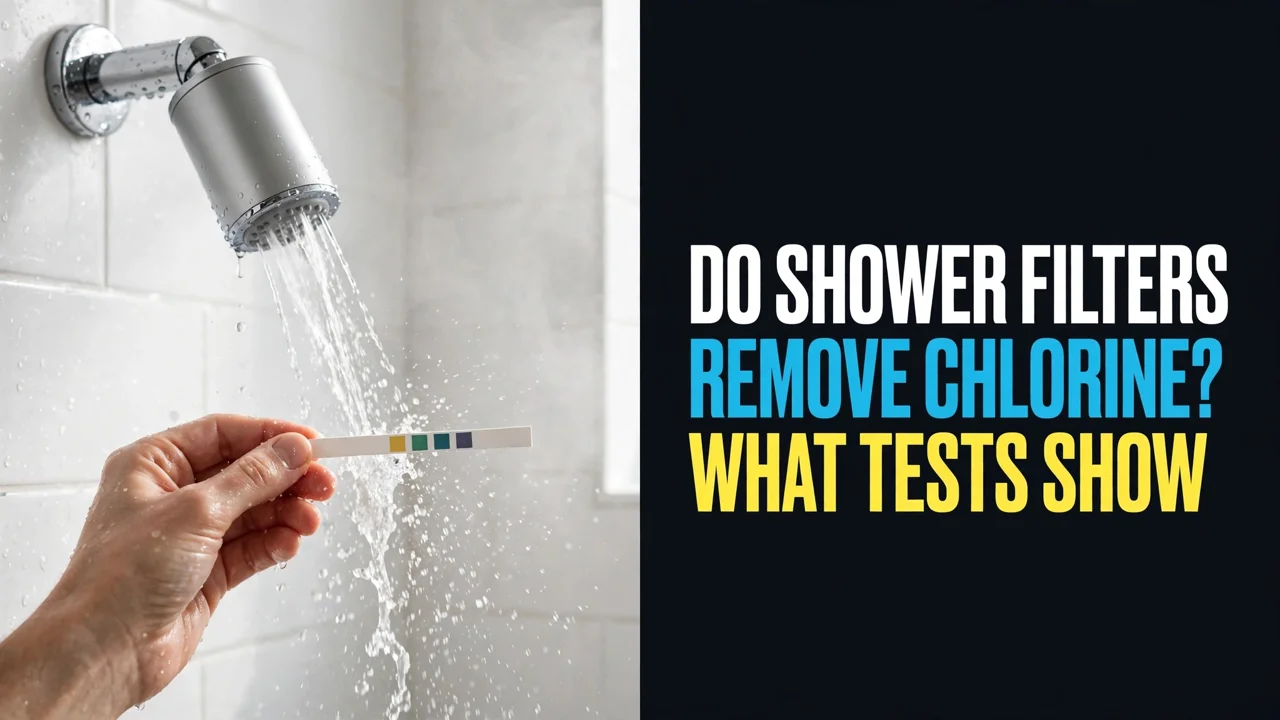

Do Shower Filters Remove Chlorine (2026): What Lab Tests Actually Show
Guide
Chlorine is the one thing in shower water you can smell. It is added deliberately — it keeps water safe on its way from the treatment plant — and by the time it reaches your shower it has done its job and become a nuisance: the pool smell in the steam, the tight skin, the hair that feels like straw. So the question behind every shower filter purchase is narrow and testable: does the cartridge actually take the chlorine out? Unlike most filtration claims, this one can be answered precisely, because chlorine is simple to measure and there is a certification standard written for exactly this job. Here is what that standard says, what the tests show, and where the claim stops.
The short answer: yes — a shower filter can genuinely reduce free chlorine, and models certified to NSF/ANSI 177 have been lab-tested doing exactly that, at shower temperatures and flow rates. The fine print matters: the certified claim covers free chlorine only (not chloramine), it applies across the cartridge’s rated life rather than forever, and you can verify it at home with a drop test that costs a few dollars.
Table of Contents
The claim
Every shower filter on the shelf makes this claim, usually as a percentage with no source attached. Percentages without a standard behind them are marketing, so ignore the number and ask a better question: certified, or not? The claim has a precise, testable form — this device reduces free available chlorine in shower water — and a certification system exists to check it. A filter making the claim without certification may still work; it simply has never been made to prove it under test conditions. Start there, because everything the lab tests show hangs off that distinction.
What lab tests show

NSF/ANSI 177 is the shower-filtration standard, and its entire scope is the reduction of free available chlorine. A certified model has been tested by an accredited lab under realistic shower conditions — hot water, full flow — and shown to reduce free chlorine across the cartridge’s rated service life, not just on day one. That rated-life detail is what separates certification from a demo: anyone’s fresh cartridge performs; the standard asks whether it still performs near the end of its rated gallons. Independent checking is unusually easy here, because the same chemistry the lab uses fits in a $10 pool test kit: add the reagent to a water sample and free chlorine turns it yellow in proportion to concentration. Test the water bypassing the filter and the water through it, and the difference is the filter’s work, visible in two glasses. When this comparison is run on a working, certified cartridge, the filtered sample reads clearly lower — the claim holds. The wider question of what else these filters do and do not do is covered in our companion piece, do shower filters work.
How the media does it
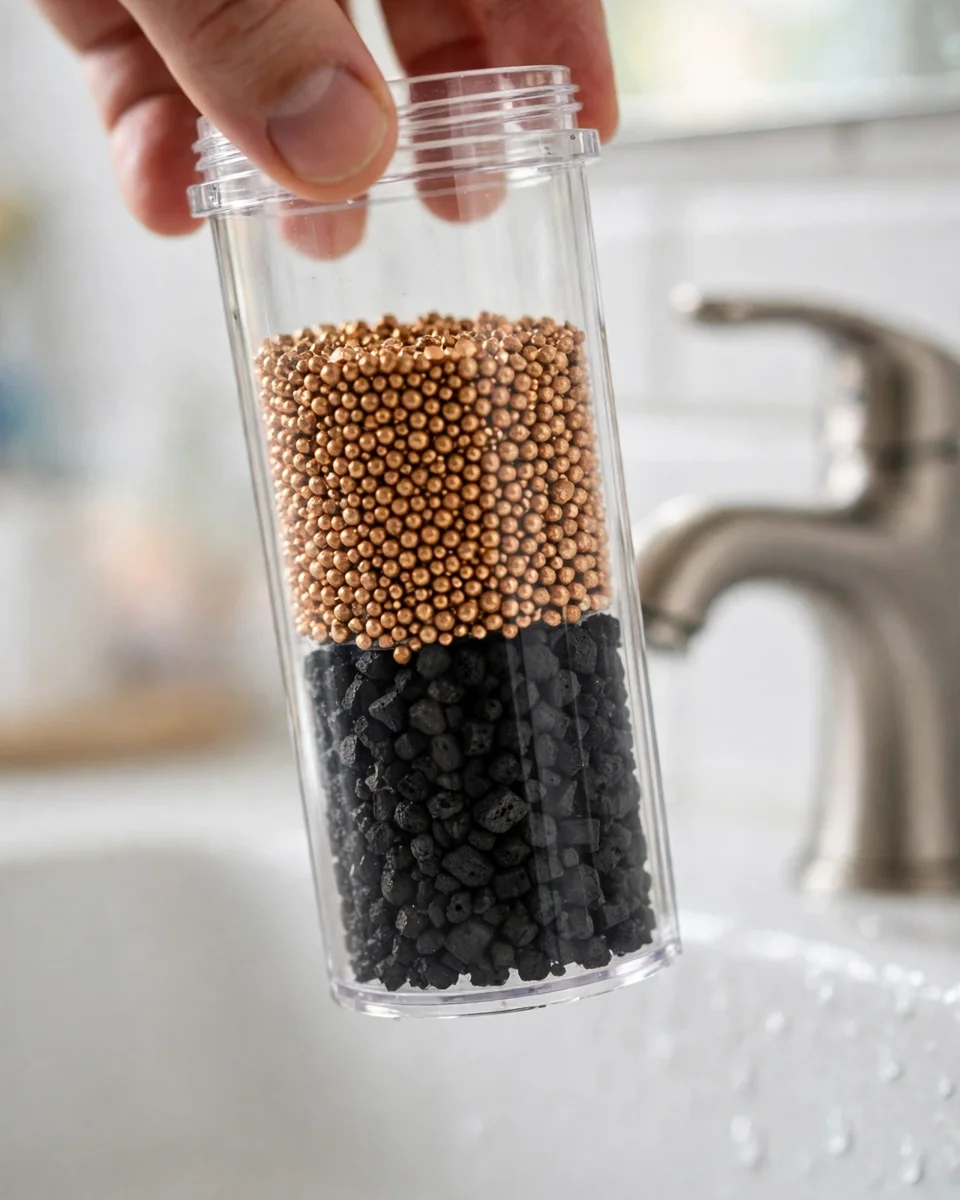
The reason shower cartridges look different inside from drinking-water filters is the working conditions: water near 40°C moving at several gallons a minute gives any media a fraction of a second of contact. Plain activated carbon — the drinking-water workhorse — adsorbs chlorine well at kitchen-tap pace but struggles at shower temperature and flow. So shower cartridges lean on faster chemistry. KDF media, a copper-zinc alloy, works by redox reaction: as free chlorine passes over it, the metal surface converts the chlorine into harmless chloride almost on contact, a reaction that tolerates heat and speed. Other cartridges use calcium sulfite, which reacts with chlorine extremely quickly, or ascorbic acid (vitamin C), which neutralizes chlorine chemically. Many designs layer media — a redox or sulfite stage doing the heavy lifting, carbon polishing where it can. The practical lesson: the media type is not a detail. A cartridge built for the conditions is the difference between the certified claim and the uncertified hope, and it is one reason the models in our best shower filter roundup lead with their media and certifications.
The chloramine caveat
“Chlorine” on the box means free chlorine — and a large share of cities no longer disinfect with it. Many utilities use chloramine instead, a chlorine-ammonia compound chosen precisely because it is more stable and longer-lasting. That stability cuts both ways: chloramine is harder to remove, needs more contact time than a shower cartridge naturally provides, and is not covered by the NSF/ANSI 177 free-chlorine claim. A filter that aces the chlorine test can leave chloramine largely untouched. Before buying, check your utility’s water quality report for which disinfectant your city uses; if it is chloramine, our shower filter chloramine guide covers which media types are built for that fight. This single check explains most “my filter does nothing” stories.
How long the effect lasts
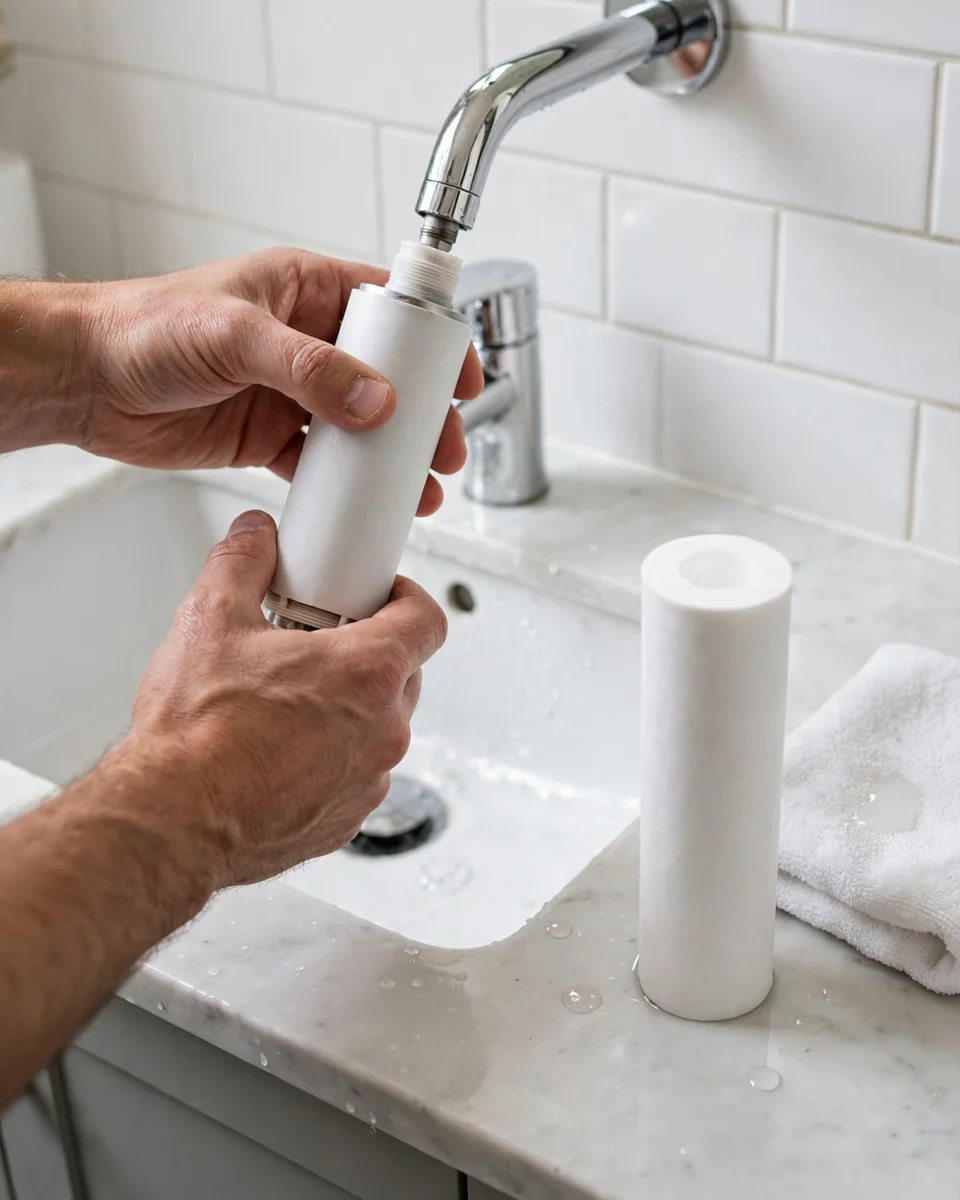
Chlorine reduction is spent, not permanent: the media’s reactive capacity is consumed as water passes, and flow channels through exhausted media find less and less resistance. Manufacturers put the service interval at roughly six months per cartridge under typical use — at maker-listed prices, about $52 per AquaSana cartridge or $25–28 for Sprite, as examples of the running cost. Treat the calendar as a guide and the evidence as the rule: if the pool smell creeps back into the steam, run the two-glass drop test — a filtered sample that has gone back to yellow has told you the cartridge is done, whatever the date says. What we will not do is quote you a precise week-by-week fade curve: the degradation percentages repeated around the internet trace back to no primary source we could verify, so the honest guidance is the maker’s interval plus your own test.
Bottom line
When the claim holds
- Your water is disinfected with free chlorine, and the model is certified to NSF/ANSI 177.
- The media suits the conditions — KDF, calcium sulfite, or vitamin C based cartridges built for hot, fast water.
- The cartridge is within its service life — roughly six months, verified by your own drop test.
When it fails
- Your city disinfects with chloramine — outside the certified claim entirely.
- The cartridge is exhausted and left in place; it becomes decoration.
- The claim comes from an uncertified model quoting a percentage with no standard behind it.
One more boundary worth stating, because it is the most common mis-buy: chlorine reduction is not water softening. The calcium and magnesium that spot your glass and crust your fixtures pass through untouched — if hard water is your actual problem, our hard water shower filter guide explains what a shower filter can and cannot do about it, the softening claim itself gets a dedicated hearing in do shower filters soften water, and our shower filter vs water softener breakdown sets the two technologies side by side.
Conclusion
Do shower filters remove chlorine? Yes — free chlorine, measurably, when the model is certified to NSF/ANSI 177 and the cartridge is alive. It is the rare filtration claim you do not have to take on faith: a certification standard defines it, labs test it at real shower conditions, and a drop kit lets you reproduce the check in your own bathroom in two minutes. Respect the two boundaries — chloramine is a different fight, and the cartridge is a consumable — and the claim on the box is, for once, the claim in the water.
Update log
October 2026: Article published. Claims framed to the scope of NSF/ANSI 177 (free available chlorine reduction); cartridge prices are maker-listed examples. No end-of-life degradation percentages are cited — the figures in circulation could not be verified against a primary source, so they are omitted rather than repeated.
FAQs
Do shower filters remove all the chlorine?
No filter removes literally all of it, and the certified claim is a reduction, not an elimination: NSF/ANSI 177 verifies that a model reduces free available chlorine across its rated life under shower conditions. In practice a working cartridge takes the level down to where the smell and the dry-skin effect are gone — which is the outcome people are actually buying.
What is the difference between free chlorine and chloramine?
Free chlorine is chlorine disinfectant on its own; chloramine is chlorine bonded with ammonia, used by many cities because it lasts longer in the pipes. That stability makes chloramine harder to filter, and it is not covered by the NSF/ANSI 177 free-chlorine claim. Your utility’s water quality report states which one your city uses.
How can I test my shower water for chlorine at home?
Use a pool-style free-chlorine drop or strip test on two samples: water that has not passed through the filter (the tub tap usually works) and shower water through the cartridge. The unfiltered sample shows your supply level as a yellow color; the filtered sample should read clearly lower. If both match, the cartridge is exhausted or the model is not performing.
How long does a shower filter keep removing chlorine?
Manufacturers rate cartridges at roughly six months of typical use, and the honest test is the water, not the calendar: when the chlorine smell returns or a drop test shows the filtered sample back at supply level, the media is spent. Heavy use, very hot showers, and high incoming chlorine all shorten the interval.
Why do shower filters use KDF instead of just carbon?
Conditions. Shower water is hot and fast, and plain activated carbon adsorbs chlorine best with cooler water and longer contact time. KDF copper-zinc media converts free chlorine to chloride through a redox reaction that happens almost on contact and tolerates the heat — which is why it, calcium sulfite, or vitamin C media anchor most shower cartridges, often layered with carbon.
Will a shower filter fix my hard water spots?
No — and it is important not to buy one expecting that. Chlorine reduction leaves calcium and magnesium, the minerals behind spots and scale, completely untouched; hardness readings are identical before and after. A shower filter solves the chlorine problem only. Actual softening requires an ion-exchange softener.