Are Shower Filters Worth It (2026): What Lab Tests Actually Show
Guide
Shower filters are sold like beauty products: softer skin, shinier hair, no more chlorine damage. The problem is that the box rarely separates what these small canisters genuinely do from what they cannot. So people buy one for the wrong job — usually hard water — feel no difference, and conclude the whole category is a scam. It is not a scam. It is a narrow tool, and whether it is worth it depends entirely on whether your problem is the one thing it actually treats.
The short answer: a shower filter is worth it if your complaint is chlorine — dry, tight skin, brittle hair, a swimming-pool smell — on chlorinated city water. It is not worth it if you expect softer water, less limescale, or contaminant removal; no shower filter does those jobs. The cost of finding out is low, the install takes minutes, and the honest expectations below are what separate a good buy from a wasted one.
Table of Contents
The claim
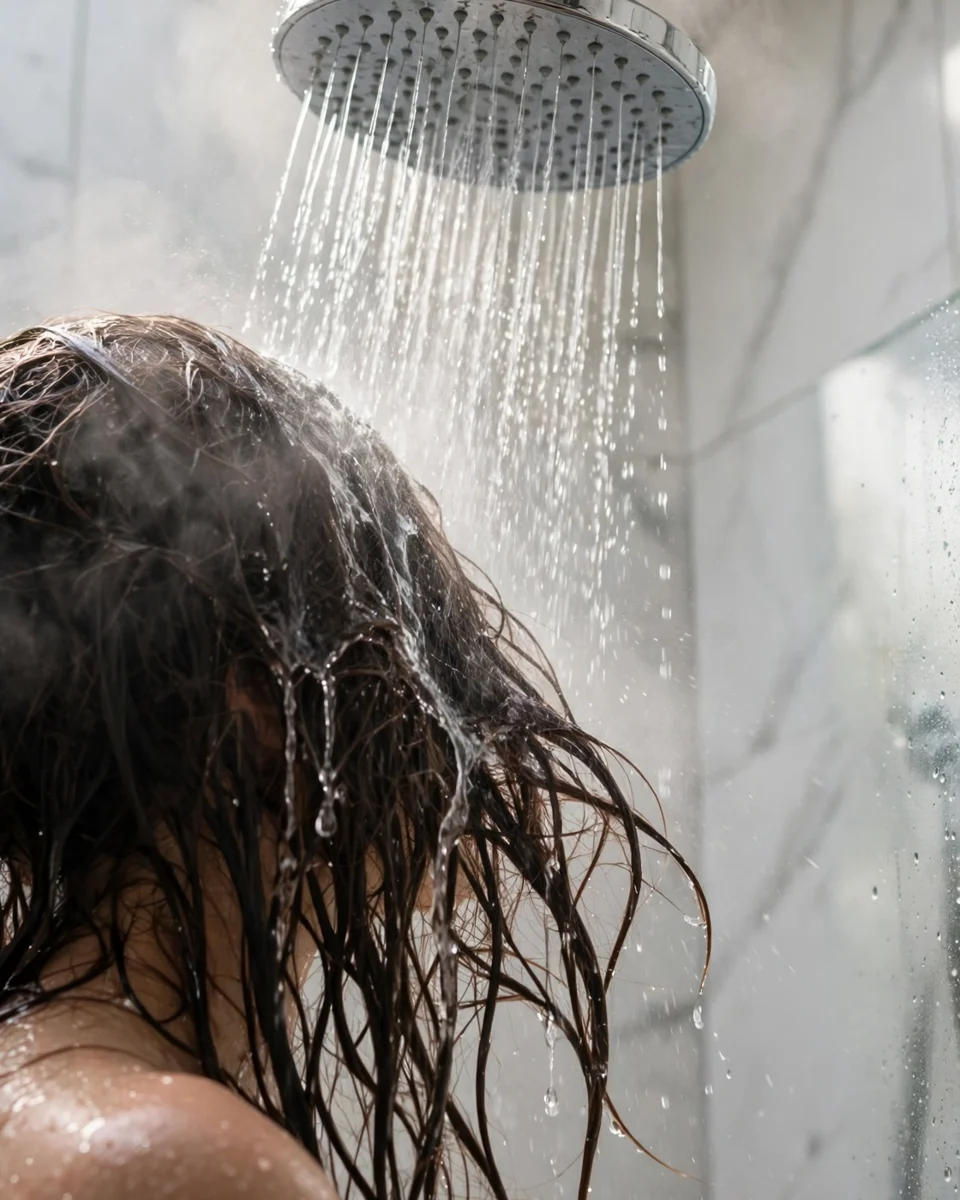
The marketing claim is broad: filter your shower water and your skin and hair will thank you. Buried inside it is one specific, testable promise — reduce the chlorine in the water. Chlorine is added to municipal water on purpose, and it is genuinely hard on skin and hair: it strips natural oils, leaves skin feeling tight after a hot shower, and is rough on color-treated hair. A shower filter is a small canister of reactive media placed in the line before the shower head. Water passes through it in seconds, and the media’s one real job is to neutralize chlorine in that brief contact. Everything else on the box — heavy metals, “toxins,” softer water — is either outside the certification or outside the physics, which the next section separates out.
What the standard actually certifies
There is exactly one certification written for this product category: NSF/ANSI 177, the standard for shower filtration systems. Its scope is a single claim — reduction of free available chlorine. Not chloramine, not lead, not hardness, not “chemicals” in general. When a shower filter is certified to NSF/ANSI 177, a lab has verified that it reduces free chlorine under the standard’s test conditions. When a box leans on other numbers, they are the maker’s own claims, made under the maker’s own conditions.
The media inside explain both the capability and the limits. KDF — a copper-zinc alloy — tolerates hot water well and converts free chlorine into harmless chloride as water passes over it, which is why it is the classic shower media. Activated carbon, excellent in a cold drinking-water filter, is a weaker fit here: hot water and a fast shower flow rate cut its contact time and its appetite for chlorine. Calcium sulfite and vitamin C (ascorbic acid) media neutralize chlorine chemically and quickly, and vitamin C is one of the few media that also reacts with chloramine — the chlorine-plus-ammonia disinfectant many cities now use instead. That distinction matters: in a chloramine city, a filter built only for free chlorine has less to work on in the first place.
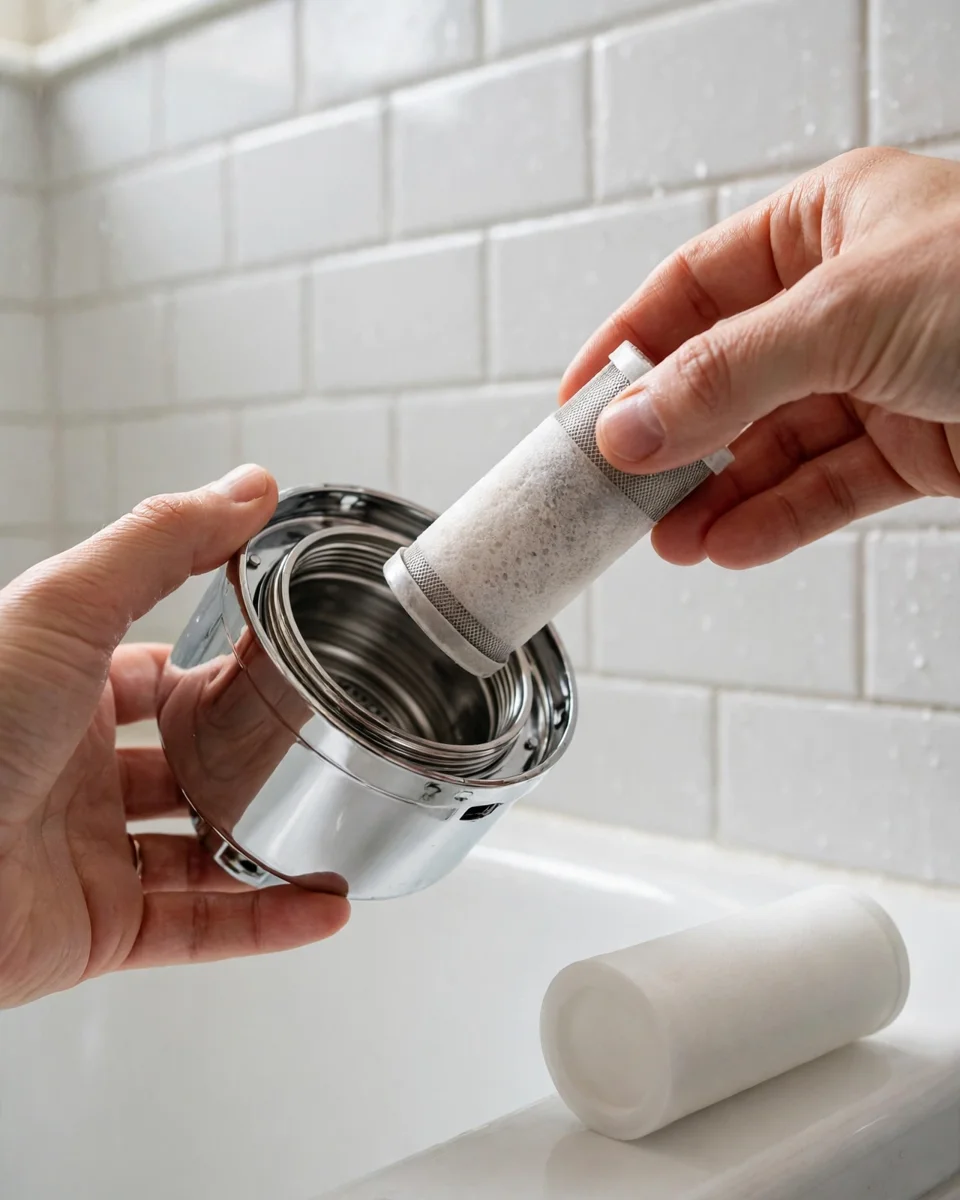
Two honest caveats follow from the design. First, performance is highest when the cartridge is fresh and declines across its life as the media is consumed — makers rate cartridges in gallons or months for exactly this reason, and a filter left in far past its rating is decoration. Second, certification tests run at controlled flow and temperature; a long, very hot, high-pressure shower is harder duty than the lab bench. None of this makes the category fake — it makes it a consumable with one job, judged by whether that job is your problem.
What owners report

Owner feedback clusters tightly around the chlorine story. The most common reports: skin that feels less tight and itchy after showering, hair that feels less straw-like and holds color longer, and the disappearance of the pool-deck smell in a steamy bathroom. People with chlorine-sensitive skin are the most consistent fans — which tracks, because they have the most chlorine effect to remove. Reports from chloramine cities are noticeably more mixed, matching the media problem above: less of the disinfectant is free chlorine, so less of it is caught in a two-second pass.
Just as common are reports of no difference at all — and those cluster around the wrong expectations: owners who bought the filter for limescale on the glass, for genuinely hard water, or for drinking-water worries a shower unit was never built to answer. Expectation is the whole ballgame here. If chlorine is your issue, the change is usually felt within the first few showers; if it is not your issue, no cartridge will manufacture a difference.
What it cannot do
A shower filter does not soften water. Hardness is dissolved calcium and magnesium, and removing it takes ion exchange or reverse osmosis — a palm-sized canister with seconds of contact time does neither, so hardness passes straight through and scale keeps forming. We walk through the test evidence in our guide to whether shower filters soften water. If scale and hard-water damage are your actual problems, the honest comparison is a shower filter vs a water softener — different tools, different budgets.
It is also not a health or drinking-water device. NSF/ANSI 177 certifies nothing about lead, PFAS, or microbes, and shower water is not where those exposures are managed anyway. Treat any box implying whole-body detox as marketing, and judge the product on the one certified claim.
Bottom line
Worth it if
- Your water is chlorinated city water and your skin or hair shows it — dryness, itch, brittleness, fast-fading color.
- You want the chlorine smell gone from a hot, steamy shower.
- You rent or want a reversible, tool-free change you can undo in minutes.
- You will actually swap the cartridge on schedule — the benefit rides on fresh media.
Skip it if
- Your problem is hardness or limescale — a shower filter cannot soften, full stop.
- Your city disinfects with chloramine and the model you are eyeing only targets free chlorine.
- You are worried about lead or PFAS — those are drinking-water questions for certified kitchen filtration.
- You know you will never change the cartridge; a spent filter delivers nothing.
If you land in the “worth it” column, the models that carry the NSF/ANSI 177 claim and sensible cartridge pricing are compared in our best shower filter roundup.
Conclusion
A shower filter is worth it for exactly one job: taking free chlorine out of the water hitting your skin and hair. For chlorine-sensitive households on chlorinated city water, that is a real, felt improvement for modest money and five minutes of install. For softening, scale, or contaminant worries, it is the wrong tool no matter how good the reviews sound. Match the tool to the problem — and swap the cartridge on time.
Update log
October 2026: Article published; certification scope per NSF/ANSI 177 (free available chlorine only). No laboratory degradation figures are cited for any filter media, as none were verified against a primary source at publication.
FAQs
Do shower filters actually work?
For their one certified job, yes. A shower filter certified to NSF/ANSI 177 has been lab-verified to reduce free available chlorine, and chlorine reduction is what drives the skin and hair effects owners report. They do not work for softening water or removing drinking-water contaminants — those claims are outside both the standard and the design.
Will a shower filter help my dry skin and hair?
If chlorine is the cause, plausibly yes — that is the most consistent owner report, especially from people with sensitive skin and color-treated hair. If your dryness comes from hard water, hot showers, or a skin condition, a filter will not fix it; hard water in particular passes through a shower filter unchanged.
Do shower filters remove chloramine?
Most do not, or only modestly. Chloramine is more stable than free chlorine and needs longer contact or reactive media — vitamin C based cartridges are the usual exception. NSF/ANSI 177 covers free chlorine only, so check what disinfectant your city uses and what media the filter contains before buying.
How often do I need to replace the cartridge?
On the maker’s schedule — typically rated in months or gallons, commonly a few months of household use. There is no sensor; the rating is the guidance. Past it, the media is progressively consumed and chlorine reduction fades, so the calendar, not the taste of the water, is your reminder.
Can a shower filter soften hard water?
No. Softening requires ion exchange or reverse osmosis to remove calcium and magnesium. A shower filter does neither, so hardness and limescale continue as before. If hard water is the problem, look at softening options sized for the home rather than a shower canister.
Are expensive shower filters better than cheap ones?
Not automatically. What matters is the NSF/ANSI 177 certification, media suited to your disinfectant (free chlorine vs chloramine), and cartridge price and availability — a premium shell with costly, short-lived cartridges can be worse value than a plain certified unit. Judge the claim and the consumable, not the finish.