
ZeroWater Replacement Filter Cost (2026): The Real Per-Year Math
Guide
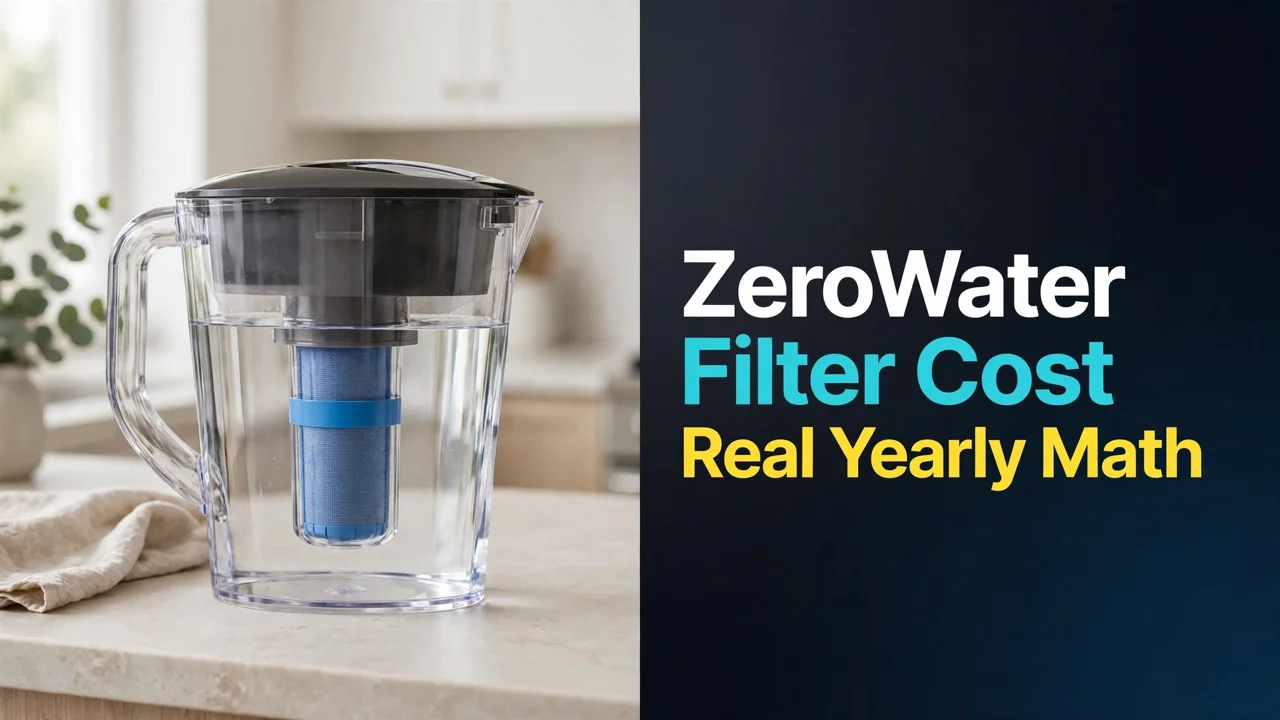
The ZeroWater pitcher is reasonably priced and the water genuinely reads 000 on the meter — then the first replacement cartridge dies in three weeks and costs $15, and you start wondering what you actually signed up for. The honest answer is that there is no single ZeroWater filter cost: the same $15 cartridge lasts 40 gallons on one tap and 12 on another.
Here is the short answer: a ZeroWater cartridge costs roughly $13–15 (less in multipacks), and its life runs about 15–40 gallons depending on your tap’s TDS — estimates drawn from ZeroWater’s published guide ranges and owner reports. That puts a typical household’s year anywhere from $140 to $400+. Below: the per-gallon math by TDS level, the yearly scenarios, and the point where a different filter type honestly becomes cheaper.
Check Current PriceTable of Contents
Quick verdict
ZeroWater is a fair deal on low-to-moderate TDS water and an expensive habit on high-TDS water. At or below roughly 150 ppm, expect the friendly end of the range — around $0.40–0.60 per gallon and a manageable yearly bill. At 300+ ppm (common in parts of the Southwest and on some well water), the same pitcher can burn a cartridge every two weeks and pass $1.00 a gallon, at which point under-sink reverse osmosis — costed in our RO or carbon filter guide — is the cheaper machine for the same job. Know your tap’s TDS first; our guide to what TDS means explains what the number does and does not tell you.
Why your TDS number runs the bill
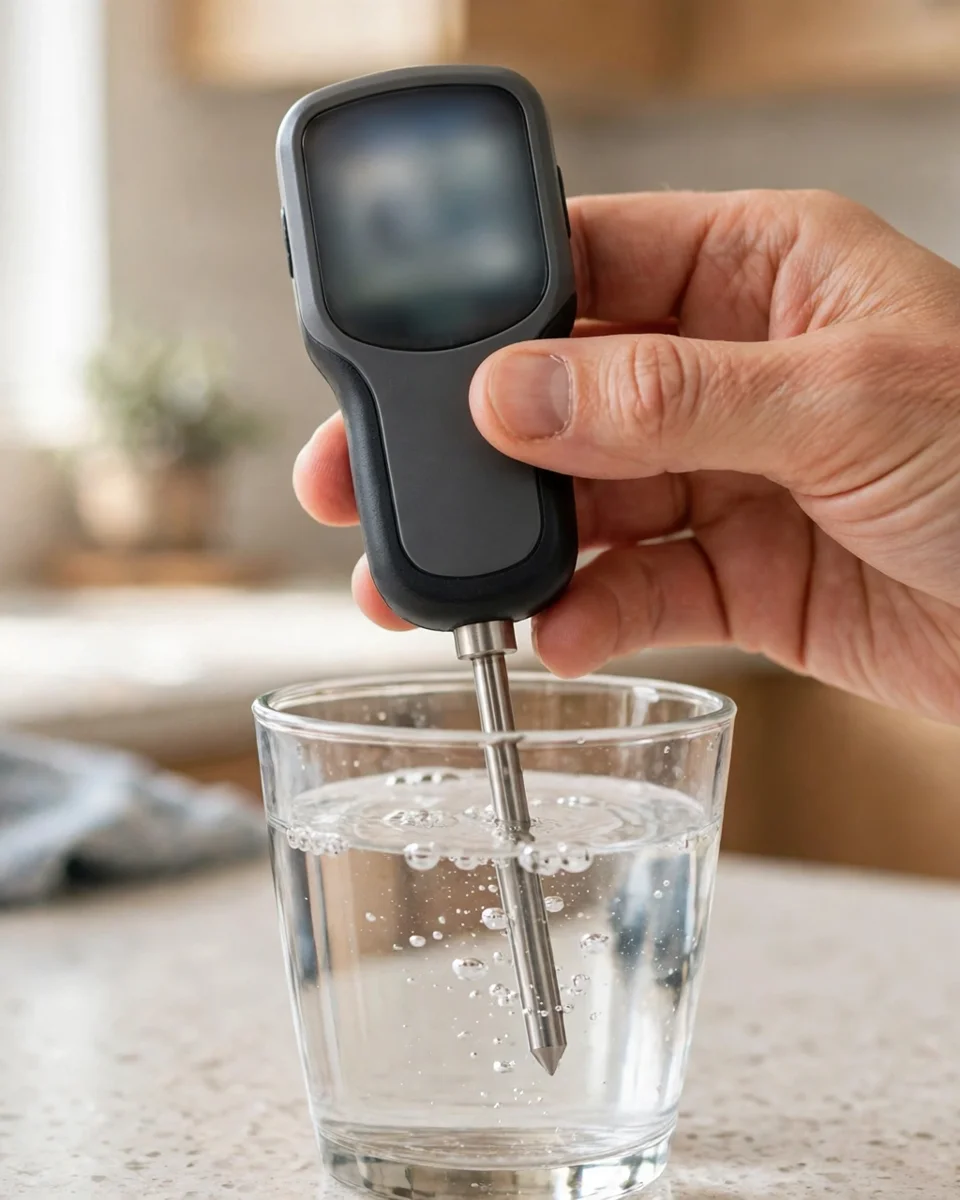
ZeroWater’s five-stage cartridge finishes with an ion-exchange resin that strips dissolved solids out of the water — that is how it reaches a 000 TDS reading. Resin is a consumable with a fixed appetite: the more dissolved solids in every gallon, the sooner it is spent. Double the tap TDS roughly halves the cartridge’s life. That is why two owners can both be telling the truth — one gets six weeks per filter, the other gets twelve days. ZeroWater ships a TDS meter with its pitchers for exactly this reason, and instructs owners to change the cartridge when the filtered water reads 006.
The cost-per-gallon table
| Your tap’s TDS | Estimated gallons per cartridge | Estimated cost per gallon |
|---|---|---|
| Under 100 ppm | ~35–40 gal | ~$0.38–0.43 |
| 100–200 ppm | ~25–30 gal | ~$0.50–0.60 |
| 200–300 ppm | ~15–20 gal | ~$0.75–1.00 |
| Over 300 ppm | ~8–15 gal | ~$1.00–1.90 |
Multipacks pull the cartridge price toward $12–13, which trims each row by about 15–20%. For contrast, a Brita-style carbon pitcher cartridge runs roughly $0.15–0.25 per gallon — cheaper, but it does not strip TDS to 000; the two products are not doing the same work, which is the whole reason ZeroWater can charge what it charges.
What a year actually costs

Take a household filtering about a gallon a day for drinking (365 gallons a year) and apply the table — estimates, with the assumptions shown:
| Tap TDS | Cartridges per year | Yearly cost at $15 | Yearly cost at $13 (multipack) |
|---|---|---|---|
| Under 100 ppm | ~10 | ~$150 | ~$130 |
| 100–200 ppm | ~13–15 | ~$200–220 | ~$170–190 |
| 200–300 ppm | ~18–24 | ~$270–365 | ~$235–315 |
| Over 300 ppm | ~24–45 | ~$365–680 | ~$315–590 |
Filter coffee, tea and cooking water too and the volume — and the bill — climb further. None of this makes ZeroWater a bad product: per ZeroWater’s published certification through IAPMO to NSF/ANSI 42 and 53 for its listed contaminants, it is doing certified work that cheap carbon pitchers do not attempt. The cost surprise is a TDS surprise, not a quality surprise.
Check Current PriceHow to spend less without drinking worse water

- Change at 006, not at the first off-taste panic or the calendar. The meter (included with pitchers) is the honest gauge; changing early wastes the resin’s best gallons.
- Buy multipacks. The per-cartridge price drops from ~$15 toward $12–13 in 4-, 8- and 12-packs — the easiest 15–20% saving on this page.
- Do not filter water you are about to boil away or cook off with if every gallon counts — save cartridge life for drinking water. (This is a budget choice, not a safety statement.)
- At 300+ ppm, run the honest comparison. A countertop or under-sink RO unit’s cost per gallon lands far below $1.00 once installed; above a certain TDS the pitcher math stops working, and pretending otherwise costs more.
- Ignore off-brand “ZeroWater-compatible” cartridges with suspicion. The five-stage ion-exchange design is the product; unverified copies rarely hold a 000 reading for long.
Conclusion
Budget ZeroWater like this: find your tap’s TDS with the included meter, read your row in the cost table, and multiply. Low-TDS households get certified 000-TDS water for roughly $130–200 a year — reasonable. High-TDS households should expect $300–600 and should price an RO system before the third multipack. The $15 cartridge was never the real price; your water’s mineral content is.
Update log
October 2026: Guide published. All cartridge-life and cost figures are estimates based on ZeroWater’s published guide ranges, current retailer prices, and the usage assumptions stated in each table.
FAQs
How much does a ZeroWater filter cost per year?
It depends almost entirely on your tap’s TDS. For a household filtering about a gallon a day, our estimates run from roughly $130–150 a year on low-TDS water (under 100 ppm) to $365 or more at 300+ ppm, where cartridges may last only 8–15 gallons each. Multipacks trim about 15–20% off the single-cartridge price.
Why does my ZeroWater filter die so fast?
Almost always high tap TDS. The ion-exchange resin in the cartridge is consumed by dissolved solids, so mineral-heavy water — 300 ppm and up, common in the Southwest and on some wells — can exhaust a cartridge in under two weeks. Confirm with the included meter: if your tap reads high, the pitcher is working as designed; the water is just expensive to strip.
When should I actually change a ZeroWater filter?
ZeroWater’s guidance is to change it when the filtered water reads 006 on the TDS meter. Other end-of-life signs are a sour or fishy taste — the classic signal that the ion-exchange resin is exhausted — and slowing flow. Changing on the meter reading, rather than the calendar, gets the full life out of each cartridge.
Is ZeroWater more expensive than Brita?
Per gallon, yes — roughly two to four times the cost, by our estimates. But the comparison is not like-for-like: Brita’s carbon cartridges improve taste and reduce a set of contaminants without stripping dissolved solids, while ZeroWater’s five-stage cartridge targets a 000 TDS reading and carries IAPMO certification to NSF/ANSI 42 and 53 for its listed contaminants. You are paying for a different job.
Does the sour or fishy taste mean the filter is harmful?
It means the ion-exchange resin is exhausted — as the resin depletes, the water’s taste turns sour or fishy and the TDS reading climbs off 000. It is the designed end-of-life signal, not a defect: change the cartridge and the taste clears. It is also why stretching a cartridge past 006 is false economy.
At what point is RO cheaper than ZeroWater?
Roughly when your tap TDS passes 300 ppm or your household filters more than about 1.5 gallons a day — the cartridge count climbs past what an RO system’s membrane-and-filters budget costs per gallon. Below that, the pitcher’s zero installation and portability usually win. Our RO-versus-carbon guide works through the comparison in detail.